An Adventure at the Bush Theatre review ****

world_map

An Adventure

Bush Theatre, 26th September 2018

Now I cannot pretend that, when the lovely people at the Bush moved the matinee performance of An Adventure that I attended forward by an hour, and indicated it had metamorphosed into a three hour plus extravaganza, I wasn’t concerned. And reading the proper reviews, which were variable, but generally pointed to narrative ambition trumping dramatic momentum, didn’t help.

Well I can report that this is, give or take, a wonderful story, superbly, and smartly, told. The Bush is still claiming a 3 hour 15 minute running time but it isn’t, it certainly doesn’t feel anywhere near it, and there are a couple of intervals to catch your breath anyway. If anything I would have liked, whisper it, a bit more. It kicks off with feisty Gudjarati Jyoti, ostensibly 16, interviewing callow Rasik, ostensibly 22, one of the five suitors chosen by her father, on a stormy night on the outskirts of Ahmedabad in post-partition India in 1954. Not best qualified, Rasik doesn’t start his wooing too well but eventually, after a little sparring, Jyoti warms to him and the match is made. It is a cracking opening scene with emotional warmth set against the non-naturalistic set of Rosanna Vize, a golden plinth flanked by Louise Rhodes-Brown’s video designs (which help to anchor time and place throughout). The second scene, on a beach where Rasik, who can’t swim, clings on to Jyoti, is no less powerful and is the metaphor from which the rest of the story unfolds.

We then track the couple through Nairobi, during the fight for Kenyan independence in the late 1950’s, where Rasik goes into business with patriot David and buys him land, to London where the couple arrive in 1968, through the 1970’s, and daughter Sonal, and back to India, for the funeral of Joyti’s mother, where we meet niece Joy, and then finally Nairobi, in the present day. Along the way we see the India diaspora experience unfold, with exposition which generally doesn’t interrupt the flow, entwined with the personal journey of the couple. Home, emigration, immigration, post-colonialism, racism, gender roles, political activism, ageing, parenthood, the tyranny of everyday life, in fact just about everything that matters, is lightly ticked off along the way, but all is coherent.

The first part, (and the finale), in Kenya, is the most pointed in terms of political message, contrasting Kikuyu David’s support for violent Mau-Mau resistance with Rasik’s more pragmatic faith in a peaceful transition. This in turn contrasts with the personal politics of Jyoti who joins a union and campaigns to improve the conditions of British Asian working women in the 1970s. At the same time we see the racism that Rasik endures in his work and the strains that the struggle to get on put on their marriage. We see the next generation in the shape of Sonal looking to move up and on through education and travel encountering Jyoti’s motherly resistance.

This is though more a love story than history lesson and is all the more successful for it. In the final scenes, with the couple in their seventies, Rasik’s sight failing and mobility impaired, they look back and this, frankly, is where it really connected emotionally. I cannot claim to understand the journey of Jyoti and Rasik but I can certainly empathise with the prosaic intimacy of their relationship. For these final scenes Jyoti and Rasik are played by Nila Aalia and Selva Rasalingam, but you can still feel the essence of the characters shaped by the superb Anjana Vasan and Shubham Saraf in the earlier years. Jyoti may be headstrong but her inner strength shines through from the off. Rasik may be less certain, earnest in his youth, irascible in his old age, but they make an entirely believable couple. Writer Vinay Patel based his story on the life of his grandparents which is maybe just why.

Mr Patel’s expansive tale wears its learning pretty lightly. As with his previous work, notably his play True Brits and his TV drama Murdered By My Father, he shows that he has a way with story and character and can conjure up a lot of content from relatively straightforward starting points. An Adventure is more ambitious that his previous works, and maybe this time he has tried to pack a bit too much in to create his odyssey of marriage, but it is still a very entertaining and skilful attempt. I imagine he is a confident young man and I suspect he believes, as do I, that he will get even better from here. Madani Younis is, unsurprisingly, a completely sympathetic directorial presence; you get the feeling writer and director brought the best out of each other from the very start of the project. It will be very interesting to see what Mr Younis brings to the South Bank in his new role.

The cast, including a resolute Martins Imhangbe as David and impressive work from Aysha Kala as Sonal/Joy, is well matched to character, though, for me, Anjana Vasan stood out, as she did Life of Galileo at the Young Vic and Behind the Beautiful Forevers at the NT. Sally Ferguson’s lighting and Ed Clarke’s sound were able to navigate the intimate and expansive as the story demanded.

Six actors and seven characters, (well eight when you include younger daughter Roshni who literally phones in at the end), is not a lot to span this much history and geography. Then again the best way in drama to understand the big stuff is to see its repercussions at the human level. This is where Vinay Patel’s play works. He gets away with shoehorning in maybe just a bit too much of what he wantt to say because the characters are so real and the dialogue, with a few overly dreamy, symbolic interruptions, so apothegmatic. Above all there is that fearless enthusiasm for the power of drama that the best writers convey which makes this, for all its obvious faults, work.

Henry V at the Tobacco Factory Bristol review *****

geograph-2470375-by-Steve-Daniels

Henry V

Tobacco Factory Theatre, 22nd September 2018

Hello. I feel another bout of hyperbole coming on. It could just be that cumulative exposure is making me realise what the smarter punters and all the luvvies have known for hundreds of years, that nothing comes close to Shakespeare. It could be that my first visit to the Tobacco Factory has revealed a near perfect space, intimate but airy, in the round, with the right vibe of industrial chic, (and a good value curry in Thali next door). It could be that the Shakespeare at the Tobacco Factory company, under retiring founder Andrew Hilton, continues to churn out top quality productions of the Bard, and a few others, as it has done since its founding in 2000. Last year’s Othello set the ball rolling for me (Othello at Wilton’s Music Hall review ****) and I now intend to make a note in the diary for future pilgrimages to Bristol.

However I think the special ingredient in this particular production lies in the direction of Elizabeth Freestone. Ms Freestone is not afraid to offer up a contemporary slant on big Will, which usually works for me. Indeed she is the director behind Jeanie O’Hare’s composition of Queen Margaret at the Royal Exchange Manchester as we speak. Queen Margaret is one of Shakespeare’s best, no question, and I gather the magnificent jade Anouka is doing the business in the title role, though she will need to to get anywhere near the visceral walloping Sophie Okonedo gave the character in The Hollow Crown. (Can’t wait to see ms Okonedo as Cleo at the NT which the critics are loving).

What is patriotism? How to tread the line between the glorification and the senseless horror of war? What makes a “national hero” and how does this get weaved into a nation’s view of itself? How does Henry go from playboy Hal to warrior king? Is he just a cipher, whatever we want him to be? Sincere, scheming or both simultaneously? How to think about Katherine? Simpering pawn or power broker? A lot of good questions to ask at any time but especially when a bunch of utter cocks are playing dangerously fast and loose with our national identity. Once again Shakespeare shows he is the man for all ages when it comes to shedding light on the business of politics.

Lily Arnold’s blissfully simple set, four metal cages filled with stones, is put to work as battlefield and meeting hall, military and political space. A quartet of strip-lights, (recycled from Othello I’ll warrant), megaphone, radio and mic, suitcases and kit-bags, bottles of voddy, clip-boards, melancholic Union Jack and Tricolore. It’s all you really need. Less can so often be more in both the history plays and the tragedies. Go with the standard battle-dress/fatigues of so many modern-dress productions because it just works, but then add some twists to underscore the symbolism. A tutu dress for Mistress Quickly, a sharp suit for Cambridge and the King of France, a T shirt for King Henry, “the Artist formerly known as Prince” – I loved that – and turn Katherine into an imposing skinhead with elegant purple frock-coat suit and DM’s to match.

Cut out superfluous roles, in this interpretation, and double up (most intriguingly Chorus/Burgundy, Canterbury/King of France, Cambridge/Fluellen, York/Bourbon and Nym/Orleans). The armies are interchangeable after all. Lose a few of those pesky Dukes on both sides, Westmoreland, Exeter and York on the English side, with just Cambridge to face the traitorous music, and Bourbon and Orleans, and eventually Burgundy, on the French side. Make Exeter a skilled, female, negotiator. Slim down the English and French armies as well, and lose Queen Isabel and, in a real coup, merge the Dauphin into Katherine (and thus make her relationship with Orleans potentially very weird). And turn the Chorus into a detached, Bristolian, history lecturer.

Start off with a big party night choreographed to Boys Will Be Boys. Make Henry physically and metaphorically begin to stand tall as we move through the battles and make Katherine fight him and the English tooth and nail to the end. Don’t make too much fuss about those tennis balls. Let Henry whizz through the “breach speech”. Turn Katherine’s comedy English/French body part translation into a bitter and furious lament for lover Orleans which scares Henry (and us) witless. See Montjoy humiliated in defeat. Watch Henry only just keep it together after the brutal dispatch of Bardolph then wipe away the tears to receive the patronising French embassy. Ensure maximum ambivalence for our Harry as he wanders the camp for this is surely where the mantle of power is most keenly felt. Believe that Henry is probably bluffing when he threatens the citizens of Harfleur so belligerently.

The comedy relief of Pistol, Nym, Bardolph, Quickly and the Boy doesn’t fare quite as well in this production but their cannon fodder status, even as accident, certainly does. When Exeter reads out the list of the English dead at Agincourt the Boy is “none else of name” but we know his pointless sacrifice. A comparatively modest Harry, as here, makes Pistol’s over the top grandiosity less of a counterpoint. Fluellen is as annoying as ever though.

Now young Ben Hall has a bit of history here having played Henry V at the Guildhall when a student. He obviously has the genes for the theatre being the grandson of Sir Peter, nephew of Edward, (now moving on from Hampstead Theatre), and son of producer Christopher. You probably know him as the bespectacled tutor of Gerry and would be suitor of Margo in The Durrells off the telly, (a Hall family affair of sorts). He left an impression in the recent RSC Coriolanus but here he steps up and given a very interesting performance. Deliberatively tentative and awkward in parts, not entirely conversational but certainly not a master of oratory, with shaved head and red beard, he is believable as soldier if not, even in victory, as king. He spits out the lines too rapidly at the start but as Henry rises to the challenge so his speech becomes more measured, though never entirely, assured, as his disturbing “wooing” of Katharine at the end shows. He is not Olivier’s square-jawed hero, Branagh’s reborn statesman or Lester/Hytner’s war criminal hardman. Ben Hall’s Hal is constantly “wrestling with the moral responsibility of what it means to be a good leader” as Ms Freestone says in the programme. That crown certainly still lies uneasy on that head.

Offering us an androgynous Katherine who is near Henry’s equal in terms of destiny, passion, integrit,y as well as duplicity and xenophobia, with the same hair-cut to boot, is inspired. It is hard to take your eyes off Heledd Gywnn. She prowls the stage with an air of aggressive disdain, coming on all Joan of Arc like, (she popped up a decade, and one play, later). You just know that marriage isn’t going to solve anything at the end.

I was also drawn to the performances of Joanne Howarth as the patient Chorus who at one point is moved to tears, Alice Barclay’s largely composed Exeter, Luke Grant’s York/Bourbon, Zachary Powell’s Nym/Orleans, David Osmond’s verbose Fluellen and Melody Brown’s seasoned Gower. The re-gendering here doesn’t shout out. It just works.

Matthew Graham’s contrasting lighting design and Giles Thomas’s martial though still unobtrusive sound design all contributed to this thoughtful interpretation and experienced movement director Lucy Cullingford, even with this thinned out cast, was at the top of here game. There are some astonishing tableaux in this production, though nothing feels consciously artful. Elizabeth Freestone and Lily Arnold took visual inspiration from the battlefield art of WWI, (go see the Aftermath exhibition on now at Tate Britain for some of the most striking). I can see that and it also reminds us just how after this corner of Northern France has been the host of carnage. (Aftermath at Tate Britain review ****).

For me this is a near perfect production, considered, insightful, innovative and genuinely relevant. The company is drilled to perfection and battle hardy and it looks and moves beautifully. Like I say at the top, it could just be that nobody does it better than Will, but there are many ways to skin the ambiguity of this particular dramatic cat, and it still needs an inspired creative team and cast to bring the verse to life. STF is taking the production on tour so if you are lucky enough to be anywhere near these venues on these dates I implore you to get tickets.

9-13 Oct – Stephen Joseph Theatre Scarborough
16-20 Oct – Dukes Theatre, Lancaster
23-27 Oct – Malvern Theatres
30-3 Nov – Theatre Royal, Bury St Edmunds
6 -10 Nov – Exeter Northcott

Allelujah at the Bridge Theatre review ****

25998114085_2027f69bbf_o

Allelujah

Bridge Theatre, 12th September 2018

Yet again by the time the Tourist gets round to seeing a major London premiere and, worst still given his feckless nature, comments on it, it is as good as over. Mind you the good news is that, as far as I can see, Allelujah was an unqualified success for the Bridge Theatre, playing to full(ish) houses which can only be a good thing. Nick Hytner, the Bridge AD and director here, and Alan Bennett go back a long way. If there was one thing guaranteed to get bums on those plush, comfy(ish) Bridge seats then this was it. Hopefully more people get to see just how marvellous this new theatre is and will return for whatever comes next. If they have any sense at all they will sign up for A Very, Very, Very Dark Matter, the new Martin McDonagh play, which opens here in a couple of weeks.

Now I am not sure there is, maybe bar Queen Liz II, a person more qualified to take on the National Treasure mantle than Alan Bennett. You know pretty much exactly what you are going to get when Mr Bennett puts pen to paper. If you love his wry, quizzical artistic voice, then you were never going to be disappointed by this. And plainly there is a pretty wide demographic who do love that voice. But that voice does come with some drawbacks, a few of which were on show in Allelujah. He can be, dare I say it, just that teeniest bit lazy when it comes to getting a laugh. (Mind you any image of louche behaviour in Yorkshire towns is pretty funny I guess). His characters have aged with him and he can veer towards the stereotypical. Overt nostalgia and sentimentality can seep into the text. He doesn’t really go in for plot, preferring to stitch together episodes to tell his story. All in all then sometimes Alan Bennett can be a bit too Alan Bennett.

Yet slowly and surely, underneath all that Bennettism, he makes his points here such that, by the end of Allelujah, I, and I suspect much of the audience, was both moved and angered by the plight of its subject, the NHS, here becoming a metaphor for the breakdown of community and State by decades of neo-liberalism and “market solutions”. The Bethlehem is an august Yorkshire hospital, meeting its “targets” but threatened by closure simply because it is too small and negates the fatuous “economies of scale” that Government demands. The surprisingly hands-on Chair of its trust, Salter, a robust performance from Peter Forbes, isn’t going down without a fight however, recruiting a documentary team (Sam Bond and Nadine Higgin) to the cause. The action is centred on the geriatric ward, highlighting that many of the patients here have nowhere else to go, from an august cast of twelve, dare I say, mature actors including the likes of Julia Foster, Gwen Taylor and Simon Williams. (I bet rehearsals for Alleluhah were a hoot). They sing, they dance, they reminisce, they moan, they have inappropriate conversations.

One of their number, Joe (a cantankerous Jeff Rawle, an AB regular), is paid a visit by his gay son, Colin, (Samuel Barnett), who just happens to be the slimey management consultant who is behind the closure plan. We also see a pair of grasping relatives, the Earnshaws, (Rosie Ede and Duncan Wisbey), who blame the hospital for robbing them of the inheritance, (note to AB, check out taper relief), feckless work experience teen Andy (David Moorst) and various put-upon staff (Manish Gandhi, Richie Hart, Nicola Hughes and Gary Wood).

The crux of AB’s didactic though is revealed by a pair of excellent performances from Sacha Dhawan as Dr Valentine and by the peerless Deborah Findlay as Sister Gilchrist. She has an alarming system to ensure efficiency on her wards. Yet when she delivers her valedictory “farewell” speech there is real poignancy. Deborah Findlay really is a special actor who never seems to miss a step in the roles she takes on nor in the performances she gives. This is no exception.

Yet if you really want to be reminded of just how biting AB can still be when he wants to then look no further than the closing lines, delivered direct to audience from Sacha Dhawan’s student visa immigrant doctor. AB, by his own admission a “blend of backward-looking radicalism and conservative socialism”, is angry about the country we have become, and the risks we face, and, wisely, uses its most beloved institution, to vent his spleen. Don’t worry this is no in-yer-face political diatribe, it is AB through and through, and he doesn’t preach, but there is a cumulative rage which takes it well beyond 2012’s People or the autobiographical plays.

Nick Hytner is obviously an expert at presenting AB’s material and creating action out of pure text and here he is immeasurably helped by Bob Crowley’s versatile staging and the choreography of Arlene Philips and her assistant Richard Roe. I wouldn’t be at all surprised to see a soundtrack album emerging from the play: if you wanted to keep the old folk happy with a “knees up” at Christmas this fits the bill kids.

Alan Bennett’s The Habit of Art is currently on tout with Matthew Kelly as Auden and David Yelland as Britten and we have Mark Gatiss to look forward to in The Madness of George III at Nottingham Playhouse (to be broadcast on NT Live). I don’t think it will be too long before Allelujah gets another outing. It will be interesting to see just in what direction this country travels between now and then.


Blackkklansman film review ****

3508865199_c3c5f53dbb_o

Blackkklansman, 30th August 2018

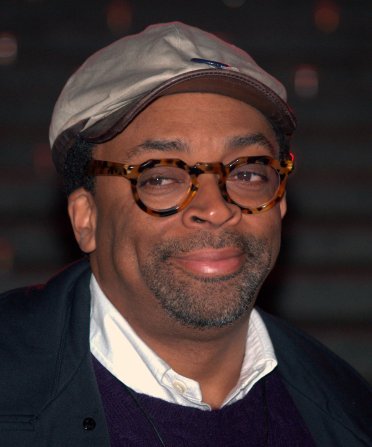
Spike Lee is 61 years old. This photo is a few years old but there is still a twinkle in his eye if you ask me. That twinkle, the eye for mischief, has been in his films from the start. Now I can’t pretend that I have followed his career, after the initial breakthrough in the mid 1980s with She’s Gotta Have It, Do The Right Thing and Malcolm X, but every time I have seen one of his films I have been thoroughly entertained, educated and provoked and made a mental note to see more of his work and revisit the early films. I have failed in this.

However I thoroughly enjoyed Chi-Raq a couple of years ago, with its more than a passing nod to Lysistrata, though the remake of Park Chan-wook’s Oldboy was disappointing, and can add to the acclaim for Blackkklansmen. It is, to its core, a Spike Lee film, the examination of race in the US and the African American experience, the humour, the exaggerated characters, the mixing of fact and fiction, the incorporation of documentary footage, the title sequences, the slick technique, the music, the dolly shots, all in the service of a captivating and extraordinary true-ish story of a black cop in 1970s Colorado Springs who, with the help of a white colleague, penetrates the Ku Klax Klan as they plan a terrorist atrocity.

Mr Lee is a proselytising political film-maker who can, at his best, appear not to be. (I am not talking here about his specifically documentary films such as 4 Little Girls and When the Levees Broke). Political films can, perforce, be a dour watch. Especially if they are about the “business’ of politics, political history, made by directors with an avowedly political agenda or focus on big, global issues, the stuff of international relations. Getting bums on seats with this sort of stuff is not easy. Me Lee here though has managed to incorporate the elements of a thriller, the one sure-fire way to secure an audience for the political, with elements of personal and identity politics in the relationships between the key male characters and the main protagonist, Ron Stallworth, and impassioned student activist girlfriend, Patrice. Best of all the satirical mocking of the KKK and its leader David Duke repeatedly hits the target without diminishing the ugliness of their hate. Remember the criminal fascist Duke is still peddling his sh*te and people are still being emboldened by it.

The period setting is superbly realised. The cast is outstanding. John David Washington’s bone-dry Ron is confident enough to face down face down racist colleagues after joining the force and to persuade boss Chief Bridges (Robert John Burke) to back his plan to infiltrate the KKK. The ever laconic Adam Driver is the perfect foil as Flip Zimmerman, who is sent in undercover to join the KKK cell. We see the political horizons of both expand; Ron after he is sent to monitor a Black rally at the local university, (where Corey Hawkins plays Kwame Ture in a stunning scene), where he meets Laura Harrier’s Patrice, and Flip, as the Jewish heritage he had abandoned is unmasked by the KKK and, specifically, the comically evil Walter (Ryan Eggold). Topher Grace is the spitting image of the young David Duke and brilliantly captures the rhetorical articulacy allied to an idiotic world view. There are some fine cameos on show  from Paul Walter Hauser, following on from his scene stealing performance in I Tonya, from Finnish actor Jaasper Paakkonen as Felix Kendrickson, the leader of the local Klan cell, and from Ashlie Atkinson as his wife Connie, who spews out shocking unthinking vitriol but still ends up as an unwitting victim.

Scene after scene hits home and somehow Spike Lee knits effortlessly knits this all together. Harry Belafonte is immensely moving as Jerome Turner in a scene where he describes the violence meted out to African-Americans in past generations. The Klan meting which ends in a screening of the outrageous DW Griffith’s film Birth of a Nation is properly shocking as is Alec Baldwin playing white supremacist Dr Kennebrew Beauregard. The ending is proper edge of the seat stuff. As if that wasn’t enough Lee leaves us with actual news footage from the Charlottesville rally in 2017. No equivocation here in contrast to some in the US. You will leave the cinema with no doubt what is right and what is wrong.

Blackkklansmen won a price at the Cannes Film Festival. I regret I am not up on these sort of things and have no idea what it was up against, but I am sure the jury here got it right. Mr Lee has packed so much into this film, plot, character, message, tone, spectacle, and the just over 2 hours flies by. Unmissable.

The Lieutenant of Inishmore at the Noel Coward Theatre review *****

aidan_turner_28377312040629

The Lieutenant of Inishmore

Noel Coward Theatre, 31st August 2018

My regular reader, (hello), will need no reminding, (OK maybe they will), that I am a massive fan of Mr Martin McDonagh. Hangmen is the best new play I have seen in the last 3 years, indeed one of the best ever, and Three Billboards Outside Ebbing Missouri, amongst the best films. Three Billboards Outside Ebbing, Missouri film review *****). I am massively excited about his new play, A Very, Very, Very Dark Matter, which will open at the Bridge Theatre in October, with Jim Broadbent in the lead as Hans Christian Anderson and Phil Daniels alongside him as Dickens. It sound like it will plough the same dark furrow as 2003’s Pillowman, (which Mr Broadbent originally starred in), where a writer, living in an unspecified totalitarian theocracy, is accused of murders which mimic the plots of his own fairy tales. It is meta, a bit Gothic, it captures the power of literature, there’s some Kafka going on, the ethical dilemma is fascinating if a little forced, of course there is violent imagery and of course there is humour.

Like all of McDonagh’s plays The Pillowman’s morality is slippery, though not really ambiguous; it is normally pretty clear what he is saying, just that its compass is oscillating so rapidly between perspectives of right and wrong that we in turn start to  lose our bearings. That is what makes them thrilling. I would be pretty sure that violence is going to be a theme in the new play, as well as the nature of “story-telling”, based on the intriguing Bridge blurb.

Prior to The Pillowman, The Lieutenant of Inishmore was the last produced of Mr McDonagh’s “Irish” plays, and the second in the Aran Islands trilogy, (named after the three islands in Galway Bay), and was originally produced in 2001 by the RSC. (The final play in the trilogy, The Banshees of Inisheer, is as yet unpublished). Michael Grandage, the director here, revived the first in the trilogy, The Cripple of Inishmaan, to great acclaim, in 2013, at this very theatre, with Daniel Radcliffe in the lead. It is, you guessed it, a black comedy, this time about the impact on the community, and specifically bookish loner Billy, of a Hollywood film crew on neighbouring Inishmore in 1934. The documentary, like the play, was a sort of pastiche on the “remote” west of Ireland, and there are strong echoes of JM Synge’s Playboy of the Western World. McDonagh, with his rapid plot reversals, with his fictions and lies, and with that always slippery morality, again sets out to confuse and offend. Here his target is the whole notion of Irish identity, the creation myths if you will. Set it up, then knock it down, shift it on, that’s the method he employs and that’s why his plays and films are so bloody marvellous.

The ink had been dry for three years or so on the Good Friday agreement when The Lieutenant of Inishmore first appeared on stage. However it was actually written in 1994, and is set in 1993, the year of the Harrods, Warrington, Bishopgate and Shankhill Road bombings. Yet by the end of that year British PM John Major and Taoiseach Albert Reynolds were able to sign the Joint Declaration of Peace, the beginning of the end of the Troubles. Now some halfwit Brexiteers public school jape puts this all at risk, amongst so many other things. Remember it is now near 600 days since the power sharing assembly which forms the Northern Ireland Executive collapsed and the threat of a return to direct rule looms without any agreement. Meanwhile the Northern Ireland Secretary freely admits she knew nothing about politics in the country ahead of being appointed. Anyway, calm down Tourist. Back to the culture.

The Lieutenant of Inishmore, in common with many other of Mr McDonagh’s works, uses extreme violence to show that violence is no solution to argument or injustice, whether personal or political. “A violent play that is whole-heartedly anti-violence” as its author described it. Mad Padraic is a terrorist who is so brutal that he has been booted out of the IRA and even the INLA. We first encounter him torturing a suspected drug dealer until interrupted by the news from back home in Inishmore that his cat Wee Thomas is ill. Let’s just say havoc ensues thereafter. The play is a satire on Irish terrorism, for sure, on political violence more generally, and especially on the kind of beliefs, and the fanatical rhetoric and sanctimonious moral superiority underpinning them, that justify mindless butchery by the believers.

It is brutal, callous but also very funny. The idea of a revenge comedy is hardly new: I think this is the best way to interpret Titus Andronicus and its forebears for example (Titus Andronicus at the Barbican Theatre review ****). Or the films of Quentin Tarantino. To squeeze this many laughs out of the situation though, whilst clearly conveying your message, takes extraordinary writing skill.

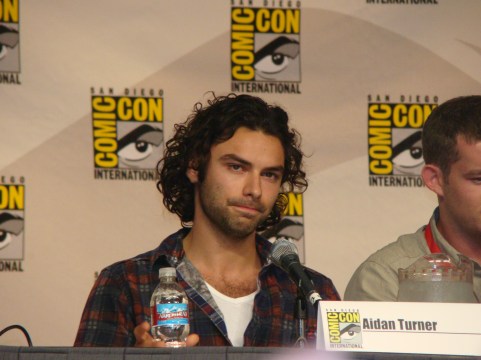
It also needs a skilful cast to strike the right tone and pace. Now I don’t think it will come as much of a surprise when I tell you that I was probably one of the few members of the audience who wasn’t there to gaze upon the undoubted charms of Aidan Turner as Padraic. Indeed, following a late substitution. the SO stood down to be replaced by LD. The LD has not yet been meaningfully exposed to the genius of Mr McDonagh, unlike the rest of the family, nor frankly is she a fan (yet) of that Poldark. But she can see the fella is gorgeous, I assured here it would make her laugh and the political context was right up her academic street. She thought it was brilliant. And that remember from a youth who is very suspicious of both Dad and the “theatre”.

She was right. This is a brilliant production. And that is due in no small part to the charisma of Aidan Turner. Mr Turner’s stage career has been hijacked by the TV roles and this is effectively his first major role outside of Dublin. He is very, very good, toning down Padraic’s sadism and dialling up his childish sentimentality, so I hope we don’t have to wait too long for his next outing. This is not just about him however. Denis Conway as Padraic’s father Donny, Chris Walley in his stage debut as the hapless Davey and Charlie Murphy as Davey’s sister, and budding “freedom-fighter” and Padriac’s soulmate, Mairead, are all mightily impressive. The set from Michael Grandage’s regular collaborator Christopher Oram is revealed to be an exact replica of the family cottage in every detail even as it is splattered with lashings of blood.


Imperium at the Gielgud Theatre review ****

cicero

Imperium I Conspirator and Imperium II Dictator

Gielgud Theatre, Royal Shakespeare Company, 18th July and 25th August 2018

I don’t read much. Don’t have the patience or the imagination. Much easier to get my kicks from the theatre, or from film, where other people can do all the hard work. Also suspect years of reading, writing and talking, to no great effect, in an office, for the greater good of neo-liberal capitalism, has shredded what grey matter I once had. Not like the SO. A voracious reader.

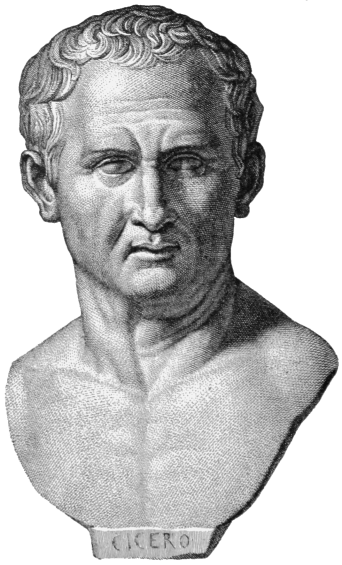
All of which means I have no view on the novelist Robert Harris. Never read anything he has written. Always had him down as a writer of pot-boiling political thrillers. Not even seen any of the film adaptions. On the strength of this majestic entertainment, an adaption of Mr Harris’s trilogy of novels about Cicero adapted by Mike Poulton, I think I might have missed a trick. It looks like Mr Harris’s books would be right up my street and he sounds like a terribly good bloke as well.

So next holiday reading now nailed down what about this RSC blockbuster? Apparently Mike Poulton had to be fairly judicious with what he took from the book, focussing on certain episodes in the maturity of the great orator’s life, but what he has conjured up, together with RSC AD Gregory Doran, is a fantastic slice of theatre. OK so there are times, as in some of Shakespeare’s weaker sections in the history plays, where the shuffling of characters on and off the stage, and the expository repeats, become a bit cumbersome, but generally Mr Poulton and Mr Doran have, through a variety of devices, ensured that, throughout the 7 hours or so of the two plays, we know exactly who is doing what to whom and, mostly, why. We also get an insight into the mind of one of history’s greatest thinkers, (or at least one of the greatest thinkers in a Western culture still in thrall to the Classical), and some universal lessons about the nature of politics and representation, and the symbiosis of word and deed in history, or at least the history of “great men”.

The plays also succeeds thanks to the casting of the two main protagonists. Richard McCabe is a thoroughly convincing Cicero, principled, courageous, sardonic, egocentric. Joseph Kloska as his secretary and our narrator Tiro, is equally impressive even if he has less to work with. There is more than a touch of the buddy movie about their central relationship. The audience is frequently dragged in to proceedings whether as the imagined Senate that Cicero and others address, the mob, or, breaking the wall, as conspirators in the events on stage. Not formally innovative but very satisfying in this kind of “one thing after another” history play. The political canvas, as we pass through Cicero’s election as Consul, his machinations with Catiline, Clodius, Julius Caesar, Mark Antony and, finally, Octavian (Augustus), all to protect the values of the Republic and, take note, the rule of law, is contrasted with the domestic, Cicero’s dysfunctional relationships with wife, family and proteges. If you know your Roman history and/or your Shakespeare, this is a delight. Even if you don’t the touch is so light that it is a breeze to follow.

The staging, against the steps leading up to a pair of giant. mosaic eyes, in Anthony Ward’s set, is as dramatic as it needs to be when serious stuff is playing out, but there is a thread of humour, largely milked by the two leads which prevents it turning into a slog. Sometimes the laughs, and the delivery, edges a little bit towards the Up Pompeii, but this is a good thing in my book, and much better than the alternative of ponderous epic. Composer Paul Englishby and sound designer Claire Windsor have very adroitly managed to plot a way through this tonal warp and weft, not easy to sustain over this length of time. The same is true for Mark Henderson’s lighting composition. Indeed the entire creative crew should be lauded for their studied concentration. It would be easy to let things slide, or for the pace to ease up, when you have this much to show, but, if at any point my concentration wavered, it was my fault not theirs.

With this size of undertaking, 44 named parts and more walk-ons and crowd scenes beyond that, and spanning four decades, most of the cast were doubled up across the two plays. In addition to Cicero and Tiro, Siobhan Redmond as Cicero’s put upon wife Terentia, Jade Croot as his unfortunate daughter Tullia and Paul Kemp as his bluff brother Quintus all stuck to one role, along with Peter de Jersey imperious, (no other adjective will do), Julius Caesar. When he came on all fake chummy to Cicero he captured exactly the air of a big man who knows he can’t be refused. Oliver Johnstone (after young Rufus in Part I) played Octavian with an air of even greater menace as he seized the opportunity given to him by his adoptive father Caesar Mk I. Joe Dixon seemed to relish the roles of, first, entitled aristo Catiline and then, a boozed up Mark Antony, as did Eloise Secker as the scheming Clodia and then Fulvia. This is, unfortunately, not a story with much to offer in the way of female roles, so it was a bit disconcerting, and unusual, to see so many white men on show. Still that was Rome, except that it wasn’t really.

Turning Cicero’s life, through the device of a biography written by his (originally) slave, mediated through millenia of scholarship, a writer of gripping fiction, and then on to the stage, was bound to throw up all sorts of questions about how we interpret the Ancients and how the “principles” they established still inform the world today, politics, democracy and drama, most prominently. Layer that into a fast moving biography, contemporary resonance, (for once not shoehorned in), and a history lesson, and you can see why the team here was pretty much on the case as soon as the ink had dried on the final part of Robert Harris’s trilogy, also entitled Dictator. History does not repeat itself, nor is there some deterministic arc to human progress, but two-bit, populistic tosspot geezers (always men) are ten a penny. Easy to spot, less easy to stop.

For all of you who get sniffy about the RSC and its contribution to the cultural fabric of this country, and, the world, I respectfully suggest you zip it. Here’s a great story, thrillingly told, neither too high or too low brow. Of course, as usual, by the time the Tourist gets round to seeing it and writing about it, it’s pretty much all over but I would hope this adaptation has an afterlife and I for one would love to see more “history” plays delivered in such confident, ambitious style. Like I say, if like me, you just don’t have the attention span to read a book or devote days to a box-set, then this is the thing for you. Proof positive that anyone who thinks theatre is a dreadful, long drawn out bore hasn’t tried and basically doesn’t know what they are talking about.