Destination Unknown film review *****

destunknown-poster300dpi

Destination Unknown, 15th June 2017

Destination Unknown is a very powerful documentary about the survivors of the WWII Holocaust.

Director Claire Ferguson has taken the testimony of thirteen Jewish survivors largely from Poland and carefully, but decisively, built up their powerful narratives before, during and after the Holocaust. The film shifts rapidly between each of the survivors and intercuts footage of the camps and of life inside the ghettos, as well as family snapshots from after the war. This means there is perhaps less of a focus on the straight to camera “talking-head” descriptive testimony that you might be familiar with from other similar documentaries. However with a powerful score in the background this does make for a tellingly more direct emotional response from the audience.

The anger of some of the victims, in particular the redoubtable Ed Mosberg, is palpable. Mr Mosberg, into his nineties, continues to tirelessly lecture audiences asking them “never to forget and never to forgive”. It is this that I found most affecting. A number of the interviewees survived the Krakow camp where the notorious Amon Guth was Commandant and whose inhumanity was documented in the book and film Schindler’s List.

I understand that some of the interviewees have passed away since they talked to producer Llion Roberts. These testimonies are vital. There are only a limited number of screenings but I am sure, in time, you will find an opportunity to see this film. You should.


The Levelling film review *****

levelling_03

The Levelling, 23rd May 2017

This is director Hope Dickson Leach’s full length film debut. In the screening I attended there was a short but illuminating interview with Ms Dickson Leach which discussed the difficulties female film-makers face in bringing their ideas to fruition. She gave up for a bit but came back. And she eventually managed to get financing for this film. Well all I can say it thank goodness she didn’t give up and thank goodness she got the money. This is a genuinely outstanding film. I can’t wait for her next outing – I’d be happy to give her a few quid if it helps

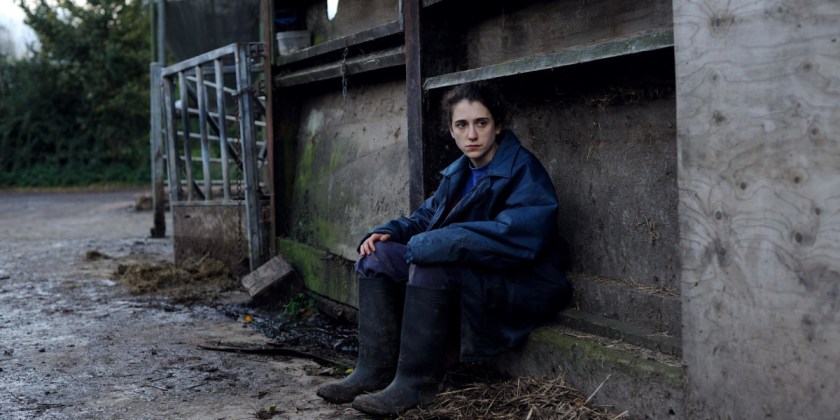
Clover, played by the astounding Ellie Kendrick who apparently is in that Game of Thrones frolic, is a veterinary science student, who returns to the family dairy farm on the Somerset Levels following the death of her brother Harry. Dad, Aubrey (David Troughton), it is fair to say, is somewhat emotionally stunted. The farm is a mess having never recovered from flooding and with no insurance bailout. Aubrey has abandoned the house to live in a caravan in the farmyard. He likes a drink. The two then fail to talk to each other in any meaningful way as the events that led up to Harry’s death are played out – not just the immediate past but over many years.

It is beautifully shot. This is not a conventionally attractive landscape. No attempt is made to leaven the atmosphere. The sun doesn’t shine at all. It rains quite a bit. There are however sone striking close ups of nature to remind us where we are. A farm is not a classic location for a British film I believe. We city types dominate the medium and the rural normally appears more arcadian that Hobbesian. The fragility of the existence and the temptation to take risks to secure economic viability is deftly portrayed. The sheer hard work of running the farm is not hidden.

Not much happens. Not that much is said. But the despair, disappointment, resentment and blame that the two central characters feel is remorselessly laid bare. You want to shake them to sort it out and swallow their pride. You know they can’t. The emotional intensity of the ending is shattering. All of this is accomplished with relatively sparse dialogue and there is loads of detail which remains ambiguous if not entirely elusive. What happened to Mum, why did Dad despise Harry, how exactly did Harry meet his end, what was the relationship between Harry and his best mate James (Jack Holden), who dreamt up the dubious plans to rescue the farm, will Clover stay and why? Don’t let me give the impression that this is in any way frustrating – it is what makes the story so utterly compelling.

The proper reviews have observed how this looks and feels like a horror film without the horror. It certainly begins in that vein. This is apt. Except, as those reviews have also generally observed, the unembellished horror of what has happened to this family is all too real.

If this all sounds more art house foreign auteurish that the Archers you’d be right. Ms Dickson Leach has herself cited the influence of the Dardenne brothers and Bruno Dumont (note to self: find out who these chaps are). Then again it is just so English – in the where certainly, but also in the who and the why.

I could go on and on. The mark of any great film, play, book, artwork is that it stays with in the days and years that follow its viewing. This slam-dunks that test. It will get under your skin. I doubt there will be a better female lead performance this year. Hope Dickson Leach is a mighty talent. And all this probably done for less than the bog paper bill for the cast of Pirates of the Caribbean: Just Serve Them Up Any Old Sh*t.

And this father – daughter relationship is throwing up some truly great films (Toni Erdmann, Graduation as well as this). Maybe there really is still some cinematic mileage in BD’s withering glances following my hilarious observations.

The Handmaiden film review ****

maxresdefault

The Handmaiden, 19th May 2017

I don’t read too much fiction these days. I prefer theatre, the visual arts and music. I have also found much of the contemporary fiction that I have read in the last few years a little underwhelming. I have a long list of classics I need to read but figure that will happen in the fullness of time.

There are however some contemporary authors that I do have a lot of time for. Sarah Waters is certainly one of those. Fingersmith, on which this film is based, is my favourite of her novels to date.

I am also pretty picky about the films I see – though I guess if it is a decently reviewed art-housey offering then it will make the cut, even if it doesn’t translate into an immediate viewing. There are also an eclectic handful of directors whose work I will try and see come what may: Mike Leigh, Terence Davies, Michael Haneke, Paul Thomas Anderson, Terence Malick and Martin Scorsese. No logic here. And this list also includes the director of the Handmaiden, Park Chan-wook, who is back to his Korean native film-making best after the English language Stoker. Oldboy is one of the best films of the last couple of decades in my view and the Vengeance trilogy isn’t half bad either.

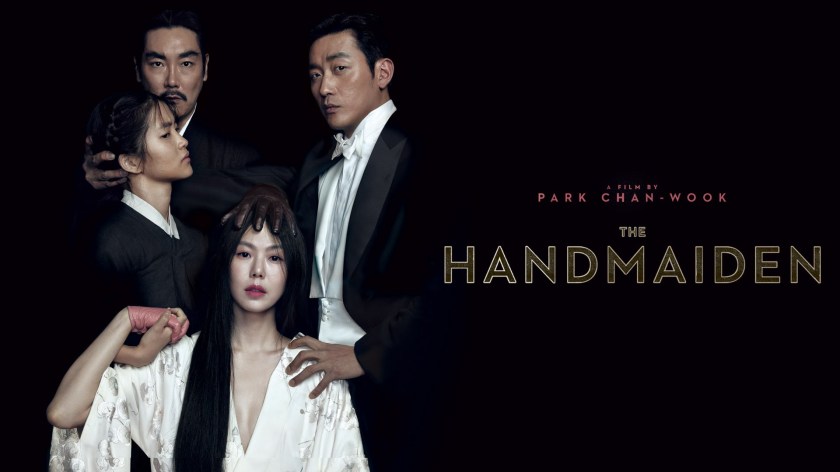
So finally I got to see this and blimey what a feast it is. If you don’t know the plot of Fingersmith I won’t spoil it but suffice to say you get proper switchback twists, not once but twice, which makes for a proper thriller. In this respect it goes well beyond the book to explore fresh perspectives of deceit and desire. Yet this plot is punctuated with a knowing humour which is just as well given some of the less than subtle symbolism that is on show. And this all revolves around a lesbian love story with no stinting on the eroticism. There is a fair smattering of mucky stuff as my dear aunt would have said. This is set against a backdrop of a Korea at the time of Japanese colonial rule in the 1930s just to add another layer of confection.

It looks extraordinary with the bulk of the action filmed in wide-screen and set in a house which combines a Western style gothic pile with a Japanese palace. And an interior which is full of all manner of surprises, kinky and otherwise. I am a terrible judge of what is appropriate or not when it comes to issues of the documentation of sexuality in art so I don’t know whether this is lascivious or empowering but it is convincing in its depiction of the main protagonists’ relationship and of the pornographic impulses that drive some of the characters (at one point there a number of fellas who are literally very hot under the collar- hilarious). Apparently Sarah Waters herself has given the film the thumbs up so I guess all is well.

So we have a playful, wry, suspense-filled thriller/whodunnit, dressed up as a very fruity Victorian costumed melodrama, dressed up as a yearning love story, which looks quite stunning. And that’s just for starters. What’s not to like. I have a feeling that for quite a few people pretty much everything. But if you think you might fall into the target audience don’t hesitate (though you might what to ask yourself what qualifies you to be the target).

And if you do accidentally walk into the wrong screen whilst looking for Guardians of the Galaxy Vol 2 I suspect you will realise your mistake well before the subtitles pop up.


Lady Macbeth film review ****

lady-macbeth-new-poster-1

Lady Macbeth, 3rd May 2017

So a bit of an aside first. Went to see that Sense of an Ending at the cinema but never got round to reviewing it. Bit pointless now as it has probably been and gone from all those arthouse cinemas where it might have got a look in. Anyway, an exemplary cast (jim Broadbent, Harriet Walter, Charlotte Rampling, Michele Dockery) showing all those Hollywood chumps how to act and a screenplay by the marvellous Nick Payne based on the Julian Barnes novel. It could not be more British-class-act if it tried. Loved it (in short the past comes back to haunt our lead – shades of 45 Years – another recent Brit-class-act) until the last few minutes. Now I know there is a clue in the title but I still felt deflated by the open ending. Anyway, if and when it hits Netflix, do the decent thing and watch this and not some idiotic blockbuster.

So off to the next Brit-class-act on general release in the theatrically sculpted form of Lady Macbeth. But this time I was accompanied by the expert eye of the SO who has just read Leskov’s novel Lady Macbeth of the Mtensk District on which this is based. I only know the story from the Shostakovich opera and had to quickly remind myself of plot and characters (despite having seen it as recently as Nov 15 at ENO). BTW I note this is going to be revived at the Royal Opera House in 2018, oooh how exciting is that.

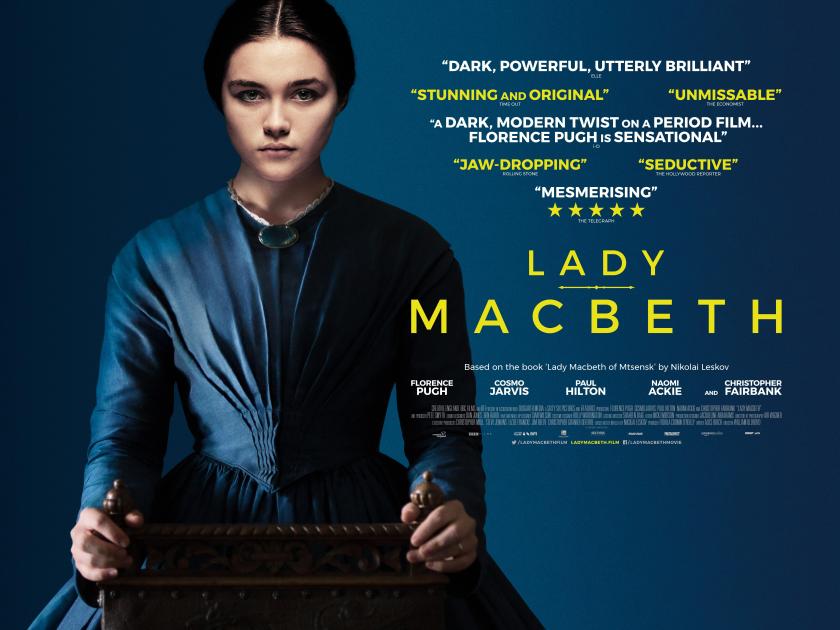
Anyway enough of pseuds corner. What happens here. Well bored, “bought” housewife, Katherine, with useless twat of a husband (played by Paul Hilton) and father in law (Christopher Fairbank with that face) has affair with farmhand. So far, so Madame B-Lady C. But then it all goes t*ts up. The screenplay here is by Alice Birch whose anatomy of a suicide (yes small letters) is about to be brought to the Royal Court stage, no doubt in some controversial way, by Katie Mitchell. It cuts most of the last third of book out which is a shame in some ways as there is plenty of plot, general nastiness and psychological insight to be gained there, but, on the other hand, it brings location (C19 NE of England) and its power relationships to the fore and swings us a little bit closer back to the original source of our (anti)-heroine here in Will Shakespeare’s Mrs Macbeth (“it is done” – wait for it). So play, book, opera, film, film – yep there was a film before this as well – mind you trapped woman who breaks all taboos has always fascinated the mostly blokes who wrote this stuff.

It certainly looks the part. Hard to believe this is William Oldroyd’s feature film debut. Muted Hammershoi (look him up) colours, sparsely furnished house interior, crappy weather, windswept moors, Bronte chic. Camera lingering on our Vermeer like leading lady, the outstanding  Florence Pugh (who I adored in Falling), who is the dictionary definition of stultified. And when she breaks out she is utterly convincing and the scenes with lover Sebastian, played by Cosmo Jarvis, are properly passionate. And he, and the maid Anna, superbly played by Naomi Ackie, bring another racial dimension to time, place and events. Very intelligent. Events then accelerate towards the chilling conclusion, with Pugh once again devastating as she goes properly bad.

So all in all a remarkable effort. No need to spend squillions on a film. Just take a classic story, get a stage writer of talent to rework it, a theatre director of insight to think it all through and an inspired cast to bring plot and characters to life, lights, camera, sound, action. Job done. Seek it out and if you don’t catch it on a big screen, then, when it eventually gets to the small screen, do not miss it.

 

Graduation – film review *****

bacalaureat-2

Graduation, 12th April 2017

I haven’t seen too many films at the cinema this year and have so far resisted the temptation to offer up an opinion on any of them, in large part because they had been and gone before I kicked off this blog. (For what it’s worth I was drawn into Silence but ultimately not satisfied, really enjoyed Manchester by the Se, especially Casey Affleck’s performance, was very annoyed by Jackie, just loved Toni Erdmann, admired Moonlight, was gripped by Elle, but this was largely because Isabelle Huppert was Isabelle Huppert, and think the passage of time might see Get Out start to grate on me).

However, Graduation is by some margin the best of them, indeed I would venture one of the most intelligent films I have seen in the past couple of years, (which marked a serious return to cinema going). I am no expert on things cinematic so had no knowledge of the Romanian director Cristian Mungiu, nor of his renowned compatriots who make up the cast.

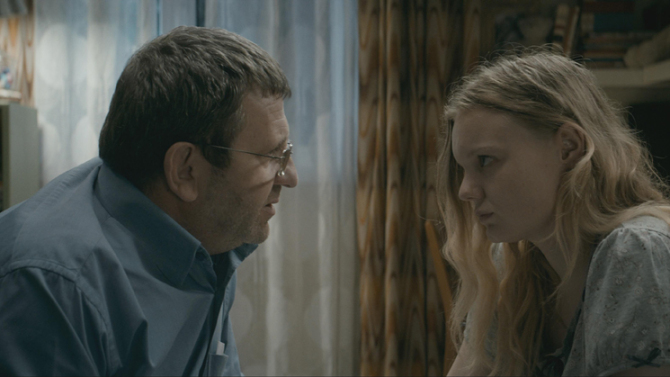
You can read the proper reviews to get the drift but it cleverly manages to be thoroughly absorbing, and gently stomach turning, as it lays bear the moral dilemmas its protagonists face and the shabby compromises that feel are required to resolve them. A proper tragedy then. Adrian Titieni is compelling as a surgeon who wants his daughter to secure a scholarship to go to Cambridge University to study psychology. His relationship with his apparently depressed wife however is falling apart and he is in a relationship with an ex-patient. The assault of his daughter acts as the catalyst for a string of backscratching negotiations and deceits in order ostensibly to ensure her future is not imperilled.

This allows Mungiu to explore the father’s ethical and moral limits and his unclear past, the disillusionment of a generation which returned to Romania post the fall of communism, the pressures to do the right thing in a society plagued by low-level, endemic corruption and the clash between parental love and a young adult’s right to self determination. The film is shot in a naturalistic way, though with some interesting perspectives, and the music of Handel is a persistent counterpoint. The characters are rapidly sketched but then deepen through the film and are utterly believable. The low key progression of events to an enigmatic conclusion,whilst all the while threatening a more dramatic twist, resembles the films of Michael Haneke, which is a massive compliment in my book.

Anyway, please try to see it if you have any interest at all in proper cinema. In fact if I had a favour to call in from you or a way of bribing you then that is exactly what I would ask you to do.