The Favourite film review *****

The Favourite, 3rd January 2019

The more theatre I see, the more I am turning into an insufferably superior luvvie. “A play will always trump a film because it is organic, dynamic, viewed from multiple perspectives, energised by audience complicity, palpable, alive, more daring in terms of form and structure” and much other such guff.

However sometimes I have to accept that the cinematic trumps the theatrical and that is definitely the case for The Favourite. For only a couple of years earlier, writer Helen Edmundson, director Natalie Abrahami, the massed ranks of RSC creatives and a cast led by Romola Garai and Emma Cunniffe served up Queen Anne, a play that, like The Favourite, dramatises the relationship between Anne, Sarah Churchill and interloper Abigail Hill. Except that the play offered a much broader sweep of history, Anne’s accession, the War of the Spanish Succession in Europe between the Grand Alliance and the Spanish and French Catholic monarchies, the rise of the Duke of Marlborough, Sarah’s husband, as well as Lord Godolphin and Anne’s political interventions. It also focusses on the birth of the free press in England at the turn of the C18 and, specifically, the spread of satirical publications. All this in addition to the personal troika.

In contrast The Favourite, whilst referencing the political manoeuvrings between protectionist Whig and free-trade Tory, and the impact of the growing tax burden to finance the war on landowners, is firmly focussed on the relationship between the three principal women. Mark Gatiss gets a look in as Marlborough (Winston Churchill’s ancestor) but not much opportunity to show off. Same goes for James Smith as Godolphin. Both were Tories but they became ever more reliant on Junto Whigs to finance the war.

(As an side I personally continue to sh*t myself about the long term, and increasingly short term, effect of debt on this country. As it happens public debt to GDP ballooned in the years after William III first went cap in hand to the City spivs with the idea of issuing Government bonds. At the peak of the War of Spanish Succession it approached 200%. War tends to do that. Anyway now good old Blighty runs at around 90%, not too far away from our major developed economy neighbours. But when you add in private debt it gets closer to 300% of GDP. There are a bunch of countries with “higher” levels but this reflects their tax friendly approach to issuers of corporate debt. Our debt is built on the backs of consumers.

So for those Brits who now purport to prize “sovereignty at any price” I would venture we are already in more of a pickle than all the Euro economies you take a pop at. But that is not all. Our current account deficit currently runs at 5% or so. Comparable with the likes of Turkey and Argentina. This has to be financed by foreign investors, “the kindness of strangers” as the Governor of the BoE would have it. Who knows what might happen in the next few weeks and months but if we balls this up, sterling depreciation, imported inflation, capital flight and sale of assets is guaranteed. And there may be f*ck all the BoE and Government can do to protect us. Forget about your ten quid for a visa, roaming charges, lorry queues or medicine stockpiling. That’ll be the least of your worries).

Oops I’ve done it again. Back to the script. So Anne, a natural Tory, became increasingly less enamoured of the Junto dominated government, especially when she fell out with Sarah, and the non-Junto Whigs started to break bread with the Tories led by Robert Harley. Cue the terrific Nicholas Hoult for it is he that plays Harley, sumptuously powdered and bewigged, but still brutally Machiavellian. He intrigues with the ambitious Abigail, eventually marrying her to his ally Masham (a virile Joe Alwyn), with the Queen’s approval. Harley wins the political battle, last straw for Sarah, but the Whigs win the battle after Anne’s death when the Hanoverian line is established, the Jacobites are defeated and the Whig supremacy is ushered in. The new money trounces the old.

Anyway I suspect that once the mercurial director Yorgos Lanthimos, in 2009, got his mitts on Deborah Davies’s original script, first written twenty odd years ago, it was always likely that the political context was going to be downplayed. Mr Lanthimos went on to garner deserved critical acclaim for Dogtooth (my favourite of his until, er, this Favourite), The Lobster and The Killing of a Sacred Deer. For those that don’t know, these are not your run of the mill Hollywood blockbusters. So, in many ways, The Favourite it surprisingly in its near naturalism. It is beautifully shot courtesy of cinematographer Robbie Ryan, the costumes (Sandy Powell) and set decoration (Alice Felton) are, as you might expect, exceptional and the locations, mostly Hatfield House, also Hampton Court Palace and the Bodleian’s Divinity School, are all stunners. The soundtrack, without exception, is divine, though amongst all the Purcell, Handel, Vivaldi and Back (WF as well as JS) make sure to listen out for Anna Meredith’s rasping contribution from her string quartet Songs for the M8.

So it looks and sounds wonderful. A period drama with a twist of Peter Greenaway’s Draughtsman Contract. But it is the relationship between the three women that is Mr Lanthimos’s concern and, with a little embellishment and ornamentation, he constructs a drama that the Tourist thinks sheds more light on the workings of power than any dry “historically accurate” portrayal could do. It is a drama, so “historical accuracy” for all the pedants out there is meaningless in this context, and, in any event, history is simply what is left and what is found, and it always changing. I suspect what really winds these punters up is the functional lesbian love triangle but, without that there would be no drama. The power games between the three women seem to echo, and directly, influence the power games between politicians and Crown and State.

Queen Anne, (we never see husband George who was an arse by all accounts), famously lost all 17 of her children and left no heir, hence the invitation to the Germans, 26 years after the invitation to the Dutch. Protestant royal kids eh, never there when you need them. This, unsurprisingly, leaves her sad, needy, physically incapacitated and isolated. Hence her bunnies. And her cake. She has a friend from childhood, Sarah Churchill, but these two chums are beyond dysfunctional. Having opened the door to her, she, Sarah, is in turn is manipulated by impecunious upstart cousin Abigail Hill, who then steps in to manipulate the Queen, literally and emotionally. Except that she, the Queen, whilst vulnerable is also capable of manipulating both, and ultimately pulls rank.

There are external scenes, in the palace gardens, on horseback, to Parliament, but most of the action takes place indoors and specifically in the Queen’s bedchamber and the corridor outside. Genius. Adds to the damaging intensity and claustrophobia of the relationships. As does the roving camera. And the predominantly wide-lens shots. The dialogue is dynamic and contemporary, the humour broad and often incongruous, the tone ambivalent. Your sympathies will constantly oscillate between the characters.

It is probably a comedy, but not one of those “dark” or “black” comedies where you don’t laugh. There are hints of Restoration romp and barbed bitch-fest a la Les Liaisons Dangereuses but then the idiom is right here, right now. It might be a tragedy but who is the heroine? Historical drama? But no-one normally speaks or moves like this in the bog-standard drama. The Madness of King George filtered through an absurdist lens. Maybe, but then it isn’t that absurd. Parallels with the arch Whit Stillman’s Love and Friendship, or the recent ITV Vanity Fair. Yes, but with more filth and camp. Could another director have taken the scrip and budget and churned out a more than passable film. For sure but it wouldn’t be half as much fun or half as original.

All of this reflects Yorgos Lanthimos’s off-kilter, deadpan style but it was never going to work without the three leads stepping up and, crikey, they do. In any other filmic context Emma Stone’s opportunist Abigail would take your breath away. Then along comes Rachel Weisz’s cruel to be kind, then to be cruel, and then back again, Sarah. And then, in probably the least surprising acting triumph of all time, Olivia Colman comes along and chews them up with her Queen Anne. The way all three bring out the conflicts implicit, and explicit, in their relationships is, frankly delicious, but OC takes it to another level.

I have already intimated that IHMO the present shower of Parliamentary sh*te might as well be dissolved to be replaced by a matriarchy comprised of acting Dames. Judi Dench as PM, Maggie Smith as Chancellor, Helen Mirren as Foreign Secretary, Eileen Atkins as Home Secretary, Joan Plowright as Education Secretary, Patricia Routledge at Health, Harriet Walter Justice, Kristin Scott Thomas International Development, Julie Walters Work and Pensions. You get the idea.

Culture Secretary I hear you cry. Easy. Sarah Caroline Olivia Colman. Only a matter of time before she is be-Damed. And surely she could cheer us all up. Telly, film or, too rare, on stage (she was close enough to touch in Mosquitoes), how she manages to get so deep into the emotional core of the characters she has played, even in relatively “lightweight” roles, is astounding. Anyway she now seems to have cornered the market in screen Queens, as it were, and here she is simply magnificent. Whether vomiting up blue cheese, petulantly cutting short a recital, stroking her rabbits (no euphemism), freezing in Parliament, linguistically weaponising cunnilingus (yep that’s what I meant), weeping for her lost child, ecstatically responding to Abigail’s poultice (again no euphemism) or bullying some poor footman, she always convinces, even as we snigger.

I see The Favourite, and Olivia Colman, Emma Stone and Rachel Weisz, are all over t’internet as Oscar candidates. I haven’t seen many of the other films habitually mentioned bar Blackkklansman and Black Panther (note to self: get on to that Roma caper asap). I doubt they will get far. But just maybe Olivia Colman can do the business and the whole world can see how perfect she is. That would be nice.

Switzerland at the Ambassadors Theatre review **

Switzerland

Ambassador’s Theatre, 16th November 2018

A couple of weeks prior to Switzerland the Tourist took in another play by Joanna Murray-Smith, Honour, at the Park Theatre. A very fine cast and a sharp enough dissection of a marriage broken by the cliche of the husband leaving for a younger woman, but alarmingly contrived, and borderline pretentious.

Still Switzerland has a sound reputation and the reviews for this Theatre Royal Bath production were pretty strong. And the SO is a massive fan of the talented Tom Ripley, especially in Anthony Minghella’s cinematic version (as opposed to Rene Clement’s earlier Plein Soleil). So a play which pitched the famously cantankerous Patricia Highsmith, author most famously of the Ripley novels, holed up in the mountains, and a fresh-faced flunkey from her American publisher, looked to be right up our strasse. It wasn’t difficult to guess that the young man would likely take on the attributes of Ms Highsmith’s sophisticated sociopath but even so we were intrigued by the premise.

Metaphysical conflation of an author and their most famous creation may not be entirely original but it should be the entry point into an illuminating and powerful drama. Switzerland started off well enough. William Dudley’s set delivered the lofty interior of a Swiss chalet, complete with distant mountain views and Ms Highsmith’s alarming antique armoury on the walls. The lighting of Chris Davey and sound of Mick Pool both got with the thriller project. A hint of Sleuth and especially Deathtrap, pervaded the stage, and, as it happens, the plot. (BTW both of these are better plays/films – in the case of Sleuth in either cinematic version). Phyllis Logan as Patricia Highsmith certainly looked and sounded the part: a lifetime of booze, fags and isolation leaving her character hoarse and suspicious. Callum Findlay, as the visitor Edward, had enough of the wide-eyed, naif superfan to persuade us that she would have let him stay. There’s a bit of a gear crunch as the irascible Highsmith is then persuaded by Edward to drum up a new Ripley plot, but so be it. 

However, slowly but surely the suspense then starts to drain out of the Ms Murray-Smith’s text. She piles up the biographical details of PH’s ghastly childhood (let’s just say she and her Mummy didn’t get on), adult misanthropy and overt racism, alcoholism, depression, illness, sexuality. Maybe she was insecure and damaged, particularly by the way her talent was dismissed because of the “genre” she chose to work in, and behaved this way for effect, or maybe she was just a nasty piece of work. The play doesn’t delve too deep. The attempt to turn Edward into a vision of Tom with a dapper pressed suit (out of a rucksack no less) and a whisky tumbler in hand is unconvincing. Tom Ripley is undoubtedly one of the C20’s greatest existential (anti-) heroes, up there with Mersault, Antoine Roquentin, Raskolnikov, Patrick Bateman, Rick Deckard, Port Moresby, Gregor Samsa and those two tramps. He is well-mannered, cultured, intelligent but also a narcissistic serial killer, a con-man whose sexuality is unresolved. He literally gets away with murder. What’s not to like? That is the whole point. We can’t help liking him. 

There is not enough opportunity for Calum Findlay to get anywhere close to Ripley though. After a while it begins to feel that all we are getting is Patricia Highsmith’s Wiki page and some quick notes from the 1999 film. I was hoping for and expecting some shift in the direction of the play, not a twist as such, but some leap that took the story beyond prosopography (yep it is a word, look it up, I am trying to find the moment when I can drop it into a casual conversation). It never came. The alter-ego theory was laid out but never explored. So I ended up underwhelmed as did the SO, for broadly similar reasons. For a play about a writer whose books are artfully dramatic this seemed a shame. 

This was even more of a surprise given director Lucy Bailey’s recent pedigree. She directed the two very recent successful Agatha Christie adaptations, Lover From A Stranger and Witness For The Prosecution. The Tourist hasn’t seen either (yet) but, being a high falutin’ sort of fellow he did see Cave, Tansy Davies’s latest opera at the Printworks, which she directed and which was terrific (if you like that sort of thing – which I do). She also has a string of feted RSC Shakespeare to her credit.

So it is, with regret as Sir Alan would have it, that I have to report that Switzerland was a disappointment as a play if not in its execution. In contrast to its predecessor here at the charmingly intimate Ambassadors, Foxfinder which was a fine play let down by the realisation of the revival. 

The Madness of George III at the Nottingham Playhouse review *****

The Madness of George III

Nottingham Playhouse, 13th November 2018

Flushed with success from his visit to Manchester the Tourist hopped on a train across the Peak District to the proud city of Sheffield, (where I see the Theatres will be staging a Rutherford and Sons next year ahead of a version at the NT, and will then attempt to stage The Life of Pi, which should be interesting), and then on to Nottingham.

An interesting exhibition at Nottingham Contemporary – Feminisms, Gender, Resistance – but the main aim of the visit was the Playhouse and The Madness of George III. Now I booked this on the assumption, as with the Death of a Salesman at the Royal Exchange, that this was as near to a sure-fire winner as it was possible to get in theatrical terms. Alan Bennett at his witty best, but armed here with a riveting biographical story, directed by the ebullient new(ish) Artistic Director at the Playhouse, Adam Penford, and with Mark Gatiss in the lead, and Adrian Scarborough as Dr Willis, in a uniformly excellent cast. 

And sure-fire winner it turned out to be. Apparently it has become the biggest box-office hit in the Playhouse’s history. It was screened to millions (I may be exaggerating here) via the NT Live cinema programme and ensured a bunch of critics left their London mansions to deliver a slew of 4* and 5* reviews. The audience on the evening the Tourist attended plainly loved, explicit in the congratulations during the after-show discussions.

I saw the original NT production with Nigel Hawthorne as George back in 1991, the Apollo Theatre revival a few years ago with David Haig at his actorly best, and have seen the film version a fair few times. So you can probably tell I am a bit of a fan. I will assume that, since you are one of the very select band reading this, that you are too, so won’t bore you with plot or historical details. If you don’t I suggest you see the film tout suite. 

So what was so good about this production? Well first off Adam Penford has cut out a handful of scenes. AB’s play is already, like most of his work, structured as a series of very short scenes in multiple locations. This guarantees momentum but, allied with AB’s constant urge not to leave a potential quip on the table (which is why it is a comedy after all), can mean the characters, other than the King, come across as a bit thinly sketched. Cutting scenes out might seem counter-intuitive but it does actually mean we become more focussed on the “tragedy” of the King’s breakdown, and then the jubilation of his apparent recovery. I was also more aware here of the King’s relationship with his retinue. The political machinations, Whig vs Tory, the plotting of the Prince Regent and his faction, took a bit more of a back seat.

George III’s 59 year rule saw not just the Regency crisis, but the “loss” of American, the union of GB and Ireland, wars in Europe and throughout the burgeoning Empire, rivalry with France, the Agricultural Revolution and the accumulation of capital to fuel the Industrial Revolution, a new way to finance the monarchy, constitutional change and scientific advances (which George was keenly interested in when he was on top form). Whilst AB’s play only incidentally touches many of these profound changes it does brilliantly capture the dichotomy between the public and private life of the monarchy and the metaphor of the King’s breakdown mirroring the political struggle catalysed by the American War of Independence. 

The dynamism of the production was also very well served by Robert Jones’s ingenious set. The various locations were smartly rendered with a series of Georgian style duck-egg painted flats, on stage and suspended, which were moved into place with no interruption to the action at all. Richard Howell’s lighting design, Tom Gibbons’ sound and Lizzi Gee’s movement, as well as some blisteringly quick costume changes, all further contributed to the pace and period feel of the production (most memorably at the end of the first half). A theatre set to point up the theatricality which underpins royalty. 

However, and perhaps unsurprisingly, it was the performance of Mark Gatiss that really made the difference. Adrian Scarborough’s Dr Willis, alarmingly forthright in his proto-psychiatric treatment of the King, (pointing up that he was just a man), in the second half, Debra Gillett’s devoted Queen Charlotte, Louise Jameson’s callous Dr Warren, Nicholas Bishop’s morose Pitt, Amanda Hadingue’s presumptuous Fox and Will Scolding’s nincompoop Prince Regent all caught the eye, but all eyes were on Mr Gatiss. As you might expect the comedy flowed easy for him: but better still was the way he caught the pathos of the king as he was plunged into a mania which he could not control but which he understood. “I am not going out of my mind, my mind is going out of me”. The production also doesn’t hold back from showing the physical pain that was inflicted on him by doctors who didn’t have a clue what they were doing. Mr Gattis’s detailing of the King’s speech, tics, convulsions and agonies is mesmerising. Adam Penford was keen to offer a more sympathetic, and contemporary reading, of the King’s mental illness and to avoid seeing his behaviour solely through the lens of humour. Thanks to Mark Gattis’s performance he certainly succeeded. 

History play, political drama, comedy. tragedy? This production makes the case for all of these in a forthright way. Thank you Nottingham Playhouse. I’ll be back. 

Peterloo film review ****

peterloo_carlile

Peterloo, 2nd November 2018

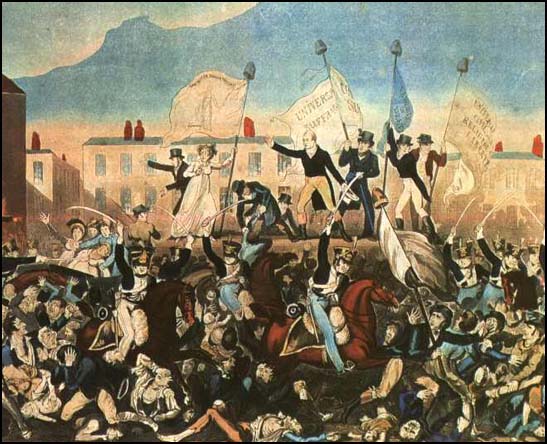
I doubt that there has ever been a more carefully researched, painstakingly assembled or more vividly imagined “history” film than Peterloo. If you like Mike Leigh (I do) you are going to love this. If you like British social, economic and political history (I do) you are going to be very interested in this. If you are concerned about the brutality with which power can crush the legitimate appeals of the ordinary person, (you should be wherever you sit in the system), this is going to stir you. If you understand the power of oratory, (words are what turn ideas into action), then this is going to draw you in. If you like the cast, Rory Kinnear, Maxine Peake, Pearce Quigley, Karl Johnson, Nico Mirallegro, Tim McInnerney, and especially Neil Bell and David Bamber, all stood out for me, but honestly this is a massive assemble of British acting at its best, then you will relish this.

However if you are after a satisfying personal drama, or complex plotting, then you might want to look elsewhere. Which given that this is a film that documents one of the darkest days in British history shouldn’t come as too much of a surprise. (Mind you this wasn’t the only massacre of peaceful protestors in the first half of the C19, more followed in the 1830s, notably in Wales). There is a lot of talking, at the meetings called by the various political radicals and reformers in and around Manchester in 1819, between the founders of the Manchester Guardian and the firebrand liberal orator Henry Hunt who was invited to address the rally in St Peter’s Field, within the family of Joseph (the real life John Lees) which is the emotional centre of the film, between the moreorless vicious magistrates who look to Government to break the sedition and between the Home Secretary and the lackeys who do his business. In this way Mike Leigh shows us why the people of Manchester and their leaders sought reform, of representation, of taxation, of the punitive Corn Laws, and why the authorities became so fearful, and were so consumed with the threat that the radicals posed, that they wilfully sanctioned a cavalry charge by volatile yeomanry and troops into the innocent crowd of 100,000 crammed into a square with minimal exits.. It is also what ensures the universal relevance of the film and the events it portrays. The power of rhetoric and the paranoia of the State are constants in the human condition.

This final scene is as awful as you might imagine but Mr Leigh doesn’t overdo the sound and fury and cleverly links the massacre back t the field at Waterloo which opens the film and which gave the events their sobriquet. As so often with Mr Leigh the film is assembled from linked montages though here many of the scenes are splendidly expansive. The interiors especially, of the powerful and the dispossessed, of Parliament, magistrates houses, pubs, meeting houses, parlours, mills, are richly detailed. The moors around Manchester offer a wild, lyrical contrast to urban industry. I think I saw parts of Lincoln standing in for historic Manchester and, of course, Chatham Dockyard, the period film’s spiritual homeland.

This was the time when “entrepreneurial” capital was looking to the State to underpin its privilege at the expense of labour, the very struggle Engels was to highlight three decades later, when, despite apparent reforms, conditions for the working class had only got worse. Peterloo may have fired up the press in London and no doubt fuelled legislative change but, as the film shows, didn’t cause the mill-owners of Manchester to question their consciences.

Any other director, without the freedom that Mr Leigh has secured, (say thanks to all the producer money here, especially Amazon), would have been forced to compromise. There are one or two occasions when, maybe, just maybe, he might had left some of cinematographer Dick Pope’s stunning assemblies on the cutting room floor, but if he had then he wouldn’t be Mike Leigh and we wouldn’t have this film. And he has ben able to spend his handsome budget to create a film of incredible ambition. In addition to Mr Pope, I would also call out the work of costume designer Jacqueline Durran and her team, the set decoration of Charlotte Watts, composer Garry Yershon’s score and finally, and I might contend most importantly, historian Jacqueline Riding.

If you don’t see it at the cinema make sure to see it at home one day. It is “serious” and it is “important”, so clear the mental decks beforehand but it is richly rewarding and, shot through with humour, it is as entertaining as didactic gets.


Touching the Void at Bristol Old Vic review *****

siula_grande

Touching the Void

Bristol Old Vic, 22nd September 2018

The Tourist had a terrific visit to Bristol recently. Shakespeare at the Tobacco Factory’s marvellous Henry V (Henry V at the Tobacco Factory Bristol review *****), the Georgian House, another fine cathedral ticked off, an accidental preview of the refurbished space at the Old Vic and then this, a reminder of just how powerful theatre can be when filtered through the imaginations of first, its creators, and then second, us the audience.

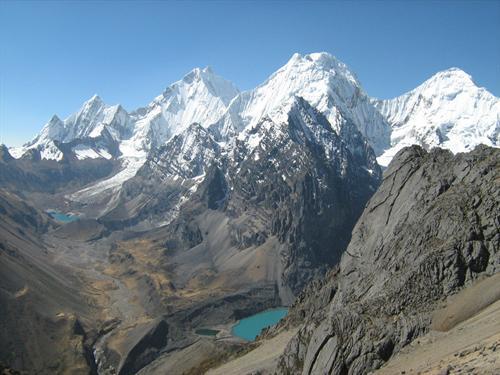
Mind you mountaineer Joe Simpson’s extraordinary, mythic, true-life story of survival after being left for dead on Suila Grande in the Peruvian Andes by his climbing parter Simon Yates could hardly be more dramatic. You may well know it from Mr Simpson’s own mesmerising account in his 1988 book, Touching the Void, or from the feted docudrama from 2003 directed by Kevin MacDonald, with Brendan Mackey, Nicholas Aaron and Ollie Ryall. I also recall a separate TV documentary but I may be getting confused. If you don’t know the story I am not about reveal details here: that would be vexatious. Whilst the Old Vic run is over the production will tour to the joint producing houses of the Royal and Derngate Northampton and Royal Lyceum Edinburgh, and then on to Hong Kong, Perth and Inverness. I would be stunned if it doesn’t get further run-outs thereafter.

For this is brilliant theatre. I can see why some might of thought it a bit nuts to stage it, not only because of the prior, superb treatments, but also because of its subject. How to bring the mountain to the Old Vic deep proscenium? This is after all the oldest continually operating theatre in the English speaking world built in 1764. The Theatre Royal auditorium interior is a thing of beauty in paint and wood, matched only by the Theatre des Bouffes de Nord in Paris IMHO. The new public space based on my quick peek is only going to add to its architectural wonder.

So what have Tom Morris, the AD of BOV and director here, and designer Ti Green, opted to show us here? Well a few tables, chairs and a sign to symbolise a pub in Scotland and a bar in Switzerland. And an immense rotating metal frame, a skein filled with opaque white paper which gradually gets perforated. All of which turn into mountain ranges. Not literally. Don’t be silly. But add in climbing gear, tents, a video backdrop, superb lighting and composition/sound courtesy of Chris Davey and Jon Nicholls and, I swear, we are transported. It is one of the best realisations I have ever seen in a theatre.

However, even with craft of this imagination, that would still not be enough. Which is where the writer David Greig, the AD of the Royal Lyceum, adds his genius. Mr Greig’s original work for Traverse, NT Scotland and Paines Plough is testament to his skill but his adaptions may just be even better. I can vouch for The Suppliant Women which came to the Young Vic last year (The Suppliant Women at the Young Vic review ****), Creditors, Tintin in Tibet, and trustees who rate his contributions to Charlie and the Chocolate Factory. It is not just the ability to think through how the story can be converted into this thrilling visual spectacle, to show us where and how this happened, but also how to recast the main characters to offer us a insight into why this happened. This is after all a first person narrative where the main character is largely alone.

David Greig’s masterstroke is to incorporate Joe Simpson’s older sister, Sarah, into the narrative. (Sarah is a constant, goading presence in Joe Simpson’s autobiography The Game of Ghosts. Poignantly she died a couple of years ago.). At the outset she is angry at what seems to be Joe’s pointless sacrifice, we rewind to see her meeting Simon with Joe and being bitten herself by the climbing bug. And it is Sarah who is cajoling Joe, the spirit in his fractured mind, during the darkest hours of his escape. Monologue is turned into internal, and then here, external dialogue Add to this the contrast offered by the wry commentary from Richard, the hippyish Geordie who is recruited early on to man the base camp during the “alpine style” assault on Suila Grande.

Patrick McNamee, maybe because of, rather than in spite of, a couple of musical interludes and some remarkably insensitive dialogue, I guess this was Richard, is on top form and Fiona Hampton as the fierce, bolshie, brother-loving, Sarah is outstanding. Edward Hayter has to be more subtle to capture the more taciturn Simon, especially when he is forced to make his momentous decision and the anguish which follows. This role is a huge ask physically, though it pales a little beside that of Josh Williams as Joe. I don’t recall having seen an actor have to commit so much energy to a performance. Hanging off ropes, hopping across rocks, flying down an icy slope. Frostbitten, dehydrated, hypothermic, He really looked like he was knackered and in agony, partly I reckon because he probably was! On top of this he also has to convey the mental agonies that Joe faced in his ordeal as well as offering us, like Edward Hayter’s Simon, some idea of what drives these seemingly unremarkable blokes to take on such challenges. These fellas it seems have a rather different, more direct and maybe more rational, take on risk than the likes of you or I it seems.

So we have humour, suspense, tension, horror, exposition, explanation, psychological insight, metaphor, tricks of perspective and memory, energy, physicality, music (Boney M can be a motivator), Blimey it even feels really cold and dark at times. And if you have ever wondered what a movement director gets paid for, Sasha Milavic Davies (as in the Suppliant Women mentioned above) shows you, and then some.

This is theatre at its inventive best. It gets to the heart of the “what would I have done” question. I do hope many more people get to see it. If you are one of the lucky people close by to the theatres mentioned above do not hesitate and drag as many of your friends along as you can. I guarantee they will not be disappointed. It is hard to think of anything more gripping than a story of someone who “comes back from the dead”. To provoke our imagination into being there with him by using his imagination to create some-one being there with him is just exceptional.

Blackkklansman film review ****

3508865199_c3c5f53dbb_o

Blackkklansman, 30th August 2018

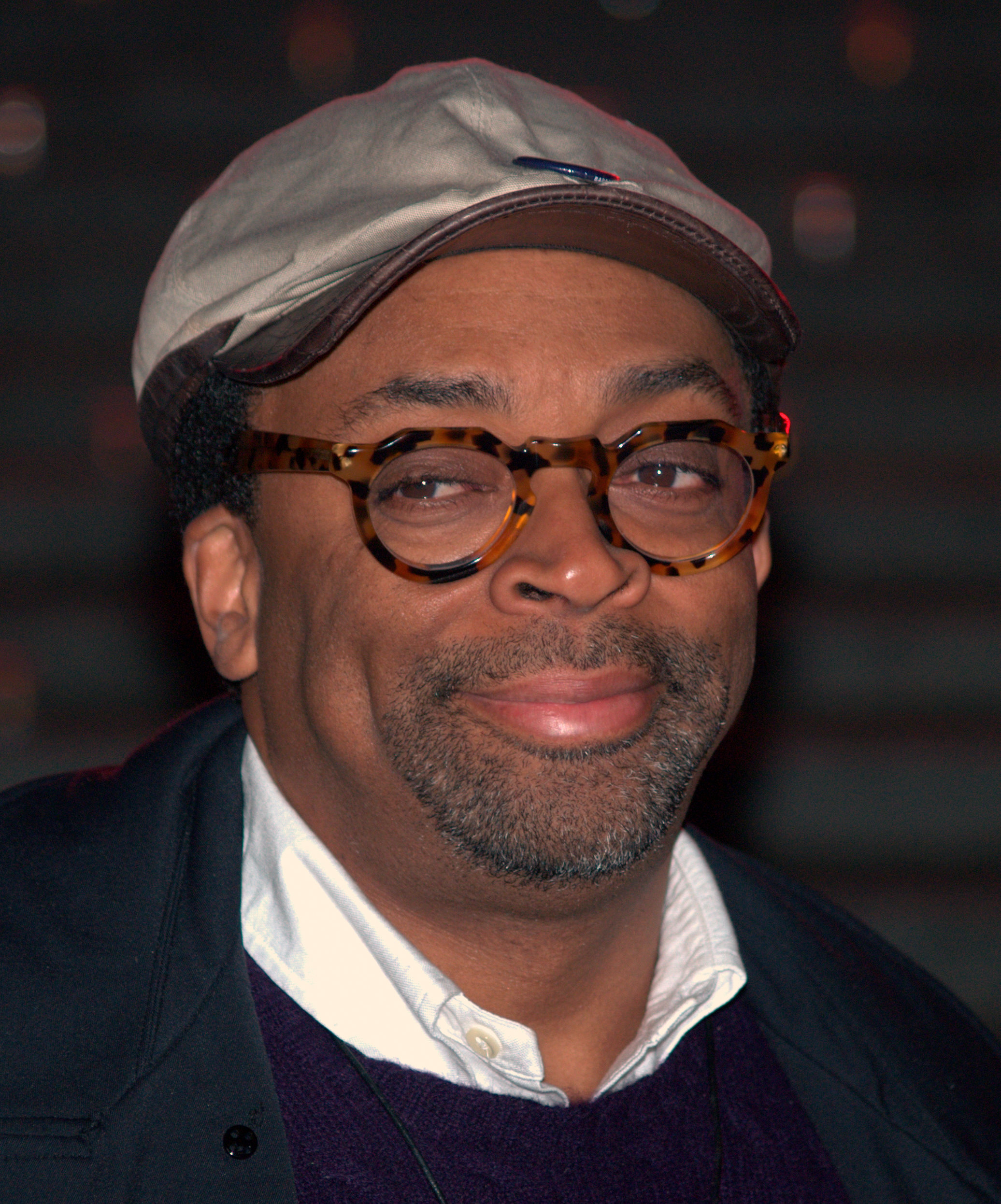
Spike Lee is 61 years old. This photo is a few years old but there is still a twinkle in his eye if you ask me. That twinkle, the eye for mischief, has been in his films from the start. Now I can’t pretend that I have followed his career, after the initial breakthrough in the mid 1980s with She’s Gotta Have It, Do The Right Thing and Malcolm X, but every time I have seen one of his films I have been thoroughly entertained, educated and provoked and made a mental note to see more of his work and revisit the early films. I have failed in this.

However I thoroughly enjoyed Chi-Raq a couple of years ago, with its more than a passing nod to Lysistrata, though the remake of Park Chan-wook’s Oldboy was disappointing, and can add to the acclaim for Blackkklansmen. It is, to its core, a Spike Lee film, the examination of race in the US and the African American experience, the humour, the exaggerated characters, the mixing of fact and fiction, the incorporation of documentary footage, the title sequences, the slick technique, the music, the dolly shots, all in the service of a captivating and extraordinary true-ish story of a black cop in 1970s Colorado Springs who, with the help of a white colleague, penetrates the Ku Klax Klan as they plan a terrorist atrocity.

Mr Lee is a proselytising political film-maker who can, at his best, appear not to be. (I am not talking here about his specifically documentary films such as 4 Little Girls and When the Levees Broke). Political films can, perforce, be a dour watch. Especially if they are about the “business’ of politics, political history, made by directors with an avowedly political agenda or focus on big, global issues, the stuff of international relations. Getting bums on seats with this sort of stuff is not easy. Me Lee here though has managed to incorporate the elements of a thriller, the one sure-fire way to secure an audience for the political, with elements of personal and identity politics in the relationships between the key male characters and the main protagonist, Ron Stallworth, and impassioned student activist girlfriend, Patrice. Best of all the satirical mocking of the KKK and its leader David Duke repeatedly hits the target without diminishing the ugliness of their hate. Remember the criminal fascist Duke is still peddling his sh*te and people are still being emboldened by it.

The period setting is superbly realised. The cast is outstanding. John David Washington’s bone-dry Ron is confident enough to face down face down racist colleagues after joining the force and to persuade boss Chief Bridges (Robert John Burke) to back his plan to infiltrate the KKK. The ever laconic Adam Driver is the perfect foil as Flip Zimmerman, who is sent in undercover to join the KKK cell. We see the political horizons of both expand; Ron after he is sent to monitor a Black rally at the local university, (where Corey Hawkins plays Kwame Ture in a stunning scene), where he meets Laura Harrier’s Patrice, and Flip, as the Jewish heritage he had abandoned is unmasked by the KKK and, specifically, the comically evil Walter (Ryan Eggold). Topher Grace is the spitting image of the young David Duke and brilliantly captures the rhetorical articulacy allied to an idiotic world view. There are some fine cameos on show  from Paul Walter Hauser, following on from his scene stealing performance in I Tonya, from Finnish actor Jaasper Paakkonen as Felix Kendrickson, the leader of the local Klan cell, and from Ashlie Atkinson as his wife Connie, who spews out shocking unthinking vitriol but still ends up as an unwitting victim.

Scene after scene hits home and somehow Spike Lee knits effortlessly knits this all together. Harry Belafonte is immensely moving as Jerome Turner in a scene where he describes the violence meted out to African-Americans in past generations. The Klan meting which ends in a screening of the outrageous DW Griffith’s film Birth of a Nation is properly shocking as is Alec Baldwin playing white supremacist Dr Kennebrew Beauregard. The ending is proper edge of the seat stuff. As if that wasn’t enough Lee leaves us with actual news footage from the Charlottesville rally in 2017. No equivocation here in contrast to some in the US. You will leave the cinema with no doubt what is right and what is wrong.

Blackkklansmen won a price at the Cannes Film Festival. I regret I am not up on these sort of things and have no idea what it was up against, but I am sure the jury here got it right. Mr Lee has packed so much into this film, plot, character, message, tone, spectacle, and the just over 2 hours flies by. Unmissable.

Zama film review ****

formosa_argentina

Zama, 22nd June 2018

Now here is a work of imagination. Just what film is for. I suspect its languorous pace might not be to everyone’s taste but it delicately captures the sense of isolation and ennui that its hero, the eponymous Diego de Zama finds himself trapped in.

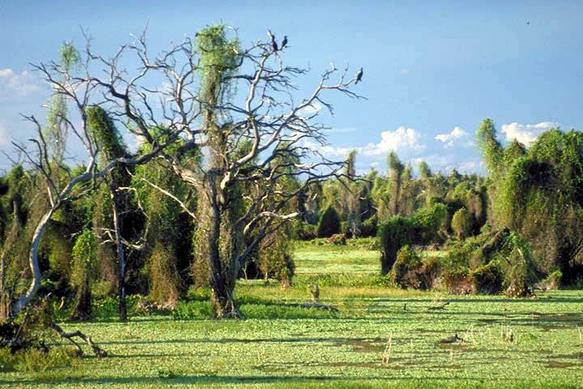
We are in Asuncion on the Paraguay River in the C18. Zama has been scantily rewarded with a position as a government magistrate in the service of the Spanish Empire after his exploits in battle, an americano born in present day Argentina, desperate to return to his family in Buenos Aries after many years away. His oft-promised transfer requires the imprimatur of the ministry in Madrid and that requires a letter from the Governor. Meanwhile Zama has to just get on with the unlovely business of life in a colonial outpost, flirting with the wives of the ruling elite, avoiding the temptations of the local prostitutes and drowning his sorrows in drink. Daniel Jimenez Cacho brings a palpable sexual frustration to Zama, alongside the barrenness of his emotional and intellectual landscape. You sense his despair at the hand that fate has dealt him and his own shame at the man he has become. The film opens with him spying on some indigenous women bathing in mud on the banks of the river. Not a good look.

The setting is magnificent. Interiors and exteriors look and feel totally authentic. Nature intrudes. The heat is oppressive. Cholera is endemic. Domesticated animals wander in and out of buildings. The colonisers and colonised are entwined. Indeed it turns out that Zama himself has a child with a local woman. The colonisers don’t have much to do here at the end of the world. Zama has a few cases to deal with, one of which exposes the ugly racism embedded in his office, and precipitates a scrap with his Spanish subordinate, who, much to Zama’s chagrin is “punished” by being sent away. A new, even less sympathetic Governor, replaces the incumbent when he returns to Spain and he takes over Zama’s quarters forcing him into a decrepit shack on the outskirts of the outpost. Early on Zama steps in, unconvincingly, to protect the honour of the local inn-keeper’s daughters, later on he fails to have an affair with the Governor’s wife.

Eventually Zama, deciding he has nothing to lose, throughs his lot in with a bunch of Quixotic bounty hunters who are tasked with tracking down a local bandit named Vicuna Porta, who may or may not exist. This, you won’t be surprised to learn, doesn’t end well.

Now if I was a betting man I would say that Zama is a walking metaphor for colonial guilt. He exists in a perpetual state of paralysed reverie. Someone is needed to represent the “civilising” force even as it becomes progressively less “civilised”, only able to bring “order” through terror and moving on once the economic exploitation is complete. Everyone on the ground is trapped in the hierarchical bureaucracy.

Familiar territory in some ways, novelists Achebe, Conrad, Forster, Orwell, Naipaul, Rushdie, even Kipling in his ham-fisted way, have been there, with film-makers like Coppola, Denis and Herzog following, and Fanon, Said, Rodney, and countless other academics, have examined the corrosive effects on coloniser and colonised and the profound impact on our world today. Indeed Zama itself is based on the 1956 novel of the same name by Antonio di Benedetto, who was tortured and imprisoned by the junta in 1970s Argentina.

Argentinian director Lucrecia Martell  has served up a very worthy addition to this canon. This is her first feature for 10 years which probably explains why I had not heard of her but I will hunt out her previous films. Apparently some people think she went on a trip up the Amazon, Kurtz like, during her hiatus. If so she has put it to good effect in the visual language of Zama.

If you are of a patient disposition, keen on stories that might stretch you a little further than usual in terms of space and time, and enjoy cinema for how it looks as well as where it goes, then I recommend you give this a viewing if, and when, it pops up on your chosen streaming service. I was reminded of the films of Terence Malick as I watched it, which is mostly, though not exclusively, a good thing.


Beast film review *****

jersey-1707238_1920

Beast, 14th June 2018

I can be pretty certain I am going to thoroughly enjoy a film in a cinema. I can go when pretty much no-one else is there, to a showing near the end of a run, which satisfies my misanthropy and intolerance of distraction, and I can rely on the combination of known critics, cast and directors, to near guarantee success. And, unlike the theatre or a concert, the very “static’ nature of film, there is only one possible performance, further pre-empts disappointment.

The only real question then is just how good is the film going to be and is it in with a chance of entering my mental best ever lists. Beast is superb and most definitely does. Any concerns that I had that this might drift a little too far into genre territory plot-wise were entirely unfounded. In fact it effortlessly slips and slides between genres to promote a satisfying sense of discomfort, if that makes sense.

This is director Michael Pearce’s feature film debut. He is plainly an immense talent and it is no wonder this got financed. Gripping story, superb performances, beautifully shot and a clear, but not simplistic message, about the impact of “outsiders” on a “settled” community. Above all though it has bucket-loads of utterly believable suspense. A genuine thriller but without daft McGuffins or false motivations. If you are a scion of the ubiquitous crash, bang, wallop school of Hollywood blockbusters this probably isn’t for you. But, rest assured, neither is it anywhere near the cinema of pretentious, European navel-gazing that is my usual menu de jour.

Moll is a tour guide in her 20’s trapped in a stiflingly bourgeois middle class family on the island of Jersey. Mum Hilary is the worst kind of snob, Dad is incapacitated with Alzheimer’s and needs constant care, smug brother Harrison leaves tween daughter to the care of Mum and Moll, immaculate sister Polly is a social climber now boastfully pregnant. It opens at Moll’s birthday party where she is the very definition of “putting a brave face on it”. Time to turn to the drink, walk out, pop some pills, go to a club, find with a bloke, stay out all night and have a quick shag behind the old gun battery by the beach. Except that said bloke tries to coerce her. Enter the handsome, if slightly rough-looking stranger, Pascal, who sees off the creepy bloke at gunpoint. Couple up with the stranger much to the disgust of family. Secure freedom …. but at a price …. as Moll and Pascal chase each other, and are chased, down the “did-they, didn’t-they” rabbit hole.

In many ways this is not an entirely fresh plot, though in C19 novels, both classic and/or melodramatic, and plays of old, it often involved married, or about to be married, women seeking to escape into the arms of an enigmatic, or worse, outsider. This, though, couldn’t be more contemporary, by laying on top the investigation of a crime, like the best murder mysteries, (though this is no Bergerac, people), and through the dissection of class and xenophobia. Johnny is a local, boasting he can trace his lineage back to Norman times. He may be lying. Moll’s family are presumably monied incomers. Migrant workers come to pick potatoes are vilified. Jersey looks lovely but feels parochial. Bubbling underneath though is something very primal. Michael Pearce grew up in a Jersey which remembered being terrorised by a serial rapist and paedophile in the 1960s, Edward Paisnel, which provided the spark, but wisely no more, for his wily screenplay.

As if this wasn’t enough we are also made to continuously question the nature of Moll and Pascal’s passion and just how much Moll knows or wants to know about Pascal. Both have dark secrets and unpredictable outbursts. The final collision, played out in close-up at a scenic beachside restaurant, is a belter.

Now you can see from the sound of all of this, that, with all that they have to convey, only the very best of actors was going to be up to the task of playing Mol and Pascal. Step up Jessie Buckley and Johnny Flynn. Now I know my regular reader will find this hard to believe, given my oft-repeated distaste for musicals, but I actually found myself watching a couple of episodes of I’D Do Anything on the telly all those years ago, the brain-child of the slightly odd Andrew Lloyd-Webber. Our Jessie was robbed at the end but anyone with any sense could see what an immense talent she was. That is why I watched despite myself. She then, smartly, pitched up in the acclaimed Menier CF revival of A Little Night Music, trained at RADA, went on to a Globe Tempest, a Grandage Henry V and the Branagh Winter’s Tale with Sir Ken himself and Dame Judi. On TV she has done a Rosamund Pilcher adaptation, the BBC War and Peace (a marvel), Tom Hardy’s bonkers, but addictive, Taboo, The Last Post and, latterly, Marian Halcombe in the recent brilliant BBC Woman in White. On every outing she has been outstanding in my book even when up against the best of British acting talent.

And then there’s Johnny Flynn. It looks to me, that alongside his modern folk musical career, Mr Flynn does pretty much whatever he likes when it comes to acting. Serendipity, and latterly extreme admiration, has meant I have seen most every performance Mr Flynn has committed to the stage. His Curtis in Edward Hall’s intelligent take on Taming of the Shrew for Propellor, Lee in the West End Jerusalem, the Globe Richard III and Twelfth Night (again alongside Mark Rylance), Bruce Norris’s The Low Road at the Royal Court and as, (the not dissimilar to Pascal), Mooney in McDonagn’s masterpiece Hangmen. Like Jessie, even when surrounded by outstanding actors, he shines. And he just oozes charm. Vagabond, itinerant, drifter, rake, roue, mountebank, inveigler, Take your pick. He was born to play them right down to the straggly beard. You can smell him in Beast from the back of the cinema.

Put these two together and it is mesmerising. No need for any over the top theatrical flammery and no need to suspend any disbelief when it comes to romance. It is a wonder the two of them take even a few hours to get it on such is the intensity, and depth, of the passion they portray. You root for them, a latter day Bonny and Clyde, as they stick two fingers up to family and conformity even as their malignancy is revealed. Oh, and as if that wasn’t enough, across a string of excellent supporting performance, Geraldine James as haughty Mum Hilary is superb, oppressively trying to control Moll, in part because she fears her. A word too for Trystan Gravelle as oleaginous Cliff, the police officer looking at the murders and failed wooer of Moll.

I know this is going to sound daft but the best comparison I can make is to Hitchcock. The call back to timeless fables, the slight air of oneiric unreality, (Moll even has a couple of living nightmares), the psychological insight, the mauling of hypocrisy, the intensity of performance and, obviously, the mastery of suspense. No funny business from the camera, though there are some banally beautifully composed interiors and exteriors from cinematographer Benjamin Kracun, in full natural light belying the darkness at the heart of the plot, but certainly the same way with plot and story.


Isle of Dogs film review ****

geograph-2646252-by-Thomas-Nugent

Isle of Dogs, 12th April 2018

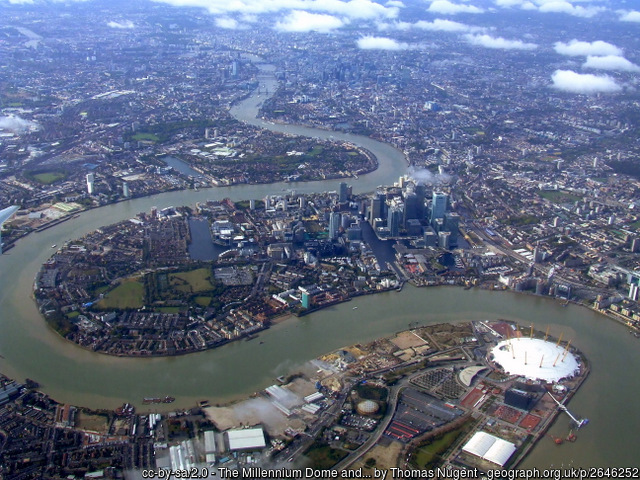
Many, many years ago, just after the London Docklands Development Corporation was set up in 1981 I had cause to visit the Isle of Dogs, the real one, as part of my academic studies. It was a desolate sh*thole then, with all due respect to the few residents still camped out there. I saw some stray dogs on my visit. I swear it.

It is much better now. Obviously. With all those towers, activity and people. Or is it? Was it better in its heyday as a docks, all misty-eyed, working class solidarity, shepherding the fruits of Empire. Or when it was first laid out built on capital from the evil of slavery, as so much of this country’s wealth was. I have no idea but it is interesting food for thought.

Anyway, f*ck all to do with Wes Anderson’s latest near masterpiece, unless of course old Wes was secretly slumming it with some creative chums in Limehouse at the time. I have enjoyed what I have seen of Mr Anderson’s films, namely The Royal Tenenbaums and Grand Budapest Hotel, admired them even more, but all that artifice, activity, trickery, and well, off-kilter-ness, makes it hard to connect emotionally. That is true to an extent here though the surface simplicity of the tale and the stop-motion makes it less arch than these predecessors. And that comes from someone who is not a dog person. Or a cat person. Or a goldfish person. Or a budgie person. Come to think of it I am not even a person person really.

Wes has collaborated here with literally hundreds of other creatives, (I stayed behind to watch all the credits roll up just to see, not my best ever idea), to deliver his spectacular stop-motion animation. Apparently a fair number of said creatives are based in Three Mills Studios, a short, (and very fine), walk down the River Lea and Limehouse Cut to the Isle of Dogs. One of the Three Mills is the House Mill which is reputedly the largest tidal mill in the world. I was fortunate enough to be shown around said mill, now maintained by a Trust and open on a Sunday, whilst out on a walk a couple of years ago. Once you get your head round how it works you see just how marvellous in is in its simplicity. Geeky I know but fascinating.

Back to Isle of Dogs (film). In addition to an army of artists, Mr Anderson has chucked the kitchen sink of plot devices at his story and employed some of Hollywood’s most discernible voices: Jeff Goldblum, Bill Murray, Edward Norton, Scarlett Johanssen, Greta Gerwig, Frances McDormand, Tilda Swinson, Harvey Keitel and, most memorably, Bryan Cranston as Chief. An orphan, an evil uncle, banishment, disenfranchisement, ecological collapse, plague, technology harnessed for dastardly purposes, rescue, trial by ordeal, redemption, there is a soupcon of everything, mixed together and gently simmered though still digestible for all ages.

There is some gentle homage to the great directors of Japanese cinema, straight and animated, (apparently Kurosawa make a film set on a rubbish heap), and the setting and collaboration is avowedly Japanese. The screenplay comes from Mr Anderson, Roman Coppola (again), Jason Schwartzman (again) and Kunichi Nomura, (who also voices Mayor Kobayashi). The dog’s barks are voiced in English, the Japanese language is only sporadically sub-titled.

I gather a whole load of guff has been written about the apparently dark forces of cultural appropriation here, given Mr Anderson’s range of Japanese stylisations . I see the argument but would not know where to start with marking out the cultural borders that would make such transgressions logical or credible. Who sets these boundaries, how and when? If this offends you will have a awful lot of shared cultural history to unravel and I, for one, would need to know how this separation was to be policed. This sort of thinking worries me.

As for the simple story of a boy and his dog, I loved it. The distancing effect which tarnishes Mr Anderson’s other films is disarmed making it much easier to root for the characters. The craft is admirable. It is a completely realised world but still doesn’t hide its cartoon roots. The score brings new definition to the word eclectic, extending well beyond the expected taiko drum rolls. It is visually funny but never tries too hard. Whilst I may not have laughed out loud at exactly the same time of the little’uns in the audience, the fact is we both laughed, ad that takes some skill. And the draughtsman in Mr Anderson can be given full rein, as his, and his collaborators’s, imaginations, range across background and foreground, to create striking scene after scene.

There is a lot here. However it works for you though, it will work for you. Don’t miss it.


The Square film review *****

_STH0322 - version 2

The Square, 27th March 2018

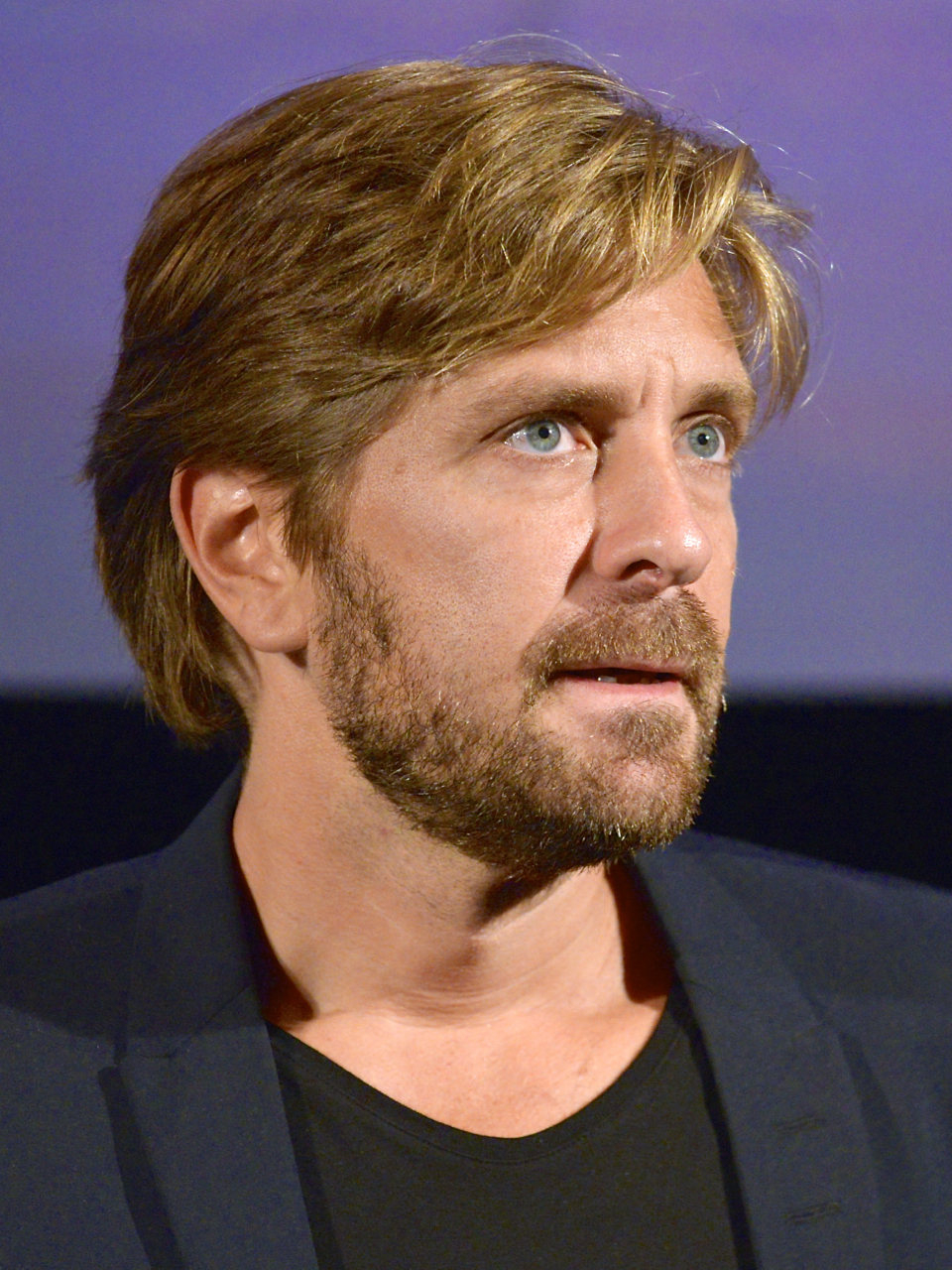
Ruben Ostlund’s last feature, Force Majeure, is one of my favourite films of the last few years. Now we have The Square to set alongside it. Longer, more ambitious, a bit baggier in places, it once again deals with the nature of embarrassment. This time though there is a healthy dose of satire laid on top. initially at the pretension and contradictions of contemporary art, with Mr Ostlund subsequently taking aim at a lot more targets along the way. It is excruciatingly funny.

The blurbs make a lot of noise about the participation of Elisabeth Moss and Dominic West. Ms Moss, who I only really know from the TV adaptation of the Handmaid’s Tale, has a job to do playing American journalist with whom the lead character, Christian, has a one-night stand. And she is very good in the role. (As an aside my advice to those who want to sample the pungent and vital voice of Margaret Attwood, probably the greatest living English language novelist, should stick to reading her books. I know she gets involved with the TV adaptations but for me they do go on a bit. There. I’ve said it). Dominic West also chips in with some low grade scenery chewing but it’s really just a cameo.

Nope. this film is really about two people. The wonderful Danish actor Claes Bang in front of the camera and our Ruben behind it. It has already garnered a hatful of awards, should have won the Foreign Language Oscar, and will be seen a a classic in decades to come.

Christian is the suave curator of the X-Royal gallery in Stockholm (the real Nationalmuseum, currently being refurbished, offering up its elegant services for the exterior shots). Anne poses some naive questions which flummox him. He is robbed when intervening to help a woman on the street. He and his assistant track his phone and hatch an ill-advised plan to letterbox mildly threatening leaflets to the apartments in the block where his phone apparently lurks. Plot A goes downhill from there. In Plot B the distracted Christian ends up sanctioning a viral campaign to promote the gallery’s latest exhibition. That also ends really badly. Throughout we see Christian’s self-image of progressive liberalism unravel to reveal darker class, intellectual, racial and sexual prejudices. He is a pretty selfish man. A modern, privileged, anxious Everyman.

Ostlund is motivated to explore all those situations where we confront when we should walk away or ignore when we should intervene. There is a sharp dissonance between the way the characters feel they should behave, in polite, liberal society, and the way they actually want to, and do, behave. Consequences flow from banal and absurd decisions. The animal instincts beneath the veneer of sophisticated humanity are revealed, literally in one memorable scene from actor Terry Notary. Ostlund carefully juxtaposes the wealth and lifestyle of the metropolitan elite in Stockholm, the apotheosis of “equality”, with want, in the form of beggars. Civilisation, whether in the form of art, technology, commerce, behaviour, is fragile.

Ostlund claims that some of the episodes are drawn from his own experiences. He and producer Kalle Boman devised an installation, called the Square of course, for an exhibition in 2014. Like its fictional counterpart ,”the Square is a sanctuary of trust and caring. Within it we all share equal rights and obligations.” The installation in the X-Royal gallery bears a striking resemblance to the work of Robert Smithson. The scene where a man with Tourette’s Syndrome interrupts a press conference happened at a Swedish theatre and Ostlund claims he was mugged in the rather ostentatious way in the film’s opening. Ukrainian-Russian artist Oleg Kulik who performs as a dog is the inspiration for one of the scenes.

Now you might reasonably say the film is a little long, but there isn’t one of the carefully crafted scenes that I would remove. You might also say that its doesn’t really go anywhere, and the narrative is unstructured, but that is the point. Characters jump into the plots unannounced heightening the discomfort. There is a surreal quality to the film, but that reflects more the images which Ostlund selects and the way he shoots his scenes, and the breaks between them, rather than any specific quality of ‘unreality”. There is also a link to the best of sit-com for me where the hapless hero, in an attempt to avoid embarrassment digs himself deeper and deeper into a hole. As in Force Majeure Ostlund has an ear for musical motifs which enhance the spectacle. I recognise the Bach setting and the Bobby Ferrin/Yo Yo Ma mash up; you hipsters will be alert to the more modern grooves.

In a failing bid to keep up with BD’s chosen academic specialism, and because it is so interesting, I have found myself delving into idiot’s guides to social psychology. Ruben Ostlund’s extraordinary work seems to mine hte same vital territory. I am going to watch this film again and again.