The Permanent Way at The Vaults review *****

The Permanent Way

The Vaults, 13th October 2019

I have to hand it Debbie Hicks and Alexander Lass, producer and director of The Permanent Way. Whilst David Hare’s 2003 verbatim dissection of the Tory rail privatisation in the 1990s, and the four fatal disasters which followed, is an undeniably powerful piece of theatre, which was praised at the time, it takes guts to revive it. Especially in a two month run. With a cast of nine. Admittedly the economics at the Vaults are attractive for theatre makers and performers, that is why the Festival goes from strength to strength, and the USP of a site specific production about the railways, under Waterloo with trains rumbling every few minutes, is self evident. And a few coats, uniforms, lamps and four benches is all that was needed set and costume wise (Ruth Hall). Even so I was surprised when this was announced, though very pleased as it had been on my watch list for years.

I was even more surprised that the Vaults was packed with twenty somethings on the Sunday afternoon when I attended. I guess this is ancient history from their perspective but then again, as our politics and civic discourse becomes more polarised, and with rail nationalisation firmly on Labour’s policy agenda, I guess the relevance of the play needs no explanation.

Now when I was their age, fresh out of uni, and keen to do something worthwhile, I sought work in the public sector. Civil service exams completed it was off for interviews at various departments (at least I think that was the chronology). Ever the statto, Department of Transport was top of the list. Some kind mandarin chaps quizzed me on the thorny issue of rail privatisation, already firmly on Thatcher’s agenda. To paraphrase I said it was a shite idea. How to split infrastructure from operations and how to make competition work across a fixed capital public good? The chaps didn’t really demur. Didn’t get an offer mind but it was pretty clear that if this jejune, if opinionated, grad could see this was bonkers idea, then so could everyone tasked to make it happen. From one entity to 113.

And so it came to pass. David Hare offers us a High Powered Treasury Thinker (Lucas Howe), a Senior Civil Servant (Jonathan Coote) and an Investment Banker (Anna Acton) to walk us through the how and why of privatisation, all retrospectively seeking exculpation. Wendy (Sakuntanla Ramanee), in a neat touch, just makes the tea. A turn of the political wheel and we meet John Prescott (Paul Dodds) and a Senior Rail Executive (Tej Obano) who ooze complacency. A Very Experienced Rail Engineer (Jonathan Tafler) warns of the dangers presented by the split of responsibilities and the lax safety regime, driven by commercial imperatives, before the four “accidents” are forensically examined. Southall (19th September 1997, 7 dead, 150 injured), Ladbroke Grove (5th October 1999, 31 dead, 523 injured), Hatfield (17th October 2000, 4 dead, 70+ injured) and Potters Bar (10th May 2002, 7 dead, 76 injured). For those that doubt the connections, after all the actions taken in the years after these tragedies, there have been minimal fatalities on Britain’s railways, outside of incidents on level crossings.

The cast, including Jacqui Dubois and Gabrielle Lloyd as well as the above, take on the roles of the bereaved, union leaders, campaigners and pivotally, a British Transport Policeman (Jonathan Coote), the MD of the eventually nationalised Railtrack (Lucas Hare), yes it turned out you couldn’t leave the infrastructure in private sector hands, and a Bereaved Widow, the author Nina Bawden, whose husband died at Potters Bar (Gabrielle Lloyd). The diversion into the schisms between the various groups of the bereaved feels prescient.

The play was inspired by Guardian journalist Ian Jack’s book, the Crash That Stopped Britain, and was based on interviews carried out by the cast of those involved selected by Max Stafford-Clark and transport journalist Christian Wolmar, (who I see is not standing this time as the Labour candidate in Richmond Park where, one expects, the hypocrite and quarter billionaire Zac Goldsmith, will lose out to the Lib Dems). This process is classic Joint Stock Theatre, which was founded by Hare and Stafford-Clark and out of which the original creator of The Permanent Way, Out of Joint …. well, emerged.

What is extraordinary is that David Hare added very little in terms of connecting tissue to the interviews. All he did was extract and order. Given the subject matter it is unsurprising just how vital and moving so much of the testimony is. What is surprising however is just how well it works as drama. There is a bit of policy wonking at the start but nothing intimidating and by the time we got to the aftermath of the crashes I was properly immersed. Of course it helps that this interests, and angers, me, but I think the rest of the audience were similarly engrossed.

For that we must thank director Alexander Lees, the movement, in a very tight transverse space, of Sian Williams, the lighting of Rick Fisher and the sound of Roly Witherow. And a very committed cast. The setting helped but this would have been just as effective in a standard theatre. A string of 3* reviews seemed a little stingy in my view. Political theatre at its best. And every single word is true.

Of course you could always just nip “upstairs” to see the complex in action, or, more often than not, inaction. And this at the London terminal for South Western Railways, better looked after than most because all us posh types use it. An under-invested infrastructure, owned and operated by the state at arms length through Network Rail, (most of the track, stations and signalling), regulated by the Office of Rail Regulation, with passenger train operators under short term franchises awarded by the Department of Transport, or through open access, and freight operators through open competition, paying to use that infrastructure. Rolling stock in the hands of leasing companies, sub-contractors a plenty for maintenance. Most franchises receive subsidies, with contracts and legalese rampant, conditions on service, punctualities and control of fares never ending. And of course there is the irony that one way or another most of the operating companies involve a European state owned rail company (Keolis, Deutsche Bahn, Nederlandse Spoorwegen, MTR Hong Kong and soon Trenitalia). Ooh and then there’s LNER, accidentally nationalised. I am pretty sure this was never the intention of the Thatcherite nutters. We pay more (fares and subsidies) and get less. Go figure.

Faith, Hope and Charity at the National Theatre review ****

Faith, Hope and Charity

National Theatre Dorfman, 8th October 2019

I didn’t catch the first two plays in Alexander Zeldin’s trilogy, Beyond Caring (zero hours contracts) and Love (a homeless hostel), about life for the disadvantaged in modern Britain. In fact worse that that I didn’t even know about them. And seeing Faith, Hope and Charity was something of a last minute decision driven by the strong reviews and a timing loose end.

Well more fool me. Creating a devised play about everyday life where not much happens but which still packs a powerful emotional and political punch is not easy. FH&C doesn’t shout, preach or hector because it doesn’t need to. It comes from the same place as the film collaborations of Ken Loach and Paul Laverty and I would imagine is driven by the same passion, but its mood is altogether more eloquent. Mr Zeldin’s other work, a play based on Lars van Trier’s The Idiots, directing Macbeth in Korea, Romeo and Juliet in Italy and operas in Russia (including Ades’s Powder Her Face) suggests he is a man of many talents and I can’t wait to see more of his work.

The simply astounding Cecilia Noble plays plays Hazel, a kind, redoubtable woman who volunteered to cook lunch for those in need in a dilapidated community hall on the edge of a nameless British town. With her soft, calm voice and unflappable temperament Hazel could hardly be more different from Ms Noble’s two previous roles on the Dorfman stage, as no-nonsense probation office in Bruce Norris’s Downstate and as comedic force of nature Aunt Maggie in Natasha’s Gordon’s brilliant Nine Night.

She is joined by reforming ex-criminal Mason, another superb performance from Nick Holder, who is setting up a choir, as much to aid his own rehabilitation as to help the locals. He starts to assist in the kitchen. The array of regulars include cranky pensioner Bernard (veteran stage actor Alan Williams) who can’t face his empty home, timorous Tharwa (Hind Swareldahab) and her daughter Tala, the extremely anxious Karl (Dayo Koleosho) always waiting for his carer, the truculent Anthony (Corey Peterson). And Beth (Susan Lynch), with teenage son Marc (Bobby Stallwood), whose chaotic life means she has lost custody of her 4 year old daughter, Faith, and is arguing with the court authorities to secure her return.

Mr Zeldin’s script makes plain the impact of austerity on the lives of his characters, the leaky community hall is eventually closed down due to lack of funds, but this is no grim polemic. His characters may be struggling but they are resilient, they are compassionate and, at times, optimistic. There is humour and joy through the various scenes, the Christmas lunch, the offer by Hazel to take in Faith though she has her own family issue, the relationship between Mason and Beth, the cheesy choral anthem “You’ve Got The Music In You”, but the realities of the impact of the broken social care system always looms large.

Natasha Jenkins’ set and Marc William’s utilitarian lighting is as note perfect as the dialogue. Mr Zeldin spent two years researching this play and it shows. Of course I know a couple of hours assuaging the guilt of a comfortable and sympathetic metropolitan audience makes fuck all difference to those people at the pointy end of austerity. Though I might respectively suggest the following.

  • Banish from your mind any thoughts that those in need are at fault. In any way. Ever. You are not better or cleverer. Just luckier.
  • Vote the right way. You know what to do.
  • Give £10 a month to the Trussell Trust. Pay for it by doing something veggie, green or healthy.

And now for the rant.

Local authorities will have seen an average 77% decrease in government funding in the four years to 2020. In real terms overall local government spending will have seen a fall in real terms of 30% since 2010. In the last 5 years food bank use in the UK has risen by 73%. According to the TUC` 3.1 mn children with working parents now live below the poverty line.

Austerity failed. Sucking demand out of a brittle economy will always fail. Spend on health (20%), education (15%) and pensions (15%) is going to run ahead of real growth and inflation. Slicing spend elsewhere and pretending that any job, however lowly paid and precarious, makes for healthy employment is nonsense. The UK cannot have the services it wants without paying for them. And if we don’t pay for them in the long run we will, as we are now, pay for it. Hiding debt by buying shitty assets was never a long term solution. We are already, public and private, the most indebted major economy on earth. Pretending we can cut ourselves off from Europe and pursue some buccaneering independent future is bollocks. Our debt cost will rise as our currency croaks and capital and labour will fuck off elsewhere.

The solution is simple. Pay more tax. Everyone who can afford it. The argument is over whether that be on wealth or income, not how much. And borrow more. A lot more. Everyone else is. And debt is cheap because there is no alternative. But use it to invest, support and drive sustainable growth, not buy votes. And right this minute end the farcical Brexit pantomime by immediate revocation. Doing something idiotic just because you don’t want to lose face, or hope that will make it go away is, well, idiotic. Time for toddler Britain to end the tantrum and face realities.

Merry Christmas.

Mother Courage and her Children at the Royal Exchange Manchester review ****

Mother Courage and her Children

Royal Exchange Theatre Manchester, 28th February 2019

Brecht. Royal Exchange. Headlong (This House, People, Places and Things, Labour of Love, Common, Junkyard, 1984, The Glass Menagerie, American Psycho and Enron – and that’s just what I can vouchsafe), Anna Jordan adapting, Amy Hodge, the Associate Director alongside Jeremy Herrin at Headlong and Julie Hesmondhalgh as Mother Courage (“MC”) herself.

Strap yourself in. This was bound to be an exhilarating theatrical ride. And so it was. Full of great visual moments. Even if the transposition of the story to a future (2080’s) European war, Reds against Blues in a continent divided up by grids, probably subtracted from, rather than added to, its contemporary relevance. Brecht finished Mother Courage in 1939 and he pointedly set it in the Thirty Years War of 1618 to 1648, proportionately the most destructive conflict in human history, as a message of the forthcoming horror. The greatest “anti-war” dramatic statement of all time? Probably, though it is more analysis than fulmination. One pf the greatest plays of the C20, and all time? Certainly. So f*ck about with it at your peril.

On the other hand the whole point of BB’s epic, Verfremdungseffekt, theatre is to set the audience on its toes and get the grey matter working overtime, and to let the theatre makers create their own take. Which they certainly do here. With the utmost respect to Ms Hesmondhalgh who is predictably a mighty presence, the star of the show is a repurposed ice cream van, standing in for the cart of the original text. Not something I expect to write again on these pages. Joanna Scotcher’s design looks like it came from it was sneaked out of a forgotten storeroom at a Hollywood studio marked “Vietnam War/Mad Max for charity”, right the way down to Yvette’s (Hedydd Dylan) pink plastic “catsuit”. There isn’t much in the way of fixed bric-a-brac as it should be in Brecht and as is warranted by the Royal Exchange’s in-the-round space. Which left the van, sans engine but still with its jingle intact, free to perambulate across the stage, pulled, before their respective early demises, by each of MC’s three kids, Eilif (Conor Glean), Swiss Cheese (Simeon Blake-Hall) and Kattrin (Rose Ayling Ellis). Foods, drink, water, shirts, uniform, clothes, guns, furniture, you name it, MC stocked it in the ramshackle van. Everything you need to profit from a prolonged war. It even doubles up as a nightclub.

Music (Jim Fortune), which nods back to Weill, sound (Carolyn Downing) and lighting (Lizzie Powell) was similarly pimped up to match the setting and aesthetic. Musician Nick Lynn, positioned in the circle, served up, often at MC’s request, a barrage of sound at times to set alongside some of the gentler, folksy numbers. And Movement Director Raquel Meseguer put the hours in to marshal the nine strong cast through the 12 scenes (covering 12 years of the conflict).

Now the Tourist knows from Anna Jordan’s other recent, superb, work with Frantic Assembly, The Unreturning, that she is the doyenne when it comes to ambitious, physical theatre. And so it proves here. This adaptation comes in at a couple of hours. It can drift closer to three. With the on-stage intros to each scene and some fairly direct exposition it is easy enough to follow even for the uninitiated, and all the narrative elements are intact, but it scampers along at a heck of a lick and, with all the visual stimulus, the constant motion, the soundscape, the dizzying array of accents, there just isn’t much time to think about what is going on and what Brecht is telling us.

Not a complaint. The production looks and sounds so good that this is easily forgiven but don’t come here looking for any gestural detail in the main relationships, between MC and the children, or between MC and respectively the Cook (Guy Rhys), the Chaplain (Kevin McMonagle) and Yvette. Julie Hesmondhalgh and the rest of the cast, notably these three, are too good for Brecht’s messages not to sink in but the true horrors, the deal with the Recruiting Officer to conscript Eilif, Swiss Cheese’s torture, MC’s denial of her son after the botched ransom, Kattrin’s rape, Eilif’s execution, the Cook’s rejection of Kattrin and Kattrin’s sacrifice don’t always register as strongly as they might. Mind you the bleak conclusion certainly does: MC taking up the van’s harness as a single fire burns out.

MC’s determination, even desire, to profit however from the war, despite the damage it does to her and those around her, does ring clear. Julie H is a ballsy, artful fiercely protective but, ultimately wary and realistic, MC. As she should be. This isn’t Hollywood – we are supposed to engage emotionally with the characters but not be emotionally manipulated by them. Ultimately we aren’t really supposed to sympathise with MC, just to understand why she has to act as she does, to see the damage that war does to those at its periphery as well as the fighting protagonists. MC thinks that her business is the way to safeguard her children. Manifestly it is not. We see that. She cannot.

And to see how war, when churned through the prism of difference and ideology, is an integral part of the economic sub-structure, orchestrated by the powerful. One day perhaps Brecht’s lesson will have no relevance. No sign right now though we should remember that the global and supra-national institutions which were built post WWII to rein back our worst excesses have largely succeeded in restricting conflict to the national, or intra-national, level, though still often as proxies for economic accumulation.

Which is why MCAHC will go on being restaged and re-imagined (Lynn Nottage’s Ruined for example) for new audiences to watch and learn. At the matinee performance the Tourist attended there were, as is to be expected, throngs of school students. They seemed to be all over it. I assumed it was still some sort of set text for drama students. Apparently not. Only Brit playwrights good enough for the Government when it comes to reaching GCSE drama. Interesting in the context of the breakdown of the political order in Europe that this adaptation presages. Still we should be grateful that this shower of a Government hasn’t interfered with syllabus and teaching for, what, all of a couple of years. And, unless the nutters back down, they won’t be able to for many years to come as they sort out the never-ending shower of sh*t that is coming down the tracks once we have “Brexited”. It’s only just begun folks. And not in a nice, Karen Carpenterish kind of way.

Got me to thinking about what our proud youth study for drama at A level. Faustus, Lysistrata, Woyzeck, Antigone, Much Ado About Nothing, A Servant to Two Masters, Hedda Gabler, The Caucasian Chalk Circle, Accidental Death of an Anarchist, Jerusalem, Yerma, The Glass Menagerie, Metamorphosis, Cloud Nine, Our Country’s Good, Bronte, Earthquakes in London, Stockholm, The Crucible, The Visit. Across the various boards. Bloody Hell. If they master that lot then I have nothing to fear for they will know everything there is to know about the human condition. Drama is integral to democracy and citizenship. Ask Aeschylus, Sophocles or Euripides.

The American Clock at the Old Vic review ***

The American Clock

Old Vic Theatre, 11th February 2019

All the reviews will tell you the same thing. This was not one of Arthur Miller’s finest moments. Mind you his finest moments are amongst the greatest in theatrical history so the bar is set pretty high. A series of vignettes, with musical accompaniment, inspired by the oral histories of Studs Terkel, notably Hard Times, which intend to knit together to offer a dramatic critique, if you will, of the Wall Street Crash and The Great Depression. Almost bound by its form perhaps to fall short dramatically but could still fly as theatre.

It might have flopped on Broadway when it first appeared in 1980 but apparently the NT production from the mid 1980’s, (albeit under the guidance of master director Peter Wood, the man who breathed life into Stoppard’s comedies), was a great success. So I can see why Matthew Warchus entertained the idea of American musical director Rachel Chavkin having a crack at it on the Old Vic stage. Especially after the success of Conor McPherson’s Girl From the North Country, which to me, albeit with the powerful addition of the music of one B. Dylan, it somewhat resembles.

Miller himself termed it a vaudeville, a variety entertainment popular in the US before the Depression, and similar to music hall in good old Blighty. A long way from the original French precursor, (which I have just learned about – thanks teach), from the late C18 which was the lightest of comedies interspersed with songs and ballets. Comic opera with no intention of lecturing its audience. Unlike Mr Miller who leaves you in no doubt about what he is trying to say. It probably “helped”, at least artistically, that Miller’s own family like so many other well-to-do types were ruined by the Crash.

The American Clock is centred on the Baum family, an initially well to do Manhattan Jewish family, Moe, Rose and son Lee, who lose it all in the Crash and are forced to move in with family in Brooklyn, (Rose’s sister Fanny, her son Sidney and his wife Doris, and Grandpa). A narrator of sorts appears in the guise of sagacious money man, Theodore K. Quinn, who sells out ahead of the crash, in contrast to a bunch of his peers, who we meet, along with a whole host of other characters incidental to the Baum’s journey. In total there are some 26 named characters. Thus the whole of American society is represented. And, just to emphasise the timeless relevance, and thereby add more bodies to the stage, Rachel Chavkin has chosen to cast the Baum family with three different sets of actors, White Jewish, African American and Asian American. Actually it turns out this is less of an annoying conceit that in sounds.

Now I can see why uber critic Frank Rich archly observed that, “It is Mr. Miller’s notion, potentially a great one, that the Baums’ story can help tell the story of America itself during the traumatic era that gave birth to our own. As it happens, neither tale is told well in The American Clock: indeed, the Baums and history fight each other to a standoff.” That about sums it up though it is a little harsh. Each episode in the “story”, and there are many, sheds light on a slice of American life across those fateful few years, whilst still giving primacy to the journey of the Baums. But we never get to see enough of these characters to make any emotional connection to them and the narrative arc is too fragmentary to generate any real direction.

Having said that some of the scenes, individually are powerful, the dispossessed Mid-West farmers taking control of an auction on behalf of one of their number, the call to action from an oratorically gifted Communist agitator in the office for poor relief, the dance marathons, for example. And the play looks at sound fantastic. Chloe Lamford’s in-the-round set starts out as a commodities trading floor and, then, through constant evolution (and revolution,) becomes speakeasy, club, family home, diner, auction house and much much more. Rose Elnile’s costumes are similarly evocative. The combined talents of composer Justin Ellington, sound designer Darron L West, musical director Jim Henson and his on stage band made up of Shaney Forbes, James Mainwaring and Laurence Ungless create a rich, jazz based, aural tapestry. Top of the class though is surely choreographer Ann Yee, (and not for the first time in my experience, Caroline, or Change, the War Requiem at the ENO, and the Donmar Shakespeare Trilogy are all recent examples of her work), who oversees some smashing dance routines..

There are also many committed performances notably from Clarke Peters, Clare Burt, Francesca Mills, Golda Rosheuvel, Ewan Wandrop and Abdul Salis.

So, if you are tempted, and there are plenty of reasonably priced tickets left, I wouldn’t stop you. Just don’t go expecting to get the emotional punch in the gut that classic Miller delivers. I have certainly endured worse history lessons.

Wild East at the Young Vic review ***

Wild East

Young Vic Theatre, 13th February 2019

So after an hour spent in the florid company of an unraveling traveller couple courtesy of Cuzco at Theatre 503, followed by a hour lapping up the detail of natural and man-made beauty through the eyes of John Ruskin (The Power of Seeing at Two Temple Place – do go – it’s free and open late on Wednesdays) how would the Tourist’s day end?

In the bonkers company of April de Angelis. That’s how. You know how something turns out to be not quite what you expect. This hour or so was exactly that. What with her adaptation of My Brilliant Friend and The Village based on Lope de Veja’s Fuenteovejuna, as well as After Electra, (I haven’t seen her acclaimed play Jumpy), I have been much taken with Ms de Angelis’s work. So I signed up for Wild East reading that it was a satire on the corporate interview, (a comfortable space for a recovering running dog/capitalist lackey). I imagined something along the lines of Jordi Galceran’s play The Gronholm Method which went down well at the Menier Chocolate Factory last year.

Should probably have focussed more on the words “surreal”, “outlandish” and “human chaos”, and the reference to Ionesco, in the Young Vic blurb. For that about sums up Ms Angelis’s three hander which debuted at the Royal Court in 2005. Frank (Zach Wyatt) is plainly nervous as he begins his interview/evaluation with Dr Jacqueline Pitt (Lucy Briers) and Dr Marcia Gray (Kemi-Bo Jacobs). So was I as I realised the creatives weren’t joking when they indicated that this would be old-stool bench seating. The audience in the Clare is ranged around an entirely MDF set courtesy of Sarah Beaton. Nothing else. The Tourist managed to find a perch with some back support but there was still a palpable sense of WTF as the cast emerged from audience. As it turned out props, and in some cases bits of costume, also adopted the plywood aesthetic, though this shifted as the play developed.

Frank is an accidental anthropologist, keen to return to Russia, to help a nameless corporation further its greenwashing agenda. Dr Gray is a stiff-backed stickler for the bureaucratic selection “process”. Dr Pitt is unconvinced by Frank’s credentials but clearly has issues stemming from PTSD after a recent “accident” in Russia. Turns out the two women are past lovers and Frank a pawn in their personal battles even as they plead loyalty to the “bosses” that are watching them as they in turn decide who is next for the chop. Or something like that. The targets of April de Angelis’s ire come thick and fast: anthropology and psychology as marketing technique, “developing markets” environmental cover-ups, learned corporate behaviours, the subjugation of personal identity to organisational process, and so on. But it does get pretty messy and pretty weird, especially when it goes full-on shaman at the end.

These are entirely unbelievable characters so it is just as well that the cast play this up, with Zach Wyatt near mugging the audience with his comic portrayal of Frank, who journeys from nerd to willing yes-man, Kemi-Bo Jacobs sounding like she had just stepped out of a science programme from the 1950s as she tries to staunch her insecurity and Lucy Briers adopting a air of sardonic victimhood throughout. Lekan Lawal as director, (the recipient of this year’s Genesis prize), also runs with the “if you can’t beat ’em, join ’em” approach to interpretation of the play, heightened by the use of microphones for key chunks of dialogue.

Another 90 minutes I wouldn’t have missed but another 90 minutes I won’t get back (nor will, literally, my back). Weird day. Still if you don’t want intellect or lumbar to be challenged you can always stay in and watch an interminable “realistic’ US box set on Netflix. Just like billions of other slack-jawed consumers.

Sweat at the Donmar Warehouse review *****

Sweat

Donmar Warehouse, 24th January 2019

Who is the greatest living playwright (in the English language). Caryl Churchill. Obviously. Who is, in the opinion of the Tourist, probably the most talented playwright under 40 in Britain today. Ella Hickson. What was the best original play the Tourist saw last year. John by Annie Baker. And the best play so far this year. Sweat by Lynn Nottage.

So far this year the Tourist has seen 19 plays (well 18 and a half to be exact of which more in a future post. Actually it is quite a bit more than that but I have condensed the Pinter at Pinter season ). Too many. Certainly but such is the life of the friendless, privileged layabout.

Only 4 by women though. Not good enough. Either by me or the industry. Last year, (I shall refrain from the total number – it is embarrassing), just 25% of the plays of the plays I saw were by women. If I take just new plays (not classics or revivals) the ratio edges towards 40%. Not great but getting better.

Before I get started I note that Sweat is transferring to the Gielgud Theatre from 7th June for 6 weeks or so. If you haven’t seen it don’t hesitate.

Sweat is set largely in a bar in a de-industrialising town in the rust belt of the American North East. Lynn Nottage and her team spent over two years interviewing residents of Reading, Pennsylvania in preparation for writing the play. Now, as I know from having seen another Pulitzer Prize winning entertainment, Julia Wolfe’s oratorio Anthracite Fields, Reading was, in its heyday through the second half of the C19 and first few decades of the C20, a powerhouse of US industry built on iron and then steel, its proximity to coalfields and on the railway. Its fall was precipitous however and it became, by the time of the 2011 census, one of the poorest cities in the entire country, though it is now being reinvented as a centre for cycling nationally.

Ms Nottage’s play is set in 2000, though it begins in 2008, with the release of Jason (Patrick Gibson) from prison into the hands of probation officer Evan (Sule Rimi who has, thankfully, popped up on numerous occasions for my viewing pleasure). Jason is “reunited” with once friend Chris (Osy Ikhile). Neither is in a good place. We then flash back to see how we got to that place. Jason’s mum Cynthia (Claire Perkins), Chris’s mum Tracey (Martha Plimpton) and Jessie (Leanne Best) are celebrating in the bar managed by Stan (Stuart McQuarrie) and where Hispanic-American Oscar (Sebastian Viveros) is employed. Cynthia is estranged from husband Brucie (Wil Johnson) who has spiralled downwards after being shut out from the factory during a strike some years ago. All three, tough, women are also employed at the local steel-works, as are the boys, (though Chris wants another life), and as was Stan until an industrial accident, and it is against this back-drop that the story unfolds.

Now you might be thinking, uh-oh, this is going to be one of those terribly worthy political plays where a finger-pointing, hand-wringing lesson about economic and social injustice sucks the life out of the drama and leaves you with conscience enhanced but ever so slightly bored. Well nothing could be further from the truth. The relationships between the characters, and the extraordinary, often moving, dialogue, that describes them is perfectly pitched. The play is flawlessly plotted, structured and executed. The fact that Lynn Nottage is able to locate this within a broader economic and social context (blimey, she even nails the mixed blessings of NAFTA), to conjure up time and place (and history) and to explore fault-lines along racial, class and gender divides, without getting in the way of the personal drama, is what makes this such a complete work of theatre. This is fiction, with no trace of verbatim, but the process of its creation, the people that Ms Nottage talked too, make it very real.

There is nothing redemptive or uplifting here but that is the reality of the damage that the economic dislocation and industrial change has brought to the region and by implication, those left behind in the US and across the Western world. The play opened in New York in 2016 just before Trump’s election. It could not be more relevant. The shattering of the American Dream is hardly a novel subject for drama but Sweat brings home the causes and consequences of the shift away from heavy industry and manufacturing, from managed capitalism, through financial capitalism into the information age. Ms Nottage has said that “we are a nation that has lost our narrative”, which sums up the disillusionment, rage and frustration which is now being vented by those that have lost out and, for whom, the dignity of labour has been upended and faith shattered in a system which was supposed to protect them. Setting the play in an all-American bar, rather than the workplace itself, is a masterstroke, for this is an arena in which the tensions can truly erupt.

Even a play this perfect still needs cast and creatives to deliver. Indeed any flaw in delivery would probably be more visible. Fortunately we are in the secure hands of director Lynette Linton, assistant at the Donmar and now in the hot seat at the Bush. Frankie Bradshaw’s set is wonderful as the bar descends, altar-like, inside a framework of steel girders, supported by Oliver Fenwick’s lighting design and George Dennis’s sound. The cast is uniformly exemplary, another triumph for dialect coach Charmian Hoare, (though this Brit is no expert), with Claire Perkins particularly excellent as the striving Cynthia and Martha Plimpton just, and for once the vernacular is justified, awesome.

Best of all Lynn Nottage didn’t just helicopter in to extract her story and then move on (as it happens now to a work around the life of Michael Jackson – crikey!). No, she and the team, went back to show the play and to engage in many ways with the community across multiple projects. Drama matters. The Greeks knew that. Hard to see how it could matter more than with Sweat.

Approaching Empty at the Kiln Theatre review ***

Approaching Empty

Kiln Theatre, 16th January 2019

An overly optimistic faith, despite a welter of evidence to the contrary, in the combined efforts of South Western Railway and Network Rail’s ability to convey passengers to the stated destination on time meant that the Tourist pitched up late for this showing. So he had to watch the set up in Ishy Din’s new play on one of those little black and white TV screens that theatres provide for latecomers (and production crew obviously) where the sound is reedy thin and where the lighting comes across like a molten sun on stage. Not the first time either. Please make sure you never take the Tourist’s casual attitude to pre-performance timekeeping.

Anyway it is April 2013 and we are in a minicab office in Middlesborough. Mansha is marshalling the cabs through a mic whilst bored twenty-something Shazad is phonearsing (this being my all-encompassing term for texting/browsing/Instagramming/WhatsApping/taking selfies/looking at cats/admiring themselves/trolling/dying a small death at the fake success of others/Candy Crushing and whatever else it is you people do on your phones). The telly in the background pipes up with coverage of Mrs Thatcher’s funeral. Raf enters, coughing.

Now it transpires that sharp Raf is the owner of Kings Cars, Shazad is his vague son, supposedly learning the ropes, and Mansha is Raf’s mate from way back, and manager of the cab office. We hear from feisty Sameena, a new driver, who comes back to the office, as does the gullible Sully, Mansha’s son in law, and we hear talk of Sameena’s younger brother Tony, who plays a pivotal role at the end. From these characters Ishy Din builds a story of a friendship, missed opportunities, family ties and a double-crossing all wrapped up in a critique of neo-liberal economics (with Mansha and Raf’s different takes on Thatcher’s legacy being the catalyst). Mr Din was himself a taxi-driver in this very city, and the dialogue rings true and the sympathetic characters arrive fully formed. The problem is the somewhat lumbering plot and telegraphed reveals. It is not a bad story, quite the reverse, but in his haste to crank it up the playwright smothers the interchanges between his characters, which is where the play is most affecting. Less might well have been more.

As it is we do take away how Mansha and Raf, as first generation Pakistani immigrants, have gone from hard, but dignified, graft in the factory, to a more precarious existence in the service economy, and how many, and not just in this community (the intention was to write a drama which could equally well be set elsewhere in “left-behind”, post-industrial Britain), end up skirting the law in some way. Rosa Maggiore set looks the part and Pooja Ghal’s direction is supportive of people, place and message. Kammy Darweish as Mansha is the epitome of careworn decency and Nicholas Khan as Raf neatly treads the line between arrogant, shifty and desperate. I will look out again for Karan Gill who impressed as Shazad. I have seen Rina Fatania (Sameena) and Nicholas Prasad (Sully) so was not surprised by the way they end humour out of their characters. Maanuv Thiara was left to do what he could with textbook thug Tany.

This is the second of a proposed trilogy about Asian men in Britain, with theatre company Tamasha, following his debut Snookered from 2012. Ishy Din came late to the scriptwriting game but it’s pretty easy to see he has the ear. The last play will focus on men who leave families to work here with the intention of returning “home”. I will look out for that and for his earlier work. Whilst Approaching Empty, in its dissection of a community whose bonds are fracturing under the stress of financialised capitalism, doesn’t quite scale the heights of, say, Sweat at the Donmar, it is definitely worth seeing, and when Mr Din reins in his desire for action, slows it all down and focuses on family and faith, he is going to write a classic.

Peterloo film review ****

peterloo_carlile

Peterloo, 2nd November 2018

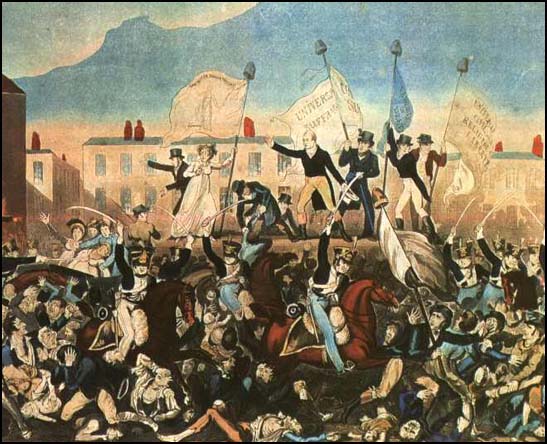
I doubt that there has ever been a more carefully researched, painstakingly assembled or more vividly imagined “history” film than Peterloo. If you like Mike Leigh (I do) you are going to love this. If you like British social, economic and political history (I do) you are going to be very interested in this. If you are concerned about the brutality with which power can crush the legitimate appeals of the ordinary person, (you should be wherever you sit in the system), this is going to stir you. If you understand the power of oratory, (words are what turn ideas into action), then this is going to draw you in. If you like the cast, Rory Kinnear, Maxine Peake, Pearce Quigley, Karl Johnson, Nico Mirallegro, Tim McInnerney, and especially Neil Bell and David Bamber, all stood out for me, but honestly this is a massive assemble of British acting at its best, then you will relish this.

However if you are after a satisfying personal drama, or complex plotting, then you might want to look elsewhere. Which given that this is a film that documents one of the darkest days in British history shouldn’t come as too much of a surprise. (Mind you this wasn’t the only massacre of peaceful protestors in the first half of the C19, more followed in the 1830s, notably in Wales). There is a lot of talking, at the meetings called by the various political radicals and reformers in and around Manchester in 1819, between the founders of the Manchester Guardian and the firebrand liberal orator Henry Hunt who was invited to address the rally in St Peter’s Field, within the family of Joseph (the real life John Lees) which is the emotional centre of the film, between the moreorless vicious magistrates who look to Government to break the sedition and between the Home Secretary and the lackeys who do his business. In this way Mike Leigh shows us why the people of Manchester and their leaders sought reform, of representation, of taxation, of the punitive Corn Laws, and why the authorities became so fearful, and were so consumed with the threat that the radicals posed, that they wilfully sanctioned a cavalry charge by volatile yeomanry and troops into the innocent crowd of 100,000 crammed into a square with minimal exits.. It is also what ensures the universal relevance of the film and the events it portrays. The power of rhetoric and the paranoia of the State are constants in the human condition.

This final scene is as awful as you might imagine but Mr Leigh doesn’t overdo the sound and fury and cleverly links the massacre back t the field at Waterloo which opens the film and which gave the events their sobriquet. As so often with Mr Leigh the film is assembled from linked montages though here many of the scenes are splendidly expansive. The interiors especially, of the powerful and the dispossessed, of Parliament, magistrates houses, pubs, meeting houses, parlours, mills, are richly detailed. The moors around Manchester offer a wild, lyrical contrast to urban industry. I think I saw parts of Lincoln standing in for historic Manchester and, of course, Chatham Dockyard, the period film’s spiritual homeland.

This was the time when “entrepreneurial” capital was looking to the State to underpin its privilege at the expense of labour, the very struggle Engels was to highlight three decades later, when, despite apparent reforms, conditions for the working class had only got worse. Peterloo may have fired up the press in London and no doubt fuelled legislative change but, as the film shows, didn’t cause the mill-owners of Manchester to question their consciences.

Any other director, without the freedom that Mr Leigh has secured, (say thanks to all the producer money here, especially Amazon), would have been forced to compromise. There are one or two occasions when, maybe, just maybe, he might had left some of cinematographer Dick Pope’s stunning assemblies on the cutting room floor, but if he had then he wouldn’t be Mike Leigh and we wouldn’t have this film. And he has ben able to spend his handsome budget to create a film of incredible ambition. In addition to Mr Pope, I would also call out the work of costume designer Jacqueline Durran and her team, the set decoration of Charlotte Watts, composer Garry Yershon’s score and finally, and I might contend most importantly, historian Jacqueline Riding.

If you don’t see it at the cinema make sure to see it at home one day. It is “serious” and it is “important”, so clear the mental decks beforehand but it is richly rewarding and, shot through with humour, it is as entertaining as didactic gets.


The Lehman Trilogy at the National Theatre review *****

114319196_445326e2cb_o

The Lehman Trilogy

National Theatre Lyttleton, 18th September 2018

So I gather this staging of Stefano Massimi’s play The Lehman Trilogy is a very different take from that lauded across Europe after its premiere in 2015 in Italy. No cast of thousands here. Just three amazing actors in Simon Russell Beale, Ben Miles and Adam Godley, and a minimalist set bearing all the usual hallmarks, (revolving glass cube, neon lights, monochrome, simple props to be shuffled around by the cast), of its designer Es Devlin, with symbiotic and effective video panoramas courtesy of Luke Halls, and thrilling sound and lighting design from Nick Powell and Jon Clark . All this from a director Sam Mendes, who is normally master of the maximalist, last seen in The Ferryman.

Of course no matter how good the production it all starts with the text. Here the Deputy Artistic Director of the NT, and dramaturg maestro, Ben Power has condensed the original play into the sprightliest 3 hours (ex intervals) imaginable. Of course there is a history lesson, but Mr Power, I assume reflecting the Italian original, draws out the themes and repeated motifs, and the key characters, the original three brothers, Henry, Emmanuel and Mayer, and the next generations, Herbert, Philip and then scion Bobbie. The final chapters, as the family cedes control to “outsiders”, and the collapse presided over by the hubristic bully Richard Fuld is, as many others have observed, a bit of a rush, but I don’t think that really matters. This is a story of the founding roots, expansion and degradation of American capitalism and, specifically, how a family of Bavarian Jewish emigres went from a farm supplies shop in Montgomery, Alabama to become one of the most powerful global financial dynasties ever seen. Lehman Bros is fascinating, yes because it is no longer there, but also because it was, to all intents and purposes, the first of its kind.

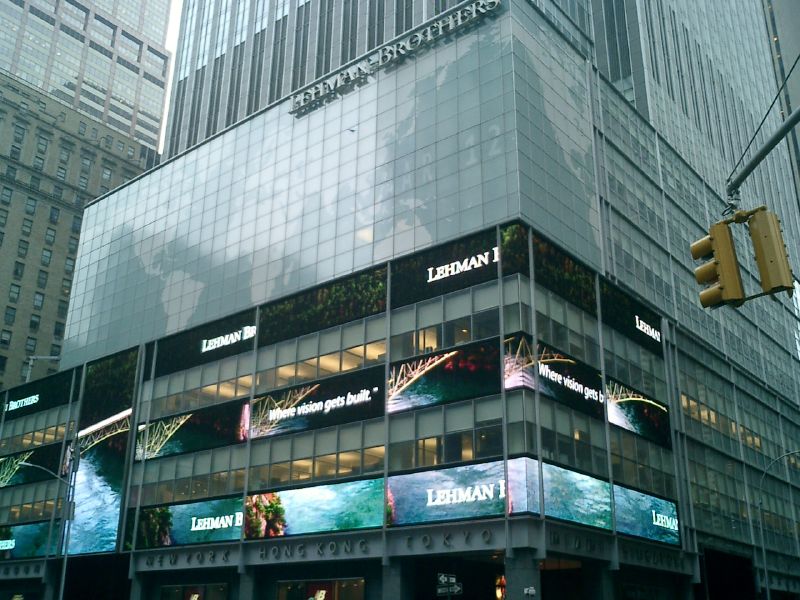
Our generation knows the importance of these institutions thanks to the crisis of 2008, still impacting the global economy a decade later. Lehman Bros, on that fateful 15th September, was the sacrifice made pour encourager les autres. The biggest bankruptcy in US history, (though the US, European and Japanese “franchises” largely ended up with Barclays and Nomura), Lehmmn was the catalyst for the intervention which we all all still paying for with, at root, the “wrong” cost of capital. The play though resolutely shows that cyclical crises are endemic to financial capitalism, and not just in the events of the 1929 Wall Street Crash. 1857 and 1873 also get a look in. The mis-pricing of complex risk is built into the system. It won’t go away.

We start at the end though with the iconic boxes, which staff used to carry out belongings after Chapter 11 was declared, piled up on the modern office set. These boxes in various configurations, with a few chairs, tables, a spot of graffiti and our imaginations, go on to signify the humble one room shop, the expansion into cotton-broking, the office in New York set up in 1860, the homes of the great and good in the story, particularly the families the three brothers marry in to, a synagogue, the boardrooms and trading floors of the palaces of the post WW II years.

And all the supporting characters, wives, children, business associates, rabbis, friends, even a tightrope-artiste, all are played by our three actors. Throughout they wear the formal frock coat attire from the mid C19. So all these “extras” are conjured up with accent, movement, stance, attitude. Now Simon Russell Beale relishes this sort of caper but Adam Godley near matched him, especially when it came to squeezing humour out of his impersonations. All three of these actors have been at the top of their game for years. Whether on stage, large or small screen, it is a fair bet that they will steal the show in whatever they appear in. To have them all together was revelatory. This is an abstracted story. With a narrative arc of this scale, across this much time and space, intricately juxtaposing the familial with the social, political and economic, it couldn’t be anything else. So everything we see, hear and learn is formed from the basic building blocks of acting and direction. Yet it is so, so rich, symphonic if you will. Look out for the recurring nightmare scenes. Just one example. Simply stunning.

Oh and there was one other genius involved. Candida Caldicot. The soundtrack to this odyssey conjured up live with one piano.

With this story, this cast, this director, this text and this creative team this was always likely to be a winner. No surprise it was an early sell out. This play in this adaptation will re-appear. No question. Whether you get acting of this quality again I am not so sure.