The Glass Menagerie at the Duke of York’s Theatre review ****

33672_full

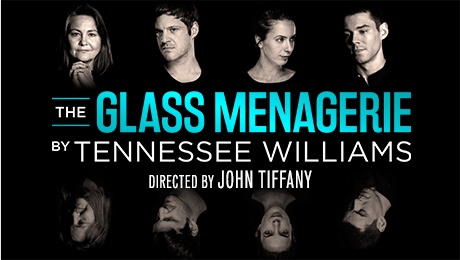
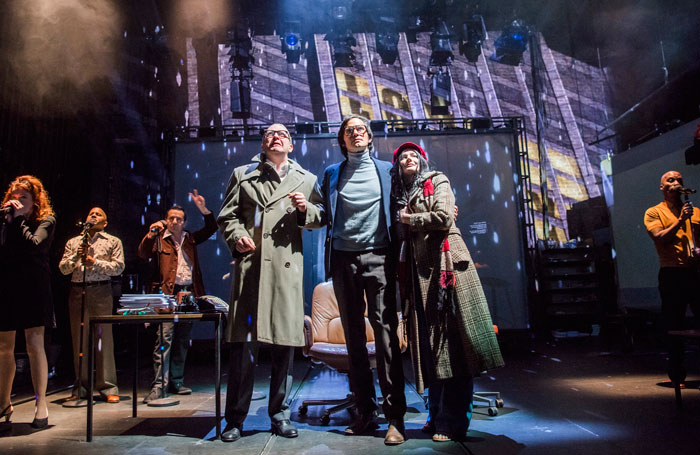
The Glass Menagerie

The Duke of York’s Theatre, 2nd March 2017

Sorry this is a bit late in the day but this is soldiering on until the end of April and is definitely worth seeing I think.

So obviously this is a classic American play from a classic American playwright and this production has been around for a little while now. It was Tennessee Williams’s breakthrough play and in my book more satisfying than the later classics (mind you I have only seen Streetcar Named Desire, Cat on a Hot Tin Roof and Sweet Bird of Youth so I am guessing I am not best placed to judge). It takes the form of a memory play with the protagonist Tom (TW himself- geddit) looking back to a time before he left the home he shared with his histrionic mother and delicate sister. That’s all you really need to know. TW’s writing is as crystal clear and so beautiful and the characters so perfectly described that it is really easy to sink into this.

The production itself is brilliantly lit with the main room of the apartment which the family shared surrounded by inky blackness revealing how their straightened financial circumstances and Laura’s (the sister) agoraphobia and limp have cut them off somewhat from the outside world. The score is also perfect (the chap responsible, Nico Muhly, is one of the best of the current crop of format hopping accessible modern composers). This combination of light and sound intensifies the “dreamy, half-remembered” nature of the events – memory after all is a construct which is imperfect and changes through time. There you go, a little bit of cod psychology for free.

Moreover John Tiffany’s production (he who is behind that Harry Potter play – never ever talk to me about Potter – and Black Watch, which along with the James Plays, is NT Scotland’s finest hour in my view), serves the text very well and is careful to draw out the broader social context (Tom has some monologues to this effect) in which the family find themselves. Actually if you do see this get round to the America After the Fall exhibition at the Royal Academy as well. This play also fits with the themes of optimism and fear which suffused 1930s America (and arguably 1970s America and America now) that the exhibition explores. That is the thing with TW – by looking inwards into the family/friends he shines a light on the wider world around them. And in a much more delicate way than the bang you over the head approach of Arthur Miller (mind you nothing wrong with Miller in my book). Just a thought.

As for the performances. Well Michael Esper as Tom very neatly takes on the heavy lifting that he needs to contextualise events and cleverly captures his ambivalence towards his dependent family and all his frustrations. Cherry Jones is a natural as mummy Amanda, the proper reviews can tell you all about her, and stays the right side of scenery chewing for me. But Kate O’Flynn as Laura is just outstanding. We like her on the telly – she has a face that perfectly reveals the internal machinations of the character – and though I was a bit too far away I felt every second of the excitement and subsequent crushing that followed the visit of the “gentleman caller”, Jim her high school secret crush, which is the pivotal scene. Just so moving.

Anyway time to stop being a gushing luvvie. This is a super play which is well served by this production. Simples.
London theatre update

Focussing on theatre and couldn’t be arsed to put in a photo.

Most of this below post still applies but a few new shiny things have caught my beady eye.

Some ideas for the culturally inclined in London

At the Barbican booking opening for a Japanese version of Macbeth which is apparently a “once in a lifetime” experience. So they have hooked me in easily. And all the Shakespeare Roman plays are coming from Stratford to the Barbican with booking very soon.

Talking of Roman plays the new Bridge Theatre with the marvellous Nicholas Hytner at the tiller will announce its inaugural season on 19th April but has already teased with a Julius Caesar with Ben Wishaw as Brutus. Busy Ben will also be in Against at the Almeida. What with the National Theatre productions of The Madness of King George III, The Cripple of Inishmaan, The Alchemist, England People Very Nice, One Man Two Guvnors, Timon of Athens and Othello through the years Mr Hytner has been the brains behind some of the very best theatre I have ever seen.

The West End transfer of the Almeida Hamlet with Andrew Scott is booking already I think – I got a bit confused. Mandatory viewing if you haven’t already seen it. Hamlet at the Almeida review *****

And the Park Theatre new season has been announced and looks full of goodies to me. I don’t know how they do it but the ideas, writers and cast they attract it tip top. Rabbits, Loot, What Shadows and The Retreat all catch my eye for varying reasons. Take a gander at the website.

Park Theatre What’s On

Right best of what’s on now that I have seen is (in no particular order)

  • The Glass Menagerie at the Duke of York’s Theatre – make sure you are in a Tennessee Williams mindset though (whatever that is) but the production and performances are top notch. mind you the staging requires a close up view I think.
  • The Kid Stays in the Picture at the Royal Court – loved it – The Kid Stays in the Picture at the Royal Court Theatre review *****
  • Ugly Lies the Bone at the National Theatre – have to review this but worth a visit – it is a bit skeletal and needs a bit of meat to flesh it out (sorry this is getting overly carnivorous) but solid performances, sone good ideas and a cracking Es Devlin set.

Yet to see Twelfth Night and Consent at the NT but critics like ’em, same for Who’s Afraid of Virginia Woolf, The Goat and Don Juan in Soho in the West End but sounds like you could easily go a whim to any of these.

Cheers

The Radical Eye at Tate Modern review ***

radical-eye-book-hardback-17733-large

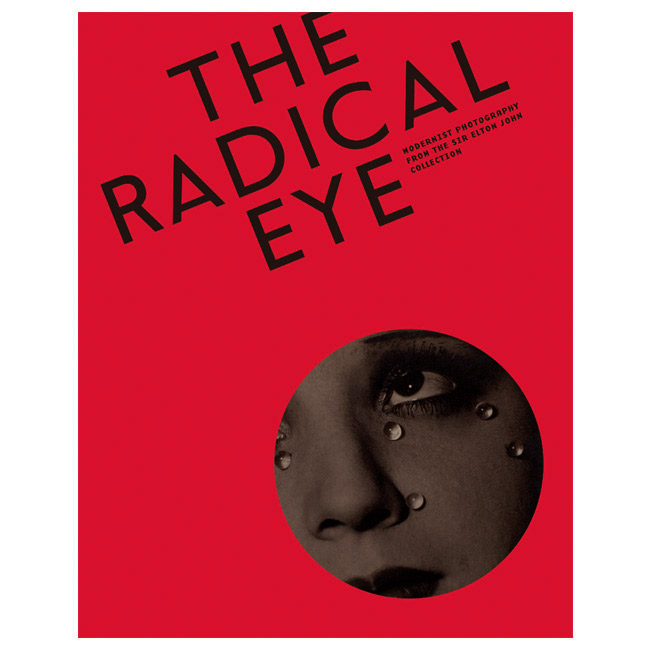
The Radical Eye: Modernist Photography from the Sir Elton John Collection

Tate Modern, 29th March 2017

Sir Elton John is a thoroughly good bloke in my book. Firstly, for letting the Tate conjure up an exhibition of iconic works by renowned photographers (Man Ray, Dali, Kertesz, Strand), secondly for not coming over like a pretentious kn*b when explaining why he started buying them in the video that accompanies the exhibition – essentially because he liked them and it helped him get over the booze – and thirdly because he intends to gift the collection in time I gather. I can even forgive him for accepting the invitation from Kate Bush to sing on the Fifty Words for Snow album (mind you Stephen Fry should also have put the phone down). Though to be fair it is Kate’s fault for asking and my theory is she deliberately makes these lapses of judgement to confuse us into thinking she is human and not actually a god.

Having said that the house where Sir Elton displays them could do with a bit of colour accessorising in my view – there is a whiff of show home here. As perhaps could this exhibition. There are some absolutely stunning images here make no mistake, but they are all so perfect in pristine black and white, whether portraits, nudes, landscapes, close ups, surrealist mash-ups or still lifes, that in the end I was overwhelmed rather than engaged. The “coffee table book syndrome” that can often hit me in photography exhibitions came fast and came big. It is entirely my fault but I just ended up needing a hit of paint (mmm a bit of Doig would have done the trick if I had time – I know, I know now who is the pretentious kn*b).

If you know what you are looking at then I gather this is the bee’s knees. If you are a casual observer is it worth a whizz round? Yes. But if I only had time for one in Tate Modern right now the Wolfgang Tillmans would get my vote. Nothing pretty about most of his photos but way more to chew on.

The Kid Stays in the Picture at the Royal Court Theatre review *****

kid-stays-in-the-picture-royal-court-4291

The Kid Stays in the Picture

Royal Court Theatre, 30th March 2017

So another of life’s minor annoyances caused by devoting too much time to work and not enough time to expanding the cultural horizons. I confess I have not read Robert Evans’s eponymous autobiography on which this play is based and therefore knew nothing about him. This clearly now looks like a massive oversight and will be put right tout suite. It is a fascinating story and it is pretty much immediately clear from the off why the genius Simon McBurney and Complicite have worked so hard to bring this story to the stage (with help from some big names in cinema).

Now all you theatre lovers will know full well how much of an asset Mr McBurney OBE is to the human race. For us lesser mortals you have likely seen him in a few films (Allied, Mission Impossible, The Theory of Everything, The Last King of Scotland which I recently watched), and a bit on the telly (Vicar of Dibley and Rev for example). Now I assume these were to pay the bills and fund the adventures with Complicite which he co-founded. Most recently he created Beware of Pity in conjunction with Schaubuhne Berlin at the Barbican (no review from me as it went in the blink of an eye but an astonishing five star tour de force) and The Encounter which I also saw at the Barbican last year and which was again a staggeringly clever piece of theatre.

Now this piece uses all the tricks for which he is famous. Video on stage, recorded video, close ups of other media, music and sound collages, lighting effects including brilliant use of silhouetting, actors telling the story through microphones rather than drama per se, multiple parts. It is an astonishing technical feat to have pieced all this together – even a dummy like me can see that. Given however that this is in essence therefore just telling the first person story, in a very cinematic way, of what is on the page in the autobiography, I can see why some of the professional reviewers got a bit sniffy about whether this is proper theatre. Me I couldn’t give two hoots about the genre bending when the story is this captivating and when it is delivered at this pace. At the risk of sounding like a patronising old git (actually no risk at all for when the cap fits) I would highly recommend this to those who are not natural theatre goers but who do love their cinema.

This is not simply because of the content (Robert Evans was largely responsible for the rise of Paramount Studios in the 1960s and !970s and the driving force behind the likes of Rosemary’s Baby, Love Story, The Godfather and Chinatown) but also the style. There is a debt of gratitude to the likes of Citizen Kane and films from the early days of cinema, as well as to noir with the “voiceovers”, but Complicite also manage to capture this era of great “New Wave” cinema making when big characters made big films with big issues at their heart (not the silly CGI fantasies too often spat out by modern Hollywood). There is no real development of the characters so I think I now know what Robert Evans and other caught up in his story got up to (a rise and fall morality tale), though not really why, but frankly it didn’t matter to me. I just got mesmerised by the story.

So there you have it. Please go and take a look. It isn’t the typical Royal Court fare where the writer is everything (and that is why it is a precious institution) but it is still a rollickingly good evening and they even let you out for a comfort break halfway through.

P.S. This did bring to my mind two other recommendations. Firstly if you have never read Suspects by the film journalist David Thomson, please do. He takes renowned characters from cinema’s past and weaves imagined back-stories for them. Marvellous holiday reading. And secondly if you are a youngster and have never sat down and watched the Godfather trilogy please put this right. I accept that by Part 3 Al Pacino is having to make herculean efforts to prop up a creaky plot but Parts 1 and 2 are about as good as film gets. Ask your Dad if you don’t believe me. If he doesn’t agree get a new Dad.

English National Ballet at Sadler’s Wells review ***

mqdefault

English National Ballet

Sadler’s Wells, 26th March 2017

So there I am sitting at a performance of Steve Reich classics a few months ago. In front of me is some twenty something with an open tablet nodding his head up and down like he’s listening to Metallica. Utter p*ick. Anyway once I and another granddad had given him what for he, ungraciously, desisted, but I was still in a gruff mood.

So for the second half I move and find myself next to a lovely lady who looks exactly like I imagine a retired ballet dancer would look. We start chatting and, lo and behold, she is a retired ballet dancer and, I gather, was a principal no less who still teaches. Anyway I tell her in the course of our interval chat that ballet is not really my cup of tea. But she tells me that I must go and see this performance (given I like minimalism, Beethoven and Stravinsky which essentially provide the soundtrack to this gig).

Well all I can say is that I am very grateful to this delightful woman. Thank you. Turns out LL who also knows a thing or two about ballet would recommend this too.

Now first things first. If you have a pathological hatred of the cultured, London, metropolitan elite then I strongly advise you steer clear of the ballet at Sadler’s Wells. Blimey, these people clearly know what they are about. I stood out like a sore thumb with my utter lack of fashion sense and graceless movement.

So I gather the first piece, William Forsythe’s In the Middle Somewhat Elevated, is a modern classic. I loved the thumping 4/4 electro soundtrack (anyone remember Cabaret Voltaire) and could see how some of the movement must have been revolutionary when first seen. But I did drift out a bit, in a way that has happened before with dance.

The second piece, with 3 couples, Hans van Manen’s Hammerklavier Adagio, was disappointing I am afraid. The slow movement from Beethoven’s Sonata No 29 can drag on for an eternity in the wrong hands and so it did here. It needs real skill to preserve the line of the music and this felt just too slow, I am guessing in order to match the choreography. Maybe it wasn’t, but listening to my faves, Pollini, Gould and Brendel. playing the same movement, is satisfying in a way this wasn’t. So I couldn’t really grasp the piece because of this. Sorry.

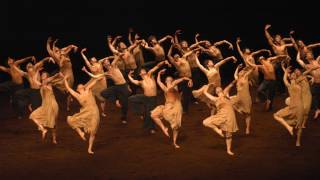
However, the final piece, a Rite of Spring choreographed by Pina Bausch, was a revelation. Obviously this is one of the greatest pieces of music ever written and the band rose to the occasion (though not approaching the heights of the Philharmonia’s take under Salonen last year which was off the scale brilliant). But the dancing. Blimey. Now I see what all the fuss was about. I was up in the gods (having actually moved backwards from a ludicrously uncomfortable seat with no legroom whatsoever, presumably everyone who goes here is a skinny rake), and so could see the whole spectacle.

Now it may be that this is what the Rite of Spring always does to you when seen as a ballet (I have only ever heard concert performances or recordings). But I suspect based on what I have read about the awe in which Pina Bausch’s version is held that this was a bit special. Anyway I was gripped. I just had no idea that ballet could be like this. Pulsating, menacing, primordial, savage and really sexy. I am not sure who was the dancer who played the sacrificial victim (what a chump I am) but she was brilliant.

So if all ballet was like this piece count me in. If all ballet was like the other two pieces then I cannot be converted.

Nederlands Kamerkoor at Cadogan Hall review *****

resizedimage600221-schreurs-nkk-totaal-rgb-geel-lr

Nederlands Kamerkoor: Sacred and Profane

Cadogan Hall, 8th March 2017

  • Britten – Hymn to St Cecilia
  • Gabriel Jackson – Ave Regina caelorum
  • Berio – Cries of London
  • Lars Johan Werle – Orpheus
  • Lars Johan Werle – Canzone 126 di Francesco Petrarca
  • Britten – Sacred and Profane

Another bit of a catch up here. This was so good though that I thought I better say something about it.

This was the latest in an ongoing stroll through the best choirs that pop up in London with BUD who knows where he is at with this sort of caper. Any sensible consumer of classical music will likely eventually conclude that the most versatile and approachable instrument of all is the human voice, with a smallish choir the optimal way to hear it. And the genius composers of the past for such limited, but pure, forces, the likes of Taverner, Tallis, Palestrina, Byrd, Gibbons, Monteverdi and Allegri, are now augmented by some greats from the mid C20 and from the ranks of contemporary composers.

Anyway this outfit, conducted by Peter Dijkstra, were outstanding. The likes of The Sixteen, The Tallis Scholars, The Cardinal’s Musick and so on are a delight to hear but somehow these guys seemed even better to my ear (Cadogan Hall, along with Wigmore Hall and Milton Court are perfect venues for choirs I think). They just had such extraordinary control both individually and collectively.

Now I know the Britten pieces pretty well but it was in the second of the Lars Johan Werle pieces, and especially Berio’s the Cries of London, that the dazzling virtuously of our Dutch friends really came to the fore. The Berio piece takes the sounds of a Medieval market and turns it into a quite extraordinary piece, challenging and beautiful. And the Lars Johan Werle Canzone somehow manages to sound both contemporary and an eerie take on Monteverdi at the same time. I was just blown completely away by this. The Gabriel Jackson piece was not quite of the same quality and had a bloke playing a few licks on an electric guitar harmonising with the choir which didn’t entirely work for me.

So I gather these guys are keen to expand the contemporary repertoire and are keen to commission new works. Sounds like the Dutch government rightly invests in them as well. For sure they now have a couple of 50+ blokes as groupies eagerly awaiting their return to London.

For those of you that are not familiar with contemporary or indeed Renaissance choral music I would strongly urge you to take the plunge. I guarantee that within a few seconds of one of these outfits opening their lungs all the s**t that swirls around your head thanks to modern life being rubbish will evaporate. You really don’t need to know anything about the music.

On my radar there are a few Monteverdi Vespers coming up (including 23rd June Barbican Academy of Ancient Music), The Tallis Scholars at St John’s Smith Square on 30th June, The Cardinal’s Musick 18th July Wigmore Hall and an Estonian Choir next January 30th at Milton Court with a bit of Arvo Part action. Go on treat yourself.

Roman Tragedies at the Barbican review *****

19668romantragediesleade1

Roman Tragedies

Barbican Theatre, 19th March 2017

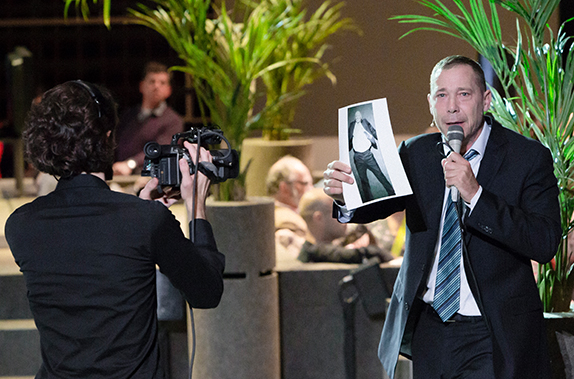
Right that fella in the pic above is Hans Kesting. And for my money he is the best stage actor in the world (though to be fair the fact that I have only seen a small sub-set  of the total universe of stage actors may lead you to suspect some exaggeration here). Yet I don’t understand a word he says (well maybe one or two). And I have only seen him twice. But I stick by this.

His Richard III in Toneelgroep Amsterdam’s Kings of War last year was mesmerising. His powerful frame crammed into a tiny suit with a birthmark on his face (all that was required to conjure up disability and difference), and using a mirror to expose his soul (did I really just write that) and lay bare his self-hate, he nailed it in my book.

And if anything in this production his Mark Antony was even more powerful. His funeral oration in response to Brutus’s justification was riveting as he prowled around the stage sometimes leaving the microphone and tearing at his tie – frankly I would have done whatever he asked if he were a leader of men in the real world even as I knew he was lying through his teeth. And he wasn’t alone. Eelco Smits as Brutus constantly probing his own conscience, Bart Siegers breaking down outside the auditorium as Enobarbus, Chris Nietvelt’s skin crawlingly needy Cleopatra, Gijs Scholten van Aschat as Coriolanus throwing the ultimate power tantrum. There were many others. The whole ensemble is just extraordinary having worked together under wunderkind director van Hove for many years. The last hour or so of A and C was perfect theatre – they must all know exactly what they are doing but it just felt so utterly and aggressively spontaneous.

The thing is by translating Shakespeare into Dutch and then back into English through the subtitles you can follow all the action whilst still retaining most of the poetry. By hacking all the war scenes out and focussing solely on the rulers and not on the ruled that they generally disdain, the real motives behind the exercise of political power are exposed. Ego, prejudice, love. ignorance, jealously are all laid bare with cool heads and analysis in short supply. By setting the action in a conference centre cum news room (so everything is “on”and visible), and in modern dress, the timeless nature of the exercise of power is exposed. And by allowing the audience to shift around at will, all this can be seen through multiple viewpoints (which you choose) and with us, the observers, becoming the observed/the ruled. The parallels with the populism in the world today effortlessly emerge (as no doubt they did in Shakespeare’s day – the experts can tell you more).

And it is anything but a marathon. Watching episode after episode of the Wire or Breaking Bad or that Game of Thrones cartoon is a bloody marathon yet millions of people do it. This is a breeze by comparison and you can even eat you sarnies and sit on a sofa.

Anyway hopefully you get the picture and can see why the punters and luvvies rave about this.

Of course it isn’t much good telling you this now that this is over but Toneelgroep Amsterdam stays at the Barbican for Obsession with Jude Law as the lead Gino in an adaption of the Visconti film and then the ensemble will bring their take on a couple of Bergman films. And they will I am sure be back again next year and they have the collaborations with Simon Stone and Katie Mitchell on their home turf. Maybe not the same as these genius Shakespeare mash-ups but whatever comes will be mandatory viewing anyway. Just look on their website at what they haven’t brought to London yet from the back catalogue and salivate.

Korn maar op!

The Miser at Richmond Theatre review ***

hq720

The Miser

Richmond Theatre, 22nd February 2017

Just catching up with this from a few weeks ago prior to the current West End run at the Garrick Theatre.

Now comedy is a tricky business to get right. Moliere’s tale with satirical and farcical forebears by way of Plautus and Italy has all the stock scenes you might wish for. The cast is definitely up for it with a performance of great energy from Griff Rhys Jones, a sardonic turn as multiple characters from Lee Mack on his “proper” theatrical debut and sterling support from the likes of Matthew Horne, Kathy Wix and Andi Osho (for me the best performance here) all off the telly.

And the whole thing is brought together by the go-to director to deliver sure fire comedy theatre in Sean Foley. LD and I really enjoyed The Painkiller which he directed as part of Branagh’s last London season though I think the playwright Francis Veber combined with perfect roles for the comedy talents of Branagh himself and Rob Brydon (anyone remember Future Conditional) made Foley’s job easier. Otherwise though whilst the whole family enjoyed The Ladykillers and SO and I tolerated Mad World My Masters, nether set our pulses racing.

So how was this Miser. Well enough gags and visual humour stuck to raise a few laughs but it all felt a bit laboured and obvious to be honest. Not unenjoyable but not memorable. I think the play has the capacity to offer a satirical insight in today’s world with Harpagon’s worship of money but this was more Mrs Browns Boys than Father Ted if you get my drift. The obvious can be subtle just not here. But like I say comedy on the stage is really tough. Oh for another Old Vic Noises Off.

Sussex Modernism at Two Temple Place review ***

david-jones-madonna-and-child-in-a-landscape-main

Sussex Modernism: Retreat and Rebellion

Two Temple Place, 15th February 2017

Just a quick shout out for this interesting, compact exhibition. For those who don’t know Two Temple Place it is a neo-Gothic, late Victorian mansion on the Embankment built for an Astor and full to the brim of OTT panelling, carving and painting. It puts on occasional exhibitions at the beginning of each year and this year it is a diverting journey through key British figurative artists of the first half of the C20.

Many of the artists represented here spent sizeable chunks of their working lives at various locations in Sussex hence the theme and many were associated with the Bloomsbury Group and latterly whimsical British surrealism. Sussex no doubt because the houses are nice and the rich toffs have always liked it and it was close to the capital. But also to be fair because the landscapes did offer material to feed the muse. But don’t expect any proletarian radicalism here.

What you do get though are 120 or so works by many of the key figures in British art through the 1920s to 1950s.My favourites are the sculptures from Eric Gill (we can still appreciate the art I think), some lovely Vanessa Bell works (including a perfect still-life and fine fabrics), an Eric Ravilious interior, landscapes and studies by John Piper, Edward Wadsworth and Paul Nash, watercolours by Edward Burra and some haunting photos by Lee Miller.

All in all worth a detour or a lunchtime trip if you work close by. And it’s free. On until 23rd April.

P.S. I note that a fair proportion of the works on show here come from the Towner Gallery in Eastbourne which is one of my absolute favourites. It always has interesting exhibitions informed by its permanent collection. Like the Turner Contemporary in Margate a great excuse when the sun comes out to get on the train, scoff some chips and ice cream, take a look at some of the shops set up by the East London bearded dispora and generally promenade. Lovely.

Hamlet at the Almeida review *****

hamlet_1470x690_version_3

Hamlet

Almeida Theatre, 11th March 2017

“…. but I’ve forgotten what Hamlet is about. 

It’s about a young man called Hamlet. And a girl called Ophelia who goes mad. And a ghost. And a Queen called Gertrude who gets poisoned. And a king called Claudius who gets stabbed. And a young man called Laertes who gets killed in a duel, and an old man called Polonius who gets killed by mistake.

I remember now. Not a Bright Piece …. “

From Henrietta Sees It Through by Joyce Dennys

The SO’s unparalleled reading of first half C20 memoirs turned up the above. A perfect spoiler/summary which tickled me. Hamlet may be the greatest play that big Will ever created but for me it still has some plot development that needs a deft directorial touch as well as, obviously, a believable psychological portrait from the Prince himself. That means a logic to the pile up of corpses, a Hamlet who loves Mummy and Daddy, reasons why Gertrude might love Claudius who therefore cannot just be just a weakling or a tw*t from the off, a Polonius who isn’t a total buffoon, an Ophelia who isn’t off with the fairies, a properly p*ssed off Laertes, good reasons why Hamlet might still have mates whilst his behaviour gets ever more erratic and preferably sotto voce reference to Norway and England.

For me this Hamlet ticked all the boxes and much. much more. I can’t pretend I have seen loads of great actors do their thing here nor can I remember vast swathes of the text. You can read the proper reviews to get all of that. But I can tell you that this is, in my view, about as good as Shakespeare gets.

Casting Andrew Scott as Hamlet if I am honest, probably didn’t require a massive leap of imagination. He looks the part (still sufficiently youthful) and surely was a shoe-in to play an unhinged mind based on previous work (oh alright based on his Moriarty on the telly as that is all I really know).

But OMG as the kids might say. Does he deliver. The conversational delivery meant I could savour almost every line and hear plenty that had not previously registered. There was an inevitability to his behaviour as events unfolded reinforced by the continuous animation in his face and hands . The petulance and narcissism that I want from a Hamlet was abundant. Let’s be honest he can be an annoying little s**t.

The relationships were perfectly pitched. The archness in the scenes with the actors, with Polonius, with Horatio and with the gravedigger were spot on. And the emotional tension created in the scenes with Gertrude, Ophelia and with Claudius (a gun and a dream, maybe – brilliant). And the soliloquies were perfectly delivered (and there are some cracking notes in the programmes about the psychology around voices in the head).

Hard for me to imagine better performances as well from a tactile Juliet Stevenson (Gertrude) especially as realisation turns into self-sacrifice, Jessica Brown Findlay (Ophelia), just edge of seat stuff with the herbs (a phrase your are unlikely to hear again!), Luke Thompson (Laertes), lump in throat in the final scenes with Hamlet, and Peter Wright (Polonius) a proper loving Dad and a vital right hand man. And for me Angus Wright’s (Claudius) more declamatory delivery fitted the nature of a chap who I think is rarely plagued with self doubt unlike his step-son.

The real genius though is director Robert Icke who is at the top of his game here. That’s not to stay he is infallible. Myself and BD (who was a massive Simpsons fan when she was a littlun) didn’t get on with Mr Burns where the concept drowned the characters for me, and whilst The Red Barn at the NT looked amazing I think the story was perhaps ultimately too thin, even as it passed through the hands of David Hare and the eyes of Mr Icke, to support the promise. 1984 though was brilliant, his Mary Stuart was absorbing and, for me, his Uncle Vanya was revelatory (I have not always got on with this), but even this was surpassed by Mr Icke’s Oresteia which was magnificent with the expanded prologue setting up the moral pickles and making the intervention of the gods gripping instead of a bit bonkers.

In this Hamlet the use of video is inspired not hackneyed, in the Ghost scene, in the play close-ups and in the conclusion, all reinforcing the the themes of surveillance and tine passing. The idea of Claudius’ confession as a dream is intriguing as is Ophelia’s breakdown from a wheelchair. There is mordant comedy in the Polonius/Hamlet scene. All in all lots of bang up to date ideas but which all serve a purpose.

Love it, love it, love it. And the good news. It is transferring to the Harold Pinter Theatre apparently. So no excuses now. Get a ticket.