Steve Reich’s Drumming and Tehillim at the Royal Festival Hall review *****

67544afa6d1

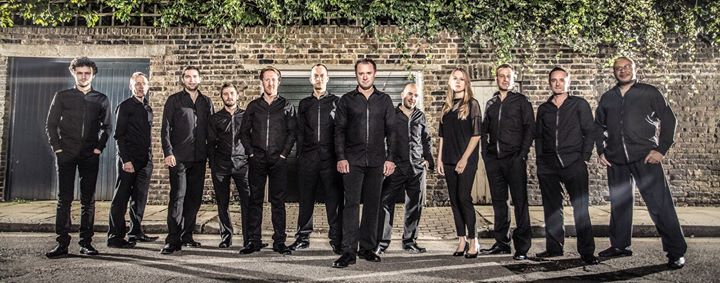
The Colin Currie Group, Synergy Vocals

Royal Festival Hall, 5th May 2017

  • Steve Reich – Tehillim 1981
  • Steve Reich – Drumming 1971

There are a handful of sacred founding texts when it comes to the world of US minimalist music. Terry Riley’s In C certainly, John Adams’s Harmonielehre and Short Ride in a Fast Machine, Philip Glass’s Glassworks, early operas and Music in Twelve Parts and Steve Reich’s Music for 18 Musicians and Drumming. There are plenty of other works I would want to add from these, and other composers, to capture the full glory of the genre, and I have plenty more to explore, but, so far, my stand out favourite is Drumming.

And this performance from what is now Reich’s own favourite interpreter, Colin Currie, and his colleagues, was, jaw droppingly, brilliant.

Now I went along to the performance of Music in Twelve Parts at the Barbican Hall on 1st May. No review as I only managed the first six parts. No reflection on the music or the performance; only because I misjudged the timing so had to scoot off. It was a fine rendition of this seminal Glass work, although at times, it did end up in that one-dimensional cul-de-sac that Glass’s music can be prone to. The effect of layer upon layer of the tiny cells of music is obviously hypnotic and trance-like but, to me, still fascinating, as is hearing the shifts between “movements” within the parts. This is the most minimalist of minimalism to my ears – no narrative, no resolution, chords slowly emerging, taking repetition to its ultimate conclusion. And when it hits the points of apparent stasis despite all the instruments (and voice) feverishly playing it is mind-blowing. But sometimes, and this was the case here, if that apparent stasis is not perfectly delivered it can be a bit wearing.

In contrast this performance of Drumming was, I think, unbeatable. You see, for me, whilst this is still firmly minimalist in terms of the overall effect, the methods that Reich employs here add up to so much more. The use of phasing, where one musician takes a phrase and then others repeat the phrase but with changes to the tempo so that gradually they step out of sync, is Reich’s signature. In this piece however, there is greater alternation in the phrases of beats and rests, which creates much greater rhythmic drama. The three sections, before for the finale where everything comes together, offer a spine tingling variation in timbre and register, as the tuned bongo drums of the canonic first section (mostly obviously indebted to Reich’s visit to Ghana ahead of the composition), is followed by the marimbas and the three female voices, and then the shift to the very different world of the glockenspiels (augmented by the whistling !! and the shrill piccolo). Put all this together and you have a real musical narrative, which I think is in contrast say to the Glass piece above. And all this from just one repeated rhythm – that is its genius.

To make it really work you need an ensemble which is both experienced but also fearless. Like most larger scale minimalist works it requires immense concentration (though the repeats here were kept to a minimum which is wise I think) but to really let go all the musicians have to trust their colleagues. There is nowhere to hide (unlike large scale Romantic works say). There was nothing tentative here and that is what made this performance truly stand out. The same ensemble was superb this time last year with it Reich programme topped by Music for 18 Musicians but this surpassed that. The audience (which is getting bigger and more diverse I think for these works – brilliant stuff) was up on its feet immediately the piece concluded and deservedly so.

Tehillim which proceeded Drumming was also very well performed (especially the extraordinary singing of Synergy Vocals the experts in this field) but, as this is a newish addition to Colin Currie’ Reich repertoire, it was not as overwhelming. Here the combination of four female voices (singing Hebrew psalms) with the six percussion instruments and a small chamber orchestra means the melodic lines are more prevalent and the use of phasing here is more redolent of canons from Medieval Western music (readers will know that is a good thing in my book). The rhythmic drive of Reich’s percussion led pieces gives way to the illusion of harmony and counterpoint. This is why he is such a clever fellow.

Anyway I think you can tell that I loved it. Please seek out Drumming even if you hate “classical music” – the key recording is still Reich’s own. You won’t regret it. We have had a couple of good years for minimalist music in London, what with the various anniversaries of its leading lights, but I will keep my eyes peeled for future dates.

 

Hagen Quartet at the Wigmore Hall review ****

hagen20420crop

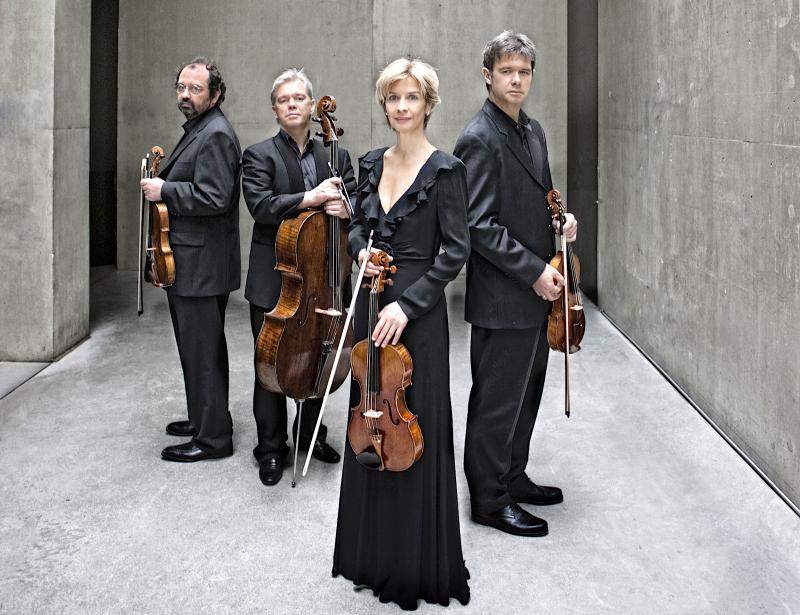
Hagen Quartet

Wigmore Hall, 29th April 2017

Dmitry Shostakovich

  • String Quartet No. 3 in F major Op. 73
  • String Quartet No. 14 in F sharp major Op. 142
  • String Quartet No. 15 in E flat minor Op. 144

To paraphrase a great man about a great band “always different, always the same”. The same is true of DSCH (apart maybe from some of the very early experimental works). An Adagio will be ponderously slow. A Scherzo will be nuttily rapid – as close to heavy metal as it is possible to get in the world of popular classical music. There will be Russian folky tunes (hard to imagine a TV programme on C20 Russia which doesn’t have some DSCH in the background). There will be an ominous march like rhythm, screaming strings, some bizarre jokey interludes. There will be highbrow compositional structures mixed with lowbrow tunes. And there will be the endless search for clues about what he was really saying.

I love it but even I sometimes find myself focussing on the banal and the bombastic rather than the stirring and uplifting that is part and parcel of the Shostakovich experience, sometimes even in the same movement. His music seems to carry more of the personal and political, but this perhaps is a reflection of when and where he was writing, and his own gnomic utterances only served to fuel the interpretative fire. Even his own country wasn’t entirely sure whether to celebrate or condemn for much of his lifetime.

But he gets played. A lot. If you churn out this amount of music at this level of immediacy (no flirting with atonality here), with many more fans than haters ,then you are going to well represented in the concert hall – up there with Haydn and Beethoven when it comes to quartets. And if the 15 symphonies are the “public” works of his art then the 15 string quartets are the “private” offerings. So for once this concert was less a voyage of discovery for me and more an opportunity to try to evaluate what I was hearing. I have some recordings, complete Fitzwilliam and Emerson Quartet versions and assorted Borodin Quartet CDs.

I thoroughly enjoyed these Hagen Quartet interpretations. The only recording I have by them is a complete Mozart cycle; firstly, because it is string quartets, a format which I can easily digest, secondly, because it is Mozart and I know I must try harder with him and thirdly, because it was good value. But it will take a bit of time to get to the bottom of this. I understand that the HQ is made up of 2 brothers and a sister and a mate (at least I assume they are friends!), and that they have been playing together for over 30 years. So that presumably accounts for the extraordinary unison and power in the playing. As I have said there is nothing fancy dan about Dmitry’s melodies, rhythms or musical language so this lack of pussy-footing in the playing is exactly what I want to hear.

On the other hand this approach does mean that there is nothing between us and the music itself, which, when it is good, No 3 Op 73 and, in its own striking way, No 15 Op 144, it is very, very good, but when it is less compelling, No 14 Op 142, well then the doubts emerge.

No 3, along with the crowd pleasing No 8. is a work of great variation and drama, with a perky allegretto opening, a couple of the heavy metal scherzos I referred to above (I love it went a string quartet gets really loud so you feel as well as hear the sound), then the usual miserable adagio (a passacaglia here) and a final movement which contrasts the moods of the first and fourth and has a classic fade to nothing DSCH enigmatic ending.

No 15 on the other hand is made up of six slow movements. Yep you heard me, six of his most desolate (and moving) creations all in the key of E flat minor (the go-to morbid key). The piece is usually taken as his own memoriam as by then he had lung cancer, poliomyelitis in his limbs, his heart was giving up and he was still knocking back the vodka. I would always caution about programmatic readings of compositions but here you have no choice. Along with the other later works (notably the last couple of symphonies) it inspired the next generation of Soviet composers (some who had been taught by DSCH himself). And it is an amazingly powerful piece of music, though I will be honest, most of the allusion and symbolism goes over my head. Yet bizarrely it is not depressing, maybe cathartic, painful certainly, but not depressing.

BTW there is a reference in the programme to DSCH’s instructions to the Beethoven Quartet about how to play the first movement: “Play it so that flies drop dead in mid-air, and the audience starts leaving the hall from sheer boredom”. Listen and you will get the picture.

So finally No 14. I don’t get it. The other two are more “obvious” in their construction, so I am probably not up to the task of decoding No 14, but it is just a tricky listen. The first and last movements seems to meander about to no great purpose and the middle Adagio sometimes gets a bit too syrupy. No doubt those who dislike all of his music will point out that there isn’t much difference between this quartet and the other two but I can’t explain it. I just don’t like it as much.

Which brings me back to my opening remarks. 80% of DSCH listening is something to be proud of, 20% best kept in the bedroom. Mind you what do I know – after all I find myself increasingly enjoying the Sisters of Mercy when they shuffle on to the IPod. Now that really is something to be ashamed of.


Junkyard at the Rose Theatre review *****

junkcast_web1600x542

Junkyard

Rose Theatre Kingston, 30th April 2017

Once again I am writing some thoughts about a play (well musical in this case) which has been and gone. I really haven’t got the hang of this have I. Still this blog is mostly to stop me from annoying the rest of the family so I guess it doesn’t matter.

So Junkyard was/is a co-production between Headlong, the Rose, the mighty Bristol Old Vic and Theatre Clwyd. The book and lyrics come from one Jack Thorne, the creative brain behind the Harry Potter play which garnered all the accolades at the recent Olivier Awards, and who is directing the Woyzeck about to open at the Old Vic with John Boyega in the lead. I know Woyzeck through Berg’s opera and I am looking forward to this big time. Jack Thorne also co-wrote the This is England film series with Shane Meadows which I highly recommend if you have never seen it.

As an aside I cannot bear this Potter stuff. MS loved the books when he was a boy, LD is addicted to the films, we had a wonderful day out at that Potter World thingy (one of those many occasions when I have been forced to eat humble pie) and I think JK Rowling is a marvellous human being. But I still think it is calculated, derivative nonsense.

Anyway Tourist try not to alienate your audience.

So why go to see Junkyard? And worse still why drag BD along? It might have been her turn to “go with Dad to see something otherwise he will moan on about how no-one cares about him despite all he has done for us” but on paper a musical about kids in a playground in the late 1970s is not designed to wow the sophisticated, worldly, WhatsApp-arati

As well as the massive stamp of quality from this being Headlong and directed by Jeremy Herrin (most recently People, Places and Things and This House), the main draw in booking was Erin Doherty. She plays the lead Fiz in this production and it her smiling face in the promotional pic above. And I think she is going to be a massive stage star. This is the second time I have seen her lead a play. First time was in Wish List, the Bruntwood Prize winning debut play by Katherine Soper at the Royal Court. This was a very moving account of a pair of siblings struggling to get by in today’s Britain. Erin Doherty as Tamsin was riveting as she maintained a quiet, optimistic dignity despite the wearying array of pressures she had to bear.

The mark of a great play/production for me is whether in sticks in your mind and you come back to it weeks and months after you have seen it. So far this year Wish List, along with Winter Solstice at the Orange Tree, the Almeida Hamlet, Toneelgroep Amsterdam’s Roman Tragedies and The Kid Stays in the Picture fit this bill. I suspect Consent at the NT will also join the list.

Anyway stop rambling. Junkyard is terrific. I don’t really like musicals but the songs here are short and catchy, and emerge directly from the prose like a kind of West Country singspiel, and the music by composer Steven Warbeck could barely be appear to be any simpler (much trickier to do that it sounds I reckon). The plot is hardly imaginative, a bunch of troubled kids (the “junk”) at a Bristol school in the dark days of 1979 are roped into helping an idealist “youth worker” type, Rick, into constructing an adventure playground out of junk materials. They resist at first, they come round, the school authorities step in to close it down, it mysteriously burns down, but the kids rebuild and it is saved for the next generation. Literally the oldest “look what us kids can do if we really want to” plot in the book.

But OMG it packs an emotional punch. It is very, very funny, the kids are foul mouthed, arch and knowing, and easy to root for. The issues they face, with “chaotic” (as I believe the papers call it) family lives are beautifully rendered with simple brush strokes and the drama very real. The set is a fully paid up member of the cast. The energy and enthusiasm of the cast is infectious – cliche I know but they really did look like they were having a great time – and whilst I singled out Erin Doherty there wasn’t a duff line, note or step in the house

So this old curmudgeon ends up surreptitiously wiping a tear from his eye at the end and BD had to admit, unprompted, that she really enjoyed it. We didn’t quite become as unselfconscious as the play and performers in front of us but it took us mighty close. An absolute joy.


Hysteria at the Greenwich Theatre review ****

iconsquarehysteria1

Hysteria

Greenwich Theatre, 29th April 2017

I will keep this short and sweet. Whilst this production by London Classic Theatre has been and gone from Greenwich it is still touring with dates in Oldham, Yeovil, Newtown, Aberdare, Dunstable and Colchester.

In my view this kind of touring productions deserves your support. These people work very hard doing something they love. I am not saying you should toddle off to anything just because it is on the doorstep. You need an interest in the play on show for sure. But if there is the merest inkling please take a look.

This was not, I fear, a packed house and Greenwich Theatre is in need of a little TLC which I hope will be forthcoming. This is a marvellous play which was very competently delivered and it was a shame there weren’t more bums on seats to see it – mind you it was a Saturday matinee to be fair.

I went with the SO, BUD and KCK last year to see the all-star production of Dead Funny in the West End which was an excellent account of Terry Johnson’s meta-comedy which he also directed. And I am praying that Mr Johnson’s Insignificance will be revived at some point as I am now a firm fan.

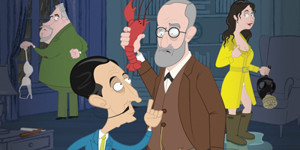
Hysteria imagines what happened when Sigmund Freud (played by Ged McKenna) met Salvador Dali (John Dorney) in 1938 in Freud’s London home (just before his death in 1939). Freud is resting but is startled by Jessica (Summer Strallen who I gather normally plys her trade in musicals), who turns out to be the daughter of one of his previous patients, who was the basis for his theories of presexual shock. Jessica gets out of her wet clothes (including Freudian slip obviously), hides in closet (!!), Freud’s doctor, Abraham Yahuda (Moray Treadwell) arrives, followed later by Dali, played in a deliberately over the top way. This is the set-up for a visual farce, which uses language and props to simultaneously examine Dali’s art and Freud’s theories of psychoanalysis. To give you an idea, at the point Dali enters, events have conspired to leave Freud holding a snail infested bicycle, with a bandage on his head which looks like rabbit ears, and his arm in a wellington boot. Geddit.

It is unabashedly a clever play and has Johnson’s trademark veering between low(ish) comedy, high(ish) intellectualism and dark insight often in the same scene. It examines many of the criticisms of Freud’s theories and Dali’s surrealist art – it rams this home through Yahuda’s criticism of Freud questioning the “Moses myth”. It demands attention. You will learn a lot – I had no idea about Freud’s turn on a sixpence on who bears “responsibility” for sexual abuse. But it also has some proper laugh out loud funny bits. And it does go from A to B – or maybe it doesn’t as the ending suggests a dream. It probably helps if you have a tiny bit of insight into the work of the two key characters. But it has a structure (farce) which is constant – which makes it easier to digest than early Stoppard the closest parallel I know.

I am sure there have been, and may well be, higher profile productions of the play but this audience member for one is grateful to LCT for taking it on. Thanks.

Kopatchinskaja and Gabetta at the Wigmore Hall review ****

gabettakopatchinskaja-2-949x466

Patricia Kopatchinskaja, Sol Gabetta

Wigmore Hall, 27th April 2017

Iannis Xenakis – Dhipli zyia
Jörg Widmann – Extracts from 24 Duos for violin and cello
Maurice Ravel – Sonata for violin and cello
György Ligeti – Hommage à Hilding Rosenberg
Peter Eötvös – a Call
Zoltán Kodály – Duo for violin and cello Op. 7

So it may not be on a par with the level of adulation reserved for Radiohead at Glastonbury but when the well heeled, third agers at the Wigmore Hall fall for a performer you can feel it (albeit in the form of polite applause and a few bravos). And on this evening they had two to really fawn over.

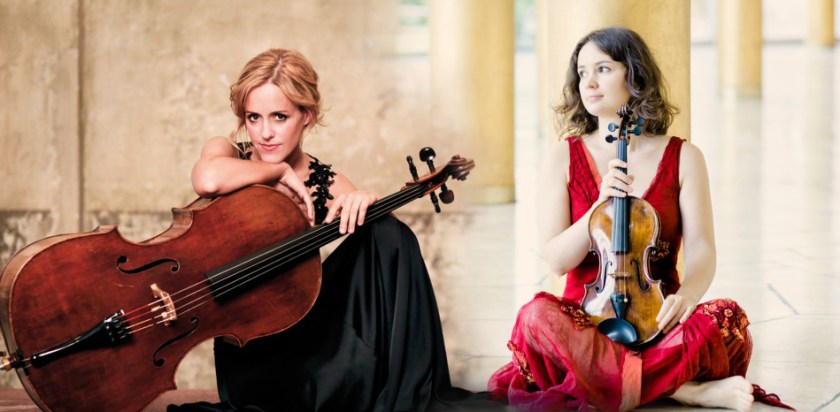
Moldovan Patricia Kopatchinskaja and Argentinian Sol Gabetta (looks like it is obligatory to mention nationalities in reviews of classical concerts) might have stepped straight out of casting central when it comes to playing the uninhibited, young female violinist and cellist. The thing is though they are the real deal. Individually they are both captivating performers, together they are awesome. Whilst this was actually a less intimidating programme than it might have looked on paper, it was still anything but genteel. But it cleverly showed off both their individual virtuosity and their combined energy, notably in the Ravel sonata and the Widmann extracts.

It was the Xenakis, Widmann and Ligeti pieces that drew me into going and they did not disappoint. The Xenakis piece is very early (1951) from his first year studying with Messiaen before he shook it all up with Metastaseis and created his own distinct sound world. The piece is still tonal, based on Greek folk songs and owes a clear debt to Bartok. But the two movement duo is still thrilling. PK and SG then played 6 of the 24 Widmann duos. I was not familiar with these but I should be. Lots of invention and a wide dynamic which seemed to fit our two heroines perfectly. More Wildman than Widmann.

Then the Ravel sonata. Now I don’t know why but I went into this less than fussed about hearing it. I sort of tolerate Ravel’s orchestral music and quite like a bit of the piano pieces but this sonata had passed me by. What a chump. This was outstanding. One of the best pieces of music I have heard so far this year. Just goes to show that you should keep your mind open. It is much more dynamic and aggressive than the earlier Ravel works I have heard. There is a real battle between violinist and cellist, which eases up in the final movement, and again an echo of our pal Bela B.

After the interval the Ligeti was a short, sweet growling canon-like thing – terrific. I was less sure about the Eotvos solo violin piece written for PK but heavens can this woman play a fiddle. And I have to admit defeat on Kodaly. I have tried but I just can’t get anything out of his music. With Bartok, whilst I need to get my head in the right place I can be drawn in, but I find his mate Zoltan just too prickly.

Overall though (there was a bit of some Bachs and Scarlatti thrown in) this was a genuinely exciting evening of chamber music that got us silver hairs all of a lather. My list of individual performers I will seek out is not long – I am too new to the game – but it has just had two names added somewhere near the top.


The Plague at the Arcola Theatre review ****

956380d6df

The Plague

Arcola Theatre, 27th April 2017

I booked this not knowing quite what to expect. I couldn’t really visualise how this was going to be staged but was intrigued at the idea. Well more fool me. Neil Bartlett and the cast have done a wonderful job in bringing Camus’s parable, written in 1947 after the Nazi “plague” that had engulfed Europe in the Second World War, to life. Given Mr Bartlett’s previous work I should probably have never doubted it would be a success.

Five of Camus witness characters, Dr Rieux (Sara Powell), Tarrou, an unspecified businessman/official (Martin Turner), Rambert, a journalist (Billy Postlethwaite), Gotthard, an unstable petty crook (Joe Alessi) and Grand, a widowed clerk (Burt Caesar) begin reciting their “objective” testimony through microphones in the manner of a Select Commttee appearance. This testimony is returned to throughout the 90 minute play, but is overtaken with “subjective” individual narratives that track the emergence of the mysterious plague, the reaction of the authorities, the quarantining of the unspecified city, the devastation wrought by the contagion and the eventual and surprising disappearance of the plague and the return to normality, a sort of triumph of good over evil.

With a non-naturalistic bare set (and just a handful of props), it is left to the words (and some deft lighting and sound), and the way in which they are delivered, (with some effective use of the actors combined in a chorus at key points), to very effectively conjure up the images (the death of the rats, the nature of the deaths, the increasing desperation and panic in the city, the failure of a serum, the attempted cover up by authorities, the arbitrary nature of the plague). It is not to hard to spot the influence of Mr Bartlett’s early days in Complicite.

So a very smart piece of work both in presenting the still relevant allegory of Camus’s novel and in creating a sense of unease and foreboding which resonants beyond the play itself. I purchased the text and a quick whizz through it shows just how clever Mr Bartlett has been in adapting the novel and concisely delivering a parable for our own times. I have a feeling that when I come to look back at this year’s theatre-going this will rank very highly. After all the most effective drama is that which sticks in your head, and this is already doing exactly that. It has deservedly sold out I think but worth keeping on the radar should it ever re-appear.

And a reminder. For £50 you can buy an Arcola passport which gets you 5 tickets. That is just bonkersly good value. A tenner per trip for work of the quality that is turned out here. Just buy one. Now.


Creating Modernism in France at the Ashmolean Museum review ****

d2p_cover-1

Degas to Picasso: Creating Modernism in France

The Ashmolean Museum, Oxford, 20th April 2017

So a day trip to the Ashmolean to take in this exhibition and a bit of the mighty Ashmolean’s permanent collection, (favourites include the Sickert room, the Medieval English collection and the Chinese ceramics and art). Well worth it since you ask.

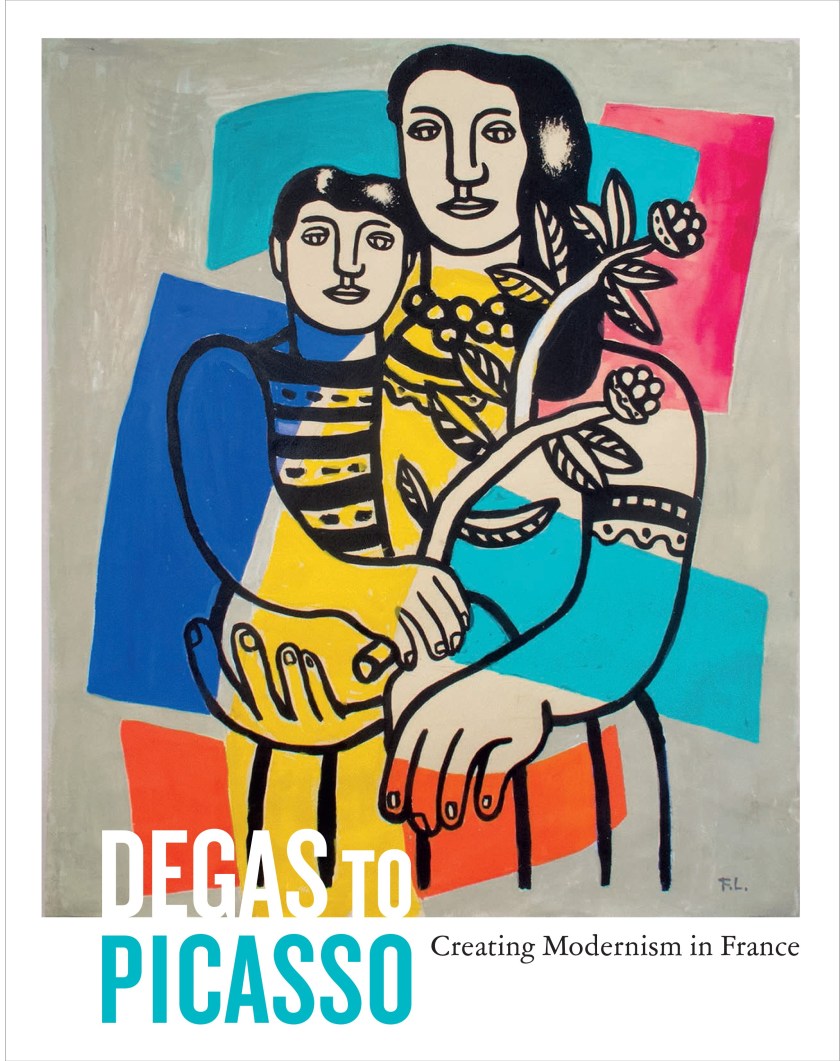
So this loosely, and not entirely accurately, titled exhibition takes in highlights from the very fine collection of Ursula and R Stanley Johnson, from the Romantics and Neo Classicists of the early C19, through Impressionism and Post Impressionism,  and into the myriad of movements through the early C20, notably Cubism. It does a grand job in showing just how complex and exciting the evolution of Modernism was in France (largely Paris obviously) during those heady days. The collection, I gather,  was initially centred around drawings which feature especially in the first half of the exhibition, but in the second half we do get some lovely paint. Just goes to show what you can do if you send years studying art history, inherit a gallery from your dad and then deal your way to this.

There are plenty of examples of drawings from the top notch greats of the canon but what I found most interesting was the showcasing of many works from those who might not be considered household names, notably Juan Gris (three works here), Albert Gleizes, Jean Metzinger and Jacques Villon. Talking of Juan Gris if you quickly tire of the crush of schoolkids and tourists ticking off of Guernica in the Reina Sofia wander off to Room 208 – a collection of stunners by Gris.

Now I can take or leave all the Romantic and Neo Classicist stuff, actually no I can leave it, with Ingres and Gericault in particular a complete mystery to me. There is however a fine JL David drawing (Old Man and Young Woman) once owned by a Mr Henry Moore apparently. So I only really started to pay attention at the Manets, in particular the lithograph here taken from the Berthe Morisot portrait in the Musee D’Orsay and the delicious watercolour of a Mirabelle Plum. Degas drawings are then given an extensive workout (I am sorry I just can’t get too excited about these) before we get to some wonderful Cezanne drawings with the Study of Pine Trees the most remarkable to my eyes. Manet and Cezanne – to this day I wonder why it took me so long to get it. There is also a Portrait of Doctor Gachet which apparently is Van Gogh’s only etching – great stuff.

From here it is the Picassos and Legers which I guess will wow the punters but I was drawn to Jacques Villon, the brother oF Marcel Duchamp and Raymond Duchamp Villon, and his contemporaries, Jean Metzinger and Albert Gleizes. All three were part of the Puteaux group whose key exhibition was in 1912, the Salon of the Golden Section. In particular I would point to to Villon’s watercolour study Soldiers Marching, and the oil portrait and drawing of his father, to Jean Metzinger’s oils, The Yellow Feather and Landscape, and to Albert Gleizes’s Still Life, his landscapes and the Stravinsky portrait. For any of you, like me, who often finds themselves more admiring, rather than really enjoying, the cubism of Picasso and Braque, I think you will get a lot of aesthetic pleasure out of these particular works. I guess some might say they veer a little towards the decorative, (and some poncey critics won’t countenance them next to big Pablo), but there is an easy immediacy here and lots of lovely colour, so I am smitten. I had seen a smattering of works elsewhere by these three but paid insufficient attention. They are now firmly on the “actively seek out’ list. Apparently the Johnsons have a truckload of Golden Section artists. I would pay good money to see those.

So there you are. A wonderful collection, easy to take in, in a top notch institution. It was a bit busy when I went (same as the Fitzwilliam when I go) and it doesn’t have any late opening as far as I know but well worth a visit. Mind you only a week left – sorry.

Who’s Afraid of Virginia Woolf at the Harold Pinter theatre review ****

35425_full

Who’s Afraid of Virginia Woolf

Harold Pinter Theatre, 19th April 2017

So I came quite late, as is my wont, to this particular party for one reason and another. There is still a month to go on the run though and this is definitely worth seeing. Though it still looks like you will have to pay an arm and a leg to get a decent stalls seat, and if you go for cheaper options upstairs, you risk losing an arm or a leg in this most uncomfortable theatre.

But it is very, very good. You know the story. Martha and George invite their new neighbour/colleague(s) back to their house after a boozy party and then all four keep drinking. And Martha and George kick seven bells our of each other verbally dragging their new “friends” into the carnage. Everything that is wrong with their lives, and the root causes thereof, pours out in a torrent of dextrous abuse which leaves them and us reeling. Marvellous, and cathartic, stuff.

Now all the reviews harp on about Imelda Staunton’s performance as Martha which is, to be fair, breathtaking – vicious, sexy, vulnerable, sometimes all in the same line. Yet I think the real star of the show is Conleth Hill as George. George and Martha are yoked together by their shared sorrow, fears and frustrations but to watch Mr Hill show this man of immense intelligence reduced to analysing his own vindictive barbs even as he delivers them is a masterclass of acting. Luke Treadaway and Imogen Poots as guests/victims, Nick and Honey, are also superbly on point – it seems only the passage of time separates them from a fate comparable to George and Martha. And there is a reason why Caryl Churchill trusts her treasured texts with director James Macdonald – he knows when to just trust the writer, as he does here perfectly.

There are times I confess where, for the briefest of moments, I wish for a lighter tone/turn, just some salvation, to emerge, but then Mr Albee’s lines are just so delicious that you just keep on willing the slugfest on. As I think do George and Martha. Oh and I can’t really see all this state of the nation parallel stuff that others read into this.

George and Martha. Can’t live with em, can’t live without em. And a reminder to take it easy on the hard stuff.

Next up Mr Albee’s goat.

Consent at the National Theatre review *****

consent_3435_680x297_20161127

Consent

Dorfman, National Theatre, 27th April 2017

Crikey. This is a very fine piece of theatre make no mistake. This was my first exposure to Nina Raine’s writing though I had been really looking forward to it based on what I had read about her previous works and on the proper reviews for this. But that didn’t prepare me for quite how strong a work this turned out to be.

The play explores complex issues of consent, empathy and justice in the context of rape. Kitty (Anna Maxwell Martin) and Edward (Ben Chaplin) are new parents. Edward is a barrister as are their friends, couple Rachel (Priyanga Burford) and Jake (Adam James), and Tim (Pip Carter). They try to set up Tim with Zara (Daisy Haggard), Kitty’s actress friend, without success initially. Cue deft comic writing and unsettlingly direct discussions around the rape (and other) cases that the barristers are prosecuting/defending. We watch Jake and Rachel’s relationship flounder on his infidelity and then recover. Edward too has an affair so that Kitty seeks a sort of revenge through a relationship with Tim, who had been seeing Zara. The break up leads to a custody battle and Kitty seeking  to have Edward prosecuted for marital rape. Edward, perhaps, finally understands. Running through all of this is rape victim, Gayle (Heather Craney), who does not secure justice and, in consequence, takes her own life.

No apologies for laying out the plot but I think this is justified firstly, because the run at the Dorfman is nearly over and is sold out, secondly, because the above doesn’t even get close to capturing just how clever and multi layered this play is and thirdly, because no-one will read this anyway. We get to understand something of how the adversarial justice system works in Britain, notably the emphasis on rhetorical skill in driving the outcome. We see how the necessary fictions which lay behind this system, (such as innocent until proven guilty, the so called “cab rank”, cross examination and the admissibility of evidence), together with the driving need to “win”, leaves the barristers incapable of any empathy with the victims in rape cases. We see how the system fails rape victims and destroys lives. We see how frustration and infidelity sours one marriage and breaks another apart. We see how the need to create a “performance” in work can seep into the home and relationships.

Nina Raine’s writing is exquisite as these insights are layered into believable, but still nuanced characters, and the whole tragedy is leavened with real humour. There are some memorable touches: the play begins and ends with Kitty and Edward prosaically folding a sheet, the witty descriptions of Greek drama, the (I think) symbolism in the shifting positions of the sofas, the early reveals and later call-backs, the multiple lampshades/viewpoints of Hildegard Bechtler’s set.

The research that went into the play is palpable but never obvious or didactic, which given the subject matter is remarkable. The dialogue feels entirely natural and never forced. There are occasions when you can see the joins, when Kitty starts needling Edward at one of the get-togethers, when Gayle gate=crashes the party, when Zara reveals her pregnancy plans, but all are justified to move the stake up to the next level. Overall, the rational and emotional part of your brain will be given a massive workout. Roger Mitchell’s direction is perfect precisely because it lets the text and the actors get on with it.

Anna Maxwell Martin is properly awesome as she charts how Kitty’s need to make Edward understand what he has done becomes overwhelming. Ben Chaplin (who was captivating as the amoral fantasist in Apple Tree Yard on the telly) is also perfectly cast, as his egotistical smugness turns to desperate wheedling. I hope Adam James is not a complete misogynist bully in real life because he is brilliant at playing them (I remember his performance in Bull at the Young Vic). Daisy Haggard (who I only know from TV comedy Episodes where she creates comic genius from one expression) is terrific, as are the rest of the cast. Oh and hats off for the performance of Misha Wakefield Raine as Edward and Kitty’s baby.: nerveless.

So if this doesn’t get a run elsewhere I have absolutely no doubt it will be revived in the not too distant future given its extraordinary quality. And I cannot wait for Nina Raine’s next play which I understand will be … ta dah … a play about JS Bach starring Simon Russell Beale. And if I am not mistaken Mr SRB was viewing this very performance of Consent. I have no idea what on earth Ms Raine will do with this idea but I AM SALIVATING AT THE PROSPECT – repeat it is about the genius Bach starring the genius Simon Russell Beale.

Incident at Vichy at the Finborough Theatre review ****

edwardkillingbackjeremygaganlawrenceboothmanmichaelskellernbrendanorourkeandrocrespowillbryant-thumb

Incident at Vichy

Finborough Theatre, 16th April 2017

I haven’t see that many productions at the Finborough but what I have seen there has been uniformly excellent. This was no exception.

This is an Arthur Miller play which premiered in 1964 and was prompted in part by a visit with his third wife, Inge Morath, to Mauthausen concentration camp near Salzburg and to the trial of some Auschwitz guards. It focusses on a group of male characters who have been rounded up and detained by a local police offer and a German military officer in Vichy France and are awaiting an inspection by a German doctor. Most of the characters are Jewish and they begin to discuss what may be about to happen. As the true horror of their situation becomes clearer their fears, appeals to rationality, desperation, denialism and ultimately their true humanity is explored with Miller’s characteristic incisiveness and intelligence. How was/is this allowed to happen and who was/is complicit in letting it happen?

There is sufficient plot and development to keep the audience gripped and emotionally engaged but the play ultimately revolves around the themes that are explored by this very diverse range of character viewpoints. Director Phil Wilmott and colleagues wisely opted for a non-naturalistic white room set to highlight these themes and the tiny Finborough stage with audience piled up in front was ideal in conveying the increasing desperation of the characters.

Unfortunately this has been and gone but it would be a crying shame if London had to wait another 50 years (for that is how long it took) for this to reappear. But it does lend further credence to a couple of golden rules in theatre – firstly, if anything takes your fancy at the Finborough take the plunge, and secondly, always check out any production of an Arthur Miller play.