Isabelle Faust and Kristian Bezuidenhout at St Luke’s Old St review *****

finsbury_st_lukes_1

Isabelle Faust (violin), Kristian Bezuidenhout (harpsichord)

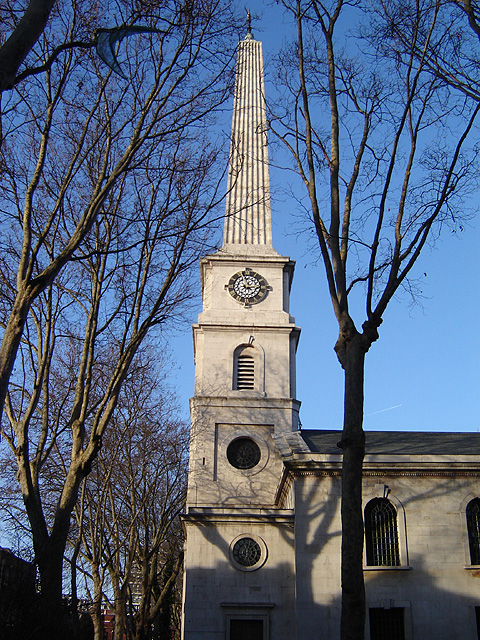
LSO St Luke’s Old St

JS Bach

  • Sonata no 3 for violin and harpsichord in E major BWV 1016
  • Partita no 2 for solo violin in D minor BWV 1004
  • Sonata no 1 for violin and harpsichord in B minor BWV 1014
  • Toccata for harpsichord in D minor BWV 913
  • Sonata no 6 for violin and harpsichord in G major BWV 1019

The second instalment in Isabelle Faust and Kristian Bezuidenhout’s rendition of the six JSB violin sonatas BMV 1014-1019 following on from the Wigmore Hall in April. (Isabelle Faust and Kristian Bezuidenhout at Wigmore Hall review ****). Once again they allowed themselves a solo each, but this time some more JSB, in keeping with the Bach Weekend theme, which also celebrated the 75th birthday of the venerable Sir John Eliot Gardiner.

This time I was joined by Bach groupie MSBD. Early start. 11am on a Saturday. I wish every day started this way though.

At times JSB is truly sublime. More so that any other composer. You might find it in the cantatas, others in the masses or passions, or maybe the keyboard, instrumental ensemble works or the cello suites. Not for one moment could I disagree with you but, for me, the apotheosis of JSB’s genius lies in the violin sonatas and partitas, solo and accompanied. Great art induces a state of rapture. Not the nonsense exclusive coach trip into the sky that some befuddled Christians cling on to, but the state of grace, individual or collective, that you can feel inside your whole being when dancing in a club, or breathless and motionless in the theatre, or when your ear sends pure sound to your brain at a concert or when you get lost in a painting. It doesn’t happen much, just as well as that might overwhelm, but it is part of what makes life worth living. I appreciate that this might be a terribly old-fashioned way to think about art but I dare you to tell me I am wrong.

Anyway it happened here. In the final movement of the Partita. The immense Ciaconna. Amongst Bach’s finest creations as the programme says. They’re not wrong. It gets me most times but here, OMG, Isabelle Faust, her violin, St Luke’s, my ears, my brain, the audience, and of course, old JSB all came together as one. This old buffer did his best to hold back a tear. It is so simple, just a basic four bar pattern, (apparently “the harmonisation of a descending tetrachord” – thanks again programme notes). But JSB is able to do so much with it including a huge mood shift about two thirds of the way in. This is when you might just believe that JSB reconciles himself to the early death of first wife Maria – he was to meet Anna just a year later.

The accompanied sonatas came close to their solo cousins. I have banged on before about just how expressive Isabelle Faust is when it comes Baroque violin. She’s pretty handy too when it comes to the rest of the canon. Listen to her recordings of the Beethoven, Bartok and Berg concertos if you don’t believe me. She can even persuade me with her historically-informed interpretations of that Mozart chap. But Bach is where she enters a different realm. She applies an astringent, almost abstract, rigour which just blows me away. And KB, who has a gentler conversation with his harpsichord, is the perfect accompanist. IF doesn’t muck it up with unnecessary and unwarranted vibrato, and both the left and right hand lines for KB are clear and not jangly. This leaves plenty of room for the sonatas to breathe and, in the superb space that is St Luke’s, with the sun streaming in from outside ….. well you can see where I’m coming from.

JSB continued to revisit and buff up the six sonatas throughout his life. Maybe that’s why the old boy perfected his art here. In the early decades of the C18 the trio texture was considered the compositional ideal for chamber music, creating a perfect synthesis of linear counterpoint, full-sounding harmony and cantabile melody, (thanks once more programme notes). Put this trio principle into the hands of the man who got closer to the ideal of perfect harmony than anyone else in the history of Western music, with the melodies driven by the finest of instruments the violin, then obvs it was going to work. JSB created trio works for flute, viola da gamba (which I like) and organ but they don’t come close.

Listen to No 1, BMW 1014. It kicks off with a 5 part texture with double stopping and a 3 part effect on the harpsichord. The two quick movements, (the first 5 sonatas stick to the old skool sonate di chiesa four movement set up with No 6 breaking free into 5 movements), have each of the three lines chipping in together, the perfect realisation of the trio principle with the third movement switching to violin and harpsichord right hand weaving around a left hand bass. No 3 BMW 1016 kicks off with a slow movement where both players can show off their skills, followed by a bouncy fugue, a powerful lament in C sharp minor before rounding off with an extraordinary gallop where the violinist can really show off. No 6 BMW 1019, is very different, with a central solo harpsichord movement flanked by two jolly giant Allegro opener/closers (real faves) and two slow, simple (-ish) shuffles in a kind of canonic form.

Other than the aforementioned divine Ciaconna the Partita No 2 consists of 4 dance movements, an Allemanda, a Corrente, a Sarabanda (which foreshadows the Ciaconna) and a Giga. We have Leopold, Prince of Anhalt-Kothen’s Calvinism to thank for JSB’s discovery of all things boogie as he wasn’t confined to elaborate Church music in the Prince’s employment. (We also have the genius Antonio Vivaldi to thank for the twin graces of rhythm and repetition that underpin JSB’s unique ear for inventive sonority).

Other than the Sarabanda thsee dance movements are all monophonic in structure so easy to understand and have a dominant rhythm from which the violin goes off on ever more exciting harmonic excursions. It was a massive hit when first published and performed and remains so to this day. It really is very easy to see (and hear) why. You do not need to have any interest or understanding of classical music to get this. You just need ears and a pulse. So whatever your musical bag, I implore you to listen to it. IT WILL MAKE YOUR LIFE BETTER. I promise.

KB had a little less time to shine though not by much as he picked the most extensive of the six toccatas, BMW 910-916. The D minor 913 was composed when JSB was just 20 as he went AWOL from his job and walked the 450kms to Lubeck to hear Dieterich Buxtehude play. So next time you complain about how tricky it is to get to the Barbican think on JSB’s devotion. It opens with a typical Baroque improvisation, (typical for others that is), followed by a couple of JSB trademark fugues linked by a bridge which shifts tempo and ending with a tierce de Picardie, a major chord at the end of a minor key piece, which JSB was partial too. After the Partita and the first two sonatas this harpsichord piece shifted the mood before the final, jolliest, No 6 sonata. Smart programming and smart playing, (I only know these toccatas from the never surpassed Glen Gould on piano).

So there you have it. This will definitely be a top 10 2018 concert for me and I am pretty sure for MSBD, though I have lined up a few more for his delectation. And I wonder if, by the end of my musical education, I end up realising that no-one topped Bach. It is beginning to feel that way.
 

Venetian Baroque: Academy of Ancient Music at St Luke’s Old St review ****

venetia_-_porcacchi_tomaso_-_1620

Academy of Ancient Music, Bojan Cicic (violin), Persephone Gibbs (violin), Sarah McMahon (cello), Alistair Ross (harpsichord), William Cater (theorbo)

LSO St Luke’s Old St, 15th June 2018

  • Dario Castello – Sonatas No 10 a 3 Book Two, No 1 a 2 Book One, Sonata No 1 for violin (Book Two), Sonata No 2 for violin (Book Two), Sonata No 12 a 3 (Book Two)
  • Tarquinio Merula – Ciaconna
  • Michelangelo Rossi – Toccata No 7 for harpsichord
  • Giovanni Girolamo Kapsberger – Toccata and Ballo for theorbo
  • Francesco Tunrini – Sonata a 3 “il Corisino”

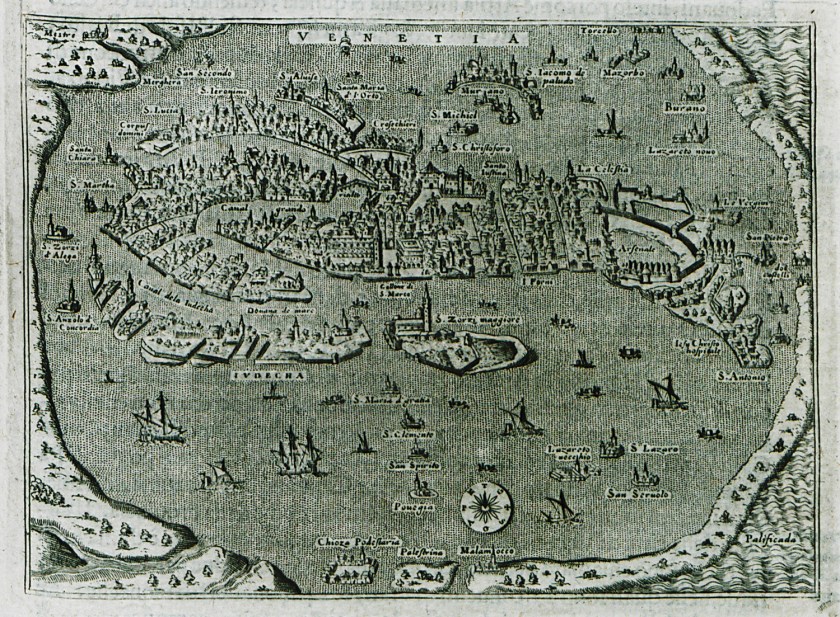
Venice in the early C17 was the hot place for music in the West. The Republic might have begun its long slow decline, having picked fights with the Ottoman Empire and the Vatican, amongst others, but there were plenty of punters who had made big bucks and were looking to spend it. It was certainly a big-time, sexy, funky, party town. Carnival was big business. Public opera, with that genius Claudio Monteverdi in the vanguard, was taking hold. New instrumental ensembles were being tried out. Exquisite brass was set alongside double and triple, or more, choirs in churches, following on from Gabrieli’s innovations in the previous century. (Even the guards telling the snaking hordes of tourists in St Mark’s Basilica to shut up sound musical thanks to the stunning acoustic). The best performers, composers and instrument makers gathered there.

This was the music members of the AAM sought to highlight in this BBC lunchtime concert, built around the sonatas of Dario Castello, which, to an extent, defined the form. He was born around 1590 and died around 1658, though his best known work comes from the 1620s. He was the leader of a wind ensemble, cornetts, sackbutts, shawns, bagpipes and so on, and might have had a job in St Mark’s. His two books of sonate concertate comprise 29 pieces, (five were played here), that alternate retro polyphonic sections with cutting edge, (by 1620s standards), expressive recitative, the stile concitato,  a la Monteverdi. Instruments are specified, including continuo, musicians are expected to be on their game. This simultaneous looking backwards and forwards is what makes this music fascinating if not entirely satisfying.

In addition to the Castello we had a chaconne, a simple bass riff with increasingly inventive variations, dead easy for the Baroque initiate to grasp, from one Tarquinio Merula, a harpsichord Toccata from Michelangelo Rossi, an unusual Toccata and Ballo for theorbo from Giovanni Girolamo Kapsberger and a concluding trio sonata from Francesco Turini.

Merula never worked in Venice, (he had positions in Cremona and Bergamo)  but he knew the drill. He was an argumentative chap by reputation but he helped set the tone for the dance vibes of the later Baroque. Rossi came from Genoa, worked in Rome, wrote madrigals and operas, and, despite being a violinist, a book of 20 toccatas, which embrace some dramatic chromaticism and choppy tonality as here. Now you don’t often see a theorbo solo even if you are a paid up member of the Baroque club. The theorbo is that giant-sized lute that the player rests, like a loving parent, on his/her knee. GG Kasperger came to Rome by way of Vienna and was, in terms of theorbo virtuosity, the Charlie Mingus of his day. Turini was also born outside of Italy and published madrigals including some early instrumental sonatas.

I probably don’t need to tell you how very fine the members of the AAM were in this very rarely performed repertoire. Their excitement in exploring the, shall we say, backwaters, of the Venetian School was palpable. Bojan Cicic, as leader of the AAM, has appeared a few times before on this blog, as has Alistair Ross on the harpsichord. William Cater was as eloquent in his explanation of the theorbo piece as he was in its playing, but I was particularly taken by Persephone Gibbs’s playing in the second solo violin sonata of Castello. Great first name. Even better surname. And she leads a Baroque orchestra based in Devon. No relation though. She has talent after all.


Tallis Scholars and Peter Philips at Cadogan Hall review ****

thomas_tallis

The Tallis Scholars, Peter Phillips (director)

Cadogan Hall, 7th June 2018

  • Robert White – Domine, quis habitabit
  • John Sheppard – Missa Cantate
  • John Sutton – Salve regina
  • Robert White – Magnificat
  • Thomas Tallis – Spem in alium

I just cast my eye over an article in the Guardian purporting to list the best albums of 2018 so far. The Guardian has been my newspaper of choice since my teens. In a world of (too) fierce tribal-like identities it pays to read something you agree with. Or does it? Whatever, it is a reasonable bet that this list encompasses exactly the sort of contemporary music I should be listening to. I hadn’t heard any of it. I was aware of a few of the artists listed and I wouldn’t say I am completely immune to the music of today though the path I cut through it is both random and infrequent. But all of this was a mystery to me.

Now three decades ago I would have been all over this list like one of the cheap suits I own. And that millennial equivalent me would probably have scoffed at the very notion of Renaissance polyphony. Yet here I am, years later, near wetting myself at the prospect of listening to an expanded Tallis Scholars under their renowned leader Peter Phillips, perform Thomas Tallis’s Spem in alium. As I suspect was the majority of the full house at Cadogan Hall.

So I say to my younger self, and any readers who are still in the prime of their cultural life, make damn sure you listen to this masterpiece as soon as you can. You could always try Janet Cardiff’s sound art installation, which takes a recording of Spem in alium, and puts in through 40 carefully positioned speakers, if it swings by you. Extraordinary. It might be in MOMA as we speak. Anyway add it to you cultural bucket list. And in return I promise to seek out a couple of the modern beat combo recommendations from the list referenced above and try to like them.

Now if you are Mr Phillips, and you have secured more than a couple of dozen fine voices to add to the 16 or so permanent members of the Tallis Scholars, you are not going to pass up the opportunity to programme some other, much rarer, large scale vocal works. Specifically here pieces from the Tudor period in England. Now we know a fair bit about Thomas Tallis’s (1505-1585) music, (if not his life), as we do his erstwhile pupil, William Byrd (1543-1623), because these two managed to snaffle a monopoly on publishing and printing music, sacred and profane, from Elizabeth I. This despite them both being (careful) Catholics. Control printing and you control prosperity, printing being as big a deal in the C15 and C16 century as t’internet is now. The other composers on this programme though were less fortunate, despite being as talented, surviving copies of their music being far rarer.

That is what makes this polyphonic vocal music so fascinating beyond the beauty of the modal scales, the harmonies and the thick, rich interweaved textures. It is the history behind it. The when, why and how it was created and the when, why and how it was preserved, and in some cases, rediscovered and brought to a new level of appreciation, in part through recordings as well as performance, in the last few decades.

For a vast swathe of this music was destroyed pretty much as soon as it was created. If it was Latin and liturgical then odds were some bell-end or other would shred or burn it in the Reformation, as one bunch of religious nutjobs asserted their half-arsed fantasies over another.

Thus the richest source of sacred music from the early Tudor period is contained in just three illuminated manuscripts, the Eton Choirbook, and the later Lambeth and Caius Choirbooks. The Eton Choirbook dates from 1500 or so, is incomplete, with 64 surviving works from 24 different composers. It tracks the development of polyphonic music in England from the five voice, non-imitative textures where contrast comes from voices dropping in and out, to the beginnings of imitation ,(a voice singing the same line a bit later), underpinned with cantus firmus techniques, (a sort of plainchant anchor normally from the tenor part), and the attractive dissonances conjured up by frequent false relations, (a chromatic contradiction apparently, two voices singing a different note simultaneously). The latest pieces in the Choirbook dump the cantus firmus, up the imitation and generally get more complicated and florid, “parodic” is the technical term, aping what was going on in the Low Countries, Italy and France. You see, dear Brexiters, even in the late 1400s England was being influenced by those funny furriners.

The earliest piece in the concert then was from this Choirbook, John Sutton’s setting of Salve regina, the liturgical highpoint of the Virgin Mary craze which, amongst many other things, is what makes Catholicism so weird. This is all we have of Sutton, and all we know is he was a Fellow at Magdalen College Oxford in 1478 and at Eton the following year. It is for seven voices, here doubled, and swirls around in very pleasing fashion, highly melismatic,  with points where all the voices mass together.

It wasn’t quite as powerful as the two pieces by Robert White (1535-1574) however. White was appointed to the post of organist and master of the choristers at Westminster Abbey no less, at the tender age of 32. Unfortunately he only managed another few years falling victim, as so many did, to one of the many outbreaks of plague in London. The first motet here, Domine, quis habitabit is a later Tudor psalm setting which White was particularly drawn to and involves three pairs of voices (again doubled here) delivering waves of imitative polyphony. The second White piece, a Magnificat, was an altogether grander affair which looks back to earlier styles. It is underpinned by long drawn-out plainchant divided amongst the voices, interspersed with long runs of melismatic melody. Apparently White employs gymel, the bifurcation of parts to add further texture. Who knew. Anyway I was much taken with this, probably my favourite other than the Tallis.

I was also mightily impressed by the Missa Cantate from John Shepperd (1515-1558). He is another chap about whom we know very little though PP and the Tallis Scholars have put some scholarship in to find out what they can. This work probably dates from the mid 1550s. The source for this “festal mass” is unclear but Shepperd clearly felt confident enough to revive the form with Mary on the throne and Catholic musical fol-de-rol back in favour. It is in six parts divided (doubled) into high and low sections which finally come together in the Gloria. It is very ornamental, with indulgent melisma stretching out the text so that you really get your money’s worth. The high parts divide at certain points to create the polyphonic wall of sound which we (in the hall) know and love especially in the Credo. Apparently Shepperd marked the score with the instruction “Sing!”. They certainly did. It merited the substantial applause prior to the interval.

The Tallis Scholars like their contemporaries the Sixteen are so good at what they do that you sometimes forget how difficult this all is to get right. I imagine hours of rehearsal and study are required to knock this into shape especially these rarer pieces. With Spem in alium though it is impossible to be so complacent as an audience member. as the  40 singers shuffle on you become aware just how tricky an undertaking this is. I count just 31 words in the Latin text and it clocks in at around 10 minutes. It kicks off by introducing the 8 choirs of 5 parts (SATBB) one by one, shifting motifs around the space through imitation before reaching the massive culmination. Then it reverses back through the choirs before the second coming together and then antiphonal pairs of choirs are created. How they all keep it together is a mystery and you are acutely aware that if this unravelled just slightly then the whole thing would go t*its up pretty sharpish with no hope of recovery. There nothing you can do but surrender to the cluster of swirling sound punctuate by moments of immense drama such as the silence and then key change post respice (look). Or you could try and focus on a few individuals and try to pick out their lines. Good luck though the flatter Cadogan Hall acoustic actually made that a little easier.

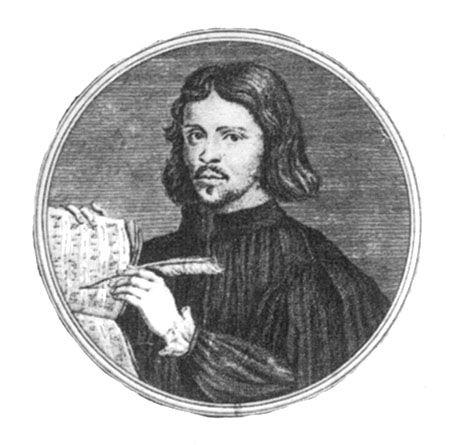
Now Tommy Tallis (that might be him above) wasn’t the only Renaissance man to conjure up a 40 part smash hit. Apparently an Italian fella called Alessandro Stroggio came on tour to London with his equivalent a few years earlier commissioned by the Medicis. When Tallis presented his effort to the Duke of Norfolk in 1570’ish, he apparently took off his gold chain and presented it to TT so overwhelmed was he. This could be nonsense though since the Norfolk was about to be executed by Lizzie I as a persistent Catholic plotter. Despite having lost all their titles and possessions on a couple of occasions and a few lurches in terms of inheritance the Norfolk title is still top dog in terms of the English aristocracy and still Catholic.

Spem in alium was sufficiently famous though to be used at the investitures of the Prince of Wales in 1610 and 1616 from when the first surviving manuscripts date. Every contemporary Renaissance vocal group has had a poke at recording it but I am happy enough with the recording by this very ensemble.

Since all 40 of the singers had turned up for work it seemed a shame not to let them off the leash again and so we were treated to an encore, the 12 part Regina Coeli by Nicolas Gombert. Not strictly Tudor but still a prime example of what was going on in the Low Countries at the time before the Italians took over led by Palestrina. Gombert, along with Adrian Willaert, was the master of the dense, highly imitative, almost contrapuntal, style, and here the shifts between voice groups, especially in the lower registers, were thrilling. No idea about the text but very happy to hear this.

Now I wasn’t going to keep this treat all to myself so BUD was happy to attend, and I spied a couple of other chums in attendance. For a certain poncey metropolitan elite type attendance here was mandatory. Like I say at the top though I really would  entreat you to find a way to hear this. It won’t change your life, it’s just music after all, but it will marginally enhance it.

LSO play Ravel and Mussorgsky at the Barbican review ***

mussorgsky_repin

London Symphony Orchestra, Gianandrea Noseda, Yefim Bronfman (piano)

Barbican Hall, 3rd June 2018

  • Ravel – Rapsodie Espagnole
  • Beethoven – Piano Concerto No 3
  • Mussorgsky arranged Ravel – Pictures at an Exhibition

It has been a few years since I have heard Pictures at an Exhibition live, and I have thoroughly enjoyed Mr Noseda’s way with Shostakovich and Beethoven recently, so I reasoned now was the time to reacquaint myself. Moreover Mr Bronfman’s account of the PC 4 last year, admittedly under the exacting eye and ear of Mariss Jansons and the Bavarian RSO, was pleasurable enough if not earth-shattering (Bavarian Radio Symphony Orchestra at the Barbican review *****). And I thought it right to risk another chapter in my ongoing love/hate relationship with Ravel.

The Rapsodie espagnole is a pastiche, of sorts, of Spanish music, in contrast to the rather more rooted offerings of the likes of de Falla, Albeniz and Granados, though Ravel is not the only French composer to have been seduced by all that sultry dance. Indeed when this was composed, in 1907, Maurice was immersed in all things Iberian what with his opera L’heure espagnole and the songs of the Vocalise-Etude. And his particular favourite was that familiar habanera rhythm – which turned into, amongst other things, the cha cha cha we now today. Mind you his mum was Spanish and he was born just over the border in the Pyrenees so it was in the genes/memes.

This was Ravel’s breakthrough orchestra piece and actually pretty much his only full force work that didn’t start in another form or from the piano. Whilst it isn’t based on any specific Spanish melodies there is no doubting where you are. Ravel, of course, was the master of musical and emotional coloration. Yet he doesn’t always surprise. When he does, for me mainly in the chamber, piano and piano concerto works, he can dazzle. When he doesn’t, often as not for me in the vocal works, he can be just a bit too diddly to no purpose. Not as diddly as Debussy who mostly really tries my patience, but still a triumph of style over substance.

Overall, given the material, this was reasonably enjoyable though I wouldn’t seek it out. There is a distinct descending four note ostinato motif that recurs through three of the four sections, with the Habanera being the exception. This helps it all hang together. The LSO was on top of the score, of course, but Mr Noseda’s reading felt a little forced, but not unpleasantly so, until the final Feria where the band cut loose.

This spilled over into the Beethoven where the quiet string theme that opens the C minor concerto shuffled into, rather than glided into, the room to set up the extended orchestral intro of the Allegro. Last time round in Beethoven I felt Mr Bronfman’s precise, delicate playing meant he got a bit bullied by the orchestra. I feared a repeat. As it turned out he was given enough room to breathe and the LSO, especially in the woodwind and lower strings, was on top form, with the Largo the standout. I have heard more convincing overall interpretations, and a bit more whoosh in the Rondo, but this was satisfying enough.

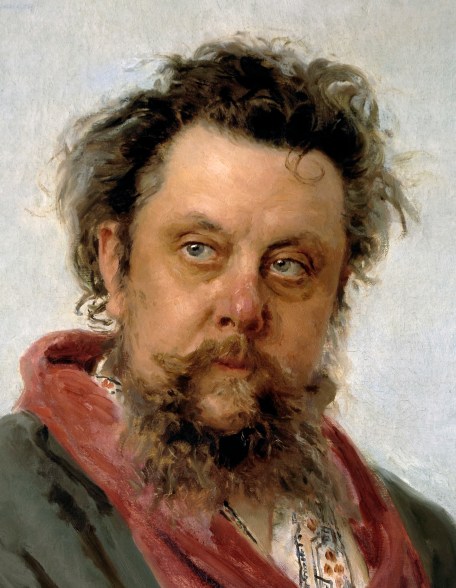
Hendrix, Morrison, Cobain, Vicious, Bonham, Curtis, Johnson, Buckley (x2), Cooke, Gaye, Coltrane, Parker, Parsons, Bolan, Tosh, Lynott, Nelson (PR). Some of my musical “heroes’ who died of unnatural causes, often with a fair bit more left to give, But if you want real rock’n’roll, nearly a century before any of these punters were doing their thing, then Modest Mussorgsky is your man. Obviously, like so many of the above, he was a f*cking idiot to waste his talent mashed up on booze, but, having chosen this course, and he did choose it seeking artistic freedom in this “bohemian life”, he got properly stuck in. Which meant he failed to complete vast swathes of work and didn’t get much beyond the piano and a bunch of songs and the completed opera Boris Godunov. He was a rubbish musician barely caring or knowing about structure or texture but boy could he capture a mood. and in BG he basically captures the essence of Russia.

Anyway there he is above in close up, in Repin’s famous portrait from 1881, which appeared in the marvellous Russia and the Arts collection at the National Portrait Gallery a couple of years ago. He looks a bit rough for sure. Worse still when you realise he was just 42 and died a few weeks later.

Easy to see what the colourist Ravel, as many others have done subsequently, was smitten with MM’s big ideas and couldn’t resist the temptation to smooth off the rough edges. The original piano suite of Pictures at an Exhibition was inspired by a posthumous retrospective of the work of artist Victor Hartmann, MMs mate who died aged 39. Mind you MM’s musical images, as you might expect, went way beyond whatever Hartmann envisioned, but the concept of the exhibition, with the repeated Promenade being us the viewer, holds the whole thing together and adds an ironic, detached air to the bombast. On the piano it doesn’t entirely work but in Ravel’s hands something magical emerges. Ravel used Rimsky-Korsakov’s edition of the piano original so a few changes were made but you get the feeling that MM would have been happy with the result even if he may not have known how Ravel got there.

It might all be very familiar but it the right hands, and the LSO and Gianandrea were the right hands, it can still be thrilling. Bydio, Baba-Yage and the Great Gate of Kiev didn’t disappoint. Boom. If you are a classical virgin and want to find a way into live performance there is no better way. You won’t stay there as you move on, and you may end up thinking it is all a bit daft, but the hairs on the back of your neck will still stand on end whenever you return to it.

Rock’n’roll. Sort of.


Nicola Benedetti and the Academy of Ancient Music at the Barbican review ****

Vivaldi (1)

Academy of Ancient Music, Nicola Benedetti (violin), Richard Egarr (director and harpsichord)

Barbican Hall, 31st May 2018

  • Antonio Vivaldi – Concerto for Violin in D major RV 208 “Il Grosso Mogul”
  • Antonio Vivaldi – Concerto for Harpsichord RV 780
  • Mystery Composer – Sinfonia in D first movement
  • Georg Philipp Telemann – Concerto for Violin in A major TWV 51:A4 “The Frogs”
  • Georg Philipp Telemann – Alster Overture-Suite TWV 55:F11
  • Georg Philipp Telemann – Concerto for Four Violins in C major TWV 40:203
  • Antonio Vivaldi – Concerto in F major RV 569

Time to take BUD to a purely orchestral evening, no voices, albeit in the ostensibly easy on the ear form of the two Baroque masters Vivaldi and Telemann. In the company of KCK who was, rightly, keen to hear the prodigious talent of Nicholas Benedetti. And all of us trusting to the capable hands of Richard Egarr and the Academy of Ancient Music.

Now to accommodate Ms Benedetti some virtuoso music was required. Even by the Red Priest’s breathless standards the D Major Concerto “Il Grosso Mogul” fits that particular bill with its two written out cadenzas in the outer fast movements. I think this showed NB off to best effect with a sharper delineation between soloist and ripieno than some of the subsequent pieces in this well programmed concert, especially in the stunning slow movement. No-one knows where the name grosso mogul comes from but JS Bach was sufficiently impressed to arrange it for organ, BWV 594.

RV 780 is Vivaldi’s only concerto for harpsichord, though only because he noted on the front page of the score that it could be, having originally specified violin and cello. This meant that there was a greater balance across the register than with the double violin peers which AV often wrote and this is what allows for the harpsichord arrangement. Richard Egarr has painstakingly recreated the solo passages, largely with arpeggios and broken chords, which made for fine decoration though I am not sure the Barbican Hall cavern showed this off as well as a smaller more sympathetic space might.

Before the first Telemann piece, the Frogs, Mr Egarr and the AAM had a bit of fun by playing the first movement of a Sinfonia in D by an unnamed composer who we were invited to identify. No answer given but it was plainly Italian so maybe Sammartini (GB) for the simple reason that he churned out a ton of them.

The Frogs is structured in the Italianate three movement fashion, not the Germanic four, and does everything you expect Telemann to do. It is laced with humour, is effortlessly easy on the ears and doesn’t let the soloist hog too much of the limelight. With plenty of riternello and suspension, it made a fine partner to the opening Vivaldi. Not bad for someone, GPT, who never set foot in Italy. The eponymous frog sound on the NB’s first entry is apparently created trough the use of bariolage, the rapid alternation of the same note between fingered and open strings (which Vivaldi was also partial to). There you go. NB was grace personified here, as she was throughout, stepping back into the band when required.

GPT churned out a fair few of his programmatic overture-suites, 600 to be exact, and it is pretty easy to see why the toffs he wrote them for lapped them up. This particular one takes as its inspiration the River Alster which joins the Elbe in Hamburg where GPT was director of its five main churches from 1721 until his death in 1767. (GPT stayed in Paris for a few months during this tenure where he was exposed to the French operatic style – with its dances –  which he incorporated into these suites). In this particular example he serves up an intro followed by eight subsequent movements each of which does exactly what it says on the tin. The “echo” of the third movement, oboes serenely imitating swans in the fifth, the chromatic crows and frogs of the seventh, the lyricism of the strings in the eighth, “Pan at rest” and the joyous winds and horns in the finale as the nymphs and shepherds leave the party. It is “lightweight” I suppose but when it is this much fun who cares.

GPT’s next contribution was one of a set of four concertos each for four violins. And nothing else. No continuo. No other instrumentation. Moreover it is in four movements – slow/fast/slow/fast – like the sonata di chiesa of old. There is plenty going on through its total ten minutes or so and all four violinists get time to shine, Ms Benedetti being joined by three excellent AAM regulars, I wish I could tell you who. Sorry.

The final piece was Vivaldi’s F major RV 569 which has pairs of horns and oboes, and a bassoon, added to the continuo and violins. Here NB took the lead in the outer two fast movements though the horns and wind also have a lot to say. The middle slow movement is the very model of brevity, even by Vivaldi’s economical standards, lasting just 20 bars. I loved it. Mind you I love every note of every concerto that AV ever wrote for violin (and most other instruments). I would it suspect take a lifetime of devotion and an acute and scholarly ear to “know” every one of AV’s five hundred-odd concertos. No matter. With music this immediate it doesn’t matter. Indeed Ms Benedetti encored with a chaconne-like slow movement from a Vivaldi concerto I think but no idea which.

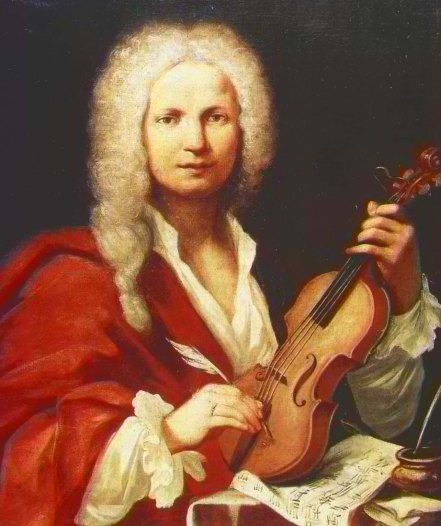
Overworked in his lifetime I reckon, despite his devotion to the education of the orphans in the Ospedale in Venice, underpaid, never given a proper contract, and buried as a pauper in Vienna where he went to get a job when he fell out of fashion. Then ignored for one hundred and fifty years. Always a bit poorly as well. And a ginger, though you wouldn’t know from the stinky wig he is wearing above.

Still no Vivaldi, no Bach. And imagine how much poorer Western art music would have been without Johann Sebastian. GP Telemann, for me, is now quite as satisfying, though BUD and KCK probably disagreed on the night, but he is musical elegance, flair and invention personified. And his music, like Haydn’s later on, will make you happy. As, on every outing, do the AAM. The venue may not be ideal for the intimacy of Baroque even at this scale, but I hope the AAM were able to turn a few quid here because of that. Well deserved.


Echo and the Bunnymen at the Royal Albert Hall review *****

Royal_Albert_Hall,_London_-_Nov_2012

Echo and The Bunnymen: The Stars, the Ocean and the Moon

Royal Albert Hall, 1st June 2018

  • Rescue
  • Villiers Terrace – (Roadhouse Blues)
  • All That Jazz
  • Stormy Weather
  • The Somnabulist
  • Nothing Lasts Forever
  • All My Colours
  • Angels and Devils
  • Bedbugs and Ballyhoo
  • Lips Like Sugar
  • Rust
  • In The Margins
  • Bring On the Dancing Horses
  • Seven Seas
  • How Far?
  • The Cutter
  • The Killing Moon
  • Never Stop
  • Ocean Rain

No real point if reading this if you want an unbiased opinion of EATB’s latest gig at the Royal Albert Hall. In their pomp they were, in the Tourist’s humble opinion, the greatest band of all time. And their pomp was so transcendently gorgeous that they still are. Even when they’re not if you get my meaning. And, the last few times, they haven’t been. Yet the songs still make up for it. Well most of them do.

I am delighted to report though that this time they were, actually, in pretty fine fettle and, to their credit, seemed to have got over the disappointment of the Champions League defeat. Mac’s voice seems to have settled down a bit. The soaring, crooning pyrotechnic baritone of the early days is long gone but so, it seems, is the gravelly booze and fags croak of more recent years. He still picks pointless verbal fights with innocent punters and mumbles incoherently in Scouse but we wouldn’t want it any other way. Will doesn’t get up to much as ever but can still turn on the licks when required. The rhythm section now has a bit of spring in its step; none of the lumpen pedestrian plod of the early noughties. Stephen Brennan on bass is no Les, but he now has his own way with the classics even if he can’t recreate the Pattinson trademark loops, and Nick Kilroe handling the sticks is more comfortable than any of his predecessors, especially in the middle period stuff. No-one has ever drummed like Pete GRHS, and I mean ever, so I will, all my life, remain bereft but best not to dwell on it. Jez Wing on keyboards is a fine musician and the Cairn String Quartet provided string arrangements as sympathetic as any I have ever heard.

The tour is billed as EATB with strings so it was as well that the sound mix here didn’t completely leave the strings high and dry as is so often the case. EATB could play Crocodiles and Heaven up Here back to back as loud as you like and I would, literally die and go to heaven, but any subsequent arrangements, the Ocean Rain material and the few decent songs from the grey album, Evergreen and WAYGTDWYL need a bit more care and attention. The addition of Kelley Stoltz’s guitar made a big difference vs previous incarnations though for this material.

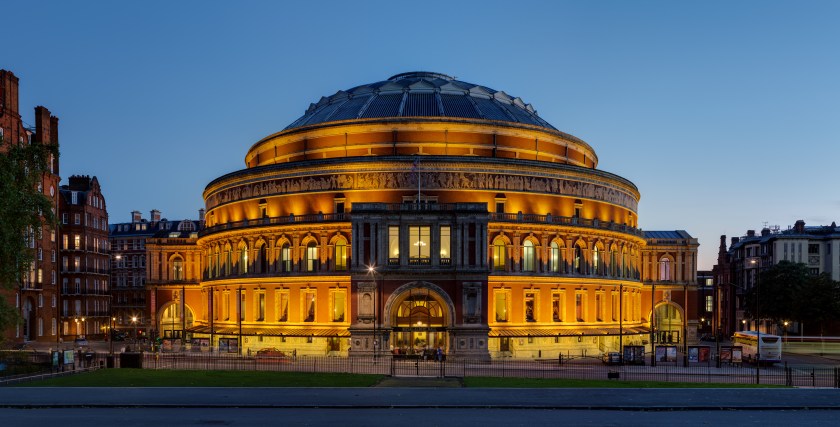
The Albert Hall, with its imposing grandeur, suits the lads, as anyone who remembers the Ocean Rain revival, will know and the light show was spot on. Now then I always have an uneasy relationship with a EATB audience these days. A) it is old(ish) reminding me of me own mortality. B) there are wall-to-wall middle-aged couples, with a smattering of young ‘uns, making us single saddo blokes stand out. The SO has done her fair share of manoeuvres putting up with EATB (and other post punk legends) and no longer feels sorry for me, so she’s a no, and other chums literally couldn’t be less interested. C) There are way too many people only there for the “hits”, Cutter, OR and the post OR singles from the grey album. There are enough “first three album”diehards/”occasionally they’ve still got it” benefit of the doubters, like me but it still makes for a strange experience as the buzz focuses on stuff that, whisper it, isn’t really all that good (Bedbugs and Ballyhoo/Bring on the Dancing Horses being the worst offenders). When I say not that good I actually mean it is brilliant just not anywhere near Bunny sublimity.

So, dropping the sanctimonious “I was there from the start”, “it was all downhill from Porcupine” pose, what were the highlights I hear you ask. Well obviously the three openers, with the Doors tribute, from Crocodiles, the standard intro give or take. In an ideal world I’d open with Going Up and squeeze Do it Clean and Simple Stuff into the list but I get that a couple of near sixty year olds trotting out an album from 40 years ago might not seem cutting edge. BUT Crocodiles was, and still is, since it takes the best of post punk rhythms, with a bit of punkish attitude, lays on top Mac’s most personal lyrics (the low rent Homeric epic poetry was leavened with the everyday), most of Will’s best melodies ever and filters this through a history lesson of their coolest ever predecessors, Velvet Underground, Doors, Television, Bowie, Modern Lovers, and, for Mac at least, Scott Walker. Many have followed Crocodiles, none have bettered.

Still, even then, Heaven Up Here is the perfect Bunny. album Sadly all you get nowadays is the stripped bare version of All My Colours, which, lovely as it is, is no substitute for the thumping Zimbo/ original, or previous arrangements, and means nothing from Side One of the original album, the greatest side one of all time, period as you Yanks say, and no Disease or Turquoise Days. Just one of Show of Strength, Over the Wall or With a Hip would be a start. Broke My Neck as long they cared to play it, a life enhancer, but the sad fact is they can’t play any of them now. So none appears. Boo hoo.

So the Tourist has to sit tight before closing his eyes for Angels and Devils, Rust, of course, and yes since I am not a complete poseur, Cutter, a stunning Never Stop and an exquisite Ocean Rain, the last two as encores. And this Sinatra-esque version of Killing Moon is, just maybe, about the most emotionally intense ever. I would still pay good money to hear any of Clay, Back of Love, Higher Hell or King of Kings, Burn For Me, Everything Kills You, Scissors in the Sand, Shroud of Turin or Market Town, but I don’t get a vote and they have been playing this set moreorless for a decade now. I’d even welcome a bit of the Electrafixion experiment but I am probably alone in that.

As for the new songs, well I will have to wait for the new album to decide. Not possible on one listening with my crappy ears and all those people milling around. The Stars. the Ocean and the Moon seems a worthy title given that these three words alone make up probably half of Mac’s lyrical output and the album will mostly rehash and pimp up the classics above with the strings on show. Still if you are want wordplay, punning, sarcasm, heroic, monumental, natural, grand, doomy etc, etc then Big Lips and Floppy Fringe are still your men. And when you are a slightly odd, though by no means unpopular, late teenager THESE LYRICS MAKE YOU FEEL LIKE YOU ARE SPECIAL. They still do decades later. Though true enlightenment only comes with the original line-up and the panoramic production of the first three, OK four, albums.

Still best gig I’ve been to for a couple of years, excepting Wire, and partly because Dave Gedge hasn’t recently volunteered the Wedding Present back catalogue, and MES (tears welling up) wasn’t on top form for the last couple of Fall outings. On that note a reminder that the only rock ‘n’ roll heroes are a) the ones that deliberately f*ck it all up and thereby never go near a stadium and b) have a Peel Session. EATB fit that bill. Like a glove.


Beethoven symphony cycle from Britten Sinfonia and Thomas Ades at the Barbican review *****

beethoven_sym_6_script

Britten Sinfonia, Thomas Ades (conductor), Nicholas Hodges (piano), Joshua Bloom (bass)

Barbican Hall, 22nd and 24th May 2018

  • Beethoven – Symphony No 4 in B flat major Op 60
  • Gerard Barry – Piano Concerto
  • Beethoven – Symphony No 5 in C minor Op 67
  • Gerard Barry – The Conquest of Ireland
  • Beethoven – Symphony No 6 in F major Pastoral Op 68

The latest instalments of the Britten Sinfonia’s Beethoven cycle under the baron of Thomas Ades, (alongside the valuable accompanying survey of Gerard Barry large-scale compositions) ,was as superb os the two concerts last year. (Britten Sinfonia and Thomas Ades at the Barbican Hall *****) (Britten Sinfonia and Thomas Ades at the Barbican Hall *****). That Mr Ades, and his friend Mr Barry, adore the music of Beethoven was never in doubt. That Mr Ades understands it, and can conjure up performances of the symphony that are as good as any that I have ever heard, is what makes this cycle unmissable in my view. I urge you, no I beg you, to come along to the final concerts next year of the last three symphonies. The Hall was no more than half full which is near criminal. If Gustavo Dudamel and his well upholstered LA Phil can fill the house with a big, if not particularly insightful, version of the Choral Symphony, then the Britten Sinfonia and Thomas Ades deserve at least the same. If you hate all the bombast that others bring to Beethoven please look no further: conductor and orchestra have binned all that sickly vibrato, endless repeats, glum grandiosity, and started afresh.

If you can’t go then look out for the recording of the cycle which should appear,God and finance willing. This is how Beethoven should sound. The right orchestral forces, the right tempi, to my ears at least, every detail revealed, and every detail in exactly the right place. Strings never thick and slushy, woodwind given enough room to breathe, brass precise, timpani rock hard. It is the difference between the way you might see an Old Master, badly hung, in the wrong room, of some C19 artistic mausoleum, centuries of filth accumulated on varnish, cracked, colours faded,  and the way you might see the same work, restored rehung, with space and light aplenty, and notes which illuminate not patronise. The joy of rediscovery. The difference between a mediocre and a great performance in a concert hall is easily to tell even if you know nothing about the music. The audience will be still and silent. Sometimes though there is something more, a connection between music, performer and audience that fills the very air.

I felt this here. Or maybe it was just there were fewer people with more invested in the performance. Either way it was a triumph. The Fourth, like the Second last year, couldn’t be dismissed as a happy-go-lucky, lithe cousin of the muscular, growling, Eroica hero that they sandwich. The first movement, marked Adagio-Allegro vivace, is, for my money, one of the finest passages of music Beethoven ever wrote. The painful opening, the booming timpani and giant string chords which conclude it, the uneasy Adagio which follows punctuated by more big chords, the double repeated scherzo theme, a dance but with something lurking in the woodshed, and then the perpetuum mobile finale, which is almost too jolly. Indeed Beethoven scores it that way, a palpable sense of anxiety pervades the whole symphony. It needs a conductor alive to the Goth inside the symphony’s Pop, and its subtleties cannot contemplate too big a sound. Mr Ades is that man. The slow movement Adagio was, and I didn’t expect to use this word about these interpretations, sublime.

I get why 2, 4 and 8 are see as lightweights compared to 3, 5, 7 and 9, the keys, the structures, the moods, the context, but I think it is a shame to get caught up in this convention. The Fourth symphony in particular is as great as its more famous peers. So how would this conductor and the BS render the Fifth anew. Remember the Fifth, (once it got over the infamous disastrous first night, alongside the Sixth, and a whole bunch of other stuff), changed the face of Western art music. Composer, and the performer from now on could be Artists. Everything would be bigger. More emotional. More, well, Romantic. Audience and commentators were now at liberty to hear, think and write all manner of the over the top guff about “serious” music. For that we should probably throttle LvB but the Fifth is just so extraordinary, however many times you hear it, that we’ll permit him the excess.

I expected the BS and Thomas Ades to absolutely nail this and they did. Familiarity can breed contempt. Or it can, as here, promote shared understanding. Everyone on and off stage was able to revel in Beethoven’s astounding invention. If I ever hear a better interpretation I’ll be as a happy a man as I was here. The opening allegro, four notes, infinitely varied, needs no introduction, tee hee, it being the most famous introduction to a piece of music ever. I suppose some might tire of the repetition. Not me. Especially with no unnecessary repeat. The double variation of the Andante, which fits perfectly together ying and yang style, was ever so slightly less impressive but the Scherzo and the magnificent finale were glorious. As in the prior performances you hear everything, no detail is obscured, nothing is too loud or two soft. This means that, along with the “classical-modern” sound of the BS and the “right” calls on repeats that the architecture of Beethoven’s creation is fully revealed, from micro to macro scale.

With Mr Ades and the BS having nailed the detail, shape and rhythm of the symphonies to date, I wondered how they would cope with the Pastoral. Maybe this, with its plain programmatic elements, wrapped its more gentle cloak, expressing all that utopian, Arcadian, rural idyll fluff that art conjured up as a salve to assuage guilt about industrialisation and urbanisation, would be the symphony where Mr Ades’s precise, vigorous approach might come unstuck.

Nope. For choice this might have been marginally less exciting than the rest of the cycle, the precision and heightened differentiation between instruments robbing a little of the warmth from LvB’s narrative. I’ll take the trade though when it results, for example, in the most thrilling storm I have ever heard, double basses thrumming, timpani thwacking. It also means the opening Allegro, which can doodle on a bit, saw variety emerge from the repetition. Nature untroubled by Man. Messaien would have purred at the birdsong emerging from woodwind in the Andante. And, in the finale, we heard the relief of real shepherds, not a bunch of embarrassed house servants dolled up by their lords and masters. Most Romantic plastic art is as schmaltzy as the Neo-Classical flummery that proceeded it, but there is some which sees the world for what it is, not want artist and patron wanted it to be. And some of it, Constable, in his sketches and watercolours, and, in his own darker way, Goya, could eschew history, violent nature and dramatic landscape, and showed more of the working reality of rural life. This Pastoral was in a similar vein. I now this all sounds like a load of poncey bollocks, but hopefully you get the gist.

Moving on. You remember those nights out in the pub, with your mates, talking sh*te and putting the world to rights. Of course you don’t. You were hammered. But you do remember it was a bloody good night out and things might have got a bit raucous and out of hand. Argument and love. Well Gerard Barry’s Piano Concerto, here receiving its London premiere, is the musical equivalent of one of those nights. Nicholas Hodges was basically asked to man-handle, (at one point literally, playing with his forearms), the piano and to get into a scrap with the orchestra. As the punches swung it got funnier though 20 minutes was probably enough. Some of the piano passages were more conciliatory but only in the way a drunk bloke (the woodwind) tries to calm his even more drunk mate (the brass) down a bit. It ends with some childish tinkles. It isn’t in Romantic concerto form, played straight through with no obvious structure, it has two wind machines, (here not amplified as expected, a shame), there is no real interplay between orchestra and soloist, just opposition, it is abrasive, chromatic and gets pretty loud. I reckon Vivaldi might have come up with something like this if he were around today.

In short it is a piece of music by Gerard Barry. I am sure he is nothing like this is reality, and I am being borderline xenophobic, but I see him as the musical equivalent of Samuel Beckett, the very definition of cussed. I am going to have to find a way into recordings of his music, probably after this time next year, as it is just too funny and punk to ignore. Mr Hodges is an expert in this dynamic modernism, having recording and performed the likes of Birtwhistle, Rihm, Carter and, indeed, Thomas Ades himself.

Mind you if I thought the Piano Concerto was a bit in-yer-face bonkers I was in for an even bigger surprise with The Conquest of Ireland. This is set to a text from Expugnatio Hibernica by Giraldus Cambrinus translated by A. Scott and F.X. Martin. Cambrinus was a Welsh writer and cleric in the twelfth century who hooked up with the army which invaded Ireland. The piece is marked quaver = 192 which I gather is pretty enthusiastic but Mr Barry then marks it “frenetic” and “NOT SLOWER” just in case we missed it. The brave soloist, here Joshua Bloom, is nominally a bass but he gets up to all sorts of pyrotechnics as he sings/speaks/growls/squawks the entirely unmusical words. It is basically detailed descriptions, written in a somewhat pompous style, of the bearing and appearance of seven Welsh soldiers. There is just one short throw-away line which dismisses the native Irish as barbarians. Mr Barry has composed intense, passionate, exuberant music to contrast this prosaic prose (!). Bass clarinet, marimba, winds and brass in combination, percussion, all got a work out. It is sardonic, in the way that I now see that so much of Mr Barry’s music is, but it certainly provokes a reaction and makes you think.

Anyway back to the performers. The Britten Sinfonia are my favourite musical ensemble. The others I regularly get to see, the LSO, the LPO, London Sinfonietta, the AAM and the OAE, are all, of course, excellent, and there are international orchestras that can blow my socks off when they visit, but it is the BS which consistently educates and surprises me. And Thomas Ades, IMHO, is now the closest thing to the immortal Benjamin Britten, that I can think of. Composer, performer, conductor. Equally gifted.

Oh and a final plea. This time to the ROH or ENO. A Fidelio. With Thomas Ades conducting. And Simon McBurney directing. I’ll wait.


Beethoven’s Missa Solemnis at the Barbican Hall review ***

beethoven-missasolemnis-manuscript

London Symphony Orchestra, London Symphony Chorus, Michael Tilson Thomas, Camilla Tilling (soprano), Sasha Cooke (mezzo-soprano), Toby Spence (tenor), Luca Pisaroni (bass-baritone)

Barbican Hall, 20th May 2018

Beethoven – Missa Solemnis

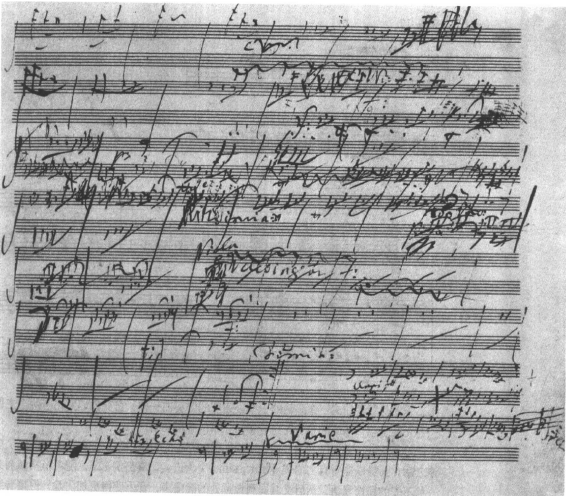
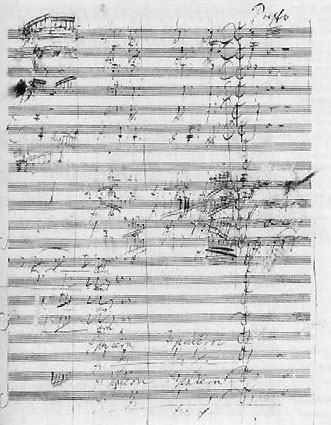
Hard to believe that the scruffy scrawl above is from the hand of the greatest ever composer in one of his greatest ever works. At least he thought so. And so does Michael Tilson Thomas, Conductor Laureate of the LSO, judging by the number of times he has taken it on.

I am not so sure though and find myself siding with Adorno on this. This will probably be the one and only time I can make this absurdly pretentious claim since, however hard I try, I cannot understand a word of what the Frankfurt School of Marxist critical theory was about, though the intellectual posturer in me dearly wishes I did. I would love to know a lot about a lot, or even a lot about a little bit of what there is to know. Instead I am doomed to know a little bit about very little.

The thing is there isn’t much of the theme and variation repetition thing than Beethoven took to unparalleled heights (at least until The Fall and Wire came along) in the Missa Solemnis. The giant fugues at the end of the Gloria and Credo provide me with some structural understanding, and connect with other late works like the piano sonatas and string quartets, but otherwise there is quite a lot of, well, Romantic meanderings.

Now it is Beethoven with massed choral forces offering up a Mass on a scale comparable with the Choral Symphony so it can’t all be bad. And it isn’t. There are stills scraps of cracking tunes which are explored in imitation to conjure up the goose-bump feel that the earlier masters of polyphony managed. Especially in the second half of the Gloria, the middle of the Credo and the beginning of the Sanctus. But there just isn’t the overarching structure to help my little head stay happy. LvB intended to complete the MS for his patron and mate, Archduke Rudolph, who was receiving some honour or other in March 1820. He missed the deadline so didn’t actually complete it until 1823 just ahead of the Ninth. Maybe that changed it.

The LSO chorus is now so bonkersly brilliant that it sort of didn’t matter when they were belting it out. Especially in the soprano section. And, like I say, MTT knows his way around the score. The soloists seemed well matched to me, though I would marginally take Sasha Cooke’s mezzo and Toby Spence’s tenor over Camilla Tilling’s soprano and Luca Pisaroni’s bass-baritone.

I will keep trying but I don’t think I will ever fully succumb to the MS. Whisper it but I am happier listening to the Mass in C which, as Beethovian experts will tell you, leaves me on the nursery slopes and forever banished from the pistes. So be it. Vita summa brevis.


Christoph Sietzen and the Wave Quartet at the Concertgebouw review ****

11611295963_46a7279b5a_o

Christoph Sietzen, Wave Quartet (Bogdan Bacanu, Vladi Petrov, Emiko Uchiyama, Christoph Sietzen)

Het Concert-Gebouw, Recital Hall, 16th May 2018

  • Emmanuel Séjourné – Attraction for marimba, vibraphone and tape
  • Iannis Xenakis – Part B (from ‘Rebonds’) for percussion
  • J.S. Bach/Brahms – Chaconne (from Second Partita in D, BWV 1004) (arr. B. Bacanu) for marimba
  • Stewart Copeland – Sheriff of Luxembourg for marimba, percussion and tape
  • Ivan Boumans – The Cloth, op. 140 (encore) for percussion
  • Josh Groban – The Wandering Kind (arr. E. Uchiyama) for marimbas
  • J.S. Bach – Allegro (from Concerto in C, BWV 1061a) (arr. B. Bacanu) for marimbas
  • Astor Piazzolla – La muerte del ángel (arr. E. Uchiyama) for marimbas
  • Astor Piazzolla – Oblivion (arr. E. Uchiyama) for marimbas
  • Reentko Dirks – Danza non Danza (arr. The Wave Quartet) for marimbas
  • Astor Piazzolla – Milonga del ángel (arr. E. Uchiyama) for marimbas
  • Astor Piazzolla – Libertango (arr. E. Uchiyama) for marimbas
  • Rodrigo Sanchez / Gabriela Quintero – Tamacun (arr. E. Uchiyama) for marimbas
  • Rodrigo Sanchez / Gabriela Quintero – Juan Loco (arr. The Wave Quartet) (encore) for marimbas

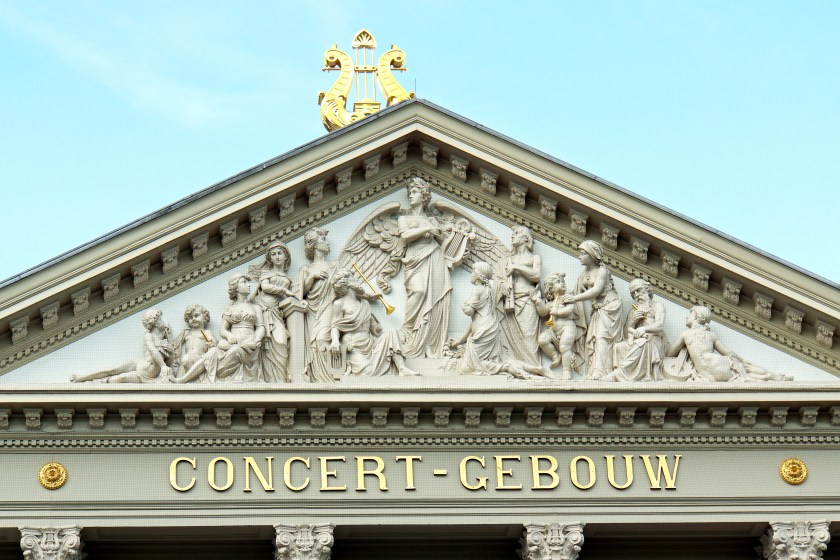
OK so I confess I was a captive buyer for this. This was what was on in the Concertgebouw on the night I was there. There were a few other tourists in the same boat, and a healthy contingent of local Amsterdammers. Which, even in the smaller, though still resplendent recital hall, made up a full house. The recital hall, in full blown neo-classical style, is topped by a rotunda with the names of the Romantic greats immortalised, and some not-so-greats as well.

Anyway whilst I didn’t know the percussionist Christoph Sietzen, and the crack marimba team of which he is a member, the Wave Quartet, this programme intrigued. In particular the Xenakis, who is near the top of my further investigation list, the Bach and the Piazzolla. The programme consisted of the first five pieces for solo percussion with Mr Sietzen and then the pieces for the entire quartet, largely arranged by Ms Uchiyama. Bogdan Bacanu, who might just be the most accomplished marimba player ever, and certainly its greatest advocate, was a child prodigy and went on to teach the other three members, amongst others, in Linz and Salzburg I believe. He is also responsible for the Bach arrangements, which are completely faithful to the originals.

Remember there are a lot of works by Bach that weren’t necessarily written for specific instruments but its a fairly safe supposition that he didn’t have a percussion instrument in mind when he set down the pieces here. On the other hand the marimba, which is by some way the most expressive and dynamically sophisticated of the percussion stable, ranging across 4 or 5 octaves, even if its timbre is so particular, isn’t too far away from the harpsichord in terms of effect. It is, as we see here, becoming increasing popular in contemporary classical music and the technical proficiency of playing has come on in leaps and bounds in part thanks to Mr Bacanu.

The first piece was by Emmanuel Sejourne who is the pre-eminent composer for marimba and vibraphone and a world renowned player. It was originally written for violin and marimba but here Mr Sietzen substituted violin with a vibraphone. I have to say it was impressive though I might have preferred to here it later on once I had adjusted to the marimba sounds. Even so it is breathtaking to hear what is possible for these instruments.

Xenakis composed two pieces for solo percussion, this piece Rebonds, and Psappha. It isn’t much of a surprise given the composer’s mastery of rhythm and structure but it is genuinely mind-boggling in its complexity. There are two movements in Rebonds. Mr Sietzen only played Part B, a shame as I would love to have heard Part A as well. It is scored for two bongos, one tumba, one tom-tom, one bass drum and a set of five wood blocks or wooden slats. Xenakis leaves some decisions on the score to the performer, all part of the mathematics of his music, (remember he was architect, engineer and mathematician as well as composer and not averse to shunting the laws of physics into his work). Xenakis is so far beyond what I understand in music but, trust me, the intensity of the rhythms here, despite the abstraction, still provokes a basic, primal reaction which needs no maths degree. You will laugh at me, but if you have listened through a John Bonham drum solo in Moby Dick (Google it kids), you will understand, though this is way more sophisticated than Bonzo thrashing away.

I took the opportunity to listen to Psappha. Amazing.

You will likely know the Bach Chaconne from the Violin Partita No 2 which Brahms amongst others transcribed for the piano left hand. (There is a YouTube performance by Danile Trifonov no less if you are interested and if you want the violin original please listen to Rachel Podger’s recording). I am not going to pretend that this marimba version matches that but it is still absolutely the same beautiful piece of music and shows astonishing virtuosity.

The Stewart Copeland piece, which was commissioned for Mr Sietzen, was a little less convincing by comparison to what else was on offer in this recital but was pleasant enough. Mr Copeland, for you youngsters who regard this as ancient history, was the drummer for popular English beat combo The Police in the 1980s, whose cod-reggae sound should never have worked, and never have been as popular, but it did, and it was. Mr Copeland has gone on to write film and game soundtracks and some classical compositions including this. Prior to the Police he was manager and drummer for Curved Air for those of you with an unhealthy interest in progressive jazz-rock. (Never ever get into conversation with me about Soft Machine).

After Mr Sietzen’s marvellous show of musical, and physical, prowess in the first half we might have expected something more sedate after the interval. No way Jose. (That being a reference to the Latin fuelled energy of the last few pieces). The Wave Quartet were decked out in bright red shirts, think Kraftwerk circa Man Machine without the black skinny ties and Fascist undertones.

There are many areas of music which are a complete mystery to me. I had never heard of Josh Groban before. Apparently he is a big noise though in the popera world. I can happily maintain my aloof indifference on the basis of this piece.

The second Bach piece is arranged from the first movement Allegro two harpsichord version of the Concerto BWV 1061 for the same instruments. So each of the four marimbas players with their two mallets (called knobs) in each hand is effectively one hand of the score. Given that the harpsichord notes can’t really sustain there is sound logic (literally) to transcribe to marimbas. It works, though I am not sure I would turn to this again in a hurry. I can’t deny Mr Bacanu’s dedication in adapting Bach in this way. I see the Wave Quartet have recorded the other harpsichord concerto arrangements with orchestra.

Astor Piazzolla was the genius Argentine who meshed the tango, the Baroque and jazz into a fresh and exciting musical world in the 1950s and 1960s. I can see exactly why the Wave Quartet would want to play these pieces. You will definitely know the Libertango. (I first heard in I’ve Seen That Face Before by Grace Jones). You will think you know the other pieces. The arrangements didn’t seem too complex which meant the Wave Quartet could pull of all sorts of flourishes. They were having a ball and so was the audience. The Reentko Dirks and Sanchez/Quintero pieces, originally for guitar, have similar heritage, with the final Juan Loco seeing young Vladi Petrov showing off on a simple beat box drum. Cheesy but undeniably joyous.

There you have it. A celebration of just what percussion can do and a salutary reminder not to get bogged down in serious classical music.


Spira Mirabilis at the Queen Elizabeth Hall review ****

Messier51_sRGB.jpg

Spira Mirabilis

Queen Elizabeth Hall, 15th May 2018

Beethoven – Symphony No 7 in A Op 92

Spira Mirabilis is a group of talented young musicians from around the world who play in various European orchestras. They hole up in Formigine in Northern Italy near Bologna to learn from each other and devote themselves to intensive study of major orchestral works of the canon which they then take around Europe to entertain us punters, and, more importantly, show us how it is done. I suspect they also have a bit of craic along the way.

The twist is that they have no conductor. Which means, in the spirit of a chamber ensemble, they have to “immerse themselves in the score with the aim of reaching an interpretative consensus on a shared vision and a complete synthesis with the work”. Now if you thought that the conductor of an orchestra, as I did a few years ago, was just there on the podium to provide a bit of visual light relief,  you would be very much mistaken. Someone has to impose a musical vision on even the most detailed score involving all manner of decisions on tempi, dynamics, who does what where, when and why, and all manner of other stuff way above my pay grade. If you dump his or her direction then I imagine you are collectively setting yourselves up for one hell of an away day. Yet this is exactly what they do with the intention then of trying to explain to us how they did it. Wonderful.

In this case they just happened to pick, IMHO, the most perfect piece of music ever written. I believe Beethoven to be the greatest of composers, the symphony to be the most complete musical form and this to be his best. Though I can see why others might disagree with any and every part of that statement. Moreover I admit that there are individual pieces by modern composer/performers in popular music genres that would just edge it for me on the eponymous desert isle. (I should probably post something on that).

Spira Mirabilis have in fact already been through an entire Beethoven cycle, good call, so this constituted something of a revival. Yet there was still a palpable sense of excitement in the Hall ahead of, and through, this performance. When Beethoven wrote this his hearing had significantly deteriorated and he had retired to the spa town of Teplice in order to gee himself up. There is no programmatic intent, unlike its predecessor the Pastoral, yet it is an astonishingly uplifting, happy work. That maybe because it is essentially dance music. Anyway it was a hit from the off and it is easy to see why.

The first movement starts slowly but when the “dotted” rhythmic figure finally kicks in LvB proceeds to push and pull it around in so many ways that it barely seems plausible that it can tolerate this level of innovation. If you ever need to understand Beethoven’s genius in taking simple material and wrestling it into music of unparalleled emotional and intellectual power through progressive variation, it lies here. This is the longest movement of any of the symphonies.

Then there is the Allegretto. A funeral march where the ostinato is repeated and repeated until it attains monumental proportions. Strings largely in minor keys, woodwinds take the major. If you need to give someone important to you a good send off, alive or dead, this is the music you need. It is the most hummable tune ever written. The Presto that follows is joyous and funny and contrasts with its central hymnal trio and the Finale cuts loose completely. I’ll warn you. Avoid sitting next to a fat bloke, likely in shorts, probably leaning forward, imperceptibly wiggling his fingers, in time just about, if the Finale of the Seventh should be playing. He might just start sobbing. With joy. Truly pathetic.

It takes a marvellous performance to overwhelm me and I have to confess this wasn’t quite there. It was insightful in glimpses, especially in the third movement, the negotiation between the players was intriguing and there was a slippery quality I liked. Tempos were sensible but I might have preferred something a little brisker in the first two movements, especially in the second subject of the Allegretto. But I still think the necessary compromises made everyone hold back just a bit. A sense of “after you Claude”. I am all about consensus in the “real” world but in the realm of the creative democracy can only take you so far.

I also have to confess that I didn’t stay for the post match replays and interviews. No good excuse other than wanting to see the SO and LD that evening. Though they of course completely ignored me when I got home early. I discovered that Spira Mirabilis had repeated the second movement, this time whilst randomly sitting in the audience. Damn. I wish I had stayed for that.

Still overall a fine performance of a transcendent work intriguingly delivered.