Estonian Philharmonic Chamber Choir at Milton Court review ****

estonian20chamber20choir2028c2920kaupo20kikkas

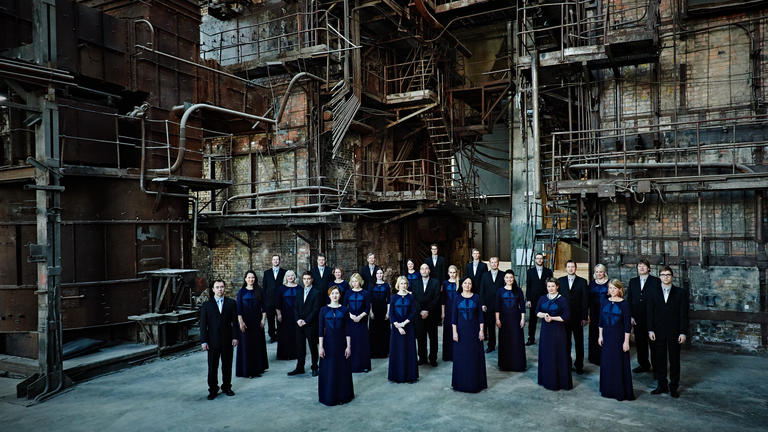
Estonian Philharmonic Chamber Choir, Kaspars Putnins (conductor)

Milton Court Concert Hall, 30th January 2018

Arvo Part

  • Solfeggio
  • Summa
  • Magnificat
  • Zwei Beter
  • The Woman With the Alabaster Box
  • Nunc dimittis
  • Dopo la vittoria

Cyrillus Kreek

  • Onnis on inimene (Blessed is the Man)
  • Psalm 104

Jonathan Harvey

  • Plainsongs for Peace and Light
  • The Angels

Veljo Tormis

  • Kutse jaanitulele from Jaanilaulud (St John’s Day Songs for Midsummer Eve)
  • Raua needmine (Curse Upon Iron)

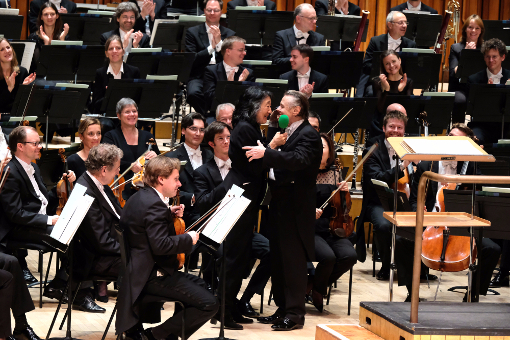
Now I gather that the Estonian people like a sing-song. Choirs are a big deal there and choral singing and national identity are tightly bound together. They even had a Singing Revolution between 1987 and 1991 as they sought independence from the Soviet Union. So this evening was an event and was graced with the presence of no less than Estonia’s Prime Minister Juri Ratas.

Now I am not going to pretend this was the main draw for me. Profound apologies Your Excellency, but what intrigued me was the opportunity to here some of the choral works of the mighty Arvo Part sung by his country men and women. Albeit mostly in Latin, with a German, English and Italian text thrown in for good measure. Now I genuinely believe that the magic of Part’s “holy minimalist” tintinnabuli can work on anyone. I believe I am right in saying he is the most performed living “classical” composer. That doesn’t mean people are whistling Speigel am Speigel on every street corner though. This is still a minority pastime, but I do think there is something in his music, (and the spaces between the notes), which can burrow into the soul of all who come across it. Not that they have souls. That is obviously mumbo-jumbo. Old Arvo might sign up to Orthodox Christianity but not me. But it does something. Even if it is just to clear the head and leave you suspended in the sound for the duration of the piece.

So it was a pleasure to rope in MSBD to the Part party. Now, in retrospect, it might have been better to break him in gently with the usual programmatic device of interspersing Part’s choral works with other contemporary composers who relish the challenge of a choir as well as selected Renaissance masters. Even I have to admit that seven of Part’s choral works back to back can induce a slowing of the heart rate that is difficult to distinguish from slumber.

The opener Solfeggio is particularly interesting. It was originally written in 1964, though I think refined in 1993, which means it actually came before Part announced himself to the world with the bang. crash, wallop of Credo for chorus, orchestra and piano in 1968. This remember was when Part was a paid-up serialist, although Credo for my money is still a cracking piece of music. Solfeggio asks the choir to trot out an ascending C major row in strict serial fashion, singing, would you believe, “do re mi … “, but you’d be hard pressed to tell it apart from the “classic” Part style which emerged in 1977 after the several year hiatus and his personal enlightenment.

Summa is a setting of the Credo from the Latin Mass, though its title conceals its origin,  composed in the pivotal year of 1977. It was, along with Part’s settings of the Magnificat (1989) and Nunc dimitis (2001) for the Anglican evensong, the most entrancing of the evening’s performances. The Estonian Philharmonic Chamber Choir has a bewitching and very exact delivery with clear definition across the parts. This means the intriguing shifts that Part employs here, and the shimmering climaxes, especially in the Nunc, seemed more suited to their style. In contrast the more direct The Woman with the Alabaster Box from 1997, sung in English and which sees adjacent thirds appear under long sustained notes, was less thrilling to me than the Latin texts, which are all based on Part’s “classic” stepwise triads.

Zwei Beter, based on the parable of the Pharisee and the Publican I gather, is a more complex beast, (it’s all relative mind you), with denser harmonies and sung in German. Now one way or another I have recordings of most of Part’s works, (I think some remain unrecorded), but I didn’t know this piece at all. In contrast I am familiar with Dopo la vittoria from 1996 which is also somewhat more “complex” than the Latin texts. Sung in Italian this “piccolo cantata” tells the story of the baptism of Augustine by St Ambrose, (who apparently broke into song whilst doing the necessary), the patron saint of Milan for which city it was written. There is a discernible story with defined sections, including a brisk opening and ending, and some pronounced homophony at crucial, uplifting points. Who said Part all sounds the same.

After the interval we were treated to a pair of psalm settings by Cyrillus Kreek, an Estonian composer from the generation prior to Part, and a man who devoted his life to setting the country’s rich legacy of folk songs into choral arrangements. These songs stem from the wave of Estonian nationalism that stirred in the second half of the C19. These two pieces were very easy on the ear and sung with real conviction by the choir. A pair of works by British composer Jonathan Harvey followed, from the end of his career. Harvey regularly turned to choirs alongside his electronic and chamber pieces. The Angels was set by the Bishop of Winchester to which Harvey adds a hummed accompaniment. Plainsongs is more substantial polyphony with some beautiful, gently dissonant passages across its sixteen parts.

Finally the EPCC treated the audience to two works from Veljo Tormis, who passed away last year, after actually retiring in 2000. Slightly older than Part, but possibly even more renowned in his homeland, with a huge body of choral work to his name. Most of the settings stem from Estonian folk songs and I gather it is fair to say he has inspired multiple generations with his music. He was born during Estonia’s short lived inter-war period of independence, lived through the German and Soviet annexations and the Socialist Republic, and through to independence again. He mixed with all the big names during his musical education in Russia and was “honoured” with his own KGB files.

The first piece belongs to a cycle which describes the important Midsummer celebrations. It starts simply enough but builds into something more sophisticated. The Germanic influence is clear. But this was just a taster for the extraordinary Curse of Iron which followed. Apparently this gets a fair few airings outside Estonia and it isn’t difficult to see why. To the rhythm of a simple drum beat throughout, and with solo bass and tenor parts, Mr Tormis sets a story based on a Finnish epic, but sung in Estonian. It is, like it says, a curse on iron, as you do, and it is very dramatic. A ritual with repeated ostinatos, I have never heard anything like it. Neither had MSBD. Imagine a kind of shamanistic chant which ends up with sopranos warning against nuclear proliferation. Can’t. Well go and hear it then. It’s on I-Player since the concert was recorded for Radio 3.

Estonian Philharmonic Chamber Choir concert recording

A riveting way to end the concert and unsurprisingly the EPCC, and especially their Latvian conductor Kaspars Putnins, were having a ball during it. If I were part of the Estonian guest party I would have found it pretty difficult not to get up and join in. Pride in their country but pride in Europe too methinks. Great stuff.

Britten Sinfonia at Wigmore Hall review *****

jackie-shave-900x900

Britten Sinfonia

Wigmore Hall, 24th January 2018

  • Heinrich Biber – Mystery Sonata No 1 “The Annunciation”
  • Philip Glass – Orbit
  • Leo Chadburn – Five Loops for the Bathyscaphe
  • Arvo Part – Spiegel am Spiegel
  • WA Mozart – Piano Trio No 3 K502

There is something of the spirit of punk about the Britten Sinfonia. They don’t have a principal conductor or director and play with pretty much who they like. They also play pretty much what they like with a refreshingly cavalier attitude to programming. I love them, whether it be a Bach St John Passion, electrifying accounts of the Beethoven symphonies under Thomas Ades, minimalist classics, Stravinsky, Ravel or contemporary British composers, all of which I have heard them perform in the last year or so.

So I was looking forward to this. Leo Chadburn’s new work Five Loops for Bathyscaphe, is scored for piano trio and electronics and runs for 10 minutes or so. So Jacqueline Shave (that’s her above), one of the violin leaders of the BS, Caroline Dearnley, the principal cello, and Huw Watkins, principal piano, had another 50 minutes or so to fill. What to choose? Mozart? Why not. After all his B flat minor trio is pretty much the first piano trio as we know the form, with all three instruments contributing rather than just a piano sonata with a bit of string diddling attached which previously defined the Classical form. And Arvo Part’s Speigel am Speigel? Yep, it’s a slam-dunk crowd-pleaser for violin and piano. But chucking in Philip Glass’s short piece, Orbit, for solo cello. And the first of Biber’s Mystery sonatas? Well as it turned out it all slotted together perfectly.

Now I have been unlucky in my endeavours to hear a performance of Biber’s Mystery, (or Rosary), sonatas for violin and continuo live. There are 15 of these chaps, divided into 3 cycles, Joyful, Sorrowful and Glorious, plus a closing Passacaglia for solo violin. Each one takes as its subject one of the Catholic “rosary”episodes in the life of the Virgin Mary. They were likely written in 1676 but were unknown until 1905 ,and they are one of the earliest and best known examples of “scordatura”, where the violin is tuned in a way that is not standard. This permits all sorts of funky effects. Don’t test me on this but it is pretty straightforward even for a dumbass like me to hear the differences. One of the Vivaldi Op 9 Le Cetra concertos does this, Stravinsky does it at the start of the Firebird and Ligeti’s Violin Concerto is a prime example. Mind you Ligeti chucks so many effects into his concerto I am hard pressed to know where it is.

Biber tests the skill of the violinist to the max so it is a unlikely anyone was up to the job in the C17. What is on the page doesn’t correspond to what hits the ear. Don’t worry it doesn’t get too weird but it does create sounds, chords and harmonies with real drama. Now unfortunately we only got the first instalment here, which is the one which doesn’t arse about with the tuning, but it was still a blinder to open the concert with and Ms Shave delivered. It opens with a virtuoso figuration, being the Angel appearing before  our Mary, and them moves into a gentler sort of theme and variations.

The Glass “sonata” was new to me. The programme notes suggest Glass is referencing Bach’s mighty cello suites. He is. But then again anyone that writes a piece for solo cello is working in the shadow of the master. Even so lots of fancy figuration and double stopping does conjure up Bach’s counterpoint and Glass’s ordered repetitions are redolent of JSB’s own structures. Ms Dearnley is at home here as she is in the Baroque.

Now I have listened to, and seen performed, Part’s Speigel am Speigel, more times than I care to remember. It is one of my favourite pieces of music period. Which probably shows how easily pleased I am. This was one of his first “tintinnabuli” works, along with Fur Alina, from 1978, and it is “minimal” even by his standards. Simple arpeggios in piano and rising, then falling, scales from violin. If you are ever too worked up about anything just pop this on. Hey presto, blood pressure plummets. Now Ms Shave and Mr Watkins seemed to take this at a marginally faster tempo than I am used to, (it is all relative as not much happens), and took a minute of two to get in the groove, but once there it was as good a performance as you will hear.

I tried with the Mozart. Honestly. If I switch off and let it drift around and through me then it is pleasant enough but I still don’t really get it. Just too nice. Obviously there are bits of Mozart, and times when I listen to it, like watching a great Figaro, where it lifts me up and takes me away, but this wasn’t one of them.

Which brings me to the Leo Chadburn premiere, co-commissioned by the BS and Wigmore. I knew nothing about Mr Chadburn but I gather he is one of these new brand of musician/composer who doesn’t give a fig for established boundaries. He writes and performs across genres, releasing three synthpop albums a few years ago as alter ego Simon Bookish, and remixing for the likes of Grizzly Bear. He can certainly sing a bit I gather. This piece takes the classic piano trio instrumentation and hooks in pre-recorded voices from himself and Gemma Sanders, and some sparse electronica. It graphically describes the journey on 23rd January 1963 of oceanographers Jacques Piccard and Don Walsh to the bottom of the ocean. Eleven kms down to be exact in the Mariana trench, in that little ball Bathyscaphe Trieste thing. The idea of the piece is to create a sense of motionlessness in the music, deep and watery I guess, and allow the voices and words to tell the story. It succeeds admirably. There is nothing to scare anyone off in this simple but very effective sound-world. Think eerie harmonics from the strings and muffled chords from both ends of the range for the piano, as well as some theatrical plucking from inside the piano. The whole thing grips from first to last. It deserves a much wider audience. I am sure Mr Chadburn knows how to make that happen.

This whole concert was a joy. Music for everyone. Even if they know absolutely f*ck all about any of it. Still I suppose if they all prefer listening to a little ginger chap who has the temerity to suggest he is the next Van Morrison, then who am I to argue. Just seems a shame. Still that’s your pesky, high/low culture divide in late neo-liberal, capitalist society for you.

Colin Currie Group at Kings Place review ****

colin-currie-group_3_credit-chris-_web-billboard-2000x1125

Colin Currie Group

Kings Place, 20th January 2018

Steve Reich

  • Music for Pieces of Wood
  • New York Counterpoint
  • Mallet Quartet
  • Drumming Part 1
  • Vermont Counterpoint
  • Quartet (2013)

So off to Kings Place for another immersion into the sound world of Steve Reich guided by his finest living advocates (probably), the Colin Currie Group. Having seen the CC Group perform Reich a couple of times in the past couple of years, (at the RFH), I consider myself something of a groupie. I was honoured this time to be accompanied by not one, but two, potential converts to the live, minimalist music cause in the shape of MSBD and MSBDB. And, to emphasise, you really do need to hear this live for the full effect.

I won’t bore you with another hagiography extolling the virtues of Mr Reich. Take a look here if you want that (Steve Reich’s Drumming and Tehillim at the Royal Festival Hall review *****). Suffice to say I urge anyone to give his music a whirl and see what you think. I won’t hold it against you if all that repetition sends you to sleep. Me, I am fascinated by it. Out of apparent rhythmic simplicity emerges music of shimmering and unsettling intensity.

On the subject of repetition in music I promised myself I would not use this blog to eulogise the now departed Mark E Smith. Let’s just say RIP. Hands down the most important creative force in my lifetime.

Anyway this gig kicked off with Music for Pieces of Wood written in 1973. Which is exactly that. Though these are not any old offcuts having been specially selected for their pitches, A, B, C, sharp D sharp and another D sharp an octave higher, and timbre. It is built entirely on patterns of beats and rests over three lengths 6/4, 4/4 then 3/4. That’s it. As so often with Mr Reich the apparent simplicity though belies its careful planning and the subtlety of outcome. There is no place to hide for the players here.

New York Counterpoint from 1985 sees a clarinettist, here Timothy Lines, pre-record ten different parts, including for bass clarinet, which is prominent in the last movement, against which he plays a final, eleventh line, live. Vermont Counterpoint from 1982, here performed by flautist Rowland Sutherland, employs a similar, though to my ear more complex, technique for flute, alto flute and piccolo, across 10 pre-recorded parts and one solo line using each instrument. In both cases, despite the discipline employed in terms of relationships of rhythm, tempo and meter, the effect is of often “melodic” and ambiguous counterpoint, with more than a whiff of Stravinsky’s neo-classical chamber works. Maybe at times in both pieces the solo line could have been brought forward a little “in the mix” but I was persuaded.

Mallet Quartet is a more recent piece from 2009 scored for two vibraphones and two five octave marimbas extending down to cello C apparently. Once again three movements, fast/slow/fast, with some fancy changes of mallets. The marimbas create the rhythmic backdrop linked by a canon structure in the fast movements, with the vibraphones providing the melodies, again largely in canon. In the slow movement it all gets pared back however, and the effect from the vibraphones is of a far more atonal world which I am not sure would be to everyone’s taste and is a fair way from “typical” Reich.

Back on track though with the iconic Drumming, or at least the first of the four movements. This is divided into four clear parts and is for four pairs of tuned bongos. (This makes me think once again of MES with his quip that The Fall was him and your granny on bongoes. Now if your granny could only play bongoes like this ……). Anyway this is quintessential Reich, building from one beat to twelve beats, alternated with rests, and then with the rests replaced with beats until the cycle is completed, and then reversed. This pattern is repeated in the other three movements with the different instruments, and it was a shame not to hear this (see review above), especially the spellbinding third movement with glockenspiels (and whistling !) and the thrilling final movement, where the whole lot gets chucked in. There is so much in the sound created that is it is impossible to believe the structure is so simple. This is Reich at his most hypnotic, made more so in this performance by the strobic effect of the movement of the sticks in the “fastest” passages. MSBD loved it so much he nodded off apparently – trust me that is a compliment. When Reich, (and other minimalist music), succeeds your mind and body can “drain away” leaving just the rhythm. Far out. Sorry for this hippy gibberish but it’s true.

Which brings me to Quartet from 2013. This piece, scored for two pianos and two percussion, which is the building block for many of Reich;s earlier works, shows what he is now up to. This is melodically much more complex than the previous works on show, with multiple key changes, breaks and pauses, frequent gentle dissonance, and shifts into new ideas. In fact more like most contemporary classical music. Fast/slow/fast once again, but the slow movement contains harmonic variety which you won’t find elsewhere in Reich’s compositions, though once or twice it veers towards doodling. Don’t worry, there is still rhythm at the core but this takes the players up a further notch in terms of level of concentration. Which is why is was written for, and dedicated to, this ensemble. I was much taken with it and will need to add it to the list of recordings of Reich’s music I need to lay my hands on. (I see there is one about to be released, And CCG are releasing their own recording of Drumming which will surely be a treat).

Loved it and so did the audience. Kings Place acoustic is terrific, warm and offering up waves of sound, so I doubt I will hear a better treatment of these works.

Next up CCG will play Reich;s Tehillim, based on psalms and reflecting his Jewish heritage, and which uses voices and wide instrumentation to drive melodic invention. Still Reich but this is more minimalism meets Baroque. Annoyingly the BBCSO also takes on Berio’s Sinfonia in this concert but I will be pandering to my new found fascination with Ligeti at the South Bank. Seems like the Barbican and the South Bank are going head to head in competition for the geeks.


Twentieth Century Masters: LSO at the Barbican review ****

orig_59afd6d959fea7-94052844

London Symphony Orchestra, Simon Rattle, Isabelle Faust

Barbican Hall, 14th January 2018

  • Janacek – Overture: From the House of the Dead
  • Elliott Carter – Instances
  • Berg – Violin Concerto
  • Bartok – Concerto for Orchestra

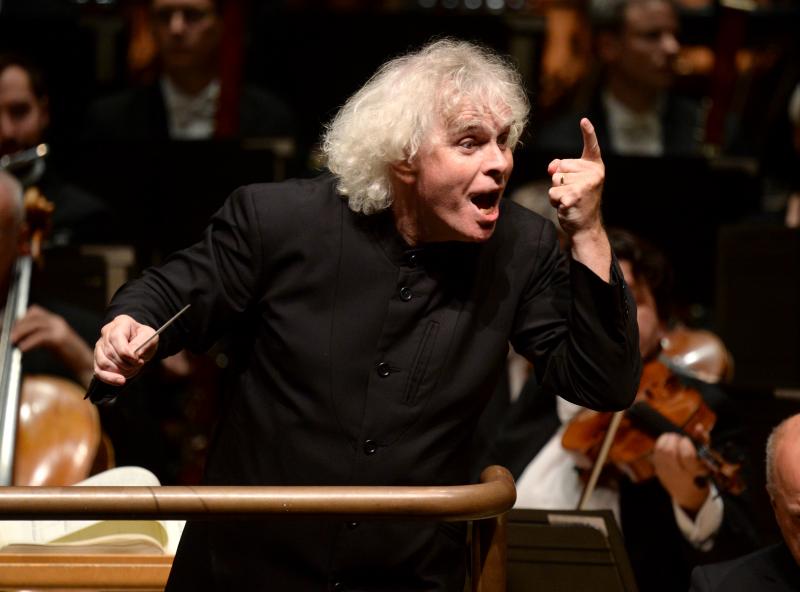
Back to the Barbican for another round with Sir Simon Rattle and the LSO, though this was more familiar ground (for me) compared to the previous outing (Rameau to Mahler: LSO at the Barbican review ***) a few days earlier. And back to my more usual perch. Once again the Hall was pretty much full to the rafters, and, encouragingly, it looked liked a very youthful audience. (Or I am ageing more rapidly than I thought). Anyway, on the subject of age, the thread here was orchestral works written near the end of their lives by these four very different composers. All of which gave a chance for the whole orchestra to shine.

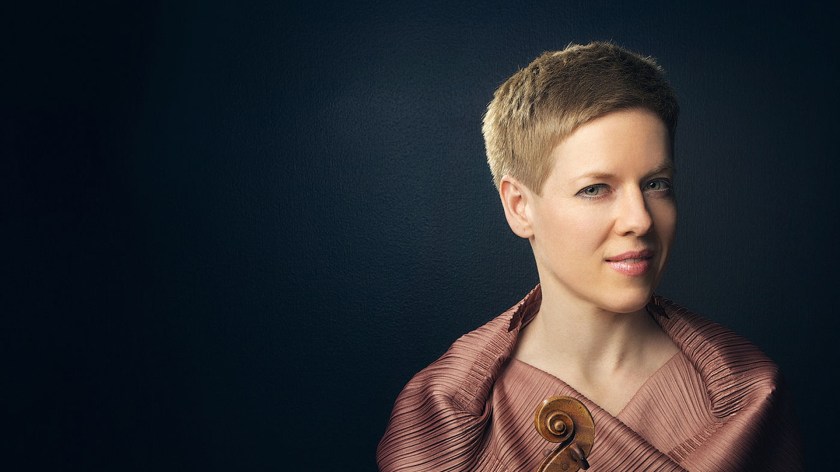
Now the main draw for me here was Isabelle Faust. I think she is probably the best current violinist in the world. Mind you, as is my wont, I have gone all hyperbolic in this claim with little evidence to back this up. So, more exactly, the best violinist I have heard in the past couple of years, based on recordings and her Bach outing last year at the Wigmore Hall (Akademie fur Alte Musik Berlin at the Wigmore Hall review *****).

As it happens I saw a fine rendition of the Berg Violin Concerto performed by another favourite violinist in the elfin form of Patricia Kopatchinskaja last year at the RFH with the LPO under the baton of Vladimir Jurowski. And I recently invested in the benchmark Levine/Mutter recording, (even though I am not entirely convinced by Ms Mutter). Now I am not going to pretend that listening to Berg comes easily to me, but even I can hear that there is a rich depth in his works from the combination of passion, intelligence, serial technique and romanticism, that rewards persistence. I rashly signed up for a performance of Wozzeck at the Frankfurt Oper a couple of years ago in German with German sub-titles (FYI I don’t speak German). Unforgivably I bought the cheapest ticket up in the gods. It is a wonderful auditorium but I could only see half the stage. That was still enough to be transfixed by an outstanding production. But most of all it meant I had no choice but to get lost in the score. Stunning. Add to this the Lulu in 2016 at the ENO directed by William Kentridge, which I confess was beyond me in parts, but was visually spectacular, and I am now well on the road to Bergian conversion. Mind you, what with his long(ish) musical education under Schoenberg, the proscription of his music under the Nazis and his early death, aged 50, after a bizarre insect biting incident, there isn’t too much composition to get your head around.

Now this Violin Concerto isn’t like others in the canon. It’s tricky for sure, and asks a lot of the soloist, but it isn’t showy. Orchestra and soloist have to mesh together. It is pretty much the last piece Berg wrote and is dedicated to the memory of Manon Gropius, the daughter of Alma (Mahler’s widow) and Walter Gropius (Bauhaus founder), who died from polio at 18. Apparently she was a captivating young woman in the manner of her mother.

The two movements are each split into two parts and with the waltz emerging from the material set out in the first movement, and the chorale emerging from the more rhythmic, almost cadenza, in the second movement. This the tempo is reversed in each. I can sort of pick out the established musical structures from within the twelve tone architecture but couldn’t tell you exactly what was going on. Suffice to say this is a dark, brooding, self-absorbed piece for the violinist and Ms Faust seemed to capture this utterly. She seemed lost in music, caught in a trap, to paraphrase Philly’s finest sisters, There are times when the whole edifice becomes just that bit self indulgent but this is where Sir SR’s insistence on picking out the orchestral instrumentation pays dividends. I hadn’t realised how detailed are the parts for harp, clarinet, viola, flute and trumpet were in this piece. I do now.

Which brings me to the Bartok Concerto for Orchestra. Now this is a piece written with the express intention of letting everyone in the band have a solo, like some prog-rock group in its 1970s pomp, It is an obvious, but still inspired, choice to present to an audience in a first season, and, I would hazard a guess, if you are engaged in a bit of musical team-building. I have Rattle’s first, (I think), stab at this when he was a younger at the CBSO, (though the bargain basement Solti/Chicago Symphony Orchestra version tops it). Anyway Sir Simon knows his way around it, and it brilliantly matches his predilection for coloration and deliberation.

I am not going to lie. It blew my socks off. There is just so much to listen to here. The first movement strings and brass, coming out of the undergrowth, with the woodwind, led by a solo oboe, getting their turn in the spotlight. The wonderful second movement scherzo with its contrasting intervals, an eerie disco. Next up an Elegia, exactly as it says, with the strings swirling around and up to be met by bold brass chords and a piccolo sticking its little nose in. The second scherzo quotes, mocks and, ultimately, compliments Shostakovich with tuba and harps getting involved, and the final movement works in classic Bartok folky stuff with a gallop to a rousing chorale at the conclusion.

I reckon we won’t have seen the last of this piece, or of Bartok, from Sir Simon and the LSO and it can probably get even better from here. Hopefully too we will see him rework some of his other C20 repertoire. Some more Stravinsky for sure, but I’d loved to hear his latest takes on Britten’s music for orchestra and, please, some, no all, of the Nielsen symphonies.

Anyway the other two pieces in this concert were tried and trusted composers for Sir Simon, Janacek’s Overture From the House of the Dead didn’t quite get the pulse racing in the way the Bartok did, but still suggested what the LSO is heading towards. (I see the House of the Dead will see a new production at the Royal Opera House in the forthcoming season. That has contemporary relevance written all over it). Sir Simon has always championed Elliott Carter and I can see why. This was another of those short, but inventive, comedy pieces that Carter was turning out in his musically fecund 90s and even into his 100s, but it has a strangely, moving ending.

Can’t wait to see what the Scouse Gandalf will programme with his band for the forthcoming season. Hopefully not too much Mahler, Bruckner, Sibelius please.


Rameau to Mahler: LSO at the Barbican review ***

rattlelsoedit7

London Symphony Orchestra, Simon Rattle, Magdalena Kozena

Barbican Hall, 11th January 2017

  • Schubert – Symphony No 8 Unfinished
  • Mahler – Ruckert Lieder
  • Handel – Three Arias
  • Rameau – Les Boreades Suite

Now I admit I hummed and harred about this particular gig. I am as excited as the next person about the return of Sir SR to London to lead the mighty LSO, but also recognise that, as his musical taste and mine are not entirely congruent, I had better carpe diem where I can. When he does serve up a favourite, chances are it is going to be the dog’s proverbials, to wit the simply stunning triptych of Stravinsky ballets, a highlight of last year (Stravinsky from Rattle and the LSO at the Barbican review *****).

So eventually I took the plunge here, intrigued by the Baroque on offer, recognising that I need to do more work on Schubert and wanting to see whether Sir SR is as nice to his wife, mezzo-soprano Magdalena Kozena, on stage as he is to the LSO and everyone else. The Mahler Ruckert Lieder and the three showy Handel Arias, one from Agrippina and two from Ariodante, certainly meant the missus had to put a shift in, two frocks and an hour in total either side of the interval. The Rameau has been a staple party piece for the Berlin Philharmonic for years, and it seemed interesting to see what the LSO would make of it.

As it turned out this programme also piqued the interest of Mrs TFP, who is rightly suspicious of my Renaissance/Baroque and Contemporary leanings, but who was happy to come along for the ride here. The Germanic quotient was also sufficiently high for her.

So what did I learn. Well …. aaah … I still don’t think I am ever going to embrace Schubert. I assume Sir Simon and the LSO gave this a respectable work-out but it is still just doodling for me, without the rhythmic discipline of Beethoven and with too many strands. Even the finished bits sound unfinished to me. I am really sorry as I know there are a lot of Schubert groupies out there.

Now the Mahler took a bit of time to get going but songs 3,4 and 5 (in Rattle’s sequence) let loose all of that Mahlerian drama and suspense, with the growly stuff at the bottom, the sniff of folk tunes and the aching strings all deployed to great effect. Mrs TFP combed the text scrupulously for mistranslation and therefore snaffled up the stories. I didn’t understand a word of what Ms Kozena was saying and, given it is the usual Romantic, Love/Fate/Man/Artist tripe, (with one about a lime tree apparently), I didn’t really care, but at times the noise was ravishing. Unsurprisingly I guess soloist and band were well matched thanks to Sir SR, though I wonder if Ms Kozena may have topped these renditions in previous performances. No matter. This was concentrated Mahler which for me is a good thing.

On the subject of concentrated musical pleasure, I cannot believe I am the only one who prefers to take his Handel operas from the set lunch, and not the full tasting, menu. The music induces a nice warm glow, for sure, but they can go on a bit. So I thought a triple helping of well chosen arias would hit the spot. These three are undoubtedly showy, particularly the final Dopo notte, but it didn’t feel as if orchestra and soloist were entirely comfortable in parts, and, I was reminded that old George Fred, once his lady singers got up a head of steam, was apt to encourage them further with interminable repeats. Even so it left me grinning from ear to ear.

As did the Rameau suite. So this is apparently one of those all singing, all dancing (literally) extravaganzas that the French Baroque invented. It was Rameau’s last opera tragedie and boy did he chuck the kitchen sink at it judging by this suite. An everyday tale of windy Gods, the orchestral colour is dazzling, with state of the art technology to boot. I absolutely adored it, as did Sir SR and the LSO. Very funky.

So another entertaining evening in the hands of Sir Simon, but also a reminder not to push the boat out too far in terms of repertoire I enjoy.


Peter Wispelwey (cellist) at Kings Place review ****

42545-pieter-wispelwey-2-c-frits-de-beer-bt

Peter Wispelwey, cello

Cello Unwrapped: Bach Through Time Concert III. Kings Place Hall 1, 8th December 2017

  • JS Bach – Cello Suite No 1 in G, BWV 1007
  • Benjamin Britten – Cello Suite No 3, Op 87
  • Gyorgy Ligeti – Sonata for solo cello
  • JS Bach – Cello Suite No 3 in C, BWV 1009

If I had to pick my favourite venue in London for classical music it would probably be King’s Place. The design is lovely. The acoustic is perfect, especially upstairs. The welcome is warm. (I lost a book there once. They found the book and then they found me). The programming is interesting. In particular the year long seasons which artfully pull together chamber music across a genre or theme. This year, Cello Unwrapped; in the last couple of years, the Baroque and Minimalism. Next year, Time Unwrapped, a more ambitious conceit which is chock full of interesting programmes. To be fair it has helped that the last three years have focussed on particular favourites of mine in terms of period and instrument but, even so, I heartily recommend Kings Place to anyone who isn’t already a regular. Bear in mind too that I am only really a consumer of the classical events: there is plenty of other stuff, music, comedy, spoken word, going on there as well. Finally they make a decent cup of tea in the caff upstairs, the loos are spotless, and there is usually some free art to soak in before, after or during the interval. And, in the summer, there is a pleasant saunter available along the canal.

Now I appreciate that the very best chamber music is likely to be found elsewhere in London, specifically the Wigmore Hall. The Wigmore certainly has its charms, but the legroom isn’t up to much and, if you intend to spend a fair time in her formidable company, you had better get used to seeing the back of other peoples’ heads. I am partial to Cadogan Hall but the repertoire is mostly orchestral and requires careful sifting. St John’s Smith Square delivers some stirring stuff for Early Music, Baroque and Contemporary enthusiasts like the Tourist but there is no hiding the fact that it is a Church, atmosphere therefore trumping sound and comfort. Mind you it is a beautiful lump of Baroque, fancy enough to satisfy, but not so fancy as to make one queasy. Thomas Archer’s buildings have taken a bit of a hammering in London, (go see St Paul’s Deptford if you don’t believe me), so it is good that this, maybe his best, looks so perky. I am also very, very partial to Milton Court Concert Hall, largely for the same reasons as Kings Place, and St Luke’s Old Street, where the interior has been brilliantly re-crafted by architects Levitt Bernstein. But, in both cases, the number of concerts which match the Tourist’s tastes, is constrained.

I digress. It was the programme here that attracted me as I confess no knowledge of Ms Wispelwey before this evening. Bach obvs, it being impossible to hear the cello suites too many times in a lifetime, but also the Britten which echoes old JSB, and the Ligeti, which, in its own way, is also an homage to the old boy. Ligeti is rapidly becoming my favourite mid/late C20 Modernist. It’s great this “finding out about new music” lark.

Apparently Britten intended to emulate Bach and compose six cello suites but this, unfortunately, was the last, written in 1972. His last operas, Owen Wingrave and Death in Venice, and then his failing heart, got in the way. Shame. I prize Britten’s chamber pieces above all of the rest of his glorious music. Obviously more personal but deeper, spikier and, if it is possible, cleverer. There are times, though, when Britten’s genius can be too satisfying, like a musical Vermeer, You just want him to cut loose. In some of the knottier passages of the chamber music this is what you get.

Actually scrub all the above. The reason why BB is the greatest English composer since Byrd, (sorry Purcell and Elgar fans), is the operas, of course. You can keep your Italian melodramas: give me Billy Budd, The Turn of the Screw or Curlew River, (yep opera doesn’t have to be full orchestra and divas belting out love arias, in fact it is better when it isn’t), any day of the week. The whole must always be greater than the sum of the operatic parts in my book, and singing cannot smother drama.

Now this last suite has some deceptively simple ideas but the overall effect is still one of immense variety of expression. A four note motive is set against a repeated bass in one of Britten’s favoured mournful Passacaglias, with repeated pizzicato, which precedes the 3 Russian folk songs arranged by Tchaikovsky and the Orthodox hymn the Kontakion chant, which act as the conclusion. Remember this was written for, and first performed by his friend, the great Russia cellist Mistislav Rostroprovich, after hearing his performance of the Bach suites. After BB’s death Mr Rostroprovich couldn’t bear to play this piece.

Earlier in the piece we have a very quick, unsettling Moto Pertpetuo which appears to invert the motif and a stately Fuga which sets it against the main line, and suggests the counterpoint which JSB famously conjures up in his suites. Elsewhere we hear a Dialogo, marked allegretto, which flips across two staves, a Barcarola, which echoes the famous Prelude from JSB’s No 1 Suite which opened this recital, a jittery Marcia, and a strange Canto. Mr Wispelwey, in very droll fashion, introduces the piece by, er, introducing each of the short movements, which provided both bearings and an insight into Britten’s compositional process. All in all, a very satisfying rendition of one of BB’s finest works, IMHO.

The Ligeti sonata is made up of two movements, both written relatively early in his career, 1948 and 1953. The first, Dialogo, a slow movement, was written for a cellist who GL fancied. It is based on Hungarian folksong, (always a rich source of inspiration for the great man), and alternates from high to low ranges, apparently representing a conversation between a man and a woman. The Second movement is a Capriccio is a rapid Moto Perpetuo that, in places, would be tricky enough on a violin, let alone cello. It’s brilliant. Like the Britten the debt to JSB isn’t hidden, notably in the manic string crossing, as ears and mind rush to keep up with the musical invention. The thing about Ligeti for me is that his music always seems to be having a laugh. None of this thorny intellectualism that can so often block your path into contemporary music. There is a celebration of Ligeti’s music at the South Bank in May. Yea. I am signed up.

No need for me to rabbit on about the Bach in detail. You will know these pieces. They are, in essence, just dances. But what dances. If you don’t know them then you should. No point living a life without the best of Bach. Make it your New Year’s resolution.

I shall be looking out again for Mr Wispelwey’s recitals. He made these technically demanding pieces look easy, (well maybe not that easy), and has a very direct style which made it relatively straightforward to follow the line of the music. He has a winning charisma, and a natty shirt/waistcoat combo, but when it all got seriously emotional on stage, we were rapt. He knows the Bach suites like the back, front and sides of his hands, he has recorded them three times. I just bought the last recording, played on a Baroque cello, tuned at a lower pitch (392 vs 440 normally). Apparently he plays fast and loose with the usual tempo interpretations. Can’t wait to find out what it sounds like.


Bach and Telemann: Academy of Ancient Music at Milton Court review *****

maxresdefault

Academy of Ancient Music, Bojan Cicic (director and violin), Rachel Brown (flute and recorder), Rachel Beckett (recorder), Alistair Ross (harpsichord) 

Bach and Telemann: Reversed Fortunes, Milton Court Concert Hall, 7th December 2017

I see I am now close to being a Academy of Ancient Music groupie. Not in a sinister way, that would be very strange. Just that I seem to pitch up to most of their London concerts. Unsurprising given their repertoire I suppose. And what a joy it always is to hear them play. This was no different. And I had a new chum in MSBD to join me.

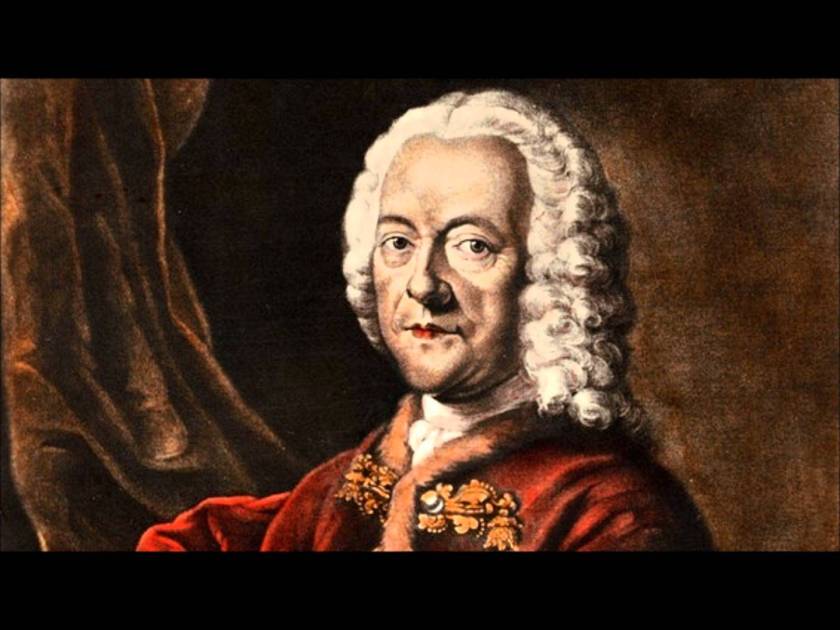
Now the theme here was to contrast the contrasting fortunes of a certain Johann Sebastian Bach and Georg Philipp Telemann. They were mates in the 1720s, 30s and 40s, with GPT becoming CPE Bach’s godfather, and both successively securing the reputation of the Collegium in Leipzig. Back in the day though Telemann (pictured above), with his suave, easy listening modelled on his French contemporaries, was by far the more popular composer, with JSB and his knotty, brainy counterpoint, and strong Lutheran faith, some way behind. As we all know JSB’s music languished for centuries, now some might say his is the daddy of all Western art music. Meanwhile whilst Telemann maintains a cherished place in the baroque world of the Baroque enthusiast, he is not much performed beyond this.

The influence of Vivaldi’s vast concerto output was much greater on JSB, and is clearly visible in the Brandenburg’s especially when played one to a part as here. In particular in the Fifth with its single tutti violin, though it is the solo harpsichord cadenza, the first ever of its type, that is the most memorable part of the concerto. Alistair Ross didn’t hold back once the harpsichord emerged from the string ritornello and his rubato was unleashed. A bit showier than Steven Devine in the last BC5 I heard in SJSS with the OAE. However, I think the Brandenburg 4 here with Rachel Brown and Rachel Beckett on the recorders was the highlight. Once the two Rachels got into the swing of it there was no stopping them, propped up by Bojan Cicic masterful violin playing, and by the end those recorders produced as sweet a sound as you could imagine (not always the case for the period recorder).

Having said that I think the most satisfying piece of the evening was the Telemann Concerto for flute and recorder. He wasn’t the only one to pair the “old” and the “new” wind instruments, Quantz was on to this, but he clearly mastered it. Written in 1712, the Concerto has some very attractive galant homophonic playing from the two instruments looking forward to the Classical. Elsewhere the soloists chase the lines from one to the other against very attractive dances, including nods to the eastern European folk tunes that he studied. The French influence on GPT is more apparent in the Overture suite, (he wrote over two hundred of these), with its simple dance rhythms and story based on Don Quixote. There is plenty of easy on the ear comic effect, (listen out for donkeys), and lots of colour. It is all so pleasant (though if I was critical maybe a tad too pleasant).

So another fine concert from the AAM who really seemed to be enjoying themselves. As I think did MSBD. In fact I know he did as he said so. I shall miss the AAM Messiah in the Barbican Hall and their intriguing Haydn and Dussek programme in April, but will be back here for the 15th February Pergolesi, Corelli and Handel gig, and for the 31st May concert in the Hall with Nicola Benedetti. Unmissable I reckon.

The Cardinal’s Musick at Wigmore Hall review ****

cardinalls_3132548b

The Cardinal’s Musick, Andrew Carwood (director)

Wigmore Hall, 4th December 2017

  • Giovanni Pierluigi da Palestrina (c.1525-1594) – Missa Hodie Christus natus est
  • Anon – Gaudete, Hail Mary full of grace, Quem Pastores, Salutation Carol
  • Jacob Handl (1550-1591) – Mirabile mysterium
  • Richard Pygott (c.1485-1549) – Quid petis O fili
  • Tomás Luis De Victoria (1548-1611) – Ecce Dominus veniet
  • John Dunstable (c.1390-1453) – Speciosa facta est
  • William Byrd (c.1540-1623) – Lullaby, my sweet little baby
  • Hieronymus Praetorius (1560-1629) – Magnificat quinti toni

In the immortal words of the now septuagenarian, Noddy Holder, “It’s Christmassssssssssss”. And what better way to kick it all off than an evening in the company of Andrew Carwood and The Cardinal’s Musick. Here was a programme that spanned a couple of centuries, various important centres of Renaissance music, Spain, Germany and England, Latin and local, liturgical and secular, motet, mass, carol and lullaby. I confess that despite repeated exposure, reading and learning I am still a bit stumped on how all the religious stuff fits together, but, no matter, this was just a lovely evening of choral music.

Andrew Carwood is a terrific host. Pretty funny too. No suggestion that he should give up his day jobs as scholar, director here, chief music honcho at St Paul’s and general provider of music at all important State occasions, for a life on the comedy circuit, but his introductions to the pieces are droll as well as informative. The CM, as in their recent concert at St John’s Smith Square informed by Armistice Day (The Cardinall’s Musick at St John’s Square review ****), which I also attended, make a simply lovely sound.

There was literally nothing here I had heard before (actually not quite true, see below) but no matter, I enjoyed it all. However, I always expect to uncover something new and interesting, and here it was the Jacob Handl motet, with its extraordinary chromaticism, and the Advent motet of Victoria, tip top polyphony. The Palestrina mass and motet, with its mixed split choirs (SSAB and ATTB) is a jolly affair, made jollier by interspersing with the four carols, including Gaudete, which I own in a recording by, of all people, Steeleye Span. Yep, a musical eclectic, that’s me. You will know it. I was a bit less enamoured of the Pygott lullaby with its baby babbles (I kid you not) but the Byrd equivalent was typically dark and unlikely to send you to sleep pacified. The Dunstable, a piece of Virgin Mary fandom, was the earliest in the programme, very short but very, very sweet. The Magnificat from the extravagantly named German composer Hieronymous Praetorius, went on a little bit but was still full of gesture as it flipped from Latin to German.

Like Bouncing Back this was “lovely stuff”. Anyway the tree is up, shopping’s done, SO has kicked off with the cards so time to get wrapping.


Bavarian Radio Symphony Orchestra at the Barbican review *****

71905-brso-jansons-barbican-2102-resized

Bavarian Radio Symphony Orchestra, Mariss Jansons, Yefim Bronfman (piano)

Barbican Hall, 24th November 2017

  • Beethoven – Piano Concerto No 4
  • Prokofiev – Symphony No 5

Concertgebouw, Berlin Philharmonic, Vienna Philharmonic, London Symphony, Chicago Symphony. These are the orchestras usually held up as the world’s best. The smart money though also rates the Bavarian Radio Symphony Orchestra under Mariss Jansons. I know that Mr Jansons has a way with Tchaikovsky and Shostakovich through recordings, but this was the first time I had ever seen him, or his principal orchestra, perform. That just shows what a berk I am, (I have discounted previous visits thanks to repertoire), though I suppose you could say this means I have much to look forward to. Anyway I was quite excited.

The thing is I still don’t know if I really like Prokofiev’s music. Sometimes I am really swept along by the wealth of ideas and colours. Sometimes I am baffled. A work in progress if you will. With the Beethoven however there was enough from the programme to commit. I am so glad I did. I don’t think I have ever heard a conductor who exerts so much control over the dynamics of an orchestra. Mr Jansons seems to have worked out every single detail and every one of the orchestra members knew what to do and when to do it. The lushiest of lush strings, the silkiest of silky woodwind,  the punchiest of punch brass and the most precise of precision percussion.

A bit too perfect. Maybe. I wouldn’t want to hear this sort of performance every day of the week but it worked for me in the Prokofiev. This was SP’s return to the symphonic form after a 15 year hiatus, and the first after his return to the Soviet Union. You could read it like a “celebration” of the Red Army’s victories over the German army, (it premiered in 1944), but it would seem to make as much sense as reading Shostakovich’s symphonies in the same way. It seems to me that it defies any programmatic intent. The first movement opens with a woodwind theme that gets bashed up by brass and percussion, followed by some string development and then a dissonant halt before the B flat major resolution. If this is an epic tale of overcoming the enemy it is a funny way of showing it. The scherzo which follows, with a tune SP nicked from his own Romeo and Juliet, (and which is the theme tune for a telly programme I can’t identify which irks me immensely), is one of those amazing ideas which SP seems to conjure up at will and which defines the word sardonic. Here though he plays with it, rather than discarding it too early and moving on, which is what normally annoys me. It ends with a trademark dissonance. The strings of the BRSO were bonkers fast by the end but still perfectly regimented. The Adagio kicks off with a proper stringy heart tugger then a funeral march before the finale opens with a gallop that gets pulled apart by percussion until a final, odd maybe-heroic conclusion.

It always seems to me that SP never seemed entirely comfortable with what he created and felt compelled to shake ideas back up as soon as they were realised. This is what makes it a bit too bitty for me. Yet in this performance I could hear a line through the movements and all that ADHD nervous intensity was calmed and channelled.

Same in the Beethoven, but because I know and get this, all was pleasure. Yefim Bronfman has a delicate touch for a big fella (like me), and pulled it out for the showy bits, but this was all about the orchestra which was so on the ball in this that it felt like it only lasted 5 minutes. I guess all that sitting around waiting for the soloist in the opening movement after his first tinkle meant the game was over before it started but this was definitely one of those performances where the diva did what they were told, even when they were in the box seat. A good thing. Mind you Mr Bronfman got plenty of opportunity to show his skills in his encore of Schumann’s pretty, if pointless, Arabeske.

The second movement Andante is one of my favourite Beethoven moments with the meek piano weaving its ethereal tune around the dramatic string interjection. And the final movement Rondo is, in turn, one of my favourite Beethoven fist pumpers, which surrounds an enchanting central diversion. Imagine hearing that for the first time. A joy.

Just like my first time with this orchestra. Mr Jansons, who works the podium energetically despite being near 75 and having a pacemaker, exudes enthusiasm and, I’ll warrant, pride in his achievement with this band. After the concert he was presented with a Gold Medal from the Royal Philharmonic Society. Only around 100 or so of these have been bestowed since inception in 1871, and only 1 or 2 are given out each year (mind you they were pretty generous in the first year). He joins the likes of Mitsuko Uchida, who presented it to him, and, in terms of living conductors, Dutoit, Pappano, Barenboim, Rattle, and the master IMHO, Haitink. Like I said, the smart money rates him.