Greek at the Arcola Theatre review *****

4720781800_20e6175e64_b

Greek

Grimeborn, Arcola Theatre, 13th August 2018

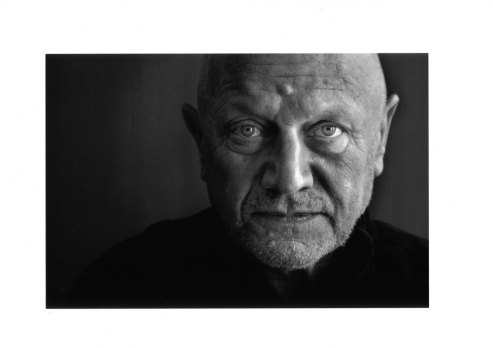
It is a shame Steven Berkoff’s plays don’t get performed more often. They do, like the stage, film and TV villains he has memorably played, (there he is above doing the menacing thing), sometimes lapse into “in yer face” cliche, but at their best they are thrilling theatre. The verse plays, notably East, West and Decadence, are the most exciting, and Greek, which transports Sophocles’s Oedipus Rex to East End London in the 1980s, was inspired. A few nips and tucks to make it fit but moreorless the same brilliant story. I love it, see here for the latest incarnation (Oedipus at Amsterdam Stadsschouwburg review ****). Aristotle thought it was the greatest story ever told and he, being the cleverest bloke that ever lived, knew a thing or two.

More inspired still though was when young Essex lad. Mark-Anthony Turnage, just 28, announced himself to the world with an opera version of Berkoff’s already “musical” play. His mentor Hans Werner Henze suggested the Munich Biennale commission him, and Jonathan Moore helped him with the libretto and directed the premiere. And Mr Moore, no less, was back to direct this production. I was lucky enough to see the first revival in 1990 at the ENO and, I tell you, it blew my socks off. I knew it was possible for opera to be the best of art forms when I was a young’un but I had also been disappointed by some allegedly top notch productions of classics by the likes of Verdi, Puccini and, even, God forgive me, Wagner. I was bored witless by much of this nonsense. But Greek, as one of the first contemporary operas I saw, made me realise that it is the theatre that matters and not the singing. Not saying that when the singing, music and drama all come together I can’t be moved by “classic” opera, especially Mozart and Monteverdi, just that it is a lot easier when the stories stack up and mean something to me and the music isn’t just a bunch of whistling tunes all loosely stitched together.

Of course some buffs might not accept that Greek is an opera at all, more musical theatre in the manner of Brecht and Weill at their best. I see their point. Indeed M-AT, probably more to wind us all up, termed it an anti-opera. Anyway who cares. Greek was a punch in the gut and food for the brain first time round for sure. Mr Turnage, with his rock and jazz inflections, and his adoration of Stravinsky especially, and the likes of Britten and Berg, as well as teacher Oliver Knussen, knows how to compose for the theatre. I knew nothing about the source of his latest outing Coraline (Coraline at the Barbican Theatre review ****) so had no baggage and, whilst if might not be up to Greek and to his version of The Silver Tassie, I thoroughly enjoyed it.

No need to trot you through the story here in detail I assume. By having the lead, here named Eddie, living a life of frustration in Thatcher’s Britain, Berkoff and Turnage have a contemporary alternative for the plague afflicting Thebes. Mr Moore wisely sticks with the 1980s, no need to invoke “Austerity/Brexit” Britain, that would be crass, which designer Baska Wesolowska, through set and multiple costume changes, neatly evokes. Class relations, cultural impoverishment, addiction, the patriarchy, hopelessness are all revealed but never bog down the story.

The differences between “foundling” Eddy and his heavy drinking Mum and Dad, and Sister, are highlighted by their over the top, “gor-blimey, Eastender, chav, working class” dialogue (no arias here folks) and movements. Eddy is angry and frustrated with them so, after having his fortune told, understandably f*cks off to meet, then marry Wife/real Mum, after an ill-fated altercation with her first hubby in a caff. There’s a fair bit of cursing and violence and the still marvellous riot, Sphinx and “mad” scenes, where M-AT’s brilliantly percussive score is at its best. It is funny and aggressive by turns, is deliberately cartoonish, has some great tunes and musical, (and music-hall), echoes and it belts through the story. And there’s a twist as you might have guessed.

Edmund Danon was a perfect Eddy if you ask me. M-AT asks for a high baritone and that is what Mr Danon provides. Every word was clear as a bell and boy did he get round the Arcola space. As did baritone Richard Morrison as Dad (as well as the, in so many ways, unfortunate Cafe owner and the Police Chief). For choice I preferred the mezzo voice of Laura Woods as Wife, as well as sister Doreen, Sphinx I and Waitress I, over the purer soprano of Philippa Boyle as Mum, Sphinx II and Waitress II.

Greek is now a staple of the operatic circuit as it can reliably pull in younger punters to even the grandest of opera houses, (the ROH got on the bandwagon in 2011). Its physicality, irreverence, punky aesthetic and social commentary can appear a little quaint now, especially if it is “over-produced” in a big space. Which, once again shows why Grimeborn, and the Arcola, is the perfect setting for works like this. With the Kantanti Ensemble, founded by conductor Lee Reynolds to showcase the best young musicians in the South East, under the baton of Tim Anderson, by turns belting out, and reining in, the score, the toes of the audience at risk of crushing from the four performers bounding around the Arcola main stage, and with the original director in charge, this production stripped Greek back to where is should be. Another Grimeborn triumph.

I genuinely urge you to try and see this once in your life. Especially if you think opera is for w*ankers. You will be blown away without any need to reassess that, largely reasonable, preconception.

The Rape of Lucretia at the Arcola Theatre review ****

rape_of_lucretia

The Rape of Lucretia

Grimeborn, Arcola Theatre, 1st August 2018

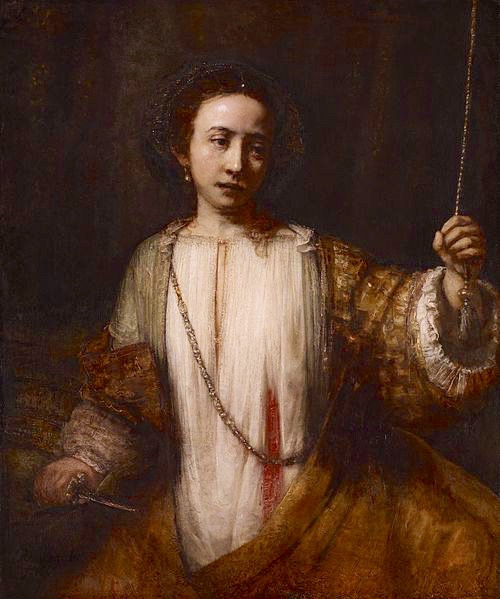
The Rape of Lucretia is a story with a long historical and artistic pedigree. It lies at the heart of the creation legend of the founding of the Roman Republic in the late 500s BCE, was documented by Livy and Ovid, then St Augustine, appears in Dante, Chaucer and Lydgate, was the subject of a poem by Shakespeare, (and Lucretia was referenced in some of his plays), and was a staple of much Renaissance and later art, notably works by Titian, Veronese, Rembrandt, Dürer, Raphael, Botticelli, old Cranach and Artemisia Gentileschi. The worst of these, depicting the rape, are violently voyeuristic, the best examine Lucretia’s subsequent suicide whilst avoiding gory titillation. Check out Rembrandt’s two takes on the latter, (see one above), Veronese’s and, best of all, Artemisia Gentileschi’s.

The story has undergone a few variations through the ages but, in the events of the Britten opera here, essentially runs like this. Tarquinius, the son of the last king of Rome Tarquinius Superbus, is sent on a military errand where he meets up with Collatinus and Junius. They have a few beers, (or the Roman equivalent),  and get to discussing the chastity of the women of Rome. Junius goads Tarquinius into testing the virtue of Collatinus’s faithful wife Lucretia. Tarquinius rides to Collatinus’s house that night and the servants are obliged to let him in. He rapes Lucretia and leaves. Collatinus returns. He comforts her but she cannot bear the shame and commits suicide. Junius tries to atone for his involvement by sparking a rebellion against the King.

As you can see there are multiple perspectives for the creatives who take on this ugly story, and specifically this opera, to alight on. Ronald Duncan’s libretto, which in turn is based on the French play Le Viol de Lucrece by Andre Obey, uses the device of a Male and Female Chorus to frame the action and, incongruously to me, to tack on a Christian message, notably in the Epilogue, to the “pagan” tale. He also uses some pretty high-falutin’ and fancy language for both chorus and in the dialogue. It is easy to grasp what is going on but the florid text does sometimes get in the way a bit.

Fortunately though the genius of Mr Benjamin Britten is at hand. The Rape of Lucretia, like Albert Herring and The Turn of the Screw which we recently saw in the superb production at the Open Air Theatre (The Turn of the Screw at the Open Air Theatre review *****), is a chamber opera scored for just thirteen instruments. As usual it took me 15 minutes or so to adjust to BB’s astounding mix of tonality, effect and experimentation but, once the ears were fully up and running, this music was as dazzling as I remembered. It has been a fair few years since the last performance I saw, (can’t actually remember where),  and I can’t say it is a turntable regular Chez Tourist, but, no matter, I was mesmerised. The Orpheus Sinfonia under Music Director Peter Selwyn, (who provided piano recitative accompaniment), were well up to the task and it was thrilling to hear the score in such an intimate space. The Sinfonia was founded to give an opportunity for talented young musicians to pursue a career that, trust me, they are doing for love not money. On this showing there are some fine talents here.

How then to deal today with what is plainly a deeply unsettling story? Britten was drawn to it as yet another “corruption of innocence” parable, the theme of so many of his operas. Yet I am not convinced that, as with those other operas, he fully thought through the perils of the material he was dealing with. Director Julia Burbach though made the most of the “universal” message that Duncan and Britten devised. The modern dress Male and Female Chorus, (here tenor Nick Pritchard and soprano Natasha Jouhl), open the opera by explaining how Rome under the Etruscan King Tarquinius Superbus is fighting off the Greeks and how the city has fallen into depravity. A Christian message for sure but as, subsequently, the two singers voice the thoughts of the male and female protagonists and move the story on, “out of time” as in classical Greek tragedy, a device to “explain” the motives and psychology of the characters and to involve us, the audience, in the action.

Fealty to Duncan’s libretto maybe means the production cannot resonant quite as volubly as it might have wanted to current MeToo awareness. Even so the drunken toxic masculinity, the fear that grips Lucretia and her two servants on Tarquinius’s arrival, the rape itself and Lucretia, broken, arranging flowers the next morning, are immensely powerful scenes reflecting the music, the acting and the movement of the characters and chorus under Julia Burbach’s direction. Having the Male and Female Chorus move through, and even at some points shape, the action was a smart move which offered insight.

I am not sure that any of this made the content of the story more palatable though and I can certainly understand why some may think this is an opera better left unstaged. I would suggest you see a production and decide for yourself though. This is not the only misogynistic opera: far from it. But when Lucretia, as here, is literally staring directly at you after the violence she suffers, it is impossible to ignore. And, when she dismisses Collatinus’s plea that Tarquinius’s action can be “forgotten”, the reason for her suicide is shifted from shame to anger.

The performances were uniformly excellent, particularly the two Chorus and contralto Bethan Langford as Lucretia. Bass Andrew Tipple was a deliberately vapid Collatinus, James Corrigan was a suitably odious Junius and a menacing Benjamin Lewis skilfully conveyed Tarquinius’s sickening importuning ahead of the rape. Claire Swale and Katherine Taylor-Jones both sang beautifully as Lucia and Bianca, Lucretia’s maid and nurse respectively. I am guessing that the performers had to take it down a notch or two in the Arcola space but what was lost in singing power was more than made up in clarity and immediacy.

The opera was staged as part of the Arcola’s Grimeborn festival which is not into its 11th year with 55 performances across 17 productions. For those of us who cannot face, or afford, the trip to Glyndebourne, where this opera was premiered in 1946, Grimeborn offers a bloody marvellous alternative. The small space means poncey C19 boring opera is off the agenda or the creative teams have to aggressively rethink it. New interpretations and new work abound. Chamber opera is in its element. Everything comes alive and acting, not vocal histrionics or regie-directorial setting, takes centre stage. All for around 20 quid a pop or less if you arm yourself with an Arcola Passport which is simply the second best gift to culture on the planet, after the Arcola AD Mehmet Ergen who should be knighted this minute.


The Turn of the Screw at the Open Air Theatre review *****

britten_-_the_turn_of_the_screw_twelve-tone_theme_tetrachords

The Turn of the Screw

Regent’s Park Open Air Theatre, ENO, 29th June 2018

Benjamin Britten. The Turn of the Screw. Members of the ENO Orchestra conducted by up and coming talent Toby Purser. Timothy Sheader directing. A Soutra Gilmour set. At the Open Air Theatre. On a beautiful late June evening. In the company of the SO, (who loves her Henry James and surprised herself by enjoying Deborah Warner’s staging of Death in Venice in 2013 at the ENO), BUD and KCK. Of course I was going to love this.

One of the aims here was to extend young BUD’s operatic education beyond Mozart. As he remarked here, not a lot of tunes.. Not sure I agree but there is no doubt in my mind that Britten’s music became darker through time, cleverer, from an already very high base, more progressive and less conservative, whilst never embracing the fearsome avant-garde, and richer, even as textures got sparser. The tonality is tempered with lots of (lovely)  dissonance.

I think TTOTS occupies a key place in the development of all of Britten’s art. It was composed in 1954, just after Gloriana, and three years after Billy Budd. In the same year Britten composed his Canticle No III, Still Falls the Rain for tenor piano and, Britten’s favourite, horn. This is recognisably BB, like a trip-hop version of the Serenade Op 31, but this, and the Winter Words song cycle from 1953, seem more melancholic than the warmer equivalents before the war. Britten himself said that his music was forever changed by the WWII, as was true for pretty much all Western art, notably by a visit to Belsen, but I don’t think this really becomes apparent until the mid 1950’s.

Anyway TTOTS is definitely an example of the “less is more” BB where surface effect is toned down a little, (though not jettisoned entirely, there are plenty of ravishing musical ideas here), in the service of greater structural and emotional depth. And structurally this is a score of genius as a tightly wound serial “screw” theme and set of 15 variations built on a different semitone, opens each scene, ratcheting up the tension. So, you see BUD, there is a “tune”, you just hear it in a different way.

Which I think is why it is such an effective piece of musical theatre, an opinion with which BUD heartily conferred. TTOTS is apparently BB’s most performed opera. And probably the most performed opera in English. And, after your man Puccini, probably the most performed opera from the C20. Certainly the most performed of those operas written since the war. In part this reflects its chamber structure. With just 13 instrumentalists and a cast of 7, this is no big budget affair. As was intended. However I also think it reflects near perfect synthesis of story, libretto and music. All three offer a sufficient challenge to an audience but in no way is this intimidating. It always takes a bit of time to get swept up into a Britten opera, but swept up you will be, even if it isn’t the massive, warming, rush of Mozart.

In retrospect it was pretty much a nailed on certainty that BB and Myfanwy Piper would alight on Henry James’s novella. BB, and his various librettists, always started with an artistic inspiration. Usually the story revolved around an “outsider” estranged from the society around him. There’s usually some sort of spiritual dimension. And, nailed on, there will be some sort of uneasy “corruption of the innocent” theme. TTOTS has all of the requisite elements in spades. Better than this though is the ambiguity embedded in the story. What really happened at Bly? What was, or is, the nature of the relationship between Miles and Flora, Miss Jessel and Peter Quint? Who, and what, can we see? Who, and what, do the characters really see? After all only the Governess apparently sees the ghosts in HJ’s original. Is this all in the Governess’s mind then? How are we being manipulated? Strange to think then that the story came to HJ via none other than the future Archbishop of Canterbury in 1895.

Myfanwy Piper’s text reads like a poetic, musical impression of Henry James’s book but it picks its highpoint carefully. On to this BB’s score is perfectly stitched. In the book, told through the first person narrative of the Governess, it is up to you to imagine what happens. In my estimation, and those way smarter than me, its psychological depth and disturbing themes, take it beyond your bog standard gothic ghost story. In the innumerable film and TV versions, the ghosts can be made to seem like the extensions of everyday reality that HJ intended (I think), thanks to the trickery of the camera, but you all get one view, one take on the story. In a version for stage as here, (or notably The Innocents or the 2013 Almeida take), Quint and the Governess are undeniably corporeal, (any design team which could escape that mortal fact would get my money, no question), especially if they are going to sing, and the children are going to sing to them, and scenes unfold where the Governess is not present. So the mystery and ambivalence has to come from the music. And I cannot imagine anyone better than Britten at facilitating this.

But BB and MP take things a lot further. Take Miles’s famous Malo song that is repeated by the Governess at the end. Haunting for sure with viola, horn and harp. Malo in Latin could either mean “bad”, “to prefer” or an apple, symbol of innocence. “I would rather be… in an apple tree … than a naughty boy … in adversity”. The Latin words recited in the lesson prior to this contain all sorts of sexual references. Miles wanting “his own kind” and reflecting on his “queer life”. Mrs Gross’s line about Quint being “free with everyone” allowed to linger in the Regent’s Park air. Blimey. This is how the opera adds a new dimension contrasting the order and convention that the Governess clings to with the liberty that Quint offers whilst not seeking to mask the implication of abuse.

So, as you can see, I am a fan of this opera. What about the production then. Sandra Gilmour has imagined the remote country house of Bly as a large, dilapidated conservatory fronted by overgrown grass and a jetty leading to the “lake” and into the audience. It was amazing. Timothy Sheader, after a decade at Regents Park, now knows exactly how to use the unique space to best effect. TTOFTS was pushed out to an 8pm start to ensure sunset and early twilight matched the change in dramatic mood in the story and provided a perfect backdrop for lighting designer Jon Clark to show off his skills. Quint and Jessel make entrances from within the audience. Even the parakeets flew over on cue, “the birds fly home to these great trees”, at our performance. The debacle of last years Tale of Two Cities is entirely forgiven. The pacing was sublime and the musicianship top notch, especially, the viola of Rebecca Chambers, the clarinet of Barnaby Robson, the horn of John Thurgood and the harp of Alison Martin. Putting the orchestra inside the conservatory, behind a panel of ancient glass, thus lending them a ghostly quality, was a genius touch.

On this evening ENO Harewood Artists Elgan Llyr Thomas played Peter Quint with William Morgan taking the Prologue. Mr Thomas’s tenor voice is clear and direct, through the melismas especially, and fitted the space. I was a little less sure about his wig and beard combo. Anita Watson was a suitably unhinged Governess, for me she was convinced this was really happening, and Elin Pritchard a very disturbing, steampunky Miss Jessel. Janis Kelly, who has in her time played Flora. Miss Jessel and the Governess, now played a protective Mrs Gross. Daniel Alexander Sidhorn’s precociousness made for an arresting Miles though I have to say Elen Wilmer’s Flora was, for me, the more impressive voice. As an actor though Master Sidhorn is the real deal. Simultaneously vulnerable and malign.

Indeed Elen matched the elder Elin in look and movement creating a “bond” between Flora and Miss Jessel as disturbing in its way as that between Miles and Quint, an unexpected bonus. Mind you when Miles dons his purple shirt to match Quint’s and when he takes over from Quint on the piano, (young Sidhorn is either a mighty fine  pianist or an even better “piano mimer”), the audience was bolt upright in their collective seats. And, on top of all of this, Mr Sheader really messed with our heads with a provocatively erotic scene as the Governess, “lost in my labyrinth”, asleep, is joined silently by Quint and Miss Jessel, or more specifically her hair, with Flora’s symbolic dolly and with Miles’s symbolic jack-in-the-box. Oh and did I say Miss Jessel is pregnant here.

One final thing. It’s outside. Which means a little technology is required to keep the volume stable as it were for both ensemble and singers. Which meant every word, with a couple of exceptions when Anita Watson’s soprano heads off to the higher registers, was crystal clear. Didn’t stop me consulting the libretto on occasion but what it did mean is that, for maybe the first time ever, I could savour every word of the libretto, to set alongside this stunning score and this tremendous production. This is what theatre, and opera, should all be about.


Cave at the Printworks review ****

background-black-and-white-cave-366313

Cave

The Printworks, Surrey Quays, 23rd June 2018

Cave is the second collaboration between composer Tansy Davies and librettist Nick Drake. Their last work, Between Worlds, which took as its subject the Twin Towers on 9/11, was superb. It was an immensely moving and sensitive elegy which focussed on the last conversations with loved ones of just five victims trapped together on one floor watched over by a benign Shaman or spirit, superbly directed by Deborah Warner. The audience I saw it with was floored (even if a couple of jaded critics were a bit sniffy).

I have since heard a few of Ms Davies’s very fine works including the premiere of her Concerto for four horns, entitled Forest. She has a way of finding the right shape, sound or phrase to match the intent and mood of her music, without ever serving up the obvious or banal. There is a rhythmic underpinning which I think reflects her familiarity with popular music genres, especially funk and post-rock. Her music can be muscular, industrial if you will, but, equally, she is capable of great lyricism. In more recent commissions she has been afforded the opportunity to work at a larger scale, but there is still a chamber like intimacy to her work, even when it is belting out in full on forte. In short she has the gift, and, even if contemporary classical music isn’t your bag, in fact maybe especially if contemporary classical music isn’t you bag, I defy you not to hear it.

She is also pretty keen on conveying a message in her music. As is librettist Nick Drake. Cave is set in a world disfigured by ecological catastrophe. A man (Mark Padmore) stumbles into a cave. He probably nibbles on some crazy mushrooms. He remembers his daughter Hannah, played and sung by Elaine Mitchener, and, when young, played by Akilah Mantock at my performance. Her spirits fills the cave. That is pretty much the long and the short of it. There are seven scenes in total beginning with the entry of the audience into The Lost River which runs through the cave.

The Printworks in Surrey Quays used to be where the Evening Standard was printed in the pre-digital era. It is a cavernous industrial space, as I discovered on my pre-prandial hike to the loo just ahead of the opening of the opera, which plays host to a variety of events, united in there “alternative” vibe. Perfect for this work. The audience was lined up along both sides of a very narrow, very long space in Mike Britton’s set, covered with, I think, wood bark. and with the seven members of the London Sinfonietta at one end and vast plastic hanging “doors” at the other. It was largely left to the marvellous lighting of Jack Knowles, who despite looking about 5 years old, has a massively impressive list of credits behind him, to conjure up the required magic, along with a sound design from, usual culprits, Sound Intermedia, as well as the electronics of Tansy Davies and Rolf Wallin.

Even with the principals moving up and down the space there were times when the “action” was a bit “laterally compromised”, especially for those of us pig-headed enough to go right along to the end where the ensemble was positioned. On the other hand this perch did afford a perfect insight into all the moving parts of the score, and, at one key point, the vocal pyrotechnics of Elaine Mitchener. She is not your opera mezzo diva. Thank goodness. Usually to be found in repertoire which is even more boundary-pushing than this, she has an extraordinary range of expression. I was spell-bound. For those of us who are regular listeners to Bach, Britten and Baroque, Mark Padmore needs no introduction at all. Here his singing was predictably exquisite. He also put in an acting shift as the Man plagued by his memories and a world that has literally fallen apart around him. I also suspect this won’t be the last I see of the precocious ten year old Akilah Mantock – no fear at all in what must have seemed a slightly odd role when she went to the audition.

Mr Drake’s other job is a poet. No kidding. The second scene, the Echoes, starts out with the Man hearing Hannah’s voice before he goes into an astonishing quasi aria describing his journey into the cave. This is when we see the connection that Ms Davies and Mr Drake intended to make to some of the very first human impacts on the earth. Apparently they went for a trip to have a peek at cave paintings in Niaux in the Pyrenees, which proved a crucial inspiration. I am not surprised, this is where art and nature recognisably first collided.

Scene three, the Cave of Birds, has the Man describing the onset of ecological catastrophe, and some sort of vision, scene four, The Mirror Cracks, is a “rave of agony” as the Man recalls losing Hannah, who “responds” by singing the last part of his “song” backwards. The Tree of Shadows starts with the Man and Hannah remembering a past holiday and then Hannah going a bit preachy as she describes how she wants to save the world from the havoc wrought by the generations which preceded her. A powerful instrumental interlude (with electronics I think) follows, The Storm, which then gives way to a lullaby shared by the two principals which shows off their superb singing. The final scene The River sees the man leaving the cave, presumably to die, but probably healed.

This is an epic myth, or more exactly a parable, and, in that, I was reminded of Britten’s Church Parables, which I don’t think were a direct inspiration, but, for me, have a similar vibe. The scoring is sparse, under the expert baton of Geoffrey Paterson, with most of the colour coming from the winds and brass, the clarinet/bass clarinet of Timothy Lines, contra bassoon of John Orford and horn of Michael Thompson, contrasted with the prominent harp of Helen Tunstall, set against a sort of continuo from Jonathan Morton’s violin and Enno Senft’s double bass. Elaine Mitchener gets to give a hefty whack to a drum at one point and, as I have said, electronics and some other sound effects (plenty of echo) play a major part. Overall you have no difficulty in musically distinguishing the scenes, there are some breathtaking sounds here and no little drama. I was not entirely convinced about the articulation between music, words and message but that probably says more about my pessimism than the creative talent on show here. It is certainly not the fault of director Lucy Bailey.

I don’t want to get more frightened of, and helpless about, the world around me as I get older, but it seems to be happening nonetheless. It certainly does feel like we humans are accelerating towards our inevitable extinction event despite the apparent gift of consciousness. Mother Earth will get over us I suppose. Anyway it is good that Tansy Davies and Nick Drake are not engulfed by this sort of negativity and prepared to make an ambitious stand of sorts in their art. It is also good that they are not cynical about all things “spiritual”. As this piece is sub-titled, courtesy of modern day environmental shaman and prodigious psychedelic drug-taker Terence McKenna, “Nature loves courage”.

At the end, Ms Davies was zipping by to thank the performers. I briefly thanked her. No doubt she thought I was a nutter so apologies but I felt compelled to offer up my appreciation. Thank you.


Isabelle Faust and Kristian Bezuidenhout at St Luke’s Old St review *****

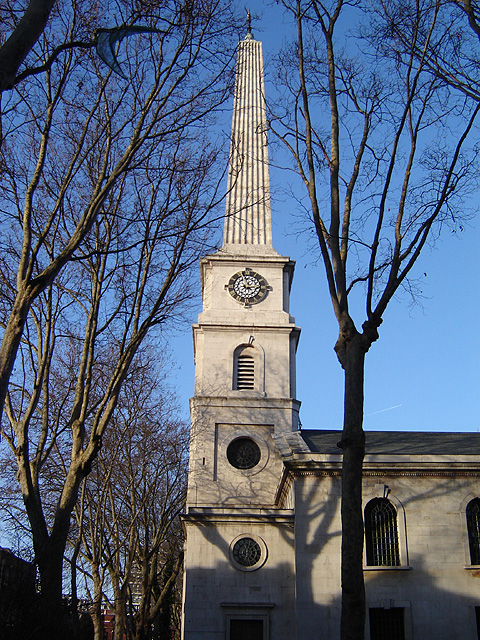
finsbury_st_lukes_1

Isabelle Faust (violin), Kristian Bezuidenhout (harpsichord)

LSO St Luke’s Old St

JS Bach

  • Sonata no 3 for violin and harpsichord in E major BWV 1016
  • Partita no 2 for solo violin in D minor BWV 1004
  • Sonata no 1 for violin and harpsichord in B minor BWV 1014
  • Toccata for harpsichord in D minor BWV 913
  • Sonata no 6 for violin and harpsichord in G major BWV 1019

The second instalment in Isabelle Faust and Kristian Bezuidenhout’s rendition of the six JSB violin sonatas BMV 1014-1019 following on from the Wigmore Hall in April. (Isabelle Faust and Kristian Bezuidenhout at Wigmore Hall review ****). Once again they allowed themselves a solo each, but this time some more JSB, in keeping with the Bach Weekend theme, which also celebrated the 75th birthday of the venerable Sir John Eliot Gardiner.

This time I was joined by Bach groupie MSBD. Early start. 11am on a Saturday. I wish every day started this way though.

At times JSB is truly sublime. More so that any other composer. You might find it in the cantatas, others in the masses or passions, or maybe the keyboard, instrumental ensemble works or the cello suites. Not for one moment could I disagree with you but, for me, the apotheosis of JSB’s genius lies in the violin sonatas and partitas, solo and accompanied. Great art induces a state of rapture. Not the nonsense exclusive coach trip into the sky that some befuddled Christians cling on to, but the state of grace, individual or collective, that you can feel inside your whole being when dancing in a club, or breathless and motionless in the theatre, or when your ear sends pure sound to your brain at a concert or when you get lost in a painting. It doesn’t happen much, just as well as that might overwhelm, but it is part of what makes life worth living. I appreciate that this might be a terribly old-fashioned way to think about art but I dare you to tell me I am wrong.

Anyway it happened here. In the final movement of the Partita. The immense Ciaconna. Amongst Bach’s finest creations as the programme says. They’re not wrong. It gets me most times but here, OMG, Isabelle Faust, her violin, St Luke’s, my ears, my brain, the audience, and of course, old JSB all came together as one. This old buffer did his best to hold back a tear. It is so simple, just a basic four bar pattern, (apparently “the harmonisation of a descending tetrachord” – thanks again programme notes). But JSB is able to do so much with it including a huge mood shift about two thirds of the way in. This is when you might just believe that JSB reconciles himself to the early death of first wife Maria – he was to meet Anna just a year later.

The accompanied sonatas came close to their solo cousins. I have banged on before about just how expressive Isabelle Faust is when it comes Baroque violin. She’s pretty handy too when it comes to the rest of the canon. Listen to her recordings of the Beethoven, Bartok and Berg concertos if you don’t believe me. She can even persuade me with her historically-informed interpretations of that Mozart chap. But Bach is where she enters a different realm. She applies an astringent, almost abstract, rigour which just blows me away. And KB, who has a gentler conversation with his harpsichord, is the perfect accompanist. IF doesn’t muck it up with unnecessary and unwarranted vibrato, and both the left and right hand lines for KB are clear and not jangly. This leaves plenty of room for the sonatas to breathe and, in the superb space that is St Luke’s, with the sun streaming in from outside ….. well you can see where I’m coming from.

JSB continued to revisit and buff up the six sonatas throughout his life. Maybe that’s why the old boy perfected his art here. In the early decades of the C18 the trio texture was considered the compositional ideal for chamber music, creating a perfect synthesis of linear counterpoint, full-sounding harmony and cantabile melody, (thanks once more programme notes). Put this trio principle into the hands of the man who got closer to the ideal of perfect harmony than anyone else in the history of Western music, with the melodies driven by the finest of instruments the violin, then obvs it was going to work. JSB created trio works for flute, viola da gamba (which I like) and organ but they don’t come close.

Listen to No 1, BMW 1014. It kicks off with a 5 part texture with double stopping and a 3 part effect on the harpsichord. The two quick movements, (the first 5 sonatas stick to the old skool sonate di chiesa four movement set up with No 6 breaking free into 5 movements), have each of the three lines chipping in together, the perfect realisation of the trio principle with the third movement switching to violin and harpsichord right hand weaving around a left hand bass. No 3 BMW 1016 kicks off with a slow movement where both players can show off their skills, followed by a bouncy fugue, a powerful lament in C sharp minor before rounding off with an extraordinary gallop where the violinist can really show off. No 6 BMW 1019, is very different, with a central solo harpsichord movement flanked by two jolly giant Allegro opener/closers (real faves) and two slow, simple (-ish) shuffles in a kind of canonic form.

Other than the aforementioned divine Ciaconna the Partita No 2 consists of 4 dance movements, an Allemanda, a Corrente, a Sarabanda (which foreshadows the Ciaconna) and a Giga. We have Leopold, Prince of Anhalt-Kothen’s Calvinism to thank for JSB’s discovery of all things boogie as he wasn’t confined to elaborate Church music in the Prince’s employment. (We also have the genius Antonio Vivaldi to thank for the twin graces of rhythm and repetition that underpin JSB’s unique ear for inventive sonority).

Other than the Sarabanda thsee dance movements are all monophonic in structure so easy to understand and have a dominant rhythm from which the violin goes off on ever more exciting harmonic excursions. It was a massive hit when first published and performed and remains so to this day. It really is very easy to see (and hear) why. You do not need to have any interest or understanding of classical music to get this. You just need ears and a pulse. So whatever your musical bag, I implore you to listen to it. IT WILL MAKE YOUR LIFE BETTER. I promise.

KB had a little less time to shine though not by much as he picked the most extensive of the six toccatas, BMW 910-916. The D minor 913 was composed when JSB was just 20 as he went AWOL from his job and walked the 450kms to Lubeck to hear Dieterich Buxtehude play. So next time you complain about how tricky it is to get to the Barbican think on JSB’s devotion. It opens with a typical Baroque improvisation, (typical for others that is), followed by a couple of JSB trademark fugues linked by a bridge which shifts tempo and ending with a tierce de Picardie, a major chord at the end of a minor key piece, which JSB was partial too. After the Partita and the first two sonatas this harpsichord piece shifted the mood before the final, jolliest, No 6 sonata. Smart programming and smart playing, (I only know these toccatas from the never surpassed Glen Gould on piano).

So there you have it. This will definitely be a top 10 2018 concert for me and I am pretty sure for MSBD, though I have lined up a few more for his delectation. And I wonder if, by the end of my musical education, I end up realising that no-one topped Bach. It is beginning to feel that way.


Venetian Baroque: Academy of Ancient Music at St Luke’s Old St review ****

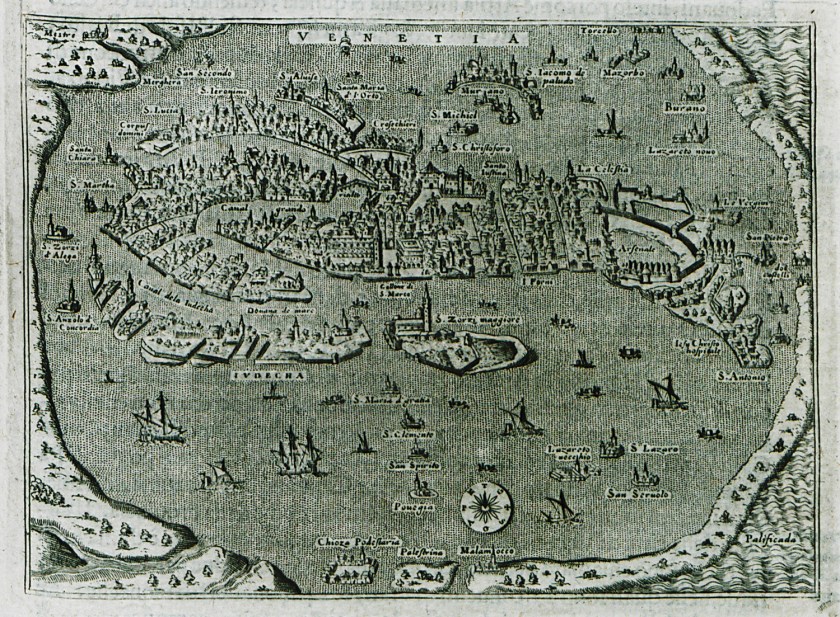
venetia_-_porcacchi_tomaso_-_1620

Academy of Ancient Music, Bojan Cicic (violin), Persephone Gibbs (violin), Sarah McMahon (cello), Alistair Ross (harpsichord), William Cater (theorbo)

LSO St Luke’s Old St, 15th June 2018

  • Dario Castello – Sonatas No 10 a 3 Book Two, No 1 a 2 Book One, Sonata No 1 for violin (Book Two), Sonata No 2 for violin (Book Two), Sonata No 12 a 3 (Book Two)
  • Tarquinio Merula – Ciaconna
  • Michelangelo Rossi – Toccata No 7 for harpsichord
  • Giovanni Girolamo Kapsberger – Toccata and Ballo for theorbo
  • Francesco Tunrini – Sonata a 3 “il Corisino”

Venice in the early C17 was the hot place for music in the West. The Republic might have begun its long slow decline, having picked fights with the Ottoman Empire and the Vatican, amongst others, but there were plenty of punters who had made big bucks and were looking to spend it. It was certainly a big-time, sexy, funky, party town. Carnival was big business. Public opera, with that genius Claudio Monteverdi in the vanguard, was taking hold. New instrumental ensembles were being tried out. Exquisite brass was set alongside double and triple, or more, choirs in churches, following on from Gabrieli’s innovations in the previous century. (Even the guards telling the snaking hordes of tourists in St Mark’s Basilica to shut up sound musical thanks to the stunning acoustic). The best performers, composers and instrument makers gathered there.

This was the music members of the AAM sought to highlight in this BBC lunchtime concert, built around the sonatas of Dario Castello, which, to an extent, defined the form. He was born around 1590 and died around 1658, though his best known work comes from the 1620s. He was the leader of a wind ensemble, cornetts, sackbutts, shawns, bagpipes and so on, and might have had a job in St Mark’s. His two books of sonate concertate comprise 29 pieces, (five were played here), that alternate retro polyphonic sections with cutting edge, (by 1620s standards), expressive recitative, the stile concitato,  a la Monteverdi. Instruments are specified, including continuo, musicians are expected to be on their game. This simultaneous looking backwards and forwards is what makes this music fascinating if not entirely satisfying.

In addition to the Castello we had a chaconne, a simple bass riff with increasingly inventive variations, dead easy for the Baroque initiate to grasp, from one Tarquinio Merula, a harpsichord Toccata from Michelangelo Rossi, an unusual Toccata and Ballo for theorbo from Giovanni Girolamo Kapsberger and a concluding trio sonata from Francesco Turini.

Merula never worked in Venice, (he had positions in Cremona and Bergamo)  but he knew the drill. He was an argumentative chap by reputation but he helped set the tone for the dance vibes of the later Baroque. Rossi came from Genoa, worked in Rome, wrote madrigals and operas, and, despite being a violinist, a book of 20 toccatas, which embrace some dramatic chromaticism and choppy tonality as here. Now you don’t often see a theorbo solo even if you are a paid up member of the Baroque club. The theorbo is that giant-sized lute that the player rests, like a loving parent, on his/her knee. GG Kasperger came to Rome by way of Vienna and was, in terms of theorbo virtuosity, the Charlie Mingus of his day. Turini was also born outside of Italy and published madrigals including some early instrumental sonatas.

I probably don’t need to tell you how very fine the members of the AAM were in this very rarely performed repertoire. Their excitement in exploring the, shall we say, backwaters, of the Venetian School was palpable. Bojan Cicic, as leader of the AAM, has appeared a few times before on this blog, as has Alistair Ross on the harpsichord. William Cater was as eloquent in his explanation of the theorbo piece as he was in its playing, but I was particularly taken by Persephone Gibbs’s playing in the second solo violin sonata of Castello. Great first name. Even better surname. And she leads a Baroque orchestra based in Devon. No relation though. She has talent after all.


LSO play Ravel and Mussorgsky at the Barbican review ***

mussorgsky_repin

London Symphony Orchestra, Gianandrea Noseda, Yefim Bronfman (piano)

Barbican Hall, 3rd June 2018

  • Ravel – Rapsodie Espagnole
  • Beethoven – Piano Concerto No 3
  • Mussorgsky arranged Ravel – Pictures at an Exhibition

It has been a few years since I have heard Pictures at an Exhibition live, and I have thoroughly enjoyed Mr Noseda’s way with Shostakovich and Beethoven recently, so I reasoned now was the time to reacquaint myself. Moreover Mr Bronfman’s account of the PC 4 last year, admittedly under the exacting eye and ear of Mariss Jansons and the Bavarian RSO, was pleasurable enough if not earth-shattering (Bavarian Radio Symphony Orchestra at the Barbican review *****). And I thought it right to risk another chapter in my ongoing love/hate relationship with Ravel.

The Rapsodie espagnole is a pastiche, of sorts, of Spanish music, in contrast to the rather more rooted offerings of the likes of de Falla, Albeniz and Granados, though Ravel is not the only French composer to have been seduced by all that sultry dance. Indeed when this was composed, in 1907, Maurice was immersed in all things Iberian what with his opera L’heure espagnole and the songs of the Vocalise-Etude. And his particular favourite was that familiar habanera rhythm – which turned into, amongst other things, the cha cha cha we now today. Mind you his mum was Spanish and he was born just over the border in the Pyrenees so it was in the genes/memes.

This was Ravel’s breakthrough orchestra piece and actually pretty much his only full force work that didn’t start in another form or from the piano. Whilst it isn’t based on any specific Spanish melodies there is no doubting where you are. Ravel, of course, was the master of musical and emotional coloration. Yet he doesn’t always surprise. When he does, for me mainly in the chamber, piano and piano concerto works, he can dazzle. When he doesn’t, often as not for me in the vocal works, he can be just a bit too diddly to no purpose. Not as diddly as Debussy who mostly really tries my patience, but still a triumph of style over substance.

Overall, given the material, this was reasonably enjoyable though I wouldn’t seek it out. There is a distinct descending four note ostinato motif that recurs through three of the four sections, with the Habanera being the exception. This helps it all hang together. The LSO was on top of the score, of course, but Mr Noseda’s reading felt a little forced, but not unpleasantly so, until the final Feria where the band cut loose.

This spilled over into the Beethoven where the quiet string theme that opens the C minor concerto shuffled into, rather than glided into, the room to set up the extended orchestral intro of the Allegro. Last time round in Beethoven I felt Mr Bronfman’s precise, delicate playing meant he got a bit bullied by the orchestra. I feared a repeat. As it turned out he was given enough room to breathe and the LSO, especially in the woodwind and lower strings, was on top form, with the Largo the standout. I have heard more convincing overall interpretations, and a bit more whoosh in the Rondo, but this was satisfying enough.

Hendrix, Morrison, Cobain, Vicious, Bonham, Curtis, Johnson, Buckley (x2), Cooke, Gaye, Coltrane, Parker, Parsons, Bolan, Tosh, Lynott, Nelson (PR). Some of my musical “heroes’ who died of unnatural causes, often with a fair bit more left to give, But if you want real rock’n’roll, nearly a century before any of these punters were doing their thing, then Modest Mussorgsky is your man. Obviously, like so many of the above, he was a f*cking idiot to waste his talent mashed up on booze, but, having chosen this course, and he did choose it seeking artistic freedom in this “bohemian life”, he got properly stuck in. Which meant he failed to complete vast swathes of work and didn’t get much beyond the piano and a bunch of songs and the completed opera Boris Godunov. He was a rubbish musician barely caring or knowing about structure or texture but boy could he capture a mood. and in BG he basically captures the essence of Russia.

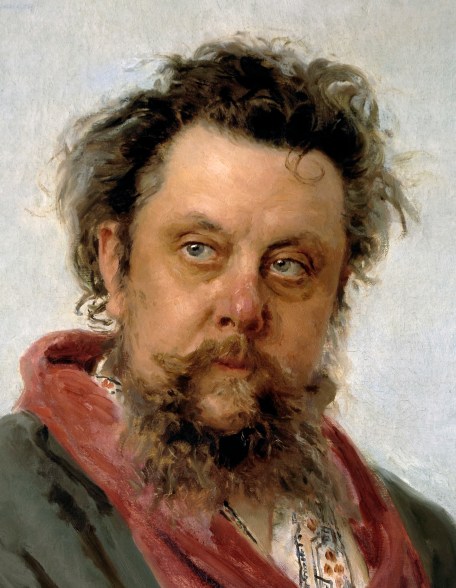
Anyway there he is above in close up, in Repin’s famous portrait from 1881, which appeared in the marvellous Russia and the Arts collection at the National Portrait Gallery a couple of years ago. He looks a bit rough for sure. Worse still when you realise he was just 42 and died a few weeks later.

Easy to see what the colourist Ravel, as many others have done subsequently, was smitten with MM’s big ideas and couldn’t resist the temptation to smooth off the rough edges. The original piano suite of Pictures at an Exhibition was inspired by a posthumous retrospective of the work of artist Victor Hartmann, MMs mate who died aged 39. Mind you MM’s musical images, as you might expect, went way beyond whatever Hartmann envisioned, but the concept of the exhibition, with the repeated Promenade being us the viewer, holds the whole thing together and adds an ironic, detached air to the bombast. On the piano it doesn’t entirely work but in Ravel’s hands something magical emerges. Ravel used Rimsky-Korsakov’s edition of the piano original so a few changes were made but you get the feeling that MM would have been happy with the result even if he may not have known how Ravel got there.

It might all be very familiar but it the right hands, and the LSO and Gianandrea were the right hands, it can still be thrilling. Bydio, Baba-Yage and the Great Gate of Kiev didn’t disappoint. Boom. If you are a classical virgin and want to find a way into live performance there is no better way. You won’t stay there as you move on, and you may end up thinking it is all a bit daft, but the hairs on the back of your neck will still stand on end whenever you return to it.

Rock’n’roll. Sort of.


Nicola Benedetti and the Academy of Ancient Music at the Barbican review ****

Vivaldi (1)

Academy of Ancient Music, Nicola Benedetti (violin), Richard Egarr (director and harpsichord)

Barbican Hall, 31st May 2018

  • Antonio Vivaldi – Concerto for Violin in D major RV 208 “Il Grosso Mogul”
  • Antonio Vivaldi – Concerto for Harpsichord RV 780
  • Mystery Composer – Sinfonia in D first movement
  • Georg Philipp Telemann – Concerto for Violin in A major TWV 51:A4 “The Frogs”
  • Georg Philipp Telemann – Alster Overture-Suite TWV 55:F11
  • Georg Philipp Telemann – Concerto for Four Violins in C major TWV 40:203
  • Antonio Vivaldi – Concerto in F major RV 569

Time to take BUD to a purely orchestral evening, no voices, albeit in the ostensibly easy on the ear form of the two Baroque masters Vivaldi and Telemann. In the company of KCK who was, rightly, keen to hear the prodigious talent of Nicholas Benedetti. And all of us trusting to the capable hands of Richard Egarr and the Academy of Ancient Music.

Now to accommodate Ms Benedetti some virtuoso music was required. Even by the Red Priest’s breathless standards the D Major Concerto “Il Grosso Mogul” fits that particular bill with its two written out cadenzas in the outer fast movements. I think this showed NB off to best effect with a sharper delineation between soloist and ripieno than some of the subsequent pieces in this well programmed concert, especially in the stunning slow movement. No-one knows where the name grosso mogul comes from but JS Bach was sufficiently impressed to arrange it for organ, BWV 594.

RV 780 is Vivaldi’s only concerto for harpsichord, though only because he noted on the front page of the score that it could be, having originally specified violin and cello. This meant that there was a greater balance across the register than with the double violin peers which AV often wrote and this is what allows for the harpsichord arrangement. Richard Egarr has painstakingly recreated the solo passages, largely with arpeggios and broken chords, which made for fine decoration though I am not sure the Barbican Hall cavern showed this off as well as a smaller more sympathetic space might.

Before the first Telemann piece, the Frogs, Mr Egarr and the AAM had a bit of fun by playing the first movement of a Sinfonia in D by an unnamed composer who we were invited to identify. No answer given but it was plainly Italian so maybe Sammartini (GB) for the simple reason that he churned out a ton of them.

The Frogs is structured in the Italianate three movement fashion, not the Germanic four, and does everything you expect Telemann to do. It is laced with humour, is effortlessly easy on the ears and doesn’t let the soloist hog too much of the limelight. With plenty of riternello and suspension, it made a fine partner to the opening Vivaldi. Not bad for someone, GPT, who never set foot in Italy. The eponymous frog sound on the NB’s first entry is apparently created trough the use of bariolage, the rapid alternation of the same note between fingered and open strings (which Vivaldi was also partial to). There you go. NB was grace personified here, as she was throughout, stepping back into the band when required.

GPT churned out a fair few of his programmatic overture-suites, 600 to be exact, and it is pretty easy to see why the toffs he wrote them for lapped them up. This particular one takes as its inspiration the River Alster which joins the Elbe in Hamburg where GPT was director of its five main churches from 1721 until his death in 1767. (GPT stayed in Paris for a few months during this tenure where he was exposed to the French operatic style – with its dances –  which he incorporated into these suites). In this particular example he serves up an intro followed by eight subsequent movements each of which does exactly what it says on the tin. The “echo” of the third movement, oboes serenely imitating swans in the fifth, the chromatic crows and frogs of the seventh, the lyricism of the strings in the eighth, “Pan at rest” and the joyous winds and horns in the finale as the nymphs and shepherds leave the party. It is “lightweight” I suppose but when it is this much fun who cares.

GPT’s next contribution was one of a set of four concertos each for four violins. And nothing else. No continuo. No other instrumentation. Moreover it is in four movements – slow/fast/slow/fast – like the sonata di chiesa of old. There is plenty going on through its total ten minutes or so and all four violinists get time to shine, Ms Benedetti being joined by three excellent AAM regulars, I wish I could tell you who. Sorry.

The final piece was Vivaldi’s F major RV 569 which has pairs of horns and oboes, and a bassoon, added to the continuo and violins. Here NB took the lead in the outer two fast movements though the horns and wind also have a lot to say. The middle slow movement is the very model of brevity, even by Vivaldi’s economical standards, lasting just 20 bars. I loved it. Mind you I love every note of every concerto that AV ever wrote for violin (and most other instruments). I would it suspect take a lifetime of devotion and an acute and scholarly ear to “know” every one of AV’s five hundred-odd concertos. No matter. With music this immediate it doesn’t matter. Indeed Ms Benedetti encored with a chaconne-like slow movement from a Vivaldi concerto I think but no idea which.

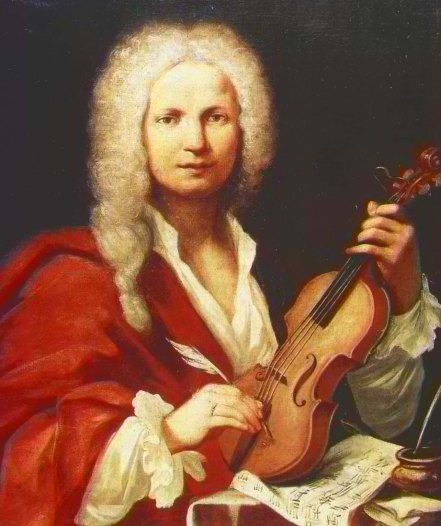
Overworked in his lifetime I reckon, despite his devotion to the education of the orphans in the Ospedale in Venice, underpaid, never given a proper contract, and buried as a pauper in Vienna where he went to get a job when he fell out of fashion. Then ignored for one hundred and fifty years. Always a bit poorly as well. And a ginger, though you wouldn’t know from the stinky wig he is wearing above.

Still no Vivaldi, no Bach. And imagine how much poorer Western art music would have been without Johann Sebastian. GP Telemann, for me, is now quite as satisfying, though BUD and KCK probably disagreed on the night, but he is musical elegance, flair and invention personified. And his music, like Haydn’s later on, will make you happy. As, on every outing, do the AAM. The venue may not be ideal for the intimacy of Baroque even at this scale, but I hope the AAM were able to turn a few quid here because of that. Well deserved.


Lessons in Love and Violence at the Royal Opera House review ****

Royal 20 A.II, f.10

Lessons in Love and Violence

Royal Opera House, 26th May 2018

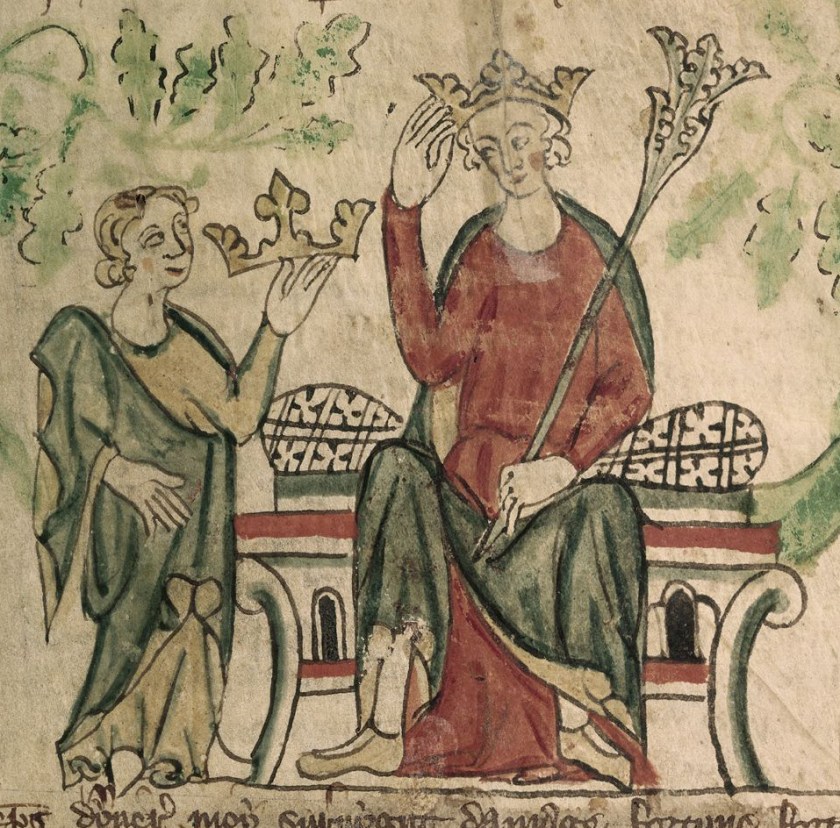
Here is an extract from an illuminated manuscript showing Eddy II getting a crown. Or more precisely a second crown. Not sure what that is all about but given he was by reputation a high maintenance sort of fella maybe two crowns makes sense.

George Benjamin and librettist Martin Crimp had a massive hit, (by contemporary opera standards), with their previous collaboration Written on Skin, which in terms of repeat performances has gone down better than BB’s Peter Grimes. Having finally seen it at the ROH in January last year I can report that it is pretty much as good as it is cracked up to be. GB is a superb dramatic composer for drama and, specifically, for the very particular prose that MC creates. I was not entirely persuaded by the only play of MC’s that I have see, The Treatment (The Treatment at the Almeida Theatre review ***), but I think he is growing on me.

This time round they have taken seven “events” in the life of the infamous Edward II, wisely leaving out his messy end, to tell the story of his relationships with lover Gaveston, wife Isabel and rival Mortimer. The two royal kids are thrown into the somewhat unusual household and we also see associated flunkeys and down trodden hoi polloi who were suffering under Eddy’s spendthrift ways. We begin with the banishment of Mortimer, then Isabel joining the plot to murder Gaveston after seeing the desitution of the people, Gaveston predicting the King’s future and then being seized, the King disowning Isabel after Gaveston’s death, Mortimer and Isabel setting up a rival court and grooming young Eddy (to be the III), the King’s abdication at Mortimer’s behest and finally the young Edward III seizing control from his Mummy.

As you might surmise the focus of MC’s story here is more on the “domestic” struggle between the “couples” and less on the conflict between King and nobles. The relationship between Mortimer and Isabel and Isabel and Edward II is given as much weight as that between Gaveston and the King. This, together with the truncated plot, makes it very different from its most obvious precursor, Marlowe’s Edward II, or, more precisely, The Troublesome Reign and Lamentable Death of Edward the Second, King of England, with the Tragical Fall of Proud Mortimer. Now I happen to believe Marlowe’s play is one of the finest ever written, comparable with Shakespeare’s History Plays. But it does go on a bit. If MC and GB had attempted to set the whole story as an opera I would still be sitting there two weeks later. So Kent, Warwick, the Spensers and all the other nobles. Canterbury and the bishops, Hainault, the Welsh, the sadists and various other hangers-on are absent. As are France, fighting, Kenilworth, scythes and pokers. The key themes in Marlowe’s play, his two fingers to his own contemporary society, namely homo-eroticism, religion and social status are downplayed, Isabella’s role and the passion between the four main protagonists are foregrounded.

Extracting these key episodes and, in some cases, manipulating them to allow GB to weave his marvellous score around them, was a classy move by MC. His libretto, as in pretty much all he writes, swings from the prosaically direct to the cryptically poetic. I mean this as a compliment but his writing is not florid but quite angular with intriguing turns of phrase and clear delineations between characters. I gather that once they have agreed the shape of the work, MC goes off and writes the whole thing, with minimal consultation, before handing it over to GB, who then slowly and patiently builds up the music from the “bottom up”. At least that is what is sounded like from the interview in the programme. But given how distinctive, dark and clever MC’s approach is I can see why it works. GB knows the “voice’ he will write around and, as in their prior collaborations, he knows his musical style, which has itself been through iteration, will fit the libretto.

The music is superb. The orchestration is immensely colourful but GB only uses large scale forces occasionally. Most of the time small clusters of instruments are used to create different moods in each of the seven scenes, notably from bass clarinet, bassoons and brass. The percussion section gets to play with all sorts of new toys. A cimbalom gets an frequent airing. There are probably motifs, patterns and structures within this but you will need to find that out from someone who knows what they are talking about. All I know is that music and drama were perfectly matched across the compact 90 minutes. I think the emotional extremes were more pronounced that in Written on Skin which had a more mythic feel. GB ratcheted up key points in the action by plunging us into dramatic silences. In Scene 3 when Edward and Gaveston private tryst is interrupted by Isabel, the kids and the courtiers and in Scene 2 when the people impinge on the Court a rich musical chaos is invoked. Harmony and counterpoint are wound up into a ball before collapsing.

The production, courtesy of the genius director Katie Mitchell, regular design collaborator Vicki Mortimer, lighting from James Farncombe and movement from Joseph Alford, reflected the enclosed and intimate nature of the drama. Each scene was set in a royal bedroom, which revolved to offer a different perspective. This included the “private” entertainment in Scene 3 with Eddy II and Gaveston and the mirroring “public” entertainment in Scene 7. The “people” were given an audience before Isabel in the bedroom in Scene 2 to air their grievances. Mortimer’s household and the King’s imprisonment at Berkeley are also presented in the confined, intimate setting of the bedroom. A massive fish-tank, which drains of water and therefore life through the scenes, is both visual treat and prominent symbol. There is a Francis Bacon style painting on the wall: that probably tells you all you need to know about the uncomfortable, existential aesthetic the production seeks to traverse. There are one or two predictable Katie Mitchell cliches, slow motion soft-shoe shuffles anyone, but the tableau are undeniably effective, When you are stuck up in the Gods, (you would be hard pressed to be further away from the stage than I was, me being such a tightwad), this matters. At this distance the Court becomes a dolls house, an interesting perspective in itself, so the “choreography” that the director brings to proceedings, matters more than the close up expressiveness of the singers.

The ROH orchestra was on top form. Mind you if you have the composer himself conducting then there is little room for error. This is not a chamber opera, GB’s sound world is too rich, but some of the textures require various players to push their technique which they certainly did. I can’t really tell you much about the skil of the cast, they all amaze me, but Barbara Hannigan, as she always does, was off the scale as Isabel, vocally and as an actor. Stephane Degout bought a petulant, entitled air to Edward II, Peter Hoare’s Mortimer was a mixture of ambition and pragmaticism. Gyula Orendt stood out as Gaveston in his scenes with the King, a mystic of sorts. Samuel Boden’s sweet high-tenor stepped up very effectively towards the end as the Boy King and Ocean Barrington-Cook, (well done Mum and Dad for the name), artfully portrayed the damage done to her and her brother by having to witness the turmoil, despite not having a voiced part (another clever idea from the creators). The children were, I suppose, the ultimate recipients of the “lessons in love and violence” that we the audience were also privy to. Though the production was smartly modern-dress there was no crass attempt to draw any lessons for our own times but the plot, MC’s libretto and GB’s music combined to underscore the tension between the private and the political for those that wield power across history.

My guess is that if I saw and heard this again, perhaps from a more advantaged position, it would merit 5*. A few punters trotted out at various junctures which intrigued me. This surely is as digestible as contemporary. “modernist” opera gets. The historical subject is not obscure, the plot direct, music is beautiful, the libretto intriguing, the staging is excellent and it is hard to imagine the performances being topped. (the vocal parts were largely written for exactly this cast). Not much in the way of tunes and no arias, but surely the most cursory of examination would have revealed this in advance. The dissonance is never uncomfortable and is rooted in chordal progression. And it is short so why not see it through.

I would assume that GB and MC will, in the fullness of time, have another crack at this opera lark given how good they are it but I wonder if they have exhausted for now the “Medieval”. Like Written on Skin there is something of the illuminated manuscript here, (see what I have done there), a jewel like morality tale, (without all the God stuff). Suits me but with this amount of goodwill, (this is a seven way co-production), surely they could get away with something genuinely of the moment next time.


Beethoven symphony cycle from Britten Sinfonia and Thomas Ades at the Barbican review *****

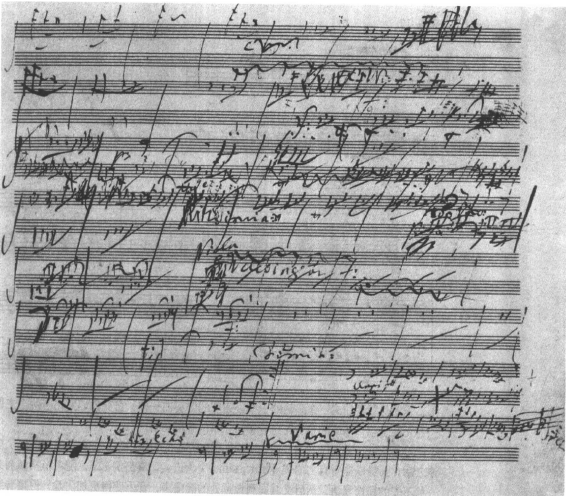
beethoven_sym_6_script

Britten Sinfonia, Thomas Ades (conductor), Nicholas Hodges (piano), Joshua Bloom (bass)

Barbican Hall, 22nd and 24th May 2018

  • Beethoven – Symphony No 4 in B flat major Op 60
  • Gerard Barry – Piano Concerto
  • Beethoven – Symphony No 5 in C minor Op 67
  • Gerard Barry – The Conquest of Ireland
  • Beethoven – Symphony No 6 in F major Pastoral Op 68

The latest instalments of the Britten Sinfonia’s Beethoven cycle under the baron of Thomas Ades, (alongside the valuable accompanying survey of Gerard Barry large-scale compositions) ,was as superb os the two concerts last year. (Britten Sinfonia and Thomas Ades at the Barbican Hall *****) (Britten Sinfonia and Thomas Ades at the Barbican Hall *****). That Mr Ades, and his friend Mr Barry, adore the music of Beethoven was never in doubt. That Mr Ades understands it, and can conjure up performances of the symphony that are as good as any that I have ever heard, is what makes this cycle unmissable in my view. I urge you, no I beg you, to come along to the final concerts next year of the last three symphonies. The Hall was no more than half full which is near criminal. If Gustavo Dudamel and his well upholstered LA Phil can fill the house with a big, if not particularly insightful, version of the Choral Symphony, then the Britten Sinfonia and Thomas Ades deserve at least the same. If you hate all the bombast that others bring to Beethoven please look no further: conductor and orchestra have binned all that sickly vibrato, endless repeats, glum grandiosity, and started afresh.

If you can’t go then look out for the recording of the cycle which should appear,God and finance willing. This is how Beethoven should sound. The right orchestral forces, the right tempi, to my ears at least, every detail revealed, and every detail in exactly the right place. Strings never thick and slushy, woodwind given enough room to breathe, brass precise, timpani rock hard. It is the difference between the way you might see an Old Master, badly hung, in the wrong room, of some C19 artistic mausoleum, centuries of filth accumulated on varnish, cracked, colours faded,  and the way you might see the same work, restored rehung, with space and light aplenty, and notes which illuminate not patronise. The joy of rediscovery. The difference between a mediocre and a great performance in a concert hall is easily to tell even if you know nothing about the music. The audience will be still and silent. Sometimes though there is something more, a connection between music, performer and audience that fills the very air.

I felt this here. Or maybe it was just there were fewer people with more invested in the performance. Either way it was a triumph. The Fourth, like the Second last year, couldn’t be dismissed as a happy-go-lucky, lithe cousin of the muscular, growling, Eroica hero that they sandwich. The first movement, marked Adagio-Allegro vivace, is, for my money, one of the finest passages of music Beethoven ever wrote. The painful opening, the booming timpani and giant string chords which conclude it, the uneasy Adagio which follows punctuated by more big chords, the double repeated scherzo theme, a dance but with something lurking in the woodshed, and then the perpetuum mobile finale, which is almost too jolly. Indeed Beethoven scores it that way, a palpable sense of anxiety pervades the whole symphony. It needs a conductor alive to the Goth inside the symphony’s Pop, and its subtleties cannot contemplate too big a sound. Mr Ades is that man. The slow movement Adagio was, and I didn’t expect to use this word about these interpretations, sublime.

I get why 2, 4 and 8 are see as lightweights compared to 3, 5, 7 and 9, the keys, the structures, the moods, the context, but I think it is a shame to get caught up in this convention. The Fourth symphony in particular is as great as its more famous peers. So how would this conductor and the BS render the Fifth anew. Remember the Fifth, (once it got over the infamous disastrous first night, alongside the Sixth, and a whole bunch of other stuff), changed the face of Western art music. Composer, and the performer from now on could be Artists. Everything would be bigger. More emotional. More, well, Romantic. Audience and commentators were now at liberty to hear, think and write all manner of the over the top guff about “serious” music. For that we should probably throttle LvB but the Fifth is just so extraordinary, however many times you hear it, that we’ll permit him the excess.

I expected the BS and Thomas Ades to absolutely nail this and they did. Familiarity can breed contempt. Or it can, as here, promote shared understanding. Everyone on and off stage was able to revel in Beethoven’s astounding invention. If I ever hear a better interpretation I’ll be as a happy a man as I was here. The opening allegro, four notes, infinitely varied, needs no introduction, tee hee, it being the most famous introduction to a piece of music ever. I suppose some might tire of the repetition. Not me. Especially with no unnecessary repeat. The double variation of the Andante, which fits perfectly together ying and yang style, was ever so slightly less impressive but the Scherzo and the magnificent finale were glorious. As in the prior performances you hear everything, no detail is obscured, nothing is too loud or two soft. This means that, along with the “classical-modern” sound of the BS and the “right” calls on repeats that the architecture of Beethoven’s creation is fully revealed, from micro to macro scale.

With Mr Ades and the BS having nailed the detail, shape and rhythm of the symphonies to date, I wondered how they would cope with the Pastoral. Maybe this, with its plain programmatic elements, wrapped its more gentle cloak, expressing all that utopian, Arcadian, rural idyll fluff that art conjured up as a salve to assuage guilt about industrialisation and urbanisation, would be the symphony where Mr Ades’s precise, vigorous approach might come unstuck.

Nope. For choice this might have been marginally less exciting than the rest of the cycle, the precision and heightened differentiation between instruments robbing a little of the warmth from LvB’s narrative. I’ll take the trade though when it results, for example, in the most thrilling storm I have ever heard, double basses thrumming, timpani thwacking. It also means the opening Allegro, which can doodle on a bit, saw variety emerge from the repetition. Nature untroubled by Man. Messaien would have purred at the birdsong emerging from woodwind in the Andante. And, in the finale, we heard the relief of real shepherds, not a bunch of embarrassed house servants dolled up by their lords and masters. Most Romantic plastic art is as schmaltzy as the Neo-Classical flummery that proceeded it, but there is some which sees the world for what it is, not want artist and patron wanted it to be. And some of it, Constable, in his sketches and watercolours, and, in his own darker way, Goya, could eschew history, violent nature and dramatic landscape, and showed more of the working reality of rural life. This Pastoral was in a similar vein. I now this all sounds like a load of poncey bollocks, but hopefully you get the gist.

Moving on. You remember those nights out in the pub, with your mates, talking sh*te and putting the world to rights. Of course you don’t. You were hammered. But you do remember it was a bloody good night out and things might have got a bit raucous and out of hand. Argument and love. Well Gerard Barry’s Piano Concerto, here receiving its London premiere, is the musical equivalent of one of those nights. Nicholas Hodges was basically asked to man-handle, (at one point literally, playing with his forearms), the piano and to get into a scrap with the orchestra. As the punches swung it got funnier though 20 minutes was probably enough. Some of the piano passages were more conciliatory but only in the way a drunk bloke (the woodwind) tries to calm his even more drunk mate (the brass) down a bit. It ends with some childish tinkles. It isn’t in Romantic concerto form, played straight through with no obvious structure, it has two wind machines, (here not amplified as expected, a shame), there is no real interplay between orchestra and soloist, just opposition, it is abrasive, chromatic and gets pretty loud. I reckon Vivaldi might have come up with something like this if he were around today.

In short it is a piece of music by Gerard Barry. I am sure he is nothing like this is reality, and I am being borderline xenophobic, but I see him as the musical equivalent of Samuel Beckett, the very definition of cussed. I am going to have to find a way into recordings of his music, probably after this time next year, as it is just too funny and punk to ignore. Mr Hodges is an expert in this dynamic modernism, having recording and performed the likes of Birtwhistle, Rihm, Carter and, indeed, Thomas Ades himself.

Mind you if I thought the Piano Concerto was a bit in-yer-face bonkers I was in for an even bigger surprise with The Conquest of Ireland. This is set to a text from Expugnatio Hibernica by Giraldus Cambrinus translated by A. Scott and F.X. Martin. Cambrinus was a Welsh writer and cleric in the twelfth century who hooked up with the army which invaded Ireland. The piece is marked quaver = 192 which I gather is pretty enthusiastic but Mr Barry then marks it “frenetic” and “NOT SLOWER” just in case we missed it. The brave soloist, here Joshua Bloom, is nominally a bass but he gets up to all sorts of pyrotechnics as he sings/speaks/growls/squawks the entirely unmusical words. It is basically detailed descriptions, written in a somewhat pompous style, of the bearing and appearance of seven Welsh soldiers. There is just one short throw-away line which dismisses the native Irish as barbarians. Mr Barry has composed intense, passionate, exuberant music to contrast this prosaic prose (!). Bass clarinet, marimba, winds and brass in combination, percussion, all got a work out. It is sardonic, in the way that I now see that so much of Mr Barry’s music is, but it certainly provokes a reaction and makes you think.

Anyway back to the performers. The Britten Sinfonia are my favourite musical ensemble. The others I regularly get to see, the LSO, the LPO, London Sinfonietta, the AAM and the OAE, are all, of course, excellent, and there are international orchestras that can blow my socks off when they visit, but it is the BS which consistently educates and surprises me. And Thomas Ades, IMHO, is now the closest thing to the immortal Benjamin Britten, that I can think of. Composer, performer, conductor. Equally gifted.

Oh and a final plea. This time to the ROH or ENO. A Fidelio. With Thomas Ades conducting. And Simon McBurney directing. I’ll wait.