Igor Levit plays Shostakovich 24 Preludes and Fugues at the Barbican review *****

Igor Levit

Barbican Hall, 26th January 2020

Dmitri Shostakovich – 24 Preludes and Fugues, Op 87

If you going to be inspired by anyone to write a monumental piano piece than JS Bach is a good place to start, specifically his Well Tempered Clavier collection of 48 Preludes and Fugues. Like Bach DSCH created a purely musical structure, with no explicit or implicit narrative or meaning. Unlike Bach he did not adhere to a strict arrangement of parallel major/minors pairs ascending the chromatic scale, though all the keys of the scale are represented as both free-form prelude (like Chopin’s Op 28) and strucured fugue, and follow the logic of the circle of fifths (again like Chopin). However these vary in mood, pace, length and complexity, some barely a minute long, others like the rolling no 16 fugue (easily confused by me for a prelude) runs to 10 minutes, some, like fugue no 9 for just two voices, whilst no 13 is a dazzling five. DSCH refers to, and quotes from, JSB at various points (as well as other Baroque tropes) to amplify the debt, and, of course, this wouldn’t be DSCH if he didn’t quote himself at times.

The work was composed in winter 1950/51 after DSCH had attended a Bach musical festival in Leipzig where he judged the piano competition won by his compatriot the 26 yo Tatiana Nikolayeva. Inspired and impressed DSCH dedicated 24 P&F to her and she premiered the work publicly in Leningrad in 1952. Prior to this DSCH had to get it through the Union of Composers who predictably managed to find fault, thinking it glum and morbid, viewing the fugue as a Western, archaic form and objecting to the dissonance in many of the episodes. Still there was now only a year or so to go before Stalin died and the pressure on DSCH started to lift.

The benchmark recording, from Hyperion, is by Ms Nikolayeva herself, who, even after she was able to travel to the West, pretty much exclusively focussed on Bach and DSCH, with a bit of Beethoven thrown in. On fact it was the very last piece she played just before her death in 1992. She recorded the work in its entirety on three other occasions and others had since had a pop at it, Ashkenazy, Donohoe, Konstantin Scherbakov, even Keith Jarrett, but, because of its length, demands and style, many have also avoided it, or just recorded a selection (Richter and old Dmitri himself though plainly not because he hadn’t mastered it!). I had be looking to acquire the recent recording by Alexander Melnikov for whom I have an inordinate amount of time, but, after this astonishing interpretation from Igor Levit I might wait to see if he commits piano to recording studio.

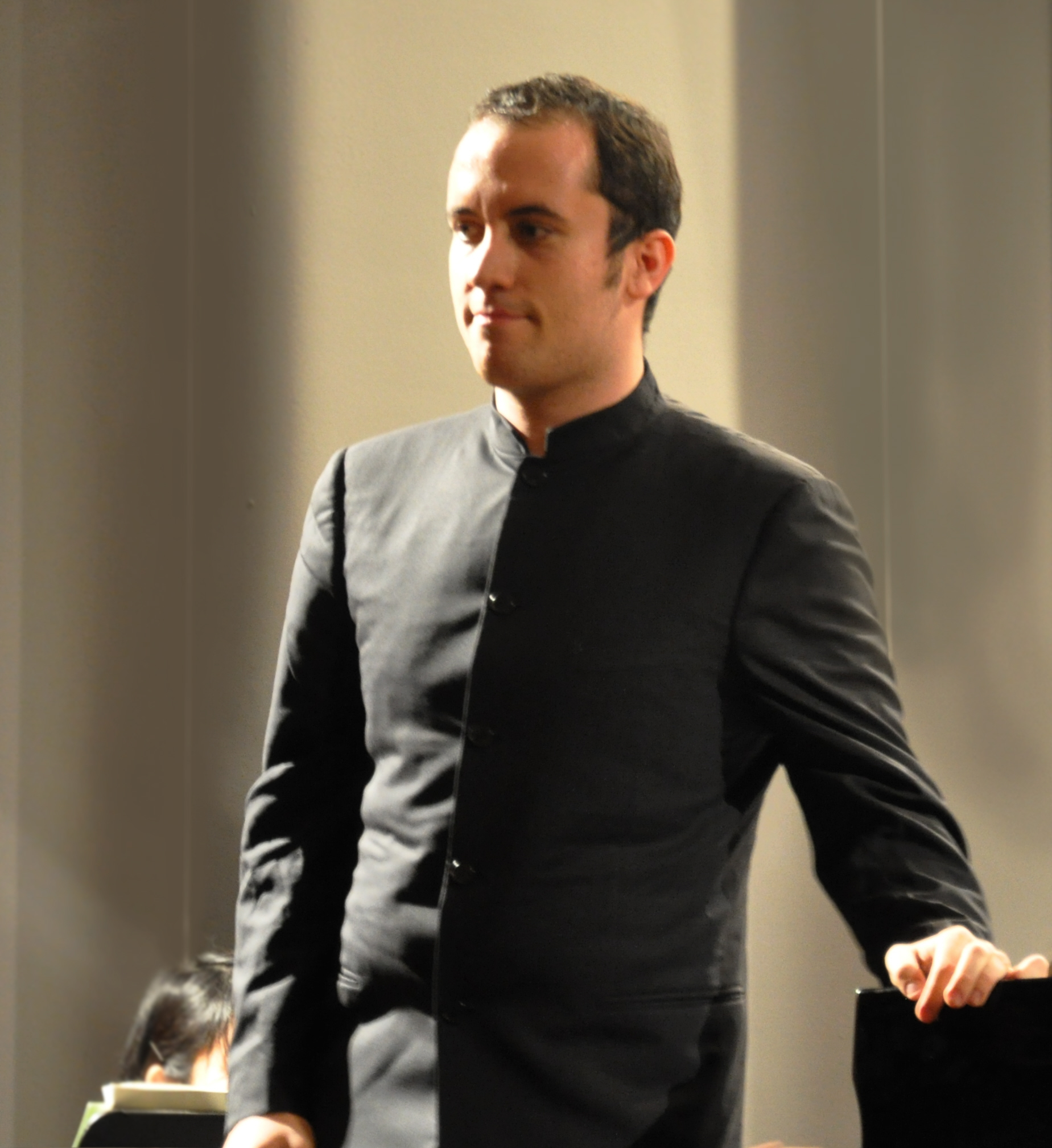
There are those who diss DSCH’s P&F as just sketches for his larger scale works, yeah like which composer doesn’t have an overarching sound, or as just pastiche Bach. Plainly bollocks and maybe reflecting the fact that it hasn’t been oft recorded and requires a deal of effort and concentration from performer. Like I say the extracts I have heard Mr Melnikov play impressed but hearing the whole thing, near three hours even before a couple of intervals, was extraordinary. IL has a penchant for big, structured, piano works, Bach’s Goldberg Variations, Ronald Stevenson’s 80 minute uninterrupted Passacaglia on DSCH, yep dedicated to you know who, and I was confident from hearing his way with Beethoven that I would likely enjoy this. But even so I was massively surprised by just how much detail and emotion he brought out in the music, to se alongside its obvious intellect, power and character.

Mr Levit has a big fan club amongst those that know and it isn’t difficult to see why. Hunched over the keyboard, all coiled intensity, fingers flashing, pounding keys, limiting use of the pedals, (though the stage floor took a n occasional pounding) which made the polyphony at times even more remarkable, building and then resolving tension, the architecture of each P&F articulated but without losing sight of the details. From the tranquil C major opening through to the triumphant, with caveat, D major final pairing, I was knackered by the end so goodness how drained IL felt. It must have taken a few glasses of Margaux to come down from that.

I don’t hold with this standing ovation nonsense for anything seen on stage. This time though no question. For exceptional artistry as well as phenomenal stamina.

Christ on the Mount of Olives: LSO at the Barbican review ****

London Symphony Orchestra, Sir Simon Rattle (conductor), Lisa Batiashvili (violin), Elsa Dreisig (soprano), Pavol Breslik (tenor), David Soar (bass), London Symphony Chorus, Simon Halsey (chorus director)

Barbican Hall, 19th January 2020

  • Berg – Violin Concerto
  • Beethoven – Christ on the Mount of Olives, Op 85

After a somewhat disappointing take on the Seventh Symphony paired with Berg’s Seven Early Songs just a few days previously, and, given the reputation of oratorio Christ on the Mount of Olives as a somewhat lesser work from the pen of our Ludwig, the Tourist approached this concert with some trepidation. I have heard the piece but don’t own a recording and cannot claim to know it at all. Well, turns out it’s a belter. Fair enough its not the Missa Solemnis or the Mass in C major (which I happen to prefer), and there are a few routine, by Beethoven’s standards, passages but there are some sublime musical ideas and plenty of drama. Maybe not quite up there with Haydn’s oratorios but running closer than you might think.

LvB started writing Christus am Ölberge, to give it its German title, in 1802 just after he had written the harrowing Heiligenstadt Testament, and was first performed in 1803, though not published until 1811.The libretto comes from poet Franz Xaver Huber, and, in a very human way, deals with the agony of Christ in the Garden of Gethsemane prior to his arrest. The tenor takes the role of Jesus, the bass Peter and the soprano a seraph. Even after Christian Schreiber was enlisted to make significant changes to the libretto LvB wasn’t happy with the text, and opinion then and since has tended to look down on the overall tone and structure of the oratorio, with the exception of the gut busting Welten signen choral finale.

The piece suited Sir Simon’s sense of the dramatic and his ability to shape individual sections. Some of the solo and choral parts are really sensational, and, with the LSO seeming to relish the novelty, the orchestral writing was similarly striking. It kicks off with a call to action from the trombones before Pavel Breslik’s vivid tenor sets out Christ’s plaintive plea to God. This was followed by Elsa Dreisig’s lovely soprano, truly angelic, and then the chorus stiffening his resolve. David Soar’s bass in truth doesn’t get much of a look in and the chorus, as soldiers, disciples and the like only really get going in the second half of the story. But, when the LSO Chorus is finally unleashed, all 145 of them, the effect was magical.

Whilst I get why Sir Si whats to showcase as much Berg as he can, him being a fave composer of his, and the Violin Concerto is, similarly a tempting morsel, actually full four course meal with the two movements each divided into two sections, the prelude, then scherzo, the cadenza and finally chorale variations. Indeed when Sir Si was still in Berlin he came over a couple of years back to take it on with the LSO, though then with the peerless Isabelle Faust on the fiddle. That was a triumph as soloist and orchestra made sense of Berg’s most compelling exercise in reconciling romantic diatonicism with twelve note serialism. Here orchestra, conductor and soloist, Lisa Batiashvili, weren’t always quite on the same page, though it was impossible to fault Ms B’s articulate playing which went easy on the vibrato and always sensed the sharp dance that underpin’s Bartok’s tunes.

P.S. Anyone who is anyone in the Western art canon has had a stab at Christ in the Mount of Olives so plenty of choice for the pic above. Though I would give you some Goya though, just because I am, what with all this global misery, going through a bit of a Goya phase right now.

Accademia Bizantina at Milton Court review *****

Accademia Bizantina, Ottavio Dantone (director)

Milton Court Concert Hall, 19th January 2020

Bach the Craftsman: The Art of Fugue

In which, as part of a Bach weekend curated by harpsichordist Mahan Esfahani, Ottavio Dantone and his troupe of crack HIP strings play the Art of Fugue. I should probably stop there as there isn’t anything to add really. It is the genius of JSB applied to the musical form that most reveals his genius, the fugue. A theme, the “subject” is heard in one “voice”, then repeated in imitation at different pitches in subsequent lines, before being developed, then returning to the subject in the tonic key. In this case served up 16 ways with a handful of canons thrown in at the end for good measure. With the greatest …… ending in artistic history.

To be played on harpsichord (for the very skilled and very brave), piano, quartet, or as here, expanded strings alongside harpsichord and diddy organ, 13 souls in total. Take your pick, though you would be hard pressed to top this version, which allows everyone line to be head and creates some surprising sonorities. AB were founded in the glorious city of Ravenna, M. Dantone joined in 1989, becoming music director in 1996, and they are amongst the foremost performers of Italian Baroque operas. My regular readers will know that I am a big fan of the rock’n’roll approach these Italian outfits take to their Baroque forebears. To hear them treat Bach’s prayer, for that is what it is, in the same way was simply thrilling. Ottavio Dantone is plainly a genius.

No better way to spend a Sunday afternoon.

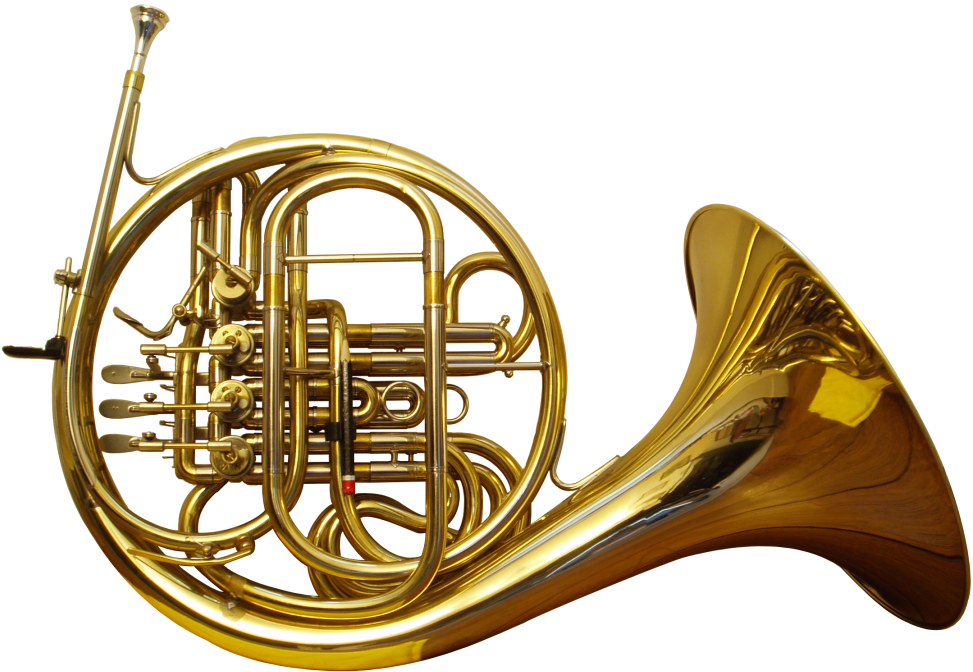
Horn Calls: Philharmonia Orchestra at the Royal Festival Hall review *****

Philharmonia Orchestra, Esa-Pekka Salonen (conductor), Richard Watkins (horn), Allan Clayton (tenor)

Royal Festival Hall, 16th January 2020

  • Carl Maria von Weber – Overture Der Freischütz
  • Mark-Anthony Turnage – Horn Concerto (Towards Alba)
  • Benjamin Britten – Serenade for tenor, horn & strings
  • Richard Strauss – Till Eulenspiegels lustige Streiche

Broke the golden rule. It is bad enough that I inflict this shite upon you and join all the other narcissists clogging up the Interweb and generally adding to the carbon burden. But I had resolved not to comment on anything that I had not sat all the way through. Notes for my own consumption but never yours. Here though I felt compelled to announce just how marvellous a concert this was. Despite walking out after the Britten Serenade and thereby avoiding the Strauss. Which, as it happens, I have heard live a couple of times and loathed. Another bloke in the lift on the way down adopted the same strategy. Why sully the perfect?

For I cannot imagine much better that this take on one of BB’s most sublime, and rightly popular, compositions. Comparable with the composers own versions surely. I might have guessed that Allan Clayton’s tenor is the perfect instrument for the work but how good is that Richard Watkins. He used to be principal horn for the PO, so he was surrounded by plenty of mates and presumably was attuned to Esa-Pekka’s no messing, forceful take on the work, even if he left before the Finnish maestro came to London. (Apparently E-P S, to add to his many talents, is a dab hand himself on the horn). He now works as a soloist fronting the London Winds and is a member of the Nash Ensemble. Every note was delivered exactly as I imagined BB composed it for the mercurial talent of Dennis Brain, the orchestra’s first principal player. The horn, let’s face it, when it enters its expanded harmonic world, is about the most thrilling, note for note, instrument in the orchestra. Obvs you can have too much of a good thing, but not here.

Which makes Mark-A T’s achievement in this world premiere of his own Horn Concerto that much more remarkable. He has always created contemporary classic music of real immediacy, but here, commissioned by Richard Watkins himself, he channels the German romantic horn tradition, of which Weber was a part, through the horn tributes of the English composing generation prior to him, Tippett, Colin Matthews, Oliver Knussen, and of course Britten himself, whilst still keeping his trademark jazzy syncopations and Stravinskian rhythms. BB’s piece, doh, is a paean to the night, setting those exquisite English texts through the ages, to faultless musical ideas, concentrated and not as flashy as some of his stuff. M-A T, in contrast, is all about the sunrise and the coming day. Alba in olde English meant “a call to the end of the night and beginning of the day”.

The so titled brief opening movement has lots of chirpy orchestral lines bouncing off the horn but, never thickens or overwhelms. The slow second movement is inspired by a late Larkin poem, Aubade, a morning serenade, in which the fear of mortality engendered by sleepless nights is banished by the light and the normality of the working day. The horn is the lyrical and bluesy expressive voice set against some beautiful, lower resister, string writing, punctuated with sustained low pedal points. The finale is also drawn from a poem, John Donne’s The Sun Rising, exactly the poet you want to mirror BB’s own choices, and does exactly what it says on the tin. M-A T offers up dense, chromatic, contrapuntal chords over which the horn soars.

Can’t remember the Weber and, like I say, no interest in the Strauss. But this was sublime and I expect Towards Alba to provide plenty of work for Mr Watkins, and others, in years to come. A fitting tribute maybe to another brilliant exponent of the French horn, Australian Barry Tuckwell, who sadly passed away on this very evening. I see Messrs Watkins and Clayton have recorded BB’s Serenade with the Aldeburgh Strings. Time to buy I think and set alongside BB’s own recording which featured Mr Tuckwell on peerless form and Peter Pears, later on his career, was marginally less the mannered English toff.

LSO: Beethoven and Berg at the Barbican review ***

London Symphony Orchestra, Sir Simon Rattle (conductor), Dorothea Röschmann (soprano)

Barbican Hall, 15th January 2020

  • Berg – Seven Early Songs
  • Beethoven – Symphony No 7

One of these Half Six Fix early start capers that Sir Si has introduced, a capital idea. A pairing of Berg with Beethoven. Sir Si being a long term fan of the unfecund Austrian, the combination of serialist structure with gushy Romantic expression, seeming to have a particular appeal for him. And, this being the big 2-5-0 for LvB, the conductor and the LSO were, and still are, going to be putting in a few shifts when it comes to the symphonies.

However I don’t think I am alone in thinking that the Scouse Gandalf is less than secure in his handling of Beethoven. Back in the day, with the CBSO, and the Philharmonia, he shone a light on composers as diverse as Britten, Elgar, Mahler, Ravel, Sibelius, Stravinsky, Szymanowsk, Turnage, Vaughan Williams, as well as the Second Viennese chaps, a master of orchestral colour, even if overall structure sometimes eluded him. In Berlin though, I guess in part responding to age and demand, the likes of Brahms, Bruckner and Mahler, were added to the repertoire, and have featured heavily since the return to London. As far as I know though his only recorded take on the Beethoven symphonies is the cycle with the Vienna Philharmonic, which awkwardly juxtaposes their super-bright, hyper-operatic sound with the lessons of period performance, and, mostly, adherence to Ludwig’s metronome markings. Let’s just say it isn’t the best cycle I own. (That would still be Harnoncourt and the COE, which I can say, without any hint of hyperbole, is life changing).

On the subject of hyperbole I have claimed before on these pages that the Seventh Symphony is the greatest. By the greatest composer of all time. Thus it is the greatest symphony ever written. And the symphony is the supreme musical form. Ergo this is the greatest piece of music ever written. At least in Western art music. Of that I have heard. Which isn’t that much. And there might be days when, say, The Wedding Present’s Take Me or Joy Division’s She’s Lost Control or the Fall’s Gut of the Quantifier might take the accolade. So I wouldn’t listen to me.

Anyway this was as I feared, a slight disappointment. Sir Simon kept the pace up in the second movement Allegretto, pulling out the cello/viola counterpoint line, but somehow losing the pathos, and in a rousing Allegro finale, with Nigel Thomas battering his timpani, he seemed to me to lose the thread a little in the long rise and fall introduction to the opening Poco sustenuto. It all tried just a bit too hard to get down on it. Like your Dad on the dance floor. Good but not outstanding.

And the Seven Early Songs is basically Wagner/Strauss in disguise. As I had suspected. So despite the undoubted skills of both band and, especially, soprano Dorothea Röschmann, it therefore had zero chance of engaging me. Sorry.

prisoner of the state at the Barbican review ****

BBC Symphony Orchestra, Ilan Volkov (conductor), Elkhanah Pulitzer (director), Julie Mathevet, Jarrett Ott, Alan Oke, Davóne Tines, BBC Singers

Barbican Hall, 11th January 2020

In which American contemporary composer David Lang, co-founder alongside Julia Wolfe and Michael Gordon and probably best known for his Pulitzer prize winning the little match girl passion, offers up his update of Beethoven’s only opera Fidelio, (in its various, protracted, incarnations). And yes he does title his compositions in lower-case.

Mr Lang has come up with some striking and novel ideas in the past to inspire his largely vocal body of work. Comic strips, disappearances, Bach, Death, search engines, the crowd at Highbury, national anthems, autopsies, Glen Gould and broken musical instruments. The whiff of the conceptual, which I like. POTS however focuses on the big themes at the heart of LvB’s opera, liberty, justice, freedom, heroism, sacrifice, as well as the central love story, but jettisons all of the comic padding, glorious as it easy musically if not always dramatically, and compacts the story down to just under an hour. Like a best bits, reworked in the immediate, post-minimalist style, though still with plenty of punch, that characterises the music of DL and his compatriots.

The lead characters become Every-Men, and Women, with Leonara now the Assistant, who inveigles her way into the prion where hubby Florestan is now the Prisoner, watched over by the Jailor and the Governor, as well as assorted guards, and a prisoser chorus which features throughout. This permits a more timeless vibe, for all the prisoners of the state, then and now, highlighted in DL’s own idiomatic and very direct libretto, which borrows from other, relevant texts (Machiavelli, Bentham, Rousseau, Hannah Arendt, and a list of English prisoners about to be carted off to Australia) . OK so maybe the simplification, at least musically, with a regular rhythmic ostinato ebb and flow of build-up arias and big choruses, verges on the repetitive, but there is no denying its emotional impact. Even if at times. especially in the final climax, the sound got a bit messy. DL certainly knows how to handle a chorus.

I have to confess that I do not know Fidelio as well as I should given my firm conviction that Beethoven was the greatest music maker of all time. A couple of productions seen on telly/laptop and a couple of listens through, with less than complete concentration, is plainly insufficient. Failed to secure a ticket for this season’s ROH production from Tobias Kratzer so a cinema viewing will have to suffice. Which means I couldn’t tell you how David Lang has re-interpreted LvB’s key set pieces though I gather they are largely present and correct if concentrated.

The singspiel style opera was semi-staged, as intended by DL, under the direction of Elkhanah Pulitzer, with a simple set design from Matt Saunders to simulate the prison, complete with lighting from Thom Weaver, projections from Yuki Izumihara and costumes from Maline Casta. I could see it working effectively as quasi-oratorio given its simple, though winning, harmonic language and direct story-telling. After all the original is more about ideas and character than convincing narrative The (amplified) vocal parts prioritise power and clarity over intricacy, which favoured the bass-baritone of Davone Tines as the Jailor and elfin soprano Julie Mathevet who convinced as the heroic, disguised, Assistant/Wife. The contrast between the defiant idealist Prisoner, baritone Jarrett Ott, and Alan Okie’s rich tenor as the authoritarian Governor was also effective, though the latter backed down pretty quickly when it cane to the pivotal rescue scene. Mind you at least this avoided the cringey, sexist ending of Beethoven’s original as the townspeople bang on about wifely virtue rather than freedom from tyranny.

This cast, with the the exception of Davone Tines, performed at the premiere of the work by the New York Philharmonic, and it will also be getting airings at co-commisioners, in Rotterdam, Barcelona, Bochum and Bruges. I have no doubt that the BBCSO and BBC Singers (here assisted by some enthusiastic students from the Guildhall) will have more than held their own against the other ensembles during the tour of the work. Once again I was struck by the authority and commitment that the oh so versatile BBCSO brought to the work.

Stravinsky’s The Soldier’s Tale at the Wigmore Hall review ***

Isabelle Faust (violin), Wies de Boevé (double bass), Lorenzo Coppola (clarinet), Javier Zafra (bassoon), Reinhold Friedrich (trumpet), Jörgen van Rijen (trombone), Raymond Curfs (drums), Dominique Horwitz (narrator)

Wigmore Hall, 23rd December 2019

  • Bartok – Solo Violin Sonata BB124
  • Stravinsky – The Soldier’s Tale

Curious confection this. Cut off from Russian royalties on the ballets, Stravinsky was short of a few bob whilst living in Switzerland during WWI, especially with first wife Katya poorly, so he teamed up with the similarly impecunious writer Charles-Ferdinand Ramuz to create L’Histoire du Soldat, a small scale music-theatrical work, to be “read, played and danced” which would be cheap to stage and could be toured anywhere. The boys turned to a Russian tale of a soldier who goes AWOL and, Faust style, sells his soul to the devil. Plenty of contemporary resonance, and a suitable format, for the gruelling post war years.

IS had yet to hear a note of the jazz music emerging from the US but, armed with a few sheets of music brought to him by Ernst Ansermet, he resolved to incorporate the new rhythmic style into the score and to reflect its sound in his choice of instrumentation with a combination of high and low pitches from each family: violin and double bass, clarinet and bassoon, trumpet and trombone as well as a wide range of percussion. It’s not that jazzy but is definitely a precursor to all the bouncy, syncopated grooves that IS was to serve up in the next decade. It doesn’t do too much by way of variation however, reprising a few key themes, and, this being my first sustained listen, is a bit same-y, even with the shifts in time signatures.

And the spoken parts, especially here where there was no dancer to distract, tend to dominate. Which gave a lot of leeway to Dominique Horwitz, who narrated, as well as taking on the roles of soldier and devil. Now M. Horwitz is apparently a bit of an expert when it comes to this piece, as well as in the likes of Brecht, Weill and Brel. And his day job as actor means he throws himself into the character of the soldier, marching and jogging on the spot, brooding over his keepsakes, rescuing a princess and having run-ins with Beelzebub in his various guises. Whilst the text here was in English and M. Horwitz can cary a speech I wish I had actually had the story in front of me as I didn’t really find a way into it. And maybe M. Horowitz could have toned down the funny voices.

Couldn’t fault the musician’s performances though. This, after all, was a crack team led by the amazing Isabelle Faust, as she showed again in her interpretation of Bela Bartok’s 1944 solo violin sonata. Written in the year before he died, ill and short of money, to a commission by Yehudi Menuhin, it isn’t, as you might have guessed, the easiest piece in the solo violin repertoire. Bartok and Menuhin took a bit of time to hit it off and YM was initially perturbed by the difficulty of the score, notably some fearsome double-stopping, but with familiarity and the implacability of BB when it came to any changes, eventually brought him round.

It kicks off with a Chaconne in homage to Bach’s writing fo solo violin, though here mediated through the prism of C20 modernism and BB’s beloved Hungarian folk tunes. The second movement is a thrillingly tricky fugue, with complex counterpoint, angular, jagged, with extreme dynamics, like the vey best of Bartok’s writing. The slow movement in contrast is serene, easy on the ear compared to what has gone before, before the rush of the Presto finale. Like most Bartok it takes a bit of listening too, and getting into the listening zone (when nothing else matters but the music) takes a bit longer than for my other favourite B’s, Bach, Beethoven and Britten. And just maybe it took Isabelle Faust just a little bit longer than normal to find her groove.

Freiburg Baroque Orchestra at the Barbican Hall review ****

Freiburg Baroque Orchestra, Trevor Pinnock (director), Rachel Redmond (soprano), Claudia Huckle (alto), James Way (tenor), Ashley Riches (bass), Zürcher Sing-Akademie

Barbican Hall, 11th December 2019

The Tourist’s annual Messiah. Almost Billy No Mates. But eventually MSBDB1 stepped into the breach. For which many thanks as Messiah is best shared.

Now the Freiburg Baroque Orchestra is one of the many top drawer German period music ensembles and Trevor Pinnock, where he is a principal guest conductor, needs no introduction. Since leaving the group he founded, The English Concert, now directed by Harry Bicket, he has followed a portfolio career, conducting, performing on the harpsichord and teaching. Handel and especially Bach are his specialisms apparent in the many benchmark recordings, a few of which are cherished by the Tourist.

His 1988 Messiah recording changed the way most professional outfits engage with the work in terms of instrumentation, tempi, dynamics and texture. Of course if a choir of billions is still your bag then be my guest. But trust me this is better.

He didn’t rush things here with the FBO, in contrast to some other period ensembles and Handel’s foot tapping fugal tunes were given space to breathe. Trumpets and timpani kept in reserve until required. Which added clarity to the text and allowed each of the soloists to make an impact. (Though I was marginally more partial to Claudia Huckle’s graceful alto and Ashley Riches’s, er rich, bass-baritone. Marginally mind, and Rachel Redmond belied her last minute substitution especially in …. Redeemer … ). The Zürcher Sing-Akademie was divided 8 to a part and pretty much vibrato free. No OTT operatics here. Less a punch to the gut. More a massage of the temples. Lighter, brighter and more transparent than big Brit choruses. Just the way I like it.

Death in Venice at the Royal Opera House *****

Death in Venice

Royal Opera House, 3rd December 2019

Fresh from the superlative semi-staged version of Peter Grimes from Ed Gardner, the Bergen PO and assorted chums and straight into this. A top drawer new version of Death in Venice from David McVicar. I have fond memories of seeing Deborah Warner’s production of DIV at the ENO with, guess who, Edward Gardner on conducting duty, which also bewitched the SO, (who has also been persuaded by The Turn of the Screw and, though she may not know it, is going to be a fan of Britten opera).

Now I am partial to BB and his operas. As you can see from recent viewings documented hereabouts. They are up there with the best of British cultural expression, indeed the best from anywhere. But that doesn’t me they are all perfect or that creatives can’t fall down when tackling them. Paul Bunyan is a bit bonkers, (the recent ENO outing wisely went with the flow), the Rape of Lucretia has a pretentious and inappropriately Christian libretto from Ronald Duncan, you need to be in the right mood for the Church Parables, I have never seen Owen Wingrave live or in the TV original and Gloriana is, well, just a bit crap. Even the musically bullet-proof, Grimes, TTOTS, A Midsummer Night’s Dream, need sympathetic performers and directors. Billy Budd is always a tricky customer. The comedies/children’s operas are too generous to fail other than in the eyes and ears of the flinty-hearted.

Some say Death in Venice is also a trick(s)y opera though I have never really understood why .(Maybe it’s because it isn’t a simple, straight A to B, with obstacles, misogynistic love story). Here David McVicar got the Edwardian look and feel spot on. DIV is a set, costume and lighting designer’s wet dream and Vicki Mortimer and Paule Constable duly delivered to create exquisite, cinematic, vertical and horizontal tableaux across the 17 scenes with maximum efficiency and impact. The water of the lagoon ever present in the backdrop. With no f*cking around with interpretation. Visconti and Mann would be purring in their graves, (or suing for plagiarism), so precise was the realisation. Even the gondola looked real. And that was with two fellas pushing it. Lynne Page similarly brought just enough to the table with the choreography of the dance scenes. Realistic with just enough grace and artistry especially from our lovely, knowing teenage Tadzio (Leo Dixon) and his irate chum Jaschiu (Olly Bell).

But the real triumph was not having our van Aschenbach go too full-on, homo-erotic, pretentious, unhinged, tortured artist too early. He really is a bit of a ninnyhammer getting all lathered up with the young boys, the culture, the heat, the plague, the offuscazione, all those words, all that useless beauty, that Apollonian/Dionysian dialectic, all that bloody philosophising. (Honestly Gustav, don’t beat yourself up mate). He is though a clever cookie, in control mentally and physically until the lurgy properly strikes, and he can eloquently verbalise. At length. Immense length. In Myfanwy Piper’s appropriately mannered libretto. Brought to life by the beautiful voice of Mark Padmore. Who can act. Even to the back of the stalls.

This isn’t quite a one-man show. The support of Gerald Finley as Traveller/Fop/Gondolier/Manager/Barber/Player/Voice of Dionysius made this very special. Has there ever been a more inspired piece of operatic doubling (and not just in the service of cheap laughs and flimsy plotting) or a more talented singer/actor to pull it off? And, as if that wasn’t enough we get the sweet counter-tenor of Tim Mead interjecting as hunky tourist Apollo. And the never-ending stream of “extras” including the likes of Elizabeth McGorian as the Lady of the Pearls and, get this, Rebecca Evans as the Strawberry Seller.

But the ever present, tireless Mr Padmore is what made this special as we go deep inside von Aschenbach’s head. An operatic Hamlet. What is real and what is imagined? Messrs McVicar and Padmore don’t tell, giving the creepy Don’t Look Now Venice a wide berth, but do largely make sense of GvA’s meanderings and even make him seem human rather than the vessel for Thomas Mann’s symbolism and aestheticism. Not that it matters. BB’s music is so clever, haunting, sparse, ascetic, with the repetitions, motifs, and the gamelan shimmers, that it tells the story, conjures up place and inhabits character all by itself. Even at the end, like GvA consumed by his own mortality, BB was turning out perfection with that poignant passacaglia, (a link back to the Doric Quartet’s muscular performance of BB’s final quartet a couple of weeks previous), and Richard Farnes and the ROH orchestra know exactly what is required of them. This score then is the truly beautiful.

25 years since the ROH last staged DIV but I’d be surprised if it doesn’t come back soonest. So go see what I mean. And pay up for a decent perch as, by ROH standards, Britten comes cheap. All the toffs seemingly never tiring of OTT Italian C19 flim-flammery or worse still Wagnerian guff.

I see I have a couple more outings with Gustav van Aschenbach later in the year. Ivo van Hove and Ramsay Naar will be bringing ITA’s interpretation over to the Barbican in April with music from Nico Muhly and the great Greg Hicks will be serving up his solo turn at the Arcola in June. I expect they will be quite different.

Peter Grimes at the Royal Festival Hall review *****

Bergen Philharmonic Orchestra, Edward Gardner (conductor), Bergen Philharmonic Choir, Edvard Grieg Kor, Royal Northern College of Music Chorus, Choir of Collegiûm Mûsicûm, Håkon Matti Skrede (chorus master), Vera Rostin Wexelsen (stage direction)

Royal Festival Hall, 30th November 2019

Let’s not waste too much time on this. For this extraordinary evening is what happens when talented music-makers devote themselves to doing justice to a near perfect, no make that perfect, work of musical theatre.

The Bergen Philharmonic’s principal conductor Edward Gardner had already elevated Britten’s most complete opera into something special at the ENO (and the Proms) during his tenure there alongside Aussie heldentenor Stuart Skelton generally acknowledged to the best Grimes in the world today. EG’s Norwegian chums have taken The Borough to their hearts, what with fish, the sea, overcast skies, gruffness and chunky knit jumpers I guess it is no great surprise, and when they unveiled the fruits of this collaboration at the Edinburgh Festival a couple of years back the critics went mental.

As they did again after this. And they were right too. You will not hear a more powerful, dramatic, atmospheric, moving interpretation of the score. And Mr Skelton now captures utterly the ambiguity in Grimes as he bullies the apprentice (Samuel Winter), whilst just about retaining enough man-child humanity to justify Ellen Orford’s sympathy. And I doubt you will see or hear a better Ellen than Erin Wall. Swedish and Norwegian sopranos, Hanna Husahr and Vibeke Kristensen, brought a bit of Scandi glamour to the two nieces, joining a peerless Brit cast. Roderick Williams as Balstrode, Susan Bickley as Auntie, Catherine Wyn-Rodgers as Mrs Sedley, Neil Davies as Swallow, Marcus Fansworth as Ned Keene, Robert Murray as Bob Boles, James Gilchrist as the Reverend Adams and Barnaby Rea as Hobson. It doesn’t get much better in terms of matching voice to character.

Now the thing is, these semi- staged versions, here just costumes (dark blues, greens and black, with just one telling flash or red), some barrels, ropes and so on, standing in for the various Borough locations, mean everything is focussed on the music and the voices. Which partly explains just why this was so darned good. But it also means we the audience are not distracted by too much visual stimulus. Not that this is a bad thing in the best opera productions. But the absence thereof here meant that the performers could uncover all of the nuanced psychological insight that is afforded by BB’s music and Montagu Slater’s libretto. (And, to be fair George Crabbe’s richly descriptive poetry which inspired it). Which is what took this performance into a different league. Grimes’s otherness, his failure to fit in, the darkness, cruelty or worse, that torments him, the ordinariness of the villagers and their routines, the scapegoating, hypocrisy and vengeance, the landscapes. The ambivalence of people, place and purpose. The good, the bad and the ugly of humanity. This really digs in to the themes generating real drama in a way you rarely see in any theatre. music or otherwise. Setting the chorus (brilliantly assembled and marshalled by Hakon Matti Skrede) behind orchestra, with principals ranged at the front of the stage, was not the only echo of Greek tragedy.

I assume that this ensemble will set this down in a recording one day but it really needs to be heard, and seen, to be appreciated. So, if and when it appears again, do not hesitate if you have any interest at all in the work. I await Mr Gardner’s return to a London gig with the LPO with bated breath.