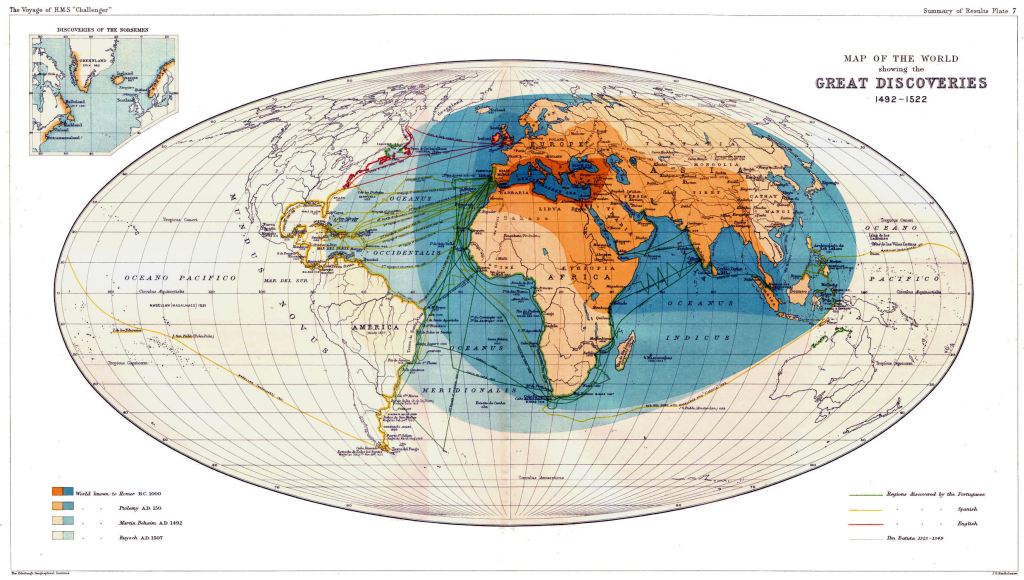
This is the first of two concentrated framing pieces on European colonial empire — its genesis, its development, its decline. Both take the same approach this project has taken to money, to luxury, to the state: not a chronicle, but a political economy, tracking pressure and invention rather than character and event. Together they’re the foundation for what comes after — the individual essays, cases, and cultural detours that this frame will make possible, the way earlier foundations here have made room for everything built on top of them since.
Before we start, a confession about the shape of what follows. Both these pieces tell empire from the European side of the encounter — what pressure drove Lisbon, Madrid, Amsterdam, London to act, what each one built once it acted. That’s a choice, not a neutral starting point, and it isn’t the only defensible one. A genuinely opposite account would put the Aztec tribute system, the Mughal state, Ashanti and Kongo statecraft in the driving seat — societies that shaped, redirected, and frequently outmanoeuvred the Europeans arriving on their coasts, not simply terrain those Europeans acted upon. There’s also a live argument, from inside the same theory we’ve borrowed, that formal empire was as often forced on reluctant capitals by crises at the frontier as it was pulled outward by capital hunting for yield back home — which would make the second piece’s own engine less central than we’ve made it. And there’s a case, from economic history rather than politics, that geology mattered more than any institution we’re about to describe: Britain’s coal, sitting conveniently near its industrial centres, doing work no amount of financial sophistication could have substituted for. We haven’t written any of those pieces. We’ve written this one, because a project has to start with a lens, and this is ours: pressure and invention, told from the side that held the pen. These other accounts matter. They’re where we will go next.
Every explanation for why empire began arrives pre-loaded with a theory nobody asked for. Great Men, restless and ambitious. The Zeitgeist of an “age of discovery.” Human nature, always reaching. Or the materialist version, no less teleological for dropping God: feudalism ripening into capitalism, capitalism reaching outward because that’s what its logic does at this stage. History doesn’t need a destination to explain a decision. It needs a pressure and an invention.
Empire’s pressures were mundane, and there were four of them. Europe was running out of the metal it minted its coins from. The overland route to Asia’s metal and spice was taxed and mediated at every stage by an empire nobody could outfight — Constantinople’s fall in 1453 confirming what was already true. One corner of the continent had, by 1492, a military-religious class freshly out of infidel to reconquer and nowhere left to deploy itself. And unlike every prior empire — Rome, the Mongols, the caliphates, all built on contiguous land — these four were maritime first, which meant extraction had to be abstracted into something that could survive the distance: a contract, a monopoly, a share.
The capability to act on these pressures existed elsewhere, and mostly wasn’t used. Between 1405 and 1433, Ming China sent fleets under Zheng He as far as the Horn of Africa — the first voyage alone ran to 250 ships and 28,000 men, a scale no European power would approach for another century. Then it stopped, for domestic-political reasons and a court that saw insufficient profit in it. What didn’t exist elsewhere was this particular pressure bearing down on this particular set of small, peripheral states — not France, pre-eminent but with no reason to look seaward; not Venice or Genoa, capable but invested in the very toll booth the others were trying to route around.
What follows isn’t the age of exploration. We won’t be much troubled by first landfalls or treaty lines. What we’re tracking, country by country, is a map: who acted, what land was made to mean once claimed, what labour was required and how it got met, what money turned into. Domestic politics and religious language attach wherever they matter, never as the mechanism — only ever its cover story.
It was left to four small states, each at its least likely moment, to answer the same pressures separately. Portugal, Castile, a Dutch Republic still a century from existing, an England that had just lost a war and was about to lose itself to a worse one.
Four countries. One map. Four different answers.
Portugal — Extraction Through Position
Portugal goes first, and it goes first almost by elimination. A kingdom of barely a million people, too poor at the start of the century to mint its own coin, sealed out of the Mediterranean’s luxury trade by geography and by the two cities who already held it. There was one direction left to try.
What Portugal met on the far coast was not empty land waiting to be filled. The Indian Ocean world it reached — the Swahili coast, Malabar, the Indonesian archipelago — was dense, wealthy, and commercially sophisticated on its own terms, run by polities with no single capital a fleet could simply seize. The Moroccan traveller Ibn Battuta had already sailed and walked that coast a century earlier, in the 1330s, reaching Mogadishu and the court at Kilwa and describing a trading world fully formed, with its own wealth, its own hierarchies, and — a fact worth holding onto for later in this project — its own long-established slave trade, centuries before a Portuguese ship arrived to industrialise and redirect it rather than invent it.
So Portugal did not take territory. It took positions — and, at least at first, partners. A fort here, a factory there, a chokepoint on a strait or a river mouth: each one built with the cooperation, or at least the accommodation, of the rulers already there, because Portugal had neither the manpower nor the appetite to conquer the Swahili coast or the Malabar ports outright. It bought access, negotiated terms, took what commercial position it could get by agreement. That changed once the position was secured. The cartaz system — a Portuguese-issued pass, backed by naval force, without which local shipping risked seizure — turned voluntary trade into something closer to protection money. João II was explicit about the aim: among his stated priorities was capturing the wealth and trade currently controlled by Mamluk Egypt and Venice. Land was fictionalised not as property but as leverage, and the leverage, once it existed, got used.
Labour barely enters the story here, until it enters completely. Portugal spent its first decades buying into an existing trading system rather than replacing its workforce — until Madeira, the Azores, and then Brazil, where sugar changes everything and the Atlantic slave economy gets its first full rehearsal.
Money, for longer than in any of the other three models, stayed close to its old form. Portugal’s early profit came almost entirely from margin and monopoly — buying spice and pepper cheap at source and selling it dear in Lisbon, the same basic mechanics as any trading business, just conducted at colonial distance. That changed in 1452. Gold had been trickling up from West Africa for over a decade by then, but that year there was enough of it, reliably enough, for Portugal to mint its own gold coin for the first time: the cruzado. Go back to where this whole piece started — Europe running short of the metal it minted its coins from — and here is that exact shortage, for this one country, actually being solved. Not solved by argument or policy, but by a specific quantity of gold arriving in a specific year and a mint turning it into currency. Before 1452, Portugal’s wealth was a percentage skimmed off someone else’s goods. After it, Portugal had its own bullion, on its own coin, for the first time in its history.
The institutional actor here was never quite the freelance adventurer of Spain’s story. Casa da Guiné e Mina, founded in the 1440s, was a state commercial house regulating exactly what could be traded and by whom — licensed captains under crown monopoly from very near the start.
Two lighter pressures explain the flavour, not the fact, of the Portuguese model — and the first one is worth a sentence more than it usually gets. Portugal had its own succession crisis, in 1383–85, but resolved it decisively and early: the Battle of Aljubarrota confirmed João I and the House of Aviz on the throne with broad urban and merchant backing rather than narrow noble factionalism, and the dynasty then held, uncontested, for the entire century of expansion that followed. Compare Castile, still assembling itself out of rival Iberian kingdoms until 1479, or England, about to tear itself apart over exactly the question Portugal had already settled a century earlier. A kingdom that isn’t relitigating its own throne can point its whole state outward. And the crusading impulse, when it appears, is aimed at North Africa, not inward at a domestic enemy the way Spain’s was about to be.
Portugal’s most durable export wasn’t gold, or even spice — it was the blueprint. Trading stations instead of territory, positions instead of conquest: a model built out of necessity by the poorest and smallest of the four, and one every subsequent entrant would either adopt wholesale or deliberately depart from. Dutch seamen learned their trade on Portuguese ships and Portuguese soil, in Goa and Brazil, before turning the same strategy against the people who’d taught it to them. Portugal invented the textbook. It just never had the capital, or the financial imagination, to stay the best student of it.
By 1481, Portugal had found its model — extraction through position, not possession. Spain, shut out of exactly this route, was about to find a very different one.
Spain — Capture and Redirect
Spain arrives at the same coast with the opposite problem. Not a chronic poverty looking for an opening, but a crown freshly bankrupted by the exact conquest that had just finished making it whole: the Reconquista’s final campaign, against Granada, cost something like 800 million maravedis, perhaps £1.5bn in today’s money, and left Castile in debt at the precise moment it acquired thousands of unemployed, land-hungry soldiers with nothing left to reconquer at home.
What Spain met across the Atlantic was not Portugal’s decentralised trading world — it was an empire. The Aztec and Inca were centralised, hegemonic, tribute-extracting states in their own right, built to capture and exploit their neighbours rather than simply rule them. Spain didn’t have to invent extraction on contact. It had to capture an apparatus that was already running and redirect the flow.
The institutional actor was the individual, but never quite a free one. Capitulación — a formal partnership contract between crown and conquistador, setting out shares and rewards — bound men like Columbus to the throne even as they operated an ocean away; the crown kept the royal fifth of everything found and reserved the apportionment of conquered land for itself alone.
Because the target was centralised, it could be decapitated. Capture the emperor, and the tribute network built to serve him became, overnight, a network serving Castile instead — which is why Mexico fell in a matter of months while the decentralised Maya and the nomadic Chichimeca resisted for decades. The old story credits horses, steel, and gunpowder; the more recent scholarship credits political fracture among peoples the Aztec had themselves been extracting from, who saw the newcomers as an opportunity rather than a threat. Both were present. Only one explains the speed.
Labour was fictionalised before Mexico even existed as a Spanish word, in the Canary Islands. Encomienda, precisely defined: a grant not of land but of people — natives formally allocated to a settler, who held them in practice as a hereditary, unpaid workforce whilst remaining, on paper, free subjects of the crown, owed conversion and welfare in exchange for the labour they gave. Tested first in the Canaries, formalised decades later in the Laws of Burgos, it was a working template years before it was exported wholesale to the Americas.
Potosí was a mountain, and then it was an economy. Discovered in 1545 high in the Andes, in what’s now Bolivia, it turned out to hold the richest concentration of silver ore anywhere on earth — worked by a rotating, coerced indigenous labour draft, the mita, itself an extension of the encomienda logic to a single site of extraordinary scale. The silver moved by mule and ship to Seville in such volume that for a century it was, effectively, Europe’s mint.
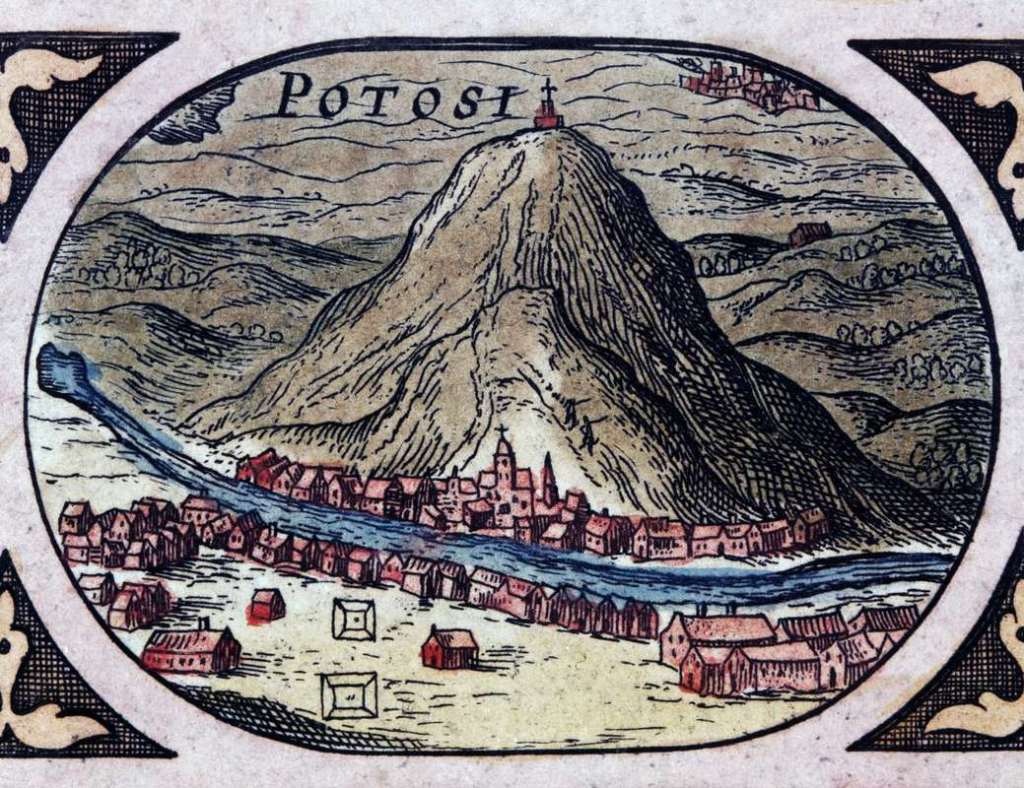
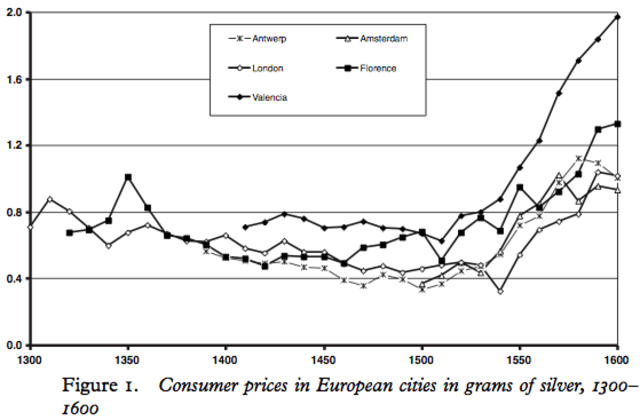
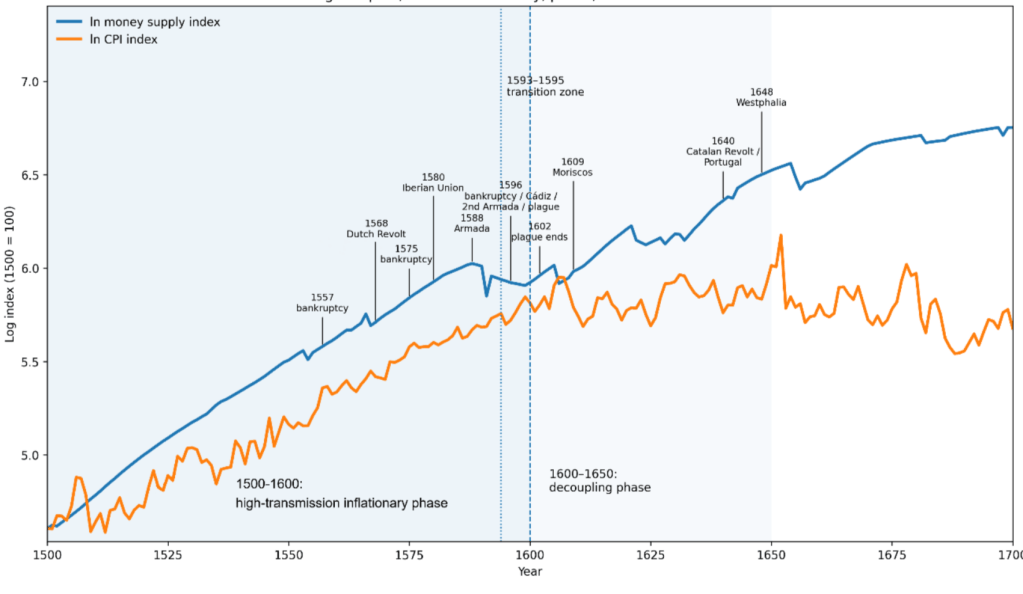
And that volume is exactly what broke the argument that more extraction means more wealth. Potosí’s silver didn’t fund productive investment so much as flood through Spain and straight out the other side, driving a price revolution across the whole continent that Castile itself absorbed worst of anyone. The paradox at the centre of this beat: the empire that extracted the most industrialised slowest, because its money never had to prove itself against anything it actually made.
Two lighter pressures, doing more work here than they did for Portugal. Dynastic union in 1479 unified crowns but not administrations — this remained, throughout, a Castilian project. And where Portugal’s crusading language travelled abroad as an afterthought, Spain’s did real ideological labour at home, and didn’t go entirely unchallenged: Bartolomé de las Casas published his account of the conquest’s brutality in 1542, the same year the crown issued the New Laws attempting to curb encomienda’s worst excesses, and in 1550–51 the crown convened an actual formal debate at Valladolid — de las Casas against Sepúlveda — over whether the indigenous peoples of the Americas were free men owed the rights of subjects or a lesser people requiring guidance. Spain lost almost nothing practical to this — encomienda persisted in modified form for another two centuries — but the debate happened, on the record.
Spain’s model, set against Portugal’s: capture and redirect, not build and hold a position. Two Iberian neighbours, the same pressures, two entirely different inventions. The Dutch, arriving a century later with no empire of their own to seize, would have to invent a third.
The Dutch — The Invention Underneath
The Dutch don’t choose empire so much as get pushed into inventing one. When the Spanish and Portuguese crowns merged in 1580, Dutch merchants were formally shut out of both empires’ trade — banned from Lisbon by 1591, and cut off from Antwerp when Spain occupied it in 1585. It was Europe’s own toll booth, closing on people who’d built their livelihood on being the continent’s middlemen. Building an independent network stopped being ambition and became the only route left to prosperity.
They didn’t invent the model from nothing — they learned it from the people who’d just shut them out. Many Dutch seamen had trained on Portuguese ships, in Goa, in Brazil. The strategy that followed was recognisably Portugal’s: trading stations, not territory, positions on the Gold Coast and the Hudson doing the same work as Portugal’s forts on the Swahili coast. What made the Dutch version different wasn’t the land strategy. It was everything built underneath it.
The VOC — the Vereenigde Oostindische Compagnie, the Dutch East India Company — chartered in 1602, privatised the state’s own instruments of war. Empowered to build fortresses, sign treaties, and raise armies, it was deliberately spread across regional chambers rather than concentrated in Amsterdam — a republican structure answering to trading families and political appointees, with no crown and barely a nobility to get in the way.
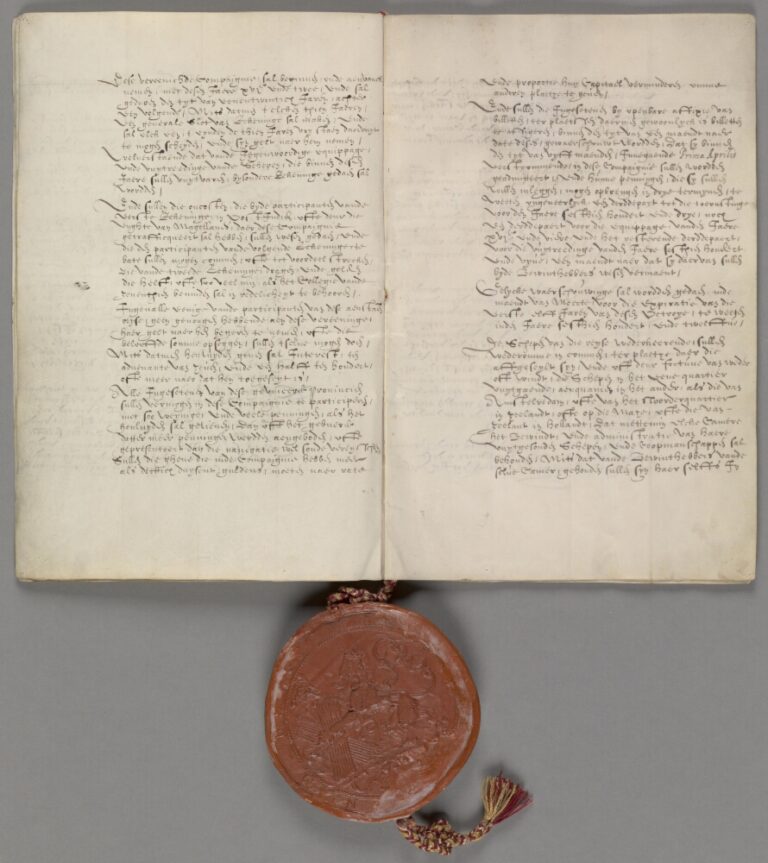
Underneath that structure sat the actual invention: money that didn’t need to come home to be real. Where earlier ventures financed each voyage separately and settled up when the ships returned, the VOC held permanent working capital and issued shares that traded continuously on Amsterdam’s own bourse — speculation, short-selling, and periodic manias (tulips, most famously) all following from the same mechanism. The Bank of Amsterdam, founded in 1609, gave that mechanism a foundation. No dividends were paid until 1610; by 1650 the shares themselves had quintupled in value. Money had stopped needing to prove itself against any single voyage’s cargo.
Land meant two different things depending on which ocean you were in. In Asia, the VOC plugged into trading networks already run by empires bigger than itself — the Mughals moved goods by sea and caravan alike — so the Dutch, like the Portuguese before them, took positions rather than territory. In the Atlantic, the calculation reversed: the GWC — the Geoctrooieerde Westindische Compagnie, or Dutch West India Company — settled New Netherland by buying land outright from the Algonquin, imposing a concept of ownership the sellers didn’t share, in pursuit of the fur trade rather than plantation agriculture.
Labour split the same way, and the split explains why one colony grew and the other didn’t. Batavia — now Jakarta, the VOC’s purpose-built capital on Java — became a segregated, multi-ethnic colonial city built on top of an existing population rather than a replaced one. The Caribbean side of the business was a conventional slave-plantation economy, Surinam’s sugar and cotton worked by enslaved Africans trafficked and owned by the GWC — the same fictitious-commodity logic Spain had applied to labour under encomienda, now stripped of even encomienda’s nominal, mostly unmet legal fiction of protection. But New Netherland itself stayed small — no persecuted minority needed the escape, and there was too much demand for labour at home — while England’s colonies, starved of exactly those alternatives, filled up fast. That contrast is the seed of what follows for England.
The republican structure that made the VOC nimble made the GWC fragile. No crown meant no reliable tax base — the company depended on the provinces honouring subsidies they routinely didn’t pay, and when Portugal fought back in Brazil, the GWC had no reserve to draw on. It went bankrupt in 1636 and never recovered the ground it lost.
And at home, none of this seems to have troubled anyone very much. The Dutch Republic was, by the standards of the age, tolerant and liberal yet in 1621 conducted one of the starkest acts of deliberate extermination in this whole period, at Banda, a small nutmeg-producing island in eastern Indonesia’s Moluccas, where the VOC killed, enslaved, or forcibly deported almost the entire population to secure a monopoly on a single spice. All without the domestic debate about the treatment of native peoples that both Spain and England, in their different ways, actually had. The likeliest explanation is also the plainest: nowhere else in Europe was so much of the domestic economy already built on international trade, so nowhere else had as little room to ask whether the trade was right.
England — The Late, Underfunded Hybrid
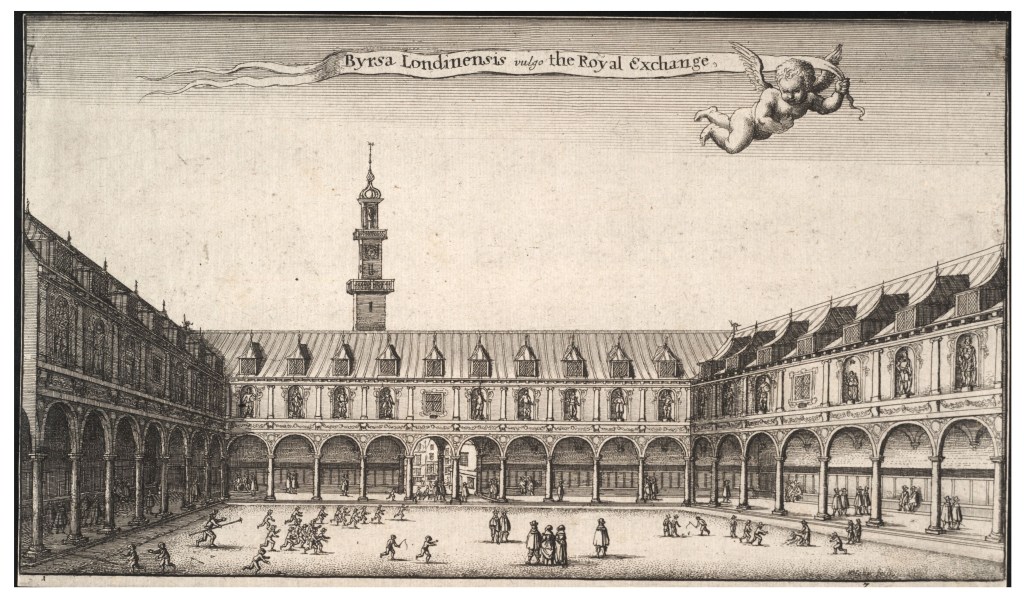
England arrives late, weak, and initially not as a producer of anything but a taker of what others had already extracted. The Royal Exchange opened in 1571, modelled deliberately on Antwerp’s, but England’s real early income came from the sea in a cruder form: Drake’s capture of a single Portuguese carrack in 1587 netted roughly £100,000, more than the crown’s entire annual customs revenue. Privateering wasn’t a sideline to empire. For England’s first decades, it very nearly was empire.
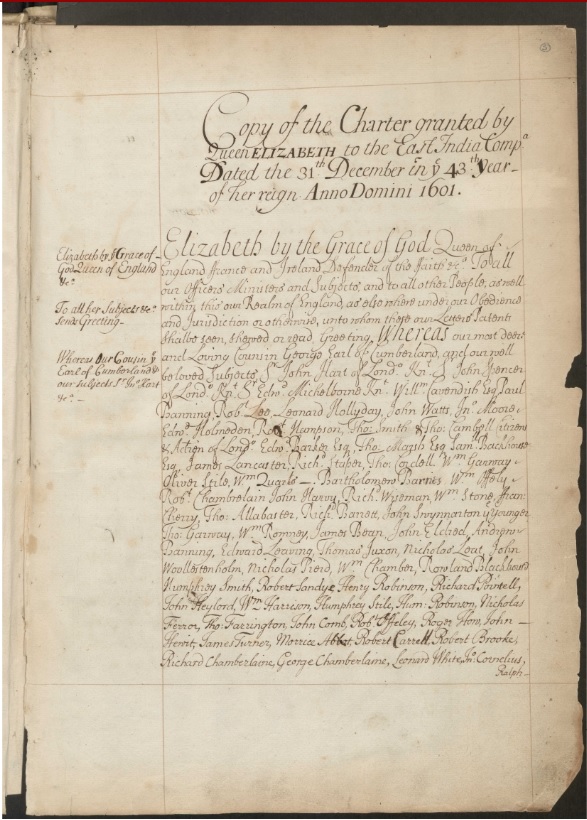
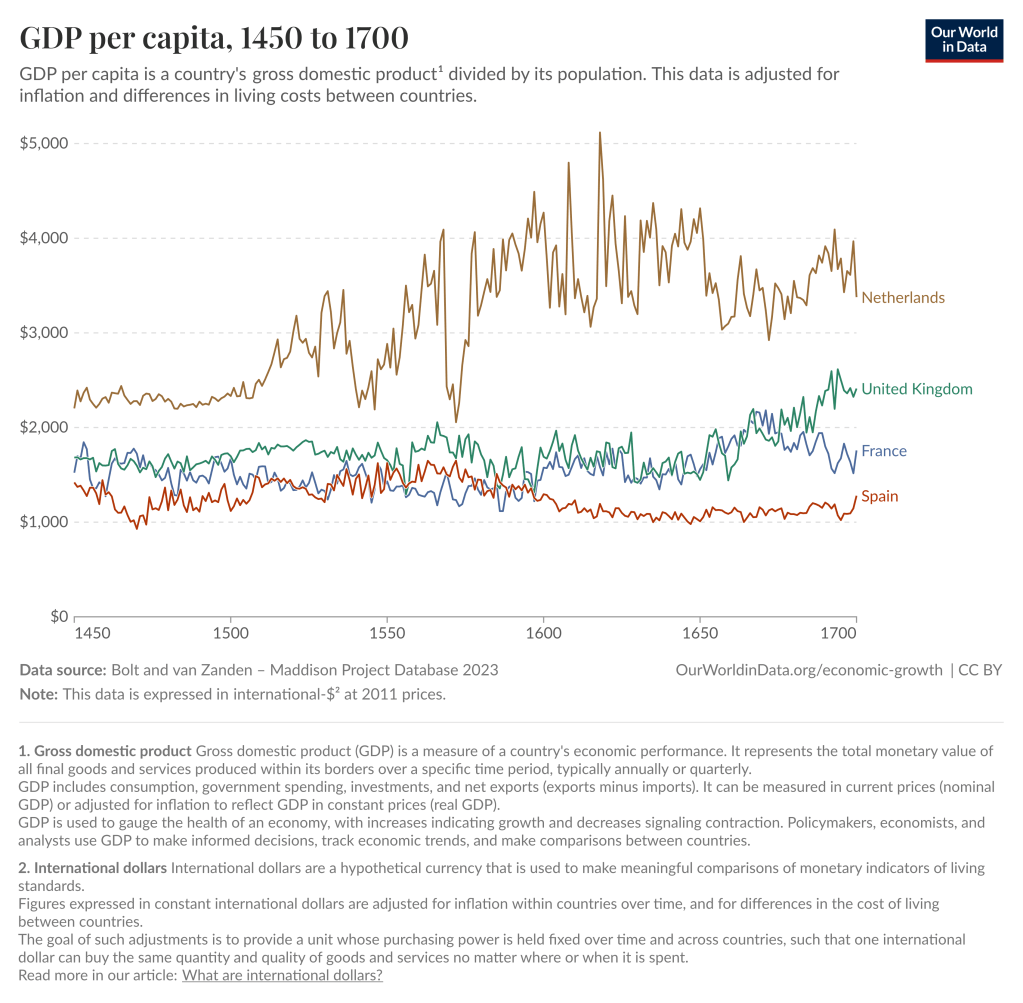
The East India Company, chartered in 1600, was England’s answer to the Dutch model — and a poor relation to it. Where the VOC had raised something like £550,000 within a few years and held it as permanent working capital, the EIC scraped together £68,000 and financed voyages one at a time, the way everyone had before Amsterdam changed the rules. England wasn’t inventing a new kind of money. It was trying, underfunded, to catch up to one already invented across the Channel.
Losing the spice race turned out to be the more important event. Priced and outgunned out of the Indonesian archipelago by the Dutch, the EIC pivoted toward India — cotton, indigo, chintz — almost by default, and in doing so stumbled into a market larger than the one it had lost.
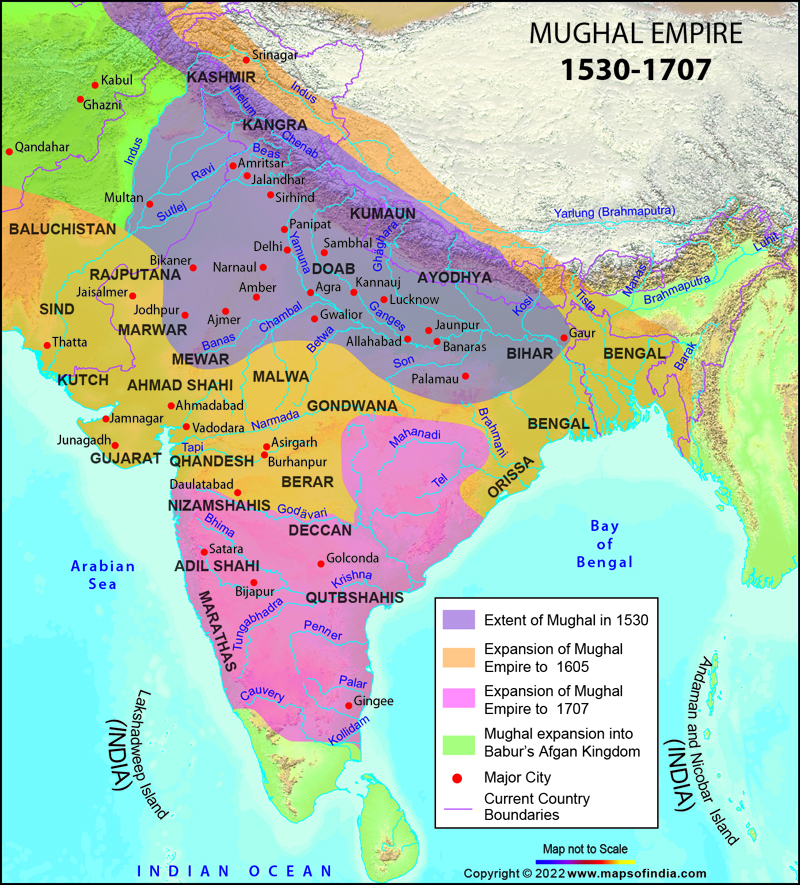
What it found there was not a centralised empire waiting to be decapitated, the way Spain had found one, but something too large to take by force at all. Mughal India held perhaps a quarter of the world’s economic output to England’s three per cent, and could field armies in the millions — enough to defeat Portugal outright at Hughli in 1632. For a century and a half, the EIC’s only viable strategy was the one Portugal had pioneered: trade through positions, diplomacy standing in for conquest, because conquest simply wasn’t available.
Meanwhile, across the Atlantic, England was doing something no other power on this list had managed at scale: making settlement work. Virginia’s tobacco and the wider Chesapeake and New England colonies filled with migrants in numbers the Dutch had never come close to matching in New Netherland — not because England wanted it more, but because England had what the Dutch lacked: religious dissenters with a reason to leave, a growing population with too little land at home, and none of Amsterdam’s ample domestic demand for labour competing for the same hands. The push factors the Dutch beat flagged as missing were, in England, all present at once.
Labour, accordingly, split three ways rather than the Dutch’s two. Settler dispossession and land enclosure in the Atlantic colonies; indentured servitude and, increasingly, the slave trade formalised through the Royal African Company and later the asiento; and, at home, a longer and more contested process doing something structurally similar — enclosure, the conversion of common or open land into private, fenced property, whether by negotiation, parliamentary act, or outright pressure, historians still argue over the mix. However it happened, its cumulative effect over generations was to narrow the ground on which a peasantry could subsist without wages, feeding the same labour market England’s colonies were filling from the other direction, through indentured migration and, increasingly, the slave trade.
Money is where England’s model quietly diverges from every other beat in this frame, and the divergence matters more than it looks. Chartered-company capital, unlike the VOC’s, increasingly found its way back into domestic manufacturing rather than staying purely extractive — wool, then cotton, feeding a productive base at home rather than sitting as bullion or dividend. That’s not yet the industrial revolution. It’s the seed of it, planted here, deliberately left unresolved.
Two lighter pressures. A crown that, like the Dutch, could not tax without consent — parliament stood exactly where the States General stood, a check Spain’s crown never had to clear. And a national self-image, from the mid-sixteenth century on, as the Protestant stalwart against Catholic Spain — legitimating rivalry more than extraction, much as it had for the Dutch.
By 1757, the drift stopped being a drift. At Plassey, the East India Company — a trading corporation, not a state — defeated the Nawab of Bengal in battle and installed a ruler of its own choosing. Trade through position, the model every one of these four powers had leaned on in one form or another, tipped over into conquest. What a company does next, once it has stopped trading and started ruling, is where this pair of pieces turns next.


Leave a Reply