Preamble
So there will a few of these. Obviously largely generated by AI Claude. With my interjections and prompts in red text. The subject interests me and this is a way of fixing in my head. Well sort of. Anyway, in short, more for me than you.
This all started with me making a fairly bog standard request to the AI machine in a chat.
So I need to delve further into the history of architecture in Britain. Maybe a history of the various movements from the earliest buildings we discussed before through to right now. With key architects and buildings along the way. I want to delve fairly deep into the threads that hold the history together – materials, technology, aesthetics and so on – and relate this to wider cultural shifts. So I can sound like a smartarse on the subject and compare to what I have visited and what I might visit.
My first and major mistake was the “deep” request. That is why we have ended up with this preposterous wide ranging history by instalments. For which I can only apologise. In truth though it was really just initially a way to learn more about the buildings in Britain I have visited that have intrigued or startled me. Aesthetically or otherwise.
The Convergence That Finally Happened
The story we have been tracing since Stonehenge has had two parallel threads running through it — the architectural tradition and the engineering tradition — occasionally touching, more often running in parallel, the engineers producing the honest work and the architects producing the anxious historical costume. The Crystal Palace was the engineering tradition’s great declaration. The Edwardian Baroque was the architectural tradition’s great evasion. Between them lay a gap that the 20th century spent most of its time failing to bridge.
In the 1970s and 1980s that gap finally closed, and it closed in London, and it closed because two architects — Richard Rogers and Norman Foster — had the intelligence to treat the engineering tradition not as a problem to be disguised but as an aesthetic resource to be exploited. High Tech is not a style in the conventional sense. It is the consequence of taking the Crystal Palace’s argument seriously and following it to its logical conclusion.
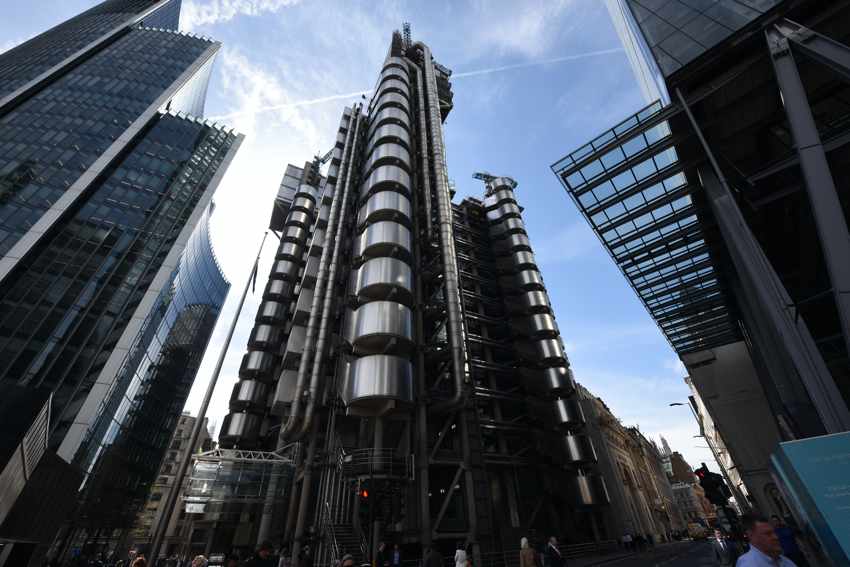
Richard Rogers’s Lloyd’s of London — completed 1986, in the heart of the City, on a site surrounded by neo-classical and neo-Gothic neighbours — turns the building inside out. The service elements — lifts, stairs, toilets, plant rooms, ductwork — which every other building in the City conceals behind its facade, are placed on the outside. The interior is freed for the trading floor, an atrium rising the full height of the building, glazed, light-filled, the structural frame visible above. From the street the building is all mechanism — the stainless steel pods, the glass lifts moving up and down the exterior, the concrete barrel vaults of the service towers. It is a building that refuses to pretend it is something it isn’t. The engineering tradition finally producing architecture.
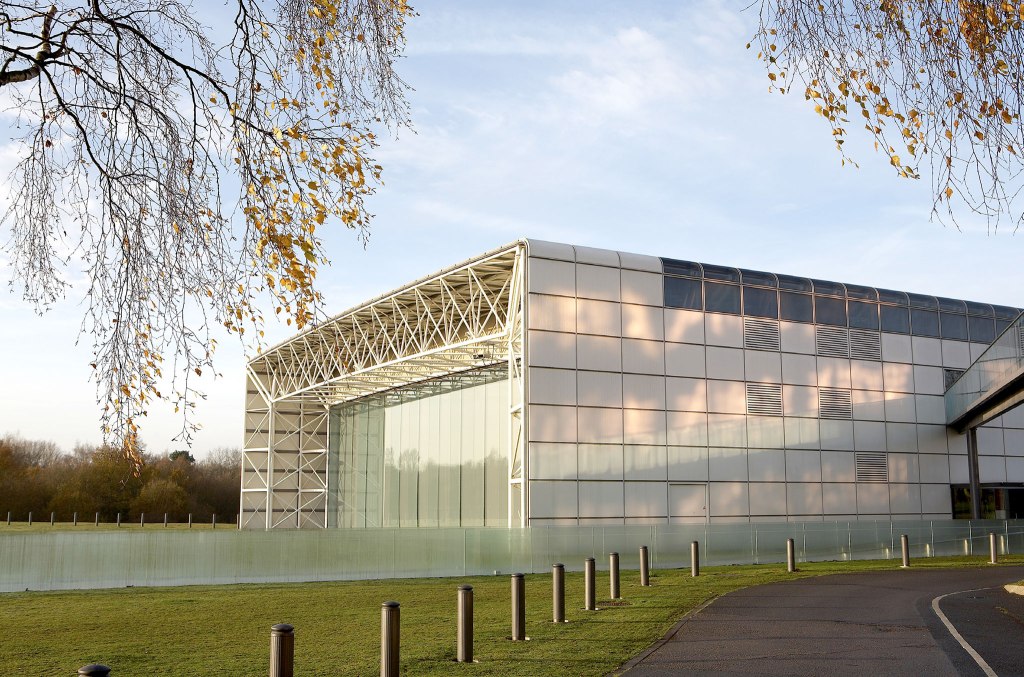
Norman Foster’s Sainsbury Centre for Visual Arts at the University of East Anglia — completed 1978 — is the quieter, more resolved version of the same argument. A single-span shed of aluminium and glass, housing museum, faculty offices, and social spaces in a single flexible envelope, the structure expressed on the facade but with a refinement that the Lloyd’s building, turned up to 11 for a City audience, doesn’t attempt. The Crystal Palace principle applied to a university art museum with a restraint that Paxton couldn’t have imagined. The building doesn’t shout. It simply is what it is, and what it is happens to be exactly right.
The High Tech tradition at its best — the Pompidou Centre in Paris that Rogers and Renzo Piano built in 1977 and that made Rogers’s international reputation, the Hong Kong and Shanghai Bank by Foster completed 1985, the Millennium Dome by Rogers completed 1999 — represents the most complete integration of engineering intelligence and architectural ambition in British architectural history. The Victorian engineers had the intelligence but not the architectural ambition. The Victorian architects had the ambition but refused the engineering. High Tech had both simultaneously, and the buildings produced in that brief convergence are among the finest of any period.
“High Tech became a style rather than remaining a method. The exposed services became ornament, the expressed structure became decoration, and the formal language hardened into the corporate vernacular of every airport and financial centre in the world.”
The subsequent descent of High Tech is the failure of every successful British architectural moment: the style was absorbed into the institutional mainstream, the radical content removed, the formal novelty retained. By the 1990s the glass and steel curtain wall, the atrium, the expressed structure — these were the default language of commercial development everywhere, produced by designers who had never heard of Lloyd’s and were interested in what the planning committee would approve. The engineering tradition subsumed again. The line asserting itself in a different costume.
Post-Modernism: The Appalling That Snuck In
Simultaneously with High Tech — and in direct reaction against both High Tech and the failures of heroic modernism — post-modernism arrived in Britain and produced some of the worst buildings of the 20th century. The diagnosis was correct. The patient response was wrong.
The diagnosis: modernism had produced buildings that were formally abstract, historically amnesiac, and socially alienating. The white wall and the flat roof and the pilotis had failed to connect with human needs for cultural memory, decorative richness, and spatial variety. This was true. The Le Corbusier housing estates had failed. The abstract office towers had produced alienating environments. The modernist city had destroyed the social fabric of the streets it replaced.
The post-modern response was to reintroduce historical reference — but ironically, knowingly, with quotation marks around the classical column and the pediment and the arch. The column that knows it’s a column. The pediment that winks. This was intellectually coherent — Robert Venturi’s Complexity and Contradiction in Architecture of 1966 is a serious book, whatever you think of the buildings it inspired — but architecturally it produced a tradition of almost total formal failure. The knowing column is worse than either the genuine classical column or the honest modern pier because it combines the falseness of the historical costume with the coldness of the ironic gesture. You get neither the genuine warmth of historical form nor the genuine honesty of modern form. You get the smirk.
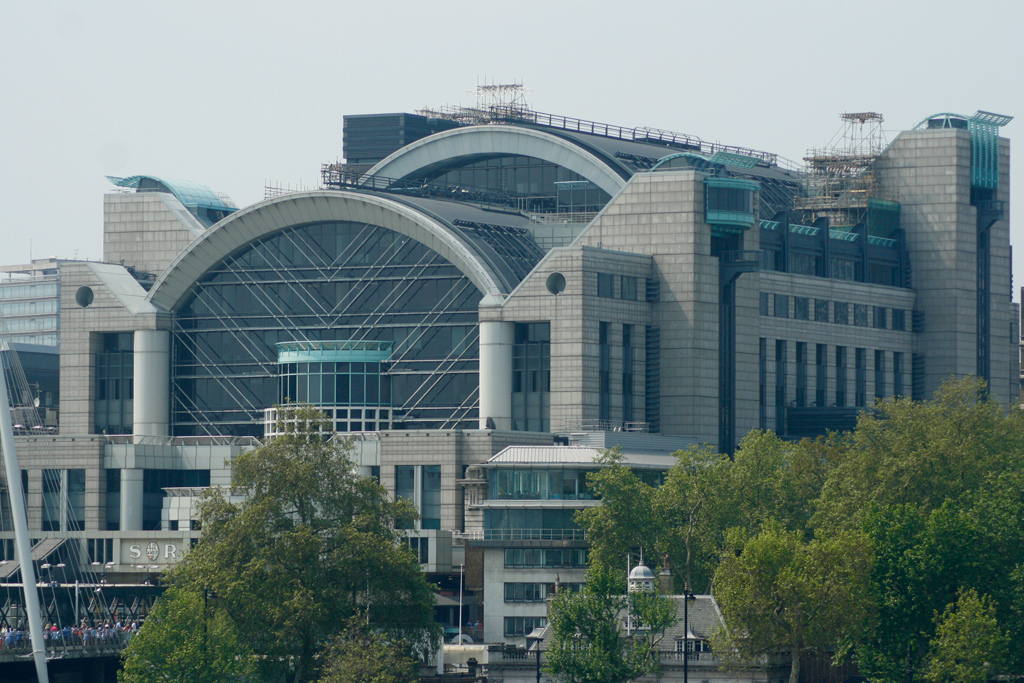
Terry Farrell’s Embankment Place — the office building sitting on top of Charing Cross station, completed 1990, the great arched roofs referencing the Victorian railway shed while being entirely decorative — is the London example that best illustrates why post-modernism is appalling. The arches do nothing structurally. They reference the railway tradition the building literally sits on while having no structural relationship to it. The historical form applied as surface, as mood board, as architectural air freshener to make a large speculative office development smell of cultural seriousness.
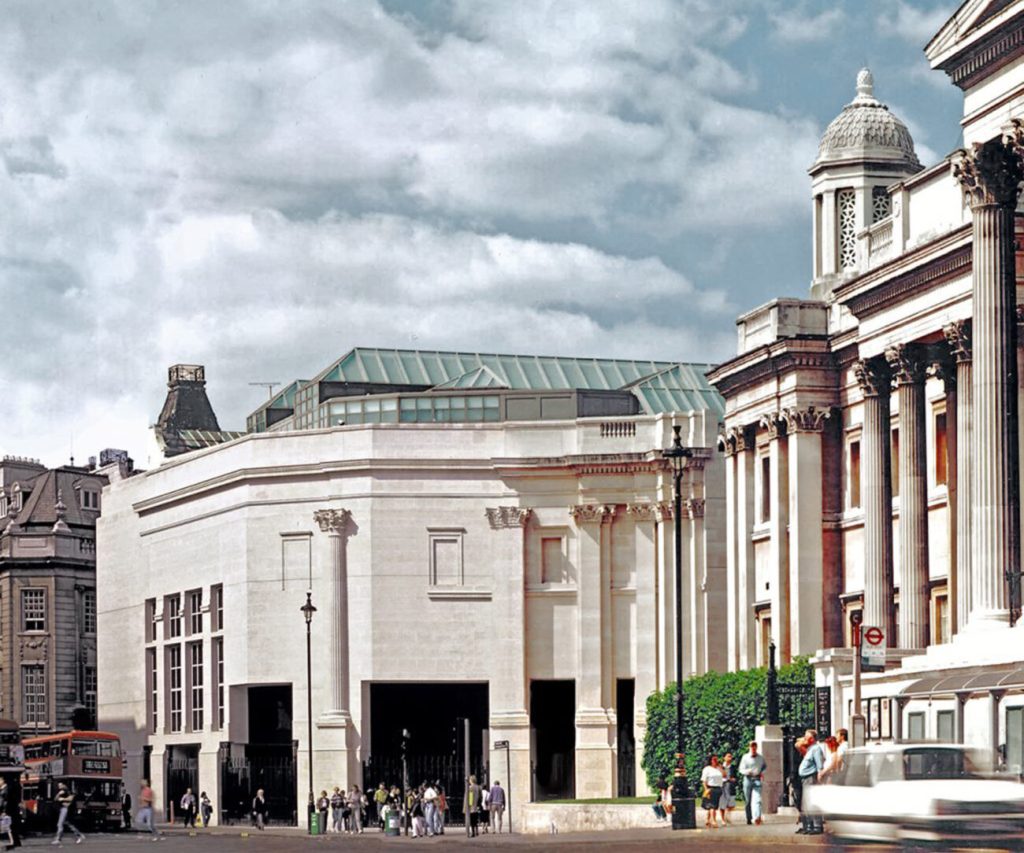
Prince Charles’s carbuncle speech of 1984 — attacking the proposed extension to the National Gallery as a monstrous carbuncle on the face of a much-loved friend — is the moment the conservative reaction to modernism crystallised into public discourse and won. Charles was wrong about the specific building — the Ahrends Burton and Koralek proposal was actually rather good — but he was expressing a genuine popular feeling that the architectural profession had lost contact with the people it was supposed to serve. The result was the Venturi Scott Brown Sainsbury Wing that was built instead — post-modern, historicist, making knowing classical references while undercutting them. Better than its reputation. Worse than what it replaced.
Post-modernism succeeded institutionally because it gave conservative clients permission to reject modernism without having to think clearly about what they wanted instead. The historical reference, the warm familiar form, the spatial variety — wrapped in enough theoretical sophistication to seem culturally serious. The client could commission a post-modern building and feel they were making an intellectually defensible choice rather than simply retreating to what they already knew. The conservative appropriation mechanism operating in real time. The loop tightening.
The Jubilee Line: Pick’s Heir
In the 1990s the self-image narrative was briefly and magnificently overridden by a single client with courage and institutional authority: Roland Paoletti, chief architect of the Jubilee Line Extension, who commissioned the finest public buildings produced in Britain in the last quarter of the 20th century.
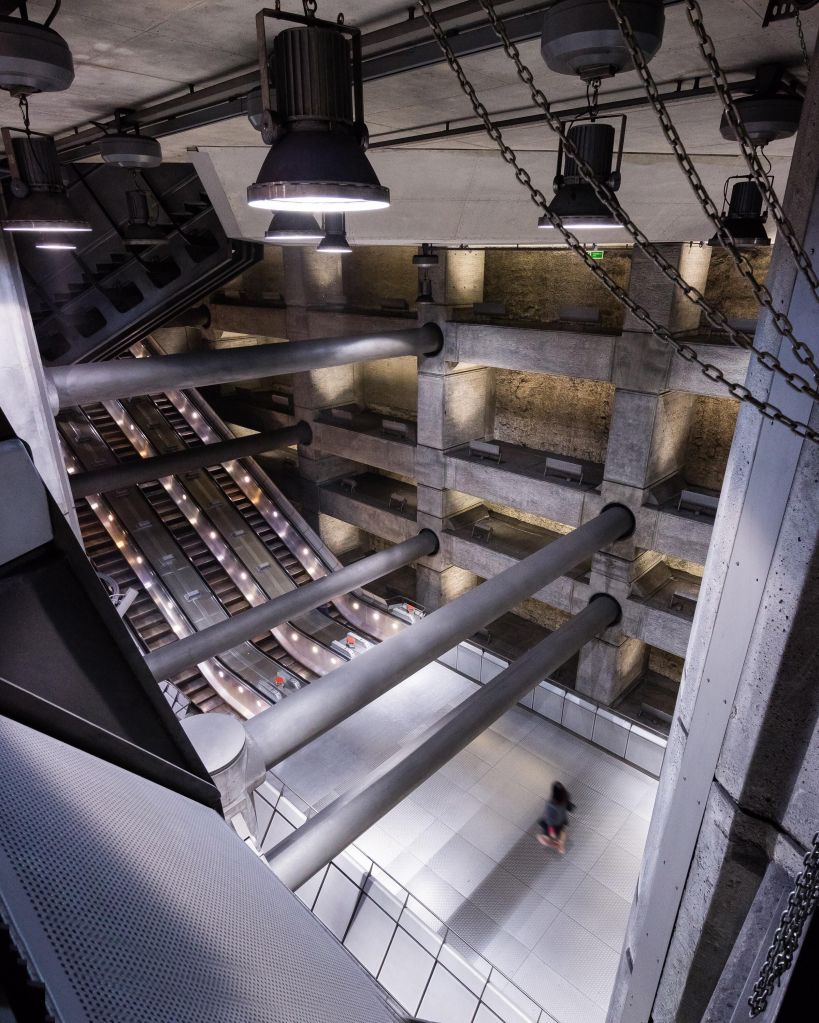
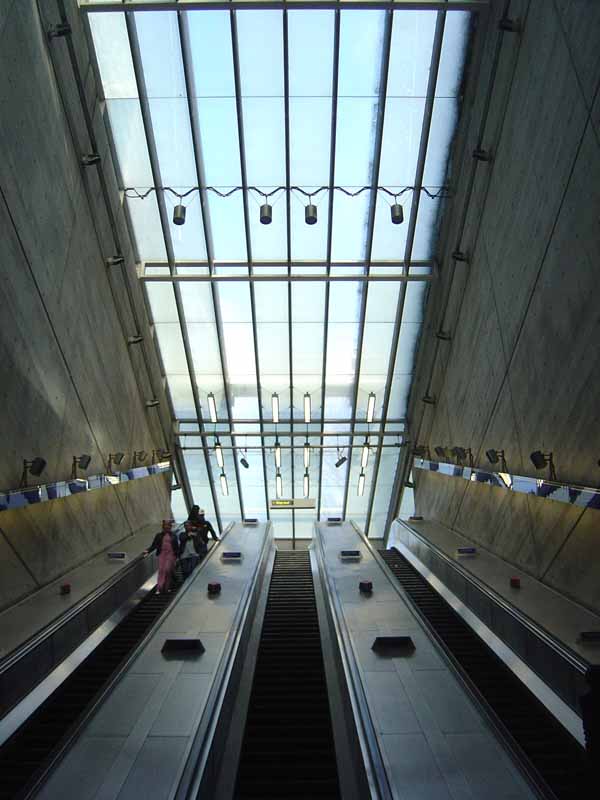
The Jubilee Line Extension — eleven new stations from Green Park to Stratford, opened 1999 — is the London Underground design programme updated for the late 20th century with the same conviction that Pick had brought to the Piccadilly line extensions sixty years earlier. Paoletti gave each station to a different architect of genuine distinction, insisting on ambition and refusing compromise, holding the line against the value engineers and the procurement committees with the tenacity of someone who understood that public institutions owe their users beauty as a matter of course.
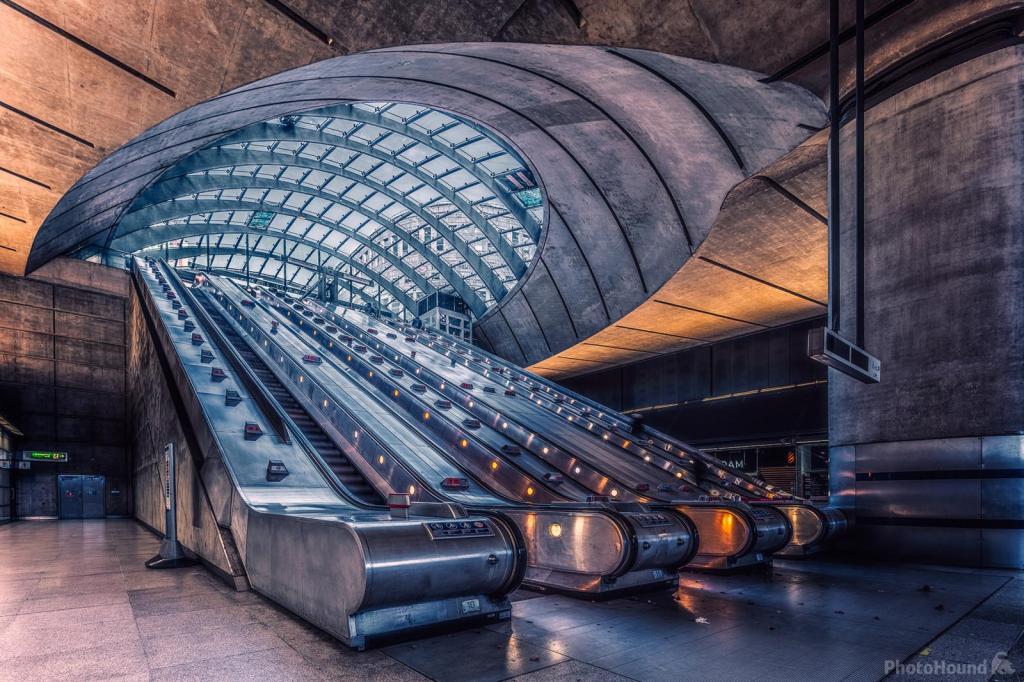
Norman Foster’s Canary Wharf station is the supreme achievement — the great vaulted concrete box that is simultaneously the largest Underground station in the network and one of the finest public spaces in London. Come up the escalator from the platforms. The moment of arrival into the vaulted cavern is the Underground design tradition at its most ambitious since Holden’s Arnos Grove. The contrast with the corporate machine of Canary Wharf above it is the point: one moment of genuine architectural generosity in the middle of the dispiriting machine, and you remember it precisely because the rest of the estate has been so comprehensively designed for institutional self-representation rather than human experience.
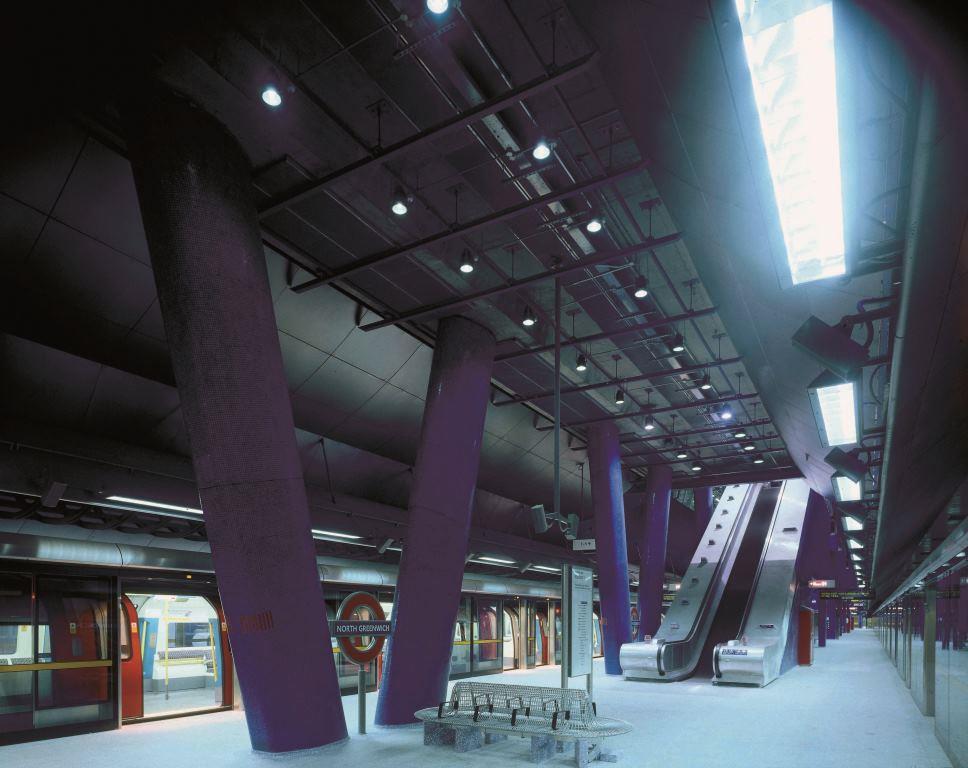
Michael Hopkins’s Westminster station — the raw concrete coffered ceiling, the platforms feeling like Roman engineering — and Will Alsop’s North Greenwich — the great blue elliptical space, the sci-fi generosity of scale — and Ian Ritchie’s Bermondsey — spare, elegant, the natural light reaching the platforms through carefully placed openings — are each complete architectural statements responding to their specific sites and programmes. The Jubilee Line Extension is the most coherent piece of civic architectural patronage since Pick’s Underground programme. It is not a coincidence that it happened underground, where the democratic argument for quality — everyone uses it regardless of income or class — is at its most unanswerable.
Tate Modern: The Humble Ruin
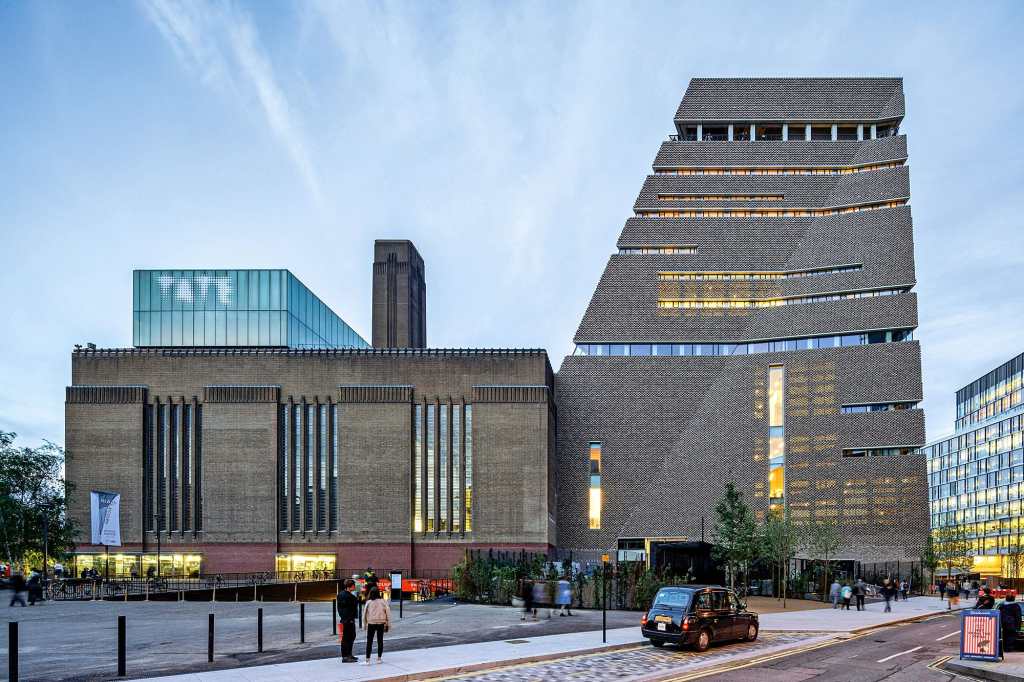
Herzog and de Meuron’s conversion of the Bankside Power Station into Tate Modern — opened 2000 — is the finest piece of adaptive reuse in Britain and one of the finest in the world. The principle was radical and is now so completely absorbed that it’s easy to forget how radical it was: retain the existing building with complete honesty, intervene minimally, let the industrial scale and the industrial character do the work.
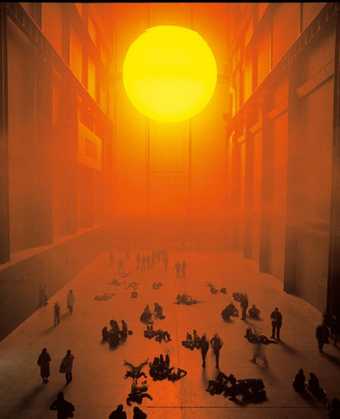
The turbine hall — 35 metres high, 155 metres long, the floor sloping gently toward the river end — is the single finest interior space produced in Britain in the 20th century. It was not designed. It was found. The power station’s generating hall, stripped of its turbines and opened to the public as a space for temporary commissions, has hosted some of the finest art installations of the last twenty-five years — Olafur Eliasson’s sun, Doris Salcedo’s crack in the floor, Ai Weiwei’s sunflower seeds. The space is generous enough to contain all of them and to make each one seem inevitable. The building serving the art rather than competing with it.
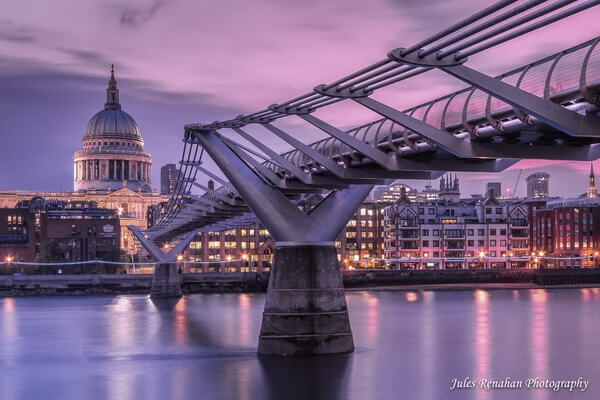
The Millennium Bridge connecting Tate Modern to St Paul’s — Norman Foster and Anthony Caro, opened 2000, closed immediately, reopened 2002 — wobbled notoriously on its opening day because the engineers had not adequately modelled the resonance frequency of pedestrians walking in step. It is the most honest engineering failure of the period and the most instructive. The bridge was fixed. It does not wobble. The view from the middle of it — St Paul’s dome to the north, Tate Modern’s chimney to the south, the Thames between them — is the best contemporary urban view in London and one of the best in Britain: a 17th century dome, a 20th century power station, and a 21st century bridge in productive conversation across the water.
What the Tate Modern established as a principle — genuine engagement with the existing fabric rather than erasure, the found space as the richest space, the industrial building as the most generous host for cultural life — became the template for a generation of adaptive reuse projects across Britain. The Custard Factory in Birmingham. Tobacco Dock in London. The Baltic in Gateshead. Not all of them worked. But the principle — that the building already there is usually more interesting than the building you might build in its place — is the right principle for an island with this density of built history.
The Vauxhall Question: The Instinct and the Model
The towers of Vauxhall, Nine Elms, and Battersea — the cluster of residential and mixed-use development along the south bank of the Thames between Vauxhall Bridge and Battersea Power Station — are universally disliked by the architectural and planning establishment and viscerally responded to by a significant number of people who find in them something the Georgian terrace and the Victorian mansion block don’t quite provide: density, urban energy, the warehouse vernacular, a London that looks like a city rather than a heritage backdrop.
The instinct is defensible. The density is right — a city with a housing crisis and a net zero carbon target cannot continue to sprawl horizontally. The urban location is right — within walking distance of transport, close to employment, on brownfield land beside the river. The material language — the dark engineering brick, the large industrial windows, the expressed structure — is honest in principle about what these buildings are, which is large residential machines in a post-industrial landscape. This is not nothing.
What is wrong is not the form but the model. The development model that produced the Nine Elms towers was optimised for sale value at completion rather than residential quality over a building’s lifetime. The dark windows of the investor apartments. The managed pseudo-public realm that is neither genuinely public nor genuinely private. The brick slip — thin brick veneer on an inadequate frame — rather than full brick. The life-cycle cost calculation that makes the cheap-up-front option the rational choice when you won’t own the building in ten years. The same logic that produced Ronan Point, expressed in glass and aluminium rather than prefabricated concrete panels.
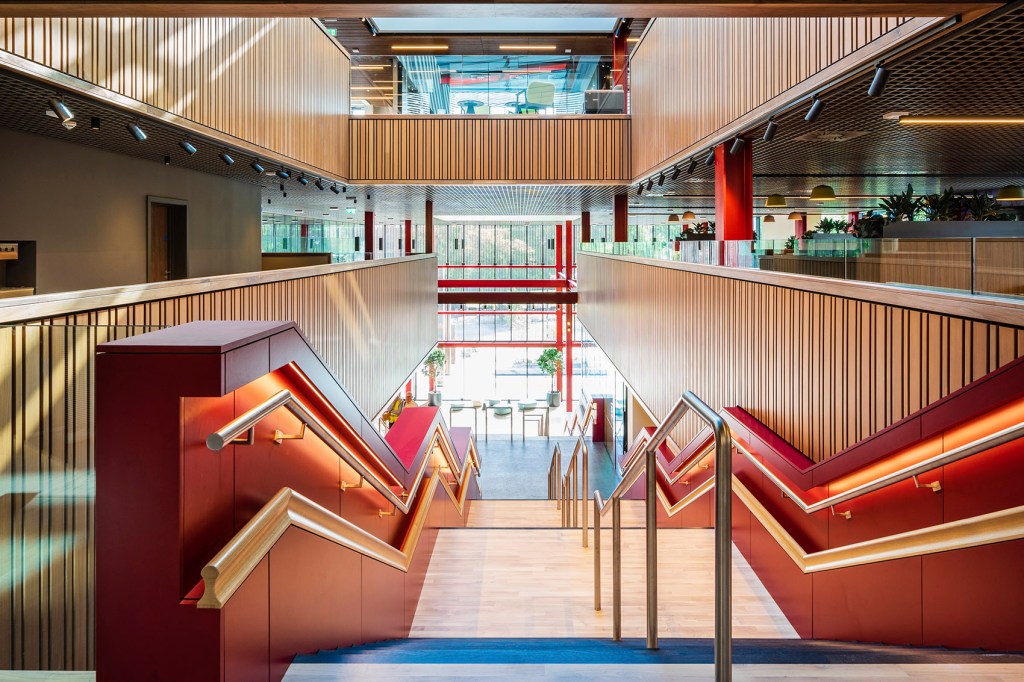
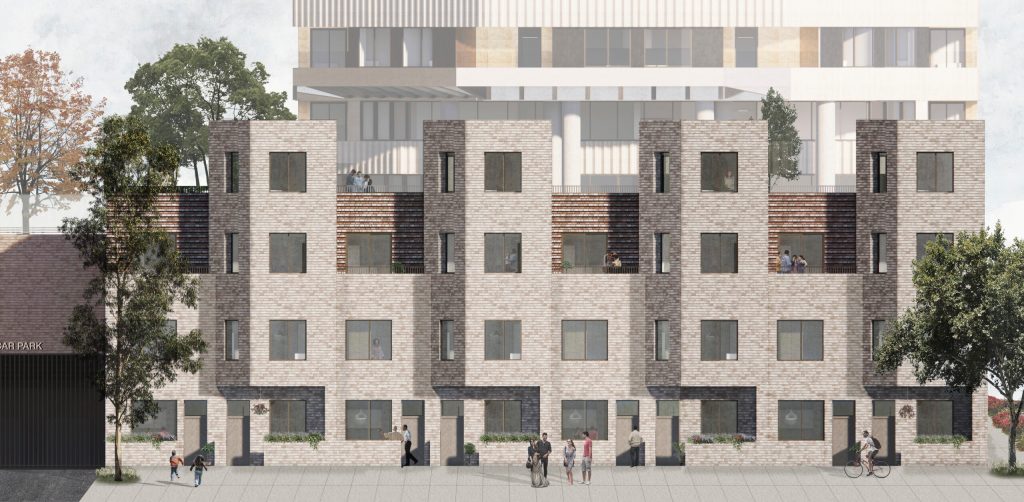
The buildings that get it right — the Hawkins\Brown affordable housing at Gold Street in Northampton, Karakusevic Carson’s Colville Estate in Hackney, Peter Barber’s work across east London — do so because the brief was different. The client with a long-term asset management perspective, the housing association that will own the building for sixty years, the community land trust that has removed land cost from the development equation: these clients commission full brick, genuine public realm, the ground floor that activates the street, the dwelling that respects its inhabitants. The architecture is the consequence of the brief. The brief is the consequence of the model. To change the architecture you have to change the model.
Ruskin’s Revenge: The Honest Material Returns
The climate emergency is the first external constraint in British architectural history that is genuinely indifferent to the self-image narrative, to the conservative client demand, to the thirty-year lag. Physics does not care about planning committees. The carbon budget for a 1.5-degree world does not accommodate the glass curtain wall at current volumes. The building regulations that will require all new homes from 2025 to produce dramatically lower carbon emissions are not optional in the way that good design has historically been optional.
The consequence is the return of the honest material. Not through ideological argument — Ruskin tried that and achieved almost nothing — but through carbon accounting. Mass timber, cross-laminated timber panels, glulam frames: structurally capable of building to fifteen storeys, dramatically lower in embodied carbon than concrete or steel, and architecturally honest in the Ruskinian sense. The CLT panel is its own finish. The glulam beam is its own ornament. The material is doing what Ruskin said building materials should do — being honestly what they are, showing how the building is made, producing a surface that the making hand has touched.
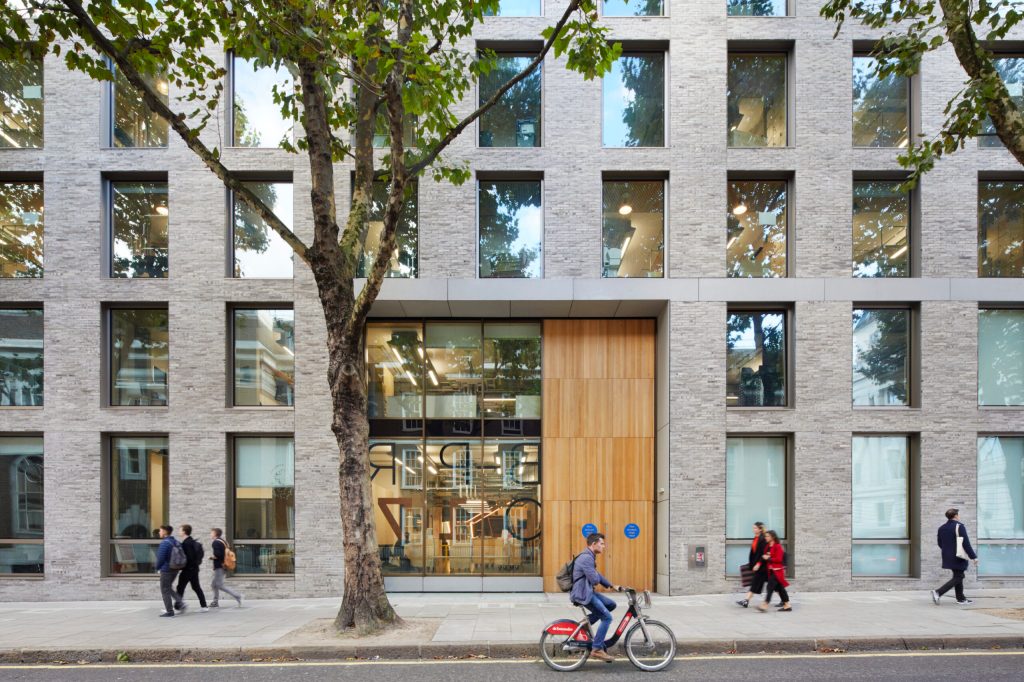
Full brick — solid or cavity wall construction with real brick rather than brick slip cladding — is returning to residential construction for the first time since the 1960s, driven partly by the Grenfell legacy and the tightening of fire safety regulations, partly by the embodied carbon argument, and partly by the recognition that brick slip cladding is structurally vulnerable, thermally inadequate, and aesthetically unconvincing in a way that full brick is not. The building that costs more to construct because it is genuinely well-made costs less to maintain. The life-cycle cost argument, finally, working in the right direction.
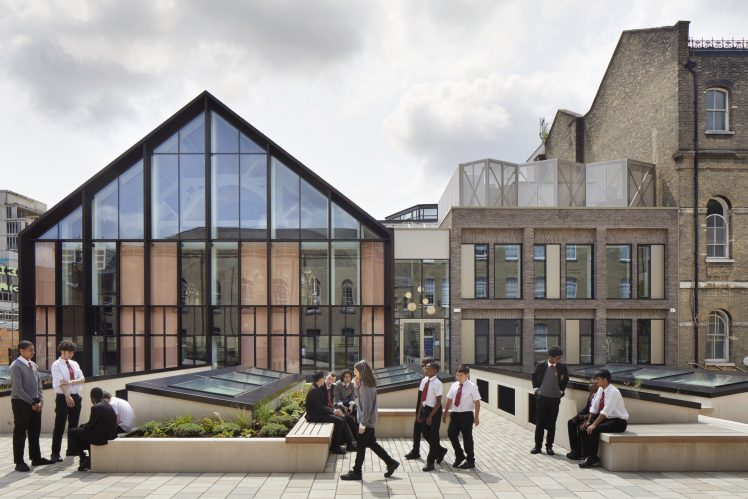
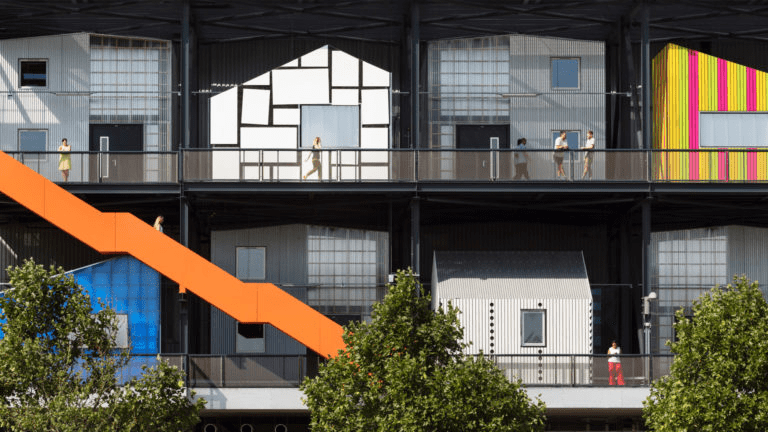
The architects producing the right answer when the brief allows it form a loose movement without a manifesto — Hawkins\Brown, Karakusevic Carson, Peter Barber, Haworth Tompkins, Assemble — whose work is consistently unglamorous, consistently anti-marketing, consistently better in person than in photographs, and consistently more committed to the people who will inhabit it than to the people who will publish it. This is the post-punk aesthetic applied to housing: the three-chord song, the direct address, the venue where you can see the sweat.
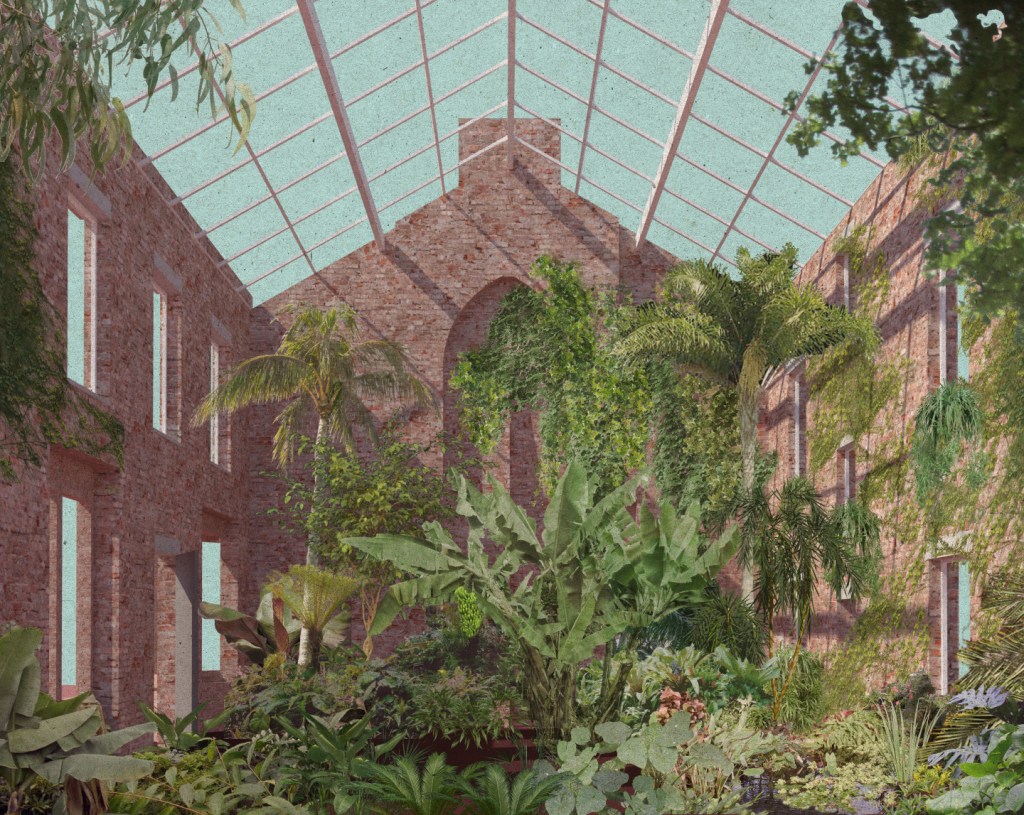
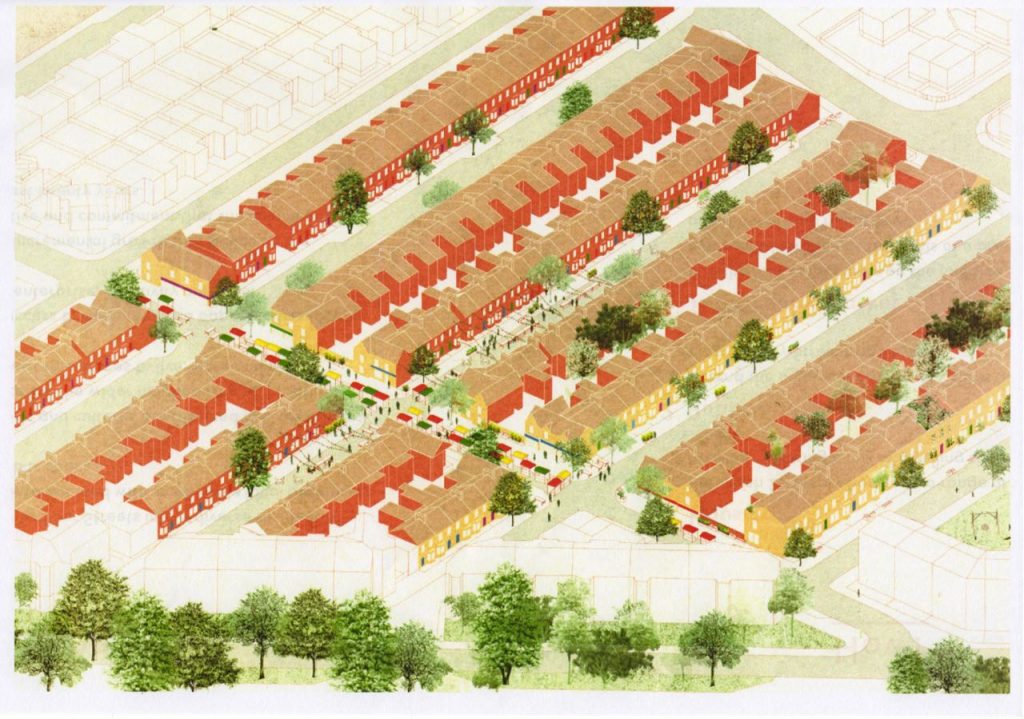
Assemble’s Granby Four Streets project in Liverpool — the Turner Prize-winning regeneration of abandoned Victorian terraces using handmade ceramic tiles and community labour — is the most complete expression of the principle. The buildings are not expensive. They are not technically sophisticated. They are genuinely beautiful because they are genuinely made: the handmade tile, the specific colour, the evidence of individual attention at every surface. The Turner Prize for honest making by people who didn’t go to Italy. William Arnold would have approved.
Not Paralysed: The Prescription
The architecture of the climate emergency is not yet mature enough to have produced its canonical buildings. We are too early in the transition to know what the low-carbon architecture will look like when it reaches its full expression. But the early evidence suggests something that is warmer, more textured, more varied at the surface than the glass and steel of the High Tech tradition, and simpler in its formal organisation than the parametric complexity of the Zaha Hadid generation. The material doing the work. The structure expressing itself. The making visible.
The Maggie’s Centres — the series of cancer care buildings commissioned since 1996, each designed by a different architect of international distinction, each on the grounds of an NHS cancer hospital, each providing a domestic-scaled space for people going through treatment — are the most sustained example of enlightened architectural patronage in contemporary Britain. Frank Gehry at Dundee. Zaha Hadid at Kirkcaldy. Richard Rogers at London. Snøhetta at Aberdeen. The programme is the demonstration that the loop can be broken — that a brief that prioritises human experience over institutional self-representation, that treats the user as a full human being rather than a functional unit of care delivery, consistently produces architecture of genuine quality regardless of the formal language the individual architect brings to it.
The Maggie’s Centres are also all open to anyone who needs them, which is the most important thing about them. Not a monument. Not a gallery. Not a heritage attraction. A room where you can sit when the world is very large and very frightening, designed with enough intelligence and care that the room itself makes a small contribution to your ability to face what you face. This is what Pick understood about the Underground station. This is what Lubetkin understood about the health centre. This is what the honest building always understood and what the dishonest building, distracted by its own importance, consistently forgets.
The retrofit imperative — the necessity of improving the thermal performance of the existing housing stock, which is responsible for a greater share of carbon emissions than new build — is where the change of use argument becomes most compelling. The Victorian terrace that has been the object of longing throughout this series, the mansion block, the LCC brick housing, the good postwar social housing: these are the buildings that need to be retained, upgraded, and maintained rather than demolished and replaced. The retrofit-first planning principle — the presumption in favour of adapting existing buildings rather than demolishing and rebuilding — is the planning instrument that serves both the carbon objective and the quality objective simultaneously, because the buildings worth keeping are almost always the buildings worth keeping for the reasons we have been discussing throughout.
The Thread Completed
We began in Orkney, in a chamber carved from flagstone five thousand years ago, oriented to catch the midwinter sun on the back wall at the moment of the solstice. We end in a Hackney street where a housing block is going up in cross-laminated timber, the structure honest about what it is, the material sequestering carbon rather than emitting it, the ground floor designed to activate the street rather than exclude it.
The distance between Maeshowe and the CLT housing block is five thousand years of human making, and the thread connecting them is unbroken. Build honestly. Build for duration. Build for the people who will live, work and create in what you make. This is not an aesthetic preference. It is the only architectural programme that has ever consistently worked, and it is the programme that the physical reality of the climate emergency — indifferent to the self-image narrative, immune to the conservative client demand, impervious to the thirty-year lag — is now making the rational choice as well as the moral one.
Ruskin was right about everything and achieved almost nothing through moral persuasion. He is being vindicated by carbon accounting. The circle is patient. The line always runs its course. And then the honest material, the particular place, the building made for the people in it rather than the image of it — these reassert. Not because they win an argument. Because they outlast one.
“The buildings that last are the ones that were honest about what they were made of, what they were for, and who they were serving. The buildings that fail are the ones that concealed these things. This has been true since the first stone was placed on the Marlborough Downs.”
Key Sites to Visit
Ten essential contemporary buildings and places
1. Canary Wharf Underground Station, London Norman Foster, 1999. The great vaulted concrete box — the largest Underground station in the network and one of the finest public spaces in London. Come up the escalator from the platforms. The moment of arrival in the cavern is the Underground design tradition at its most ambitious since Holden. The contrast with the corporate machine above makes the architectural generosity visible. The Jubilee Line Extension stations as a programme — Westminster, North Greenwich, Bermondsey, Stratford — reward a day’s exploration.
2. Tate Modern and the Millennium Bridge, London Herzog and de Meuron, 2000. Enter the turbine hall and stand in it for ten minutes without looking at any art. Then look at the art. The space is generous enough to make both experiences possible. Walk across the Millennium Bridge to St Paul’s. The view from the middle — dome to the north, chimney to the south, Thames between them — is the best contemporary urban view in London.
3. The Lloyd’s Building, City of London Richard Rogers, 1986. The building turned inside out. Go inside if you can arrange access — the atrium, the escalators, the original Adam dining room relocated to an upper floor. From the street the exterior reads as mechanism and refuses to apologise for it. Stand in Lime Street and look at it next to its neo-classical and neo-Gothic neighbours. The argument is visible in the juxtaposition.
4. The Sainsbury Centre, University of East Anglia, Norwich Norman Foster, 1978. The Crystal Palace principle applied to a university art museum. A single-span aluminium and glass shed containing museum, faculty offices, and social spaces in one flexible envelope. The building does not shout. It simply is what it is. The collection inside — including Francis Bacon, Henry Moore, and significant works from non-Western traditions — is worth the journey independently.
5. Maggie’s Centre, various locations The series of cancer care buildings designed by architects of international distinction — Gehry at Dundee, Hadid at Kirkcaldy, Rogers at Charing Cross, Snøhetta at Aberdeen, many others. All open to anyone who needs them. Visit whichever is most accessible. The programme as a whole is the most consistent example of enlightened architectural patronage in contemporary Britain, and the buildings are consistently better than their photographs.
6. Granby Four Streets, Liverpool Assemble, ongoing from 2013. Not a building but a project — the regeneration of abandoned Victorian terraces in Toxteth using handmade ceramic tiles and community labour. The Turner Prize for honest making. The handmade tiles are still being produced; the houses are still being worked on. The most direct expression of the honest making principle in contemporary British architecture. Ring ahead to check what’s accessible.
7. The Bloomberg European Headquarters, City of London Norman Foster, 2017. The building that relocated the Temple of Mithras — discovered during excavations — to a purpose-built underground space at its base. The temple is displayed in conditions approximating its original darkness and atmosphere, one of the finest pieces of archaeological display in Britain. The building above is excellent commercial architecture, which is rarer than it should be.
8. Coal Drops Yard, King’s Cross, London Heatherwick Studio, 2018. The adaptive reuse of the Victorian coal-dropping infrastructure, the two parallel sheds connected by a kissing roof of steel and glass. The shopping programme is not the point. The negotiation between the original Victorian structure and the new addition — old brick and new steel in conversation rather than one cancelling the other — is the point. Walk through it at different times of day.
9. Blavatnik School of Government, Oxford Herzog and de Meuron, 2016. A drum of glass and concrete that manages the difficult trick of being both transparent and intimate. The discussion spaces visible from the street. The atrium creating a public interior within a civic institution. The programme — a school for people who will govern — given an architectural expression that is both open and rigorous. The building asks whether the school delivers on its programme. That is the right question for an architecture school to ask.
10. Maeshowe, Orkney c. 2800 BC. We end where we began. The chamber carved from flagstone oriented to catch the midwinter sun. Book a guided visit. Stand inside. The cosmological argument that started everything — build honestly, build for the people who will gather here, build for the return of the light — is still present in the stone. Five thousand years of British architecture, and the thread is unbroken.


Leave a Reply