Preamble
So there will a few of these. Obviously largely generated by AI Claude. With my interjections and prompts in red text. The subject interests me and this is a way of fixing in my head. Well sort of. Anyway, in short, more for me than you.
The Central Puzzle
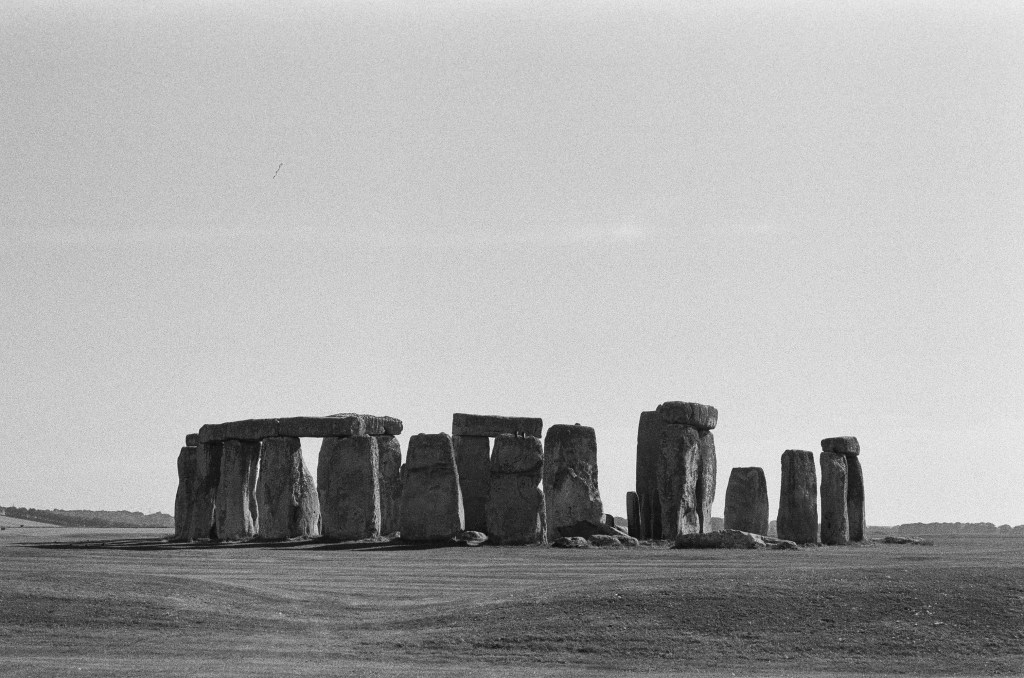
The first thing to understand about prehistoric British architecture is that it wasn’t about shelter. The people who built Skara Brae, Stonehenge, and the great chambered cairns of Orkney were perfectly capable of constructing serviceable dwellings from timber and thatch — and did so. But those buildings have vanished. What survives is what they built in stone, and they built in stone almost exclusively for the dead and the sacred. This tells us something profound: the first architects in Britain were not solving problems of comfort or security. They were negotiating with the cosmos.
This is the thread that will run through everything — architecture as a technology of meaning, not just of shelter. That thread never breaks.
Materials and Technology
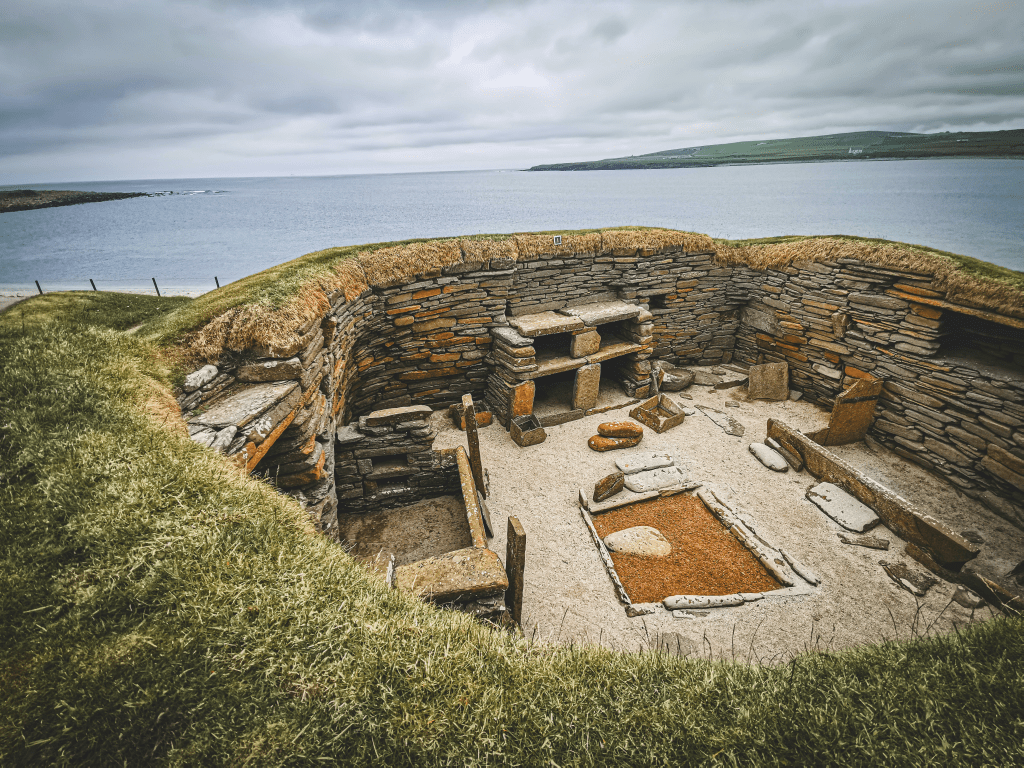
The prehistoric builders worked with whatever the landscape gave them. In Orkney, that meant flagstone — a sandstone that splits naturally into flat slabs, almost purpose-made for construction. This geological accident is why Orkney has the finest surviving Neolithic architecture in northern Europe. Skara Brae (c. 3180 BC) has stone beds, stone dressers, stone hearths — furniture that in southern Britain would have been made of wood and disappeared entirely. The island’s treelessness forced a stone culture, and stone culture preserves.
In Wiltshire, the material was sarsen — a dense silcrete that occurs naturally on the surface of the Marlborough Downs. Moving the Stonehenge sarsens, some weighing 25 tonnes, over distances of up to 25 miles required an organisational capacity we still struggle to fully account for. The bluestones came further — from the Preseli Hills in Pembrokeshire, 150 miles away, almost certainly by sea and river. The question of why those specific stones from that specific location remains genuinely unresolved, and it’s one of the most interesting unsolved problems in British archaeology.
The technology was Neolithic and then Bronze Age: no metal tools for most of this period, no wheel in the early phases. The sarsens at Stonehenge were shaped with stone mauls — you can still see the toolmarks — and joined with mortise-and-tenon and tongue-and-groove joints borrowed directly from woodworking. The builders were thinking in timber and translating into stone.
Aesthetics and Form
Prehistoric British architecture has two dominant formal languages, and they’re worth distinguishing.
The first is the long barrow and chambered cairn — elongated earthen or stone mounds containing burial chambers. West Kennet (c. 3650 BC), Wayland’s Smithy, Maeshowe in Orkney. These are threshold architecture: they define the boundary between the living world and the world of the ancestors. The internal chambers are dark, low, and profoundly bodily — you crawl in. The experience is deliberately womb-like, which is almost certainly intentional. Death as return. The ancestor as simultaneously present and departed.
The second is the henge and stone circle — circular enclosures, usually with a ditch and bank, sometimes with standing stones, sometimes timber posts. Stonehenge, Avebury, the Ring of Brodgar, Castlerigg. These are gathering architecture, oriented outward to the sky. The famous solar alignments at Stonehenge (midsummer sunrise, midwinter sunset) weren’t accidents — they were the entire point. The building is a calendar, an observatory, and a ceremonial stage simultaneously.
What’s striking is the precision of these alignments given the absence of written mathematics. Whoever designed Maeshowe calculated that the midwinter sun would illuminate the back wall of the chamber through a precisely oriented passage. They were right, and it still happens every year. This is not primitive. This is a different kind of sophistication from our own, not a lesser one.
Cultural Context
These monuments emerged during a period of profound social transformation — the shift from nomadic hunter-gatherer life to settled farming communities. Architecture is part of that shift, not just a symptom of it. Building a monument that takes generations to complete is itself a statement about permanence, about commitment to a place, about the continuity of a community across time. You only build Stonehenge if you believe your descendants will still be here.
The monuments also functioned as territorial markers and political statements. Avebury, the largest stone circle in Europe (you can walk around it, through a village that sits inside the henge), sits at the centre of a ritual landscape that would have required enormous coordinated labour across a wide population. Whoever organised that labour had power — and the monument was the demonstration of that power as much as its exercise.
By the Bronze Age, the communal burial mound gives way to individual burial under a round barrow, often with grave goods — a shift in ideology from collective ancestor veneration to something more like individual status. You can literally see the political change in the archaeology.
What to Visit
You’ve already encountered these from our last conversation, but let me add a visiting logic to them.
Orkney is in a category of its own and worth a dedicated trip if you haven’t made it. Skara Brae, Maeshowe, the Ring of Brodgar, and the Stones of Stenness are all within a few miles of each other and form a coherent Neolithic world. Maeshowe especially — you have to book a guided entry — is one of the most affecting spaces in Britain. The scale is intimate, the stone is beautifully dressed, and standing inside it you feel the full weight of the intention behind it.
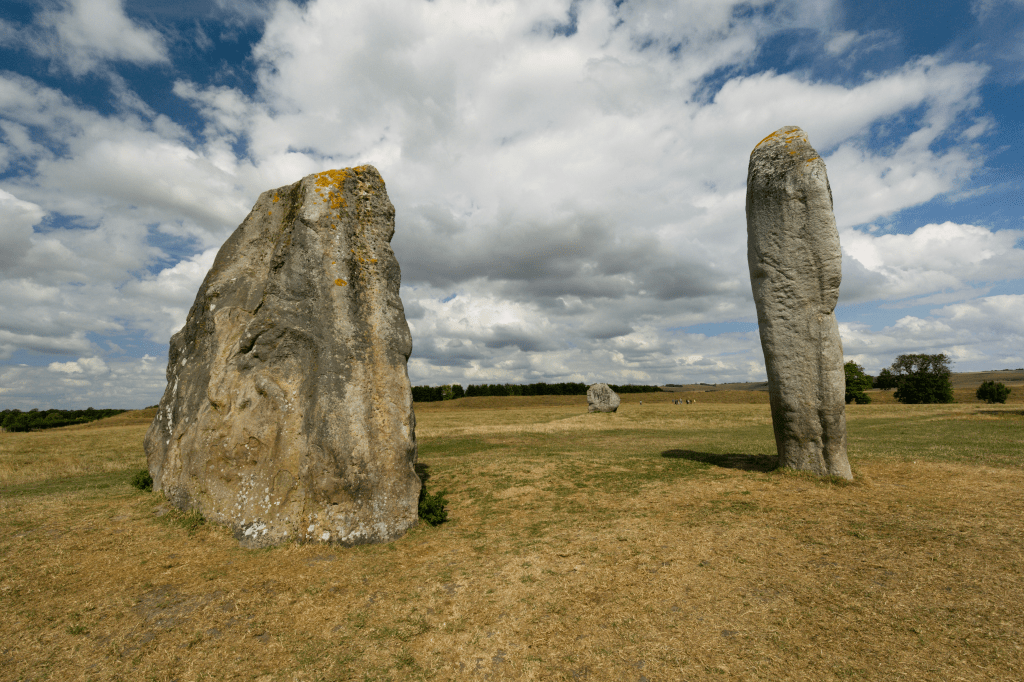
Avebury over Stonehenge, if you have to choose. Stonehenge is extraordinary but you can’t get near the stones without a special access booking (which does exist — worth doing). Avebury you walk through. The scale only becomes apparent when you’re inside it.
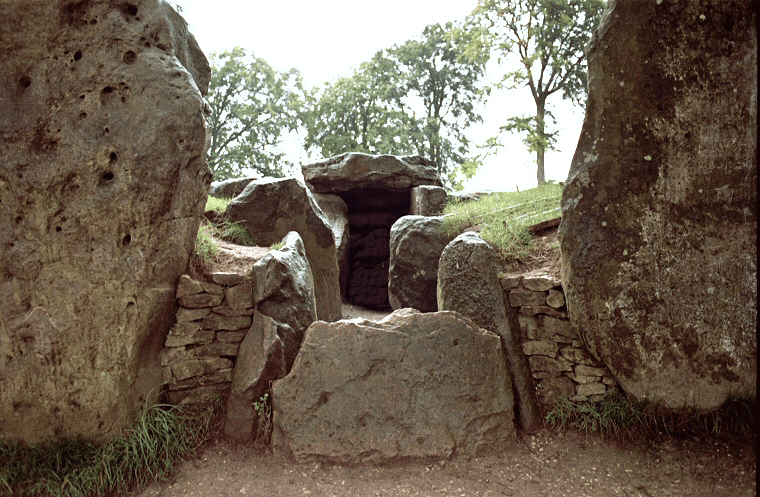
Wayland’s Smithy in Oxfordshire — a Neolithic long barrow beside the Ridgeway — is almost always empty and genuinely eerie. The mythology accreted around it (Wayland the smith-god, the legend that if you leave a horse and a coin overnight the horse will be shod by morning) is itself a measure of how these ancient structures continued to generate meaning for people thousands of years after they were built.
The Thread Forward
What prehistoric architecture establishes that never goes away: the idea that building is a form of world-making. The choice of materials, the orientation, the threshold between inside and outside, the relationship to sky and earth — these are not engineering problems. They are philosophical ones. Every era of British architecture we’ll discuss is, in some sense, still answering the questions first posed by the people who dragged bluestones from Wales.
The Cosmology of Life and Death
The cosmology of death and rebirth. Of day and night. West and East. This is common to all prehistoric and early cultures. This was drummed into me on our recent trip to Egypt. I guess if that is what you see that is the world you build to right?
Exactly right. And it’s worth sitting with that for a moment before we move on, because it’s one of those observations that sounds simple and is actually enormous.
When you have no artificial light, no heating beyond fire, no medicine worth the name, no understanding of disease, no ability to predict weather beyond hard-won seasonal pattern — the fundamental drama of existence is the sun coming back. Every morning is a minor miracle. Every winter is a genuine existential threat. The return of the light at midwinter isn’t a charming astronomical curiosity. It’s the thing standing between your community and starvation. Of course you build to it. Of course you orient your sacred spaces to catch that specific shaft of light at that specific moment. You’re not decorating. You’re doing the most important thing you know how to do.
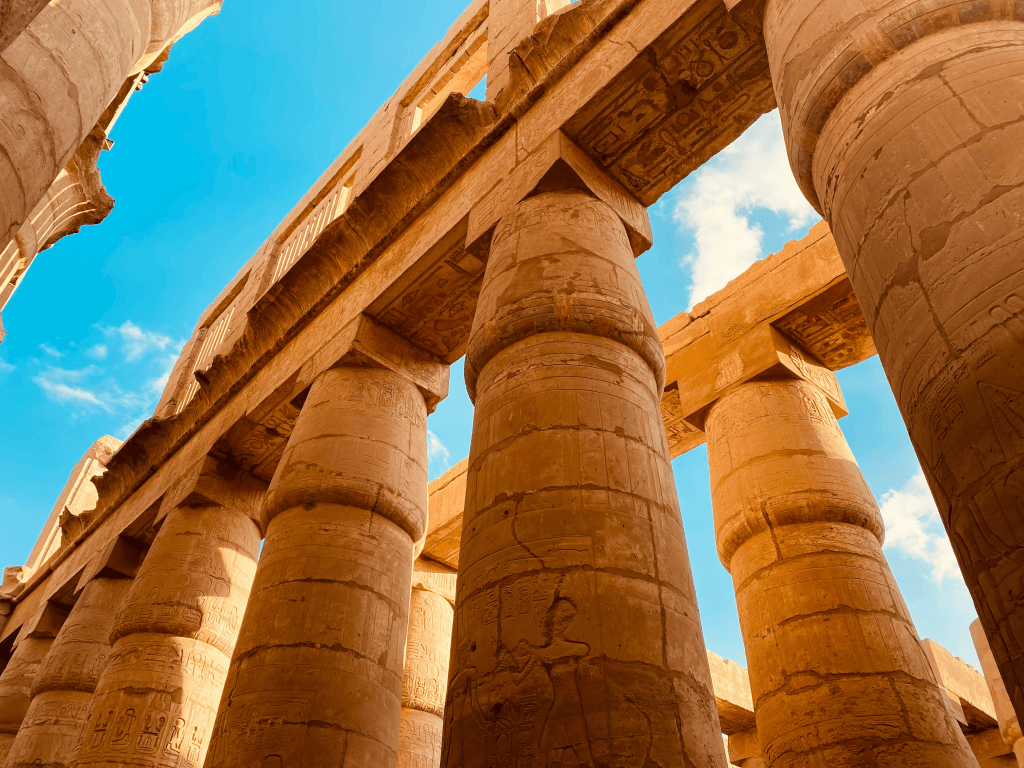
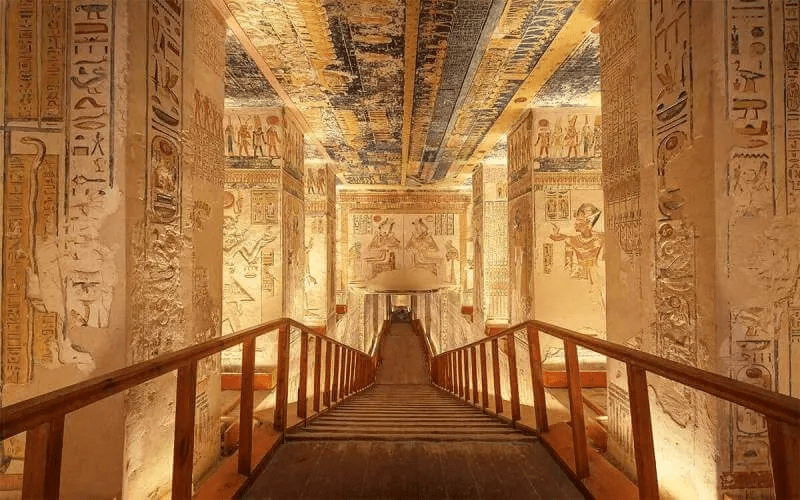
The Egypt parallel is exact and revealing. The Nile floods from the south. The dead are buried on the west bank — the side where the sun dies. The east bank is for the living, where the sun is reborn. Thebes, Luxor, Karnak — all on the east. The Valley of the Kings, Deir el-Medina, the mortuary temples — all on the west. This isn’t symbolism layered onto geography. The geography is the cosmology. The river tells you the story and you build the story back into the landscape.
The same logic is operating at Maeshowe. The midwinter sun sets in the southwest and the passage is oriented to catch the last light of the shortest day, throwing it onto the back wall of the chamber where the dead lie. The dead are touched by the dying sun at the moment of its annual death and rebirth. That’s not a coincidence or a lucky alignment. That’s a complete theological statement built in stone. The monument is the argument: death is not the end, because the light always comes back.
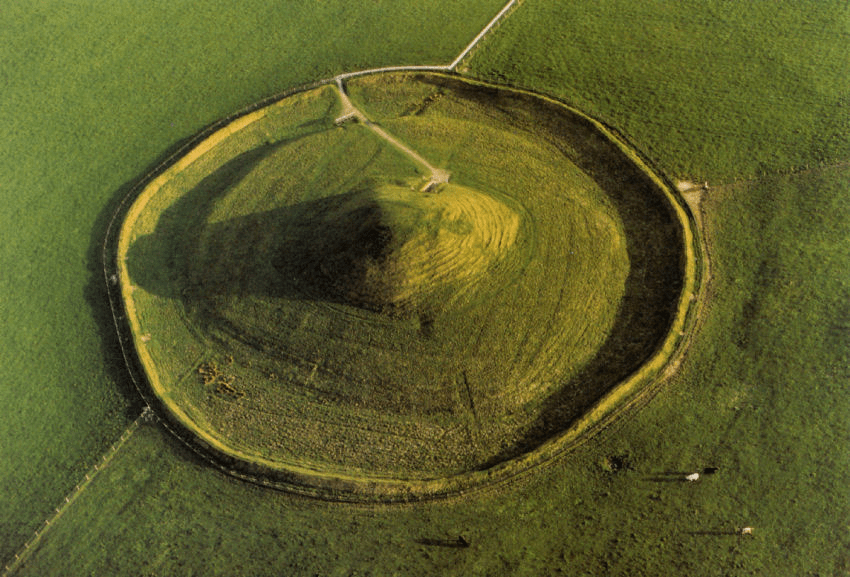
What’s striking across all these cultures — Egypt, Orkney, the Boyne Valley in Ireland where Newgrange does the same thing with the winter solstice sunrise — is that they arrived at structurally identical answers from completely separate starting points. Because they were all looking at the same sky and asking the same questions. Darkness and light. Winter and summer. The dead underground and the sun overhead. You don’t need to have met the Egyptians to build like this. You just need to be human, and afraid of the dark, and desperate for the spring.
The great architectural historian Vincent Scully wrote about this in relation to Greek temples — the idea that sacred buildings don’t just sit in landscapes, they complete them. The temple finishes a conversation the landscape has already started. A peak on the horizon, a natural cleft in the rock, the direction of the prevailing light — the building responds and answers. Scully was writing about Greece but he could have been writing about Orkney or Luxor. The instinct is the same.
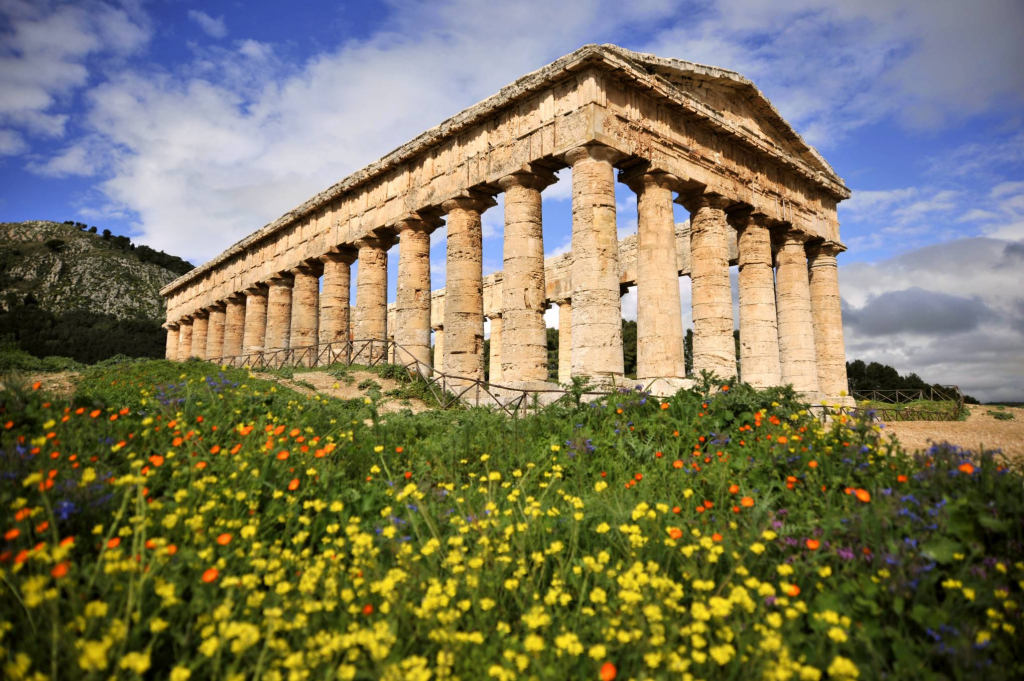
What changes, when you get to literate urban civilisations like Egypt or later Rome or medieval Christendom, is that the cosmology gets written down and institutionalised. It becomes theology, then doctrine, then architectural programme. The priest specifies the orientation. The canon dictates the form. But underneath all of that elaboration, the original terror and wonder is still operating. The Gothic cathedral is still, at some level, about the return of the light. That’s what the stained glass is for. You’ll see it when we get there.
Key Sites to Visit
Skara Brae, Orkney
Neolithic village c.3180 BC. Stone furniture intact. Europe’s most complete Neolithic settlement — the “Scottish Pompeii.”
Maeshowe & Ring of Brodgar, Orkney
Maeshowe: the midwinter solstice illuminates the back wall of the chamber. Book guided entry. Brodgar: the finest stone circle after Avebury.
Callanish Standing Stones, Isle of Lewis
c.2900 BC. A cruciform avenue of stones aligned to the moon. Remote, almost always quiet, extraordinarily atmospheric.
Castlerigg Stone Circle, Cumbria
c.3000 BC. Open access. The Lake District mountains as backdrop make this the most dramatic setting of any stone circle in Britain.
Wayland’s Smithy, Oxfordshire
Neolithic long barrow beside the Ridgeway. Almost always empty. The mythology accreted around it is as moving as the stones.
Avebury, Wiltshire
The largest stone circle in Europe. A village sits inside it. You walk through rather than around. Prefer this over Stonehenge.
Stonehenge, Wiltshire
Book special access to get close to the stones. The standard visit keeps you at a distance that diminishes the experience.
West Kennet Long Barrow, Wiltshire
c.3650 BC. Open access. The largest surviving Neolithic burial chamber in Britain. Walk into it. The scale is intimate and specific.
Pentre Ifan, Pembrokeshire
c.3500 BC. A Neolithic dolmen of seven giant stones on the Preseli Hills — the same hills that supplied Stonehenge’s bluestones.
Mousa Broch, Shetland
c.300 BC. The best-preserved Iron Age broch in Britain — a double-walled tower 13 metres high. Accessible only by boat from Sandwick.


Leave a Reply