Just before I set off. I apologise for this. I get wound up by the state of the world. So I needed to get this off my chest. Feel free to ignore. I know I would if this was put in front of me.
A Manifesto for Dignity, Democracy and the Long Game
Preamble
This is not a programme handed down from above. It is an invitation to a conversation that has been deliberately prevented. The powerful have always understood that the most dangerous thing is not anger. Anger can be redirected. The most dangerous thing is people thinking clearly together.
Everything that follows is provisional. It is the beginning of an argument, not its conclusion. It will be wrong in places. It is offered in the conviction that honest, clear, collective thinking — about how things actually work, who actually benefits, and what we might actually build together — is the first act of any genuine politics.
The title is a demand and a reciprocal commitment. Listen to me. I will listen to you. We will think together. That is all. That is everything.
I. How Things Actually Work
Money is not a natural phenomenon. It is a social institution, created by political choice, maintained by collective belief, and currently organised primarily to serve the interests of those who already have most of it.
Banks create money when they lend. They destroy it when loans are repaid. The money supply is essentially the sum of outstanding private debt. No new debt, no new money, no functioning economy as currently constituted. This is not a conspiracy theory. It is how the system works. The Bank of England said so plainly in 2014. Almost nobody was told.
The system requires continuous expansion to service existing claims. Growth is not a desirable outcome of a healthy economy. It is a structural necessity of an economy organised around compound debt. When growth falters the mathematics become vicious. We are currently carrying global debt of more than three times global economic output. The music has been playing for a very long time.
Markets are not natural phenomena either. They are constituted by law, maintained by states, and shaped by political choices about who owns what, who can do what, and who bears the costs of what. There is no market without the state underneath it. The question has never been market versus state. It has always been — which kind of market, structured how, serving whose interests, with what constraints and what purposes.
The system as currently arranged takes from the many to give to the few, calls it freedom, and dares you to imagine otherwise.
You are not the problem. The arrangement is. And arrangements can be changed.
II. What We Are Owed and What We Owe
Every human being is owed dignity. Not as charity. Not as the residue of economic growth. As a prior claim. The first claim. The one from which everything else follows.
Dignity means the material conditions of a decent life — security, shelter, health, education, time. It means the social conditions of a respected life — work that is valued, voice that is heard, difference that is not punished. And it means the political conditions of a self-determining life — genuine participation in the decisions that shape your circumstances, genuine accountability from those who exercise power on your behalf.
Wealth is not just an absolute condition. It is a relative and visceral one. The billionaire’s rocket is not merely an extravagance. It is a statement about whose life counts. The sewage in the river is not merely a regulatory failure. It is a statement about who bears costs so that others may take profits. These are not metaphors. They are the daily texture of indignity that the current arrangement produces and depends upon.
In return we owe each other honest contribution. To the collective work of maintaining the conditions of shared life. To the civic work of democratic self-governance. To the intergenerational work of leaving something worth inheriting. These obligations are not impositions from above. They are the reciprocal structure of dignity itself. You cannot claim dignity while denying it to others.
III. The Ten Foundations
One. Money serves society. The power to create money is a public trust exercised by private institutions. That trust requires strict accountability. Credit creation for productive investment is to be encouraged. Credit creation for speculation and rent extraction is to be constrained. Public banking options will exist. Sovereign money will fund public investment. The financial system is infrastructure, not an end in itself.
Two. Unpayable debt will be written down. This is arithmetic not charity. Debt that cannot be paid will not be paid. The only question is whether its resolution is managed justly or imposed chaotically. Structured write-downs for over-indebted households, nations and students — modelled on the 1953 German debt relief that built the postwar world — will be negotiated honestly and implemented fairly. Creditors will take losses. That is what risk means.
Three. Wealth will be taxed not just work. Income tax was radical once. A genuine progressive wealth tax — on assets, inheritance, and above all on land value that nobody created — is the next logical step. Not punitive. Redistributive. The proceeds fund the common infrastructure of individual freedom.
Four. The planet’s limits are the economy’s limits. This is not sacrifice. It is the precondition for any future worth having. Green industrial transformation at wartime scale — publicly directed, privately delivered, creating dignified work and genuine infrastructure — is both the necessary response to ecological crisis and the largest available programme of productive investment. The cost of not doing it is everything.
Five. Work will be dignified and fairly rewarded. Every person who works deserves security, fair pay, genuine rights and the respect of their society. Organisations that cannot pay a living wage are externalising their costs onto the public. Maximum pay ratios within organisations will be statutory. Union rights will be genuine. The dignity of work is not a slogan. It is a measurable set of conditions that law can require and culture can honour.
Six. Essential services are not markets. Water, energy, housing, healthcare, public transport — these are the infrastructure of dignity. Their provision will not extract rent for distant shareholders. The model of ownership varies — public, cooperative, regulated utility — but the principle does not. Essential services serve people. People do not serve essential services.
Seven. Democracy will be genuinely funded and genuinely free. Private money in politics is the mechanism by which concentrated wealth buys collective outcomes. It will end. Public campaign finance, strict lobbying regulation, revolving door prohibitions, and full transparency of political funding are the minimum conditions of a democracy that is more than theatre.
Eight. The digital commons will return value to its creators. The internet was publicly built. The data is yours. The platforms built on public infrastructure and fed by your attention and your information have extracted private fortunes from public goods. Platform monopolies will be broken or regulated as utilities. A data dividend will return value to its rightful owners. The attention economy will be reoriented toward human flourishing rather than human manipulation.
Nine. Global problems will have global solutions. Tax havens are a choice. Transfer pricing abuse is a choice. Race to the bottom regulation is a choice. These choices serve the few at the expense of the many across every national border. A genuine global minimum corporate tax enforced by institutions in which the Global South sits as architect not supplicant. Rules based international cooperation — reformed, democratised, genuinely representative — is not naive idealism. It is the only available response to problems that do not respect borders.
Ten. We will measure what matters. GDP measures throughput. It counts the prison and the cancer treatment and the flood damage equally with the school and the park and the healthy child. We will supplement and ultimately replace it with measures of genuine human flourishing — health, security, environmental sustainability, time, connection, dignity. What you measure is what you manage. We have been managing the wrong things.
IV. How We Decide Together
Ideas without institutions are just documents. The ten foundations require a different kind of democracy to both choose them and to hold them honest. Representative democracy is necessary and insufficient. It needs supplementing with direct civic participation at every level.
Citizens will be called by lottery to serve in local deliberative assemblies — paid, time-limited, genuinely empowered — to make real decisions about real local matters. Like jury service. Like Athenian democracy, available to all not just the confident and the connected. The evidence from citizens’ assemblies across the world is consistent and moving. Ordinary people, given time, genuine information and structured space to think together, produce wiser, more humane and more long-termist decisions than professional politicians operating under electoral pressure. The reason is simple. They are not calculating re-election. They are trying to solve the problem.
Every institutional leader — in government, corporations, public bodies, charities, quangos — will meet regularly in open unmediated public forum. No presentations. No communications professionals. No prepared remarks. Just them, a question from anyone, and the obligation to answer honestly. Moderated for courtesy. Unfiltered for content. The experience of being genuinely accountable — not to journalists, not to shareholders, not to party whips, but to the people actually affected by your decisions — changes behaviour in ways that formal accountability mechanisms alone cannot.
Management will not be shareholders and shareholders will not be management. Those who run enterprises are accountable to those who own and are affected by them. They will be well rewarded for genuine performance. They will not personally extract from asset price inflation they themselves engineer.
The state will be an active and patient investor — in public banking, in long duration equity capital for productive investment, in the capture of returns from publicly funded innovation. Not Soviet planning. Not the abolition of markets. The intelligent, transparent, democratically accountable participation of the public in the markets that the public’s laws, infrastructure and institutions make possible. Patient capital for the long game that private capital structurally cannot play.
V. How We Think Together
None of this works without citizens capable of genuine deliberation. That capacity is not given. It is built. It is built in schools, in communities, in the daily practice of civic life.
Education will be reorganised around the how of learning not just the what. The transmission of knowledge — which artificial intelligence can now do cheaply, patiently and well — will be supplemented by the practice of thinking. Structured philosophical dialogue from early secondary education. Rhetoric and argument as explicit curriculum. Epistemic education — how do we know what we know, how do statistics mislead, how do algorithms shape what we see. Project-based learning rooted in genuine community questions. The explicit practice of being wrong, revising, and understanding that changed minds are strong minds not weak ones.
Teachers will be valued as the most important civic profession. Their work is not content delivery. It is the cultivation of the human capacity for thought, judgement and democratic participation. Societies that understand this — that make teaching high status, well paid and genuinely autonomous — produce citizens capable of the democracy this manifesto requires.
Critical thinking is not a subject. It is a disposition. The disposition to ask — who says, on what basis, in whose interest, and what am I missing. Applied not just to the ideas we oppose but rigorously and especially to the ideas we prefer. Applied to this manifesto. Applied to everything.
The examined life is not a luxury. It is the precondition for the examined society. And the examined society is the only society capable of choosing its own future rather than having one chosen for it.
VI. What We Are Building Toward
Not utopia. Utopias are dangerous — they justify present sacrifice for imagined perfection and tend to find that imperfect humans are the problem. Not a return to any golden age — every golden age had its slaves, its excluded, its silenced. Not the end of conflict, difference or difficulty — these are the conditions of genuine human life, not problems to be solved.
What we are building toward is a world in which the conversation is genuinely open. In which the room contains everyone. In which power is genuinely accountable to those it affects. In which the material conditions of dignity are understood as collective infrastructure rather than individual luck. In which the planet is treated as the precondition of all value rather than an input to be consumed. In which the long game is taken seriously because the long game is the only game that matters.
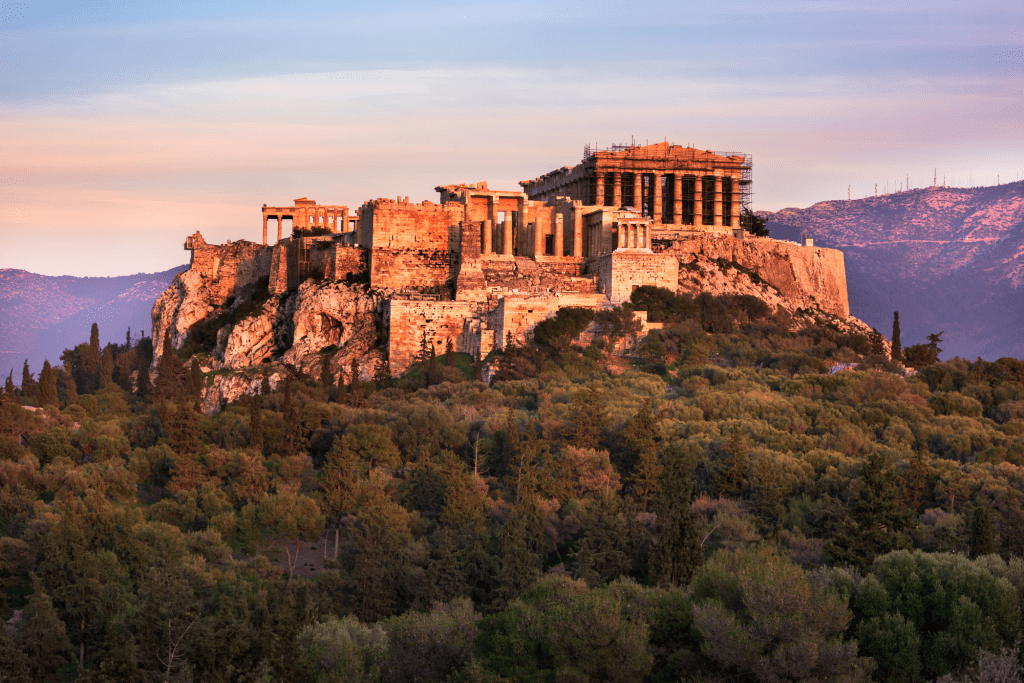
Athens was extraordinary and partial simultaneously. The examined life as civic practice, democracy as daily habit, beauty and thought as public goods — these were genuine achievements that changed what human beings understood themselves capable of. The exclusion of women, slaves and foreigners was not incidental to that achievement. It was embedded in it. We inherit both the achievement and the exclusion. The task is to take the achievement seriously enough to extend it to everyone the original excluded.
That extension is not complete. It will not be complete in our lifetimes. Every emancipatory project has its blind spots, its exclusions, its complicity with arrangements it believes it is opposing. This one will too. The answer is not paralysis or cynicism. It is the commitment to keep the conversation open, keep the room getting larger, keep asking who is not yet in the room and why.
The right has understood for fifty years that political economy is decided in culture before it is decided in parliament. In what feels natural and what feels impossible. In what can be said and what cannot. In who is taken seriously and who is dismissed. The long march through ideas — the think tanks, the narratives, the patient construction of common sense — produced Thatcher and Reagan and everything that followed.
The answer is not a counter-march imposing different content. It is building the capacity for genuine thought that makes any march less effective. Teaching people to interrogate all received ideas — including progressive ones, including this one — is the only durable foundation for a politics of genuine human freedom.
Coda
Listen to me.
I have been told my voice doesn’t matter. That the system is too complex for me to understand. That the people in charge, for all their faults, know better. That things cannot be fundamentally different because they have always been this way. That my anger is legitimate but my alternatives are naive. That I should be grateful for what I have and realistic about what is possible.
I do not accept this.
Not from arrogance. From the simple observation that the people who tell me this have interests in my believing it. And from the equally simple observation that human beings, given genuine information, genuine time and genuine respect, are capable of thinking more clearly, deciding more wisely and acting more justly than any system currently gives them the chance to do.
The conversation is the politics. The politics is the conversation. It starts here, with this, with you reading it and thinking — yes, but, and what about, and have you considered — and it goes wherever those thoughts lead when enough people are having them together honestly.
Listen to me.
I’m listening.
This manifesto is unfinished by design. Its next chapter is written by whoever reads this and thinks they can do better. They probably can. That’s the point.


Leave a comment