
Modern Couples at the Barbican Art Gallery review ****

Modern Couples: Art, Intimacy and the Avant-Garde

Barbican Art Gallery, 15th November 2018

Here’s another smart bit of curating from the team at the Barbican, in collaboration with the Centre Pompidou-Metz here led by Jane Alison. Track the history of modernism in art – not just painting, but sculpture, photography, design, print, literature and architecture, with a nod to the commercial where appropriate – through the couples which created it. 

The net has been cast wide, both in terms of the number of artists involved, 46 partnerships in total, the themes that are explored, including love, sex, passion, politics, collaboration, abstraction, communication, and the nature of the relationships, straight, gay, bi, polyamorous, homoerotic, controlling, liberating, disturbing, equal, unequal, conventional, unconventional. 

With a few exceptions there isn’t a great deal of material here to map each couple but the quantity, and the clear and direct tone, display and messaging, makes up for that. The private connections are fascinating in themselves but also shed a lot of light on how art and artists have changed society since the turn of the C20.

There are a fair few relationships that you might expect to appear, the Bloomsbury Group permutations, Frieda Kahlo and Diego Rivera, Georgia O’Keefe and Alfred Stieglitz, Ben Nicholson and Winifred Nicholson and then Barbara Hepworth, Alma Mahler and Gustav and Oskar Kokoschka (who really couldn’t let go), Jean Arp and Sophie Tauber, Lucia Moholy and Laszlo Moholy-Nagy, the Delauneys. And then there are a few which I didn’t anticipate. The Aaltos, Gustav Klimt and designer and businesswoman Emilie Floge, Nancy Cunard and Henry Crowder. 

It is hard not to be drawn into the stories of those women artists whose contributions, the exhibition argues, may not have been justly recognised in the shadow of their more “famous” partners, Camille Claudel and Rodin, Maria Martins and Duchamp and, arguably, Dorothea Tanning and Leonora Carrington with Max Ernst. The fate of Dora Maar, Picasso’s early muse, and Unica Zurn, the “inspiration” for Hans Bellmer, will likely disturb. A lot of these fellas don’t come across well here. 

Most interesting for me. The intense friendship between Lorca and Dali. The portraits of Romaine Brooks, (her lifelong partner, and oft-subject was the writer Natalie Barney), entirely new too me, Lee Miller, during her years with Man Ray and Roland Penrose, she is a cast-iron genius though here, as elsewhere, the submission is unsettling, and, best of all the extraordinary creative partnership of constructivists Varvara Stepanova and Alexander Rodchenko. Now they were the future, and looking at their work, they still are. And as far as I can see they were genuinely equal with no hint of the f*cked up sadism of the surrealist fringe. There they are above in the 1920’s looking pretty cool. 

Well worth a look. It may end up being more biography than art and it is probably fair to say, like most of the Barbican’s exhibitions, it is designed for the slighter, and maybe outre, attention span, but, let’s be honest that is sometimes what the head, and feet, requires. Don’t expect to be bowled over by amazing art, but do expect to learn something. Tie it in with something else – it’s not like there isn’t plenty going on at the Barbican. 
Macbeth at the Barbican Theatre review ***

Macbeth

Barbican Theatre, 15th November 2018

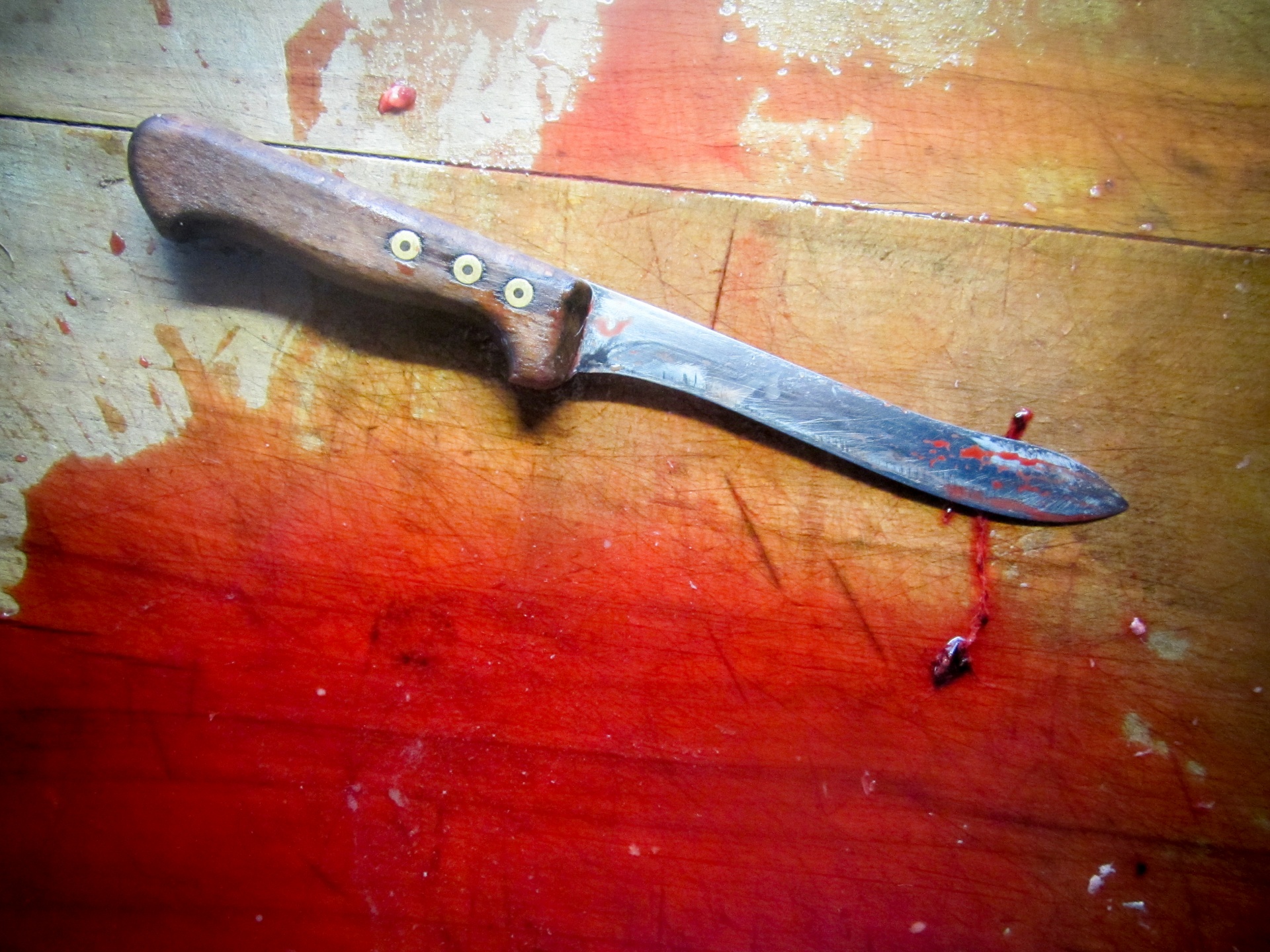
Is this a dagger I see before me … well maybe more of a kitchen knife …

It is pretty tightly plotted (at least if you pare it down). It is quick by comparison to a lot of the Bard – half the length of Hamlet, though that always needs a few nips and tucks – in part perhaps because Thomas Middleton adapted the text that has come down to us. It wastes no time at all in getting going – if anything it is a bit too abrupt at the start I reckon. Other than Macbeth and his lady wife most of the characters don’t get much air time to reveal themselves. It’s language is direct, often shockingly so. It is eminently quotable. There is no welter of arcane classical references. Most interested people know it or know of it (it’s a GCSE set text after all). The themes are easily defined and understood – ambition and patriotism, moral disorder and inversion, violence begetting violence, childlessness and legacy, gender roles and masculinity, the suppression of feeling and equivocation, the supernatural.

It might be built on an edifice of contemporary (when written) conventions, verse speaking, soliloquies, quibbles, audience asides, witches, ghosts, a dumb show, severed heads, but it is the supernatural that gives plenty of scope for coups de theatre. It may also have been intended to massage a royal ego, the patron of the company that first performed it, Jimmy I (of England, No 6 of Scotland) being an expert in the magic field with his best-seller Demonology, and coming just after the failed Roman Catholic plot to blow him up. Yet the supernatural also works on our imagination, (as it works on the power couple), always a good idea in a play, which, together with big Will’s acute psychological insight, and repetitive language – blood, blood and more blood, time, darkness, man – explains why it is so popular.

So why then is it apparently now so difficult to get right? Search me though if I take this somewhat disappointing version, alongside the similarly underwhelming recent NT production, (and plenty more in the last decade), the problem might lie in trying to hang too much on the play. No problem with a clear overarching creative vision but keep it simple. Don’t add all sorts of frills – there are enough interpretative and visual choices to be made from the text itself. Make sure the two leads nail the verse. No mumbling. Ensure they can explain their motivations – remember they are travelling in opposite directions, from normative revulsion to nihilistic emptiness in the case of Macbeth and vice versa for the Lady. The other characters can play it straight. Duncan is a symbol of kingship, Banquo matters because he doesn’t fall for all that weird sister sh*t. (And he can scare us later). The Porter is there to offer ironic commentary, warn against those who say one thing and do another, and, here in this production, very successfully mind the time. Everyone else is pretty much plot collateral.

It works best when we the audience are dragged into the couple’s nightmare. Small space, simple staging, like the landmark Dench/McKellen/Nunn RSC version. Or the Walter/Sher/Doran apparently, which kicked off in darkness. The recent Ninagawa version, though it is different, worked because the Samurai backdrop leant contextual clarity and the age of the couple a desperate poignancy.  The 2015 Justin Kurzel film, if you can forgive the accents, also has a clear aesthetic and some very smart interpretative choices. You can add your own to the list.

In this version however, director Deborah Findlay, seems to have focussed on the details of the visual, and on the “horror” to the exclusion of the themes. Some of this works, notably Michael Hodgson’s Geordie Porter, always present, tapping his watch, chalking up the body count, hoovering incessantly, disturbing in his ordinariness, as well as the digital clock countdown, even if it is a big of a cliche, which links to the theme of time passing. Niamh Cusack as Lady Macbeth, clawing and pawing, also has the measure of most of her key lines and David Acton’s Duncan, whilst a little fruity, is what you expect from a man born (rather than compelled) to rule. However Christopher Eccleston, whilst capturing Macbeth’s military bearing, doesn’t, for me, vary the verse sufficiently, such that he comes across as insufficiently tortured by events. The same is true of the Edward Bennett’s Macduff who comes across as more geography teacher than grief stricken revenger. Mr Bennett is an outstanding Shakespearean, especially in comedy, but he looked lost here. Rafael Sowole’s hefty Banquo was more convincing, especially as ghost. 

Having the witches played by three girls, dressed in red, Don’t Look Now/Shining style and signifying blood, is initially striking but the novelty soon palls. The jump cut fizzing/flickering lighting from Lizzie Powell, and the “spine-chilling” score from Rupert Cross and sound design of Christopher Shutt leans a little heavily towards the cinematic. Fly Davies’ set, with de rigeur upper level, accommodates the interpretation but doesn’t really wow or command the front of the vast Barbican stage. 

Having said all this the production doesn’t drag, it squeezes out a few laughs, not all intended, and its pinball of ideas craves attention. Maybe I should try some of the other current London Macbeth’s, the NYT at the Garrick, or the Michelle Terry/ Paul Ready at the Sam Wanamaker (if it wasn’t so bloody uncomfortable, and more problematically, sold out). Or maybe I’ll just wait. Something wicked will this come again soon.