

The Turn of the Screw at the Open Air Theatre review *****

britten_-_the_turn_of_the_screw_twelve-tone_theme_tetrachords

The Turn of the Screw

Regent’s Park Open Air Theatre, ENO, 29th June 2018

Benjamin Britten. The Turn of the Screw. Members of the ENO Orchestra conducted by up and coming talent Toby Purser. Timothy Sheader directing. A Soutra Gilmour set. At the Open Air Theatre. On a beautiful late June evening. In the company of the SO, (who loves her Henry James and surprised herself by enjoying Deborah Warner’s staging of Death in Venice in 2013 at the ENO), BUD and KCK. Of course I was going to love this.

One of the aims here was to extend young BUD’s operatic education beyond Mozart. As he remarked here, not a lot of tunes.. Not sure I agree but there is no doubt in my mind that Britten’s music became darker through time, cleverer, from an already very high base, more progressive and less conservative, whilst never embracing the fearsome avant-garde, and richer, even as textures got sparser. The tonality is tempered with lots of (lovely)  dissonance.

I think TTOTS occupies a key place in the development of all of Britten’s art. It was composed in 1954, just after Gloriana, and three years after Billy Budd. In the same year Britten composed his Canticle No III, Still Falls the Rain for tenor piano and, Britten’s favourite, horn. This is recognisably BB, like a trip-hop version of the Serenade Op 31, but this, and the Winter Words song cycle from 1953, seem more melancholic than the warmer equivalents before the war. Britten himself said that his music was forever changed by the WWII, as was true for pretty much all Western art, notably by a visit to Belsen, but I don’t think this really becomes apparent until the mid 1950’s.

Anyway TTOTS is definitely an example of the “less is more” BB where surface effect is toned down a little, (though not jettisoned entirely, there are plenty of ravishing musical ideas here), in the service of greater structural and emotional depth. And structurally this is a score of genius as a tightly wound serial “screw” theme and set of 15 variations built on a different semitone, opens each scene, ratcheting up the tension. So, you see BUD, there is a “tune”, you just hear it in a different way.

Which I think is why it is such an effective piece of musical theatre, an opinion with which BUD heartily conferred. TTOTS is apparently BB’s most performed opera. And probably the most performed opera in English. And, after your man Puccini, probably the most performed opera from the C20. Certainly the most performed of those operas written since the war. In part this reflects its chamber structure. With just 13 instrumentalists and a cast of 7, this is no big budget affair. As was intended. However I also think it reflects near perfect synthesis of story, libretto and music. All three offer a sufficient challenge to an audience but in no way is this intimidating. It always takes a bit of time to get swept up into a Britten opera, but swept up you will be, even if it isn’t the massive, warming, rush of Mozart.

In retrospect it was pretty much a nailed on certainty that BB and Myfanwy Piper would alight on Henry James’s novella. BB, and his various librettists, always started with an artistic inspiration. Usually the story revolved around an “outsider” estranged from the society around him. There’s usually some sort of spiritual dimension. And, nailed on, there will be some sort of uneasy “corruption of the innocent” theme. TTOTS has all of the requisite elements in spades. Better than this though is the ambiguity embedded in the story. What really happened at Bly? What was, or is, the nature of the relationship between Miles and Flora, Miss Jessel and Peter Quint? Who, and what, can we see? Who, and what, do the characters really see? After all only the Governess apparently sees the ghosts in HJ’s original. Is this all in the Governess’s mind then? How are we being manipulated? Strange to think then that the story came to HJ via none other than the future Archbishop of Canterbury in 1895.

Myfanwy Piper’s text reads like a poetic, musical impression of Henry James’s book but it picks its highpoint carefully. On to this BB’s score is perfectly stitched. In the book, told through the first person narrative of the Governess, it is up to you to imagine what happens. In my estimation, and those way smarter than me, its psychological depth and disturbing themes, take it beyond your bog standard gothic ghost story. In the innumerable film and TV versions, the ghosts can be made to seem like the extensions of everyday reality that HJ intended (I think), thanks to the trickery of the camera, but you all get one view, one take on the story. In a version for stage as here, (or notably The Innocents or the 2013 Almeida take), Quint and the Governess are undeniably corporeal, (any design team which could escape that mortal fact would get my money, no question), especially if they are going to sing, and the children are going to sing to them, and scenes unfold where the Governess is not present. So the mystery and ambivalence has to come from the music. And I cannot imagine anyone better than Britten at facilitating this.

But BB and MP take things a lot further. Take Miles’s famous Malo song that is repeated by the Governess at the end. Haunting for sure with viola, horn and harp. Malo in Latin could either mean “bad”, “to prefer” or an apple, symbol of innocence. “I would rather be… in an apple tree … than a naughty boy … in adversity”. The Latin words recited in the lesson prior to this contain all sorts of sexual references. Miles wanting “his own kind” and reflecting on his “queer life”. Mrs Gross’s line about Quint being “free with everyone” allowed to linger in the Regent’s Park air. Blimey. This is how the opera adds a new dimension contrasting the order and convention that the Governess clings to with the liberty that Quint offers whilst not seeking to mask the implication of abuse.

So, as you can see, I am a fan of this opera. What about the production then. Sandra Gilmour has imagined the remote country house of Bly as a large, dilapidated conservatory fronted by overgrown grass and a jetty leading to the “lake” and into the audience. It was amazing. Timothy Sheader, after a decade at Regents Park, now knows exactly how to use the unique space to best effect. TTOFTS was pushed out to an 8pm start to ensure sunset and early twilight matched the change in dramatic mood in the story and provided a perfect backdrop for lighting designer Jon Clark to show off his skills. Quint and Jessel make entrances from within the audience. Even the parakeets flew over on cue, “the birds fly home to these great trees”, at our performance. The debacle of last years Tale of Two Cities is entirely forgiven. The pacing was sublime and the musicianship top notch, especially, the viola of Rebecca Chambers, the clarinet of Barnaby Robson, the horn of John Thurgood and the harp of Alison Martin. Putting the orchestra inside the conservatory, behind a panel of ancient glass, thus lending them a ghostly quality, was a genius touch.

On this evening ENO Harewood Artists Elgan Llyr Thomas played Peter Quint with William Morgan taking the Prologue. Mr Thomas’s tenor voice is clear and direct, through the melismas especially, and fitted the space. I was a little less sure about his wig and beard combo. Anita Watson was a suitably unhinged Governess, for me she was convinced this was really happening, and Elin Pritchard a very disturbing, steampunky Miss Jessel. Janis Kelly, who has in her time played Flora. Miss Jessel and the Governess, now played a protective Mrs Gross. Daniel Alexander Sidhorn’s precociousness made for an arresting Miles though I have to say Elen Wilmer’s Flora was, for me, the more impressive voice. As an actor though Master Sidhorn is the real deal. Simultaneously vulnerable and malign.

Indeed Elen matched the elder Elin in look and movement creating a “bond” between Flora and Miss Jessel as disturbing in its way as that between Miles and Quint, an unexpected bonus. Mind you when Miles dons his purple shirt to match Quint’s and when he takes over from Quint on the piano, (young Sidhorn is either a mighty fine  pianist or an even better “piano mimer”), the audience was bolt upright in their collective seats. And, on top of all of this, Mr Sheader really messed with our heads with a provocatively erotic scene as the Governess, “lost in my labyrinth”, asleep, is joined silently by Quint and Miss Jessel, or more specifically her hair, with Flora’s symbolic dolly and with Miles’s symbolic jack-in-the-box. Oh and did I say Miss Jessel is pregnant here.

One final thing. It’s outside. Which means a little technology is required to keep the volume stable as it were for both ensemble and singers. Which meant every word, with a couple of exceptions when Anita Watson’s soprano heads off to the higher registers, was crystal clear. Didn’t stop me consulting the libretto on occasion but what it did mean is that, for maybe the first time ever, I could savour every word of the libretto, to set alongside this stunning score and this tremendous production. This is what theatre, and opera, should all be about.


Monogamy at the Park Theatre review ***

torben_betts-2

Monogamy

Park Theatre 200, 28th June 2018

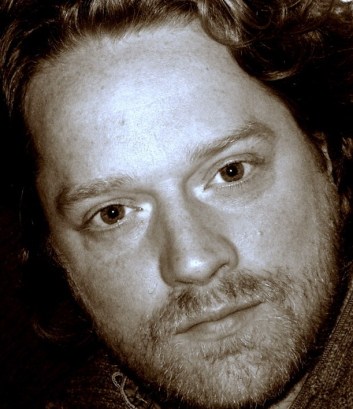
This was a curious confection. Playwright Torben Betts (there his is above) has, by all accounts, made a very creditable stab exploring the comic social realism so expertly, and prolifically, mined by his one time mentor Alan Ayckbourn. Here is another to follow the likes of Invincible and Muswell Hill (also set in a kitchen). I hadn’t seen any of his work before, other than his adaption of Chekhov’s Seagull at the Open Air Theatre, which displayed his sympathy for the Russian master.

With Janie Dee in the title role, so superb in the NT’s Follies, as Caroline, a celebrity TV chef whose “perfect” life starts to unravel, this sounded interesting. Which, in some ways, it was. The problem is that it couldn’t quite make up its mind what it wanted to be or say. Nothing wrong with flipping between comedy and tragedy, this is after all, what the mighty Chekhov and all his subsequent acolytes have strived to perfect. The British middle class family, and specifically the British middle class marriage, is a perfect dramatic target and is guaranteed to put knowing bums on theatrical seats. (Remember the phrase “middle class” in this, and most other, contexts doesn’t actually mean those in the middle. It means those at the top who assuage their guilt, and give themselves room to complain about their entitled lot, by pretending they are in the middle. I should know. I am one of them).

In Monogamy though the comedy, whilst often very witty was just too broad, veering into farce. The satire was just too obvious, the targets too cliched. The tragedy too contrived. I am pretty sure this technicolour effect was what Mr Betts set out to achieve, assisted by Alistair Whatley’s direction,  but it left me a little muddled despite some satisfying individual elements.

The play opens with the effortlessly capable Caroline rehearsing in the kitchen of her house which, temporarily is doubling up as her TV show kitchen. After the show her new PA, the coked-up Amanda, very amusingly played by Genevieve Gaunt with sub-Russell Brand verbal strangles, breezes in and announces the tabloids have got pics of Caroline pouring herself out of a bar after a big night out. It is wine o’clock though and Caroline, glass in hand, starts preparing for a party to celebrate son Leo’s Cambridge graduation. Leo (Jack Archer) is brooding, indulgently left-wing, gay and looking for his parents approval/spoiling for a fight as he comes out. We discover that builder Graeme (Jack Sandle), polishing up the house for sale, is having an affair with Caroline. As if this wasn’t enough the second act sees the return of the utterly over the top husband Mike return from his round of golf, (played with blustering, red-faced, apoplectic aplomb by Patrick Ryecart), and the arrival of Sally, (an under-utilised Charlie Brooks), bent on revenge for her husband’s infidelity. And the action ratchets up from there to a blackly comic conclusion, a knife standing in for the Chekhovian gun.

So you can see. Sit-comish staples, farcical energy, a hotch-potch of targets. Mike is a banker. And a philanderer. Obviously. Caroline is a Christian. Improbably., and her faith offers no protection from the demolition of family and fame. Sally is depressed, conveyed with real pathos by Charlie Brooks, but drowned by the rest of the shenanigans. Salt of the earth type Graeme turns out to have not so hidden depths of compassion. Amanda thinks they are all w*nkers, a fair enough assessment in the circumstances though she is the very embodiment of annoying. Though it may not be her fault as, McGuffin alert, her Mum has just died. Leo and Daddy make up, sort of.

It is genuinely hard not to like much of the detail and the performances, and I for one would be happy to acquire the kitchen conjured up in James Perkins’s set, but all together it overwhelms to the point of underwhelming if you see what I mean. I am pretty sure Torben Betts will hit the theatrical jackpot (and he can write other, more serious fare). This just doesn’t quite cohere. Having said that I gather it is set to tour in 2019, after a mini-tour prior to the run at the Park, and I would certainly look out for it if it comes near you.


Machinal at the Almeida Theatre review ****

machinal-1928-setting-cell

Machinal

Almeida Theatre, 27th June 2018

I always like to do as much reading as I can before seeing a play. Reviews, synopses, articles, cross referencing creatives to previous work. You get the idea. The SO however will have none of that, preferring to go in cold and then see what she makes of it. And so it was with Machinal at the Almeida. Which made it a great deal more fun for me when I asked her after we came out to guess when it was written. She guessed the 1980s and was taken aback when I told her that Sophie Treadwell wrote this, her most famous and provocative play, in 1928.

For the most striking thing about the play is its modernity. It has an Expressionist structure, with nine scenes (“episodes”) and 29 characters telling the story of A Young Woman, (named Helen Jones we learn at the end), from her dull office job as a stenographer who lives with her Mother, through to her trial and execution after she murders her Husband, George H. Jones. It is inspired by the notorious real-life case of Ruth Snyder, but Sophie Treadwell significantly changes the facts of that case to portray the Young Woman as, in part, a victim of the mores of the patriarchal society she lived in. This is what has made the play relevant to later generations as this woman’s story could have been told yesterday. The rhythm of the dialogue, the choice of scenes, the motivations of the character,s all display a formal invention that was apparently not so apparent in most of Ms Treadwell’s other, more prosaic, plays (there are 39 in total). Her prime concern though in these plays, and in her short stories and journalism (which also took in sport, theatre and WWI), is the place of women in contemporary society, specifically in the domestic and economic spheres, the role of journalism and questions of race, all of which are addressed here.

Interest in her work waned after her death but has increased over the last three decades or so with major revivals of Machinal. It is easy to see why for this is a startling play. Not just in the story, which is gripping enough, and in the message, a powerful indictment, but in the way in which Ms Treadwell structured the play. I have to think there must be valuable creative opportunity in the rest of her dramatic oeuvre based on this.

No surprise to see this play paired in this Almeida spring/summer season with Ella Hickson’s brilliant The Writer (The Writer at the Almeida Theatre review *****). They both subvert dramatic form in order to express controlled fury at the way women’s desires and creativity are crushed by the expectations of men. And both remember to deliver their ideas in a thrillingly entertaining way.

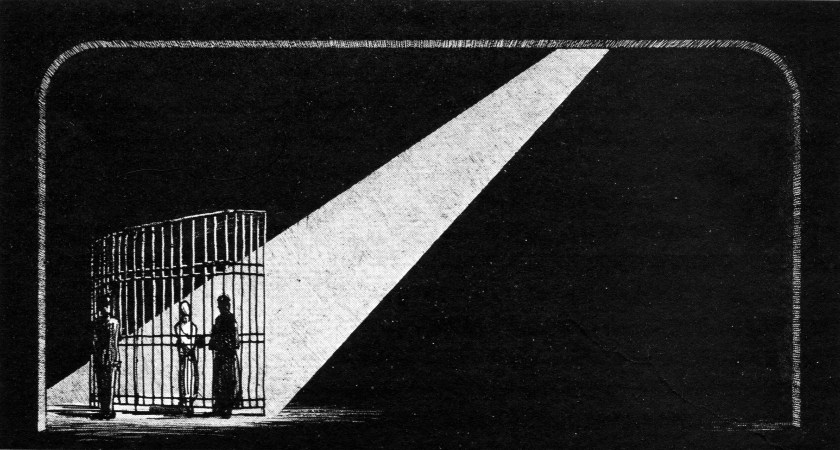
Director Natalie Abrahami locates this production at the opening in a recognisably late 1920’s America but thereafter adds timeless twists to reinforce how little has changed. Miriam Buether’s set is framed, (in a way similar to The Twilight Zone on this stage), so that each scene is viewed through a window as it were, which, in turn, is reflected by a mirror angled above the stage. This creates a suitably claustrophobic atmosphere and allows for some dramatic contrasts between each scene, (and some extraordinarily quick work by the stage management team at the Almeida led here by Kate McDowell who could give a Formula 1 pit stop crew a run for their money). The opening scene, rows of typewriters and desks, is a tour de force as the Young Woman’s colleagues gossip and bicker as she is hauled up before the boss who eventually becomes her Husband.

The rapid fire dialogue is matched by the superb sound design of the Ringham brothers and lighting of young Jack Knowles, (together these might just be my favourite sound and lighting team especially when it comes to more uninhibited shows). All this sound and rhythm is written into Sophie Treadwell’s text which is astoundingly modernist. Subsequent scenes, at home with Mother, as the Young Woman talks herself into the doomed marriage, in the hotel room on the honeymoon night, especially queasy, in the bar where the Young Woman, helping out a colleague on a double “date’ begins her ill-fated affair with a Man, through to the courtroom scenes and the execution, are also brilliantly realised. There is so much that the Almeida gets right which makes it the best theatre in London right now, but the quality and imagination of the design is always just amazing.

Emily Berrington is spot on as the Young Woman. She is simultaneously the author of her own fate, (the real life Ruth Snyder was the instigator of her husband’s murder egging on her lover), with agency, but also sometimes apparently meek, helpless, naive, accepting, submissive even. She is disgusted by her work and husband but, when offered a way out of the trap, she seizes it, albeit with tragic consequences. The murder is not shown. It is simply the consequence of her escape from the inexorable social and economic forces that weigh down on her. She falls in love, real passion, but, here too, she is eventually disappointed and disillusioned.

Denise Black as her caustic Mother, husband long gone, is from a generation with absolutely no opportunity and sees an “economic” marriage as her daughter’s only path. Jonathan Livingstone as the smothering Husband sees her as a trophy and baby-maker with no interest in her thoughts, ideas or well-being. The Doctor, (Andrew Lewis), in the hospital where she gives birth to the daughter she doesn’t want is a patronising tosser. Her lover (Dwane Walcott) offers excitement, a path to an imagined new life, but you know his interest in her is transient, and he soon takes her for granted too.

Machinal means mechanical or automatic in French and this is what Sophie Treadwell seeks to reveal, the trapped automaton. The art of the 1910s and 1920s was preoccupied with the rapid social and economic change brought on by the rise of the machine. Yet this crushing imperative is contrasted by a series of emotional monologues delivered by the Young Woman which describe her resistance and which only theatre can proffer. I was struck by the resemblance to Alice Birch’s outstanding Anatomy of a Suicide shown at the Royal Court Downstairs directed by Katie Mitchell. Another breathtakingly original, formally experimental, superbly staged dissection of female entrapment with a tragic, repeated, outcome. That too didn’t need swathes of expositional dialogue to get the story across, just rapid, vivid exchanges. Yet that was written in 2015 not 1928.

So another hit for the Almeida. Next up is Dance Nation which is probably not for me but I can’t wait to see what Rupert Goold and the team have up their sleeve for the autumn/winter season.