
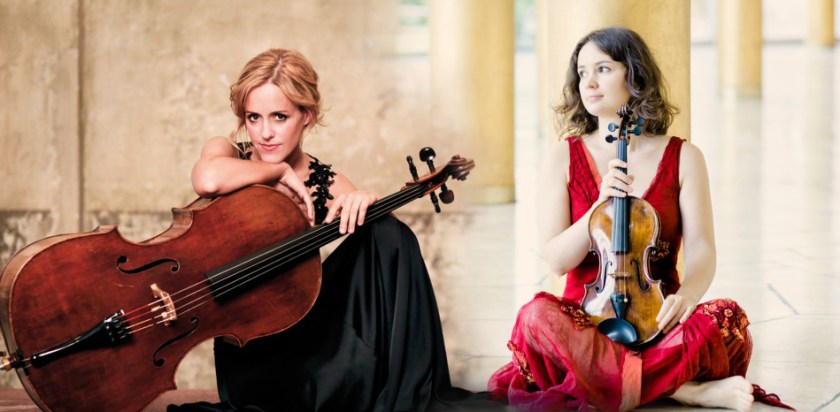
Patricia Kopatchinskaja, Sol Gabetta
Wigmore Hall, 27th April 2017
Iannis Xenakis – Dhipli zyia
Jörg Widmann – Extracts from 24 Duos for violin and cello
Maurice Ravel – Sonata for violin and cello
György Ligeti – Hommage à Hilding Rosenberg
Peter Eötvös – a Call
Zoltán Kodály – Duo for violin and cello Op. 7
So it may not be on a par with the level of adulation reserved for Radiohead at Glastonbury but when the well heeled, third agers at the Wigmore Hall fall for a performer you can feel it (albeit in the form of polite applause and a few bravos). And on this evening they had two to really fawn over.
Moldovan Patricia Kopatchinskaja and Argentinian Sol Gabetta (looks like it is obligatory to mention nationalities in reviews of classical concerts) might have stepped straight out of casting central when it comes to playing the uninhibited, young female violinist and cellist. The thing is though they are the real deal. Individually they are both captivating performers, together they are awesome. Whilst this was actually a less intimidating programme than it might have looked on paper, it was still anything but genteel. But it cleverly showed off both their individual virtuosity and their combined energy, notably in the Ravel sonata and the Widmann extracts.
It was the Xenakis, Widmann and Ligeti pieces that drew me into going and they did not disappoint. The Xenakis piece is very early (1951) from his first year studying with Messiaen before he shook it all up with Metastaseis and created his own distinct sound world. The piece is still tonal, based on Greek folk songs and owes a clear debt to Bartok. But the two movement duo is still thrilling. PK and SG then played 6 of the 24 Widmann duos. I was not familiar with these but I should be. Lots of invention and a wide dynamic which seemed to fit our two heroines perfectly. More Wildman than Widmann.
Then the Ravel sonata. Now I don’t know why but I went into this less than fussed about hearing it. I sort of tolerate Ravel’s orchestral music and quite like a bit of the piano pieces but this sonata had passed me by. What a chump. This was outstanding. One of the best pieces of music I have heard so far this year. Just goes to show that you should keep your mind open. It is much more dynamic and aggressive than the earlier Ravel works I have heard. There is a real battle between violinist and cellist, which eases up in the final movement, and again an echo of our pal Bela B.
After the interval the Ligeti was a short, sweet growling canon-like thing – terrific. I was less sure about the Eotvos solo violin piece written for PK but heavens can this woman play a fiddle. And I have to admit defeat on Kodaly. I have tried but I just can’t get anything out of his music. With Bartok, whilst I need to get my head in the right place I can be drawn in, but I find his mate Zoltan just too prickly.
Overall though (there was a bit of some Bachs and Scarlatti thrown in) this was a genuinely exciting evening of chamber music that got us silver hairs all of a lather. My list of individual performers I will seek out is not long – I am too new to the game – but it has just had two names added somewhere near the top.

 At Home He Feels Like A Tourist