Bryce Dessner and the London Contemporary Orchestra Soloists at Queen Elizabeth Hall review ***

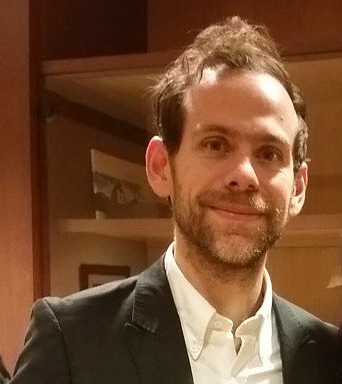
bryce_dessner_2015.jpg

London Contemporary Orchestra Soloists, Galya Bisengalieva (violin), Rakhi Singh (violin), Robert Ames (viola), Oliver Coates (cello) – Bryce Dessner (electric guitar)

Queen Elizabeth Hall. 10th April 2018

  • Bryce Dessner – Aheym for string quartet
  • Mica Levi – You belong to me for string quartet
  • Steve Reich – Electric Counterpoint for electric guitar and tape
  • Steve Reich – Different trains for string quartet and tape (with film from Bill Morrison)

I am pretty sure the last time I was in the Queen Elizabeth Hall was with a young BD and LD and the SO to see Slava’s Snow Show as a “Christmas Treat”. The SO booked the entertainment without, as is her wont, looking too closely at the details. Which is a shame as she has an aversion to clowns. Not a full blown psychic horror but enough to engender a vague sense of unease. Which is unfortunate as, for those that don’t know, Slava’s Snow Show involves clowns. A lot of clowns. On a journey. In Russian. Being the supportive family that we are we found the SO’s discomfort funnier that the show. We still do.

This was my first visit to the newly refurbished QEH and I can report an already handsome building is now even better looking. It looks like it will pursue a course of adventurous programming, which is marvellous, though I can’t pretend it is all to my taste.

This concert was though. Arse that I am I hadn’t recorded the details correctly in my foolproof diary system so I hadn’t realised Different Trains was on the menu and had no idea the evening would be graced by the presence of Mr Bryce Dessner. Now I am guessing this was in stark contrast to most of the audience, for whom, I assume, he was the main attraction. I do not know if the punters that can now be counted on to fill a hall showcasing minimalist classics have always been there, or whether they are new to the genre, but it doesn’t matter. The whole of arty. trendy, creative London turns up in droves now, (though not so much at venues without the social media presence of the Southbank)., which leaves me looking and feeling even more conscious of my shocking lack of style.

(Where did it all go wrong? I used to be a contender in the sartorial stakes and could oft be found propping up the bar at cutting edge London venues. Honestly. No longer. Now even the pensioner tribe at midweek theatrical matinees looks down on me. That it should come to this. Mind you, it’s all my fault. This too stolid flesh needs melting).

All this crossing of musical boundaries is immensely energising though, and, in some ways, it was minimalism that first brought together the the “high” art of classical music with the “popular” art of rock and pop. I would also contend that if it hadn’t been for “classical” composers in the 1950s and 1960s exploring what technology and music from other cultures had to offer, dance music would be much the poorer.

Anyway our man Mr Dessner stands astride the divide, as it were, with his well regarded minimal classical works and his day, or night, job as guitarist for The National. Now, as it happens, I like The National. No expert but I have a few of their albums and saw them support that dreadful old rocker Neil Young a few years ago in Hyde Park. Obviously I don’t mean Neil Young is dreadful. he is akin to a god in my eyes. What I can say though is that The National, along with the likes of Beach House, Death Grips, Eels, John Grant, The Knife, Metronomy and TV on the Radio, ensure that the non-classical section of my CD collection, (I know CDs, ho-ho-ho grandad), isn’t entirely made up of artists who are either older than me or dead. I also appreciate that this is hardly evidence of cutting edge musical taste, and is very white, but, I fear, so is your correspondent. And it also doesn’t mean that as far as I am concerned the best music made in the last few years has come from The Fall, (sadly no longer, why are we not still in a period of national mourning?) and Wire. Worse still, whilst writing this I am listening to Soft Machine. Could it be any worse?

Unsurprisingly Mr Dessner was terrific. I listened to Aheym for string quartet a couple of times before this and it is a worthy and apposite work to set alongside Steve Reich’s string quartet masterpiece. Written in 2009, early on in his catalogue, the title is Yiddish for “homeward” and is inspired by his granny’s stories about Eastern Europe and coming to America. There is a five beat jagged chordal rhythm that runs through the piece which is cut up and syncopated in various ways until a short solo cello line, with pizzicato breaks, takes us to a slower, murky fugal passage, above the cello rocking. This is repeated in a different way before the rhythm returns, with col legno bowing, some scratchy stuff, some very high harmonics and a bit of double stopping to round things off. It is not structurally complex but it is very arresting and every string effect on show was “enhanced” by the close microphones. I loved it though I don’t suppose it will pop up at the Wigmore any time soon.

Mica Levi’s work, written in 2016 for this very ensemble, takes the 1950s song of the title and zeroes in on scraps of music within it. There are three sections to be played in any order. Hannah, a kind of set of passacaglia variations with mad trilling, Jumping, sort of fugal with odd chords moving to tremolos over a cello grind, and Sun, with the higher strings sliding up over the cello drone. It is less interesting than it sounds. Again it was over-amplified for my liking.

Ahed of the interval and before the main event Mr Dessner took to the stage with electric guitar for a performance of Electric Counterpoint. No rock’n’roll razzamatazz here. He looked like one of the stage managers despite having taking a bow earlier after Aheym. EC has one live guitar part, obviously, alongside twelve recorded guitar parts, two on bass. There are three movements, without breaks, the first an 8 part canon with the live guitar over the top and harmonic pulse from the other recorded guitars, the slow movement is similar but with 9 parts and, er, a slower theme, and the final part, again a canon, but with more tonal variation and rhythmic change. It is pure Reich and here the QEH acoustic, the amplification and, obviously, our rock god, really delivered.

Different Trains, commissioned, like Aheym, by the Kronos Quartet, and premiered in this very venue in 1988, is way more interesting than it sounds. The live string quartet is backed by three recorded versions of themselves. This creates the opportunity for 16 part counterpoint and, in line with the concept of the piece, means we listen to a “past we did not witness”. The tape line also includes lines of speech, from Reich’s governess and a train porter, as well as Holocaust victims, as well as “train” noises. The idea is to contrast Reich’s train journeys across America as a child with the horrific journeys made by Jewish children in Europe during the war. The accompanying film from Bill Morrison reinforces the contrast and is, at times, disturbing. The first movement is upbeat, the snatches of conversation brief, and the rhythmic patterns clear and harmonics tonal. The second second is slower and darker with frequent sustains, more harmonic dissonance, and with the train ambience increasing. The final movement takes the voices from the first time and melds them into the music.

I wasn’t entirely persuaded by the performance with the recordings sometimes overwhelming the live performers though I was perched right at the back. Oliver Coates’s cello playing was very fine, as I know from previous performances, and Galya Bisengalieva’s first violin sang, but the second violin and viola parts were a bit muddied. On the other hand having the film footage definitely enhanced the powerful meaning behind Steve’s Reich’s music. (I am assuming the age of the footage is what delivered the “blotchy effects”). The performers were standing and split two by two on stage which made for an antiphonal effect, in mind if not ear.

Even with the sound this was still a fine rendition of a modern masterpiece near Reich’s best. More of this at the QEH please. I promise to smarten up next time.

Oh, and no clowns please.

The Wedding Present at Cadogan Hall review ****

IMG_0102

The Wedding Present

Cadogan Hall, 14th October 2017

Regular readers of this blog (remember chums, the best clubs are exclusive) will be aware that the Tourist doesn’t really do “gigs”. It is all a bit loud for his aged ears. The number of bands/artists he would pay money to see is severely limited and dwindling in number thanks in part to the Grim Reaper. Many venues are beyond the pale on the grounds of comfort, excessive booziness (the Tourist has taken a vow of abstinence following many happy years of excess) or claustrophobia. Festivals need friends and time, both of which the Tourist seems unable to cultivate.

Here though was a rare, and, as it turned out, wonderful exception. Even the most casual observer of the pop panoply  will know that, to paraphrase the immortal JP, “the boy Gedge has written some of the best songs of the Rock n Roll era”. He has also written some of the best tunes, and created some of the greatest guitar melodies. The latest Wedding Present double album, Going, Going …, is, I admit, maybe not their finest work, but it is still, like the albums The Fall and Wire churn out, light years ahead of anything the youth can create. I pray Gedge has finished yet.

It does begin in a strange vein with four post-rock instrumental tracks, Kittery, Greenland, Marblehead and Sprague, with slower tempi and expansive dynamics. A small choir and a classical ensemble (strings and a trumpet) are used to grand effect. Given that this concert was a run through of the album, said choir and players were up there on stage with the band. The contrast between Dave Gedge’s and Marcus Kain’s driving guitar rhythms, Charlie Layton’s thumping drums and Danielle Wadey’s swirling bass, and the wordless choir and soaring strings, maybe works a bit better on the recording than live but it is still a worthwhile departure. The good news is that from Two Bridges onwards, we get back firmly into classic WP territory, with professional Yorkshireman Gedge muttering the usual maudlin, but somehow still intensely moving, poems on failed relationships and unrequited love over the pumping (less jangling) rhythms we know and love.

Smashing stuff. A few pretentious black and white landscape films to add to the mix, some proper cranking up to 11 of the guitars in parts, and even a couple of encores, Perfect Blue from Take Fountain, and, as the reward for the patient enthusiast, the classic fugal Bewitched from Bizarro. What a racket at the end. Now I have to say of all the varied material from Going, Going …, which looks back to a lot of Gedge’s previous songs, my favourite is Rachel, which is a preposterously catchy, innocent pop masterpiece. I am also partial already to Little Silver, Birdsnest, Bells, Broken Bow and Santa Monica (the final track which culminates with some painful but exquisite chord progressions).

Best of all it was at the Cadogan Hall. One of my favourite venues (though my last visit was to hear some Shostakovich Preludes and Fugues and a capella Poem settings – pick the bones out of that contrast). Nice little perch in the balcony. Loud enough but not deafening. Lots of room around me. And what seemed like a nice crowd with just enough distinctive quirkiness and maturity.

Now there was a time kids, in 1990 I think, when the Wedding Present churned out Top 40 hits at breakneck speed. I appreciate that is likely pre-history to you, but if you were to listen to Grandad’s ravings, (me not Gedge though the vintage is comparable), here are 10 you might start with. (Hopefully they are on that Spotify).

  • Everyone Thinks He Looks Daft from George Best
  • What Did You Last Servant Die Of from George Best
  • Shatner from George Best
  • Brassneck from Bizarro
  • Kennedy from Bizarro
  • Take Me from Bizarro
  • Corduroy from Seamonsters
  • Octopussy from Seamonsters
  • Don’t Take Me Home Until I’m Drunk from El Rey
  • You’re Dead from Valentina


My top 10 greatest ever albums

Right. My cursory examination of the world wide web suggests that there are probably more top 10 album lists than there are certain kinds of sub-atomic particles. It seems that any bloke of a certain age, with too much time and access to Amazon and/or I Tunes, will have attempted to impose/show off his taste in music. and it’s obviously always 10 until he gets greedy, with 25 seemingly the next most popular integer.

Still undeterred by the utter pointlessness of the exercise, and keen to really show off my taste and knowledge, I am determined to add to the digital trash-heap.

Now regular readers will be aware that I am a) getting on a bit and b) fancy myself as a bit cultured. This will therefore colour what follows and the keen-eyed will notice there is a quite constrained chronology in my choices. This is because, in my view, the music that stays with you is the music that hits you in your most formative years when you have most time and when your are most selfish which surely is late teens/early adulthood.

Now I am talking about proper pop/rock/indie music not the chart shite that is an unfortunate by/waste product which has been there since the 1950s. I am also, in this blog, focussed solely on my pop/rock/indie identity. The classical side of my nature has been there from a fairly early age but has expanded apace in recent years. I am now pretty clear on the boundaries here and therefore continue to go deeper not broader into the classical world. And the only live music I listen to is classical. There are very infrequent gigs but it is all a bit loud for me now I fear.

Anyway back to today’s sermon. So the period of deepest engagement for me coincided with the rise of post-punk which happily for me produced most of the greatest pop/rock/indie music ever made and the best bands, a few of which soldier on to this day. I am not accepting any argument here – it is a simple fact. When it comes to musical taste I simply will not permit any collapse into some sort of hopeless, wishy-washy relativism. From this starting point I will no doubt bore you in future with stuff prior to these fertile period (it is called the 1960s and 1970s kids). But, having set my entrenched boundaries, it does mean that from the late 1980s through to the last few years I don’t really know what I am talking about, and have wandered around aimlessly trying to find exciting new stuff. And to be fair there have been some successes. Still I am grateful for any tips.

Right I have rambled on enough ahead of something no-one will ever read anyway. So with thanks to John Peel, the NME in its heyday and assorted independent record labels, here goes.

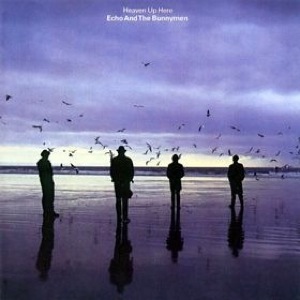
1. Echo and the Bunnymen – Heaven Up Here – 1981

eab_heavenuphere_albumcover

So Echo and the Bunnymen are the greatest ever band. Period. There are other contenders; Joy Division but there just isn’t enough material to draw on, the Fall, obviously, but there might just be too much (and it is impossible to draw out one album for this list), Wire, but maybe a bit too clever by half, the Wedding Present, but even I accept if you’ve heard one of theirs you’ve heard them all. and other contenders from other periods which will be revealed in time. But the reality is the Bunnies were, and remain, my first love, and the first 4 albums, Crocodiles, Porcupine, Ocean Rain and this, their masterpiece, are just what I know best.

I will keep buying anything the Bunnies create as there are still nuggets to be found and I will still try to see them on very rare occasions where I can tolerate the noise. But I know they will never again create the uplifting maelstrom of the heyday as Les’s loopy basslines and Pete’s (RIP) magnificently creative drumming propped up Will’s shards of guitar genius and Mac’s preposterous but utterly convincing lyrics (last night he played in a local theatre in Henley on Thames – mind-boggling).

It is therefore fortunate that I can listen to this – not every day but nary a week passes without a happy reminder. Thanks lads.

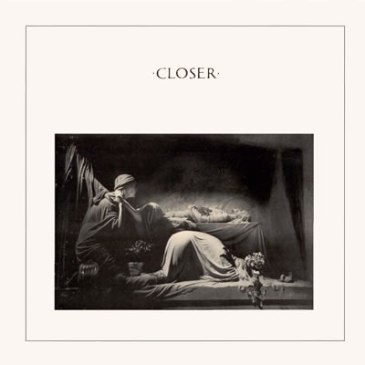
2. Joy Division – Closer – 1980

joy_division_closer

So, if the Bunnies are ultimately a swaggering, anthemic post-punk rock band (Mac has observed that if they hadn’t been so lazy they could have beaten U2 to the prize), then Joy Division are the mournful antithesis. The father of innumerable progeny this really is music for late teenage boys to listen to in the bedroom whilst wallowing in a sea of self-pity.

The thing is though that this album goes far beyond that into some really dark places. This largely reflects Ian Curtis’s lyrics (I won’t bang on about this standing as the ultimate self epitaph – it’s nonsense) but also Martin Hamnett’s extraordinary production. The fact is that I don’t think any of the contributors to this album had any idea what they had created. No surprise really that when Curtis exited stage left the rest of the band sought sanctuary in dance rhythms.

Anyway I assume any self respecting fan of popular music of the last half-century or so owns this even if they may not always be in the mood required to listen to it. If not get on with it.

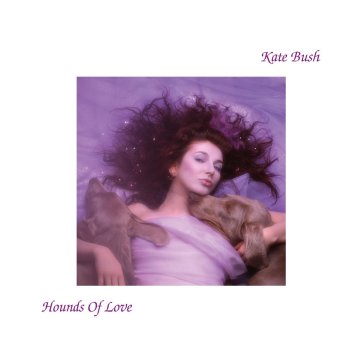
3. Kate Bush – Hounds of Love – 1985

61zm7e2bq8cl-_sl1417_

Right I know she is a genius. You know she is a genius. And this is still as amazing as it was on the day of release. There is not a musical idea, phrase, a note, a word, a sound that isn’t perfect. I get that Katie elsewhere very occasionally lets the side down with a misplaced idea but not here. This is Art.

“I’d make a deal with God”. Indeed. That can be the only explanation. Except there is no God. But you know what I mean.

I was too ill to stay for all of Before the Dawn so missed the Ninth Wave and A Sky of Honey. No matter. Six songs. It was enough to last a lifetime. What a sentimental old duffer I’ve become.

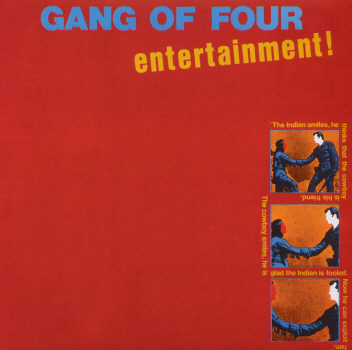
4. Gang of Four – Entertainment! – 1979

entertainment21

The discerning reader of this blog might have guessed this was coming. Funky, arty, post-punk replete with Marxist analysis. It’s like a focus group was tasked with delivering up the perfect soundtrack for the late teens Tourist. So tap the feet, engage the brain and turn it up nice and loud.

“He fills his head with culture …..”

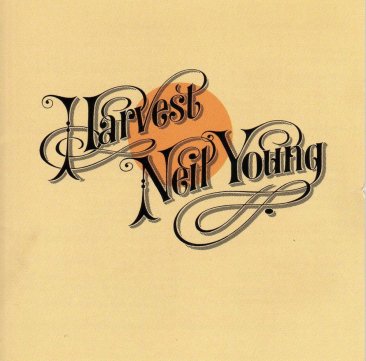
5. Neil Young – Harvest – 1972

4430266c41a0148730d1ec7084c5b362-1000x989x1

Evidence that I am not completely tied to the music of my youth.

Now most of the individual creative giants of popular music (Bowie D, Morrison V, Bush K, Mayfield C, Franklin A, Prince TAFKA, Marley B, Harvey PJ, Wyatt R) have let themselves down on occasion, none so persistently or so wilfully as the irascible Mr Young. Yet on those albums where it all came together no-one gets closer to the emotional heart of the matter.

I get why you kids today might regard this as an embarrassment. Then again you listen to Ed Sheeran. No more witnesses your honour, I rest my case.

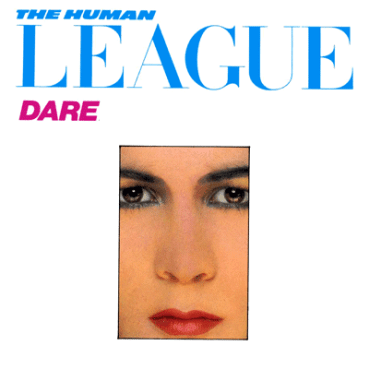
6. Human League – Dare – 1981

dare-cover

I am so glad the synthesiser has made a comeback. It has restored my faith in contemporary pop music. But none will ever come close to the pristine perfection on offer here. I daresay there will never be an 80s party without Don’t You Want Me Baby on the playlist but for once familiarity breeds joy not contempt.

Normally when a band sells out (mind you I was happy with the prior incarnation of the Human League) it spells disaster; in this case Phil Oakley’s lust for lucre was the impetus for this classic.

These are the things that dreams are made of.

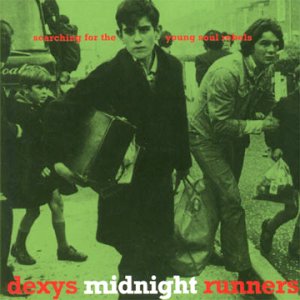
7. Dexys Midnight Runners – Searching for the Young Soul Rebels – 1980

dexys_midnight_runners_searching_for_the_young_soul_rebels

OK so there are times when Kevin Rowland gives the impression of being one Scotch egg short of the full hamper but his musical vision, at least what there is of it, is inspired. The first three Dexys albums represent the apogee of Celtic Soul which, on and off and in a different way, has proved fertile territory for another musical genius in Van Morrison.

There are those who believe Dexys were/are a novelty outfit. They are idiots and can be safely ignored. Please own and cherish this.

8. Talking Heads – Fear of Music – 1979

r-116489-1434573109-4989-jpeg

Back to 1979 and perhaps the finest example of the period when punk/new wave met the funk of the 1970s against the backdrop of the New York art scene and with lyrics of real intelligence. Fortunately there are bands today experimenting with rhythmic structure but TH remain the masters to my ears.

“This ain’t no party, this ain’t no disco, this ain’t no fooling around … ” though it sometimes sounds like it.

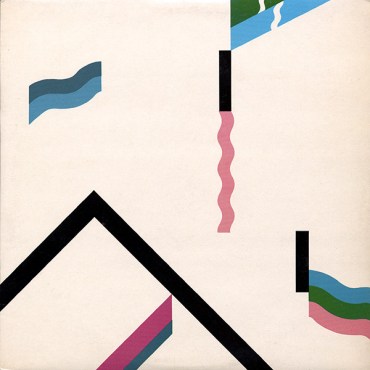
9. Wire – 154 – 1979

r-540618-1381945153-4338-jpeg

You would think I would tire of this art punk thing. You’d be wrong. Most of my favourite bands are still making new music but Wire are probably the most vital. It is clear to me that my musical brain thrives on repetition. Wire understand this.

So stop reading about them being name-checked as a “seminal influence” on all sorts of white boys who have picked up guitars and go and actually  listen. In this case Granddad knows best.

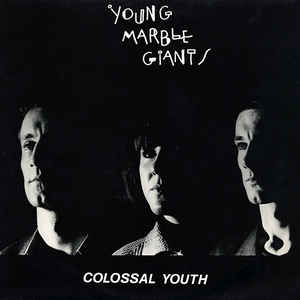
10. Young Marble Giants – Colossal Youth – 1980

r-381513-1361401068-1211-jpeg

There isn’t much of this. Alison Statton’s ethereal voice over the bass and clipped guitar of the Moxham brothers and a bit of drum machine and occasional electronic organ chords. It couldn’t be simpler. But it will get to you. I promise.

This is all they ever did. It’s all they ever needed to do.

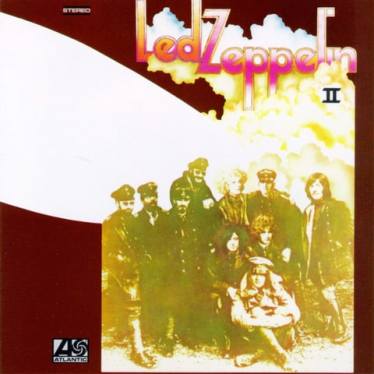
11. Led Zeppelin – Led Zeppelin II – 1969

rs-led-zeppelin-ii-82f98a89-2aca-4c66-9b4a-dd4aa7666a25

Hold up Tourist. You said Top 10.

Well I did but guess what. I’ve turned it up to 11. And what better what to do that than Zeppelin. Obviously the greatest heavy rock band of all time. And this for me was their finest hour.

Anyway if you are a serious student of popular music you already know this.

Knebworth 1979. Still one of my greatest memories.