
The Tallis Scholars, Peter Phillips (director)
Cadogan Hall, 7th June 2018
- Robert White – Domine, quis habitabit
- John Sheppard – Missa Cantate
- John Sutton – Salve regina
- Robert White – Magnificat
- Thomas Tallis – Spem in alium
I just cast my eye over an article in the Guardian purporting to list the best albums of 2018 so far. The Guardian has been my newspaper of choice since my teens. In a world of (too) fierce tribal-like identities it pays to read something you agree with. Or does it? Whatever, it is a reasonable bet that this list encompasses exactly the sort of contemporary music I should be listening to. I hadn’t heard any of it. I was aware of a few of the artists listed and I wouldn’t say I am completely immune to the music of today though the path I cut through it is both random and infrequent. But all of this was a mystery to me.
Now three decades ago I would have been all over this list like one of the cheap suits I own. And that millennial equivalent me would probably have scoffed at the very notion of Renaissance polyphony. Yet here I am, years later, near wetting myself at the prospect of listening to an expanded Tallis Scholars under their renowned leader Peter Phillips, perform Thomas Tallis’s Spem in alium. As I suspect was the majority of the full house at Cadogan Hall.
So I say to my younger self, and any readers who are still in the prime of their cultural life, make damn sure you listen to this masterpiece as soon as you can. You could always try Janet Cardiff’s sound art installation, which takes a recording of Spem in alium, and puts in through 40 carefully positioned speakers, if it swings by you. Extraordinary. It might be in MOMA as we speak. Anyway add it to you cultural bucket list. And in return I promise to seek out a couple of the modern beat combo recommendations from the list referenced above and try to like them.
Now if you are Mr Phillips, and you have secured more than a couple of dozen fine voices to add to the 16 or so permanent members of the Tallis Scholars, you are not going to pass up the opportunity to programme some other, much rarer, large scale vocal works. Specifically here pieces from the Tudor period in England. Now we know a fair bit about Thomas Tallis’s (1505-1585) music, (if not his life), as we do his erstwhile pupil, William Byrd (1543-1623), because these two managed to snaffle a monopoly on publishing and printing music, sacred and profane, from Elizabeth I. This despite them both being (careful) Catholics. Control printing and you control prosperity, printing being as big a deal in the C15 and C16 century as t’internet is now. The other composers on this programme though were less fortunate, despite being as talented, surviving copies of their music being far rarer.
That is what makes this polyphonic vocal music so fascinating beyond the beauty of the modal scales, the harmonies and the thick, rich interweaved textures. It is the history behind it. The when, why and how it was created and the when, why and how it was preserved, and in some cases, rediscovered and brought to a new level of appreciation, in part through recordings as well as performance, in the last few decades.
For a vast swathe of this music was destroyed pretty much as soon as it was created. If it was Latin and liturgical then odds were some bell-end or other would shred or burn it in the Reformation, as one bunch of religious nutjobs asserted their half-arsed fantasies over another.
Thus the richest source of sacred music from the early Tudor period is contained in just three illuminated manuscripts, the Eton Choirbook, and the later Lambeth and Caius Choirbooks. The Eton Choirbook dates from 1500 or so, is incomplete, with 64 surviving works from 24 different composers. It tracks the development of polyphonic music in England from the five voice, non-imitative textures where contrast comes from voices dropping in and out, to the beginnings of imitation ,(a voice singing the same line a bit later), underpinned with cantus firmus techniques, (a sort of plainchant anchor normally from the tenor part), and the attractive dissonances conjured up by frequent false relations, (a chromatic contradiction apparently, two voices singing a different note simultaneously). The latest pieces in the Choirbook dump the cantus firmus, up the imitation and generally get more complicated and florid, “parodic” is the technical term, aping what was going on in the Low Countries, Italy and France. You see, dear Brexiters, even in the late 1400s England was being influenced by those funny furriners.
The earliest piece in the concert then was from this Choirbook, John Sutton’s setting of Salve regina, the liturgical highpoint of the Virgin Mary craze which, amongst many other things, is what makes Catholicism so weird. This is all we have of Sutton, and all we know is he was a Fellow at Magdalen College Oxford in 1478 and at Eton the following year. It is for seven voices, here doubled, and swirls around in very pleasing fashion, highly melismatic, with points where all the voices mass together.
It wasn’t quite as powerful as the two pieces by Robert White (1535-1574) however. White was appointed to the post of organist and master of the choristers at Westminster Abbey no less, at the tender age of 32. Unfortunately he only managed another few years falling victim, as so many did, to one of the many outbreaks of plague in London. The first motet here, Domine, quis habitabit is a later Tudor psalm setting which White was particularly drawn to and involves three pairs of voices (again doubled here) delivering waves of imitative polyphony. The second White piece, a Magnificat, was an altogether grander affair which looks back to earlier styles. It is underpinned by long drawn-out plainchant divided amongst the voices, interspersed with long runs of melismatic melody. Apparently White employs gymel, the bifurcation of parts to add further texture. Who knew. Anyway I was much taken with this, probably my favourite other than the Tallis.
I was also mightily impressed by the Missa Cantate from John Shepperd (1515-1558). He is another chap about whom we know very little though PP and the Tallis Scholars have put some scholarship in to find out what they can. This work probably dates from the mid 1550s. The source for this “festal mass” is unclear but Shepperd clearly felt confident enough to revive the form with Mary on the throne and Catholic musical fol-de-rol back in favour. It is in six parts divided (doubled) into high and low sections which finally come together in the Gloria. It is very ornamental, with indulgent melisma stretching out the text so that you really get your money’s worth. The high parts divide at certain points to create the polyphonic wall of sound which we (in the hall) know and love especially in the Credo. Apparently Shepperd marked the score with the instruction “Sing!”. They certainly did. It merited the substantial applause prior to the interval.
The Tallis Scholars like their contemporaries the Sixteen are so good at what they do that you sometimes forget how difficult this all is to get right. I imagine hours of rehearsal and study are required to knock this into shape especially these rarer pieces. With Spem in alium though it is impossible to be so complacent as an audience member. as the 40 singers shuffle on you become aware just how tricky an undertaking this is. I count just 31 words in the Latin text and it clocks in at around 10 minutes. It kicks off by introducing the 8 choirs of 5 parts (SATBB) one by one, shifting motifs around the space through imitation before reaching the massive culmination. Then it reverses back through the choirs before the second coming together and then antiphonal pairs of choirs are created. How they all keep it together is a mystery and you are acutely aware that if this unravelled just slightly then the whole thing would go t*its up pretty sharpish with no hope of recovery. There nothing you can do but surrender to the cluster of swirling sound punctuate by moments of immense drama such as the silence and then key change post respice (look). Or you could try and focus on a few individuals and try to pick out their lines. Good luck though the flatter Cadogan Hall acoustic actually made that a little easier.
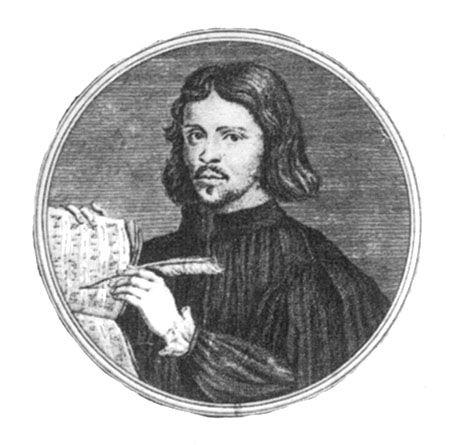
Now Tommy Tallis (that might be him above) wasn’t the only Renaissance man to conjure up a 40 part smash hit. Apparently an Italian fella called Alessandro Stroggio came on tour to London with his equivalent a few years earlier commissioned by the Medicis. When Tallis presented his effort to the Duke of Norfolk in 1570’ish, he apparently took off his gold chain and presented it to TT so overwhelmed was he. This could be nonsense though since the Norfolk was about to be executed by Lizzie I as a persistent Catholic plotter. Despite having lost all their titles and possessions on a couple of occasions and a few lurches in terms of inheritance the Norfolk title is still top dog in terms of the English aristocracy and still Catholic.
Spem in alium was sufficiently famous though to be used at the investitures of the Prince of Wales in 1610 and 1616 from when the first surviving manuscripts date. Every contemporary Renaissance vocal group has had a poke at recording it but I am happy enough with the recording by this very ensemble.
Since all 40 of the singers had turned up for work it seemed a shame not to let them off the leash again and so we were treated to an encore, the 12 part Regina Coeli by Nicolas Gombert. Not strictly Tudor but still a prime example of what was going on in the Low Countries at the time before the Italians took over led by Palestrina. Gombert, along with Adrian Willaert, was the master of the dense, highly imitative, almost contrapuntal, style, and here the shifts between voice groups, especially in the lower registers, were thrilling. No idea about the text but very happy to hear this.
Now I wasn’t going to keep this treat all to myself so BUD was happy to attend, and I spied a couple of other chums in attendance. For a certain poncey metropolitan elite type attendance here was mandatory. Like I say at the top though I really would entreat you to find a way to hear this. It won’t change your life, it’s just music after all, but it will marginally enhance it.
 At Home He Feels Like A Tourist