1. A Midsummer Night’s Dream – English National Opera – 4th March
Not quite a war-horse of a production but Robert Carsen’s version of Britten’s Shakespearean opera looks, sounds and, well, is just wonderful.
2. Ligeti in Wonderland – South Bank – 11th, 12th and 13th May
Gyorgy Ligeti. Now bitten and no longer shy. If there is one second half of the C20 “modernist” composer every classical music buff should embrace Ligeti is that man.
3. Beethoven Cycle and Gerard Barry – Britten Sinfonia, Thomas Ades – Barbican – 22nd and 24th May
This is how Beethoven should sound. Do not miss the last instalments in the cycle this May.
4. Isabelle Faust, Kristian Bezuidenhout (harpsichord) – JS Bach Sonatas and Partitas – Wigmore Hall and LSO St Luke’s – 9th April and 16th June
And this is how JSB should sound.
5. Opera – The Turn of the Screw – ENO – Open Air Theatre Regents Park – 29th June
Even the parakeets came in on cue in this magical, and disturbing, evening.
6. Greek – Grimeborn – The Kantanti Ensemble – Arcola Theatre – 13th August
Mark-Anthony Turnage’s breakthrough opera is still a thrill.
7. The Silver Tassie – BBCSO – Barbican Hall – 10th November
And this was a graphic reminder of why his mature masterpiece must be revived on an opera house stage.
8. BBC Prom 68 – Berlin Philharmoniker, Kirill Petrenko – Beethoven Symphony No 7 – Royal Albert Hall – 2nd September
Crikey. I only went for this. If Mr Petrenko keeps going on like this he might just become the greatest ever.
9. Brodsky Quartet – In Time of War – Kings Place – 18th November
A stunning Shostakovich 8th Quartet and then George Crumb’s jaw-dropping Black Angels.
10. Venice Baroque Orchestra, Avi Avital (mandolin) – Vivaldi (mostly) – Wigmore Hall – 22nd December
As rock’n’roll as the Wigmore is ever going to get.
B*gger. B*gger. B*gger. B*gger. B*gger. I never saw Mark-Anthony Turnage’s second full scale opera when it was first performed in early 2000 at the ENO. On the basis of this semi-staged performance from the BBCSO as part of the In Remembrance weekend this was a terrible omission on my part for it is an extraordinary work both musically, and, given the strength of Amanda Holden’s libretto, dramatically. It is intensely powerful and moving even without a full set and staging. It beggars belief that it has not been revived since 2002, (and that it missed out on a run in Dallas thanks to political sensitivities).
It is constructed as a symphony in four acts, Home, War, Hospital and Dance. Harry Heegan is about to return to the family flat after a football match with his best mate Barney and girlfriend Jessie. Mum and Dad are intensely proud of their son who is about to head off to the war. Next door neighbour Susie joins the party, banging on about God. Mrs Foran from upstairs also turns up escaping abusive husband Teddy. The Silver Tassie, a cup with much significance appears, the men go to war full of optimism. The War act is primarily choral preceded by the mythic Croucher, representing, I think, the war dead and intoning Old Testament-ish doom. An officer complains at the doctors in the Red Cross station. A football game is delayed as the battle begins. The story then switches to the Hospital where an angry Harry is now paralysed, Teddy blinded and Jessie, who refuses to see Harry, is now coupled up with Barney, who saved Harry’s life. The final act sees Harry and Teddy spit out their pain and bitterness at those who still have their futures at the communal dance.
The opera is based on Sean O’Casey’s eponymous plan and it is therefore we who have to thank for the gripping drama. Whilst it is never made explicit, O’Casey intended that the Heegan family, and the rest of the community, should hail from the East Wall, a working class district of Dublin, adding further pungency to the message of the play (and opera) because, at that time, Ireland was still part of the UK and the republican movement was divided on whether the country should be involved in the war. So as some young men like Harry, Barney and Teddy headed off to war others prepared for insurrection at home.
O’Casey’s play was rejected by WB Yeats, then head honcho at the Abbey Theatre in Dublin, when it was submitted in 1928, reflecting its political sensitivity. This was after the success of his first three major plays, The Shadow of a Gunman, Juno and the Paycock and The Plough and the Stars. So it premiered at the Apollo in London’s West End. There have been a fair few plays which rail at the futility of war and its consequences on the individuals who fight in it, but I doubt many match the raw power of The Silver Tassie.
So Amanda Holden, (to be clear not the airhead judge on BGT), and M-AT had something monumental to work with. Even so, and in no way intending to downplay Ms Holden’s contribution which provides M-AT with multiple opportunities to show off his trademark stylistic jagged juxtapositions, it is the score that takes the breath away. M-AT had already shown his dramatic flair in his first opera Greek, and his compositional skill with orchestral pieces such as Three Screaming Popes, Momentum, Drowned Out, Dispelling the Fears and Silent Cities, especially when it came to percussion and brass, but The Silver Tassie is on another level.
The symphonic structure is inspired by mentor Hans Werner Henze’s The Bassarids, with the first act setting out the main ideas and themes, the second the Adagio slow movement, brought to life by the large scale choral scenes (echoing the more Expressionist feel of the act in SO’C’s play), the third a Scherzo and the last act a “dance” finale with “off stage” band. This structure offers rhythmic backbone and plenty of tunes derived from song, (including Robert Burns’s own Silver Tassie), and dance, as well as repeated motifs, which make it easy to follow and show off MA-T’s uncanny ability to capture the emotional interior of the characters. There are episodes of rich orchestral colour but there are also plenty of more economic orchestration. The score should give the singers plenty of space, but just to make sure the cast were miked, (though M-AT, a couple of rows in front of me, needed to dash up to the sound desk to get the balance right early on). The second and fourth acts are up there with the best I have ever heard on an opera stage. Even allowing for the fact that this wasn’t an opera stage.
Sometimes this semi-staging lark can leave singers looking a little awkward unsure of how much to commit to performance versus voice. Costuming can also, sometimes, appear incongruous. Not here though, at east once the first act go going. There were some outstanding vocal performances, notably for me from Sally Matthews and Claire Booth, and Marcus Farnsworth as Teddy was very persuasive. But baritone Ashley Riches as Harry, even from my two perches (side stalls first half, back of circle second), was bloody marvellous not just in his singing but also in the way, pre and post wheelchair, he projected Harry’s exuberance and then his pain into the whole auditorium.
Now I have nothing to compare it to but, given just how amazing this was, I have to assume that Ryan Wrigglesworth and the BBCSO, and the BBC Singers and Finchley Children’s Music Group (complete with ensemble writhing) got as close as possible to the heart of the music.
You can listen to it for a couple more weeks on BBC Radio Opera on 3. Do yourself a favour and do so.
And can I beg the ENO to find a way and time to revive this. With Mr Wrigglesworth on the podium. I will chip in a few quid if it helps.
One way or another I see a fair amount of theatre. Making up for lost time I guess. Anyway this requires a reasonable degree of organisation. Nothing a small child couldn’t cope with but I do need to be on top of the diary. Very occasionally there is a system error. I say system. Obviously it’s my stupidity. One casualty was the National Theatre’s revival of The Plough and the Stars in summer 2016. It never got into the diary, I failed to check the fail-safe lists and ended up in Sicily en famille before I realised the mistake. Reviews weren’t great, Sicily was, (even if we found ourselves once again on top of a very steep hill despite strict instructions to the booker, me, to avoid this). And I had only paid £15 for the ticket thanks to that nice Mr Dorfman who uses his Travelex fortune to support the NT. Even so it irked me. Still does. It’s always the little things isn’t it?
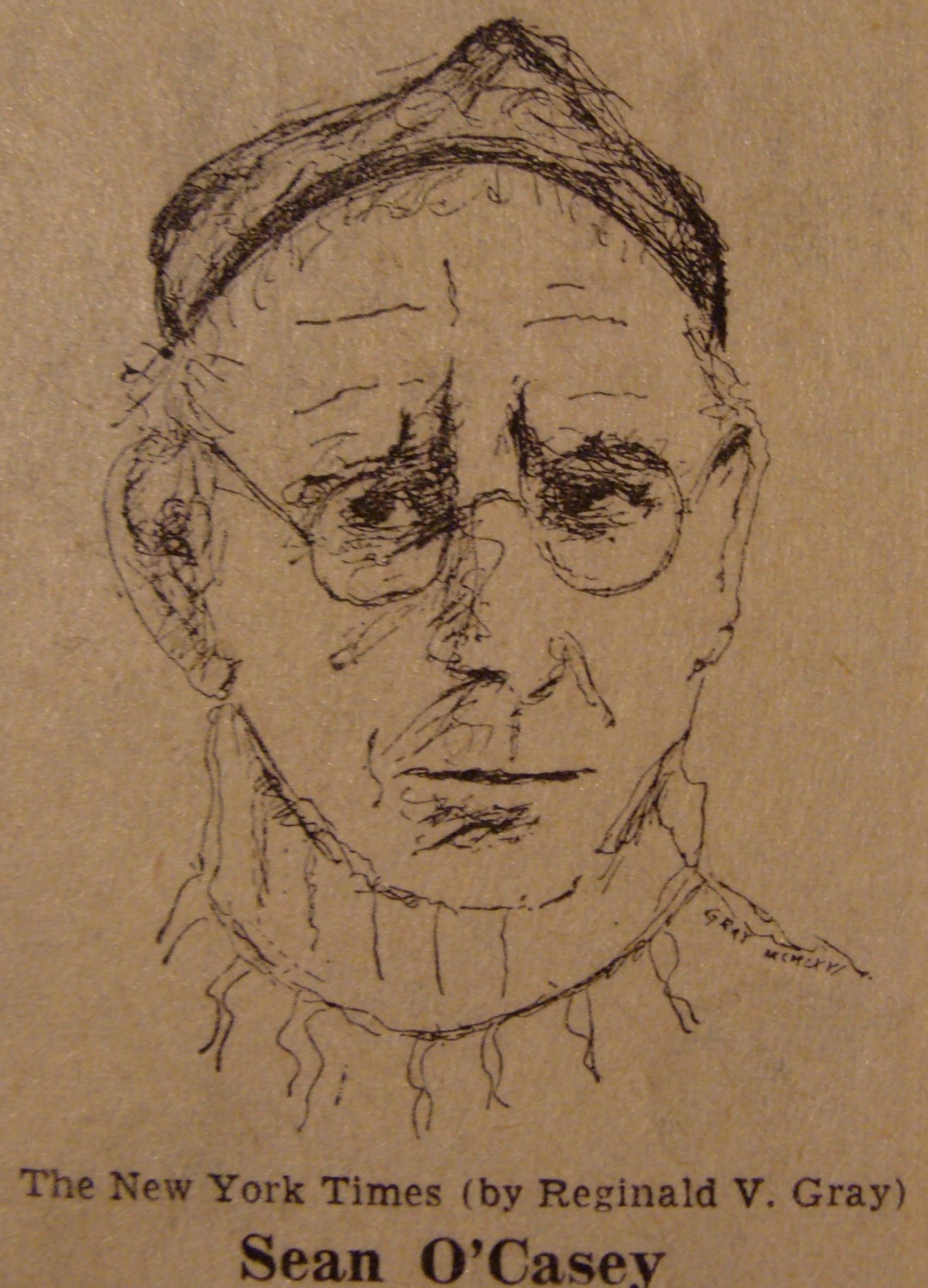
Anyway that meant postponing my first exposure to the renowned Irish playwright Sean O’Casey until this production, That’s right. No Juno and the Paycock or The Silver Tassie yet, (though I am signed up for the concert performance of Mark-Anthony Turnage’s opera based on the latter at the Barbican in November).
So I have some catching up to do. First impressions? Well I can see why Mr O’Casey’s work might divide opinion. The mixture of trenchant politics, (all sides come in for a walloping from socialist SO’C), comedy filtered through working class Dublin lives that, with hindsight, teeters perilously close to Oirish cliche, and melodramatic tragedy, takes a bit of getting used to. I see from Michael Billington’s review of the 2016 NT production that it took him a bit of time to get into the swing of things that time round. Same thing happened to me in this production. I also, shamefacedly, have to admit my ears had to adjust a bit to the vernacular accents on display, the drift of SO’C’s prose. Yet once it all got going, and subsequently having thought about, and done a bit more work on, the play, I am starting to see where the advocates of SO’C are coming from. (The programme contains a pair of fine articles on the way in which the Easter Rising, and women’s role in Irish independence, have been interpreted over the years). If it is good enough for the mighty Mr Billington, who should be knighted and canonised for his services to the theatre illiterati like me, then it is good enough for me to sit up and take notice.
This production in its original “anniversary” incarnation at the Abbey Theatre Dublin has a very fine Irish cast which has been brought over to West London largely intact. Now it wouldn’t be Sean Holmes, (don’t be deceived by the name – he’s English), as director if there wasn’t a bit of “auteristic” subversion instituted into proceedings and so it is here. Jon Bauser’s set is low budget but ingenious with scaffolding creating the Dublin tenements, or maybe now tower blocks, and graffitied plywood standing as walls. A fair amount of cheap (I assume) lager spills out on to the stage. Paul Keogan’s lighting is similarly severe. Catherine Fay’s costume design is resolutely modern-day, particularly striking when the British soldiers first appear. This means that the setting, 1916 Dublin at the time of the Easter Rising, can echo across subsequent years in the island of Ireland. I see the point. Patriotism, whether derived from a line on a map or a different shade of god, is an ugly f*cker. And it’s always the least advantaged that lost the most.
The everyday humour which fuels the first act in the living room of the Clitheroe’s flat, and in the pub in the second act, is confidently delivered. Remember this is November 1915, the Nationalists including the trade unionist Irish Citizens Army, are organising. The relationship between Ian Lloyd Anderson’s Jack and Kate Stanley Brennan’s Nora is believably tender, and then strained, when Jack is re-recruited to the cause despite Nora’s desperate intervention. On the other hand whilst individually, Niall Buggy’s buffoonish veteran Uncle Peter, Phelim Drew’s lovable drunkard carpenter Fluther Good, Janet Moran’s effervescent charwoman Mrs Gogan, Ciaran O’Brien sanctimonious Marxist Young Covey, are all individually fine performances they don’t always seem to naturally occupy the same space.
This slightly stilted tone continues through into the pub with Nyree Yergainharsian forthright prostitute Rosie Redmond. However, once the fight between Mrs Gogan and Hilda Fay’s bitter Protestant Bessie Burgess breaks out, the tone shifts, for the better in my view. Now the way external events catch up with the individual characters starts to add texture. SO’C’s critique of the “heroic” telling of this passage in Irish history is manifest even if you know very little about it. The compassion of the women in the play is highlighted, especially Bessie Burgess, the best role here. The fear that violent struggle precipitates, as the soldiers break into Bessie’s attic, is palpable.
I think it might just become a much better play in the second half. I can see that the brazen looting, young Moliser’s death from TB, (some convincing coughing on demand from Julie Maguire decked out in tribal footie shirts), Nora’s stillbirth and delirium and Bessie’s sacrifice create a tonal shift into something as bleakly overblown as the first half was comically pigeonholed. Yet is feels more sedulous, certainly in this production.
It is a hard thing to bring out the complexity of ordinary people living on the periphery of historical change. Weaving a drama from this, whilst still setting out to upset just about everyone involved in creating the narrative which idealised this change, is surely doubly difficult. You can see why the play had such an impact when first performed at the Abbey in 1926. I can also see why its status as “canonic” theatre also makes it a tricky piece to get right. This might not have been the perfect production on first viewing but I suspect I will grow to like SO’C with more exposure.
I took the wrong route home, (bus not tube since you ask), which meant that an earnest young chap, I suspect gently in his cups, politely asked for my programme lying on the seat. He carefully asked my opinion on the play. I was a little sniffy. I now regret that. I do hope he went.
Final aside. Apparently SO’C lived in Totnes. And died in Torquay. I didn’t know that. Seems like there is more to the Tourist’s birthplace than he ever realised. The more you learn the more the more the connections build.


 At Home He Feels Like A Tourist