

Allelujah at the Bridge Theatre review ****

25998114085_2027f69bbf_o

Allelujah

Bridge Theatre, 12th September 2018

Yet again by the time the Tourist gets round to seeing a major London premiere and, worst still given his feckless nature, comments on it, it is as good as over. Mind you the good news is that, as far as I can see, Allelujah was an unqualified success for the Bridge Theatre, playing to full(ish) houses which can only be a good thing. Nick Hytner, the Bridge AD and director here, and Alan Bennett go back a long way. If there was one thing guaranteed to get bums on those plush, comfy(ish) Bridge seats then this was it. Hopefully more people get to see just how marvellous this new theatre is and will return for whatever comes next. If they have any sense at all they will sign up for A Very, Very, Very Dark Matter, the new Martin McDonagh play, which opens here in a couple of weeks.

Now I am not sure there is, maybe bar Queen Liz II, a person more qualified to take on the National Treasure mantle than Alan Bennett. You know pretty much exactly what you are going to get when Mr Bennett puts pen to paper. If you love his wry, quizzical artistic voice, then you were never going to be disappointed by this. And plainly there is a pretty wide demographic who do love that voice. But that voice does come with some drawbacks, a few of which were on show in Allelujah. He can be, dare I say it, just that teeniest bit lazy when it comes to getting a laugh. (Mind you any image of louche behaviour in Yorkshire towns is pretty funny I guess). His characters have aged with him and he can veer towards the stereotypical. Overt nostalgia and sentimentality can seep into the text. He doesn’t really go in for plot, preferring to stitch together episodes to tell his story. All in all then sometimes Alan Bennett can be a bit too Alan Bennett.

Yet slowly and surely, underneath all that Bennettism, he makes his points here such that, by the end of Allelujah, I, and I suspect much of the audience, was both moved and angered by the plight of its subject, the NHS, here becoming a metaphor for the breakdown of community and State by decades of neo-liberalism and “market solutions”. The Bethlehem is an august Yorkshire hospital, meeting its “targets” but threatened by closure simply because it is too small and negates the fatuous “economies of scale” that Government demands. The surprisingly hands-on Chair of its trust, Salter, a robust performance from Peter Forbes, isn’t going down without a fight however, recruiting a documentary team (Sam Bond and Nadine Higgin) to the cause. The action is centred on the geriatric ward, highlighting that many of the patients here have nowhere else to go, from an august cast of twelve, dare I say, mature actors including the likes of Julia Foster, Gwen Taylor and Simon Williams. (I bet rehearsals for Alleluhah were a hoot). They sing, they dance, they reminisce, they moan, they have inappropriate conversations.

One of their number, Joe (a cantankerous Jeff Rawle, an AB regular), is paid a visit by his gay son, Colin, (Samuel Barnett), who just happens to be the slimey management consultant who is behind the closure plan. We also see a pair of grasping relatives, the Earnshaws, (Rosie Ede and Duncan Wisbey), who blame the hospital for robbing them of the inheritance, (note to AB, check out taper relief), feckless work experience teen Andy (David Moorst) and various put-upon staff (Manish Gandhi, Richie Hart, Nicola Hughes and Gary Wood).

The crux of AB’s didactic though is revealed by a pair of excellent performances from Sacha Dhawan as Dr Valentine and by the peerless Deborah Findlay as Sister Gilchrist. She has an alarming system to ensure efficiency on her wards. Yet when she delivers her valedictory “farewell” speech there is real poignancy. Deborah Findlay really is a special actor who never seems to miss a step in the roles she takes on nor in the performances she gives. This is no exception.

Yet if you really want to be reminded of just how biting AB can still be when he wants to then look no further than the closing lines, delivered direct to audience from Sacha Dhawan’s student visa immigrant doctor. AB, by his own admission a “blend of backward-looking radicalism and conservative socialism”, is angry about the country we have become, and the risks we face, and, wisely, uses its most beloved institution, to vent his spleen. Don’t worry this is no in-yer-face political diatribe, it is AB through and through, and he doesn’t preach, but there is a cumulative rage which takes it well beyond 2012’s People or the autobiographical plays.

Nick Hytner is obviously an expert at presenting AB’s material and creating action out of pure text and here he is immeasurably helped by Bob Crowley’s versatile staging and the choreography of Arlene Philips and her assistant Richard Roe. I wouldn’t be at all surprised to see a soundtrack album emerging from the play: if you wanted to keep the old folk happy with a “knees up” at Christmas this fits the bill kids.

Alan Bennett’s The Habit of Art is currently on tout with Matthew Kelly as Auden and David Yelland as Britten and we have Mark Gatiss to look forward to in The Madness of George III at Nottingham Playhouse (to be broadcast on NT Live). I don’t think it will be too long before Allelujah gets another outing. It will be interesting to see just in what direction this country travels between now and then.
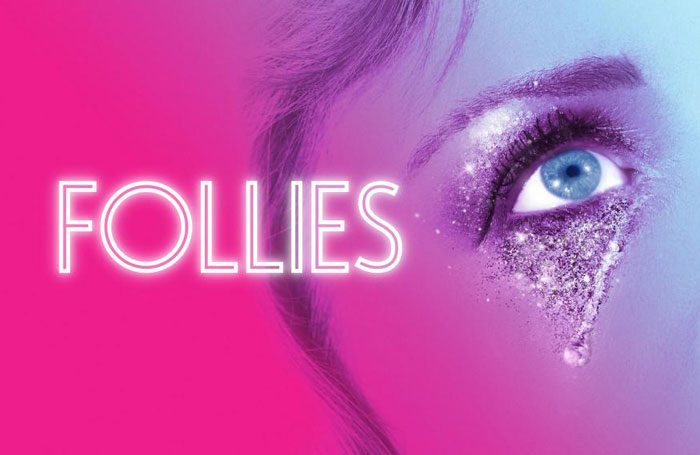
 

Follies at the National Theatre review *****

follies-poster-700x455

Follies

National Theatre, 2nd November 2017

I now think I might be mistaken in my general aversion to musical theatre. I think the problem may be that I just haven’t seen enough Sondheim. You can see from all the proper reviews and audience feedback just how well this production has gone down. Believe it. This is outstanding. Worth the thirty year wait And this from someone who is never happier than when he is locked up with 20 other punters above a pub seeing some obscure piece of European metaphysical miserabilism. So you can trust me on this.

There are a handful of tickets left. Or you can go with the Friday Rush or Day Tickets approach. If you can bear to do this, it will be worth it. This obviously cost a bomb to stage, so who knows if it will transfer, though patently it deserves too. If all else fails get to the cinema on 16th November when the performance will be screened live. Anyway, with a bit of luck, you are not a pompous, prejudiced berk like me and you will have already seen it.

Why so gushing? Design yes, courtesy of the gifted Vicki Mortimer, with her half=demolished theatre come to life on stage. The Olivier stage works best when the revolve is gainfully employed and when there is a hulking piece of stuff in the middle playing its part, as it does here. Direction yes. As others have remarked it is hard to believe this is Dominic Cooke’s first musical. Mind you, most everything he has done before, notably at the Royal Court, has turned to gold. This catapults him right to the top of the directorial league. The 21 piece orchestra, conducted by Nigel Lilley, the musical supervision of Nicholas Skilbeck, the orchestration of Jonathan Tunick and Josh Clayton and the outstanding choreography of Bill Deamer, especially in the tap routines; all combine seamlessly. Lighting and costumes are also to die for. Neon, washes, spotlights, feathers, sequins, heels, frocks, wigs, dickie bows, acres of face slap. Glam and glitz all present, correct and suitably superficial as the tale demands.

The 37 strong cast (bigger than a Premiership squad) is uniformly marvellous. The four leads garner most of the plaudits. Watching Imelda Staunton’s Sally, her girlish excitement as she is reunited with paramour Ben turning to bitter disappointment as reality bites, is about as good as acting gets. This is Imelda Staunton though so expect no less. Her rendition of “Losing My Mind” is spine tinglingly raw. Janie Dee as Phyllis, all disdainful bitterness, matches her. A trail of bile follows her round the stage. It all comes flooding out in the contemptuous “Could I Leave You”. Philip Quast is the big male beast of proper musical theatre and his Ben Stone is, to use another cliche, commanding. Watching him finally fall to pieces in the “Live, Laugh, Love” is as moving as theatre gets. Poor old Ben; money and status can’t buy you love or happiness. In my book, Buddy is the trickiest character to pull off, but not for Peter Forbes, who nails Buddy’s solipsistic refusal to take responsibility, preferring to play the fool, as he does in the “God Why Don’t You Love Me Blues”.

The younger ghostly doppelgangers (Fred Haig, Zizi Strallen, Alex Young and Adam Rhys-Charles) are perfectly matched, to each other and their mature selfs, and move effortlessly round the set. Who else? Tracie Bennett’s Carlotta, as she belts out “I’m Still Here”, even though no-one is listening, makes you want to punch the air. Operatic soprano Josephine Barstow’s duet with her younger Heidi self, play by Alison Langer, is another highlight. As, unsurprisingly, is Di Botcher as besuited Hattie in “Broadway Baby”. There are some other mind-blowing set pieces. The routine where the ladies intertwine with their sequinned and head-dressed younger selves is a highlight, as are the entrances early on down the fire escape stairs. The pastiche/parody routines are jaw dropping, camply serious, not seriously camp.

Here’s the thing though. All this stuff wouldn’t work for me if there weren’t real characters inside all the song and dance stuff and if the text and lyrics didn’t illuminate the characters. I can see that, at its heart, the story of a reunion of the showgirl cast and creator of an interwar Follies review is pretty flimsy. And that the idea of regret over lives lived and not lived, is hardly ground-breaking dramatic material. And bugger all happens. But I cared so much for these people.

And I think that even in the absence of a more upbeat ending as was apparently the case in the 1987 revival, this is still perversely an uplifting piece of theatre. And not just because of the tunes, though the way Sondheim’s music wraps its way around his lyrics, particularly into and out of the big songs, is a wonder to the ears. He just seems to perfectly capture not just the cadence of the words but also the emotions of the characters. No, the reason I came out all puffed up after this is because I think Sondheim, and writer James Goldman, tell us that all of this agonising over what might have been, which is basically what our four leads spend 2 hours bemoaning, is ultimately pointless. You only have one life. It will be full of disappointment and missed opportunities. But you might as well try and be happy with what you have. I appreciate this homily is f*ck all use if you don’t have the basics, or if your relationship threatens your physical or mental well being, but I can only describe what I think I saw and heard. There are plenty of other bright sparks, starting with that Buddha chap, who would agree that the best thing to do is ditch the constant yearning for something better. Dump the act: be yourself.

So there you have it. Redemption for Rufus Norris, AD at the NT, after the string of misses, (not as bad as some think in my book), on the Olivier stage this season. A triumphant revival of a marvellous piece of theatre where no-one, literally, puts a foot wrong. I am still smiling a week later. Loved it. No idea what the original audiences in 1971 Broadway were thinking when they failed to turn this into a monster hit.