
The Tell-Tale Heart at the National Theatre review ***

The Tell-Tale Heart

National Theatre Dorfman, 21st December 2018

No panto for the Tourist and family. This year’s entertainment was to be Anthony Neilson’s adaptation of the (in)famous Edgar Allan Poe short story about a writer who, let us say, loses a little bit of perspective. Some concern from our party, particularly those of a nervous disposition, as it gradually dawned on them what Dad had signed them up for, but I can cheerfully report that even LD took all the on-stage frights in her stride. For Mr Neilson, who is also directing, and the rest of the creative team, of which more later, have served up plenty of suspense and, occasionally gory, illusion but it is all undercut with humour and an air of wry parody. More Inside No 9 (though not quite as clever) than Texas Chain Saw Massacre.

Now Poe’s original story runs to no more than a few pages and tells of a madman haunted by the “vulture eye” of an old man. His obsession turns to murder which he confesses in fairly short order. So a classic morality tale of crime and punishment with the twist that it is narrated by the unhinged first person. Poe built on the Gothic horror tradition created by Horace Walpole, becoming the father of the psychological horror which film-makers today can’t get enough of, and the scary eye has been a staple of creepy stuff from the dawn of human existence. Check out Odilon Redon’s famous 1883 illustration for a copy of the story shown above. But Mr Neilson was going to need a bit more than that to fill a couple of hours of stage time and to appeal to us jaded sophisticates so Poe’s story has been subjected to some substantial, and largely, successful expansion.

Tamara Lawrance (soooo good in the adaptation of Andrea Levy’s The Long Song on the Beeb recently) plays Camille (or maybe Celeste) a young writer, feted for her first play, but having a bit of difficulty following it up (an NT commission ha, ha). So she holes up in a top floor garret in Brighton, Shining style, to tackle her writer’s block. Her isolated landlady, Nora, an all-in performance from Imogen Doel, is the chatty type, at first a welcome distraction, then increasingly annoying. She comes with a bit of a macabre back-story and an ostentatious patch over one eye. It doesn’t end well.

The story is told through flash-backs and flash-forwards which also involve the copper(s) sent to investigate Nora’s disappearance. It takes a bit of time to get going, though the first half, as Camille and Nora get to, very closely, friend each other, and detective David Carlyle begins his menacing/camp interrogations, doesn’t lack for atmosphere, but the real pay-offs come in the second half, both visually, and plot-wise. Anthony Neilson is probably guilty of a few too many meta twists and references by the end(s), though it does ramp up the breathless WTF quotient, and it doesn’t entirely all hang together, but who cares when there is this much invention on stage.

For designer Frances O’Connor, together with the lighting of Nigel Edwards, the sound and composition of Nick Powell and, especially, the video work of Andrzej Goulding, and everyone in their teams, have conjured up a visual and aural feast. Of course it is artifice, and deliberately so in many cases to keep pace with the knowing tone, but it is still very effective, there are some genuine audience jumps, and, for the slightly sad members of the audience (hello Tourist), a source of endless fun in ticking off the various techniques employed. As the hair-raising manifestations of her own mental state, (or did this really happen or maybe this just a script?), mount up, Tamara Lawrance steps up, never for a moment giving less than 100% commitment. Imogen Doel, and especially David Carlyle, have more in the way of comedy to deliver, which they plainly relish, and there are even a few unsubtle, though still funny, poo-based jokes.

Anthony Nielson I gather is a bit of a one for the collaborative, workshopping approach and his, and I assume, the rest of the creative team’s itch to pack in as much as they can in terms of plot, gags, schlock and stagecraft often shows, but this is still, for the most part, a thoroughly entertaining show that doesn’t take itself too seriously.
The Lehman Trilogy at the National Theatre review *****

114319196_445326e2cb_o

The Lehman Trilogy

National Theatre Lyttleton, 18th September 2018

So I gather this staging of Stefano Massimi’s play The Lehman Trilogy is a very different take from that lauded across Europe after its premiere in 2015 in Italy. No cast of thousands here. Just three amazing actors in Simon Russell Beale, Ben Miles and Adam Godley, and a minimalist set bearing all the usual hallmarks, (revolving glass cube, neon lights, monochrome, simple props to be shuffled around by the cast), of its designer Es Devlin, with symbiotic and effective video panoramas courtesy of Luke Halls, and thrilling sound and lighting design from Nick Powell and Jon Clark . All this from a director Sam Mendes, who is normally master of the maximalist, last seen in The Ferryman.

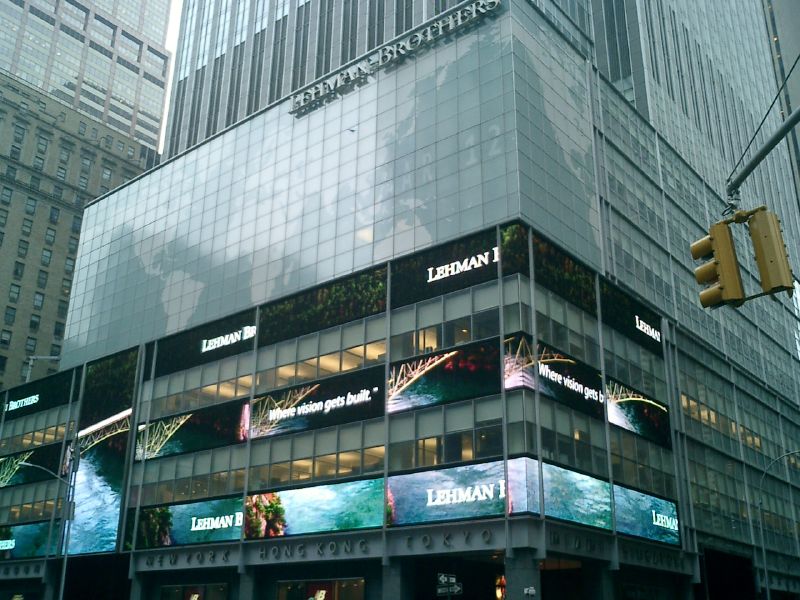
Of course no matter how good the production it all starts with the text. Here the Deputy Artistic Director of the NT, and dramaturg maestro, Ben Power has condensed the original play into the sprightliest 3 hours (ex intervals) imaginable. Of course there is a history lesson, but Mr Power, I assume reflecting the Italian original, draws out the themes and repeated motifs, and the key characters, the original three brothers, Henry, Emmanuel and Mayer, and the next generations, Herbert, Philip and then scion Bobbie. The final chapters, as the family cedes control to “outsiders”, and the collapse presided over by the hubristic bully Richard Fuld is, as many others have observed, a bit of a rush, but I don’t think that really matters. This is a story of the founding roots, expansion and degradation of American capitalism and, specifically, how a family of Bavarian Jewish emigres went from a farm supplies shop in Montgomery, Alabama to become one of the most powerful global financial dynasties ever seen. Lehman Bros is fascinating, yes because it is no longer there, but also because it was, to all intents and purposes, the first of its kind.

Our generation knows the importance of these institutions thanks to the crisis of 2008, still impacting the global economy a decade later. Lehman Bros, on that fateful 15th September, was the sacrifice made pour encourager les autres. The biggest bankruptcy in US history, (though the US, European and Japanese “franchises” largely ended up with Barclays and Nomura), Lehmmn was the catalyst for the intervention which we all all still paying for with, at root, the “wrong” cost of capital. The play though resolutely shows that cyclical crises are endemic to financial capitalism, and not just in the events of the 1929 Wall Street Crash. 1857 and 1873 also get a look in. The mis-pricing of complex risk is built into the system. It won’t go away.

We start at the end though with the iconic boxes, which staff used to carry out belongings after Chapter 11 was declared, piled up on the modern office set. These boxes in various configurations, with a few chairs, tables, a spot of graffiti and our imaginations, go on to signify the humble one room shop, the expansion into cotton-broking, the office in New York set up in 1860, the homes of the great and good in the story, particularly the families the three brothers marry in to, a synagogue, the boardrooms and trading floors of the palaces of the post WW II years.

And all the supporting characters, wives, children, business associates, rabbis, friends, even a tightrope-artiste, all are played by our three actors. Throughout they wear the formal frock coat attire from the mid C19. So all these “extras” are conjured up with accent, movement, stance, attitude. Now Simon Russell Beale relishes this sort of caper but Adam Godley near matched him, especially when it came to squeezing humour out of his impersonations. All three of these actors have been at the top of their game for years. Whether on stage, large or small screen, it is a fair bet that they will steal the show in whatever they appear in. To have them all together was revelatory. This is an abstracted story. With a narrative arc of this scale, across this much time and space, intricately juxtaposing the familial with the social, political and economic, it couldn’t be anything else. So everything we see, hear and learn is formed from the basic building blocks of acting and direction. Yet it is so, so rich, symphonic if you will. Look out for the recurring nightmare scenes. Just one example. Simply stunning.

Oh and there was one other genius involved. Candida Caldicot. The soundtrack to this odyssey conjured up live with one piano.

With this story, this cast, this director, this text and this creative team this was always likely to be a winner. No surprise it was an early sell out. This play in this adaptation will re-appear. No question. Whether you get acting of this quality again I am not so sure.


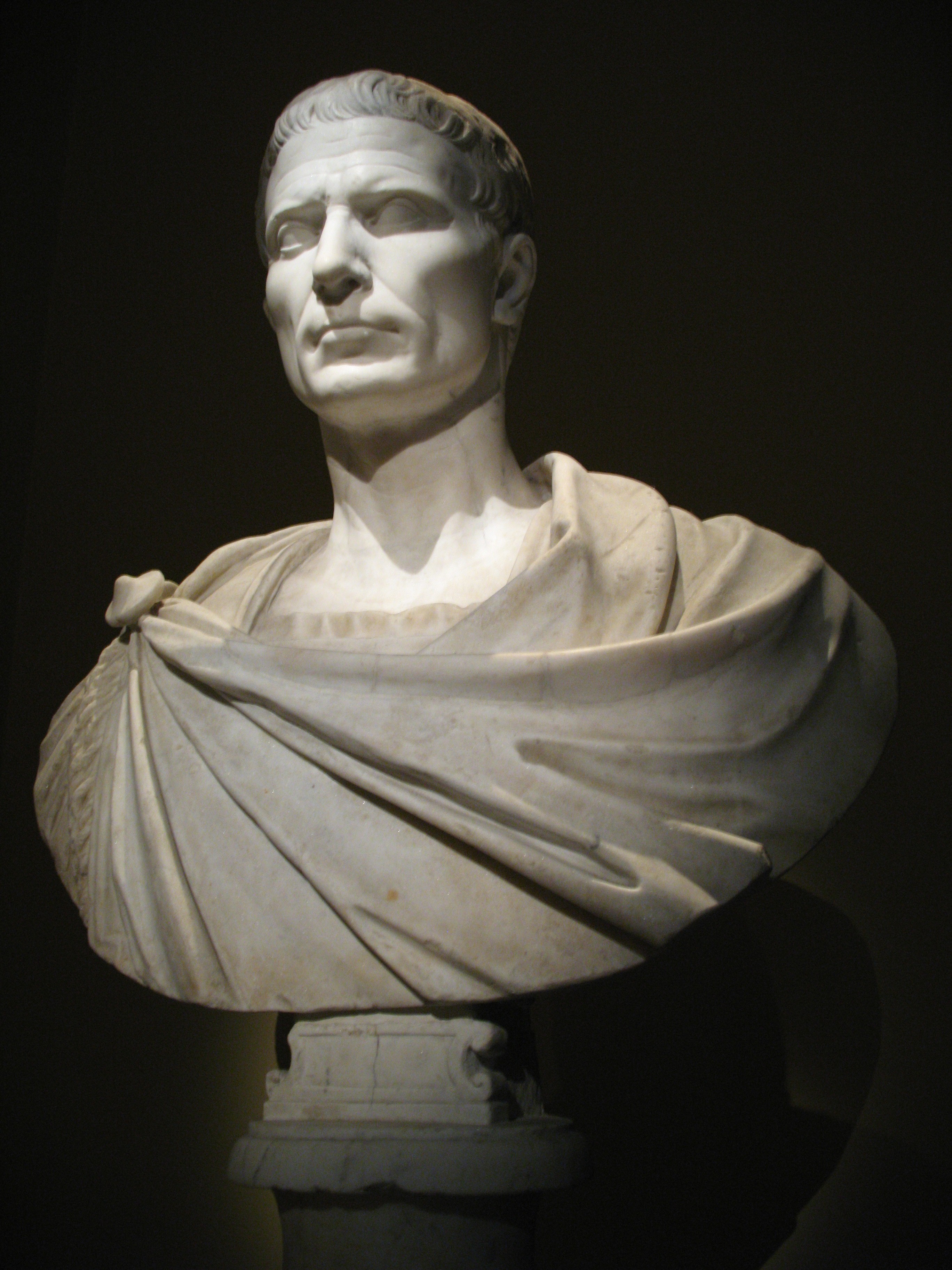
Julius Caesar at the Bridge Theatre *****

0092_-_Wien_-_Kunsthistorisches_Museum_-_Gaius_Julius_Caesar

Julius Caesar

Bridge Theatre, 28th February 2018

I had really, really been looking forward to this. Julius Caesar is one of my favourite Shakespeare plays. Contemporary relevance of course, but Shakespeare always has relevance. My appetite whetted by the excellent RSC production I saw at the Barbican last month, (Julius Caesar at the Barbican Theatre review ****) and by Phyllida Lloyd’s heady all-female interpretation at the Donmar Kings Cross in 2016. Nicholas Hytner in the director’s chair and Ben Whishaw, David Morrissey, Michelle Fairley and David Calder in the four lead roles.

So a little bit of snow wasn’t going to stop me getting there, and dragging the SO along with me. It didn’t disappoint. Best play I have seen so far this year, along with John at the NT: admittedly we are only a couple of months in, with the NT Macbeth having just opened and, I haven’t yet seen Network at the NT. Still this is a cracker. There are plenty of tickets left in the run, though the cheaper seats have largely gone, (it is hard to believe there is a bad seat anywhere in the Bridge), but it is well worth 50 quid or, if you are a fit young’un snap up a promenade ticket and be part of the action.

The transformation into a promenade space from the straight on staging of Young Marx shows just how marvellous the Bridge space is. The promenaders are shepherded around the pit by stewards, a metaphor for the manipulation of the populus as effective as it is obvious. Bunny Christie’s production design is equally blunt but effective, with a series of plinths rising from the floor as and when scenes change. A massive shout out to production manager Kate West, company stage manager Hetti Curtis and the rest of the team at work for this performance and behind the scenes. To make this intricate production succeed, whilst actually enhancing its dynamism, takes real skill. Watch and see, especially, the floor transformed into a battlefield for the final scenes. The stage management team were rewarded with well deserved applause at the end. Bravo.

Even before Caesar (David Calder) appears in front of the crowd with Mark Anthony (David Morrissey) in tow, we have a treat in storm with a some pumped up rock’n’roll for Lupercal courtesy of a street band made up of Abraham Popoola, Fred Fergus, Zachary Hunt and Kit Young. I already have a high regard for Mr Popoola, having seen his vigorous Tobacco Factory Othello alongside Norah Lopez Holden’s Desdemona and Mark Lockyer’s Iago at Wilton’s Music Hall. (Othello at Wilton’s Music Hall review ****). Turns out he can sing a bit too and he puts in a stint as a plotter in the form of a taciturn Trebonius. Fred Fergus doubles up as a slow-witted Lucius and gets a right kicking as Cinna, in that simple but so effective mistaken identity scene. Kit Young is a crafty Octavius.

David Calder’s Caesar ticks all the right boxes: proud, conceited, vainglorious. Here is a man used to getting his own way. His eventual dismissal of Calpurnia’s (an under-utilised Wendy Kweh) qualms about his visit to the Senate is insouciant but still reveals a hint of underlying unease. Our conspirators are a thoughtful bunch. Michelle Fairley as Cassius is neither bluntly straightforward in her entreaties to Brutus not bitter in her abhorrence of Caesar and what he is turning into. Instead she is logical, using force of argument to persuade Brutus to lead the coup. Books, glasses, a desk and Ben Whishaw’s innate demeanour make him a contemplative, but still determined, Brutus. You can easily see why his belief in his own rectitude might come across as priggish arrogance to the crowd. He seems to be going through the motions in his justification speech. Mind you I can see why he might underestimate David Morrissey’s Mark Antony. He comes across as a duplicitous chancer, making up as he goes along. I don’t recall being as struck by his mendaciousness before in the scene with Octavius at the beginning of the battle when he brusquely withdraws the pay-out to the people in Caesar’s will.

I reckon a woman playing Cassius, (and indeed women playing other of the conspirators), will, and should, become the norm. It creates a shift in the dynamic between Cassius and Brutus which can be profitably mined, both in the early conspiracy scenes and in the bust-up and reconciliation ahead of the battle. I am not sure whether the distance I sensed between Brutus and Portia, (Leaphia Darko who I hope to see in a much bigger role), was intended but it created an interesting ingredient. Every Casca should be as pointedly sardonic as the scene-stealing Adjoa Andoh. I know Ms Andoh has had an illustrious stage career but I couldn’t help thinking, for example, how much better the recent RSC production of Antony and Cleopatra would have been with her in the driving seat. The rest of the cast, Mark Penfold as Lepidus, Ligarius and the Soothsayer, Nick Sampson as Cinna, Leila Farzad as the reluctant Decius Brutus, Hannah Stokely as Mellellus Cimber, Sid Sagar and Rose Ede were all on top form.

Nick Hytner directed the first Shakespeare productions that ever made any sense to me; his RSC productions of King Lear and The Tempest with the incomparable John Wood. This was when I first “got Shakespeare”.. He is the master of modern dress, “contemporary” Shakespeare. Early on at the NT he created a Henry V with Adrian Lester which was the antithesis of jingoistic. All the surveillance stuff in Hamlet that Robert Icke loaded up on at the Almeida. Look no further than Hytner’s 2010 version with a bookish Rory Kinnear as the Dane. His Othello at the NT with, surprise, surprise, Adrian Lester and Rory Kinnear, is possibly the best Shakespeare production I have ever seen. His Timon of Athens with Simon Russell Beale kicked into a cocked hat any notion that this is a difficult, unbalanced play.

His visual language is so complete that, even if you don’t catch every line. (let’s face it that is going to happen with Will S, one reason why you can never see too many productions), you still comprehend pretty much everything in front of you. He takes a view for sure, but always in the service of the universal themes that the plays wrestle with. Every single detail is thought through. For anyone who thinks Shakespeare is not for them, Mr Hytner will change your mind.. It helps that his key collaborators in this production, Bruno Poet (lighting), Christine Cunningham (costume), Nick Powell (music), Kate Waters (fight) and, especially here, Paul Arditti (sound) are so expert in bringing his vision to life.

The Trumpian allusions are not overplayed. No need to. We can see the attraction of Caesar to the crowd, but we also see why the conspirators are so alarmed by his lazy demagoguery. The vacuum that is created after the assassination, a visual twist here, is palpable, as the patronising elitist Brutus and the pragmatic Cassius haven’t thought through what happens next. Sounds familiar eh. Which leaves a yawning gap for the opportunist Mark Antony to unleash those war dogs. The failure of the “liberal’ response to populism hangs heavy in the air.

Finally here is my plea to Mr Hytner. Whilst I absolutely get that Messrs Shakespeare, Bean, Bennett, Hodge and McDonagh are, incontrovertibly, the best of writing collaborators, and I see he has the scoop on Nina Raine’s new play, please can you have another crack at Ben Jonson or Marlowe. Maybe you can make sense out of Bartholomew Fair and pull the punters in. There’s a challenge.

P.S. I note that another play that deals with the had-wringing liberal response to populism, albeit in a very, very different way, Roland Schimmelpfennig’s Winter Solstice, still has a few more legs of its tour left, Plymouth, Edinburgh and Scarborough. Highly recommended.