
The Good Person of Szechwan
Moscow Pushkin Drama Theatre, Barbican Theatre, 9th February 2019
I am a sucker for these Russian theatre companies. Despite the fact that I can’t say I was bowled over by the last visits of the Maly Drama Theatre of St Petersburg and the Vakhtangov State Academic Theatre of Russia. Much to admire but they don’t half go on a bit. Still it’s the idea of seeing Russian drama in Russian that appeals to this culture vulture. So I signed up for the Chekhov Cherry Orchard and this Brecht classic in an instant, though given that past experience, I went for the cheap seats just in case.
Which turned out to be a wise choice in the case. of The Cherry Orchard. No review for the simple reason that I only made it to the interval. To be absolutely clear this was not because it is a poor play, I have seen TCO on many occasions and when it works it can be as good as theatre gets, (though I prefer Uncle Vanya’s dose of comic deprecation alongside all the revelatory ennui). Translation is, and was, not a problem, though this version felt a bit peremptory, and my eye was a little caught between the sur-title banners. A minor irritation. Nor was I phased by the vogue-ish set and setting. A raked stage, made up of various entrances, a kind of crucifix in the centre, expressionist lighting, modern-ish dress, devoid of samovar and birch, stylised choreography with multiple “crowd tableaux”. Maybe the production advertised its Absurdism a little too loudly but nothing the Tourist can’t deal with having seen, and enjoyed, some challengingly bonkers stuff in the last few years. Creatives can, and should, arse about with Chekhov. The old boy can take it.
Nope the problem for me was that, amidst all this invention from director Vladimir Mirzoev and team, which certainly looked brilliant, and lent rhythm and context to the drama, Chekhov’s philosophical musings got a bit lost along the way. There was some pretty heavy-handed symbolism; one or two little sailor-suited Grishas, Madame Raneskaya’s dead son kept popping up, Lopakhin was sex symbol as well as vulgar, proto-capitalist, governess Charlotta, in full on Kate Bush Withering Heights mode, becomes a kind of spirit presaging the coming Revolution, there are blood-bags standing in for the Orchard !!!!. If there was a meaning in the text, or in the sub-text, then this production wasn’t going to hold back from offering up a visual signifier to make sure the you didn’t miss it. TCO is so much more than a bunch of air-head, spendthrift aristos blind to what is happening around them. There are individuals wrestling with their own destinies and there are relationships to be unpicked.
I could see the parallels with the world today, an exalted elite about to be overwhelmed by a populist wave, interesting in the context of modern Russia, but it was also pretty clear that this wasn’t for me. So I missed the techno party in swimsuits and Alexander Petrov turning Lopakhin into a full-on oligarch, but I think it was the right call.
What it did do though was get the juices flowing for The Good Person of Szechwan. If this was the way a Russian company was prepared to shake up their own uber-dramatist, what might they do with the German sage, albeit with a different director, Russian wunderkind Yury Butusov in the hot seat. The last time I saw TGPOS was so long ago I had forgotten the details but I did remember it makes a few strong points tellingly well, even if it takes it time to do so, it is long on tunes and that whoever plays Shen Teh earns their fee.
Basics first. Brecht completed the play in 1941 by which time he was in the US though its first performance was in Zurich in 1943. Long-time collaborators Margarete Steffin and Ruth Berlau worked with Brecht, and the score and songs were created by Swiss composer Huldreich Georg Früh. However in 1947, Paul Dessau created and alternative collection of songs which is now the standard and which was used in this production. TGPOS has all the Brechtian “epic theatre” hallmarks though it was obviously inspired by an interest in the conventions of Classical Chinese drama, not just in terms of subject, a parable involving the intervention of gods on humans, but also the situation and performance style. There is also, to my eyes, more than a nod to classical Geek drama, with the intervention of the Gods at beginning and, in the trial, at the end. As well of course, as a classic double identity plot.
The original title translates in German as “love as a commodity” but also, in a different spelling as ‘true :one” which gives a fair idea of Brecht’s target. Shen Teh is a prostitute who struggles to live a “good life” in line with the morality handed down by the gods. Everyone around her takes advantage of her generosity to the point where she invents an alter ego male Shui Ta, to protect her interests. Shen Teh meets a suicidal unemployed pilot, Yang Sun, with whom she falls in love, but he too, egged on by his mum. only ends up exploiting her. Eventually Shen Teh deception is revealed and a trail ensues.
And so we have a dualism, a dialectic if you will, between gender, between altruism and exploitation, between the individual and society. Economic substructure defines the morality in the human superstructure; the gods gift Shen Teh the money to buy her tobacco shop, the relations between Shen Teh and her customers and her landlord, Yang Sun pretending to love Shen Teh to get his hands on her capital. There is also, for me, a religious dimension. Why won’t the all powerful goods intervene to prevent this naughty humans getting up to no good rather than piling all the pressure on Shen Teh? It’s not subtle but it’s still vital.
So plenty to get your teeth into if this is the bag you are into. Which I most definitely am. This being Brecht, there is plenty more beyond the Marxist, (filtered through the writings of theoretician Karl Korsch,) economics lesson. We begin, for example (after bit of sand play) in the prologue with a direct address to us, well the Gods, through the character of Wong, the unfortunate water seller, he played by Alexander Matrosov, in a somewhat disturbing, palsied “village idiot” manner. (I have to assume Russian audiences have a rather less enlightened attitude to disability). The set, designed by Alexander Shishkin is spare, and dark, denoting a “derelict, abandoned world” according to the programme, with props, (chairs, beds, bicycles, a noose, dogs – you know the usual apocalyptic detritus), scattered across the Barbican stage and three birch trees shielding a backdrop for sledgehammer visuals (Diane Arbus’s twins a particular brazen favourite). The lighting design of Alexander Sivaev is suitably harsh, though effective. The jazzy Dessau score and songs, in German, are used in their entirety though the on-stage band, under director Igor Gorsky, doesn’t skimp on additional eclectic arrangement and material, even some incongruous dub and EDM.
A well choreographed Anastasia Lebedev plays all the Gods, and Alexander Arsentiev is Yang Sun, here just Unemployed Man. The rest of the cast (with a few familiar faces from The Cherry Orchard) loads up on supporting roles with no doubling and the whole ensemble moves, sings and performs with gusto. And that is certainly the case with a shouty Alexandra Ursulyak in the lead role, for which she has been garlanded in Russia. Apparently the production is rooted in the concept of “behavioural plasticity” which is a real biological thing where organisms react to changing external stimuli. And there was me thinking they were acting. Anyway Ms Ursulyak’s torn fishnets, shiny plastic mac and gars make-up for Shen Teh, and baggy pinstripe suit, bowler and pencil moustache screamed alienated cabaret Weimar which persuaded me.
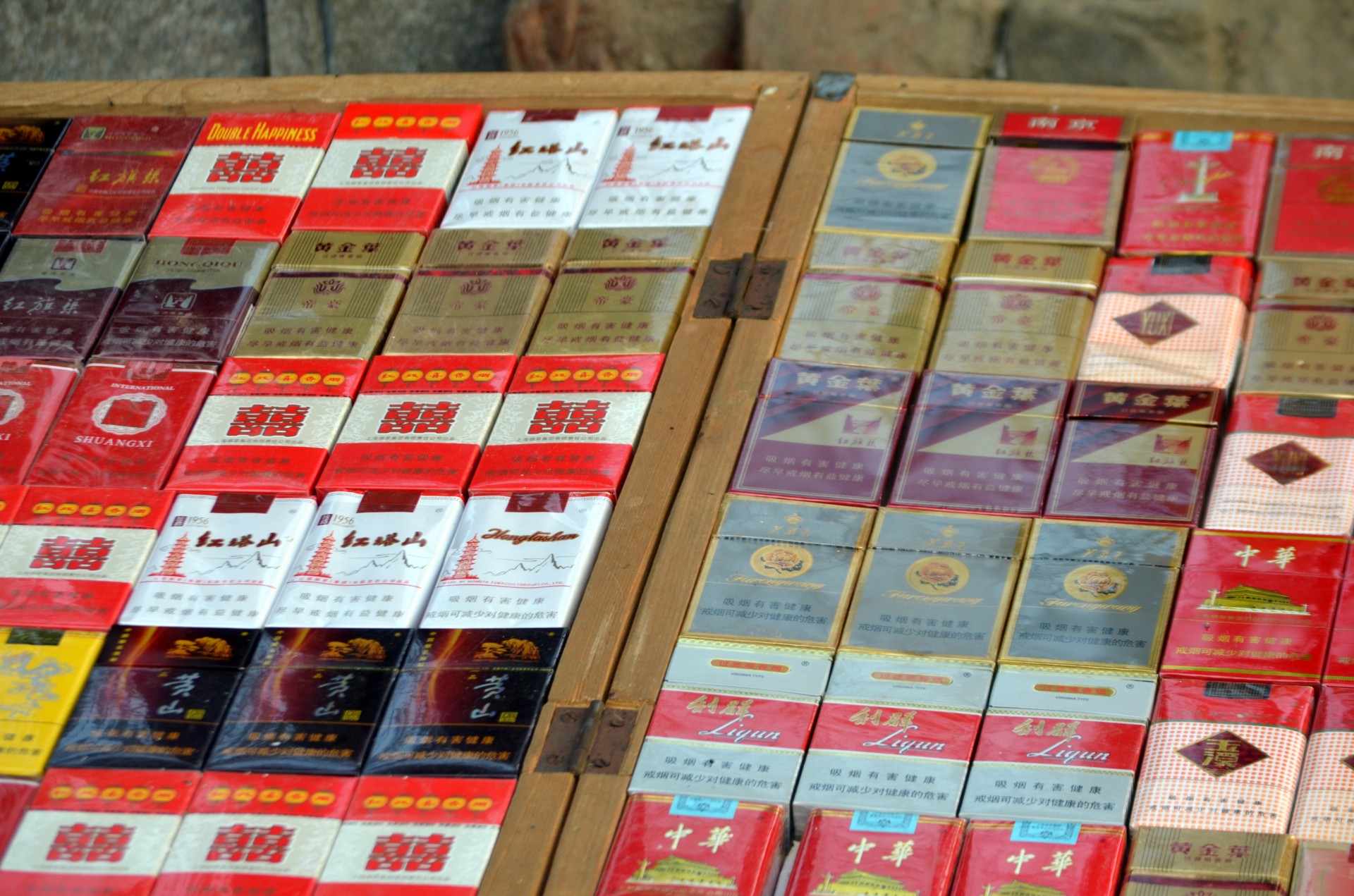
There were a few scenes which lagged (200, 330, 500 silver dollars) but, overall, as it should be with competent Brecht the 3 hour 20 minute running time wasn’t a chore, given a translation to follow, political lessons to be absorbed, songs to enjoy, after a fashion, and Shen Teh’s journey to absorb. And some cracking stagecraft. Rice rain anybody? Or better still a deluge of fag packets? The production first appeared in 2013, and I’ll warrant will be playing for many years yet.
The Tourist consumes a play that explores the contradiction between morality and capitalism, especially the commodification of relationships, bought to London by its most famous Russian oligarch emigre. Pick the bones out of that BD.
 At Home He Feels Like A Tourist