
Until the Flood at the Arcola Theatre *****

Until the Flood

Arcola Theatre, 10th September 2019

I am in awe of actors, and indeed other performers, who are prepared to step out on a stage alone to entertain, inspire and educate us. A one character monologue is tricky enough. To present multiple characters surely more so. To inhabit 8 different, very different, people with no more than a jacket and a chair. 8 fictional characters though all based on the testimonies of real people. To also pack a emotional punch, lay bare the fault-lines of race in modern America but never harangue or proselytise. Surely impossible.

Not when Dael Orlandersmith takes to the stage with her work Under the Flood. The Tourist first alighted on Ms Orlandersmith’s work through the revival of Yellowman at the Young Vic a couple of years ago which tells the story of two friends Eugene and Alma across three decades, dissecting race, gender and, especially, colourism, and was way better than anticipated. Until the Flood, where she is both writer and performer, also blew me away despite now raised expectations.

It was first performed in St Louis in 2016 and as a response to the shooting of Michael Brown and in the suburb of Ferguson and the protests that followed. 18 year old unarmed African American Michael Brown was shot by a 28 year old white police officer Darren Wilson in August 2014. The circumstances of the killing were contested with the account of Michael Brown’s friend Dorian Wilson, who was with him, significantly diverging from that of the police officer. The police response to the unrest which followed the killing was viewed by many as excessively heavy-handed. A grand jury decided not to indict Wilson and a US Department of Justice investigation concluded that he had shot Brown in self defence. Many in the community believed this to be a cover-up given inconsistencies in witness statements and forensic evidence and biases in the legal process.

Prior to this short run at the Arcola the play was a highlight at the Edinburgh Festival. Dramatisation of cause celebres is a staple of recent American theatre but DO goes a stage further by attempting to show the character types which inhabit the world where this kind of tragedy is possible, almost inevitable, and to show the behaviours, prejudices and reactions that underpin it. There is Paul, a young black man, consumed by fear of the police and violence, hanging on until he can escape to college. The unapologetic white homophobe racist, Dougray, who revels in his hate, describing how he would gun down a group of black teenagers. Rusty, the retired white police officer who excuses shootings as inevitable given the stresses of the job. Connie, the white liberal woman whose attempts at balance only serve to highlight the assumptions she makes. Louisa, the wise black senior woman who tells us of the overt racism of her childhood, including so-called “sundown” laws. The pumped up, frustrated black youth who only sees disrespect around him. A black, female, lesbian minister who speaks to a convincing tolerance. Reuben, the barber shop owner who refuses to conform to the stereotype that two students, one black, one white, who come to Ferguson to study the case, wish to impose on him.

All these characters become more than their race or situation in DO’s hands – education, class, employment, neighbourhood change, gender roles, all get a look in – but it is race, and maybe more importantly, shared white privilege, is what pulls the narratives together. Takeshi Kata’s set offers a shrine to Michael Brown’s memory backed by video designs from Nicholas Hussong introducing each character and offering, along with Justin Ellington’s sound, snatches of the events in Ferguson. I suspect Neel Keller didn’t have too much to do by way of directing DO who is a mesmeric stage presence. It is tough to listen to, and moving as you would expect, but DO still finds humour.
The American Clock at the Old Vic review ***

The American Clock

Old Vic Theatre, 11th February 2019

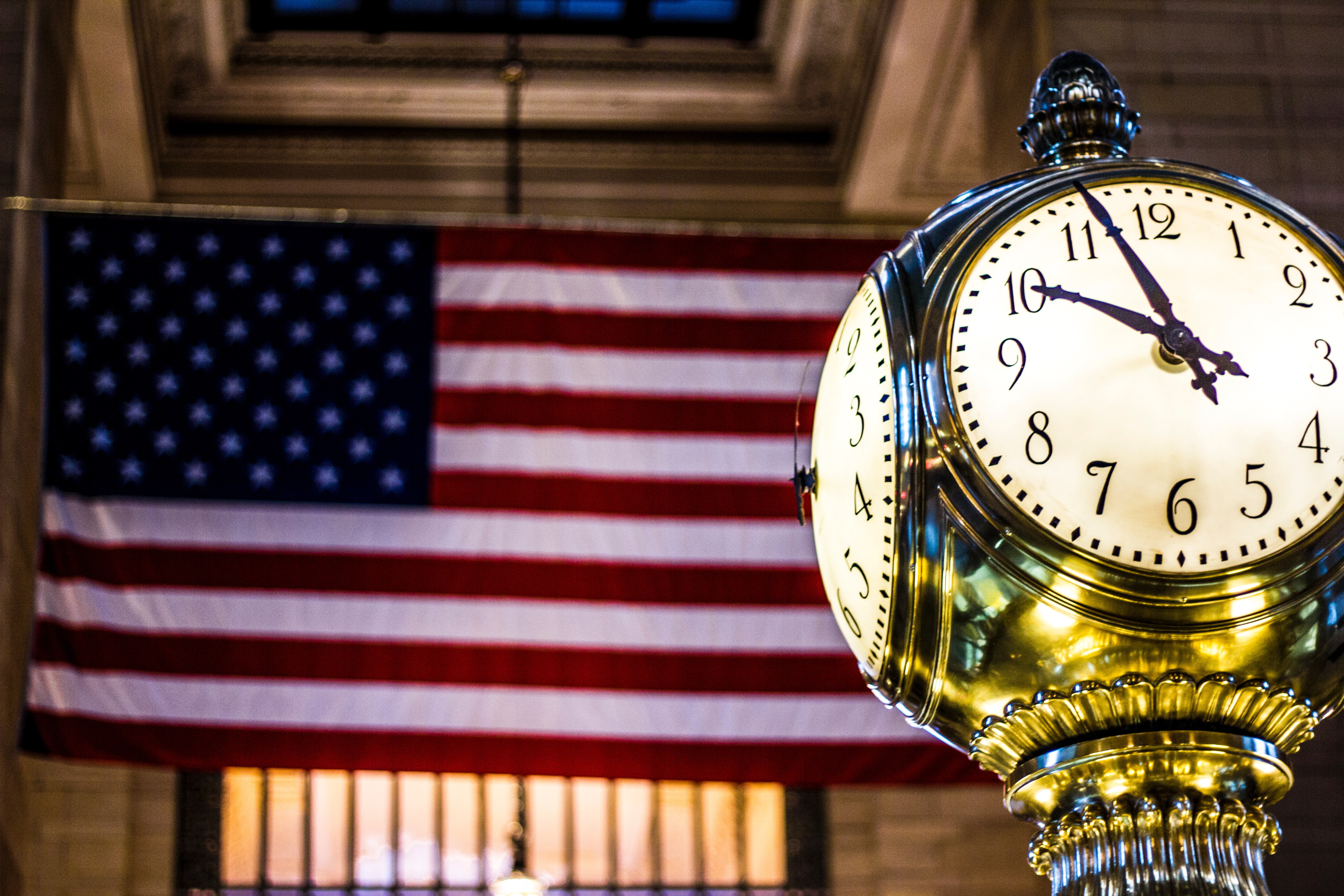
All the reviews will tell you the same thing. This was not one of Arthur Miller’s finest moments. Mind you his finest moments are amongst the greatest in theatrical history so the bar is set pretty high. A series of vignettes, with musical accompaniment, inspired by the oral histories of Studs Terkel, notably Hard Times, which intend to knit together to offer a dramatic critique, if you will, of the Wall Street Crash and The Great Depression. Almost bound by its form perhaps to fall short dramatically but could still fly as theatre.

It might have flopped on Broadway when it first appeared in 1980 but apparently the NT production from the mid 1980’s, (albeit under the guidance of master director Peter Wood, the man who breathed life into Stoppard’s comedies), was a great success. So I can see why Matthew Warchus entertained the idea of American musical director Rachel Chavkin having a crack at it on the Old Vic stage. Especially after the success of Conor McPherson’s Girl From the North Country, which to me, albeit with the powerful addition of the music of one B. Dylan, it somewhat resembles.

Miller himself termed it a vaudeville, a variety entertainment popular in the US before the Depression, and similar to music hall in good old Blighty. A long way from the original French precursor, (which I have just learned about – thanks teach), from the late C18 which was the lightest of comedies interspersed with songs and ballets. Comic opera with no intention of lecturing its audience. Unlike Mr Miller who leaves you in no doubt about what he is trying to say. It probably “helped”, at least artistically, that Miller’s own family like so many other well-to-do types were ruined by the Crash.

The American Clock is centred on the Baum family, an initially well to do Manhattan Jewish family, Moe, Rose and son Lee, who lose it all in the Crash and are forced to move in with family in Brooklyn, (Rose’s sister Fanny, her son Sidney and his wife Doris, and Grandpa). A narrator of sorts appears in the guise of sagacious money man, Theodore K. Quinn, who sells out ahead of the crash, in contrast to a bunch of his peers, who we meet, along with a whole host of other characters incidental to the Baum’s journey. In total there are some 26 named characters. Thus the whole of American society is represented. And, just to emphasise the timeless relevance, and thereby add more bodies to the stage, Rachel Chavkin has chosen to cast the Baum family with three different sets of actors, White Jewish, African American and Asian American. Actually it turns out this is less of an annoying conceit that in sounds.

Now I can see why uber critic Frank Rich archly observed that, “It is Mr. Miller’s notion, potentially a great one, that the Baums’ story can help tell the story of America itself during the traumatic era that gave birth to our own. As it happens, neither tale is told well in The American Clock: indeed, the Baums and history fight each other to a standoff.” That about sums it up though it is a little harsh. Each episode in the “story”, and there are many, sheds light on a slice of American life across those fateful few years, whilst still giving primacy to the journey of the Baums. But we never get to see enough of these characters to make any emotional connection to them and the narrative arc is too fragmentary to generate any real direction.

Having said that some of the scenes, individually are powerful, the dispossessed Mid-West farmers taking control of an auction on behalf of one of their number, the call to action from an oratorically gifted Communist agitator in the office for poor relief, the dance marathons, for example. And the play looks at sound fantastic. Chloe Lamford’s in-the-round set starts out as a commodities trading floor and, then, through constant evolution (and revolution,) becomes speakeasy, club, family home, diner, auction house and much much more. Rose Elnile’s costumes are similarly evocative. The combined talents of composer Justin Ellington, sound designer Darron L West, musical director Jim Henson and his on stage band made up of Shaney Forbes, James Mainwaring and Laurence Ungless create a rich, jazz based, aural tapestry. Top of the class though is surely choreographer Ann Yee, (and not for the first time in my experience, Caroline, or Change, the War Requiem at the ENO, and the Donmar Shakespeare Trilogy are all recent examples of her work), who oversees some smashing dance routines..

There are also many committed performances notably from Clarke Peters, Clare Burt, Francesca Mills, Golda Rosheuvel, Ewan Wandrop and Abdul Salis.

So, if you are tempted, and there are plenty of reasonably priced tickets left, I wouldn’t stop you. Just don’t go expecting to get the emotional punch in the gut that classic Miller delivers. I have certainly endured worse history lessons.