
The Knight of the Burning Pestle at the Barbican Theatre review ****

The Knight of the Burning Pestle

Barbican Theatre, 8th June 2019

The Tourist has fallen embarrassingly behind on his documentation of a cultural life. Ironically because he has been on holiday. Unfortunately for you though this is not (yet) one of those countless dormant blogs, casualties of time and application. So back to early June, the Barbican and the inestimable Cheek by Jowl. But this time the Russian ensemble under the direction and design of Declan Donellan and Nick Ormerod. The last time they visited was 2015 with Measure for Measure, though I venture I recognised a couple of cast members from the rep season earlier this year of the Moscow Pushkin Drama Theatre (on this stage, of course) who make up the CbJ company.

Now The Knight of the Burning Pestle makes a fair claim to being the first work of meta-theatre in the English language. Written by Frances Beaumont in 1607, and first published in 1613, it is a satire on the chivalric romances of earlier centuries, in a similar vein to Cervantes’ Don Quixote, which specifically parodies the work of contemporaries Thomas Heywood, The Four Prentices of London, and Thomas Dekker, The Shoeman’s Holiday. CbJ stick fairly closely in this adaptation to the original plot, though of course, delivered here in Russian with English sur-titles. Which heritage provides inspiration for a further twist. Since before the grocer George and his wife Nell emerge from the audience to berate performers and director on stage, and subsequently promote the acting “talents” of their inept nephew, we are treated to some hard core minimalist European auteur theatre (of the type that CbJ itself excels at). Monochrome, mannered and mystifying, beginning with actors shuffling up chairs in hands, even a few minutes of this leaves the audience feeling like it is going to be in for a long, “high concept”, night.

So that the laughs which come when Alexander Feklistov and Agrippina Steklova, our “low” culture delegates, pipe up, are as much from relief as from the character’s gaucheness in breaking theatrical convention. They want to be entertained (we later find out they couldn’t get tickets for The Lion King!) and demands changes. Our bemused director Tim (Kirill Sbitnev), the spit of Brecht, eventually persuades then to sit stage left and we return to the staging of “The London Merchant” but it is not long before the couple call young Rafe (Nazar Safonov) to the stage and insist he be allowed to act out his own “knight (grocer) errant” role complete wit burning pestle heraldic device, apparently a medieval knob gag.

The actual play concerns the attempted elopement of Jasper Merrythought (Kirill Chernyshenko) and Luce (Anna Vardevanian), who is betrothed to toff Humphrey (Abdrei Kuzichev). The lovebirds dream up a fake elopement scam, Jasper’s long suffering Mum (Anna Karmakova) decides to leave his feckless Dad (Alexei Rakhmanov) taking younger brother Michael (Danila Kazakov), there is some jewellery, a coffin, fights, testing of devotion, but all ends happily. At the same time the hapless knight Rafe gets in on the action, swanning off to Moldavia, rejecting a princess, before, egged on by his employers, giving us his ostentatious death scene.

Amongst all this meta upon meta upon meta conflation, (the set is a rotating cube, each scene is announced by Brecht-like projections, there is live video, obvs, there is a psychedelic-dance-dream routine to thumping techno), the daft story is actually quite entertaining, the crack Russian cast, especially Mr Feklistov and Ms Steklova, actually manage to project real character, and there are a fair few laughs, even if of some of the theatrical in-jokes went over my head. And the serious point about what theatre is for and who “owns” it, audience, writer or performers, is deftly made. Of course the Tourist would expect nothing less from Messrs Donellan and Ormerod. And even if the main, conceptual, joke wears a little thin after a while the whole thing is wrapped up in 90 minutes and thus easily forgiven. Apparently in versions that stick to the original text this can top 3 hours.

Francis Beaumont started out as a lawyer before studying with Ben Jonson no less, and went on to write in partnership with John Fletcher who collaborated with Shakespeare on Henry VIII, The Two Noble Kinsmen and the lost Cardenio. On the strength of this it would be interesting to see a new take on the Beaumont/Fletcher collaborations which generally went down well with Jacobean audiences, in contrast to TKOTBP which bombed apparently as the punters failed to appreciate the irony and satire. Which, if you think about it, probably gave Beaumont a great deal of pleasure given that his play is about the failure of an audience to appreciate the play presented to it. I also wonder what they would make of current popular culture, dripping as it is, with self-reverential, meta-, post-modernism.
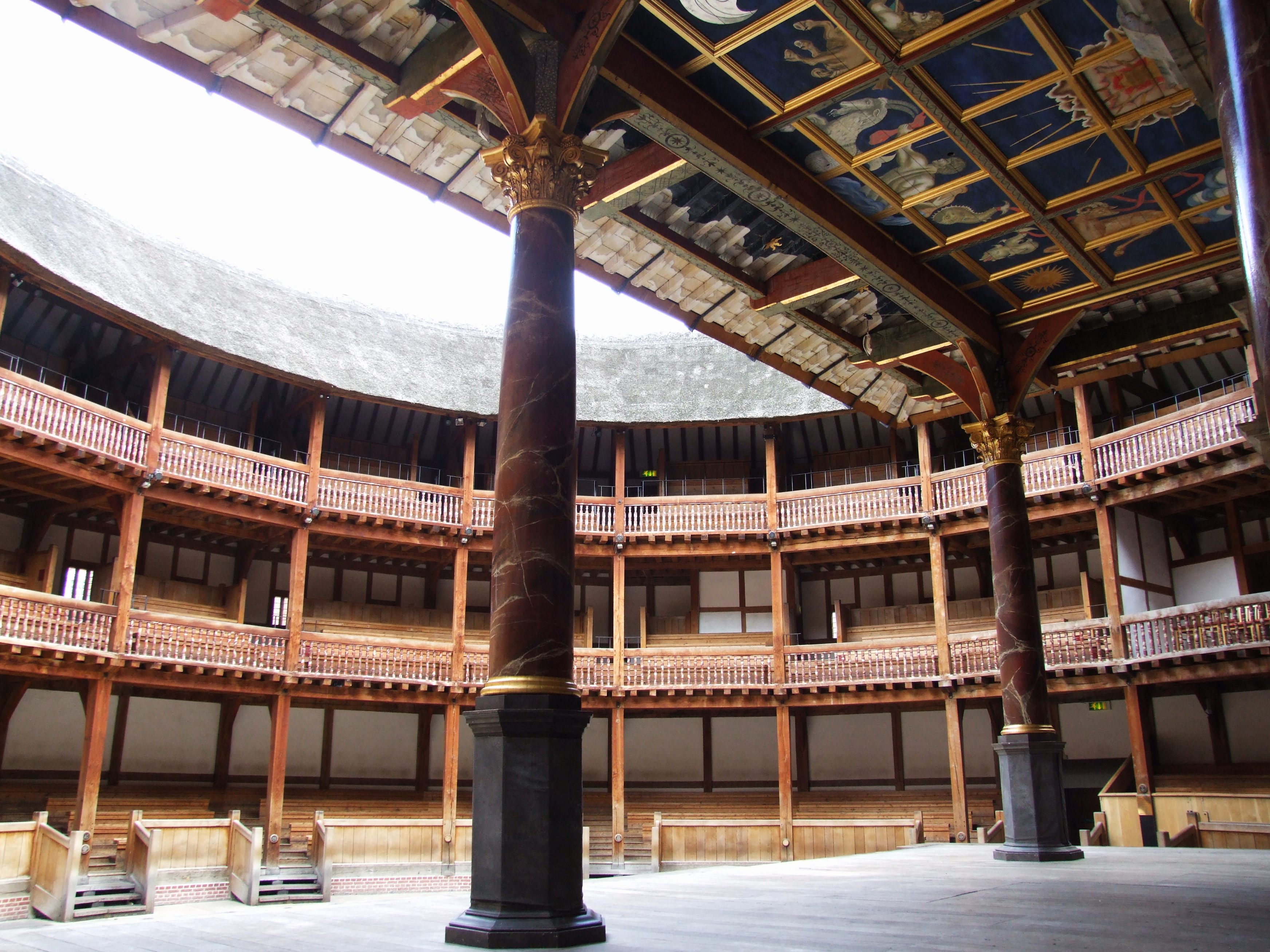
The Two Noble Kinsman at the Globe Theatre review ****

globe_theatre_innenraum

The Two Noble Kinsman

Globe Theatre, 12th June 2018

I am not too keen on the Globe. Actually that is putting it mildly. I really don’t like it. For the simple reason that it is so bloody uncomfortable. I know that is the point. Sam Wanamaker’s vision of a re-creation of Shakespeare’s original entertainment house would hardly work with plush seats and perfect sight-lines but it does’t stop my bum from numbing, my back from aching, my knees from cracking and my attention from being distracted by the shuffling of the even more unfortunate folk in the Yard and the roar of the planes overhead. Which means, however good the production, and however atmospheric the mood created, (and it certainly can be atmospheric), I am normally too unsettled to totally commit. My fault for being a fat, whingeing curmudgeon.

There are times though when I get tempted and this was one of them. I had never see “tragicomedy/romance/pastoral” The Two Noble Kinsmen before and the prospect of Barrie Rutter directing, and taking a scalpel to the preposterously over-written text, was just too inviting. I also reasoned, correctly, that it wouldn’t be packed to the rafters given this was not Shakespeare’s finest hour. TTNK was written in conjunction with John Fletcher, first performed in 1613/14 and first published in 1634, so it didn’t appear in Heminges and Condell’s First Folio. Probably because they didn’t have a decent text to hand and they didn’t deem it worthy given the co-authorship. Shame. Maybe then it wouldn’t get such a bad press, along wth Pericles, and maybe then we would also have a version of the lost Cardenio (based on the Don Quixote legend) to savour.

The mash up of Chaucer’s Kings Tale, via Greek tragedy, latin epic, English masque, and Italian romance is daft, no doubt about that, but no more so than some of Big Will’s other “comedies”. Well maybe not, but the tale of firm friends, Palamon, (who also appears briefly in Johnson’s Bartholomew Fair), and Arcite, fighting over the object of their affection, Emilia, really does have its moments. By this time Will S was no longer a sure-fire hit-maker and Fletcher may well have been drafted in to stop him going all Tempest-y introspective again. Fletcher’s contribution brings the knockabout comedy stemming from the infatuation of the (unnamed) Jailer’s daughter for Palamon and the Midsummer Night’s Dream style rustics entertainment. Indeed there is plenty that is lifted from the Dream, unsurprising given that was also inspired by A Knights Tale: the regal presence of Theseus and Hippolyta, lovers who have made less than ideal choices and another trip to that Athenian wood. Shakespeare’s verse had by now become quite knotty in parts so, in some way, the recognisable comedy makes it easier to digest and this is what Mr Rutter alights on as he sharpens up the text to the benefit of the plot.

Post prologue, we begin with the three mourning Queens, (here played by Sue Devaney, Melissa James and Kat Rose-Martin), who have come to Athens to plead to Theseus (Jude Akuwudike) and Hippolyta (Moyo Akande) to help avenge the deaths of their husbands at the hands of King Creon of Thebes (who won’t give them a proper burial – he has form on that front). Theseus in Dream always strikes me as just a way of getting from A to B plot wise, (though obviously the actor gets compensated in the form of altar ego Oberon), but here there was a bit more opportunity for Jude Akuwidike to actually direct proceedings which he seized admirably. Moyo Akande was an imperious Hippolyta helped by her gorgeous costumes, (Jessica Worrall’s designs here were marvellous  and all credit to the makers – Sarah Campbell, Rose Chandler, Charles Hanrahan, Aislinn Luton, Phil Reynolds and Janie Stephenson). I don’t know if the height difference between Moyo Akande and Ellora Torchia as Emilia, her fictional sister, is deliberate or just an outcome but it does provide, as with the casting of Francesca Mills as the Jailer’s Daughter, and that between the three Queens, further texture, (if not the deliberate, slightly sour, humour of Hermia and Helena’s confrontation in Dream).

Anyway Theseus goes to war and Creon’s nephews, Palamon and Arcite,  are captured. I read a review which said Paul Stocker and Bryan Dick, (last seen by me in a state of inspired confusion in Great Apes at the Arcola), played the firm friends like a couple of gap year hooray-henry’s, which is wittily accurate. That is not to downplay their performances, just that when the opportunity to ham it up a bit was presented, as when they first clap eyes on Emilia through the cell window, or when they meet again in the wood to resume the bickering, they grab it with both hands. Very funny.

Arcite is set free, banished but literally wrestles his way into a position as Emila’s bodyguard, as you do. Palamon too is sprung from clinkey but this time with the help of the Jailer’s Daughter who has fallen for him. Palamon and Arcite decide to fight it out for the hand of Emilia. The Jailer’s Daughter goes bonkers, Ophelia-like. The yokels, led by the Quince-like Schoolmaster (Jos Vantyler) put on their performance, “aided” by the mad woman, and here decked out in full Green Man, morris dancing English pastoral mode. With baboon. Apparently not the only play of the era that called for this particular primate. The official tournament between the two lads, decreed by Theseus, follows, with everyone asking the Gods to intervene, which, via various twists of fate, they do.

As ever in Shakespeare love at first sight is the standard modus operandi, (unless, of course it isn’t as in Much Ado). In TTNK though the love plots are unadorned, no mistaken identities, (well OK maybe one utterly transparent one), servants intervening or pretty sonnets. We end with two marriages but they are peremptory. Emilia is indifferent to the point of blase about which man she gets and the Jailer’s Daughter rewards the persistence, and dodgy impression, of the Wooer (here Jon Trenchard) after the Doctor’s unusual prescription.

All in all TTNK has the air of a partially successful comeback album. It is surprising just how good it is, in the right directorial hands, and a lot of the magic is still there, the band never having it lost it, but it is a little too indulgent, the main songwriter is a bit too preoccupied, and may just be mocking his own legacy, it is a bit too loose and you wouldn’t want to listen to it as often as the “classic albums”. It even has a subtle callback to the early years (big Will’s first ever pressing, Two Gentleman of Verona). Not quite done just for the money but with a strong sense of “take it or leave it”.

Barrie Rutter, very wisely, seeks to play up the comedy and dial down any tragedy. Jacobean comedy by now had become a little more sophisticated when compared to WS’s earlier comedies which, in the main exchanges between the “courtly” posher characters, encourages a more knowing air. This does mean that by the time we get to the end we don’t really care about the death of Arcite. It also places a little less weight on the gay sub-text of Palamon and Arcite’s friendship and when Emilia is graphically remembering her friend Favina. The two male characters, like Demetrius and Lysander in Dream are pretty similar though here the performances and build of our two created some distinction. The exchanges between Emilia and Hippolyta and Hippolyta and Theseus are similarly “flat”.

All this means that the undoubted star of the show is the Jailer’s Daughter who has plenty of opportunity to shine and shine she does here. Francesca Mills is a wonderful actress and this performance makes a strong case for adding the Jailer’s Daughter to the list of “rounded” comic A-listers in Shakespeare’s roster. OK so maybe not up there with Falstaff and Malvolio but the equal of Bottom surely. Ms Mills has natural comic timing, amazing energy and was able to convey the Daughter’s “love-sickness” convincingly and sympathetically. Her diction, through the perfectly judged “northern” accent was natural and clear, and she conveyed real passion, not the sometimes rather pathetic attachment of other Shakespeare women.

Mr Rutter has ensured that music plays a big part in this production enlisting the skills of genius folk composer Eliza Carthy, choreographer Ewan Wardrop and a band led by Andy Moore who get properly involved. He has also cast Matt Henry as Pirithous, Theseus’s bosom buddy, who is, by trade, a scion of musical theatre and it shows, as he provides the backbone to key musical interludes. The final ensemble set piece is properly, joyously, foot-tapping to the point where I forgot my aches and pains and left the Globe smiling.

Which, I can assure you, doesn’t always happen.