

Detroit film review *****

detroit_teaser_poster

Detroit, 29th August 2017

I sheepishly admit that, up to now, I had not see a film directed by Kathryn Bigelow in its entirety. I have tried to get going on The Hurt Locker a couple of times but seemed to recall interruptions and general life business got in the way. I mean to correct this omission on the assumption that her previous work is as powerful as Detroit.

For gut-wrenchingly powerful this is. Ms Bigelow and previous collaborator-writer, Mark Boal, have taken the real life events at the Algiers Motel in July 1967, set against the backdrop of the Detroit race riots, and created a genuinely gripping polemic against racial injustice. Hate, fear and violence are realistically portrayed by a uniformly excellent cast. From the direct historical prologue, through the police raid on the “blind pig” celebration party, which was the catalyst for the 12th Street Riot, and finally the closing scene where one of the survivors, Larry Reed, seeks some closure by returning to a career in singing, I was transfixed. The hand held cinematography of Barry Ackroyd takes you right inside the Algiers Motel during the crucial hours, but the cameras work just as effectively in the “vintage” riot scenes, the courtroom scenes and the scenes in the police station. It seems to me that every shot has been thought through to craft a “realistic” experience. The soundtrack adds to the intensity and the story of soul group, the Dramatics, whose lives changed dramatically that night, adds an agonising poignancy to complement the anger. 

If I had to single out one performance it would be Will Poulter as Philip Krauss, the leader of the Detroit Police Force patrol which raids the Motel. He is up against pretty stiff thespian competition in the form of John Boyega as Melvin Dismukes, the conflicted security guard who gets caught up in the incident, and Algee Smith, as the aforementioned Larry Reed. Poulter captures the matter-of-factness of Krauss’s racism perfectly, but also shows the way he seems to be both addicted and fearful of his own paranoid recklessness. You will hate him but you will recognise him.

I confess I knew nothing of these events and only had a vague knowledge of the Detroit riots. I certainly had no idea as to the scale of the response by the authorities to these riots – National Guard, army, tanks, artillery, snipers – the spectre of Vietnam hangs heavy. I gather Ms Bigelow and Mr Boal have made some fairly significant changes to explain the gaps in the “known” facts of the case, and have collapsed down the investigation and subsequent trials. In a telling construction the black characters in the film largely reflect the real life protagonists but the names of the white characters have been altered. This has served to heighten the drama and the argument. It seems from the extensive Wikipedia entry that the injustices meted out to the victims here were carried through into the subsequent trails of the police perpetrators, and that the events had a profound impact on the nature of race relations in the US.

And yet you will be left with a profound feeling that very little has changed. I am no expert on the nature of racism in the US, and my view is informed by my politics and reading (so damn me as a hand-wringing liberal), but, it seems to me, that by dramatising these events of 50 years ago, the makers of this film have served to underscore what is still so wrong now.

I can see that some might recoil at the graphic way in which events are portrayed or might reject the way in which white police brutality is so absolutely contrasted with black helplessness. But I was left reeling and seething from a very fine piece of film-making. There is enough utter escapist shite on the screens of cinemas everywhere, or indeed, serious films that run scared of taking a view. So those like Ms Bigelow, who get the budget and the cast to make such howls of indignation, should be rewarded by us the audience with our attention in my humble opinion.
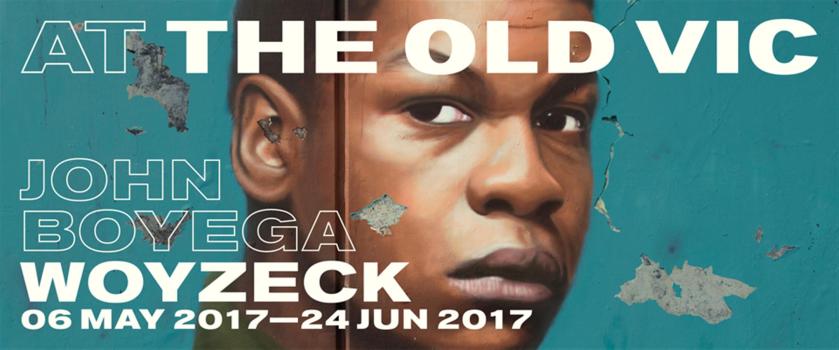
Woyzeck at the Old Vic review ***

wozyeck-11780

Woyzeck

The Old Vic, 27th May 2017

One day soon the Old Vic under the aegis of its ambitious Artistic Director, Mathew Warchus, is going to come up with an absolute stonker. The strategy of taking a classic play, or new work from a top flight current playwright, stuffing it with stars of stage and screen, wheeling in the brightest directors and other collaborators (if Mr Warchus doesn’t himself take the helm), and then bringing to a steady boil is surely going to pay off. We have come mighty close in the last couple of years; for me Tim Minchin’s musical Groundhog Day was a triumph but the straight plays have, for one reason or another, not quite smashed the ball out of the park.

The production of Rosencrantz and Guildenstern are Dead saw fine performances from Daniel Radcliffe and, especially, Joshua McGuire, and sure-footed direction from Stoppard veteran David Leveaux, but it is Stoppard, so there is no indulgence for any lapse of concentration by (me) the audience. Art contained three fine performances from Rufus Sewell, Paul Ritter and Tim Ke,y but not enough to persuade me that this play remains rather too pleased with itself. In retrospect there should have been no surprise at all that Glenda Jackson gave us a peremptory Lear, but Deborah Warner’s directing didn’t fully solve some of the play’s issues for me (I am all for massaging the text here to enhance proceedings), and there was some jarring casting. I can’t exactly say why, but the Caretaker directed by Mr Warchus himself didn’t quite deliver that electric thrill that Pinter can serve up when it all comes together, despite an outstandingly wheedling Davies from Tim Spall. And the Master Builder with Ralph Fiennes was frustrating, largely because of Sarah Snook’s Hilde I am afraid. I loved The Hairy Ape with Bertie Carvel (next up as young Robert Murdoch in Ink at the Almeida). In fact, for me, it has been the most successful of the productions since Mr Warchus’s tenure commenced, but I get that early Expressionist Eugene O’Neill is not for everyone. Finally the less said about Future Conditional the better, although the idea was sound.

So I was hoping that Woyzeck might be the one. I fear it was not, though John Boyega’s tragic performance was riveting (let’s hope after this debut he doesn’t get lost to Hollywood). Now part of the problem may be that I only know the story here from Alban Berg’s opera Wozzeck. This is a musical masterpiece which I am slowly getting to grips with having seen a handful of productions now. Whilst Berg himself wrote the libretto he was keen, at least based on what he said, to retain the “essential character” of Georg Buchner’s 1837 play (the poor fella died aged 23) with “its many short scenes, its abrupt and sometimes brutal language, and its stark, if haunted, realism…”. If you have never seen the opera (and you should) then, trust me, he does.

So I can’t be sure just exactly how far Jack Thorne’s new adaptation deviates from Buchner’s fragmentary, unfinished text. But I know a man who does which is why the SO and the TFP’s were fairly willingly cajoled into joining me. And it is fair to say that Mr TFP, who is all over German literature, and I, were both a bit bamboozled by this.

I won’t spoil since the production has some weeks to go, but the shift to the divided Berlin of 1981, the insertion of an extensive back story for the lead and some fairly radical shifting around of events and character action/motivation (notably for Marie, Woyzeck’s wife, Andrews, his mate here, and Maggie, the Captain’s wife) didn’t entirely work for me. The social criticism in Buchner’s work was less evident (how grinding poverty and real hunger leaves the “lower classes” unable to sustain a “moral” life). The depiction (and causes) of Woyzeck’s psychosis were a little forced through some of the the extended dream sequences. The dehumanisng impact of military service seemed to get lost a little inside one man’s struggle with his own demons.

If I am honest I think the laudable attempt to update the play (this is not some plea for “authenticity”) and offer a more complete narrative, left the production poised uneasily between a sort of TV drama realism (Mr Thorne’s comfort zone  as he himself freely admits in the programme), and the more usual Expressionist tableau (most obviously visible in set and sound design), which didn’t quite do it for me. This tension between naturalistic and expressionistic is the conundrum at the heart of Buchner’s text I gather, but Jack Thorne and director Joe Murphy’s solutions seem to drag the structure down. Sometimes less can be more.

There are some memorable images though, especially if you are partial to a bit of simulated shagging, a gentleman’s full frontal, topless ladies and red marigolds (rubber not floral), and other borderline theatrical cliches. The supporting performances are all robust. So maybe, in the spirit of the less is more advice, you might find this more rewarding than me if you go in without too much expectation or preconception.

So next up at the Old Vic is Conor McPherson’s Girl from the North Country, which he is self-directing (with Joe Murphy assisting). Stardust will be sprinkled courtesy of Bob Dylan’s music and we have an interesting and expansive cast (including Ron Cook, Sheila Atim, Shirley Henderson, all firm favourites of mine). The setting in Minnesota intrigues (so no Steinbeckian dust bowl tragedy or Southern family saga I assume). Maybe this will be the one then.


.

Rosencrantz and Guildenstern are Dead at the Old Vic review ****

more time required

The cast for the revival of Art