
A Very Expensive Poison at the Old Vic review *****

A Very Expensive Poison

Old Vic Theatre, 9th September 2019

Lucy Prebble wrote The Effect, ENRON and The Sugar Syndrome all of which were rightly lauded. She is currently one of the writers on Succession the best thing on the telly in this, or any other, year. And Guardian journalist Luke Harding writes vital books about the modern state, two of which have already been made into films. So this adaptation of his book A Very Expensive Poison: The Definitive Story of the Murder of Litvinenko and Russia’s War with the West was always going to be A BIG THING. And so it proved. The Old Vic is always a good place to spy luvvie types on their nights off and the evening we (the SO and the Blonde Bombshells) went was no exception. I won’t say who the Tourist fawned over this time. Just that it was almost as great a pleasure as the play itself.

Now this being Lucy Prebble we were never going to get a straightforward narrative. Even so the sheer invention on/in show was breathtaking. First though a quick reminder of the story. Alexander Litvinenko was an officer of the Russian FSB secret police who specialised in investigating the links between the state and organised crime. In 1998 he and other officers publicly accused their superiors of ordering the assassination of oligarch, and thorn in Putin’s side, Boris Berezovsky. He was acquitted but re-arrested, and when the charges were again dismissed, he fled to London with his family, where he was granted asylum, wrote articles and books accusing the FSB and others of terrorist acts and worked with British intelligence. In November 2006 he suddenly fell ill and was hospitalised. It transpired that he had been poisoned by a lethal radioactive dose of polonium-210. The subsequent British investigation pinned the blame on Andrey Lugovoy a former member of Russia’s Federal Protection Service but he could not be extradited. Litvinenko’s widow Marina, together with biologist Alexander Goldfarb, tirelessly sought justice for her husband and a coroner’s inquiry was set up in 2011. This was eventually, after much foot dragging by the Home Office, (yep one T May was in charge), followed up with a public enquiry which in 2016 conclusively ruled that his murder was sponsored by the FSB and likely conducted with the direct approval of FSB director Nikolai Patrushev and Putin himself.

Not difficult to understand why Luke Harding would want to document this extraordinary story or why Lucy Prebble could see its dramatic potential. The action centres on the indefatigable Marina (MyAnna Buring) and, in a series of slickly staged flash-backs, forwards and sideways, jumping across genres, tackles the who, how and why of the crime. I would be a liar if I can remember all the striking scenes but let’s try a few. The song and dance routine in a quasi brothel led by Peter Polycarpou’s Berezovsky. Amanda Hadingue as Professor Dombey giving a rapid fire 101 lecture on the history of radiation complete with puppets, Tom Brooke’s oddball Alexander Litvinenko serving up deadpan humour from the hospital bed which regularly appears on stage in a thrice, the two incompetent stooges played by Lloyd Hutchinson and Michael Shaeffer sent to carry out the assassination, the super meta-theatricality of Reece Shearsmith’s petulant, but still sinister, Putin commenting unreliably from the Old Vic boxes, the tell-tale trail of radiation handprints, the powerful direct address to the audience from Marina, and, finally, Alexander.

Of course the whole idea is to mess around with the truth in order to show how the modern state messes about with the truth. This near vaudevillian approach to political satire is not especially new (for LP herself), indeed I could imagine Joan Littlewood lapping this text up in the heyday of the Theatre Workshop, but the juxtaposition with such a serious subject is what makes this so interesting and, in some ways, challenging. OK so I can see why some might tire of all the theatrical fun and games but the abrupt shifts in tone, with humour constantly undercutting the serious narrative, worked for us, and, judging by the reaction, the audience including my new celebrity friend.

Bringing all this together will have tested the directorial powers of John Crowley, who has spent most of the last decade on a movie set. However this is the man who brought Martin McDonagh’s Pillowman to the NT stage so this wasn’t going to phase him. Mind you success was in no small measure due to the versatile box set of Tom Scutt, the choreography of Aletta Collins and remarkably nifty stage management from Anthony Field, Jenefer Tait and Ruby Webb.

I have said it before and I’ll say it again. If you want to make a powerful political point in the theatre then humour is your best bet. But it is also the most difficult way to do so. Maybe this isn’t absolutely perfect but given how much Lucy Prebble has gifted us here, as in her previous plays, it is as close as dammit and for that we should be grateful.

Company at the Gielgud theatre review ****

Company

Gielgud Theatre, 29th November 2018

Regular readers will know that the Tourist doesn’t like musicals. However, with Company now ranking alongside Follies, Caroline, Or Change, Groundhog Day, Gypsy, Girl From the North Country, Junkyard and White Teeth, the list of exceptions to the rule is growing alarmingly long. Looks like I may need to revise my opinion. Maybe I just don’t like crap musicals. Or, in a witlessly circular way, just musicals I don’t like.

Company, as you can read at great length elsewhere, is very far from being crap. It’s Sondheim for a start. With a twist as the, artistically and commercially, gifted Marianne Elliott (Angels in America, Curious Incident, War Horse) has inverted the story casting Bobbie (Rosalie Craig, there she is) as a single, female thirty-something mulling the “attractions’ of a life of domestic, married bliss. All done with the blessing and assistance of Lord Sir Stephen S, (well he would be if he were British), who is notoriously, and rightly, possessive about his work. And a trademark, stunning multi-neon, multi-light box design a la Curious Incident from Bunny Christie that could even accommodate a bigger stage.

Now there were still one or two moments when the Tourist’s anti-musical radar started twitching. A fair few of the c(C)ompany dance routines were a little too slick, with choreographed “leaning in” and the suspicion of jazz hands. The camp quotient meter lurched close to the red on occasions. Some of the dialogue seemed a little workaday in places. I am probably alone in failing to understand why Patti LuPone, playing Joanne, is a legend, or maybe the cliche of hard-bitten Broadway broad is just not my bag.

But the music, here played by a bad-ass band under musical supervisor and conductor Joel Fram, with its motifs, repetitions, parodies, consistent surprises, and the lyrics, intelligent, arch, acerbic, funny, thoughtful, wistful, put it into a different league from the fluffy, zero to hero, musical norm. It’s not Chekhov, but unlike what I think of as most musicals, it does ring true to life. It doesn’t have a plot or chronology to speak of, rehearsing Bobbie’s central dilemma over and over again, with different partners and different couples, it doesn’t resolve and it certainly isn’t any sort of “genre”. In fact I can see why, in its garish expressionism, why some punters think this production is all actually going on inside Bobbie’s head.

SS, together with book-writer George Furth, set their musical in the New York of 1970, and built it around nine linked scenes that Furth had previously created for a play. “The increasing difficulty of making emotional connections in an increasingly dehumanised society”. That was how SS described the theme at that time. Marianne Elliot has stuck with the setting, but by inverting the gender of the protagonist, (and many of the gender roles in the couples who come together to give her a surprise 35th birthday party), she brings it bang up to date. Mind you, given extended single-dom, Tinder and the quest for on-line perfection, maybe the world has moved closer to the theme. Don’t ask me, this sort of caper is miles outside of my comfort zone, but Company still struck chords, and not just musically, ta-dah. Anyway throwing the so-called “biological clock” into the mix is a master-stroke. The personal is still political.

There are some absolutely stunning set pieces, in part due to illusionist Chris Fisher, lighting design of Neil Austin and choreography and dance routines of Liam Steel and Sam Davies. Bobbie’s Tardis of an apartment, the street and subway scenes, Another Hundred People, the party games, Company and What Would I Do Without You, the daily routine of living together and the imagined future, (this is where the babies come in), in instrumental Tick Tock with the procession of Bobby body doubles, Jamie’s (Jonathan Bailey, brilliant, again) altar-jilting of Paul (Alex Gaumond), Getting Married Today, the barbershop trio of You Could Drive A Person Crazy (the three boyfriends now being PJ, Andy and Theo),

That’s All I Can Remember. Oh hang that’s not a song that’s just a remark. Whatever. Not knowing the songs or the story, such as it is, means I am not a particularly reliable correspondent but I can assure you that you can believe the positive reviews.

Now Rosalie Craig can sing. And she can dance. But best of all she can act, as the Tourist knows from her turns as Rosalind in the Polly Findlay NT As You Like It alongside Patsy Ferran, and as Polly in the NT Threepenny Opera. Here she plays Bobbie as a wry, detached, almost observer, of her own life, (is it a dream?), occasionally breaking out into a more impassioned soliloquy, firstly in Marry Me A Little and then, most vehemently, in the finale Being Alive. She humours her friends, accepting their foibles, justifications and disappointments and accepting with good humour their attempts to couple her up. but you always sense her reticence in embracing an unknown future when compared to her spirited past and predictable present. Her red dress, and forgive me for the crass and cliched observation, her flame-red hair, make her the focus of attention even when the action is flowing around her. Bobbie’s ambivalence towards coupledom is always present.

Whilst I may not have been entirely convinced by Joanne as performed I see exactly why the character is necessary. With Bobby now as Bobbie, the forceful and intelligent, if somewhat embittered, older woman serves as both guardian and warning. Gavin Spokes, (I wondered where I has seen him last – as the unfortunate Major Ingram in James Graham’s Quiz), as Harry gives Mel Giedroyc, as wife Sarah, a run for her money in the hamming it up stakes. Both are very funny. I was also struck by Jennifer Saayeng’s uneasy Jenny, Ashley Campbell’s conflicted Peter and Daisy Maywood’s haughty Susan but this really is a fine ensemble.

From what I read Company always wows audiences and critics when it is performed, from its first run through many major revivals. It’s easy to see why. If it wasn’t for that Hamilton caper this Elliott/Harper production would sweep up all the musical awards for 2018. I wonder, when it gets its next major UK or US outing (for it is off, of course, to Broadway next year), whether anyone would dare return to Bobby.

Plenty of seats left for the remainder of the now extended run to end March. The prices they are charging for the best seats are in the category of “you’re sh*tting me” but for once it might be worth it and, if you want to, or have to, go cheaper, the Gielgud is not the worst of the West End theatres for sight-lines and legroom. Whatever you do through, don’t miss it. Even if, like me, you hate musicals!!!

Quiz at the Noel Coward Theatre review *****

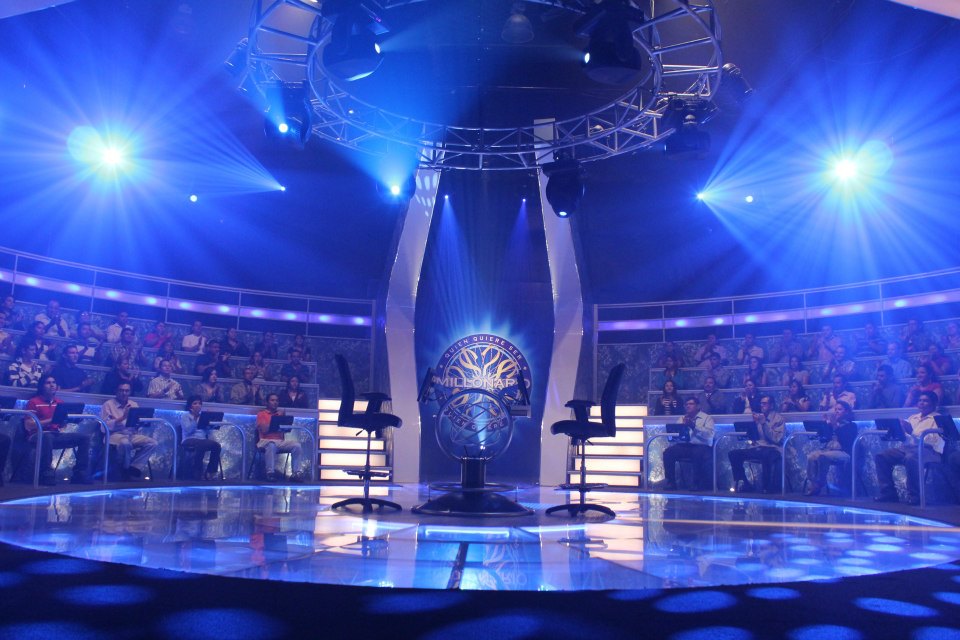
milonario_el_salvador

Quiz

Noel Coward Theatre, 2nd June 2018

Your starter for ten. (I know I am mixing up my quiz show formats). Why where there empty seats at the Saturday evening performance of Quiz that the Tourist attended alongside the SO, BUD and KCK? Reviews for the original production at the Chichester Minerva, and this transfer, were very good with a couple of exceptions, playwright James Graham is a one man hit machine and the content, whilst parochial in some ways, the story of the “Coughing Major” is a very British affair, is still centred on a game show with global reach. If I were a tourist, as opposed to a Tourist, or a local wanting a good night out, I would be hard pressed to top it. It is a superb entertainment, very funny yet provocative enough to make you really think. Still the run is nearly over, so my comments, as ever, can be safely ignored, but if this does get another outing I can highly recommend it, even if, or maybe especially if, you or any of your chums are normally reluctant theatre goers.

With This House, Finding Neverland, Ink (Ink at the Almeida Theatre review *****) and Labour of Love (Labour of Love at the Noel Coward Theatre review *****), and a string of other plays, James Graham has developed a prodigious Midas touch for popular, witty, effervescent theatre which usually takes “real” events from the recent(ish) past and dissects them to offer lessons for our world today. The drama and cyclicality of politics, threats to the democratic process, the nature and manipulation of “truth”, the power and reach of the media, flaws in the dispensation of justice, the creeping ubiquity of technology, the rise of celebrity culture, the relationship between state, institutions and the individual. These are all fertile areas of concern for most contemporary dramatists but few churn out plays that are as light on their feet as James Graham. I happen to think he is one of our finest living playwrights though I get that some may be a little snippy about his commercial success and the ease with which the muse comes to him.

Quiz takes the story of Major Charles Ingram, (via a book by Bob Woffinden and James Plasskett), who was one of the handful of million pound winners on the British version of Who Wants To Be A Millionaire. It skips through the history of British Quiz show formats, the genesis of a programme combining big money and high drama, the bizarre “plot” that led to the “win”, the subsequent court case, the lives of the individuals involved and the media reaction. We the audience are asked to vote at the interval, and then again at the end, after some of the details of the case are revealed, having been knowingly manipulated. Just like a TV quiz show. The play toys with our own recollection of the events, (sorry kids if this was before your time), reminding us that memory is uncertain and constructed. It taps in to our obsessions with competition and the notion of winners and losers. It shows the damage that is wrought through hysterical “trial by media”.

Robert Jones’s garish set is a bright lights version of the Millionaire studio, with a “light cube” of sorts taking centre stage. This doubles up as the home of the Ingrams, a pub for quizzes and nefarious meetings of various Millionaire obsessives and as courtroom. The set, the story and the structure of the play demand a high octane production and boy do we get that with Daniel Evans’s direction. The proscenium Noel Coward stage may not be ideally suited to this set-up, (the thrust of the smaller Minerva probably made more sense), and all the frenetic activity, and mic-ing, drowns out some nuances of performance, but hey, this is what you get with JG’s plays. Lighting designer Tim Lutkin, sound designers Ben and Max Ringham and video designer Tim Reid certainly earned their corn here.

The whole cast also has to be on its toes. Kier Charles as the hyperactive warm up act, as TV quiz hosts from the past, and especially as an exaggerated version of Chris Tarrant is hilarious. Paul Bazeley and particularly Sarah Woodward, who has a powerful monologue near the end, also shone when playing the opposing QCs. Gavin Spokes just about managed to get away with an air of bumbling, stiff upper lip, vulnerability for Charles Ingram that allowed us to maybe accept that here was a man wronged as details of the court case emerged. Conversely Stephanie Street managed to show a buried ruthless streak in Diana Ingram. Mark Meadows as erstwhile coughing accomplice Tecwen Whittock seemed harmless but was plainly desperate to win. That was my reading. You might have a different interpretation. That is the point. Maintaining this necessary uncertainty about their motives does mean a bit of an emotional hole at the centre of the play (which is not always the case in other JG hits) but the pay off is the comic dialectic. Did they or didn’t they “cheat”?

Our viewing quartet was in half-time and post match analysis heaven as we tried to piece together our recollection of the “facts” of the case, the detail of what had been presented in the play and whether we could “trust” this and how our sympathies had changed. BUD craves objective verification. In contrast The Tourist has spent way too much time in the theatre so he barely knows how to distinguish art from reality any more. The wiser heads of the ladies prevailed. We laughed a lot. All in all just what you want from a night at the theatre.

The justice system is not a branch of light entertainment. Truth is not relative – as some important historian said about WWI I think, Belgium did not invade Germany. The institutional structures that we derive from the Classical world by way of the Enlightenment are still the best we have. We the people still have agency. There are two participants in a narrative, speaker and listener. But we need to be critical, keep thinking and exercise our power. What better way to remind us than with a “real” story made up on a stage which beguiles and provokes us with the very concepts it wishes us to question.