Lucie Horsch and the AAM at Milton Court review *****

Academy of Ancient Music, Richard Egarr (harpsichord, director), Lucie Horsch (recorder) 

Milton Court Concert Hall, 24th February 2019

  • Antonio Vivaldi – Flautino Concerto in C major, RV443 (arr in G major for recorder)
  • JS Bach – Harpsichord Concerto No 3 in D major BW V1054
  • Giuseppe Sammartini – Recorder Concerto in F major
  • JS Bach – ‘Erbame Dich’ from St Matthew Passion
  • JS Bach – Oboe Concerto in D minor BWV1059r (arr for recorder)
  • JS Bach – Concerto for Harpsichord No 7 in G minor BWV1058
  • Antonio Vivaldi – Flute Concerto in G minor ‘La Notte’, Op 10 No 2 RV104

Lucie Horsch is just 19 years old. That’s her above, at 14 when she appeared in the Eurovision Young Musician festival. Her first recording of Vivaldi came when she was just 16. Now she may not be a household name outside the world of Baroque music and probably never will be given her choice of instrument, the recorder, but inside that select, (though I think widening), club she is a sensation. The recorder is a tricky instrument to play and to hear. Not in the lads of Ms Horsch. She is simply an astonishing musician. I haven’t heard anyone come close to the articulation, beauty, control and variation of sound that she achieves on these instruments. And her virtuosity in some of the faster passages on show in this concert was dazzling. Richard Egarr and the rest of the AAM, unsurprisingly, looked as pleased as punch throughout.

Now to be fair young Lucie started off with a few advantages. Mum and Dad are professional cellists, Dad with the Concetgebouw. Though perhaps this makes it more surprising that she stuck with the recorder, the “beginners” instrument. Mind you this beginner never even managed to master the basics, his music teacher quietly suggesting to his mother at age 10 that young Michael might want to stick to his books.

Anyway lucky for us that Ms Horsch decided she liked the sound and the immediacy of the connection between this “simple” instrument and performer. Of course the recorder doesn’t have too much in the way of “standard” repertoire beyond the Baroque and as the “pastoral”cue in early operas. There are a few Classical offerings and even one or two later works but generally there is none of the interminable showy sh*te from the Romantic and early C20. The technology of woodwind moved up a gear in the second half of the C18, the concerto became an ever blowsier conversation between soloist and orchestra and the textures of chamber music became more complex.

Go back in time though and it is time for the recorder to shine. Early and Renaissance music is brimful of the little fella, whether in instrumental ensembles or consorts, in dance music or as an accompaniment to voices. It is the Baroque though that shows the recorder at its most virtuosistic with the Vivaldi and Sammartini pieces on show here somewhere near the top of the pile. And this is not just one recorder. Ms Horsch is equally adept across the size range, sopranino, descant, treble and tenor. Mid C20, and some contemporary, composers have explored the unique sound of the instrument, technology has expanded the range and Baroque and earlier specialists are discovering new scores and arranging existing works, as here, for the humble recorder.

Vivaldi’s RV443 is just such an arrangement having been written for a flautino, though frankly it matters little since this is effectively the C17 version of the sopranino recorder. In this performance though the key was shifted down to the less stratospheric G major from the original C minor. This is the Baroque party piece for recorder (and piccolo) players with its lilting Largo monologue framed by showpiece brisk Allegro movements with dazzling solo parts. In the first movement the soloists chimes in with and unbroken string of 84 eighth notes! And that’s just for starters. The final movement calls for a seemingly never-ending run of triplets. Even by AV’s standards this is intoxicating stuff. He wrote a couple more concertos for flautino, RVs 444 and 445 as well as two specifically for recorder RVs 441 and 442. This though is the Daddy and there are literally billions of recordings HIP and not so HIP. I doubt I will hear a better live version that Lucie Horsch’s however. I have no idea where she gets the puff from.

The other Vivaldi concerto in this programme is also a staple. RV439 is one of the six flute concertos which make up ABV’s published Opus 10 from 1728/29. It was printed by the Roger firm in Amsterdam, which first brought out the Op 3 L’Estro Armonico, though a second version was also printed in Venice for recorder for which it will have likely been originally scored with a chamber accompaniment, 2 violins, bassoon and continuo, R10 4. This is explains its suite-like structure with six, blink and you’ll miss ’em, movements. La Notte is the night in Italian, hence the second title of the rapid second movement Fantasmi or ghosts, (though they seem quite playful spirits), and the slow fifth movement il Sonno, sleep. The first movement is a staccato affair, a sort of nodding off, the central Presto has a touch of the REM (dreams not band) flickers about it, and the finale turns very perky, showing off Ms Horsch’s skills to great effect.

Giuseppe Francesco Gaspare Melchiorre Baldassare Sammartini (1695-1750) was renowned in his lifetime as a wind performer, (musical not flatulist, a performance style I for one would like to see revived), notably the oboe, but I can also testify to the invention of his recorder concentre compositions of which this is by far the most well known. There may not be too much to distinguish the accompaniment but as a workout for the recorder player this is up there with Vivaldi, though with more variation and less reliance on repeated arpeggios and the like. Now we must be careful not to confuse Giuseppe with younger brother Giovanni, also a composer and oboist, who was one of the precursors of the galant Classical style, taught Gluck, counted JC Bach as a fan and influenced Haydn through his concert symphonies which are definitely worth a listen, (if only as musical history lessons). It helped the brothers that Dad was a professional French oboist.

Giuseppe wasn’t quite as forward thinking as little bro’ but there is still plenty to admire in his late Baroque/proto-Classical grooves. Outside of the concertos there is plenty of action for the recorder in his sonatas and trios. He kicked off his career in Milan but it took off when he moved to London and the court of Freddy Prince of Wales. Handel no less considered him the greatest oboist ever. (Note to the gammons. You see that those bloody foreigners have been coming over here and stealing your jobs for centuries. Musicians, composers, even the bloody royal family. Worth thinking about, should you ever choose to think, when you are humming the Hallelujah chorus. Actually scrub that. Most gammons in my limited experience couldn’t give a flying f*ck about classical music. Nor culture in general. One reason why they are always so bloody angry about everything especially the very Brexit they craved).

Or maybe they are angry because the Germans got all the best tunes. Well specifically Beethoven and JS Bach. Here were a few of them. Ms Horsch took a well deserved breather when Richard Egarr took centre stage, (actually this is when his harpsichord was moved side on), for a couple of JSB’s harpsichord concertos. In 1713 whilst working at the Weimar court you Bach was assigned the tasking of making keyboard transcriptions of some Italian concertos including 10 by Vivaldi himself. This was the wellspring from which much of his Italianate instrumental music emerged with the harpsichord concertos first performed in the 1730s at his weekly jams in Leipzig’s Collegium Musicum. These two started life as violin concertos and the original scores have no tempo markings. So nothing to stand in the way of Mr Egarr cranking up the rhythm and fiddling with his stops and couplers (don’t ask).

You probably know “Erbame dich” – Have mercy – from the St Matthew Passion with its violin lament supporting the singer’s teary plea to God. St Peter breaking down after his triple denial of Jesus. Here the instrumental version. led by Bojan Cicic’s expressive violin, was effective but lost a little bit by being taken out of context and “de-lyricised”.

So that just leaves JSB’s BWV 1059r. Now pay attention. This is the final one of the eight harpsichord concertos, a companion to nos 3 and 7 above. Except that this only survived as fragments so had to be reconstructed to create an oboe concerto. Utilising the two instrumental outer movements of BWV 35, the cantata Geist und Seele vird verwirret which have long passages of keyboard writing, which probably came from a concerto which might have been written for oboe. And some bars repurposed from another cantata BWV 156. Oh and the slow central movement of the three, (the first has no tempo guidance), is pilfered from an oboe concerto by Venetian composer Alessandro Marcello (also worth a listen) which JSB came across in his Weimar days, see above.

And here the oboe part was arranged for recorder. Confused? I’m not surprised. That’s what happens when composers have to churn out new works for money. Which JSB certainly had to do. No wonder he reused his back catalogue. And if we don’t have the original scores there is more room for interpretation and scholarship. Most of the harpsichord concertos started off somewhere else.

It matters here because this concerto, however arrived at, has some mighty fine riffs even by JSB’s standards. I didn’t know it at all. I liked it a lot, Which probably won’t come as a great surprise to you. As did my new companion, MSBDOB, newly returned to London and keen to hear some tip top playing. This was a fortuitous start methinks.

The beauty of the recorder sound is the connection between player and sound. There isn’t much between their breath and what hits your ears. This vulnerability and innocence, if you will, is also what makes it a sometimes awkward listen. In the best hands though, including these, it is a sublime experience. Lucie Horsch will surely get better with experience and when whatever tosser of a record company executive can no longer surround her with all that sexist, gamine, prodigy sh*te that the classical music world is riddled with.
Venetian Baroque: Academy of Ancient Music at St Luke’s Old St review ****

venetia_-_porcacchi_tomaso_-_1620

Academy of Ancient Music, Bojan Cicic (violin), Persephone Gibbs (violin), Sarah McMahon (cello), Alistair Ross (harpsichord), William Cater (theorbo)

LSO St Luke’s Old St, 15th June 2018

  • Dario Castello – Sonatas No 10 a 3 Book Two, No 1 a 2 Book One, Sonata No 1 for violin (Book Two), Sonata No 2 for violin (Book Two), Sonata No 12 a 3 (Book Two)
  • Tarquinio Merula – Ciaconna
  • Michelangelo Rossi – Toccata No 7 for harpsichord
  • Giovanni Girolamo Kapsberger – Toccata and Ballo for theorbo
  • Francesco Tunrini – Sonata a 3 “il Corisino”

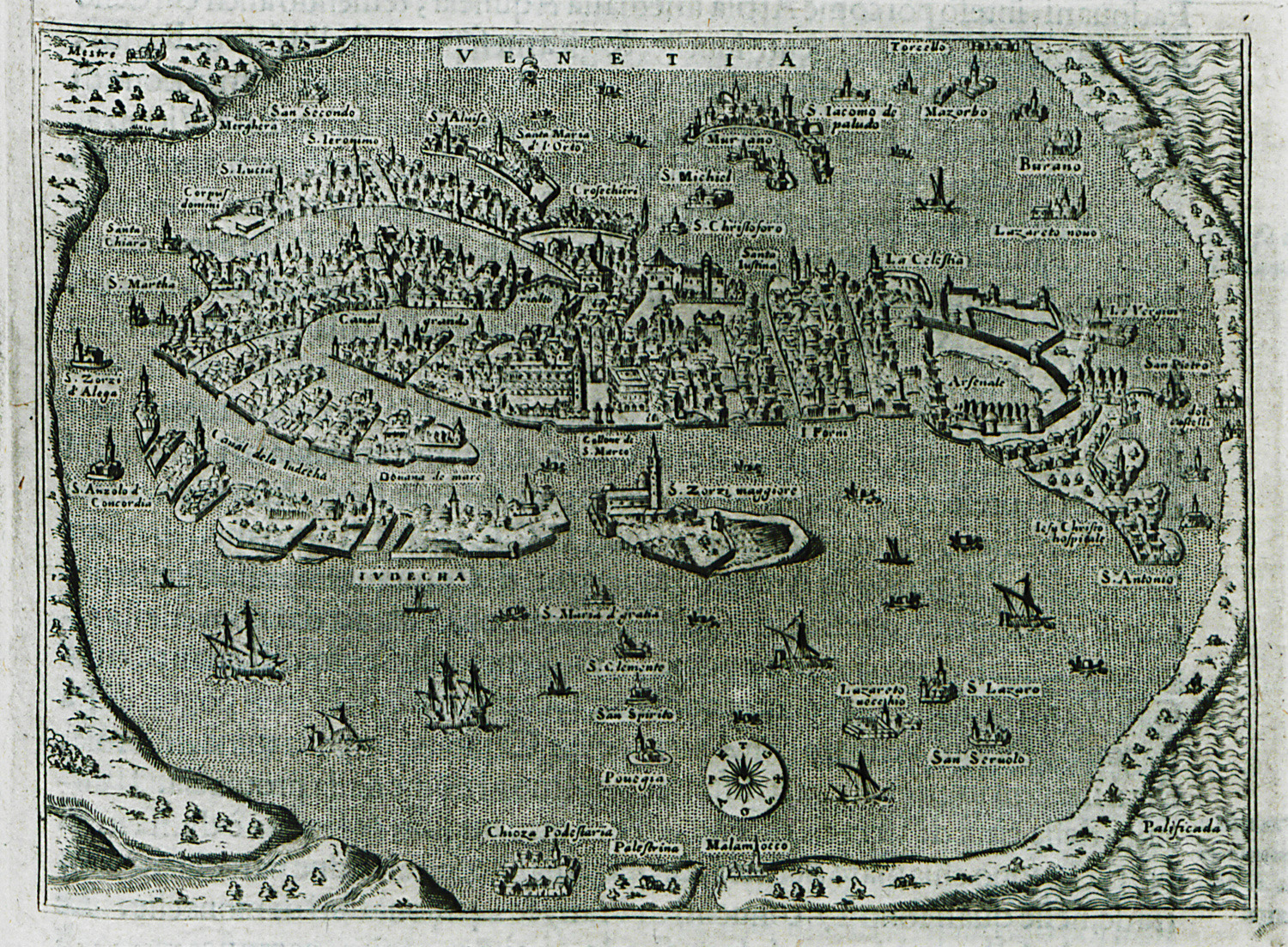
Venice in the early C17 was the hot place for music in the West. The Republic might have begun its long slow decline, having picked fights with the Ottoman Empire and the Vatican, amongst others, but there were plenty of punters who had made big bucks and were looking to spend it. It was certainly a big-time, sexy, funky, party town. Carnival was big business. Public opera, with that genius Claudio Monteverdi in the vanguard, was taking hold. New instrumental ensembles were being tried out. Exquisite brass was set alongside double and triple, or more, choirs in churches, following on from Gabrieli’s innovations in the previous century. (Even the guards telling the snaking hordes of tourists in St Mark’s Basilica to shut up sound musical thanks to the stunning acoustic). The best performers, composers and instrument makers gathered there.

This was the music members of the AAM sought to highlight in this BBC lunchtime concert, built around the sonatas of Dario Castello, which, to an extent, defined the form. He was born around 1590 and died around 1658, though his best known work comes from the 1620s. He was the leader of a wind ensemble, cornetts, sackbutts, shawns, bagpipes and so on, and might have had a job in St Mark’s. His two books of sonate concertate comprise 29 pieces, (five were played here), that alternate retro polyphonic sections with cutting edge, (by 1620s standards), expressive recitative, the stile concitato,  a la Monteverdi. Instruments are specified, including continuo, musicians are expected to be on their game. This simultaneous looking backwards and forwards is what makes this music fascinating if not entirely satisfying.

In addition to the Castello we had a chaconne, a simple bass riff with increasingly inventive variations, dead easy for the Baroque initiate to grasp, from one Tarquinio Merula, a harpsichord Toccata from Michelangelo Rossi, an unusual Toccata and Ballo for theorbo from Giovanni Girolamo Kapsberger and a concluding trio sonata from Francesco Turini.

Merula never worked in Venice, (he had positions in Cremona and Bergamo)  but he knew the drill. He was an argumentative chap by reputation but he helped set the tone for the dance vibes of the later Baroque. Rossi came from Genoa, worked in Rome, wrote madrigals and operas, and, despite being a violinist, a book of 20 toccatas, which embrace some dramatic chromaticism and choppy tonality as here. Now you don’t often see a theorbo solo even if you are a paid up member of the Baroque club. The theorbo is that giant-sized lute that the player rests, like a loving parent, on his/her knee. GG Kasperger came to Rome by way of Vienna and was, in terms of theorbo virtuosity, the Charlie Mingus of his day. Turini was also born outside of Italy and published madrigals including some early instrumental sonatas.

I probably don’t need to tell you how very fine the members of the AAM were in this very rarely performed repertoire. Their excitement in exploring the, shall we say, backwaters, of the Venetian School was palpable. Bojan Cicic, as leader of the AAM, has appeared a few times before on this blog, as has Alistair Ross on the harpsichord. William Cater was as eloquent in his explanation of the theorbo piece as he was in its playing, but I was particularly taken by Persephone Gibbs’s playing in the second solo violin sonata of Castello. Great first name. Even better surname. And she leads a Baroque orchestra based in Devon. No relation though. She has talent after all.


Bach and Telemann: Academy of Ancient Music at Milton Court review *****

maxresdefault

Academy of Ancient Music, Bojan Cicic (director and violin), Rachel Brown (flute and recorder), Rachel Beckett (recorder), Alistair Ross (harpsichord) 

Bach and Telemann: Reversed Fortunes, Milton Court Concert Hall, 7th December 2017

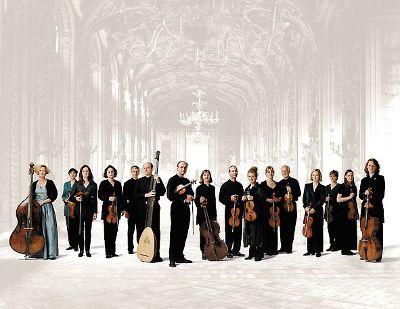
I see I am now close to being a Academy of Ancient Music groupie. Not in a sinister way, that would be very strange. Just that I seem to pitch up to most of their London concerts. Unsurprising given their repertoire I suppose. And what a joy it always is to hear them play. This was no different. And I had a new chum in MSBD to join me.

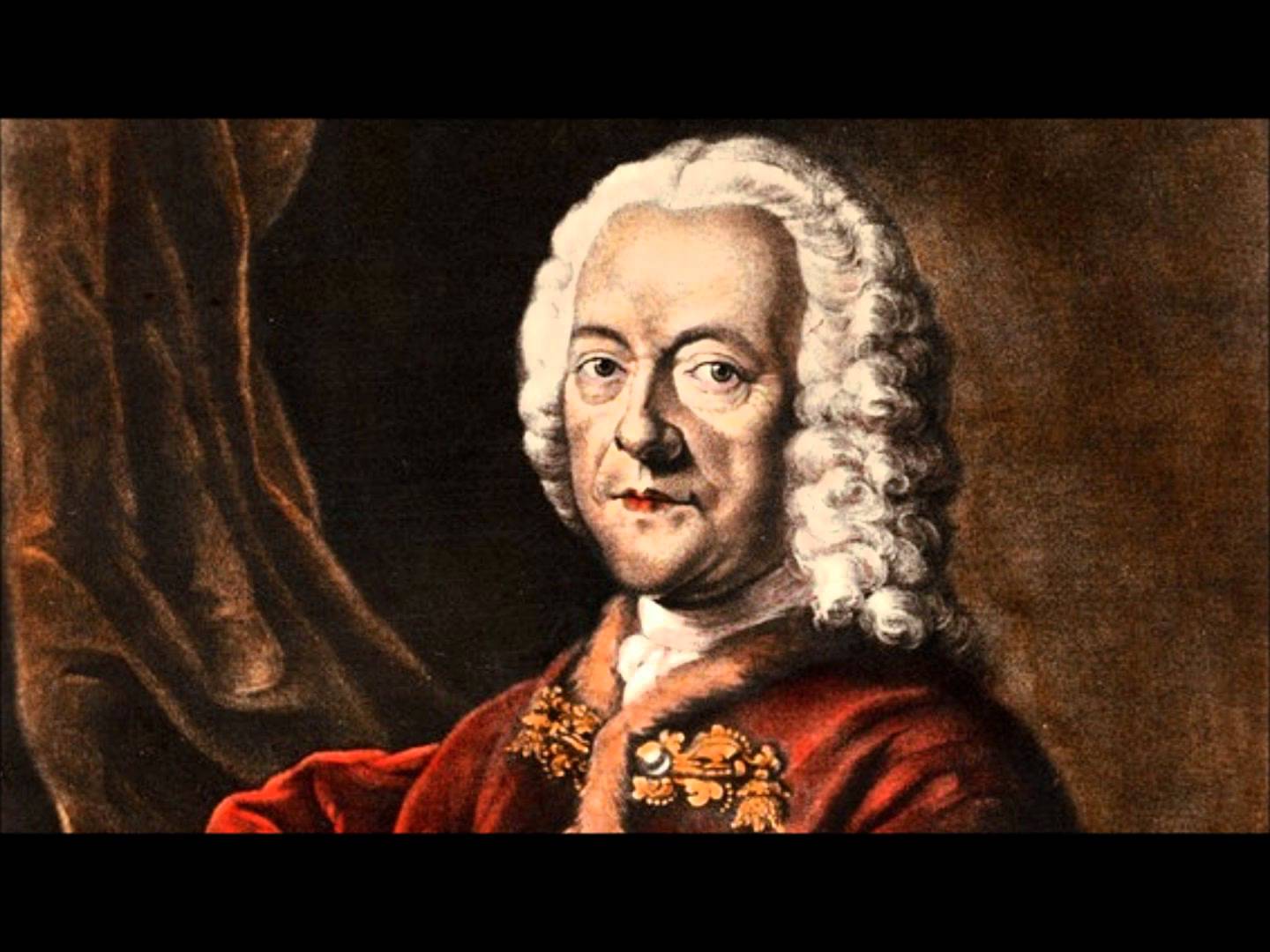
Now the theme here was to contrast the contrasting fortunes of a certain Johann Sebastian Bach and Georg Philipp Telemann. They were mates in the 1720s, 30s and 40s, with GPT becoming CPE Bach’s godfather, and both successively securing the reputation of the Collegium in Leipzig. Back in the day though Telemann (pictured above), with his suave, easy listening modelled on his French contemporaries, was by far the more popular composer, with JSB and his knotty, brainy counterpoint, and strong Lutheran faith, some way behind. As we all know JSB’s music languished for centuries, now some might say his is the daddy of all Western art music. Meanwhile whilst Telemann maintains a cherished place in the baroque world of the Baroque enthusiast, he is not much performed beyond this.

The influence of Vivaldi’s vast concerto output was much greater on JSB, and is clearly visible in the Brandenburg’s especially when played one to a part as here. In particular in the Fifth with its single tutti violin, though it is the solo harpsichord cadenza, the first ever of its type, that is the most memorable part of the concerto. Alistair Ross didn’t hold back once the harpsichord emerged from the string ritornello and his rubato was unleashed. A bit showier than Steven Devine in the last BC5 I heard in SJSS with the OAE. However, I think the Brandenburg 4 here with Rachel Brown and Rachel Beckett on the recorders was the highlight. Once the two Rachels got into the swing of it there was no stopping them, propped up by Bojan Cicic masterful violin playing, and by the end those recorders produced as sweet a sound as you could imagine (not always the case for the period recorder).

Having said that I think the most satisfying piece of the evening was the Telemann Concerto for flute and recorder. He wasn’t the only one to pair the “old” and the “new” wind instruments, Quantz was on to this, but he clearly mastered it. Written in 1712, the Concerto has some very attractive galant homophonic playing from the two instruments looking forward to the Classical. Elsewhere the soloists chase the lines from one to the other against very attractive dances, including nods to the eastern European folk tunes that he studied. The French influence on GPT is more apparent in the Overture suite, (he wrote over two hundred of these), with its simple dance rhythms and story based on Don Quixote. There is plenty of easy on the ear comic effect, (listen out for donkeys), and lots of colour. It is all so pleasant (though if I was critical maybe a tad too pleasant).

So another fine concert from the AAM who really seemed to be enjoying themselves. As I think did MSBD. In fact I know he did as he said so. I shall miss the AAM Messiah in the Barbican Hall and their intriguing Haydn and Dussek programme in April, but will be back here for the 15th February Pergolesi, Corelli and Handel gig, and for the 31st May concert in the Hall with Nicola Benedetti. Unmissable I reckon.

“Italy in England”, Academy of Ancient Music at Milton Court review ****

mi0002869560

Academy of Ancient Music, Bojan Cicic (director and violin), Frank de Bruine (oboe)

Italy in England: When Handel Met Corelli, Milton Court Concert Hall, 19th October 2017

  • Corelli – Concerto Grosso in D major Op. 6 No. 4
  • Handel – Concerto for Oboe No. 3 in G minor
  • Geminiani – Concerto Grosso Op. 5 No. 3 (after Corelli)
  • Sammartini – Sinfonia in G major
  • Avison – Concerto Grosso in D minor No 3 ‘The garden of harmony’ (after Scarlatti)
  • Sammartini – Concerto for Oboe in E flat major
  • Handel – Concerto Grosso Op. 6 No. 5

We don’t know too much about Arcangelo Corelli (1653-1713). From the late 1670’s through to his death though he was a big noise in Rome, heralding a great leap forward in violin playing and an instrumental (ha ha) influence on the sonata and concerto form. Unless you are a Baroque nutjob, (there are more of them than you might think), you may only be peripherally aware of him. Yet you will certainly have heard snatches of his most famous composition the Op 6 12 Concerto grossi. Odds are if you hear Baroque music on a telly or film soundtrack, (and it isn’t Vivaldi Four Seasons or a blast of Handel), then it will be Corelli.

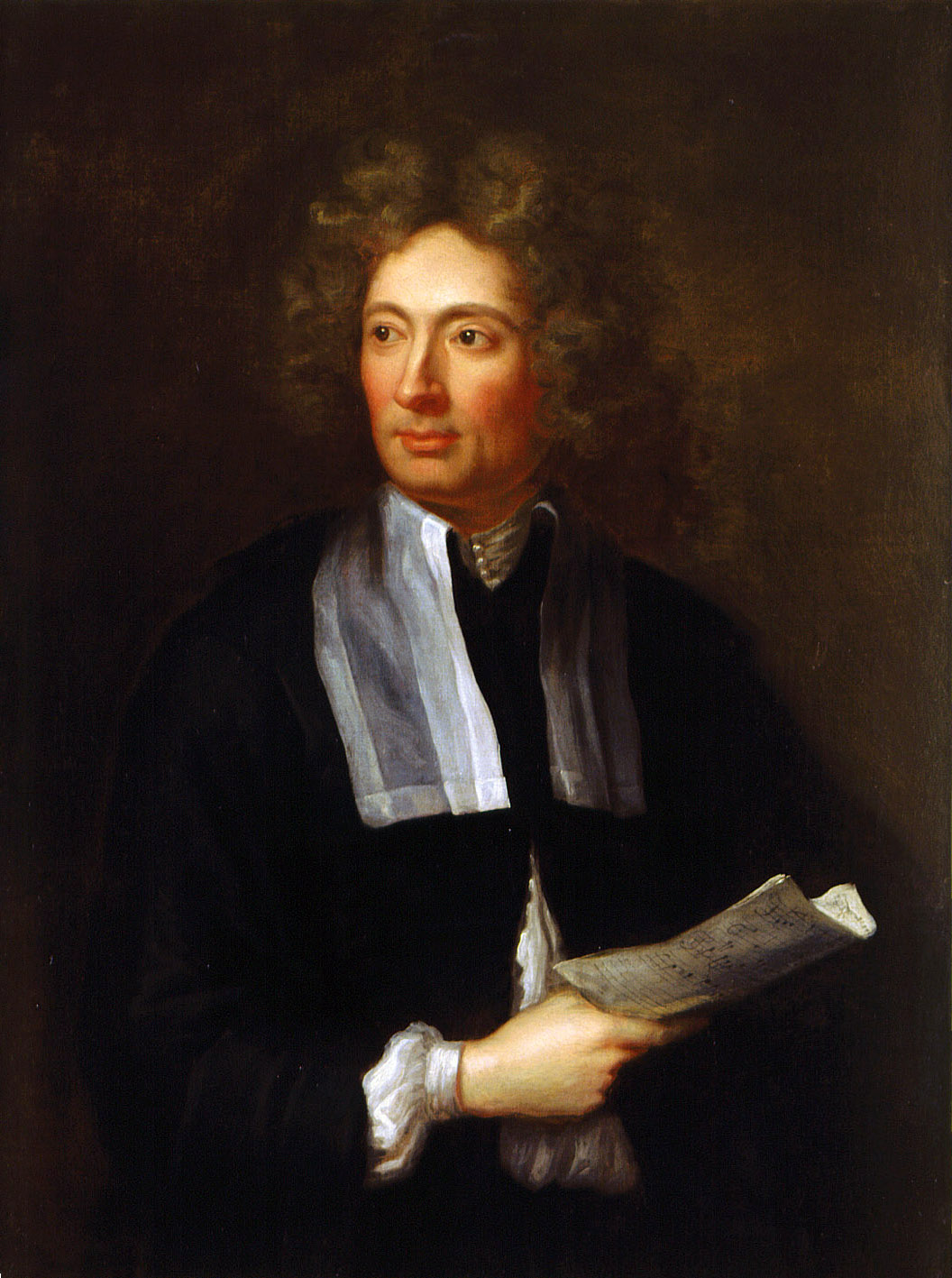
If you are just an occasional dipper-in to the Baroque canon, or just fancy some nice background stuff, get your hands on a recording of his Op 6. You won’t regret it. Here he is. Poodle wig and all. Fine looking fellow.

arcangelo_corelli2c_portrait_by_hugh_howard_28169729

By the late C17 Italy was the bees knees for all things musical, (as it had been in art for a couple of centuries), albeit with stiff competition from the French. Europe was stuffed with on trend Italian musicians and performers. Printed music was now ubiquitous assuming you mixed in the right circles. This concert from the consistently brilliant Academy of Ancient Music under its new(ish) leader Bojan Cicic sought to show how the the Italian Concerto grosso form, perfected by Corelli, and here his compatriots Geminiani and the Sammartini brothers, influenced composers in England, especially the mighty GF Handel. Both Geminiani and the elder Sammartini, Giuseppe, an oboist, ended up living in London, jus as Handel did. Handel had travelled to Italy from 1706 through to 1710  to learn from both Corelli and the other great master (of the keyboard especially) Scarlatti.

The Concerto grosso, as its probably not too complicated to surmise, is a piece of music where a small group of soloists, maybe a couple of violins and another instrument, called the concertino, pass the ideas between themselves and a larger orchestra, the ripieno. Simples. Mind you this is the Baroque so the orchestra is still pretty tiny by later standards. It is the forerunner of the single instrument concerto with orchestra we see today and which developed in the later Classical period. Vivaldi set the ball rolling with his acres of beautiful single violin (and other single instrument) concerti though the musical patterns are similar to his mates elsewhere in Italy.

Here, in addition to the violin led concerti on show from Corelli himself (the very jolly No 4), Geminiani, based on material from one of Corelli’s works, and Handel (No 5 from his own Op 6), we also had the same from Charles Avison, new to me, but I gather a big favourite of the cogniscenti. This was based on some of Scarlatti’s harpsichord sonatas and was really absorbing. The oboe of Frank de Bruine joined the AAM in two other concerti and we had a sinfonia from the younger Sammartini Giovanni, a form that would develop further into the Classical period. Like the Avison I really enjoyed this and will investigate further.

Now I deft anyone now to get perked up by these pieces. They are dramatic, with vibrant rhythms, the typical motoric underpinning from cello and double bass, the continuo underpinning of the harpsichord, and the immediately catchy tunes from the other strings. It is dead easy to follow, the movements are short and sweet and the tempi unwaveringly fast-slow-fast.

The playing of the experienced AAM was pretty much faultless. We even had a moment of high drama (sort of) as Frank de Bruine had to simultaneously play and re-order his music in the Sammartini piece. I could listen to hours of this stuff, especially in this hall. Can’t wait for the next fix.