prisoner of the state at the Barbican review ****

BBC Symphony Orchestra, Ilan Volkov (conductor), Elkhanah Pulitzer (director), Julie Mathevet, Jarrett Ott, Alan Oke, Davóne Tines, BBC Singers

Barbican Hall, 11th January 2020

In which American contemporary composer David Lang, co-founder alongside Julia Wolfe and Michael Gordon and probably best known for his Pulitzer prize winning the little match girl passion, offers up his update of Beethoven’s only opera Fidelio, (in its various, protracted, incarnations). And yes he does title his compositions in lower-case.

Mr Lang has come up with some striking and novel ideas in the past to inspire his largely vocal body of work. Comic strips, disappearances, Bach, Death, search engines, the crowd at Highbury, national anthems, autopsies, Glen Gould and broken musical instruments. The whiff of the conceptual, which I like. POTS however focuses on the big themes at the heart of LvB’s opera, liberty, justice, freedom, heroism, sacrifice, as well as the central love story, but jettisons all of the comic padding, glorious as it easy musically if not always dramatically, and compacts the story down to just under an hour. Like a best bits, reworked in the immediate, post-minimalist style, though still with plenty of punch, that characterises the music of DL and his compatriots.

The lead characters become Every-Men, and Women, with Leonara now the Assistant, who inveigles her way into the prion where hubby Florestan is now the Prisoner, watched over by the Jailor and the Governor, as well as assorted guards, and a prisoser chorus which features throughout. This permits a more timeless vibe, for all the prisoners of the state, then and now, highlighted in DL’s own idiomatic and very direct libretto, which borrows from other, relevant texts (Machiavelli, Bentham, Rousseau, Hannah Arendt, and a list of English prisoners about to be carted off to Australia) . OK so maybe the simplification, at least musically, with a regular rhythmic ostinato ebb and flow of build-up arias and big choruses, verges on the repetitive, but there is no denying its emotional impact. Even if at times. especially in the final climax, the sound got a bit messy. DL certainly knows how to handle a chorus.

I have to confess that I do not know Fidelio as well as I should given my firm conviction that Beethoven was the greatest music maker of all time. A couple of productions seen on telly/laptop and a couple of listens through, with less than complete concentration, is plainly insufficient. Failed to secure a ticket for this season’s ROH production from Tobias Kratzer so a cinema viewing will have to suffice. Which means I couldn’t tell you how David Lang has re-interpreted LvB’s key set pieces though I gather they are largely present and correct if concentrated.

The singspiel style opera was semi-staged, as intended by DL, under the direction of Elkhanah Pulitzer, with a simple set design from Matt Saunders to simulate the prison, complete with lighting from Thom Weaver, projections from Yuki Izumihara and costumes from Maline Casta. I could see it working effectively as quasi-oratorio given its simple, though winning, harmonic language and direct story-telling. After all the original is more about ideas and character than convincing narrative The (amplified) vocal parts prioritise power and clarity over intricacy, which favoured the bass-baritone of Davone Tines as the Jailor and elfin soprano Julie Mathevet who convinced as the heroic, disguised, Assistant/Wife. The contrast between the defiant idealist Prisoner, baritone Jarrett Ott, and Alan Okie’s rich tenor as the authoritarian Governor was also effective, though the latter backed down pretty quickly when it cane to the pivotal rescue scene. Mind you at least this avoided the cringey, sexist ending of Beethoven’s original as the townspeople bang on about wifely virtue rather than freedom from tyranny.

This cast, with the the exception of Davone Tines, performed at the premiere of the work by the New York Philharmonic, and it will also be getting airings at co-commisioners, in Rotterdam, Barcelona, Bochum and Bruges. I have no doubt that the BBCSO and BBC Singers (here assisted by some enthusiastic students from the Guildhall) will have more than held their own against the other ensembles during the tour of the work. Once again I was struck by the authority and commitment that the oh so versatile BBCSO brought to the work.
Ligeti Immersion Day at the Barbican review ****

Ligeti Immersion Day, Guildhall Musicians, BBC Singers, BBC Symphony Orchestra, Sakari Oramo (conductor), Sofi Jeaninn (conductor), Augustin Hadelich (violin), Nicolas Hodges (piano)

Milton Court Concert Hall, St Giles’ Cripplegate, Barbican Hall, 2nd March 2019

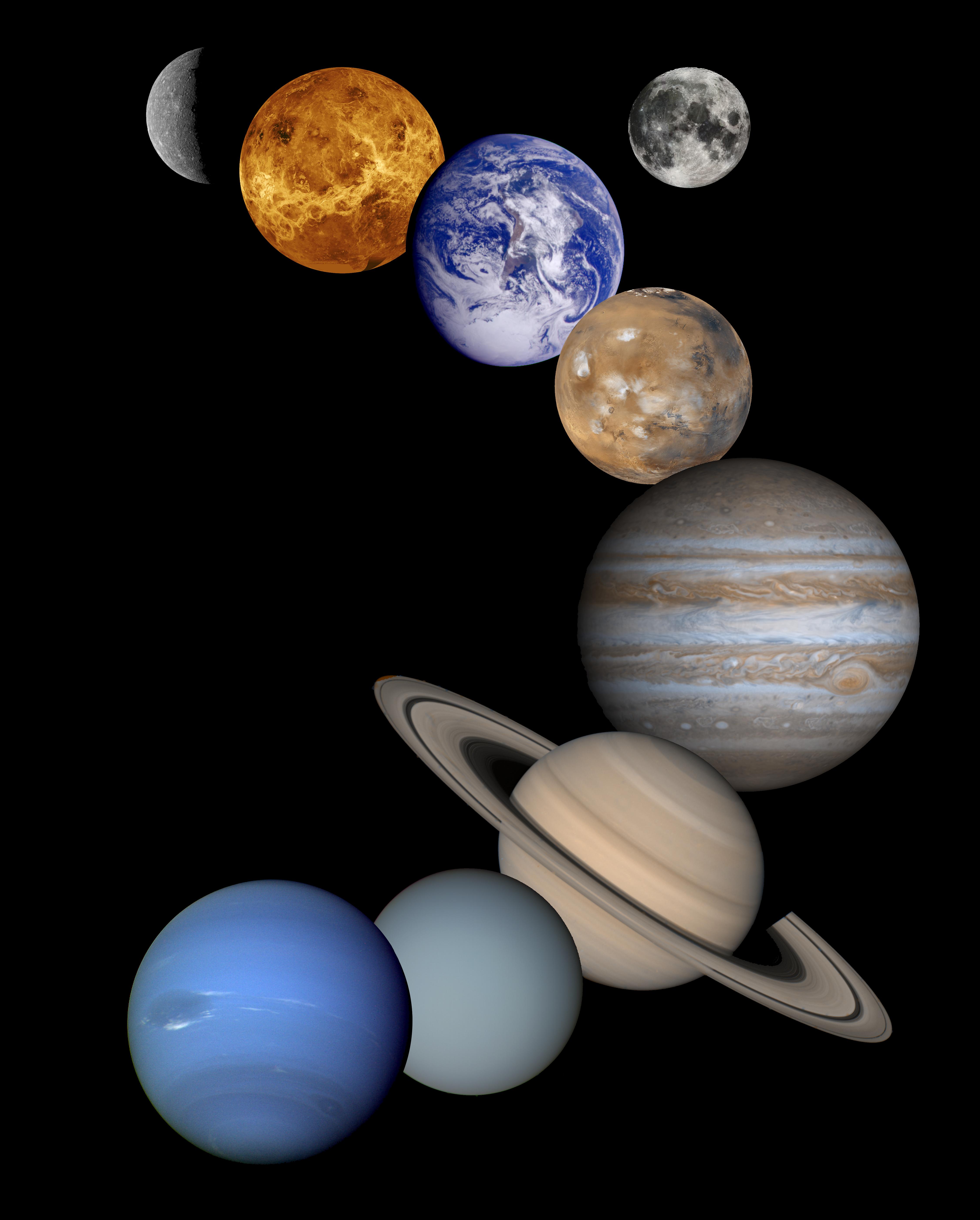
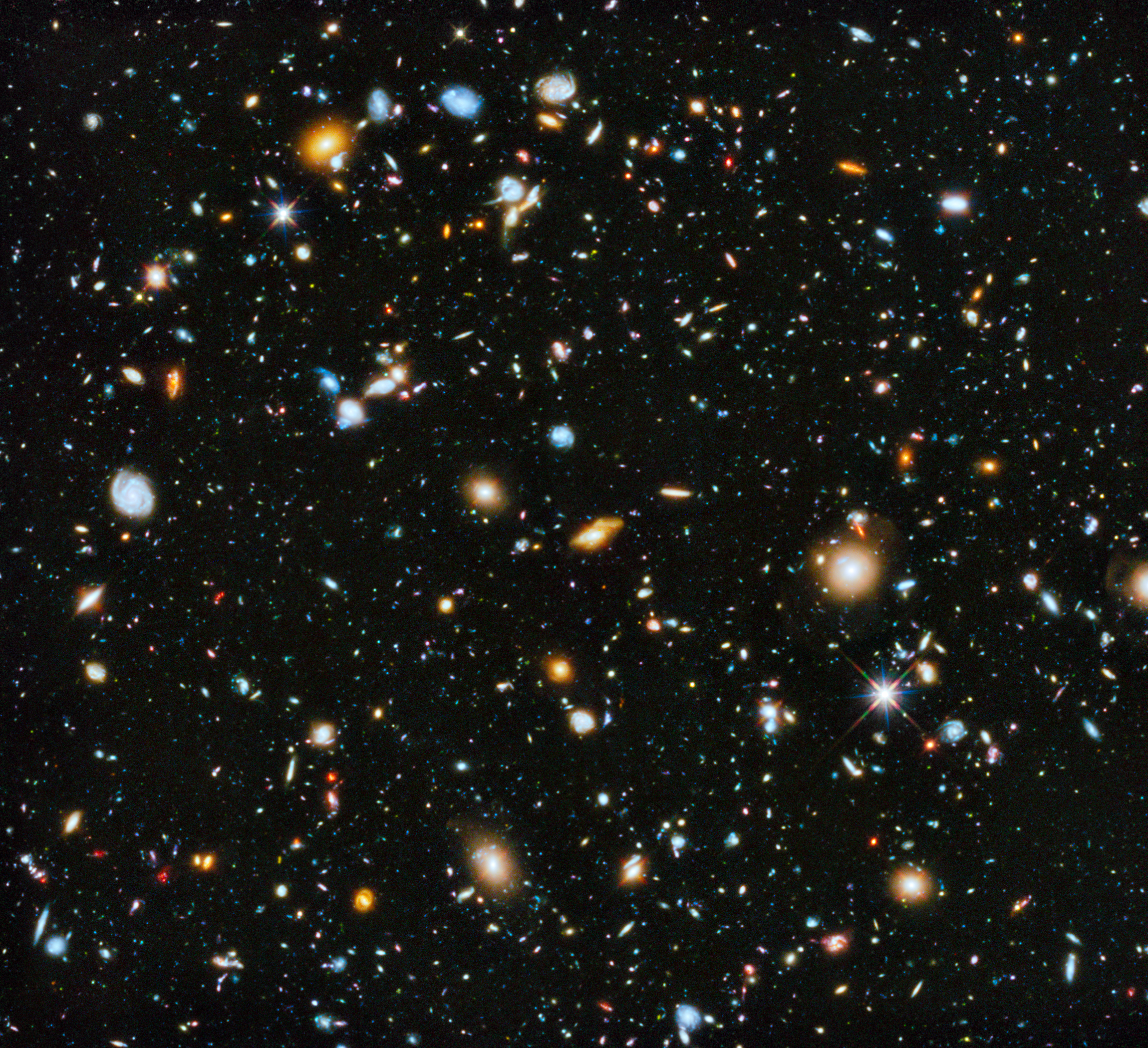
Not obligatory to illustrate the world of Gyorgy Ligeti with a “universe” picture. But given the associations of, particularly, his micropolyphonic and choral music, with such themes, (via, amongst others, its use by Stanley Kubrick in 2001 A Space Odyssey), I figured, why not? And this image. courtesy of the Hubble telescope is a beauty no? Just like Ligeti’s music.

From a relatively recent standing start I have immersed myself in Ligeti’s music, of which there are essentially three periods, the Bartokian, “secret” early music, the micropolyphonic phase, and the final polymodal, polyrhythmic works after the four year hiatus around 1980. All his work though incorporates pulse, process and humour and a fascination with pitch, texture and harmony. His music is intriguing but there is usually some immediate appeal. Its structures, often deliberately, hold back emotion, or show it in an exaggerated or comic way, perhaps a reflection of his extraordinary life story. Yet beneath the surface scepticism it worms its way in to your head and heart. Well it does me. It is easy to see why he is now probably the most popular modernist composer.

At the top pf his game he is up there with Bach and Beethoven. So you can imagine how excited I was by this Immersion Day, which followed a similar, though smaller scale celebration at QEH last year under the direction of Pierre-Laurent Aimard. This day kicked off with the documentary film All Clouds Are Clocks, then to Milton Court for a selection of chamber works from students at the Guildhall, a chat by Ligeti expert Tim Rutherford-Johnson, a survey of unaccompanied choral works at St Giles’ Cripplegate by the BBC Singers and finally some of the key orchestral works with the BBC SO under the baton of Sakari Oramo including the two late concertos for violin and piano. Here’s the complete list.

  • Musica ricerata
  • 10 Pieces for Wind Quintet
  • Horn Trio
  • Síppal, dobbal, nádihegedüvel
  • Éjszaka – Reggel
  • Zwei Kanons
  • Dri Phantasien
  • Idegen földön
  • Húsvét
  • Betlehemi királyok
  • Lux Aeterna
  • Magány
  • Nonsense Madrigals
  • Clocks and Clouds
  • Violin Concerto
  • Piano Concerto
  • Atmosphères
  • San Francisco Polyphony

I’ll spare you a great long regurgitation of the programme notes. Hardly seems worth it for the two readers who might stumble across this. Highlights then? The Horn Trio, Ligeti’s first statement of his mature style from 1982, which looks backwards in some ways to the Romantics but also contains astonishing new sounds and rhythms. A shout out to Karen Starkman’s horn playing, which was equally effective alongside the varied miniatures of the 10 Pieces for Wind Quintet. Best though was Síppal, dobbal, nádihegedüvel, (with pipes, drums, fiddle) from 2000, which sets four poems by Ligeti’s Hungarian mate Sandor Weores for mezzo-soprano, to a background of bonkers tuned and untuned percussion. Pure imagination. I particularly enjoyed the short, folk based, early choral pieces but star billing went to Lux Aeterna, the piece which Kubrick purloined, and which is the very definition of other worldly. Perfection from the BBC Singers. And in the evening, well all amazing but particularly Nicolas Hodges’s direct take on the metrical patters of the Piano Concerto from 1988 and, best of all, the closing San Francisco Polyphony, an eleven minute concerto for large orchestra which represents just about every idea GL ever had. Just immense.

The Silver Tassie at the Barbican review *****

The Silver Tassie

Barbican Hall, 10th November 2018

  • Mark-Anthony Turnage (composer)
  • Amanda Holden (libretto)
  • Ashley Riches – Harry
  • Sally Matthews – Susie
  • Brindley Sherratt – The Croucher
  • Claire Booth – Mrs Foran
  • Marcus Farnsworth – Teddy
  • Alexander Robin Baker – Barney
  • Louise Alder – Jessie
  • Susan Bickley – Mrs Heegan
  • Mark le Brocq – Sylvester
  • Anthony Gregory – Dr Maxwell/Staff Officer
  • Andre Rupp – Corporal
  • Finchley Children’s Music Group
  • BBC Singers
  • BBC Symphony Orchestra
  • Ryan Wrigglesworth – conductor
  • Kenneth Richardson – stage director

B*gger. B*gger. B*gger. B*gger. B*gger. I never saw Mark-Anthony Turnage’s second full scale opera when it was first performed in early 2000 at the ENO. On the basis of this semi-staged performance from the BBCSO as part of the In Remembrance weekend this was a terrible omission on my part for it is an extraordinary work both musically, and, given the strength of Amanda Holden’s libretto, dramatically. It is intensely powerful and moving even without a full set and staging. It beggars belief that it has not been revived since 2002, (and that it missed out on a run in Dallas thanks to political sensitivities). 

It is constructed as a symphony in four acts, Home, War, Hospital and Dance. Harry Heegan is about to return to the family flat after a football match with his best mate Barney and girlfriend Jessie. Mum and Dad are intensely proud of their son who is about to head off to the war. Next door neighbour Susie joins the party, banging on about God. Mrs Foran from upstairs also turns up escaping abusive husband Teddy. The Silver Tassie, a cup with much significance appears, the men go to war full of optimism. The War act is primarily choral preceded by the mythic Croucher, representing, I think, the war dead and intoning Old Testament-ish doom. An officer complains at the doctors in the Red Cross station. A football game is delayed as the battle begins. The story then switches to the Hospital where an angry Harry is now paralysed, Teddy blinded and Jessie, who refuses to see Harry, is now coupled up with Barney, who saved Harry’s life. The final act sees Harry and Teddy spit out their pain and bitterness at those who still have their futures at the communal dance. 

The opera is based on Sean O’Casey’s eponymous plan and it is therefore we who have to thank for the gripping drama. Whilst it is never made explicit, O’Casey intended that the Heegan family, and the rest of the community, should hail from the East Wall, a working class district of Dublin, adding further pungency to the message of the play (and opera) because, at that time, Ireland was still part of the UK and the republican movement was divided on whether the country should be involved in the war. So as some young men like Harry, Barney and Teddy headed off to war others prepared for insurrection at home. 

O’Casey’s play was rejected by WB Yeats, then head honcho at the Abbey Theatre in Dublin, when it was submitted in 1928, reflecting its political sensitivity. This was after the success of his first three major plays, The Shadow of a Gunman, Juno and the Paycock and The Plough and the Stars. So it premiered at the Apollo in London’s West End. There have been a fair few plays which rail at the futility of war and its consequences on the individuals who fight in it, but I doubt many match the raw power of The Silver Tassie. 

So Amanda Holden, (to be clear not the airhead judge on BGT), and M-AT had something monumental to work with. Even so, and in no way intending to downplay Ms Holden’s contribution which provides M-AT with multiple opportunities to show off his trademark stylistic jagged juxtapositions, it is the score that takes the breath away. M-AT had already shown his dramatic flair in his first opera Greek, and his compositional skill with orchestral pieces such as Three Screaming Popes, Momentum, Drowned Out, Dispelling the Fears and Silent Cities, especially when it came to percussion and brass, but The Silver Tassie is on another level.

The symphonic structure is inspired by mentor Hans Werner Henze’s The Bassarids, with the first act setting out the main ideas and themes, the second the Adagio slow movement, brought to life by the large scale choral scenes (echoing the more Expressionist feel of the act in SO’C’s play), the third a Scherzo and the last act a “dance” finale with “off stage” band. This structure offers rhythmic backbone and plenty of tunes derived from song, (including Robert Burns’s own Silver Tassie), and dance, as well as repeated motifs, which make it easy to follow and show off MA-T’s uncanny ability to capture the emotional interior of the characters. There are episodes of rich orchestral colour but there are also plenty of more economic orchestration.  The score should give the singers plenty of space, but just to make sure the cast were miked, (though M-AT, a couple of rows in front of me, needed to dash up to the sound desk to get the balance right early on).  The second and fourth acts are up there with the best I have ever heard on an opera stage. Even allowing for the fact that this wasn’t an opera stage. 

Sometimes this semi-staging lark can leave singers looking a little awkward unsure of how much to commit to performance versus voice. Costuming can also, sometimes, appear incongruous. Not here though, at east once the first act go going. There were some outstanding vocal performances, notably for me from Sally Matthews and Claire Booth, and Marcus Farnsworth as Teddy was very persuasive. But baritone Ashley Riches as Harry, even from my two perches (side stalls first half, back of circle second), was bloody marvellous not just in his singing but also in the way, pre and post wheelchair, he projected Harry’s exuberance and then his pain into the whole auditorium. 

Now I have nothing to compare it to but, given just how amazing this was, I have to assume that Ryan Wrigglesworth and the BBCSO, and the BBC Singers and Finchley Children’s Music Group (complete with ensemble writhing) got as close as possible to the heart of the music. 

You can listen to it for a couple more weeks on BBC Radio Opera on 3. Do yourself a favour and do so. 

And can I beg the ENO to find a way and time to revive this. With Mr Wrigglesworth on the podium. I will chip in a few quid if it helps. 

BBC Symphony Orchestra at the Barbican review ****

20150227_150301ae-spco_frost

BBC Symphony Orchestra, Sakari Oramo (conductor), Martin Frost (clarinet)

Barbican Hall, 17th October 2017

  • Dmitry Shostakovich – Symphony No 9 in E flat major Op 70
  • Aaron Copland – Clarinet Concerto
  • Sergei Prokofiev – Symphony No 6 in E flat major Op 111

Vikings, stave churches, Celsius, Bohr, Angstrom, Ibsen, Strindberg, Laxness, Kierkegard, Nielsen, Sibelius, Greig, Munch, Balke, Olafur Eliasson, ABBA, Bjork, Bergman (x2), Lars von Trier, Ullman, Sofia Helin, Mads Mikklesen, Kim Bodnia, the laconic Kimi, Schmeichel (P), Salonen (EP), Lego, IKEA, SAAB, zips, mobile phones, seat belts, loudspeakers, Alvar Aalto, Arne Jacobsen, art glass, Georg Jensen, BIG, arket, meatballs, herring, saunas, Gamla Stam, Djurgarden, Tivoli, that Bridge, Roskilde Cathedral, Uppsala Cathedral, Copenhagen Opera House, Temppeliaukio Church. There’s a few of my favourite Scandi  people and things. And that’s before anything from the natural world. And doesn’t include those Scandinavians I would count as friends. There are good reasons why Scandis are generally pretty pleased with themselves, though not in a wanky kind of way. They have much to be pleased about.

Anyway it turns out that there is an organisation for promoting the Scandinavian countries and their culture. CoScan. The Confederation of Scandinavian Societies. And every year since 1994 it has given an award to recognise the contribution of an individual. body or group on the international stage. Previous winners have included Sandi Toksvig, Magnus Carlsen (the best chess player in the world), Hans Blix, The Nordic Optical Telescope, that Bridge and Mika Hakkinen. This year was the turn of Finn Sakari Oramo, the Finnish Conductor of (amongst others) the BBC Symphony Orchestra. Presented on this very evening. Good on you Sakari. He seems like a thoroughly decent bloke and we here should be eternally grateful for the musical contribution he has made, especially to the Proms (five this year alone). He is a whizz across much of the Scandi composer repertoire, but especially Carl Nielsen, whose symphonies and, especially string quartets, don’t get enough of an airing IMHO.

in this programme he also wheeled out three works that should be performed more often. DSCH’s 9th may not be down there with the weird and whacky modernism of Nos 2 and 3 and the overly patriotic, fim-scorish 12th, but it does get neglected. Copland’s jazzy Clarinet Concerto is one of his favourites and was written for Benny Goodman but is pretty tricky so needs a top-notch soloist to do it justice. And Prokofiev’s 6th Symphony is rated by enthusiasts of his work but it is 1 and 5 that get trotted out most often.

So this seemed to me to be well-worth the effort. Which it certainly was. All three works come from the immediate post WWII era, and a scary time personally for DS and SP, but they are far from completely gloomy, at least in places.

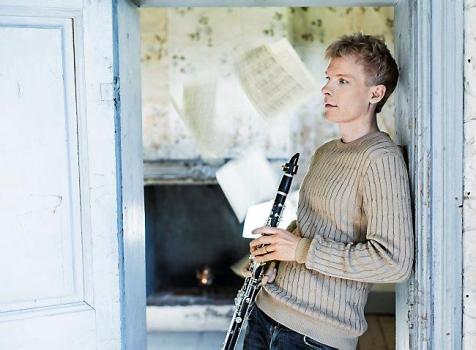
Copland’s concerto is genuinely untroubled, and was premiered by Goodman in 1950. The slower opening drops straight out of Copland’s Americana, specifically Appalachian Spring, kicking off with low strings and harps, against which the clarinet meanders, with the violins then following. Just like the sad scene when the love interest dies in a Western. It then jumps into what seems to me to be a fiendishly tricky cadenza, fully written out, which Martin Frost, doing that curious Pied Piper jig that woodwind soloists seem to adore, made look simples. Of course maybe it is. What would I know. I got booted out of recorder practice at school on the grounds of persistent ineptitude. It ends with a fortissimo scale from one end of the clarinet range to the other. Amazing. Straight into the faster, final section, with all sorts of string effects like a sort of mega Bartok quartet. More showing off from Mr Frost with a jazz jam to finish. He encored with a klezmer arrangement from his brother Goran which near brought the house down. There he is above looking suitably impish. Frost is a good name for him.

DSCH initially promised a big splash for his Ninth, with soloists and chorus, just like you no who. Shostakovich being Shostakovich though what he actually served up was a five movement, small scale (by his terms) joke, which barely gets over the finish line. Obviously he has form with odd, almost embarrassingly jejune structures, and musical satire, as much as he could get away with, witness the Sixth, but here we have what I read as an entire flippant f*ck you across a whole symphony. Maybe not just to his political masters but also to the music world in general. Everything he is routinely accused of is there but recast in a sort of Haydn-esque jollity. Scurrying strings, whistling woodwind, boy soldier drums, farting brass fanfares, an abrupt “I’ve done enough” concluding chord. And that’s just the first movement. The second movement is one of those desolate stalking Moderatos but never plumbs the depths and the screaming strings never come. The scherzo lollops along but with no repeat slows into the regulation Largo with doomy fanfare and bassoon lament which as always for me at least conjures up the battlefield dead. But again it is on a tiny scale. This is the sort of movement DSCH can crank up to 20 minutes plus. This is all over in four. The symphony ends with a quick movement which kicks of with a folksy little lick which builds up and eventually dashes over the line to the close. The whole thing is like some child’s Toy-town version of a DSCH symphony. Oramo and the BBCSO, correctly, didn’t attempt to make a case for profundity, taking it straight. I loved it.

Once again I found myself being really taken with a major Prokofiev piece that I had dismissed previously. It is the most symphonic of his symphonies, the most expansive and the most, dare I say Shostakovich-ian. It does occasionally start to go a little too C19 Romantic on your ass but there are enough of the trademark SP lurches and new twists to forestall tedium. So, like DCSH, got himself into a lot of bother with Stalin’s “realist” henchman by being a sarky, modernist clever clogs. The difference is SP actually came back to Russia to face this, er, critical music. He liked to satisfy his customer but the iconoclast in him could never be entirely suppressed. The Sixth, as a commemoration for the war dead was initially OK’d by the authorities but then, in 1948, censured.

The first movement kicks off with a couple of lazy themes led by strings then oboes before snapping into gear with a third, more forthright chanting theme, set against a tick-tock rhythm, which revives the first theme and sets up a massive tutti climax. A mixture of Mahler, Shostakovich and Saint Saens, it collapses into horn squeals, then all three themes are reprised. As usual with SP it lurches around a bit but has some great colours and sounds. It can probably turn into a bit of a grandiloquent mess in the wrong hands but I reckon Mr Oramo, by cracking on, get it about right.

The second movement Largo starts off with a series of big, chromatic gestures, but with some swinging brass, a bit like Wagner loosened up and had a nice long toke. Then we move into a kind of dreamy, lyrical reminiscence, all Hollywood love story, which breaks back into the tick-tock march of the second theme, before the first is reprised, in size. Overall this movement is genuinely unsettling.

As, in some ways, is the final movement marked Vivace, but only because it kicks off in perky neo-Classical vein. Though the bass line is anything but gallant, thumping away angrily, and backed up with percussive piano. The second idea is another jolly scamp led by woodwind, then rising strings, but this time with the tuba doing its best to create havoc. Gradually the dance starts going off-kilter, the fun peters out, and nasty stuff jumps out. The chant from the first movement returns now over the percussive thuds and deep brass fanfares. A major triad to conclude. Happy and triumphant it ain’t.

Very convincing. I have subsequently revisited the work listening to a couple of Russian orchestra performances. It wasn’t just Sakari Oramo and the BBCSO who nailed this. It really is a terrific piece of music. I think I am properly converted to SP’s world. That’s the thing with “high” art. You just need to put the hours in.


Holst’s The Planets: BBCSO at the Barbican review ****

pia03153

BBC Symphony Orchestra, BBC Symphony Chorus (women’s voices), Professor Brian Cox, Ben Gernon

Barbican Hall, 29th September 2018

I wasn’t quite sure of what the format would be for this performance of Holst’s The Planets. Maybe a quick intro from our most famous and telegenic physicist, then a work-out for the BBCSO under Guest Conductor Ben Gernon, with a few unspecified other repertoire to be tacked on. What I hadn’t bargained for was a full-on lecture preceding each of the seven movements with state-of-the-art slide-show accompaniment showcasing some of the most famous images of our solar system.

It was therefore a very pleasant surprise. The Hall was packed to the rafters and, this being The Planets with a famous bloke off the telly, there was a far more diverse audience than you normally see at the Barbican or the South Bank. And my, my, did I learn a lot. Although I confess I can’t remember it all. The point is that Prof Cox, with his dulcet Manc tones, his child-like enthusiasm and his preposterous hair-cut is just the man to show us how the latest scientific understanding of our solar system, drawn from all that hard- and soft- ware sent out over the last four decades to examine it, both connects to, and contradicts, the more mystical and conjectural view prevalent in the early C20 when Holst wrote his masterpiece.

Holst, with his attachment to English folk-song and Eastern mysticism, was a curious fellow in some ways. Swedish extraction, frail constitution, mates with Vaughan-Williams, teacher at St Pauls Girls School, as fancy as it gets even then, nice gaff looking over the Thames in Barnes, committed socialist. An interest in theosophy, a right rag-tag of funny ideas as far as I can tell, but which had quite a hold over the Western creative community in the inter-war period.

His music is pretty curious as well. Uncertain tonalities, modal expressions, the kind of counterpoint more typical of medieval forms, irregular and often belting rhythms, ear-catching dissonance. It all tumbled out in The Planets, which itself it as big a subject as you can imagine for programmatic music. No surprise that it was such a success when finally completed in 1917, bolstering his career and reputation, and no surprise it is so popular today. Its best ideas might now appear to be a field full of hackneyed war-horses but, if you step back from the familiar, it still has the power to wow especially, I think, in the slower passages. At the time it was as “modern” as Debussy or Stravinsky, and, like them, its influence on “everyday” classical music now, is inescapable. No Planets, no fantasy film scores.

Holts’s starting point was the elemental character of each of the seven planets which is what lies behind astrology, (connected to this theosophy caper apparently). All b*llocks obviously, even at the time, but Holst believed it. And believing in the power of the planets to influence us did give a starting point for Holst to set out what he saw as important facets of the human condition: War (Mars), Peace (Venus), Messenger (Mercury), Jollity (Jupiter), Old Age (Saturn), Magician (Uranus), Mystic (Neptune), Scoff all you like but this nonsense also meant that, on this night, the exact centenary, Prof Cox could then riff on how far we have come in our understanding of what makes up our solar system, and that more existential question, what other life might be, or have been, out there.

The BBCSO, (with the female voices of the choir for the final wordless chorus in Neptune) was on top form and threw itself into the hyped-up interpretation under Ben Gerson. With the movements broken up by Prof Cox’s oration it was important to establish momentum in each of the movements tout suite as it were. After all the whole piece clocks in at just under an hour with only Saturn and Venus getting anywhere near the 10 minute mark. Easy enough to quickly stake your claim on the thunderous toccata of Mars, (here claimed as a wider critique of industrial capitalism and not just the horror of mechanised warfare), the carnival scherzo of Jupiter, the bitonal dance of Mercury or the sardonic fantasy of Uranus. I have to say though that the BBCSO was actually most convincing in the nagging processional of Saturn and the endless hush of Neptune which take more time to overawe.

All up a splendid idea. Of course individually the images, the music and the lecture might have had more lasting impact, but put them all together and a deeper impression was created. It would be nice if we humans could keep our sh*t together long enough to find out if we are not alone.

BBC Symphony Orchestra and Vilde Frang at the Barbican Hall review ****

vilde_frang_wikipedia

BBC Symphony Orchestra, Sakari Oramo, Vilde Frang (violin)

Barbican Hall, 21st March 2018

  • Anna Clyne – This Midnight Hour
  • Benjamin Britten – Violin Concerto, Op 15
  • Ludwig van Beethoven – Symphony No 6 in F major “Pastoral”, Op 68

The Violin Concerto is one of those Britten pieces that takes a bit of time to get used to. It was written in 1939 so contains plenty of the youthful flashiness, and debts to Stravinsky, which characterise early BB, but with a more serious intent which reflects his admiration for Alban Berg, whose own Violin Concerto, was the last in a frustratingly thin oeuvre. BB attended the posthumous premiere of Berg’s masterpiece in 1936, in Barcelona in the shadow of the forthcoming Spanish Civil War, as well as two further performances later in the year. Understandably he was mightily impressed.

BB’s own concerto was premiered in New York in March 1940 by the Philharmonic under John Barbirolli, given that he and Peter Pears were stuck there following the outbreak of war. The British premiere was in April 1941 in BB’s absence. Despite BB’s revisions in 1950, 1954 and 1965, which brings a little more of the late Britten’s soundworld to the violin part, the piece has historically been more admired than loved, but it has developed a bit more of a following in recent years.

Which means that some of today’s finest violinists have taken up the BB VC cause. These include Janine Jansen who played the piece with the LSO last year under Semyon Bychkov in this hall last year. This is not a concerto full of showy virtuosity, the soloist works on the ideas with the orchestra, but it does require a formidable technique. Ms Jansen certainly has that but the performance overall was a bit more athletic and weighty than I might have liked (though maybe that was the influence of the Mahler on the bill).

In contrast Vilde Frang, who has also recently recorded the piece, seemed a little bit more delicate, most obviously in the pianissimo sections, and the double stopping, of which there is a surfeit in the Scherzo, more Baroqueish than Modernist. This lighter, though still enthralling touch, made the final coda, constructed in BB’s favourite Passacaglia form, even more irresolute. a good thing in my book. The first movement, in sonata form, opens with a little rumble on the timps, then the bassoon takes up the tune, and then the rest of the orchestra, returning to it ostinato through the movement, whilst the violin moves in and out with its uneasy, song-like lament. The second theme is also martial in intent; there is a link to Shostakovich, but with more elegance and less hectoring. This theme is taken up by the violin, not the orchestra, in the recapitulation which ends with an unsteady coda. The second movement scherzo is spiky and Prokofievian in feel, with a very sinister transition to a tutti before ending with a cadenza, based on the first movement tunes, in which Ms Frang excelled. The ground bass which underpins the variations in the final movement is a bit wobbly in terms of tone, at one point D major triumphs, ending with a simple chant, over which the violin dances around, never quite closing out.

I think it is the uncertain tone, literally and metaphorically, that makes the BB VC seem like harder work than it actually is. Played like this though it is up there with the very best of BB’s works which require a full orchestra, the contemporary Sinfonia da Requiem and the War Requiem. It is a lot less knotty that the Cello Symphony that’s for sure. Having said that BB’s textures always work better for me in the pieces for smaller orchestras. I went back to the benchmark recording I have, the ECO under BB himself with Mark Lubotsky as soloist. Maybe I was just in a good mood at the concert but I reckon Ms Frang and Sakari Oramo gave them a pretty good run for their money, especially in the opening movement, which seemed to get to the point more quickly.

The BB VC was preceded by the London premiere of a 12 minute work written by Anna Clynne, British born now working in NYC. It was written for the Orchestre National d’Ille de France where she was resident composer. It is resolutely tonal and packs a hell of a punch. It is pretty sexy stuff too, as was her intention, based, as it is, on Baudelaire’s poe Harmonie du soir and one line from a poem by a chap called Jimenez about a nude lady running through the night. She packs a lot into the piece, kicking off with a rushing theme low down in the bass and cellos, moving to some sparkling woodwind, a slab of Brucknerian grandeur and then a Ravel like sharp waltz, before the whole thing seems to whirr around again. Apparently Ms Clyne notates her score with mood markings, intimate, melting, ominous, feverish, ferocious, aggressive, skittish, beautiful, eerie, which is easily comprehended. I have got much better at taking in contemporary compositions at the first, (and often only), outing, but this piece doesn’t require too much concentration, so immediate is its impact. Seems like the audience agreed judging by the reaction and deserved applause when Ms Clyne came out of the audience.

Which meant that, unusually, Beethoven took the back seat. Absolutely nothing wrong with Mr Oramo and the BBCSO’s take on the Pastoral but there wasn’t too much to get the pulse racing. The detail was there but the pacing was relaxed and the orchestra didn’t seem as engaged as when they are getting their teeth into unfamiliar repertoire or having to convince the big crowds at the Proms. Brooks babbled, birds sand, peasants partied, lambs gambolled, the storm came and went, but Mr Oramo didn’t seem to find the genuinely symphonic in the way others have. Still it’s Beethoven so pipe down Tourist and be happy with your lot.