
London Symphony Orchestra at the Barbican review ****

dd962845a2824add53af118e7be7a9dcdb84a5b710a55991534227558486c096_dowz

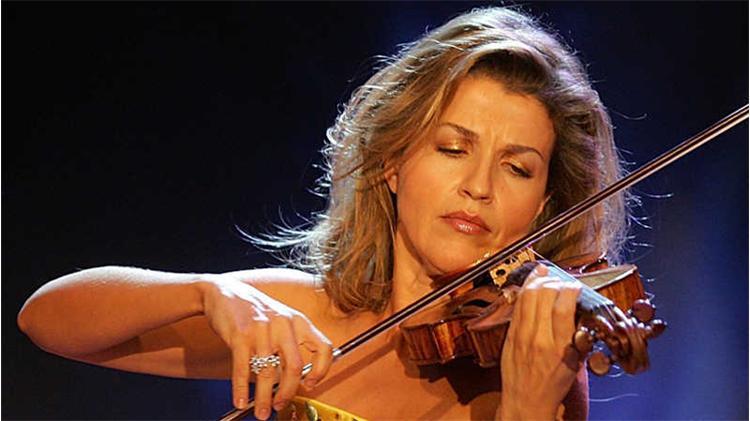
Anne-Sophie Mutter, Sir Mark Elder, London Symphony Orchestra

Barbican Hall, 7th May 2017

Modest Mussorgsky, arr. Rimsky-Korsakov – Prelude to Khovanshchina
Tchaikovsky – Violin Concerto in D major Op.35
Shostakovich – Symphony No.15 in A major Op.141

Who’d be a Russian composer eh. Mussorgsky drinks himself to death at 42 (look at the famous Repin portrait to remind you there is no glamour in this form of self destruction) and p*sses away whatever talent he may had have (one powerfully dramatic opera in Boris Godunov). Tchaikovsky may have taken his own life, or fell victim to cholera, at just 53, and seemed by many accounts to have felt compelled to keep his sexuality a private matter. And Shostakovich lived a life of allusion and inference which kept his true feelings about the society he lived and worked in a mystery.

So you’d be surprised if they produced a jolly night out musically. Well then you might have been surprised. Well maybe only a bit, as some of this did sound exactly as you might have expected given these personal demons. Yet in other ways, these pieces seem to me at least quite a long way from the narratives that are routinely get trotted out to explain the work of these three composers.

So with the Khovanshchina Prelude we have the opening to Mussorgsky’s planned grand historical opera exploring the changes in Russia society in the reign of Peter The Great. Unfortunately it never got finished and Rimsky Korsakov had to step in and tszuj it up a bit and smooth it off. I am afraid that for me it is just a bit of a meandering melody with no great interest. The Tchaikovsky concerto is properly blingy with memorable tunes but gets a little less endearing with each hearing I think. The Shostakovich, on the other hand, gets more interesting for me with each hearing. Four movements, usual proportions, biggish orchestra but balanced. But what he then does with this structure is all over the shop. Lots of single instrument lines, loads of obvious and not so obvious musical quotations, exaggeratedly simple tunes and then complex twelve note themes. The parallels with Nielsen’s 6th Symphony are often drawn which makes sense and which I always love. Who knows what he was thinking but it does seem to me to be some sort of encapsulation of all of his output before set against some sort of commentary on all that he had seen in his life. Anyway its top notch.

So the Shostakovich wqs the main reason for going to this concert (it is the programme that largely drives my choice now that I have a firm handle on the boundaries of what works for me like in the classical music world). However I am also keen to hear as many of the great performers and conductors and this was a chance to knock a couple off the list. I have to say Anne-Sophie Mutter must be the best violinist technically I have ever heard but this almost felt too perfect and furiously methodical. Still I will remember this performance, especially when she turned to the LSO to implore them punp it up, even if I am not sure I really enjoyed it. For the Shostakovich though I can see why Sir Mark Elder is held in such high regard.

So all in all a very fine programme and I will add Sir Mark Elder to the list of must see conductors (when they have the right pieces) which includes Rattle, Haitink, Jurowski, Jansons, Salonen and Chailly.
Bach’s St John Passion at the Barbican Hall review ****

b925c46a-59cb-47dd-9764-aef8ab7a9fee

Britten Sinfonia, Britten Sinfonia Voices

Barbican Hall, 14th April 2017

Britten Sinfonia
Mark Padmore – Evangelist/director
Jacqueline Shave –  leader/director
Simon Russell Beale – speaker
Britten Sinfonia Voices

JS Bach – St John’s Passion

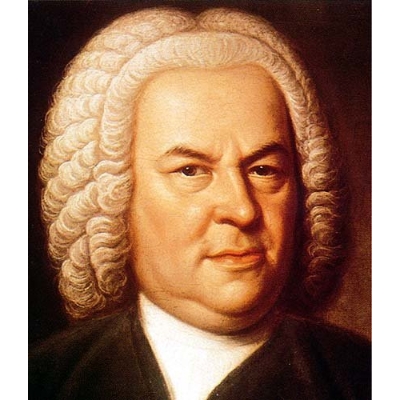
They were a glum looking bunch these great classical composers weren’t they? It is alright for us with our endless, carefully composed, beaming selfies but these poor b*ggers only had one shot at pictorial immortality normally and relied on some hack artist to deliver it. Of course, the real reason they all look grumpy is obviously because it is so tricky to paint a smile. But I find it interesting that a combination of the “genius” theory of artistic accomplishment together with these received pictorial representations so often leads us into divining the temperament of the man (for alas it was always a man) from his music.

Anyway JS does look a bit stern in this picture. I guess he was a pious chap but then that might largely have come with the job. In contrast the St John Passion to me is anything but stern and pious. It is a dramatic story, well told, with no let up in pace (the bigger St Matthew Passion is not necessarily better in my view for clocking in at 3 hours vs the 2 hours here). JSB mixes up the recitative and chorus, the solo arias, the chorales and the musical accompaniment to marvellous effect here.

Now this performance was delivered, as I understand it, with the forces intended by JSB, so a couple of everything, first violins, second violins, violas, cellos, flutes and oboes, augmented by double bass, cor anglais, bassoon, organ continuo and oboe d’amore and viola da gamba. Thus a mix of modern and period instruments. Each of the vocal parts was a single line sung by eleven members of Britten Sinfonia Voices, including its director Eamonn Dougan, alongside Mark Padmore, who is, rightly, considered a pre-eminent singer of the Evangelist role, and whose vision this performance was.

However, I have to say that the Barbican Hall is not the cosiest venue for such an enterprise, which impacted a couple of the arias, and, just occasionally, swallowed Mr Padmore’s recitative. and ensured that some of the more vibrant chorales were a bit murky.

Laid on top of the piece were a couple of readings from the mighty Simon Russell-Beale, of Psalm 22 and an incredibly moving Ash Wednesday by TS Eliot. I doubt there is a man on earth who is better at thundering out this sort of stuff whilst making it look easy – just marvellous – though I guess it will have wound up the purists. And the piece ended, as apparently it did in JSB’s day in Leipzig, with a restorative motet by a chap called Jacob Handl.

Overall then I enjoyed this performance, though my attention did wander a bit. I am persuaded by this stripped back approach with mostly modern instruments when compared to the big guns approach which I have experienced for this, and the St Matthew Passion in the past, but I wonder if a smaller hall and a definitive leader on stage might have just helped clarify things a little.

Still this is just minor grumbling. At the end of the day it is still a beautiful piece of music whichever way you cut it, notably in the chorales at the top of each Part and the run of arias post the Crucifixion. I am looking forward to the next Bach workout.