Orchestra of the Age of Enlightenment, Katherine Watson (soprano), Rowan Pierce (soprano), Zoe Brookshaw (soprano), Iestyn Davies (counter-tenor), Katharina Spreckelsen (oboe), Choir of the Age of Enlightenment
Queen Elizabeth Hall, 11th November 2019
Giovanni Battista Pergolesi (1710-1736) – Stabat Mater
Tomaso Giovanni Albinoni (1671-1751) – Oboe Concerto in D minor, Op.9 No.2
Antonio Vivaldi (1678-1741) – Gloria RV 589
Last year a Pergolesi Stabat Mater with BUD from the AAM. This year the OAE take with MSBD and Katherine Watson (braving a cold) and Iestyn Davies in the soloist chairs. I’ve already banged on about Pergolesi before. This is his most famous work. Written just before his early death from TB. More than a hint of the comic opera about its style, which are, largely, his other, authenticated contributions to Baroque musical history, (I have a recording of some of his instrumental offerings). Though certainly not its serious religious subject, a C13 poem depicting Mary’s vigil at the foot of the Cross. Took the European musical world by storm and, on and off, has been a favourite ever since. Immediate, direct and very effective, it is impossible not to be carried along by the lean, melodic strings offset with deliberately nostalgic stile antico effects, (from the time before Monteverdi revolutionised Western music). These include prolonged cadences and delayed resolutions. Feel the pain. Lovely but a couple of times a year is enough for me.
Albinoni was a prolific composer, around 80 operas, 40 chamber cantatas, 60 concertos and 80 sonatas, and was, in his day, as popular as Corelli and Vivaldi. Though not quite as good IMHO. Then again he only really considered himself a violinist and, being a rich toff, didn’t have to work. SO we should applaud his industry. And, in the oboe concertos, he did come up with some of the finest music ever written for the instrument. His Op 9 set contains 4 for solo oboe and 4 for two oboes and this one, No 2 is considered the best of them. It kicks off with an elegant medium paced Allegro, follows with a sublime and generous slow movement, with an aching, bel canto solo line against a rocking string ripieno, (which MSBD was much taken with), and a bouncy, scurrying finale, which again gives the soloist plenty of opportunity to show off. And, when it comes to Baroque oboe, very few can match the OAE’s Katharina Spreckelsen.
Last live listen to Gloria was with MS and MSC at the Cadogan Hall with the ECO, so it has become something of a family affair, (even the SO and BD have grinned, and, to be fair, more than bore it, in the past. Famously AV wrote the Gloria for a full SATB choir. despite their being, at least officially, no blokes in the Ospedale della Pieta, bar carrot top himself. Which means they were drafted in, or perhaps, in the array of talents in the convent, there were females basses or at least voices low enough to take the parts, maybe with the whole pitched an octave higher. The contemporary audience would never have known, the young women being concealed behind a grills at the balconies where they performed. We had the OAE’s dedicated chamber choir, thankfully in full view, a scratch outfit of professionals perfectly matched to the OAE’s beefy sound. This I can listen to more than a couple of times a year.
Concerto in D Op 3, No 9 RV230 (arr. for harpsichord after JS Bach’s solo transcription BWV972)
The Four Seasons Op 8, Nos 1 to 4
The Tourist adores the sound that Rachel Podger makes in the Baroque violin repertoire and especially in Bach, Vivaldi and Biber. Moreover, and feel free to snigger at the back, but he still gets a thrill when a specialist like RP, or one of the Italian maestros like Giuliano Carmignola or Fabio Bondi, lets rip on the Four Seasons. You can stick all that turgid Romantic nonsense where the sun don’t shine. This is real music. And if you are too snooty in your choice of classical repertoire to agree then more fool you. The Tourist yields to no man when it comes to the outer reaches of early 80’s post punk funk (and, as we speak, has a bit of Stockhausen ringing in his ears), but that doesn’t stop him from wigging out to the perfect pop of Benny and Bjorn’s SOS come party time.
Ms P has a rich, dark tone which gets you right in the gut. Her interpretation with her regular chums Brecon Baroque is a little less Flash Harry than the Italian peers, (though they certainly don’t hold back in the fast movements in Summer and Winter), which pays huge dividends in the super slow Largos in Spring and Winter. This was still exhilarating when it needed to be though. As confirmed by the Tourist’s regular Baroque crony MSBD. Big grins all round. For if there is one thing that singles RP and this ensemble out, apart from their sparkling musicianship, then it is that they look like they are having a ball on the stage. Which infects the audience. Even at the somewhat staid Wigmore.
Before the Four Seasons we were treated to the Easter religious piece, the Sonata and Sinfonia “al Santo Sepolcro” which may have been written in Venice or Vienna when AV visited in the late 1720s to drum up business. The Sonata has a slow movement introduction which builds from a bass line through too an exchange between the solo violin line and full ensemble. The subsequent Allegro alternates between two complementary themes in classic AV fashion. The Sinfonia is similarly just two movements but here the home key is B minor and AV explores a couple of chromatic twists in the contrapuntal Adagio and then in the Allegro which zeroes in on one, sinuous theme. The two pieces were separated by RV157, one of the Concertos written of strings and continuo without soloist. There are 60 or so of these (RV109 to 169), some of which are named as Sinfonia, which seem to have straddled performance in both saved and secular spaces. This one has repetition, imitation, dazzling figuration and syncopation, the full monty of AV’s virtuosity. The step-wise slow movement is captivating and the finale, made up of repeated semiquaver rushes in the bass line and upper lines is terrific.
Sicilian, (so its in the blood), Daniele Caminiti stepped up from theorbo continuo to lute soloist for the RV93 concerto which was probably written by AV for one Count Wrtby during a sojourn in Vienna and for the smaller soprano lute rather that the standard Baroque instrument. It was conceived as a chamber piece, with accompaniment from two violins and continuo, with each of the three movements divided into two repeated halves. It has a more stately feel against which the treble lines of the lute are set, largely down to the exquisite central Largo. This was also part of the programme from funky mandolinist Avi Avital concept with the Venice Baroque Orchestra at the back end of last yea in this very Hall.
Op 3 no 9 is one of seven AV concertos that JS Bach transcribed for harpsichord in 1713/14 when he worked in the Weimar Court. He made small changes to the right hand part and more generous detailing in the left hand part to thicken up AV’s loose textures. From this and the original BB, and especially the Polish harpsichordist Marcin Swiatkiewicz, (who plays on RP’s sublime Rosary Sonatas recording), have devised a harpsichord concerto, a form that AV himself eschewed. Like everything else on this lovely evening this was a perfectly balanced ensemble performance, the soloist a lucid, but never shouty, voice alongside the rest of BB.
RP’s next outing in her residency at the Wigmore are a bunch of Bach concertos which I will miss followed by a Sunday morning slot of the Bach Sonata and Partita No 1 which I most assuredly won’t.
Academy of Ancient Music, Richard Egarr (harpsichord, director), Lucie Horsch (recorder)
Milton Court Concert Hall, 24th February 2019
Antonio Vivaldi – Flautino Concerto in C major, RV443 (arr in G major for recorder)
JS Bach – Harpsichord Concerto No 3 in D major BW V1054
Giuseppe Sammartini – Recorder Concerto in F major
JS Bach – ‘Erbame Dich’ from St Matthew Passion
JS Bach – Oboe Concerto in D minor BWV1059r (arr for recorder)
JS Bach – Concerto for Harpsichord No 7 in G minor BWV1058
Antonio Vivaldi – Flute Concerto in G minor ‘La Notte’, Op 10 No 2 RV104
Lucie Horsch is just 19 years old. That’s her above, at 14 when she appeared in the Eurovision Young Musician festival. Her first recording of Vivaldi came when she was just 16. Now she may not be a household name outside the world of Baroque music and probably never will be given her choice of instrument, the recorder, but inside that select, (though I think widening), club she is a sensation. The recorder is a tricky instrument to play and to hear. Not in the lads of Ms Horsch. She is simply an astonishing musician. I haven’t heard anyone come close to the articulation, beauty, control and variation of sound that she achieves on these instruments. And her virtuosity in some of the faster passages on show in this concert was dazzling. Richard Egarr and the rest of the AAM, unsurprisingly, looked as pleased as punch throughout.
Now to be fair young Lucie started off with a few advantages. Mum and Dad are professional cellists, Dad with the Concetgebouw. Though perhaps this makes it more surprising that she stuck with the recorder, the “beginners” instrument. Mind you this beginner never even managed to master the basics, his music teacher quietly suggesting to his mother at age 10 that young Michael might want to stick to his books.
Anyway lucky for us that Ms Horsch decided she liked the sound and the immediacy of the connection between this “simple” instrument and performer. Of course the recorder doesn’t have too much in the way of “standard” repertoire beyond the Baroque and as the “pastoral”cue in early operas. There are a few Classical offerings and even one or two later works but generally there is none of the interminable showy sh*te from the Romantic and early C20. The technology of woodwind moved up a gear in the second half of the C18, the concerto became an ever blowsier conversation between soloist and orchestra and the textures of chamber music became more complex.
Go back in time though and it is time for the recorder to shine. Early and Renaissance music is brimful of the little fella, whether in instrumental ensembles or consorts, in dance music or as an accompaniment to voices. It is the Baroque though that shows the recorder at its most virtuosistic with the Vivaldi and Sammartini pieces on show here somewhere near the top of the pile. And this is not just one recorder. Ms Horsch is equally adept across the size range, sopranino, descant, treble and tenor. Mid C20, and some contemporary, composers have explored the unique sound of the instrument, technology has expanded the range and Baroque and earlier specialists are discovering new scores and arranging existing works, as here, for the humble recorder.
Vivaldi’s RV443 is just such an arrangement having been written for a flautino, though frankly it matters little since this is effectively the C17 version of the sopranino recorder. In this performance though the key was shifted down to the less stratospheric G major from the original C minor. This is the Baroque party piece for recorder (and piccolo) players with its lilting Largo monologue framed by showpiece brisk Allegro movements with dazzling solo parts. In the first movement the soloists chimes in with and unbroken string of 84 eighth notes! And that’s just for starters. The final movement calls for a seemingly never-ending run of triplets. Even by AV’s standards this is intoxicating stuff. He wrote a couple more concertos for flautino, RVs 444 and 445 as well as two specifically for recorder RVs 441 and 442. This though is the Daddy and there are literally billions of recordings HIP and not so HIP. I doubt I will hear a better live version that Lucie Horsch’s however. I have no idea where she gets the puff from.
The other Vivaldi concerto in this programme is also a staple. RV439 is one of the six flute concertos which make up ABV’s published Opus 10 from 1728/29. It was printed by the Roger firm in Amsterdam, which first brought out the Op 3 L’Estro Armonico, though a second version was also printed in Venice for recorder for which it will have likely been originally scored with a chamber accompaniment, 2 violins, bassoon and continuo, R10 4. This is explains its suite-like structure with six, blink and you’ll miss ’em, movements. La Notte is the night in Italian, hence the second title of the rapid second movement Fantasmi or ghosts, (though they seem quite playful spirits), and the slow fifth movement il Sonno, sleep. The first movement is a staccato affair, a sort of nodding off, the central Presto has a touch of the REM (dreams not band) flickers about it, and the finale turns very perky, showing off Ms Horsch’s skills to great effect.
Giuseppe Francesco Gaspare Melchiorre Baldassare Sammartini (1695-1750) was renowned in his lifetime as a wind performer, (musical not flatulist, a performance style I for one would like to see revived), notably the oboe, but I can also testify to the invention of his recorder concentre compositions of which this is by far the most well known. There may not be too much to distinguish the accompaniment but as a workout for the recorder player this is up there with Vivaldi, though with more variation and less reliance on repeated arpeggios and the like. Now we must be careful not to confuse Giuseppe with younger brother Giovanni, also a composer and oboist, who was one of the precursors of the galant Classical style, taught Gluck, counted JC Bach as a fan and influenced Haydn through his concert symphonies which are definitely worth a listen, (if only as musical history lessons). It helped the brothers that Dad was a professional French oboist.
Giuseppe wasn’t quite as forward thinking as little bro’ but there is still plenty to admire in his late Baroque/proto-Classical grooves. Outside of the concertos there is plenty of action for the recorder in his sonatas and trios. He kicked off his career in Milan but it took off when he moved to London and the court of Freddy Prince of Wales. Handel no less considered him the greatest oboist ever. (Note to the gammons. You see that those bloody foreigners have been coming over here and stealing your jobs for centuries. Musicians, composers, even the bloody royal family. Worth thinking about, should you ever choose to think, when you are humming the Hallelujah chorus. Actually scrub that. Most gammons in my limited experience couldn’t give a flying f*ck about classical music. Nor culture in general. One reason why they are always so bloody angry about everything especially the very Brexit they craved).
Or maybe they are angry because the Germans got all the best tunes. Well specifically Beethoven and JS Bach. Here were a few of them. Ms Horsch took a well deserved breather when Richard Egarr took centre stage, (actually this is when his harpsichord was moved side on), for a couple of JSB’s harpsichord concertos. In 1713 whilst working at the Weimar court you Bach was assigned the tasking of making keyboard transcriptions of some Italian concertos including 10 by Vivaldi himself. This was the wellspring from which much of his Italianate instrumental music emerged with the harpsichord concertos first performed in the 1730s at his weekly jams in Leipzig’s Collegium Musicum. These two started life as violin concertos and the original scores have no tempo markings. So nothing to stand in the way of Mr Egarr cranking up the rhythm and fiddling with his stops and couplers (don’t ask).
You probably know “Erbame dich” – Have mercy – from the St Matthew Passion with its violin lament supporting the singer’s teary plea to God. St Peter breaking down after his triple denial of Jesus. Here the instrumental version. led by Bojan Cicic’s expressive violin, was effective but lost a little bit by being taken out of context and “de-lyricised”.
So that just leaves JSB’s BWV 1059r. Now pay attention. This is the final one of the eight harpsichord concertos, a companion to nos 3 and 7 above. Except that this only survived as fragments so had to be reconstructed to create an oboe concerto. Utilising the two instrumental outer movements of BWV 35, the cantata Geist und Seele vird verwirret which have long passages of keyboard writing, which probably came from a concerto which might have been written for oboe. And some bars repurposed from another cantata BWV 156. Oh and the slow central movement of the three, (the first has no tempo guidance), is pilfered from an oboe concerto by Venetian composer Alessandro Marcello (also worth a listen) which JSB came across in his Weimar days, see above.
And here the oboe part was arranged for recorder. Confused? I’m not surprised. That’s what happens when composers have to churn out new works for money. Which JSB certainly had to do. No wonder he reused his back catalogue. And if we don’t have the original scores there is more room for interpretation and scholarship. Most of the harpsichord concertos started off somewhere else.
It matters here because this concerto, however arrived at, has some mighty fine riffs even by JSB’s standards. I didn’t know it at all. I liked it a lot, Which probably won’t come as a great surprise to you. As did my new companion, MSBDOB, newly returned to London and keen to hear some tip top playing. This was a fortuitous start methinks.
The beauty of the recorder sound is the connection between player and sound. There isn’t much between their breath and what hits your ears. This vulnerability and innocence, if you will, is also what makes it a sometimes awkward listen. In the best hands though, including these, it is a sublime experience. Lucie Horsch will surely get better with experience and when whatever tosser of a record company executive can no longer surround her with all that sexist, gamine, prodigy sh*te that the classical music world is riddled with.
1. A Midsummer Night’s Dream – English National Opera – 4th March
Not quite a war-horse of a production but Robert Carsen’s version of Britten’s Shakespearean opera looks, sounds and, well, is just wonderful.
2. Ligeti in Wonderland – South Bank – 11th, 12th and 13th May
Gyorgy Ligeti. Now bitten and no longer shy. If there is one second half of the C20 “modernist” composer every classical music buff should embrace Ligeti is that man.
3. Beethoven Cycle and Gerard Barry – Britten Sinfonia, Thomas Ades – Barbican – 22nd and 24th May
This is how Beethoven should sound. Do not miss the last instalments in the cycle this May.
4. Isabelle Faust, Kristian Bezuidenhout (harpsichord) – JS Bach Sonatas and Partitas – Wigmore Hall and LSO St Luke’s – 9th April and 16th June
And this is how JSB should sound.
5. Opera – The Turn of the Screw – ENO – Open Air Theatre Regents Park – 29th June
Even the parakeets came in on cue in this magical, and disturbing, evening.
6. Greek – Grimeborn – The Kantanti Ensemble – Arcola Theatre – 13th August
Mark-Anthony Turnage’s breakthrough opera is still a thrill.
7. The Silver Tassie – BBCSO – Barbican Hall – 10th November
And this was a graphic reminder of why his mature masterpiece must be revived on an opera house stage.
8. BBC Prom 68 – Berlin Philharmoniker, Kirill Petrenko – Beethoven Symphony No 7 – Royal Albert Hall – 2nd September
Crikey. I only went for this. If Mr Petrenko keeps going on like this he might just become the greatest ever.
9. Brodsky Quartet – In Time of War – Kings Place – 18th November
A stunning Shostakovich 8th Quartet and then George Crumb’s jaw-dropping Black Angels.
10. Venice Baroque Orchestra, Avi Avital (mandolin) – Vivaldi (mostly) – Wigmore Hall – 22nd December
As rock’n’roll as the Wigmore is ever going to get.
Francesco Geminiani Concerto Grosso in D minor after Corelli’s ‘La Follia’ Op. 5 No. 12
Vivaldi – Concerto in D for lute and strings RV93
Vivaldi – Sinfonia in G RV146
Vivaldi – Concerto in A minor Op. 3 No. 6 RV356
Vivaldi – Concerto in D minor for strings RV127
Vivaldi – Mandolin Concerto in C RV425
Giovanni Paisiello – Mandolin Concerto in E flat
Vivaldi – Concerto in G minor for mandolin, strings and basso continuo ‘Summer’ from The Four Seasons RV315
Saturday before Christmas. Family loafing about in front of screens or head in a book. Not the Tourist though. Two plays down and on to hear one of the finest Baroque ensembles anywhere rock out with some kick-ass Vivaldi and a couple of his lesser known contemporaries. With one of the world’s finest mandolin player (mandolinist?), Israeli Avi Avital, as soloist.
However before I got there, an errand to run. Tracking down specified cosmetics for BD and LD courtesy of Father Christmas. From Selfridges. On the Saturday before Christmas. I thought everyone did their shopping on-line now. And that retailers where watching sales plummet as the Great British public collectively sh*ts itself ahead of the March madness. Or that we had reached peak stuff.
Apparently not. I was scared. I am not much of a bricks and mortars man even on a quiet Tuesday morning. This though was positively Dantean, Especially when I got to the specified concession to discover that every woman in London under the age of 25 had come to the purchasing party. In trying to track down the appropriate shade of eye shadow I was man-handled, or should that be woman-jostled, on multiple occasions. Sensing my fear a patient sales assistant took pity on me and, in an instance, she briskly completed my elementary task. For the briefest of moments I was overtaken by an excess of Christmas spirit smiling at all those around me. Seeing fear on the faces of the throng, as they sized up the scruffy, fat, ageing weirdo grinning inanely at them, I then realised it was time to scarper. Out I waddled, weaving between the happy shoppers, scuttling along Oxford Street, round the corner, through the phalanx of black Range Rovers, (if you cannot, will not or you are proscribed from using public transport why on earth do you need to be carted around in these malevolent gas guzzlers), until finally reaching the comparative calm of Wigmore Street. Tempted to let out a cry of Freedom!!! Braveheart style but the Tourist realises that might unsettle the real tourists.
Two lessons dear reader. Financialised, neo-liberal capitalism edges ever closer to eating itself in an orgy of debt-filled consumerism and the Scrooge-like greying Tourist is now happier in the company of the genteel Wigmore Hall audience that the massed ranks of the crazed hit-polloi on a retail mission.
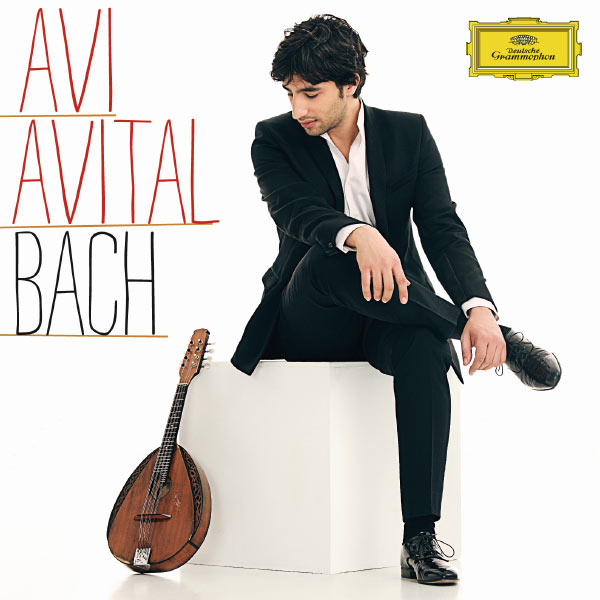
Though it turns out that the Wigmore Hall denizens are less genteel that you might imagine. For when Avi Avital came on the crowd when apeshit. OK maybe I exaggerate but ladies, and gentlemen, of a certain age definitely came out in a hot flush. For he is a good looking boy as you can see from the above, tousled-haired, tall, dark, handsome and when he gets going on his mandolin, channeling his inner rock god, it was as if Jimmy Page was back on stage at Madison Square Gardens circa 1973. OK minus the lighting rigs, dry ice, Catherine wheels, hummingbird jacket and Boeing jet round the back. Oh and he was sat on a chair somewhat curtailing the head-bang. Still there is no doubt he is a captivating performer who justified the delirious (by classical music audience standards) reaction.
Now the remaining (discovered) mandolin repertoire in the Western classical tradition, or at least that which the modern punters will pay to hear, is a little thin on the ground. (Though it is not a problem found in folk, especially, bluegrass, music). Which, perforce, limits the number of professional players. The lute, the precursor of the mandolin family, has a long and proud history in Renaissance and Baroque music, but the mandolin didn’t really take off as a solo instrument until the middle of the C18 when, most likely, the Neapolitan Vinaccia family came up with the eight stringed (in two courses) baby we know today. With strings of steel so the little fella could be heard, and then some, above the orchestra. The world has countless things of beauty to be grateful for from Italy. Not least most Western musical instruments.
Cue a burst of activity from Vivaldi and other Italian Baroque giants for the mandolin. But not much else. Beethoven had a fondness for the instrument, Mozart slipped it into Don Giovanni and a few other notables since have smuggled it into their opus list. There was a notable revival in Italy led by Rafaelle Calace in the mid C20 and the instrument has a fair following in Japanese classical music, I guess because of the sound similarity with the koto. I also see that Ligeti found a place for it in Le grande macabre: mind you he found a place for just about everything in that extraordinary masterpiece
All this means that adapting works originally scored for other instruments is par for the mandolin course. As here with Mr Avital’s own arrangement of Summer from The Four Seasons. (AA preceded this with a little patter about how he confused “Summer” with “Winter” when he was a nipper. OK so it wasn’t full on scathing Bill Hicks but it was worth a chuckle especially when you have shared that confusion).
Now I am guessing, that is if you care at all, that you either fall into the camp that believes, like the Tourist, that Vivaldi was a genius able to weave magic from short, simple repetitive musical ideas, or that he was a flashy journeyman who wrote the same arpeggio-laden riffs over and over again. Well Bach was with me even if Stravinsky wasn’t. To get the best out of AV though you need a specialist band that knows its stuff. The Venice Baroque Orchestra, along with the Concerto Italiano, Europa Galanta and Il Giardino Armonico is that band. Founder harpsichordist Andrea Marcon may have taken a back seat now but this ensemble still contains some of the very best Baroque specialists in Italy and a couple of jokers in lutenist Ivano Zanenghi and leader here, violinist Gianpiero Zanocco.
The difference is their ability to created complex harmonies, expansive dynamics and varied tempi from the apparently simple notes on the pages. Whilst, especially in the basso continuo, but also in the ripeno, tirelessly banging out thumping motoric rhythms. Vivaldi, and his Italian Baroque chums, may have worked to the principle that less is more when it comes to the length of their works but even so there is no let up, for player or listener, when the burn kicks in. Try it if you don’t believe me. Find a bog standard Four Seasons from 30 years ago churned out at a chugging medium pace by a modern orchestra that was probably rehearsing some interminable Bruckner that very afternoon, and compare it with the VBO’s “period everything” Sony recording with Giuliano Carmignola on the fiddle. See what I mean? The latter will blow your socks off, the former will likely see you popping the kettle on.
VIVALDI IS NOT BACKGROUND MUSIC AND SHOULD ON NO ACCOUNT BE PLAYED IN THE CAR. SLAP ON THE AFOREMENTIONED DISC. TURN IT UP VERRY LOUD. AND DANCE.
Giovanni Paisiello is primarily known for his operas including a setting of The Barber of Seville twenty odd years before Rossini seized his moment. He also banged out reams of scared music and a few keyboard concertos. His Mandolin Concerto was not signed but is generally accredited to him. AA really let fly here bouncing off his chair own a final flourish. Francesco Geminiani was one of the many Italian musicians who came to London in the first half of the C18 armed with an education from the master Corelli who served as the basis, with added string parts, for the Concerto grossi played here.
Vivaldi’s RV 425, the C major concerto written specifically for the mandolin, was probably the evening’s highlight. The strings, bar a few bars from the cello, play pizzicato throughout the final movement. Amazing. RV 93, pinched from the original lute, was another joy. RV 356, from L’estro armonico, was originally scored for violin so AA has substituted tremolos to replicate the long violin sustains. What a clever fellow. Of course this, as with the Winter, is always going to sound better on the violin but AA seems to me to make as good a case as is possible for his purloining.
Wonderful concert. Last entrant in my top 10 of the year. And as it turned out the highpoint before a somewhat fraught Christmas. Ho hum.
Raphaela Papadakis (soprano), Lotte Betts-Dean (mezzo-soprano), Stephanie Gonley (violin), Caroline Dale (cello), Harry Winstanley (flute), Michael Collins (conductor)
Antonio Vivaldi
Gloria in D RV 589
Concerto for Violin in F minor, ‘Winter’ from The Four Seasons, Op 8 No 4, RV 297
Concerto for Violin in E flat major (La tempesta di mare), Op 8 No 5, RV 253
Concerto for Violin and Cello in B flat major, RV 547
Concerto for Flute in D (Il gardellino), Op 10 No 3, RV 428
Vivaldi now is generally the preserve of the specialist Baroque ensembles. With audiences to match. Don’t get me wrong. If you want to hear a performance of the Four Seasons in London and aren’t too sniffy about who performs it you won’t have long to wait. Gloria may not be up their with the Faure or Mozart Requiems or Allegri’s Miserere in the popularity stakes but it still gets a fair few outings. Beyond that though if you, like me, crave repeated fixes of Vivaldi then you normally need to wait for the experts to visit. I can see why Vivaldi’s vast and exquisite output has been hijacked by a just a handful of his pieces. And I can also see why, a la Stravinsky, there are so many classical music buffs who airily dismiss Vivaldi as a lightweight, one-trick pony, before they return to their Wagner or some such other turgid dross.
Well let me tell you they are wrong. I can’t pretend an encyclopaedic knowledge of the RV’s and anyway life, literally, would be too short to “know” all of AV’s music, (even now that so much has been recorded by specialists). The cantatas, much of the sacred music outside the familiar and of course the operas, (with their risibly stereotypical plots) are unknown to me. None of this matters though since Vivaldi’s music is so immediate, so deceptively, but rarely actually, simple that even on the first listen it can be enjoyed. Which means all you need to do, (look away now buffs), is grab some cheap, web regarded collections and switch on your shuffle. Result. Life enhanced. Simple really.
So this all Vivaldi bill by the ECO, under conductor Michael Collins, caught my eye. A Gloria, a Winter, a couple of the best concerti, for respectively violin and flute, outside of you-know-what and then a comparative rarity, one of the handful of double concerti scored for violin and cello. From a chamber ensemble with a fine pedigree; remember their first Patron was Benjamin Britten and some of Britten’s finest recordings of his own music were made in partnership with them. They are not though, and this is in no way intended to be disparaging, experts in the Baroque. In fact they are one of the most versatile of orchestras anywhere on the planet. Look at their immense list of recordings. They will even do weddings. Though it helps if your names are Harry Windsor and Megan Markle.
The Choir of the C21 led by Max Barley is a similarly broad, though still top drawer, church. Our soloists for the Gloria were well matched soprano Raphaela Papadakis and mezzo Lotte Betts-Dean with ECO principals Stephanie Gonley and Caroline Dale taking the instrumental leads along with young flautist Harry Winstanley. Now I can’t pretend that these performances were up there with the best of the Vivaldi interpreters I have heard, La Serenissima under Adrian Chandler, the Concerto Italiano, the Venice Baroque Orchestra, Brecon Baroque and Gli Incognito, but they were still very enjoyable. Especially in the Gloria.
I was particularly taken by the double concerto where Stephanie Gonley and Catherine Dale’s familiarity paid dividends, This is one of only four concertos for this coupling of which one is incomplete. The Allegro comprises arpeggio figures which begin in the ripieno before being taken up by the soloists, offset with more lyrical passages. The slow movement is a conversation between the soloists a la Bach and the final pacey allegro offers more virtuoso opportunity against a triple rhythm accompaniment.
The flute concerto, No 3 of the six which make up Op 10 was likely published in 1728. A cardellino or gardellino is a goldfinch, a popular caged bird in Vivaldi’s Venice, (and in Golden Age Holland, as you will no doubt know from Carel Fabritius’s exquisite painting in the Mauritshuis in The Hague and which inspired Donna Tart’s ambitious novel). The goldfinch often crops up in Renaissance paintings of the Madonna and Child, the little fella symbolising the foreknowledge that mum had about her son’s eventual gory death. No such iconography here though, for Vivaldi the relevance was the wee bird’s song. The tweeting is most obvious in the last movement which allows the flautist to develop ever more extravagant virtuosic tweeting. The first movement isn’t quite so ornithological with the flute offering trills, runs and staccato repeats more in counterpoint to the bouncy riternello dance. The fast movements sandwich a lilting cantabile into which tousle-haired Harry injected a surprising quote of lyricism.
Vivaldi was quite keen on stormy seas. RV 433 is a La tempesta di mare for flute and RV 570 a Concerto grosso with the same sub-title. RV 253 is the violin concerto equivalent, part of the Op 8 twelve titled the Contest Between Harmony and Invention of which the first four are the Seasons. No surprise I guess for a Venetian with a view from the Ospedale della Pieta out over the lagoon to the Lido and beyond to the Adriatic. Now I happen to think that there is as much in the other 8 concertos as there is in the Four Seasons, certainly in terms of tunes, if not in pure rock ‘n’ roll theatricality. An original score for 253 survives in Dresden, probably brought by JG Pisendel the violinist when he returned from studying with Vivaldi. Pisendel was the man who introduced Vivaldi’s music to JS Bach. Diamond geezer.
253’s fast movements are marked Presto not just Allegro so they need to be quick. The central Largo is the three minutes or so of relative calm though even at the end the storm is plainly on its way back. Both storms call for seemingly never-ending (well a few minutes) of descending figurations, the last set against a sort of dotted fanfare rhythm, the first even more frantic arpeggios against a scrubbing ritornello. I enjoyed Stephanie Gonley’s rendition but you probably also need to hear this played at more extreme tempi from one of the big-boned Italian outfits with, say, Federico Guglielmo or Giuliano Carmignola in the hot seat. Same is true of 297 Winter (which has that bit of summer in it just like Summer often feels a bit wintry).
Before the Gloria we were treated to a burst of medieval carol arrangements to beef up the festive quotient. At least those of us not underneath the gallery, where the choir was located, were treated. Still a nice touch. (Now as it happens I have a jolly collection of medieval carols, songs and chants from Pro Cantione Antiqua and the English Medieval Wind ensemble on CD I can recommend). It was as much as MSC and I could do to stop MS popping upstairs and joining in for he is the expert on all things Black Death to the end of the War of the Roses.
I am not actually sure if MS and MSC had heard a recording of the Gloria before but this was certainly their first Vivaldi gig. It is simply not possible for anyone raised in the culture of Western musical tonality not to like Vivaldi’s Gloria. Unless they are dead. And even then it will be on most of the playlists in heaven I would guess. Were that, Pascal’s Wager style, to actually exist. Anyway MS and MSC seemed to like it unless there were being their usual polite selves when it comes to their overly solicitous Dad/Future-Father-In-Law.
The Gloria was composed around 1715 for the residents of the Ospedale. They probably drafted in a few blokes for the tenor and bass lines. The young women of the Ospedale were prodigiously talented, after all Vivaldi composed music for them that even today taxes the very best of musicians (especially for violin), but they probably couldn’t quite get to the gruffer end of the vocal scale. After Vivaldi died in 1741, impoverished after the failed attempt to set up shop in Vienna, the score of Gloria was lost and forgotten until being rediscovered in Turin in the late 1920s. It is a setting of the eponymous section of the Latin Mass divided into twelve sections, all mercifully short and it is resolutely upbeat even as it contrasts keys, moods, tempi, instrumentation and voices.
Divine Geometry: London Symphony Orchestra, Kristjan Jarvi, Simone Dinnerstein (piano)
Barbican Hall, 29th November 2018
Charles Coleman – Drenched
Charles Coleman – Bach Inspired
Philip Glass – Piano Concerto No 3
Kristjan Jarvi – Too Hot to Handel
Steve Reich – Music for Ensemble and Orchestra
Funny one this. As part of our project to embrace the classics of minimalism the Tourist, MSBD and MSBDB schlepped off to the Barbican. Primarily to hear the new(wish) Reich piece in its UK premiere, and to catch up with the Glass, similarly making its UK debut. Didn’t really have a Scooby about the other pieces I am afraid.
Now somewhere in Estonia, (actually it relocated to the US) there is a factory which produces conductors. It is family owned and goes by the name of Jarvi and Sons, (in Estonian obvs). For Kristjan, along with older brother Paavo, is son to the veteran, and oft recorded, conductor Neeme. Sister Maarika plays the flute though I have no doubt she too is a dab hand with a baton.
Anyway young Kristjan, who has the gig as the AD of the Baltic Sea Philharmonic which he founded, sees himself as a bit of a musical chameleon and genre-buster. Having got his hands on the LSO again he wasn’t about to waste the opportunity to showcase one of his own works, Too Hot To Handel, nor a couple from his mate Charles Coleman. Drenched takes Handel’s Water Music as its starting point, and Bach Inspired, er, a string-only snatch from the Mighty One’s Well-Tempered Clavier and his “Nun common Der Heiden Helland” chorale, plus a couple of his own movements. Too Hot …. you can work out for yourself. Suffice to say it has pretty much undigested chunks of GF’s Concerto grossi mashed up with KJ’s own Stravinskian, post-minimalism, as well as a lot of running around for the LSO’s three percussionists, Neil Percy, Sam Walton and Jake Brown, and a starring role for Chris Hill on bass guitar (I kid you not).
Worshipping at the altar of the Baroque Gods and drawing the parallels with the Minimalists is self evidently “a good idea” but always better done with the C17 and C18 originals. These pastiches, whilst certainly not dull, and played with gusto by the LSO, ended up as classic classical “classic rock” if you get my drift. Not quite Smashie and Nicey, but skirting awfully close. The Coleman pieces, especially Bach Inspired had a bit more heterogenous invention, and wit, about them but even so it was all a bit weird to be honest. At near 40 minutes and over 13 movements, Jarvi’s own work I am afraid outstayed its welcome, was shown the door but still came back again.
As for the main events, well the Piano Concerto No 3 was a little too close to the pleasant warm waves of swirling arpeggios that Philip Glass can presumably churn out in his sleep and the Steve Reich piece was, guess what, just amazing.
The Concerto was written for this evening’s soloist Simone Dinnerstein and premiered in Boston in 2017. Glass, now 81, has moved a long way from the “hard-core” rhythmic minimalism (“repetitive processes” in his argot) of the 1960s and 1970s. His music now is much more melodic, chromatic, even romantic. When he composes for piano, as with the three concertos, the lovely Etudes and Metamorphosis and the film music transcriptions, he is a right old softie and gets all emotional. It can be moving and occasionally stirring stuff but it is mostly like being immersed in a nice warm metaphorical bath with Brahms and Rachmaninov.
You could be forgiven for thinking popular art-house film soundtracks, which have been, after all, a fair contributor to the old boy’s estate in the last few decades. And one of the reasons, perhaps along with his generosity in collaboration, why his music has been so influential. In fact it is pretty difficult to think of another composer of music in the second half of the C20, and into this millennium, his musical ideas have been quite so pervasive. It will be interesting to see whether Glass’s legacy, like much of post-modernist culture, survives. Whilst love for Schubert, another compositional production line, who I suspect Glass would most liked to be identified with, has pretty much continued to increase year in, year out since his early death, other comparable piece-work composers from the Baroque itself, Bach say, or Vivaldi, spent hundreds of years being ignored. Mind you in the age of digital junk it will be hard to forgot anything ever.
Yet amidst all the familiarity Glass is still capable of surprises and here it comes in the final movement, which is simplicity itself, being a homage of sorts to Arvo Part, he of the “holy minimalism”, with a simple, chiming melody over a bass drone. The introspective concerto, which is essentially three slow to medium paced movements, begins with soft oscillating chords against a processional base-line, which drifts in and out of the similarly paced orchestra. Crotchets become quavers then triplets, rising to a swell and then subsiding. The second chaconne-ish movement is all repeated arpeggios which ends with the unflashiest of cadenzas.
As its dedicatee, and given she is an acknowledged interpreter of Glass’s music, Ms Dinnerstein, who is what you might call a “self-made” performer, more in line with the You Tube pop generation, was unsurprisingly accomplished in her playing, technique, emotion and understanding all present and correct, and if it didn’t wow then that is more the fault of the music than her or the LSO strings. She encored with a Glass Etude. I would have liked more of those.
In less than a month’s time Philip Glass’s 12th Symphony will be premiered in LA under the baton of fellow “minimalist” grandee John Adams. You can’t fault his work ethic.
Music for Ensemble and Orchestra, premiered earlier this year in NYC, is Steve Reich’s first large scale orchestral work for 30 years, following The Four Sections in 1987. Reich is of course as much performer as composer and his ostensible reason for avoiding the orchestra genre was that performers were not really up to the task. Fair enough, but, as he admits, that is no longer true as there are now orchestral players, notably percussionists, but also specialists in the other sections, as well as the latest generation of conductors, who are more than up to the task, and who love and relish the challenge of creating his stunning sound-world. Mr Reich is a year older than his peer Mr Glass but they are chalk and cheese when it comes to productivity, as well as, despite the “minimalist” label, musical style.
SR can go a couple of years without a new piece. This is is no way a criticism for when they do arrive his compositions continue to be works of staggering genius. This, of course, assumes you are predisposed to his marrying of pulse, rhythm and process. Here he has contrasted an “ensemble”, lead strings, principal woodwinds, tuned pianos, vibraphones and keyboards, with an “orchestra” which adds a full string section and brass, in the form of four trumpets, to that ensemble.
The work is made up of five sections/movements, in typical Reich style simply numbered 1 to 5, which together form a Bartokian arch. the tempo is fixed across the sections but the speed varies according to note value: 16ths, 8ths, quarters, then 8ths and 16ths again. The key similarly changes across the movements, a minor third each time, from A to C to E flat to F sharp and back to A. All this remains moreorless gobbledygook to the Tourist but I reckon, as and when a recording appears, the structure that can be felt on first listening, will be understood by this musical dummy after repeated exposure. That is the big picture: second by second though it is the magical intricacy of melodic fragments repeated, echoed, chased and overlapped by different paired members of the ensemble with the rhythmic backbone provided by the rest of the orchestra. A Concerto grossi to match Handel though maybe not quite the Daddy of the form, Corelli.
Mr Jarvi, who likes a lively workout on the rostrum, seemed to have the measure of the piece, though I wouldn’t mind hearing the LSO take it on again under, say, their Conductor the Laureate Michael Tilson Thomas. He is, after all, the expert on great American music of the C20 and there was, I’ll warrant, a Coplandian/Ivesian twinkle in some of Reich’s invention. I see he will be premiering it in San Francisco next year as it revolves around the remaining or the six orchestras that co-commissioned it.
Academy of Ancient Music, Nicola Benedetti (violin), Richard Egarr (director and harpsichord)
Barbican Hall, 31st May 2018
Antonio Vivaldi – Concerto for Violin in D major RV 208 “Il Grosso Mogul”
Antonio Vivaldi – Concerto for Harpsichord RV 780
Mystery Composer – Sinfonia in D first movement
Georg Philipp Telemann – Concerto for Violin in A major TWV 51:A4 “The Frogs”
Georg Philipp Telemann – Alster Overture-Suite TWV 55:F11
Georg Philipp Telemann – Concerto for Four Violins in C major TWV 40:203
Antonio Vivaldi – Concerto in F major RV 569
Time to take BUD to a purely orchestral evening, no voices, albeit in the ostensibly easy on the ear form of the two Baroque masters Vivaldi and Telemann. In the company of KCK who was, rightly, keen to hear the prodigious talent of Nicholas Benedetti. And all of us trusting to the capable hands of Richard Egarr and the Academy of Ancient Music.
Now to accommodate Ms Benedetti some virtuoso music was required. Even by the Red Priest’s breathless standards the D Major Concerto “Il Grosso Mogul” fits that particular bill with its two written out cadenzas in the outer fast movements. I think this showed NB off to best effect with a sharper delineation between soloist and ripieno than some of the subsequent pieces in this well programmed concert, especially in the stunning slow movement. No-one knows where the name grosso mogul comes from but JS Bach was sufficiently impressed to arrange it for organ, BWV 594.
RV 780 is Vivaldi’s only concerto for harpsichord, though only because he noted on the front page of the score that it could be, having originally specified violin and cello. This meant that there was a greater balance across the register than with the double violin peers which AV often wrote and this is what allows for the harpsichord arrangement. Richard Egarr has painstakingly recreated the solo passages, largely with arpeggios and broken chords, which made for fine decoration though I am not sure the Barbican Hall cavern showed this off as well as a smaller more sympathetic space might.
Before the first Telemann piece, the Frogs, Mr Egarr and the AAM had a bit of fun by playing the first movement of a Sinfonia in D by an unnamed composer who we were invited to identify. No answer given but it was plainly Italian so maybe Sammartini (GB) for the simple reason that he churned out a ton of them.
The Frogs is structured in the Italianate three movement fashion, not the Germanic four, and does everything you expect Telemann to do. It is laced with humour, is effortlessly easy on the ears and doesn’t let the soloist hog too much of the limelight. With plenty of riternello and suspension, it made a fine partner to the opening Vivaldi. Not bad for someone, GPT, who never set foot in Italy. The eponymous frog sound on the NB’s first entry is apparently created trough the use of bariolage, the rapid alternation of the same note between fingered and open strings (which Vivaldi was also partial to). There you go. NB was grace personified here, as she was throughout, stepping back into the band when required.
GPT churned out a fair few of his programmatic overture-suites, 600 to be exact, and it is pretty easy to see why the toffs he wrote them for lapped them up. This particular one takes as its inspiration the River Alster which joins the Elbe in Hamburg where GPT was director of its five main churches from 1721 until his death in 1767. (GPT stayed in Paris for a few months during this tenure where he was exposed to the French operatic style – with its dances – which he incorporated into these suites). In this particular example he serves up an intro followed by eight subsequent movements each of which does exactly what it says on the tin. The “echo” of the third movement, oboes serenely imitating swans in the fifth, the chromatic crows and frogs of the seventh, the lyricism of the strings in the eighth, “Pan at rest” and the joyous winds and horns in the finale as the nymphs and shepherds leave the party. It is “lightweight” I suppose but when it is this much fun who cares.
GPT’s next contribution was one of a set of four concertos each for four violins. And nothing else. No continuo. No other instrumentation. Moreover it is in four movements – slow/fast/slow/fast – like the sonata di chiesa of old. There is plenty going on through its total ten minutes or so and all four violinists get time to shine, Ms Benedetti being joined by three excellent AAM regulars, I wish I could tell you who. Sorry.
The final piece was Vivaldi’s F major RV 569 which has pairs of horns and oboes, and a bassoon, added to the continuo and violins. Here NB took the lead in the outer two fast movements though the horns and wind also have a lot to say. The middle slow movement is the very model of brevity, even by Vivaldi’s economical standards, lasting just 20 bars. I loved it. Mind you I love every note of every concerto that AV ever wrote for violin (and most other instruments). I would it suspect take a lifetime of devotion and an acute and scholarly ear to “know” every one of AV’s five hundred-odd concertos. No matter. With music this immediate it doesn’t matter. Indeed Ms Benedetti encored with a chaconne-like slow movement from a Vivaldi concerto I think but no idea which.
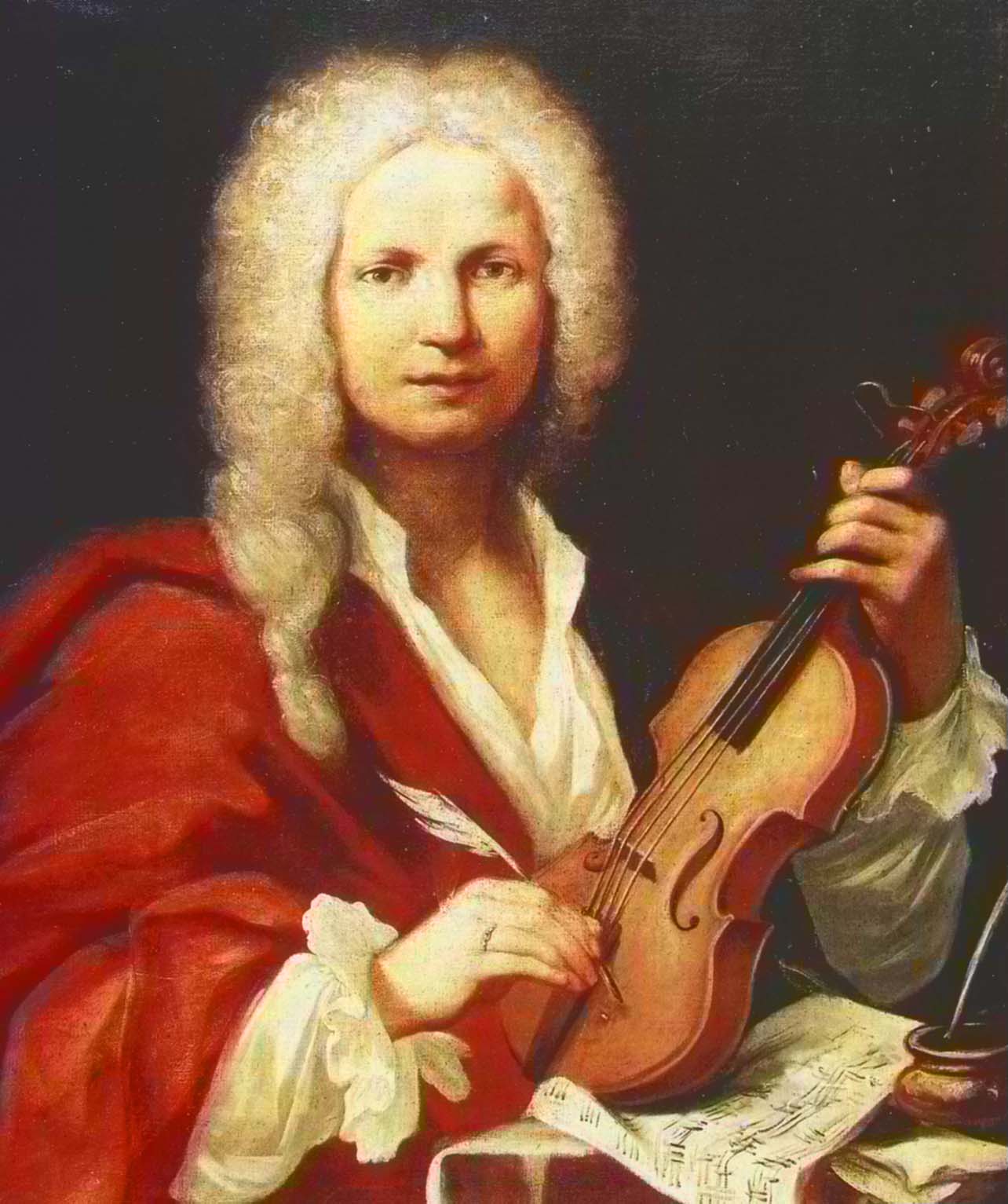
Overworked in his lifetime I reckon, despite his devotion to the education of the orphans in the Ospedale in Venice, underpaid, never given a proper contract, and buried as a pauper in Vienna where he went to get a job when he fell out of fashion. Then ignored for one hundred and fifty years. Always a bit poorly as well. And a ginger, though you wouldn’t know from the stinky wig he is wearing above.
Still no Vivaldi, no Bach. And imagine how much poorer Western art music would have been without Johann Sebastian. GP Telemann, for me, is now quite as satisfying, though BUD and KCK probably disagreed on the night, but he is musical elegance, flair and invention personified. And his music, like Haydn’s later on, will make you happy. As, on every outing, do the AAM. The venue may not be ideal for the intimacy of Baroque even at this scale, but I hope the AAM were able to turn a few quid here because of that. Well deserved.




 At Home He Feels Like A Tourist