Death in Venice at the Royal Opera House *****

Death in Venice

Royal Opera House, 3rd December 2019

Fresh from the superlative semi-staged version of Peter Grimes from Ed Gardner, the Bergen PO and assorted chums and straight into this. A top drawer new version of Death in Venice from David McVicar. I have fond memories of seeing Deborah Warner’s production of DIV at the ENO with, guess who, Edward Gardner on conducting duty, which also bewitched the SO, (who has also been persuaded by The Turn of the Screw and, though she may not know it, is going to be a fan of Britten opera).

Now I am partial to BB and his operas. As you can see from recent viewings documented hereabouts. They are up there with the best of British cultural expression, indeed the best from anywhere. But that doesn’t me they are all perfect or that creatives can’t fall down when tackling them. Paul Bunyan is a bit bonkers, (the recent ENO outing wisely went with the flow), the Rape of Lucretia has a pretentious and inappropriately Christian libretto from Ronald Duncan, you need to be in the right mood for the Church Parables, I have never seen Owen Wingrave live or in the TV original and Gloriana is, well, just a bit crap. Even the musically bullet-proof, Grimes, TTOTS, A Midsummer Night’s Dream, need sympathetic performers and directors. Billy Budd is always a tricky customer. The comedies/children’s operas are too generous to fail other than in the eyes and ears of the flinty-hearted.

Some say Death in Venice is also a trick(s)y opera though I have never really understood why .(Maybe it’s because it isn’t a simple, straight A to B, with obstacles, misogynistic love story). Here David McVicar got the Edwardian look and feel spot on. DIV is a set, costume and lighting designer’s wet dream and Vicki Mortimer and Paule Constable duly delivered to create exquisite, cinematic, vertical and horizontal tableaux across the 17 scenes with maximum efficiency and impact. The water of the lagoon ever present in the backdrop. With no f*cking around with interpretation. Visconti and Mann would be purring in their graves, (or suing for plagiarism), so precise was the realisation. Even the gondola looked real. And that was with two fellas pushing it. Lynne Page similarly brought just enough to the table with the choreography of the dance scenes. Realistic with just enough grace and artistry especially from our lovely, knowing teenage Tadzio (Leo Dixon) and his irate chum Jaschiu (Olly Bell).

But the real triumph was not having our van Aschenbach go too full-on, homo-erotic, pretentious, unhinged, tortured artist too early. He really is a bit of a ninnyhammer getting all lathered up with the young boys, the culture, the heat, the plague, the offuscazione, all those words, all that useless beauty, that Apollonian/Dionysian dialectic, all that bloody philosophising. (Honestly Gustav, don’t beat yourself up mate). He is though a clever cookie, in control mentally and physically until the lurgy properly strikes, and he can eloquently verbalise. At length. Immense length. In Myfanwy Piper’s appropriately mannered libretto. Brought to life by the beautiful voice of Mark Padmore. Who can act. Even to the back of the stalls.

This isn’t quite a one-man show. The support of Gerald Finley as Traveller/Fop/Gondolier/Manager/Barber/Player/Voice of Dionysius made this very special. Has there ever been a more inspired piece of operatic doubling (and not just in the service of cheap laughs and flimsy plotting) or a more talented singer/actor to pull it off? And, as if that wasn’t enough we get the sweet counter-tenor of Tim Mead interjecting as hunky tourist Apollo. And the never-ending stream of “extras” including the likes of Elizabeth McGorian as the Lady of the Pearls and, get this, Rebecca Evans as the Strawberry Seller.

But the ever present, tireless Mr Padmore is what made this special as we go deep inside von Aschenbach’s head. An operatic Hamlet. What is real and what is imagined? Messrs McVicar and Padmore don’t tell, giving the creepy Don’t Look Now Venice a wide berth, but do largely make sense of GvA’s meanderings and even make him seem human rather than the vessel for Thomas Mann’s symbolism and aestheticism. Not that it matters. BB’s music is so clever, haunting, sparse, ascetic, with the repetitions, motifs, and the gamelan shimmers, that it tells the story, conjures up place and inhabits character all by itself. Even at the end, like GvA consumed by his own mortality, BB was turning out perfection with that poignant passacaglia, (a link back to the Doric Quartet’s muscular performance of BB’s final quartet a couple of weeks previous), and Richard Farnes and the ROH orchestra know exactly what is required of them. This score then is the truly beautiful.

25 years since the ROH last staged DIV but I’d be surprised if it doesn’t come back soonest. So go see what I mean. And pay up for a decent perch as, by ROH standards, Britten comes cheap. All the toffs seemingly never tiring of OTT Italian C19 flim-flammery or worse still Wagnerian guff.

I see I have a couple more outings with Gustav van Aschenbach later in the year. Ivo van Hove and Ramsay Naar will be bringing ITA’s interpretation over to the Barbican in April with music from Nico Muhly and the great Greg Hicks will be serving up his solo turn at the Arcola in June. I expect they will be quite different.

Pergolesi and Vivaldi: OAE at the Queen Elizabeth Hall review ****

Orchestra of the Age of Enlightenment, Katherine Watson (soprano), Rowan Pierce (soprano), Zoe Brookshaw (soprano), Iestyn Davies (counter-tenor), Katharina Spreckelsen (oboe), Choir of the Age of Enlightenment 

Queen Elizabeth Hall, 11th November 2019

  • Giovanni Battista Pergolesi (1710-1736) – Stabat Mater
  • Tomaso Giovanni Albinoni (1671-1751) – Oboe Concerto in D minor, Op.9 No.2
  • Antonio Vivaldi (1678-1741) – Gloria RV 589

Last year a Pergolesi Stabat Mater with BUD from the AAM. This year the OAE take with MSBD and Katherine Watson (braving a cold) and Iestyn Davies in the soloist chairs. I’ve already banged on about Pergolesi before. This is his most famous work. Written just before his early death from TB. More than a hint of the comic opera about its style, which are, largely, his other, authenticated contributions to Baroque musical history, (I have a recording of some of his instrumental offerings). Though certainly not its serious religious subject, a C13 poem depicting Mary’s vigil at the foot of the Cross. Took the European musical world by storm and, on and off, has been a favourite ever since. Immediate, direct and very effective, it is impossible not to be carried along by the lean, melodic strings offset with deliberately nostalgic stile antico effects, (from the time before Monteverdi revolutionised Western music). These include prolonged cadences and delayed resolutions. Feel the pain. Lovely but a couple of times a year is enough for me.

Albinoni was a prolific composer, around 80 operas, 40 chamber cantatas, 60 concertos and 80 sonatas, and was, in his day, as popular as Corelli and Vivaldi. Though not quite as good IMHO. Then again he only really considered himself a violinist and, being a rich toff, didn’t have to work. SO we should applaud his industry. And, in the oboe concertos, he did come up with some of the finest music ever written for the instrument. His Op 9 set contains 4 for solo oboe and 4 for two oboes and this one, No 2 is considered the best of them. It kicks off with an elegant medium paced Allegro, follows with a sublime and generous slow movement, with an aching, bel canto solo line against a rocking string ripieno, (which MSBD was much taken with), and a bouncy, scurrying finale, which again gives the soloist plenty of opportunity to show off. And, when it comes to Baroque oboe, very few can match the OAE’s Katharina Spreckelsen.

Last live listen to Gloria was with MS and MSC at the Cadogan Hall with the ECO, so it has become something of a family affair, (even the SO and BD have grinned, and, to be fair, more than bore it, in the past. Famously AV wrote the Gloria for a full SATB choir. despite their being, at least officially, no blokes in the Ospedale della Pieta, bar carrot top himself. Which means they were drafted in, or perhaps, in the array of talents in the convent, there were females basses or at least voices low enough to take the parts, maybe with the whole pitched an octave higher. The contemporary audience would never have known, the young women being concealed behind a grills at the balconies where they performed. We had the OAE’s dedicated chamber choir, thankfully in full view, a scratch outfit of professionals perfectly matched to the OAE’s beefy sound. This I can listen to more than a couple of times a year.

The Talented Mr Ripley at the Vault Festival review ****

The Talented Mr Ripley

The Faction, Vault Festival, 14th March 2019

Having missed this on a couple of previous occasions the Tourist was delighted to see it pop up on the Vault listings and even more delighted that the SO deigned to come. Downfall or The Talented Mr Ripley. The SO’s two contenders for greatest film ever. Worrying you might think for her husband given the nature of the lead characters. Still I admit they are both excellent films, though mind you with, as a minimum, an annual retrospective chez Tourist, I don’t have much choice.

After our last Ripley related entertainment, the somewhat disappointing play Switzerland at the Ambassadors, we were pining for success. From reading reviews of the Faction’s original version of the play from 2015, at their adopted home of the New Diorama Theatre in Euston, I see that it ran to over 150 minutes, which suggests to me that Mark Leipacher’s adaptation may well have clung too closely to Patricia Highsmith’s book and/or film and may not have fully exploited the opportunities of theatre. You couldn’t say that now. Down to just 90 minutes, but with all the key scenes and narrative, of book mostly and not film, moreorless intact, (verified by the SO), this is, even as it slows down fractionally in the second half, an exciting and explosive drama which gets to the heart of Tom Ripley’s dark soul using the bare minimum in terms of ensemble, set and props. Having secured the stage rights from Ms Highsmith’s publishers Diogenes Verlag, Mark Leipacher, who directs, and the seven strong Faction company, have created a play which complements, though doesn’t quite match, Anthony Minghella’s film and the original novel. (I haven’t seen Purple Noon, Rene Clement’s 1960 cinematic take on the story starring Alain Delon, though I see the buffs prefer it).

From the start, back to audience and typing, “have you ever had the feeling you’re being followed”, Christopher’s Hughes’s Ripley, with his presentational asides to the audience, is the unhinged sociopath we know and love, albeit of the tigerrish variety. Making him English and having him bark out his lines takes a bit of adjustment initially but this exaggeration, which is mirrored, albeit less assertively, in Christopher York’s confident Dickie and Natasha Rickman’s wistful Marge, contributes to the energy of the adaptation and allows the audience to quickly get inside the dynamics of the trio.

I am not saying you need to know the story to follow the play but I can see that it would help. With just a raised white plinth, with gap in the centre, rapid on and off stage costume changes, some doubling, no exposition, jump scenes punctuated with cries of “cut/action” to reference the location changes and to re-run scenes, physicality, (every trick in the movement director’s handbook is on show here), it comes together to create a kaleidoscope of images which replay the story but in a very different way from the big budget, location led, close-up cuts, thriller genre and naturalistic acting of the film. We still want Ripley to get away with it but here he is a much bolder incarnation of “evil”, as in the book, trying to stay one step ahed of the game, in contrast to the more inscrutable filmic Matt Damon.

Given the effective economy of Frances Norburn’s design it was left to Chris Withers’ lighting and Max Pappenheim’s sound to assist in taking us from the NYC club where Ripley’s first meets Dickie’s anxious Dad, Herbert (Marcello Walton), through to fictional Italian resort, (I imagine the Neapolitan Riviera), the streets of San Remo, the ill fated boat trip, the Roman apartment, the alley where Ripley dumps the body of caustic Freddie (Vincent Jerome) after battering him to death, Venice, where Ripley, per the film, attaches himself to the guileless Peter (Jason Eddy), and finally to Greece, where Ripley now rich and ostensibly free of his crimes but forever tormented: “have you ever had the feeling you are being followed”. Vincent Jerome doubles as McCarron. the private detective Herbert sends to investigate his son’s disappearance, and Marcello Walton as Roverini, the Columbo-esque Italian policeman who is all but on to Ripley as he dodges across Italy. This just leaves Emma Jay Thomas who takes on the other female roles of Emily and Buffi.

All in all a fine addition to the Ripley industry and an excellent ensemble performance. I see The Faction has previous with even meatier fare. Hopefully there will be a chance to catch this at their Euston home in the not too distant future.

Venice Baroque Orchestra and Avi Avital at Wigmore Hall review *****

Venice Baroque Orchestra, Avi Avital (mandolin)

Wigmore Hall, 22nd December 2018

  • Francesco Geminiani Concerto Grosso in D minor after Corelli’s ‘La Follia’ Op. 5 No. 12
  • Vivaldi – Concerto in D for lute and strings RV93
  • Vivaldi – Sinfonia in G RV146
  • Vivaldi – Concerto in A minor Op. 3 No. 6 RV356
  • Vivaldi – Concerto in D minor for strings RV127
  • Vivaldi – Mandolin Concerto in C RV425
  • Giovanni Paisiello – Mandolin Concerto in E flat
  • Vivaldi – Concerto in G minor for mandolin, strings and basso continuo ‘Summer’ from The Four Seasons RV315

Saturday before Christmas. Family loafing about in front of screens or head in a book. Not the Tourist though. Two plays down and on to hear one of the finest Baroque ensembles anywhere rock out with some kick-ass Vivaldi and a couple of his lesser known contemporaries. With one of the world’s finest mandolin player (mandolinist?), Israeli Avi Avital, as soloist.

However before I got there, an errand to run. Tracking down specified cosmetics for BD and LD courtesy of Father Christmas. From Selfridges. On the Saturday before Christmas. I thought everyone did their shopping on-line now. And that retailers where watching sales plummet as the Great British public collectively sh*ts itself ahead of the March madness. Or that we had reached peak stuff.

Apparently not. I was scared. I am not much of a bricks and mortars man even on a quiet Tuesday morning. This though was positively Dantean, Especially when I got to the specified concession to discover that every woman in London under the age of 25 had come to the purchasing party. In trying to track down the appropriate shade of eye shadow I was man-handled, or should that be woman-jostled, on multiple occasions. Sensing my fear a patient sales assistant took pity on me and, in an instance, she briskly completed my elementary task. For the briefest of moments I was overtaken by an excess of Christmas spirit smiling at all those around me. Seeing fear on the faces of the throng, as they sized up the scruffy, fat, ageing weirdo grinning inanely at them, I then realised it was time to scarper. Out I waddled, weaving between the happy shoppers, scuttling along Oxford Street, round the corner, through the phalanx of black Range Rovers, (if you cannot, will not or you are proscribed from using public transport why on earth do you need to be carted around in these malevolent gas guzzlers), until finally reaching the comparative calm of Wigmore Street. Tempted to let out a cry of Freedom!!! Braveheart style but the Tourist realises that might unsettle the real tourists.

Two lessons dear reader. Financialised, neo-liberal capitalism edges ever closer to eating itself in an orgy of debt-filled consumerism and the Scrooge-like greying Tourist is now happier in the company of the genteel Wigmore Hall audience that the massed ranks of the crazed hit-polloi on a retail mission.

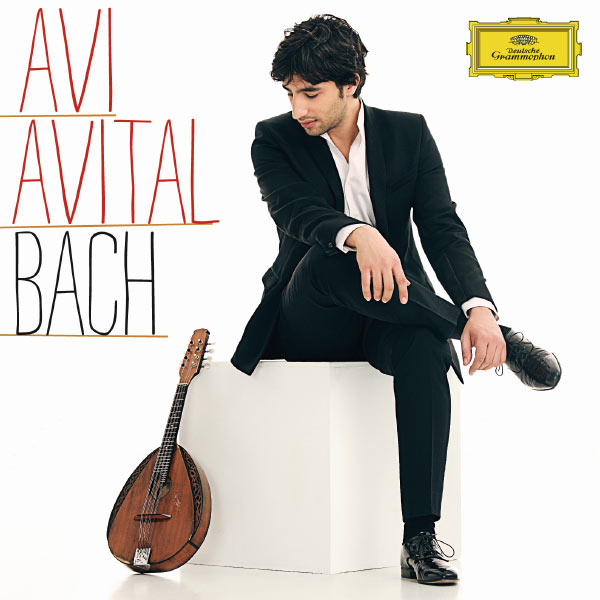
Though it turns out that the Wigmore Hall denizens are less genteel that you might imagine. For when Avi Avital came on the crowd when apeshit. OK maybe I exaggerate but ladies, and gentlemen, of a certain age definitely came out in a hot flush. For he is a good looking boy as you can see from the above, tousled-haired, tall, dark, handsome and when he gets going on his mandolin, channeling his inner rock god, it was as if Jimmy Page was back on stage at Madison Square Gardens circa 1973. OK minus the lighting rigs, dry ice, Catherine wheels, hummingbird jacket and Boeing jet round the back. Oh and he was sat on a chair somewhat curtailing the head-bang. Still there is no doubt he is a captivating performer who justified the delirious (by classical music audience standards) reaction.

Now the remaining (discovered) mandolin repertoire in the Western classical tradition, or at least that which the modern punters will pay to hear, is a little thin on the ground. (Though it is not a problem found in folk, especially, bluegrass, music). Which, perforce, limits the number of professional players. The lute, the precursor of the mandolin family, has a long and proud history in Renaissance and Baroque music, but the mandolin didn’t really take off as a solo instrument until the middle of the C18 when, most likely, the Neapolitan Vinaccia family came up with the eight stringed (in two courses) baby we know today. With strings of steel so the little fella could be heard, and then some, above the orchestra. The world has countless things of beauty to be grateful for from Italy. Not least most Western musical instruments.

Cue a burst of activity from Vivaldi and other Italian Baroque giants for the mandolin. But not much else. Beethoven had a fondness for the instrument, Mozart slipped it into Don Giovanni and a few other notables since have smuggled it into their opus list. There was a notable revival in Italy led by Rafaelle Calace in the mid C20 and the instrument has a fair following in Japanese classical music, I guess because of the sound similarity with the koto. I also see that Ligeti found a place for it in Le grande macabre: mind you he found a place for just about everything in that extraordinary masterpiece

All this means that adapting works originally scored for other instruments is par for the mandolin course. As here with Mr Avital’s own arrangement of Summer from The Four Seasons. (AA preceded this with a little patter about how he confused “Summer” with “Winter” when he was a nipper. OK so it wasn’t full on scathing Bill Hicks but it was worth a chuckle especially when you have shared that confusion).

Now I am guessing, that is if you care at all, that you either fall into the camp that believes, like the Tourist, that Vivaldi was a genius able to weave magic from short, simple repetitive musical ideas, or that he was a flashy journeyman who wrote the same arpeggio-laden riffs over and over again. Well Bach was with me even if Stravinsky wasn’t. To get the best out of AV though you need a specialist band that knows its stuff. The Venice Baroque Orchestra, along with the Concerto Italiano, Europa Galanta and Il Giardino Armonico is that band. Founder harpsichordist Andrea Marcon may have taken a back seat now but this ensemble still contains some of the very best Baroque specialists in Italy and a couple of jokers in lutenist Ivano Zanenghi and leader here, violinist Gianpiero Zanocco.

The difference is their ability to created complex harmonies, expansive dynamics and varied tempi from the apparently simple notes on the pages. Whilst, especially in the basso continuo, but also in the ripeno, tirelessly banging out thumping motoric rhythms. Vivaldi, and his Italian Baroque chums, may have worked to the principle that less is more when it comes to the length of their works but even so there is no let up, for player or listener, when the burn kicks in. Try it if you don’t believe me. Find a bog standard Four Seasons from 30 years ago churned out at a chugging medium pace by a modern orchestra that was probably rehearsing some interminable Bruckner that very afternoon, and compare it with the VBO’s “period everything” Sony recording with Giuliano Carmignola on the fiddle. See what I mean? The latter will blow your socks off, the former will likely see you popping the kettle on.

VIVALDI IS NOT BACKGROUND MUSIC AND SHOULD ON NO ACCOUNT BE PLAYED IN THE CAR. SLAP ON THE AFOREMENTIONED DISC. TURN IT UP VERRY LOUD. AND DANCE.

Giovanni Paisiello is primarily known for his operas including a setting of The Barber of Seville twenty odd years before Rossini seized his moment. He also banged out reams of scared music and a few keyboard concertos. His Mandolin Concerto was not signed but is generally accredited to him. AA really let fly here bouncing off his chair own a final flourish. Francesco Geminiani was one of the many Italian musicians who came to London in the first half of the C18 armed with an education from the master Corelli who served as the basis, with added string parts, for the Concerto grossi played here.

Vivaldi’s RV 425, the C major concerto written specifically for the mandolin, was probably the evening’s highlight. The strings, bar a few bars from the cello, play pizzicato throughout the final movement. Amazing. RV 93, pinched from the original lute, was another joy. RV 356, from L’estro armonico, was originally scored for violin so AA has substituted tremolos to replicate the long violin sustains. What a clever fellow. Of course this, as with the Winter, is always going to sound better on the violin but AA seems to me to make as good a case as is possible for his purloining.

Wonderful concert. Last entrant in my top 10 of the year. And as it turned out the highpoint before a somewhat fraught Christmas. Ho hum.