Beckett, Pinter, Stoppard, Kitson. I know, I know. He is only a stand-up comedian. So comparing him to these master explorers of the absurdity of the human condition is, to say the least, stretching it a bit. However, as those of us who have become addicted to his “story shows”, (I don’t think DK would like to think he has “fans”), as well as his “stand up”, in recent years. he is a very clever fellow, as are the chaps above, he is very funny and he delivers startling insights. Yes the conceits that underpin the structures of these stories can be as pretentious as they are inventive, and once set-up it is usually pretty easy to see where they will end up, (though the pay-off here is still worth the wait), and yes the man himself, or rather his persona, and his repeated tropes can be annoying, but when he hits it no-one comes close. And that includes many great dramatists who search for tragic-comic perfection.
In Keep he hits it. No question. The preamble, where he gives the audience a chance to excuse itself, as he describes what is coming, the threat, to read out a list of everything he owns, the diversions and repetitions which follow, the self reference, self reverence and self revelation, (now’s who’s being pretentious), the gentle provocations, the playful aphorisms, all are present and correct and all beautifully delivered. Maybe by the end the various layers become a bit too meta, and maybe, as DK himself admits the metaphor of stuff in filing cabinet for mind and self is a bit too creaky, and could be applied by anyone to anyone, but frankly I don’t care as no-one else comes close to being able to create this kind of work.
Don’t worry, there are plenty of laughs. And for those who appear to think it is too long I suggest they need to work on their attention spans. I would have taken another couple of hours no problem. Of course it meanders and digresses, it’s Kitson FFS, but, certainly not in the performances I saw, without considered effect. Love, loneliness, hope, regret, memory, agency, language, he has covered this territory before, but these are the staples of many of the modern dramatic greats including those mentioned above.
And all this for £12. It’s gone now. Don’t miss the next one.
This for me was the best off the bunch so far in the Pinter at Pinter one act play season. And proof that Jamie Lloyd is the Man when it comes to directing the menacing Master. Mind you cop this cast. John Simm, Phil Davies, Eleanor Matsuura, Celia Imrie, Katherine Kingsley, Tracy-Ann Oberman, Gary Kemp, Ron Cook and Abraham Popoola. It is something when probably the least well known on this list, Abraham Popoola, just happens to be, as anyone who saw his performances in STF’s Othello, the Bridge’s Julius Caesar and Pity will know, one of our finest young stage actors.
Jamie Lloyd has profitably emphasised the clear connection between the two plays. Both have a cast of 9 and both are centred on functions in swanky locations. Soutra Gilmour’s alternately monochrome and gaudy sets and costume designs, and Richard Howell’s sharp focus lighting, elegantly reflect this. In both cases a wealthy elite, inured to the concerns of, and detached from, wider society, bickers amongst itself. There is the usual menace, threat, misogyny, oneupmanship, bitterness, jealousy, entitlement and exaggeration that is the HP hallmark but here employed in the service of biting satire. The social class that HP is shredding may differ in each play but the message is the same.
Party Time dates from 1991 and originally premiered with the more overt political satire of Mountain Language seen in Pinter One in this season. Phil Davis’s businessman Gavin is hosting a party where the barbed chat revolves around country club membership, luxury island holidays and past affairs. John Simm’s Terry cruelly bullies his wife Dusty (Eleanor Matsuura), particularly when she mentions Jimmy, her estranged brother. The other guests are equally offensive and vapid in their various ways. Occasionally the sniping and boasting stops and a bright white light is revealed through open doors at the rear. The outside world has plunged into violent disorder, suppressed by the state, and eventually Jimmy (Abraham Popoola) stumbles through the light to deliver a poetic monologue describing this collapse.
Celebration, from 2000., sees Ron Cook’s Cockney villain/businessman (“strategy consultant” in his own words) Lambert celebrating his wedding anniversary with wife Julie (Tracey-Ann Oberman) and brother Matt (Phil Davies), and his wife Prue (Celia Imrie), who is also Julie’s sister, in a swanky restaurant. Vulpine banker Russell (John Simm) and partner Suki (Katherine Kingsley) who Lambert “knows” eventually join them. Restauranteur Richard (Gary Kemp) and Maitresse d’ Sonia (Eleanor Matsuura) alternately schmooze and patronise their ignorant, nouveau riche guests. Waiter (Abraham Popoola) “interjects” to tell tall stories about the literary circles that his grandad mixed with. Here class is the target though some rather darker themes, misogyny, misandry, incest, domestic violence, also emerge.
As elsewhere in this excellent season, the connections that run through HP’s work, and their continuing relevance, are highlighted. The divisions between an elite, defined by wealth, and the rest of society are laid bare. The callous indifference and amoral stupidity of this moneyed, brash, narcissistic class, and those who seek to emulate it, is laid bare. Materialism reigns supreme.
Of course this being Pinter there are times when you are going to fell pretty uncomfortable with some of the dialogue, but, this also being Pinter, you are also going to laugh, a lot, notably in Party Time. Whether you are laughing at, or with, the characters, or at, or with, yourself, is for you to decide.
Impossible to pick out favourites with a cast of this calibre, but if pushed, I would go for Ron Cook and Tracy-Ann Oberman. The latter does not have quite as many lines as some of her equally renowned peers but every one strikes home (it would be good to see her back in some Shakespeare) and Ron Cook is about as perfect a Pinter actor as it is possible to get. Mind you the last few times I have seen him he has pretty much stolen the show (The Children, Girl From the North Country, The Faith Healer and The Homecoming).
One more collection to go as well as the production Betrayal. Even the venerable Danny Dyer, Martin Freeman, Tom Hiddleston et al are going to have there work cut out to top this.
An overly optimistic faith, despite a welter of evidence to the contrary, in the combined efforts of South Western Railway and Network Rail’s ability to convey passengers to the stated destination on time meant that the Tourist pitched up late for this showing. So he had to watch the set up in Ishy Din’s new play on one of those little black and white TV screens that theatres provide for latecomers (and production crew obviously) where the sound is reedy thin and where the lighting comes across like a molten sun on stage. Not the first time either. Please make sure you never take the Tourist’s casual attitude to pre-performance timekeeping.
Anyway it is April 2013 and we are in a minicab office in Middlesborough. Mansha is marshalling the cabs through a mic whilst bored twenty-something Shazad is phonearsing (this being my all-encompassing term for texting/browsing/Instagramming/WhatsApping/taking selfies/looking at cats/admiring themselves/trolling/dying a small death at the fake success of others/Candy Crushing and whatever else it is you people do on your phones). The telly in the background pipes up with coverage of Mrs Thatcher’s funeral. Raf enters, coughing.
Now it transpires that sharp Raf is the owner of Kings Cars, Shazad is his vague son, supposedly learning the ropes, and Mansha is Raf’s mate from way back, and manager of the cab office. We hear from feisty Sameena, a new driver, who comes back to the office, as does the gullible Sully, Mansha’s son in law, and we hear talk of Sameena’s younger brother Tony, who plays a pivotal role at the end. From these characters Ishy Din builds a story of a friendship, missed opportunities, family ties and a double-crossing all wrapped up in a critique of neo-liberal economics (with Mansha and Raf’s different takes on Thatcher’s legacy being the catalyst). Mr Din was himself a taxi-driver in this very city, and the dialogue rings true and the sympathetic characters arrive fully formed. The problem is the somewhat lumbering plot and telegraphed reveals. It is not a bad story, quite the reverse, but in his haste to crank it up the playwright smothers the interchanges between his characters, which is where the play is most affecting. Less might well have been more.
As it is we do take away how Mansha and Raf, as first generation Pakistani immigrants, have gone from hard, but dignified, graft in the factory, to a more precarious existence in the service economy, and how many, and not just in this community (the intention was to write a drama which could equally well be set elsewhere in “left-behind”, post-industrial Britain), end up skirting the law in some way. Rosa Maggiore set looks the part and Pooja Ghal’s direction is supportive of people, place and message. Kammy Darweish as Mansha is the epitome of careworn decency and Nicholas Khan as Raf neatly treads the line between arrogant, shifty and desperate. I will look out again for Karan Gill who impressed as Shazad. I have seen Rina Fatania (Sameena) and Nicholas Prasad (Sully) so was not surprised by the way they end humour out of their characters. Maanuv Thiara was left to do what he could with textbook thug Tany.
This is the second of a proposed trilogy about Asian men in Britain, with theatre company Tamasha, following his debut Snookered from 2012. Ishy Din came late to the scriptwriting game but it’s pretty easy to see he has the ear. The last play will focus on men who leave families to work here with the intention of returning “home”. I will look out for that and for his earlier work. Whilst Approaching Empty, in its dissection of a community whose bonds are fracturing under the stress of financialised capitalism, doesn’t quite scale the heights of, say, Sweat at the Donmar, it is definitely worth seeing, and when Mr Din reins in his desire for action, slows it all down and focuses on family and faith, he is going to write a classic.
Should you be tempted to follow the Tourist into a life of excess …. theatre-going … then I have a warning. These luvvies do put on a lot of Shakespeare. No surprise there I guess. But they also really, really love their Chekhov. As will you after prolonged exposure. But I had not realised just how much there is lurking about. Particularly when you remember there are only really five full plays to choose from. There are a also handful of one-acters and “Platonov”, but basically you are going to get to know these five pretty quickly, particularly when you consider that, whisper it, they all explore similar themes in similar settings. Mind you, given the day-job as a doctor and the billions of short stories he wrote you could never say our Anton was an idler.
It’s the tragic-comedy thing I think. That’s what the directors, casts and, obviously, us audiences are attracted to. And the fact that there are so many layers. And that the characters, even if they are of a certain class at a certain time in a certain place, grapple with the real stuff of life. In short they spend a lot of time basically f*cking it up in one way or another, as we all do. The misery of dashed expectation.
The Chekhov industry also benefits from the seemingly unquenchable desire of other playwrights to adapt his dramas. Not just new works in some way drawn from or inspired by the great man, but countless new adaptations generally now taken directly from literal translations, which the dramatists have then stamped their own ideas, idiom and style on. And I am only talking about the English versions. Samuel Adamson, Torben Betts, Ranjit Bolt, Martin Crimp, Michael Frayn, Brian Friel, Pam Gems, Peter Gill, Christopher Hampton, David Hare, David Harrower, Robert Icke, David Lan, Mike Poulton, Carol Rocamora, Simon Stephens, Tom Stoppard and Nicholas Wright. That’s just the playwrights I have heard of. A very illustrious list I am sure you will agree.
This diversion was sparked by an interesting essay in the programme which looks at the translation and adaptation process and, in particular, how necessary or desirable it is to stay close to the language and/or spirit of Chekhov’s original text. Given AC’s ability to capture the universal, as well as the very particular, I can see why this continues to be a source of immense fascination to these clever and talented people.
Particularly when you consider the fact that this play, Uncle Vanya, is itself based on AC’s own earlier play The Wood Demon. This was written in 1889 though never published but sufficient manuscripts survived and many patient Russian theatre companies have given it a go. AC was pressured into writing it by his publisher Aleksey Suvorin who also contributed plot and even some text. By all accounts he was a bit rubbish but when he lost interest AC kept going and, after it was rejected by three theatres, The Wood Demon eventually got a showing only to be crucified by critics and (small) audiences alike. AC though didn’t give up on it, retaining two-thirds of the text but cutting the cast back to 9 main characters, (previously many of these had “doubles’ of one sort or another), upping the autobiographical contribution, (prevalent in all the plays), reworking Suvorin’s nepotistic bequest and stripping out a load of poncey literary references. And changing a crucial bit of plot, from a successful to a failed, suicide. Result? Well not quite overnight success,Uncle Vanya had a few provincial outings and a bit of a run in with the censors before the triumphant opening in Moscow, but it is, arguably, his most perfect work.
It was probably then only a matter of time before Terry Johnson joined the roll call of other very clever playwrights listed above and had his own shot at Chekhov. Here he upped the interpretative stakes by taking on the role of director as well, (and casting daughter Alice Bailey Johnson as Sonia). My regular reader will know that I am more than favourably disposed to the work of Mr Johnson, despite being a relatively late-comer, with his last original outing, Prism, in this very house, turning into one of those plays that continues to pop up in the memory.
Well he unashamedly opts for the traditional when it comes to the setting, though Tim Shortall’s design cleverly morphs the interior and exterior of stylised dacha with silver birches, and Ben Ormerod’s lighting attractively rings the diurnal and seasonal changes. And there is some mighty fine tailoring on show. The production thus continues the HT’s long run of exquisite sets. (Mind you, having set up the look of fin de circle rural Russia, the soundscape of Emma Laxton doesn’t do much to offer an aural equivalent). TJ has no truck with any of, for example, the modish Anglicisation of Robert Icke’s Vanya at the Almeida. The language is simple, direct and idiomatic. “Modest” is what Terry Johnson, in his own words, set out to achieve and a modest production is what he delivers.
Whilst this might, at times, leave a little bit of the characters’ complexity of motive of the table it does make for a beautifully crisp plot development. Who does what to whom is very easy to grasp and this leaves plenty of headspace to ponder why they do what they do. AC famously said he was better at writing middles than ends and beginnings and this straight reading emphasises that and doesn’t encourage too much in the way of contextual or historical analysis. It is though very funny. Mr Johnson is alert to the humour in Chekhov and, as director, he can, er, direct us towards it. Whilst still showing up the vulnerabilities and venoms that lie behind it.
Alan Cox is a perky, self-aware Vanya. He can’t resist conspiratorially pointing out the failings of others though he well knows his own. He could have been a contender but now he is mordantly shuffling towards …. nothingness. Robin Soans as Serebryakov is fall of flatulent entitlement and Kirsty Oswald, who stepped in at the last minute to replace debutant Abbey Lee, is an unusually sensitive Yelena. (Apparently she kicked off with script in hand in which case she has come a very long way very quickly. Bravo). Alice Bailey Johnson similarly gives us a Sonya who is more assertive than normal, completing, with June Watson’s Marina, a triumvirate of women who bear the burden of supporting their various menfolk. Kika Markham also turns in a solid performance as Maryia, blindly in thrall to her son-in-law’s feeble academic reputation, as does Alec Newman as pickled idealist doctor, and babe magnet by geographical isolation, Astrov, and David Shaw-Parker as the permanently chipper hanger-on Telyeghin.
The Tourist caught one of the last performances, which, in a classic as richly textured as this, is normally not a bad idea. which means it’s gone now. However, if you are still a Vanya virgin don’t despair, (at least not at all you see it). Just like the 38 bus there be another one along shortly.
The Tourist’s first viewing of a Sam Shepherd play. A couple of near misses, but this, with Matthew Dunster directing and Johnny Flynn as one of the two brothers was not to be missed. I was less sure about the acting merits of Kit Harington having actively avoided that Game of Thrones and not having seen any of his film work. The only exposure the SO and I have had, (quite literally it turned out with his botty on show), was his Faustus in the lamentable Jamie Lloyd outing a couple of years ago. (BTW Mr Lloyd may not have convinced us in Marlowe but in Pinter, as he is now proving, he is the bee’s knees).
Well as it turns out Mr Harington puts in a more than creditable stint as Austin, the screenwriter younger brother to Johnny Flynn’s maverick petty thief Lee. Or at least we should assume they are brothers. Sam Shepherd’s near-naturalistic text and setting, (apparently he was a right one for stage directions), have led many to conclude that what we are seeing is two sides of Austin’s character which emerge as he is holed up in central California in Mum’s holiday retreat.
As I had anticipated Johnny Flynn, on whom I have a small crush, was magnificent. From Jerusalem, through Twelfth Night, Hangmen, and now this on stage, Lovesick, Genius, his Dobbin in Vanity Fair and his scene stealing Felix in Les Miserables on BBC right now, and then his utterly brilliant Pascal, alongside the equally wonderful Jessie Buckley, (who I also have a similarly sized crush on), everything he does is, well, genius. Can’t vouch for his music, other than the Detectorists score and his contribution in this play, but another sign of his all-round wonderfulness. He has charisma, plainly, but he is able to mould that personality and presence, through speech, expression and movement, to the character he is playing.
Lee is volatile and unpredictable, a restless wanderer, the embodiment of the True West of America, a chancer, but enough of an opportunist to seize his opportunity when Donald Sage Mackay’s film producer, Saul, visits to check on Austin’s progress. Whilst I was a little unconvinced by this plot shift that leads to the inversion of Lee and Austin’s relationship, Austin now getting in the hair of Lee as he tries, hopelessly, to write his own script, as I was by the brawl that follows the arrival of their exasperated Mom, (Madeleine Potter in an underwritten hospital pass of a role), there was plenty in the dialogue and semiotics to keep me gainfully entertained.
Sam Shepherd’s key concerns, the dysfunctionality of family as a metaphor for the dysfunctionality of American society, are common to most of his mature plays. He started off in a more absurdist, comic vein and was a pivotal figure in all that late Sixties, psychedelic, experimental New York artistic scene. However, it is his quintet of plays. created in a decade span from the mid 1970’s, which define his writing legacy. True West (1980), alongside, Curse of the Starving Class (1976) and Buried Child (1979) make up the Family Trilogy, which was followed by Fool For Love (1983) and A Lie of the Mind (1985). These are the plays that generally get revived, (there are a lot more besides), and these are the plays I will now need to hunt out to complete my education. I can see that, without the right cast and direction, they might have the capacity for tedium, fortunately not the case here.
The way Austin initially seeks to calm his elder sibling, (they haven’t seen each other for 5 years), to forestall any conflict, eventually handing over the keys to his car. The guilt Austin feels about their alcoholic father. The golfing one-upmanship. Austin’s dismissal of Lee’s hackneyed plot for his film idea. The admissions of jealously of each other’s lives. Conformity and financial success vs rebellion, freedom and moral ambiguity. Head vs gut. The inversions as Lee calms Austin after Saul drops his script, Lee begging the drunken Austin to let him concentrate. Not the stuff of every brother relationship but enough for anyone similarly blessed, (hello little Bruv), to recognise. I can certainly see why some might want to go beyond the straightforward reading of the play, especially as things get out of control towards the end, and the signifiers of the “vanishing West” pile up, but I was happy enough sticking with the obvious.
If I am scrupulously honest the play worked best when Messrs Flynn and Harrington were bad boys, rather than when they tamed their instincts, and I got a bit peeved by the stilted proceedings later on, which come close to questioning the worth of all that has preceded. Jon Bausor’s set and Joshua Carr’s lighting were effective but a little compromised by the Vaudeville’s proscenium and architecture. All in all though, and if you like either, or better still both, of these lads, well worth the trip.
Vain, frivolous, self pitying, introverted. Richard II doesn’t come across too well at the beginning of this play, Shakespeare’s first instalment of his histories that chart the origins of the “War of the Roses” and end with the death of Richard III and accession of Henry VII. Yet by the close of Richard II, acutely aware of his own fate, we see, not a different person, but a man who finally realises how his actions, as well as those of his aristocratic rivals, brought him to where he is. The distinction in Joe Hill-Gibbons’s quick-fire take on his tragedy is that his nemesis, Bolingbroke, who becomes Henry IV, travels in the entirely opposite direction, secure in his right to reclaim his titles, and then the throne, on returning from banishment, he quickly descends into a vacillating arbitrator of facile dispute.
The play highlights the fact that political power often overwhelms those that seek to wield it, as competing interests compromise consensus, a valuable lesson for our troubled times. Kings, and their democratic equivalents, are those that divvy up the prizes, once land, now patronage, to lords and their modern equivalents. These may owe allegiance but they can get mighty uppity if they feel taken for granted or hard done by. The joy, and instruction, of Shakespeare’s history plays, which examine the delicate balance between those that lead and those that keep them there, is that the deadly embrace continues to this day. Only now, we, the hot-polloi, have the right to stick our oar in as well. Apparently the “will of the people”, even if no-one knows what it is, least of all the people, is now the only source of legitimacy. Hmmmm.
In order to get to the heart of this tragedy though the production does take a few liberties with us the audience. First off it starts at the end, kind of, with Simon Russell Beale’s Richard II pronouncing “I have been studying how I may compare/This prison where I live unto the world.” Famous soliloquy dispatched what follows might be, TV drama style, his flashback.
Richard II is written entirely in patterned verse, (as are the first and third parts of Henry VI and the ropey King John), even down to the gardeners who get to comment, memorably, on the state of the country under their warring betters. The verse remains intact through the 100 minutes of the production, (with a few pointed additions), but its rhythms take something of a back seat. Especially in the first half hour or so, when the lines are delivered at breakneck speed. Not a problem for Simon Russell Beale as Richard II or Leo Bill as Bolingbroke (whose lines are deliberately less florid and more direct than Richard’s). However one or two of the less seasoned members of the cast snatched a little, noticeably in the arbitration, tournament and banishment scenes. The rhythm settles down by the time we get to John of Gaunt’s lament (“this sceptred isle …. now bound in with shame … hath made a shameful conquest of itself”; the speech is not about how great we are but how we manage to f*ck it all up, that, and a couple of lines of blatant anti-Semitism). Even then you have to keep your ears open and your wits about you.
There is also, (not unreasonably since, as events pile up, it really works as a conceit, especially when combined with some inspired choreography), a lot of character doubling and more. The Tourist always recommends that Shakespeare is best consumed following a little homework into context and synopsis. A quick Google on the way in is all that is required, as witness BUD who was my guest here, even for those who think they know the plot backwards. Ironing out your Aumerle (here Martins Imhangbe) from your Carlisle (Natalie Klamar) from your York (John Mackay) from your Northumberland (Robin Weaver) always pays dividends. Knowing which aristo is on which side has historically always been a sound real life lesson as it happens: knowing why is a bonus.
Fans of “historical” Shakespeare, whatever that is, are also in for a bit of a shock here. ULTZ’s set is a stark, bare cube, comprised of brushed metal panels riveted together, topped by a frosted glass ceiling. It serves very well as prison cell, less figuratively as castle, garden or jousting field. As a way of showing how power plays out in claustrophobic rooms and crushes those who exercise it, it does the business though thank you very much, and, remember, we might be in the prison of Dickie’s mind anyway.
This set works especially well when combined with James Farncombe’s bold lighting design. JH-G had a huge cast on his last outing and a magnificent recreation of a Soho drinking den at the close of WWII courtesy of Lizzie Clachlan and a fat lot of good that did him. It was awful. Though that was more the play’s fault than his. Here he is on much firmer ground as he was with his excellent Midsummer Night’s Dream and measure for Measure at the Young Vic. His fascination with soil continues, there are buckets of earth, water and blood lined up and neatly notated at the back of the stage. I like to think they symbolised “this England”: they certainly left SRB needing a hot shower post curtain call.
Of the supporting cast I was particularly taken with Saskia Reeves, as I always am, who got to be the argumentative Mowbray, the unfortunate Bushy, (with Martins Imhangbe playing Bagot, his head-losing mate), the other favourite Green, and the Duchess of York, and Joseph Mydell, a composed Gaunt as well as Bolingbroke sidekick Willoughby. Various explicit nobles on both sides are excised from this reading, as is the Queen amongst others, and, should a fill-in be required, out stepped one of the cast from the “chorus”-like crowd. Brutal it may be for purists, but in terms of reinforcing the hurtling momentum, very effective.
Leo Bill once again shows why JH-G has faith in his Shakespearean abilities, but it is Simon Russell Beale who carries the weight of the production on his shoulders. How he ensures that we not only take in but understand the impact of every line he utters is a wonder, especially in the return to England and Flint Castle surrender scenes. Even when he wasn’t dashing out his metaphor and simile strewn lines in double quick time, and wasn’t soaked through covered in mud, this was a cracking performance. The fact that he was, and that we can still savour Shakespeare’s language, and sense the difference between the body politic and the body natural, (the, er, embodiment of the medieval king), shows again why he is now unarguably our greatest living Shakespearean actor.
In this performance Richard’s early, flawed, decision-making seems less vanity or indecisiveness and more high-handed hauteur, the desire just to get the job done regardless of consequences. I’m the king, by divine right, so of course I know what to do. There isn’t much in the way of Christ-like martyrdom here as there was in David Tennant’s guilt-ridden 2013 RSC take or in Ben Whishaw’s petulant Hollow Crown reading. No white robes or flowing mane of hair here. The fact that SRB is “too old”, the real Dickie was in his early thirties for the last two years of his reign when the play is set, and that he, and Leo Bill, look nothing like the generally accepted take on the characters, only adds to the universality of the message.
The early years of the actual Richard’s reign weren’t too jolly for him by all accounts. Acceding to the throne aged just 10, with a bunch of nobles preferring a series of ruling councils to a regency under Uncle John (of Gaunt), the Hundred Years War with France not going England’s way, Scotland and Ireland playing up and labour growing its share of the prosperity pot at the expense of landed capital (the Black Death had led to a sharp spike in agricultural wages). In 1381 the Peasants even had the temerity to Revolt. By now though the young king was throwing his weight around but many of the entitled aristos, (whom we meet in the play), didn’t hold with the company he kept and in 1387 the so called Lords Appellant, (Gloucester, Surrey, Warwick, Bolingbroke and Mowbray), seized control and one by one, tried and disposed of Richard’s favourites.
By 1389 Richard was back in control, with Gaunt’s oversight, and, for a few years, got on with the job. But he never forgot what his opponents had done and, come 1397 he started taking revenge, notably, on Gloucester, his uncle, who he had bumped off. This is often where the play steps off with the King’s bloody guilt informing the four short years before his death, probably by starvation, after Bolingbroke’s usurpation.
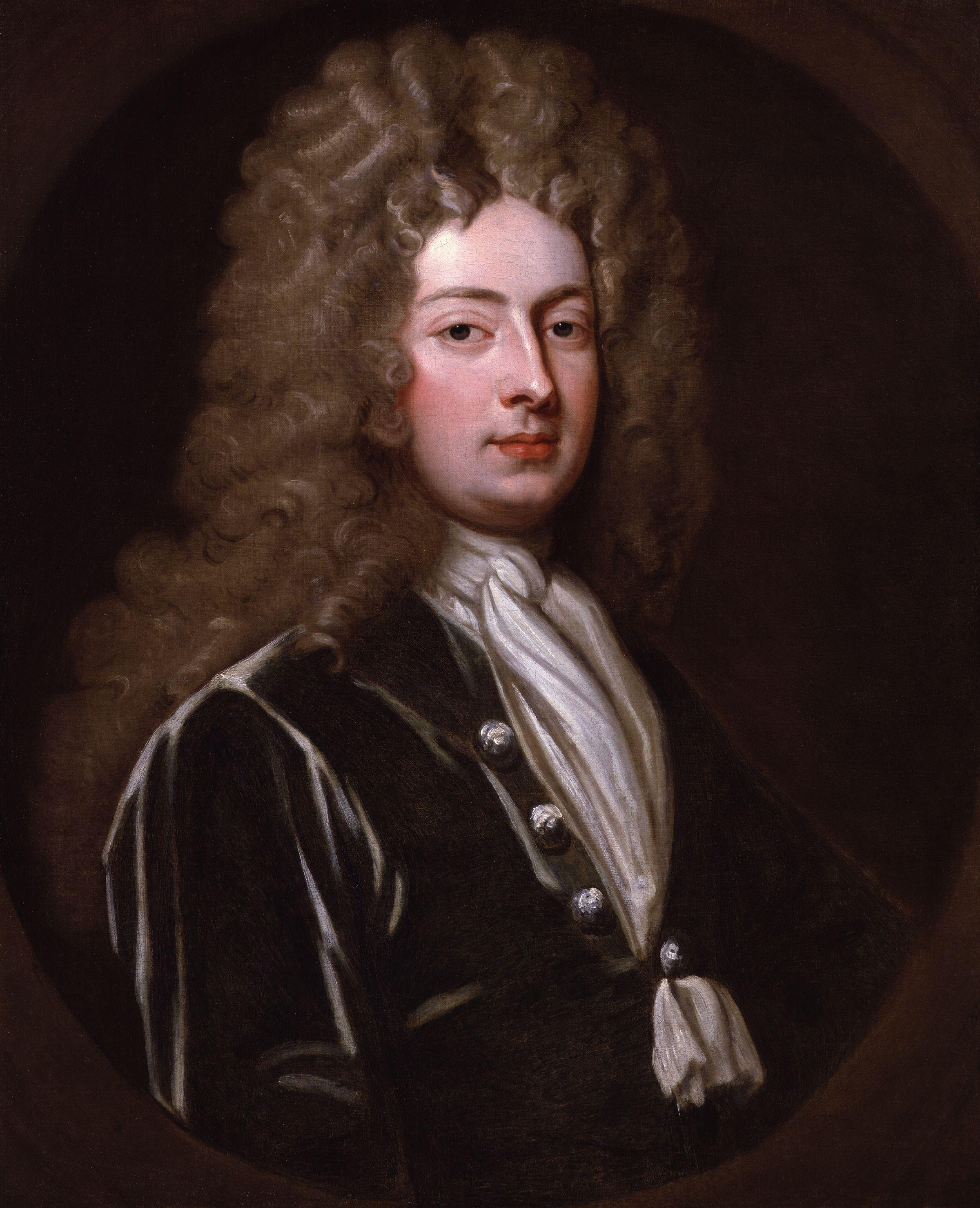
Richard was allegedly a good looking lad, see above, who believed absolutely in his divine right to rule at the expense of the uppity Lords. He wasn’t a warrior, rather a man of art and culture, aloof and surrounded by a close knit retinue. As with all the big players in the history plays, our perception of Richard II, is though to some degree shaped by the Bard’s not always favourable publicity (that’s if you have any view at all of course). Via his favourite contemporary historian Raphael Holinshed. There was apparently a time when historians thought Richard was insane: now the wisdom is that he had some sort of personality disorder that contributed to his downfall.
Mind you if you were locked up in solitary confinement you might well lose the plot. There is an extract in the programme taken from Five Unforgettable Stories from Inside Solitary Confinement by Jean Casella and James Ridgeway from Solitary Watch. Solitary Watch tracks the estimated more than 80.000 prisoners in the US system held in solitary confinement on an average day. Here four prisoners eloquently describe their experience. Left me speechless. 80,000. That’s not a typo. Google it.
So another success from the Almeida hit factory, another masterclass from Simon Russell Beale and another validation of Joe Hill-Gibbons radical(ish) way with Shakespeare. BUD, whose first exposure this was to the history plays, agreed. Mind you there isn’t much in this world that he can’t size up within 5 minutes of first introduction.
There is probably a case for JH-G slowing down proceedings just a little, another 15 minutes wouldn’t have been a stretch, just to let the poetry work a bit more magic, give a little more complexity to Bolingbroke and the nobles, and draw out more from the themes. And the stylised, expressionist visual concepts won’t, (and haven’t), pleased everyone. But as a coruscating denunciation of the perennial failure of the political class, you want see much better on a stage even if it was written over 420 years ago.
Now everyone know’s that Restoration comedy is a tricky customer. What with the humour built on misogyny, that’s if it is funny at all. The satire of a social class few of us recognise. Texts are so thick, built on repartee, wordplay, punning and double entendre. Plots and sub-plots are labyrinthine. Intrigues, trysts, disguise, mistaken identity, off stage shenanigans, eavesdropping, knob gags, duplicity, comeuppances. Characters are stock: rakes, roues, ingenues, cuckolds, randy older women, buffoons. The debt to French and Spanish contemporaries, Jacobean classics, commedia dell’arte and the Roman foundations of Plautus and chums, is obvious even if it is firmly of its time.
I’ve swerved a few in my time, including recently the Donmar Way of the World, which sounded a bit too full-on. There was a Simon Godwin Beaux Stratagem at the NT a few years ago which had its moments and the “Bright Young Things” Country Wife last year from Morphic Graffiti was diverting in parts but I am still waiting to be shown the “real thing”. Director Selina Cadell, who is a veteran of the Restoration, (you know what I mean), as both actor and, increasingly, director, (Love for Love at the RSC, Way of the World at Theatre Royal, Northampton, The Rivals at the Arcola, in addition to a Stravinsky Rake’s Progress at Wilton’s), offers valuable insight in the programme. To make the comedy work actors need to trust the text and stop their natural, modern tendency to interpret and emote.
I can see the sense of that and also the idea that we the audience shouldn’t worry too much about trying to unravel the plot. To that end, in this Double Dealer, William Congreve’s 1694 less successful follow up to his hit debut The Old Bachelor, Selina Cadell and Eliza Thompson have offered up a short prologue telling us to do exactly that. So, with that in mind, I settled in, though, given the string of less than enthusiastic reviews, expectations were low.
So I was more than a little surprised when I found myself starting to enjoy the proceedings. Not to the point of being converted to the Restoration cause but certainly enough to justify 4*, admittedly on the Tourist’s extremely flawed, subjective and overly generous ranking system. (I reason that all involved have gone to the effort so it is only reasonable for me to be generous in my appreciation. And the hard laws of cognitive dissonance mean I am hardly likely to admit I ballsed up by booking to see something in the first place).
This is not to say that the plot isn’t convoluted. Earnest young Mellefont (Lloyd Everitt), heir and nephew to Lord Touchwood (Jonathan Coy) can’t wait to marry Cynthia (Zoe Waiter) who is the daughter by a former wife of Sir Paul Plyant (Simon Chandler). Sir Paul is also the brother of Lady Touchwood (also Zoe Waites) who just happens to have the hots for young Mellefont. Lady T, rejected by said Mellefont, gets the hump and resolves to ruin his reputation. She recruits the rakish Maskwell (Edward MacLiam), the Double Dealer of the title, and Lady T’s former lover, into her plot. As it happens the villain Maskwell is actually in love with the virtuous Cynthia. So Maskwell attempts to persuade Sir Paul P that his missus, the randy Lady P (Jenny Rainsford), is getting it on with Mellefont, and Lord T that Mellefont also has designs on his wife. Into this fray are plunged Mellefont’s mate Careless (Dharmesh Patel), Lord Froth (Paul Reid) and his pretentious wife Lady Froth (Hannah Stokely) who responds to the advances of coxcomb Brisk (Jonathan Broadbent), who also plays a chaplain as the trysts pile up and the plots unravel.
Easy really. Seriously though, a quick scan of Wiki, as you might prior to a Shakespeare, Marlowe or Jonson play, a shifty glance at your programme as the various punters run on and off in the first few minutes, and it becomes pretty easy to follow. So I am not sure that constitutes a fair criticism. The constant entrances and exits do get a little repetitive but so it can in Shakespeare history plays and there ain’t a lot of options space-wise at the OT, that is normally one of its joys. The reasons for the doubling of Lady Touchwood and Cynthia remain a mystery but Zoe Waites offers more than sufficient distinction between the two, in some ways rather to the detriment of her colourless Cynthia. And, when we get to the scene where Cynthia eavesdrops on Lady T’s intrigues, we witness the rather daft sight of her rolling on her side to signify who is speaking. Still at least she didn’t have one of those split down the middle costumes on.
Lloyd Everett gives more definition to Mellefont but the the star turn by a country mile is Jenny Rainsford’s Lady Plyant, who is hilarious, both in the delivery of her lines and her movement. Hannah Stokely also gets real laughs out of Lady Froth and Edward MacLiam gradually, though not entirely, fleshes Maskwell out beyond the pantomime. The rest of the cast is solid if not always spectacular. As an aside I think this might have been my first full house in terms of the ten strong cast. All seen in the last couple of years in other productions. Madeleine Girling’s set did the job as did Rosalind Ebbutt’s costume’s and Vince Herbert’s lighting though I couldn’t escape the feeling, (very rare at the OT where less is normally defiantly more), that more space and more money would have helped.
BUT what I can say is that this was a production which persuaded me that Restoration Comedy can be not just something I, (and I suspect most audiences), should enjoy, but something that I could enjoy, and in fact something that I would enjoy. If there were an entire cast operating at the same level as, say, Jenny Rainsford here, so that every line, every exchange, every character trait, every situation, registered then it could be very bright and very witty. If this were overlaid with more expansive visual cues, the entertainment could be further enhanced. Not to the exclusion of the text but in support thereof. And if the differences between the characters are fully defined by movement, costume and through variations in the rhythm of dialogue and action then the plot should be less of a hurdle.
Even the most perfect production might have its work cut out to bring relevancy to the social satire or to contemporise the sexual politics. Congreve’s play dates from the period of the second wave of Restoration comedy from 1690 through the turn of the C18 which broadened out the interaction between social classes beyond the purely aristocratic subjects of the original craze from 1660 to 1680. Even so it is still essentially a bunch of toffs running around stunting innuendos the Carry On script writers might have rejected. Easy to see why the stuffy Victorians took umbrage and the plays fell out of fashion.
This is the first production of the Double Dealer in London for a few decades. It’s not perfect. The tension between the pantomimic and the dramatic is never really resolved. There is precious little weight to the characters. The space constrains, even though the play is nominally set in the “gallery” of Lord T’s house over the three hours of the (unabridged) play. Yet, despite this, the Tourist sniggered a fair bit and emerged in quite a perky mood. Which is not always the case post theatricals. And, armed with a greater understanding of the genre, hoping, one day, to chalk up a 5* Restoration comedy.
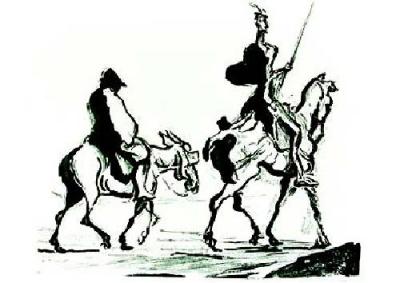
Finally the Tourist gets to see this. Took a chance that it would, after the mostly strong reviews, eventually find a home in London, and waited for the run to settle in to secure a fairly priced ticket. If you are of a similar mind, and haven’t seen it yet, I would advise you to do the same in the remaining few weeks. I am not sure it is quite the triumph some of the criterati would have you believe but the spry adaptation of James Fenton, the creative staging under Angus Jackson’s animated direction and the straight man – funny man double act of David Threlfall and Rufus Hound make it impossible not to enjoy.
Indeed once you strip out the comedy, Rufus Hound’s audience patter, the gags, the pratfalls, the puppetry, the knowing asides, the gurning, the mugging, the bun fight, all superbly orchestrated by comedy director Cal McCrystal, this is actually a moving, and occasionally, insightful play. In that regard it captures the spirit of the Cervantes novel(s). DQ may be an aged eccentric, living in a fantasy world, harking back to a world of chivalry unknown by early C17 Spain, let alone today, but he is also a man of conviction and belief, and this, surprisingly, just about squeaks through in this RSC production.
As the bond between DQ and sidekick Sancho Panza develops, and as we see the melancholic DQ doggedly stick to his quest despite the incredulity of those around him, we get ever closer to the “real” character. Result: a hushed audience taking in a closing deathbed scene, (sorry folks DQ does snuff it), where DQ regains his sanity, that is both moving and poignant. That this should be so is in part due to the sincere warmth that a padded-out Rufus Hound brings to SP, but mostly thanks to the wonderful performance of David Threlfall. Whilst the rest of the cast shifts, swirls, sings and dances around him, playing characters who, predominantly see him as a figure of fun to be endlessly mocked, DT plays it absolutely straight, even when flying Peter Pan like above the stage.
Mr Threlfall is no longer, unfortunately, the most prolific performer on stage or screen. The Tourist has only seen him once before, in the Young Vic Skellig many years ago. The last TV outing I can remember is his performance in the valuable, if flawed, recent BBC/Netflix retelling of the Greek myths, where he played Priam. Now it looks to me like DT is only interested in parts that allow him to proudly display his magnificent silver hair and beard. For his Don Quixote there is a whiff of aged Frank Gallagher, in looks, if not moral complexion, with whiskers, straggly hair and crumpled stockings. After the humorous introduction to SP, his wife and the villagers, all it takes is a few quick deft touches, by both adapter and actor, before we are convinced that reading too many chivalric romances from previous centuries could inspire our geriatric hidalgo to become a knight-errant and set off on his fantastic adventures. He may be deluded but we believe that the world he sees is all too real.
A short three hour play (it breezes by) is never going to be able to capture the complexity of Cervantes’s picaresque novel. There is a reason, actually there are many reasons, why DQ is considered the greatest literary work from the Spanish Golden Age, indeed one of the greatest of all time, comparable with contemporary Shakespeare. The first “modern” novel indeed. It is both stirring adventure (the Tourist’s take on first reading when a tween) and fountain of intertextuality (the lesson from the second reading a couple of decades latter). It is tragicomedy, genuinely both funny and sad, a plea for the primacy of the individual non-conformist and a nuanced social commentary, a satire on misplaced nationalism, a discourse on the nature of truth and reality and a tragedy centred on the corruption of idealism. It is road movie, buddy movie, heroic fantasy, action movie, tall tale, parody, burlesque, fairy tale, slipstream fiction and psychological thriller.
Cervantes’s own precarious upbringing and life of adventure (duels, midnight flits, military service, serious illness, paralysis, years of slavery in Africa, prison sentences, stabbings, affairs) are reflected in its pages. It is pretty much the only work for which Cervantes is remembered but, despite the great success of Part 1 (1605) and then sequel Part 2 (1615) he barely made a penny out of it. He died in poverty a few days after Shakespeare.
All this sort of stuff was meat and drink to writers, and readers, in C17 Spain, and clearly given the speed with which its fame spread, the rest of the Western world, but its cultural ubiquity ever since speaks to its resonance. Films, TV shows, books, songs, paintings, illustrations, tapestries, sculptures, operas, ballets, tone poems. And of course a Broadway musical in the form of The Man From La Mancha. A quick perusal of London entertainment guides will show you that in the next few weeks you can see this very musical at the ENO or, should you prefer, Marius Pepita’s ballet version at the Royal Opera House.
Whilst not quite matching the stirring cheesiness of Joe Darion and Mitch Leigh’s To Dream The Impossible Dream, this production has plenty of catchy Hispanic-inflected songs courtesy of Grant Olding and James Fenton. This does add to the somewhat episodic nature of the production, as does the need to wheel out the various sceneries, props, puppets and the like. Then again that is entirely in keeping with the tone and structure of the novel, as is so much here, and there is enough pantomime distraction to maintain momentum. The attempt to mimic the meta-theatricality of the novels by having DQ’s fame preceding him in the second half is a little stilted but, again, offers something to chew on besides the generous humour.
The set design of Robert Innes Hopkins, in common with his other recent RSC outings, has an elegant simplicity (and he does like to emphasis the vertical), and another meta touch with the giant cut-out of our hero as a backdrop, and the lighting of Mark Henderson and sound of Fergus O’Hare expertly delineates the mundane from the fanciful. Most notable however is the puppetry of Toby Olie, notably a peckish falcon, an angry lion and some convincing sheep (though maybe not quite the army that DQ sees!). Now frankly the Tourist is a bit fuzzy on the art of puppetry so he can’t be sure that the constructions signifying horse and donkey, with their human appendices, fall into the category, but they are the basis for some mighty fine entertainment.
Right even by the standards of the drivel that the Tourist usually posts on this site this is an utter waste of your and my time. Weeks too late, built on flaky foundations of understanding and appreciation and precious little use to anyone. Except maybe me that is, as an aide memoire. You can find my thoughts on these shows elsewhere on this site, if you can be arsed.
I have also appended a list of the top ten plays, so far announced, that I am looking forward to seeing this year in a desperate attempt to beef up the content. Some marginal utility in that maybe. Or maybe not.
BTW you can, and should, see The Lehman Trilogy at the Piccadilly Theatre from May through August. You can, and really should, see Caroline, or Change at the Playhouse Theatre right now. The good people of Edinburgh can see Touching the Void and it will go to Hong Kong, Perth and Inverness before coming back to Bristol. I bet it pops up in London. And, if you are in NYC, and haven’t yet seen Network, jump to it.
Network – National Theatre
John – National Theatre
The Wild Duck – Almeida Theatre
The Lieutenant of Inishmore – Noel Coward Theatre
The Writer – Almeida Theatre
The Lehman Trilogy – National Theatre
Touching the Void – Bristol Old Vic
Julius Caesar – Bridge Theatre
Death of a Salesman – Manchester Royal Exchange
Caroline, or Change – Playhouse Theatre
Near misses? Girls and Boys at the Royal Court, Cheek By Jowl’s Pericles, The Phlebotomist (now coming back to the main stage at Hampstead – do not miss), Nine Night (at Trafalgar Studios from February), Quiz, Love and Information at Sheffield’s Crucible Studio, Copenhagen at Chichester, Henry V from Shakespeare at the Tobacco Factory, The Jungle (support the two Joes in their plan to put this in front of the Home Secretary !!) and The Madness Of George III at Nottingham Playhouse.
What about this year? Take your pick from these if you trust my judgement. Which would be a surprise. No particular order BTW. There’s a few big tickets missing from this (When We Have Sufficiently Tortured Each Other, All About Eve, Betrayal, All My Sons). Like I said it’s what I am most looking forward to.
Sweat – Donmar Warehouse. Too late to get in now except for returns but this may well pop up elsewhere.
Mother Courage and Her Children – Manchester Royal Exchange. Julie Hesmondhalgh as Brecht’s survivor.
A Skull in Connemara – Oldham Coliseum. For my fix of McDonagh.
Cyprus Avenue – Royal Court. Finally I will get to see this.
Medea – Barbican Theatre. Internationaal Theater Amsterdam bring Simon Stone’s Euripides to London with best female actor in the world Marieke Heebink.
Berberian Sound Studio – Donmar Warehouse. How the hell are they going to make this work?
Top Girls – National Theatre. Caryl Churchill. Enough said.
Three Sisters – Almeida Theatre. Best of the Chekhov offerings.
Death of a Salesman – Young Vic. Miller, Elliott, Pierce, Clarke, Kene. Best play of 2019?
Blood Wedding – Young Vic. Lorca given the Farber treatment.
Oh and Antipodes, Annie Baker’s latest. Obviously.
I had only seen one of Henry Naylor’s acclaimed plays prior to this double header and that was Angel at this very venue. That was enough to know that I like the cut of his jib. Mr Naylor, prior to writing plays, was, amongst other things, the lead writer for Spitting Image and he has, as far as I can tell, always had an acute political conscience which he is prepared to put to good use in his writing. His first play, Finding Bin Laden, was a satire on the media treatment of the 2003 invasion of Iraq, (and it is now being made into a film,) whilst his second, Hunting Diana, dealt with conspiracy theories surrounding the Princess’s untimely death.
These were showcased at the Edinburgh Fringe as were his next offerings, The Collector, set in an Iraqi jail in 2003, and then Echoes and the aforementioned Angel, to complete the trilogy, Arabian Nightmares. Echoes is a two hander which contrasts two teenage women, one a Victorian colonialist adventurer, the other a Muslim jihadist. Angel is a dramatic monologue about the Angel of Kobane, a Kurdish sniper who became a symbol of resistance against Islamic State. All three plays were multiple prize winners at Edinburgh and have gone on to tour globally as well as to the Arcola.
You kind of know what you are going to get with a play from Mr Naylor. A scrupulously researched examination of a major issue of our time, (with a particular focus on the “Middle East” to date), told from the (often juxtaposed) perspective of individuals involved which sets out to even-handedly explore cause, effect and impact. Part history, part drama, part monologue and part exposition the plays cover a lot of ground in a relatively short span but don’t lack emotional heft. There is enough surprise in terms of dialogue, which is unafraid of deploying poetic symbolism where necessary, to set alongside the unfolding stories to keep the audience on its toes, and there is plenty of opportunity in terms of movement and impersonation to test the mettle of the actors. And, of course, text-based one and two handers are cheap to stage meaning Mr Naylor’s discourse can be quickly spread, as it deserves to be.
Obviously these subjects and structures are not much use to you if your idea of theatre is feel-good musicals but if serious, but never dour, political theatre floats your boat then don’t hesitate to seek out his work.
Borders adds another dimension to HN’s oeuvre to date. Premiered in 2017 at the Gilded Balloon it is another double monologue telling the stories of Nameless, a young graffiti artist in Homs protesting the Assad regime, and Sebastian Nightingale, a photographer who makes his name with an iconic early portrait of Osama Bin Laden, but who goes on to “sell out”, clicking lame-brain celebs for big money. Graffiti specifically, and art more generally, has, I now learn, played an important role in opposition to the regime in Syria since 2011, and Assad and his supporters have brutally punished its practitioners. The story of Nameless’s courage in using her art to incite resistance, and the passion which eventually leads to her exile, is very stirring, especially because, like many of NH’s previous protagonists, she is a young woman in a patriarchal society. Sebastian’s fall from grace, as he debases his own art and principles to chase fame and money, is equally riveting.
You can guess early on that the two of them, outsider and insider, are destined to meet but HN still conjures up a thrilling end. Of course this sort of story-telling, about a conflict few of us here understand at even the most basic level, is occasionally going to have to thwack the audience over the head to get its points across but HN once again finds a way to do this without getting in the way of the personal dramas. There are laughs, quite a few in fact, which often skewer the hypocrisies of Sebastian and of the men who seek to control Nameless. The other characters, played by our two actors, have sufficient presence to go beyond ciphers, Nameless’s Mum, her “boyfriend”, his dad and the elder statesman war correspondent, Messenger, who gnaws away at Sebastian’s conscience. The stories are inevitably contrived but that is probably a necessary pre-condition for theatre with this strong a message.
It wouldn’t work without two remarkable actors and that is precisely what we have here. Now in the original Edinburgh performances, and in the subsequent worldwide tour, Nameless has been played by Avital Lvova, who took over from the sadly missed Filipa Branganca in the tour of Angel, and who is also a fearsomely talented actor. In this Arcola run however the role of Nameless was taken on by Deniz Arixenas. The crib-sheet tells me that Ms Arixenas, who is of Kurdish and Syrian descent, is currently doing her Masters degree in Law with the intention of becoming a human rights lawyer. Acting’s loss is the legal profession’s gain. However if this woman can bring an ounce of her talent on stage to the task of making the world a better place then I can be assured, alongside so many of the young people I know, that the next generation will be able to unravel the mess that my, and previous, generations’ have made of our world. I confess couldn’t take my eyes off her.
Which made Graham O’Mara’s performances as Sebastian all the more exceptional. He nailed that thing where you know that, as a rich privileged beneficiary of the institutional and economic order imposed by the West on the world since WWII, you should help those who haven’t been so lucky, but you just can’t bring yourself to do it. In a connected world where those post-war institutional structures are under pressure, where selfish ideology trumps co-operation and where I suspect, (largely suspect), arguments around the concept of “Western guilt” are likely to intensify, NH has come up with am intelligent shorthand for debate.
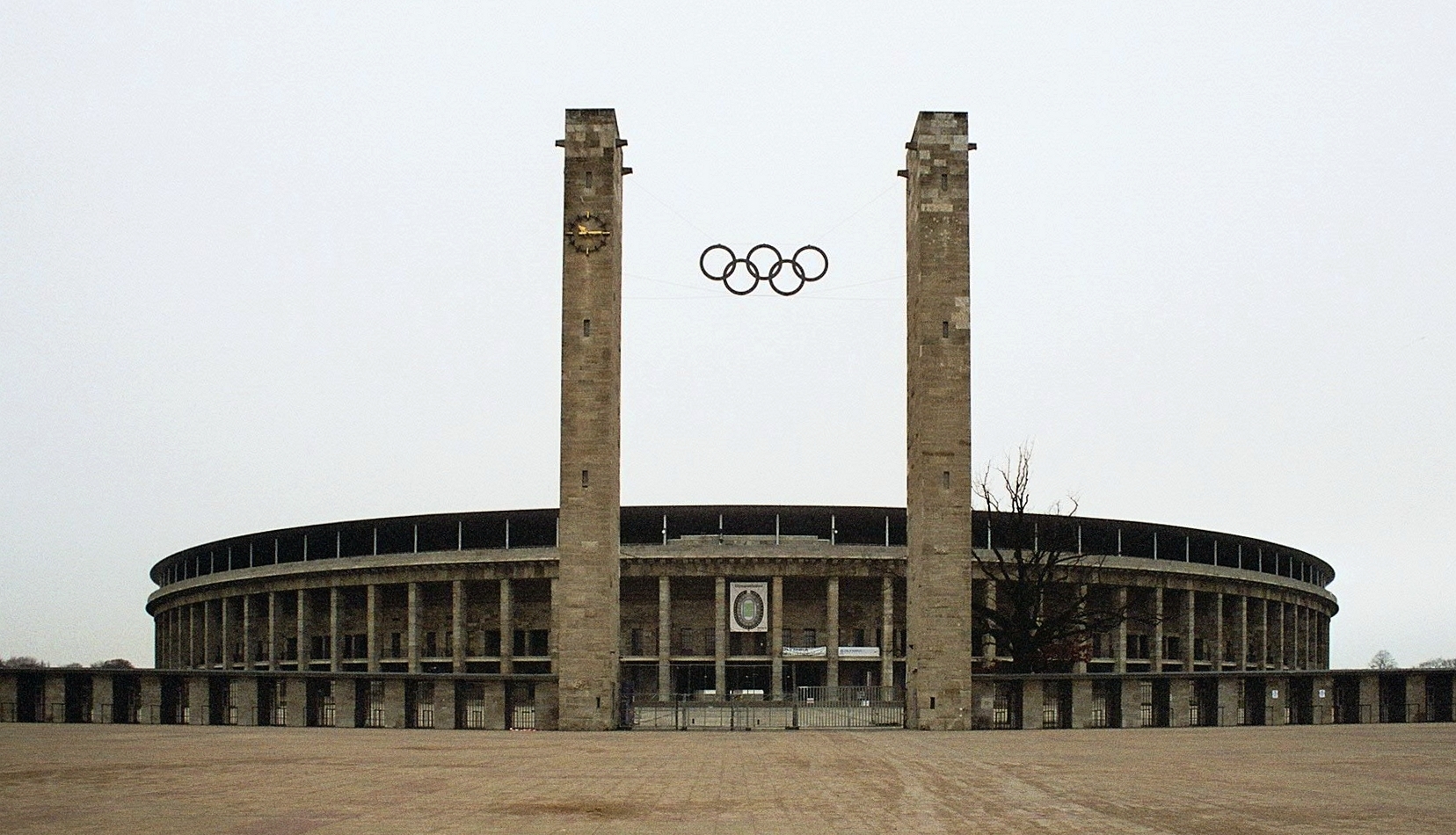
Games heads back a few decades to tell the story of German-Jewish athletes before and during the infamous 1936 Berlin Olympics (Tourist and family had a good look around the imposing stadium, now home to Hertha Berlin, last year). The two protagonists, high jumper Gretel Bergmann and fencer Helene Mayer, actually existed and the main events portrayed in the two-hander actually happened, but from this HN has woven a more nuanced debate on the nature of identity, and the iniquity of fascism, than we had any right to expect Helene Mayer won a gold medal in 1928 in Amsterdam, missed out in Los Angeles in 1932 and won silver in 1936, but despite her fame and success was still forced to leave for the US in 1935 because she was Jewish. The discrimination against Gretel Bergmann was more over,t both before the Nazis assumed power in 1933 and thereafter, as she and other Jewish athletes were denied access to training facilities, competed separately and were stripped of titles. Many left but Helene Mayer returned in 1936 to compete for Germany as the regime succumbed to pressure from the US who threatened a boycott.
Ms Mayer was an enigmatic character, whose German identity might have eclipsed her Jewish heritage and who, at least publicly, was not critical of the Nazis. She returned to Germany again in 1941and lived there until her early death in 1953. Tragic geo-political pawn or naive opportunist who put her own sporting glory above the suffering meted out to her own people? Easy to see then why HN alighted on her story, and that of Ms Bergmann, who died just a year ago aged 103, whose own resistance was implacable and who was determined to point up Hitler’s racial theories for the bollocks it was.
Maybe not quite as powerful as Borders (and Angel for that matter), and a little heavy on the biographical exposition, Games will still make you think and is surprisingly resonant on wider issues of nationalism, self-identity, and the role of politics in sport (or do I mean sport in politics), all subjects you probably thought you had a settled view on. Directed, as was Borders (in conjunction with Michael Cabot), with a confident hand by Louise Skaaping, Games has another pair of actors on top form. Sophie Shad has already written, produced and acted in Kitty’s Fortune which tells the story of a Holocaust survivor and her eagerness to tell Helene’s story shines through. She realistically captures her apparent ambiguities, internal conflicts and the impact of personal grief. Tessie Orange-Turner as Gretel has the physicality and grace of the athlete (maybe she is) and relays her character’s burning sense of injustice. In contrast to Borders the two meet on multiple occasions, Helene is Gretel’s original inspiration, but the use of the space and sparse props, (here two boxes and a flag, just two chairs in Borders), is similarly effective.
Henry Naylor has found a formula to educate us about complex political (and moral) questions without hectoring us and whilst still entertaining and moving us. And he usually brings it in at around an hour. In pretty much any space, (the credits here stop at the lighting design of Vasilis Apostolatos and stage management of Holly Curtis though I don’t doubt many others, from the research end through to the finished production at the ever welcoming Arcola, deserve credit).
I strongly advise you to hunt out more of HN’s his work. I will.





 At Home He Feels Like A Tourist