
My favourite classical concerts of 2017

623x512xrattle625_2-pagespeed-ic_-clbnppbu_4_0

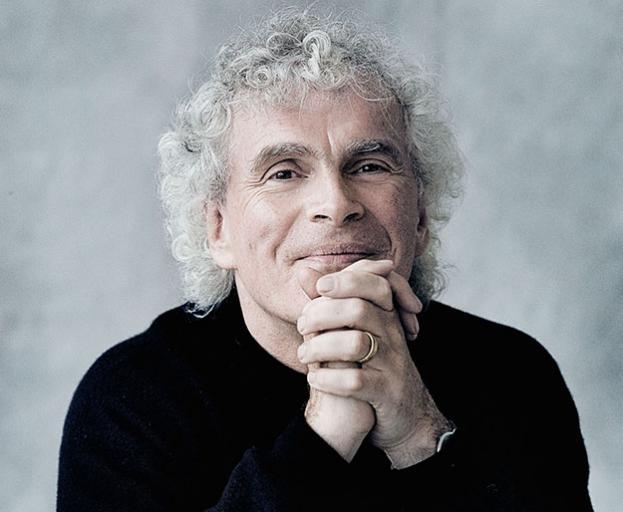
Right I know it is a bit late in the day but I wanted to make a list of the concerts I enjoyed most from last year. So everything that got a 5* review based on my entirely subjective criteria is ordered below. Top is Sir Simon and the LSO with their Stravinsky ballets. Like it was going to be anything else.

Anyway no preamble. No waffle. Barely any punctuation. Part record, part boast. Comments welcome.

  • LSO, Simon Rattle – Stravinsky, The Firebird (original ballet), Petrushka (1947 version), The Rite of Spring – Barbican Hall – 24th September
  • Colin Currie Group, Synergy Vocals – Reich Tehillim, Drumming – Royal Festival Hall – 5th May
  • Isabelle Faust, Akademie fur Alte Musik Berlin, Bernhard Forck – JS Bach Suite No 2 in A Minor BWV 1067a, Violin Concerto in E Major BWV 1042, Violin Concerto in A Minor BWV 1041, Concerto for Two Violins in D Minor BWV 1043, CPE Bach String Symphony in B Minor W 182/5 – Wigmore Hall – 29th June
  • Jack Quartet – Iannis Xenakis, Ergma for string quartet, Embellie for solo viola, Mikka ‘S’ for solo violin, Kottos for solo cello, Hunem-Iduhey for violin and cello, ST/4 –1, 080262 for string quartet – Wigmore Hall – 25th February
  • Britten Sinfonia, Thomas Ades – Gerald Barry Chevaux de Frise, Beethoven Symphony No 3 in E Flat Major Eroica – Barbican Hall – 6th June 2017
  • Nederlands Kamerkoor,Peter Dijkstra – Sacred and Profane – Britten Hymn to St Cecilia, Gabriel Jackson Ave Regina caelorum, Berio Cries of London, Lars Johan Werle Orpheus, Canzone 126 di Francesca Petraraca, Britten Sacred and Profane – Cadogan Hall – 8th March
  • Tim Gill cello, Fali Pavri piano, Sound Intermedia – Webern 3 kleine Stücke, Op. 11, Messiaen ‘Louange à l’Éternite du Jesus Christ’ (‘Praise to the eternity of Jesus’) from Quartet for the End of Time, Henze Serenade for solo cello, Arvo Pärt Fratres, Xenakis Kottos for solo cello, Jonathan Harvey Ricercare una melodia for solo cello and electronics, Thomas Ades ‘L’eaux’ from Lieux retrouvés, Anna Clyne Paint Box for cello and tape, Harrison Birtwistle Wie Eine Fuga from Bogenstrich – Kings Place – 6th May
  • Britten Sinfonia, Thomas Ades, Mark Stone – Gerald Barry Beethoven, Beethoven Symphonies Nos 1 and 2 – Barbican Hall – 2nd June
  • Academy of Ancient Music, Robert Howarth – Monteverdi Vespers 1610 – Barbican Hall – 23rd June
  • Academy of St Martin-in-the-Fields, Murray Perahia – Beethoven Coriolan Overture, Piano Concertos No 2 in B flat major and No 4 in G major – Barbican – 20th February
  • London Sinfonietta and students, Lucy Shaufer, Kings Place Choir – Luciano Berio, Lepi Yuro, E si fussi pisci, Duetti: Aldo, Naturale, Duetti: Various, Divertimento, Chamber Music, Sequenza II harp, Autre fois, Lied clarinet, Air, Berceuse for Gyorgy Kurtag, Sequenza I flute, Musica Leggera, O King – Kings Place – 4th November
  • Maurizio Pollini – Schoenberg 3 Pieces for piano, Op.11, 6 Little pieces for piano, Op.19, Beethoven, Piano Sonata in C minor, Op.13 (Pathétique), Piano Sonata in F sharp, Op.78 (à Thérèse), Piano Sonata in F minor, Op.57 (Appassionata) – RFH – 14th March
  • Britten Sinfonia, Thomas Ades, Gerald Barry – Beethoven Septet Op 20, Piano Trio Op 70/2. Gerald Barry Five Chorales from the Intelligence Park – Milton Court Concert Hall – 30th May
  • Bavarian Radio Symphony Orchestra, Mariss Jansons, Yefim Bronfman – Beethoven Piano Concerto No 4, Prokofiev Symphony No 5 – Barbican Hall – 24th November
  • Britten Sinfonia, Helen Grime – Purcell Fantasia upon one note, Oliver Knussen, George Benjamin, Colin Matthew, A Purcell Garland, Helen Grime Into the Faded Air, A Cold Spring, Knussen Cantata, Ades Court Studies from The Tempest, Britten Sinfonietta, Stravinsky Dumbarton Oaks – Milton Court Hall – 20th September


Britten Sinfonia at Wigmore Hall review *****

jackie-shave-900x900

Britten Sinfonia

Wigmore Hall, 24th January 2018

  • Heinrich Biber – Mystery Sonata No 1 “The Annunciation”
  • Philip Glass – Orbit
  • Leo Chadburn – Five Loops for the Bathyscaphe
  • Arvo Part – Spiegel am Spiegel
  • WA Mozart – Piano Trio No 3 K502

There is something of the spirit of punk about the Britten Sinfonia. They don’t have a principal conductor or director and play with pretty much who they like. They also play pretty much what they like with a refreshingly cavalier attitude to programming. I love them, whether it be a Bach St John Passion, electrifying accounts of the Beethoven symphonies under Thomas Ades, minimalist classics, Stravinsky, Ravel or contemporary British composers, all of which I have heard them perform in the last year or so.

So I was looking forward to this. Leo Chadburn’s new work Five Loops for Bathyscaphe, is scored for piano trio and electronics and runs for 10 minutes or so. So Jacqueline Shave (that’s her above), one of the violin leaders of the BS, Caroline Dearnley, the principal cello, and Huw Watkins, principal piano, had another 50 minutes or so to fill. What to choose? Mozart? Why not. After all his B flat minor trio is pretty much the first piano trio as we know the form, with all three instruments contributing rather than just a piano sonata with a bit of string diddling attached which previously defined the Classical form. And Arvo Part’s Speigel am Speigel? Yep, it’s a slam-dunk crowd-pleaser for violin and piano. But chucking in Philip Glass’s short piece, Orbit, for solo cello. And the first of Biber’s Mystery sonatas? Well as it turned out it all slotted together perfectly.

Now I have been unlucky in my endeavours to hear a performance of Biber’s Mystery, (or Rosary), sonatas for violin and continuo live. There are 15 of these chaps, divided into 3 cycles, Joyful, Sorrowful and Glorious, plus a closing Passacaglia for solo violin. Each one takes as its subject one of the Catholic “rosary”episodes in the life of the Virgin Mary. They were likely written in 1676 but were unknown until 1905 ,and they are one of the earliest and best known examples of “scordatura”, where the violin is tuned in a way that is not standard. This permits all sorts of funky effects. Don’t test me on this but it is pretty straightforward even for a dumbass like me to hear the differences. One of the Vivaldi Op 9 Le Cetra concertos does this, Stravinsky does it at the start of the Firebird and Ligeti’s Violin Concerto is a prime example. Mind you Ligeti chucks so many effects into his concerto I am hard pressed to know where it is.

Biber tests the skill of the violinist to the max so it is a unlikely anyone was up to the job in the C17. What is on the page doesn’t correspond to what hits the ear. Don’t worry it doesn’t get too weird but it does create sounds, chords and harmonies with real drama. Now unfortunately we only got the first instalment here, which is the one which doesn’t arse about with the tuning, but it was still a blinder to open the concert with and Ms Shave delivered. It opens with a virtuoso figuration, being the Angel appearing before  our Mary, and them moves into a gentler sort of theme and variations.

The Glass “sonata” was new to me. The programme notes suggest Glass is referencing Bach’s mighty cello suites. He is. But then again anyone that writes a piece for solo cello is working in the shadow of the master. Even so lots of fancy figuration and double stopping does conjure up Bach’s counterpoint and Glass’s ordered repetitions are redolent of JSB’s own structures. Ms Dearnley is at home here as she is in the Baroque.

Now I have listened to, and seen performed, Part’s Speigel am Speigel, more times than I care to remember. It is one of my favourite pieces of music period. Which probably shows how easily pleased I am. This was one of his first “tintinnabuli” works, along with Fur Alina, from 1978, and it is “minimal” even by his standards. Simple arpeggios in piano and rising, then falling, scales from violin. If you are ever too worked up about anything just pop this on. Hey presto, blood pressure plummets. Now Ms Shave and Mr Watkins seemed to take this at a marginally faster tempo than I am used to, (it is all relative as not much happens), and took a minute of two to get in the groove, but once there it was as good a performance as you will hear.

I tried with the Mozart. Honestly. If I switch off and let it drift around and through me then it is pleasant enough but I still don’t really get it. Just too nice. Obviously there are bits of Mozart, and times when I listen to it, like watching a great Figaro, where it lifts me up and takes me away, but this wasn’t one of them.

Which brings me to the Leo Chadburn premiere, co-commissioned by the BS and Wigmore. I knew nothing about Mr Chadburn but I gather he is one of these new brand of musician/composer who doesn’t give a fig for established boundaries. He writes and performs across genres, releasing three synthpop albums a few years ago as alter ego Simon Bookish, and remixing for the likes of Grizzly Bear. He can certainly sing a bit I gather. This piece takes the classic piano trio instrumentation and hooks in pre-recorded voices from himself and Gemma Sanders, and some sparse electronica. It graphically describes the journey on 23rd January 1963 of oceanographers Jacques Piccard and Don Walsh to the bottom of the ocean. Eleven kms down to be exact in the Mariana trench, in that little ball Bathyscaphe Trieste thing. The idea of the piece is to create a sense of motionlessness in the music, deep and watery I guess, and allow the voices and words to tell the story. It succeeds admirably. There is nothing to scare anyone off in this simple but very effective sound-world. Think eerie harmonics from the strings and muffled chords from both ends of the range for the piano, as well as some theatrical plucking from inside the piano. The whole thing grips from first to last. It deserves a much wider audience. I am sure Mr Chadburn knows how to make that happen.

This whole concert was a joy. Music for everyone. Even if they know absolutely f*ck all about any of it. Still I suppose if they all prefer listening to a little ginger chap who has the temerity to suggest he is the next Van Morrison, then who am I to argue. Just seems a shame. Still that’s your pesky, high/low culture divide in late neo-liberal, capitalist society for you.