
What we learn when the sky goes wrong
At 5:29am on 12 August 2026, the Moon’s shadow touched down in Greenland, crossed Iceland, and swept south over northern Spain. NASA livestreamed it. Expedition ships and a chartered research aircraft chased totality across the North Atlantic. Live blogs updated minute by minute, and social platforms did what social platforms now do with four minutes of shared darkness, which is turn it into several million individual moments of content before the sky had even finished clearing. Compare it with the last total eclipse to cross Britain, in August 1999, and this one felt bigger — louder, faster, more universally shared. Why? What was going on in the minds of all those immersed in the event?
This is not remotely the first time the sky has gone wrong and been watched closely for it. A comet crossed over Rome in 44 BC during games held for a murdered dictator, and was declared his ascending soul. A different comet appeared over England in 1066 and was stitched into seventy metres of linen as a warning about a king who hadn’t yet fallen. An eclipse crossed Egypt at almost the exact moment a king was founding a new religion built entirely around the sun, and nobody who saw it agreed on whether it caused the religion or arrived to punish it. A comet returned exactly on schedule in 1758, seventeen years after the mathematician who predicted the date had died, and the argument about whether the sky could be known at all was more or less settled that Christmas. The same comet came back in 1910, and people bought pills against it, took out insurance against it, and in at least one case appear to have died of fright at the thought of it. We could go on.
The sky is going wrong — an eclipse, a comet, a rock falling out of nowhere — the one morning the pattern breaks. So after: what happens next? What gets built afterwards on the back of that break? We offer seven windows, seven moments the sky did something it doesn’t usually do, and in each case the real subject turns out to be much closer to home: what people believed was true about the universe, what they thought that meant for their own standing in it, who got to profit from saying so, and what got built, taxed, painted, staged, or sold as a result. The anomaly in the sky is the excuse. The cosmology, the science, the philosophy, the economics, and the politics is where the real interest sits, and that was always happening on Earth.
Who tells the story? Do we believe them? Are we scared, or amazed? Who benefits? Who loses?
Seven windows follow, starting in Egypt and ending at 5:29am on 12 August 2026. Windows, not a staircase. Let us peer in.
Ancient Egypt
Where the sun ran the treasury
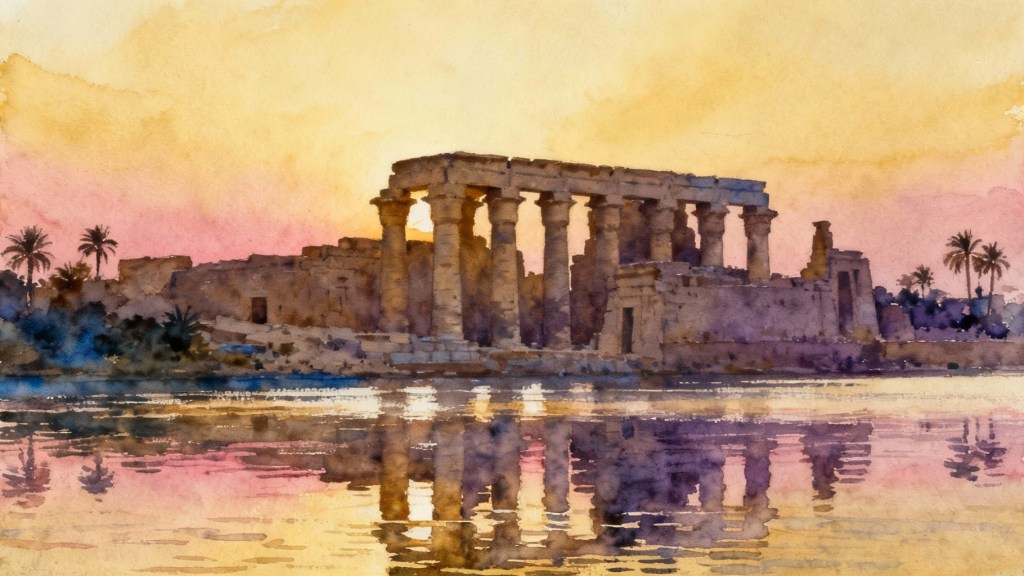
Take any sunrise in Thebes, on the east bank of the Nile, on any day between roughly 2000 BCE and 30 BCE — the better part of two thousand years, encompassing dozens of dynasties, foreign occupations, and at least one heretic king trying to make the whole system answer to him alone — and the same theology is standing there waiting for it. Karnak and Luxor Temple sit on that east bank, built where the sun rises, home to the living king and his officiating priests. Across the river, on the west bank where the sun goes down, sit the Valley of the Kings and the mortuary temples — the domain of dead pharaohs undergoing the same nightly transition the sun itself makes, dynasty after dynasty, for longer than now separates us from the Roman Empire. The whole layout of Thebes was a solar cycle turned into a city plan, and it held for the better part of two millennia without needing to change. Most of the coach parties crossing the river now are thinking about something else entirely — getting into the tombs before the light goes, getting the photo, getting the proof of having been there onto a phone before the queue moves on. Fair enough. Two thousand years of documentation for an audience that wasn’t born yet is not the most outlandish thing happening on that riverbank.
None of this was invented out of nothing. The sun rose, the sun set, and once a year the Nile flooded, on a cycle regular enough to be tracked and precise enough to be worth tracking. Egyptian priests built a 365-day civil calendar that did real, working, predictive labour: it told the state when the flood was coming, when planting could start, and what the harvest was likely to be. That calendar also set the tax base. Knowing the sky and running the treasury were the same job, held by the same institution.
The flood explains where the labour for the monuments came from, and it isn’t the slave labour most people assume. For a few months each year the flood made farming impossible, and the state redirected the idle agricultural workforce into building instead. The workers’ village at Deir el-Medina has left behind pay ledgers, ration lists, and a record of a strike when grain wages arrived late — a seasonal state payroll, timed precisely to the same calendar that predicted the flood in the first place.
All of that is the steady state — sun up, sun down, flood, calendar, tax, temple. Then, on the 14th of May 1338 BCE, the sun went out at midday. A total solar eclipse crossed Egypt during the reign of Akhenaten, tracking almost exactly over the spot where he had just founded a new capital dedicated to a single sun disc, the Aten. Whether the eclipse caused that decision or arrived to punish it is a live argument among the people who study this for a living. Nobody wrote “the eclipse happened, therefore this.” What survives is proximity — a date, a location, a new city built almost exactly where the shadow fell — but proximity is not causation, however tidy the story it lets you tell. One scrap of contemporary writing may preserve a reaction to the eclipse directly: an inscription by an Amun priest, complaining to his own god in words that translate roughly as being made to see darkness by day. Even that isn’t a plain account. It is a grievance, from a man on the losing side of the argument, written who knows how long after the fact. Egypt in this period gives you symbols in abundance and almost no one telling you what they were for.
Akhenaten’s Great Hymn to the Aten is what a king does with that kind of moment when he decides to own the interpretation himself, rather than leave it to the institution built to hold it. No mediating priesthood, no plural pantheon — one king, one sun, one channel of communication. It didn’t last. His monuments were defaced, his capital abandoned, his name struck from later king-lists, and what survives of him survives specifically because it was buried and had to be dug back up, not because anyone chose to keep it.
The older, steadier version of the same authority is what the Osiris mysteries at Abydos performed every year for a public that received the story rather than argued with it — a public re-enactment of Osiris’s death and resurrection, cosmic order as annual theatre, attested by a rare surviving eyewitness account from an official who organised one such performance and left a record of doing so. Where Akhenaten seizes the interpretation by decree, Abydos hands it down through ritual, unbroken, generation after generation, no eclipse required to justify it.
Fear of the cosmos In Ancient Egypt stayed managed rather than open. The nightly battle between the sun and the serpent Apep is threatening within the myth, but guaranteed to resolve, the way it always did. The eclipse of 1338 BC is the one moment in the whole window that the threat stops being guaranteed — an ordinary morning going dark with no ritual promise attached to fix it — which may be exactly why it produced a reinvention on one reading and a collapse on the other.
Philip Glass’s 1983 opera Akhnaten is where a very different era decides this rupture is worth restaging, and does something cleverer with it than the trance-music reputation suggests. Akhnaten is written for countertenor, the register once given to castrati and the great androgynous lovers of Baroque opera, which lands on a real and still-argued question in the Amarna reliefs themselves — the wide hips, soft belly, and elongated features that make his own image the strangest of any pharaoh’s, read by different scholars as ideology, as illness, or as something closer to the truth of the man. Glass didn’t invent the strangeness. He found a modern voice for one already sitting in the stone. The libretto goes further. Most of it is sung in Egyptian and Akkadian, drawn from primary sources, with nothing translated for the audience until Akhnaten’s hymn to the Aten switches, for the first and only time, into the language of the room. For close to three hours a paying audience sits in roughly the position an ordinary subject of the actual court would have occupied — watching power conducted in a language they cannot follow — until the one moment the king speaks to his god directly, and the opera finally lets everyone in.
Akhenaten got roughly seventeen years holding both the throne and the sky in one pair of hands, before the old arrangement reasserted itself and both were taken back. Whatever the sun disc actually told him that morning in May, it kept the secret rather better than he did.
Ancient Greece and the Roman Empire
A rock, a general, and a machine nobody could read
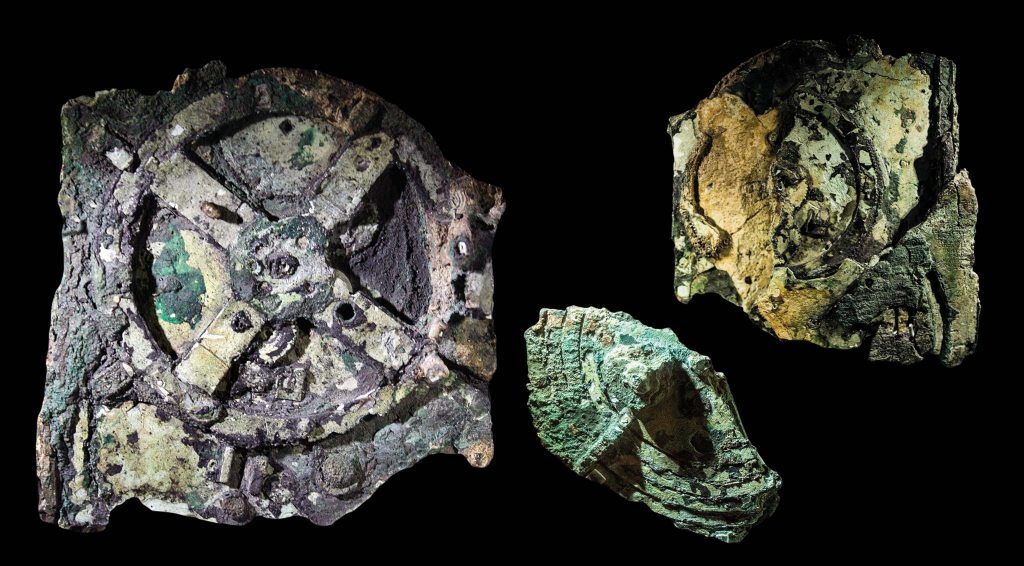
Wreck salvage is one of the strangest growth industries in archaeology, and it is only getting stranger. Land finds across the Mediterranean have been dug up, catalogued, argued over, and in no small number shipped off to some other country’s museum, more or less continuously since the Renaissance. The sea gives things up on its own schedule, usually only once, and usually to whoever happens to be diving that day. In 1901 that was a boat of sponge divers working a wreck off the island of Antikythera, hauling up statues, coins, and one unremarkable lump of corroded bronze that sat in storage for a year before anyone noticed the gear teeth inside it. The credited discovery is an archaeologist named Valerios Stais, sometimes with a politically connected relative said to be standing nearby at the time — embellishment, subtle national reclamation, or just a useful coincidence someone decided to keep. Nobody can be entirely sure.
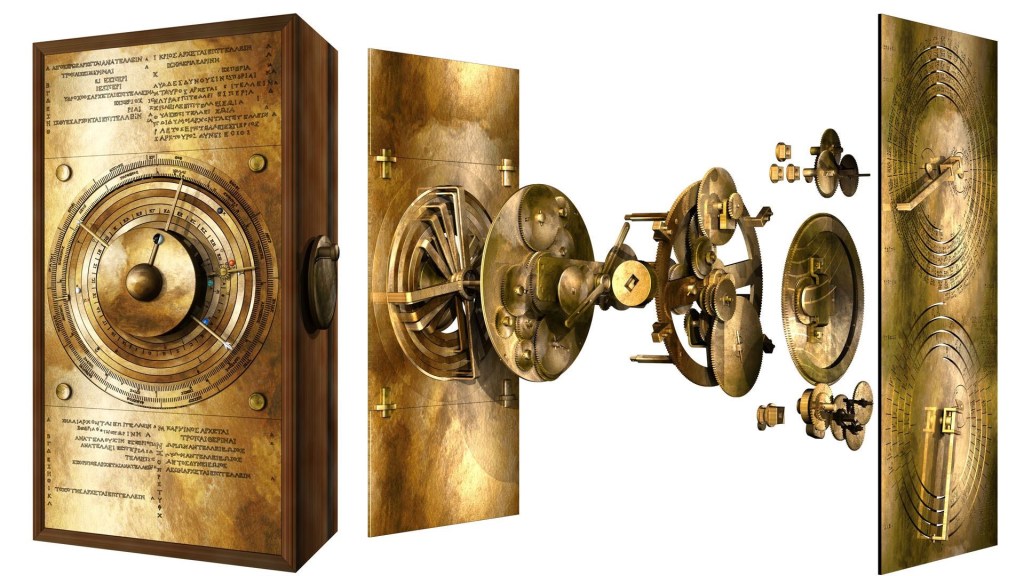
What was inside took most of a century to actually read. X-ray imaging in the 1970s and full CT scanning in the 2000s eventually revealed a geared bronze mechanism tracking the sun, the moon’s phases, and a dial built specifically to predict eclipses years ahead of time. Whoever commissioned it — precision bronze work of that kind was not cheap, and not casual — had already built into hardware an idea that had gotten a man thrown out of Athens roughly a century earlier.
Anaxagoras taught that the sun was a burning rock and an eclipse was the moon’s shadow crossing it, nothing more mysterious than that. He was tried for asebeia, impiety, and exiled — his friendship with Pericles gave his political enemies an easy target, and the charge did the rest. In a culture organised around xenia, the mutual obligation to shelter and provision a stranger, exile is not simply removal from a city. It is removal from the entire network of relationships that made a person legible as a person at all. Worse than death, for some Greeks — death at least kept you inside the story.
Aeschylus stages the same dynamic as tragedy rather than biography. At the opening of Agamemnon, two eagles are seen tearing apart a pregnant hare on the way to Troy, and the seer Calchas reads it as a promise of victory bought at an unbearable price — the fleet’s winds will only turn once Agamemnon sacrifices his own daughter. The whole engine of the play runs on a sky-reading nobody in it is free to ignore. Thucydides gives the same mechanism a body count rather than a chorus: in 413 BC, with the campaign against Syracuse already failing, a lunar eclipse sent the general Nicias to the soothsayers rather than his own officers, and the retreat he delayed on their advice gave the Syracusans time to seal every road out. The army that finally tried to leave was destroyed almost entirely. Two tellings, two centuries apart, one Athenian general and one mythical one, both handing the actual decision to the sky.
Rome ran the same mechanism forward rather than back, and used it to build something rather than lose something. When a comet appeared over public games held in honour of the murdered Julius Caesar in 44 BC, it was declared his soul ascending to join the gods — the sidus Iulium — and stamped on coin after coin by Octavian, who needed it rather more than Caesar did. The Republic was finished, and inheritance alone was not going to settle who ran what came next; a comet witnessed by a crowd at public games was legitimation no will or bloodline claim could match. The rest followed in far less mystical terms — a settled succession meant a settled treasury, a settled treasury meant the standing armies, the road-building, the grain fleets and frontier garrisons that turned one man’s inherited authority into an actual functioning empire for the best part of five centuries. The comet bought Octavian the argument. Everything built on top of it was ordinary administration, backed by the very thing Anaxagoras had been exiled for saying didn’t matter.
Ovid, writing a couple of generations later, has the gods themselves stack up the warnings first — a comet, a blood-red moon, statues weeping, dogs howling, ghosts walking the streets of Rome, all recorded as portents of the coming murder, all of them wasted on the one man in a position to act on any of it. Only after the killing does Ovid send Venus down to catch Caesar’s ascending soul in the final book of the Metamorphoses — the warning refused while he lived, the coronation granted once he couldn’t argue with it, political theatre becoming cosmology on its own terms once enough time had passed for the two to blur.
Shakespeare gets there from a different angle entirely: his Caesar shrugs off the soothsayer and Calpurnia’s warning dream, and a servant reports that comets are seen only when princes die, never for beggars — the sky, on this reading, already knows what Caesar refuses to. A dramatist working sixteen centuries later, staging the exact instinct Octavian had already exploited once, live in the Globe for the instruction of the groundlings.
Pliny the Elder, writing in the first century AD, tried something neither Nicias’s soothsayers nor Octavian’s coin-makers had much use for: a working catalogue of comet types, on the theory that enough recorded instances would let you understand the pattern rather than simply react to the next one. He still reports most of them as ill omens. The habit of taking notes had started; the habit of not being afraid of what the notes described had not yet caught up with it.
Greek soil was thin and Greek politics small-scale, which is a large part of why Greek cities looked outward — colonies scattered the length of the Mediterranean and Black Sea coasts, trade doing the economic work the land alone couldn’t. Nicias’s fleet at Syracuse was that same outward reach carried to its military limit, and broken there. The Antikythera Mechanism only makes sense as a product of the same reach — a machine that expensive, built by hands that skilled, paid for by someone with real trade or military money behind them, sent to the bottom of the same sea that had made such money possible in the first place. Rome, a little later, never needed a machine like it. An empire with legions, roads, and grain fleets running to schedule was already the prediction and control the Mechanism offered in miniature — Rome had simply built its version out of provinces instead of gears.
A machine built to calculate exactly the kind of event that exiled a philosopher and lost a war sat on the floor of that sea for two thousand years, until a team largely from a country that spent several centuries “collecting” other people’s antiquities finally worked out what it did.
Medieval Europe
A comet stitched into the story of a conquest
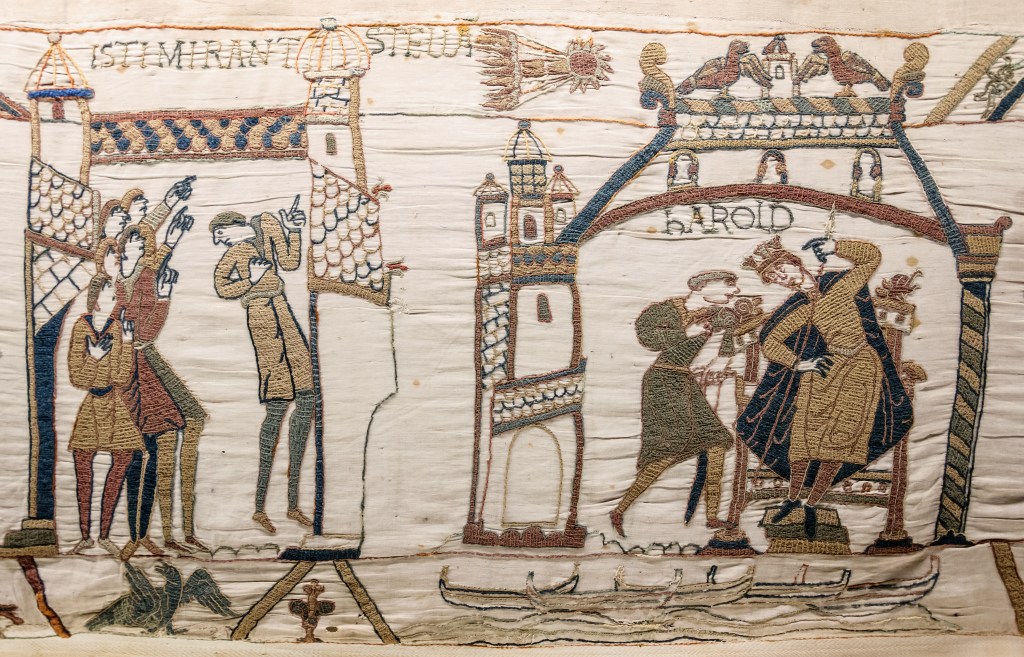
In September 2026 the Bayeux Tapestry goes on public display at the British Museum, the first time it has left France since it was made, nearly a thousand years ago. Something over seventy metres of embroidered linen, telling the story of a conquest, is coming to the country it conquered, on loan from the country that has kept it the whole time. Tickets for the first months sold out before most people had worked out how to book them. It is worth remembering, walking along it, that roughly two-thirds of the way through, someone stitched a comet into the sky.
Halley’s Comet returned in 1066, and whoever commissioned the Tapestry — almost certainly a Norman patron, stitched by English hands, using drawings that trace back to Canterbury — put it directly over a scene showing King Harold newly crowned, with men pointing up at it in evident alarm. A few panels later, English ships are already sailing to meet the Norman invasion. The comet doesn’t sit in the Tapestry as decoration. It sits there doing the job a caption would do in a less confident kind of document: this king’s reign is already marked, before a single battle has been fought.
What the comet actually was is not in question, and hasn’t been for a long time — it is the same body Edmond Halley would later name after himself, the same one that troubled Rome roughly a millennium before the Tapestry, and the same that crossed the sky again in 1301, some two centuries after it. What the Tapestry claims about the comet is a different matter entirely, and the two shouldn’t be confused. This is not an eyewitness record of what everyone in England thought that week in 1066. It is a very expensive piece of persuasion, made by the winning side, for an audience that mostly couldn’t read anything except pictures, arguing after the fact that the outcome had never really been in doubt. The comet is doing legitimating work here in almost exactly the shape Octavian’s did for Caesar’s — except this time the sky is being recruited against the loser rather than for the dead man’s heir.
The economics of the conquest it justifies get spelled out in far less mystical terms only a couple of decades later, in the Domesday Book — a full inventory of who held what land, down to the ox, commissioned by the new regime specifically to work out how much could be extracted from it. The comet supplied the justification. Domesday supplied the ledger. Between them they cover both halves of what conquest actually requires: a story that makes the outcome feel inevitable, and a set of records precise enough to tax it.
Giotto gives the same comet, or one very like it, an entirely different job two centuries later. His Adoration of the Magi in the Scrovegni Chapel in Padua paints the Star of Bethlehem as a comet with a long, unmistakable blazing tail, and the likely reason is that Giotto had seen one — Halley’s Comet crossed the sky again in 1301, a few years before he painted the fresco, and by most accounts he used it as his model. A genuine astronomical sighting, folded within a handful of years into sacred imagery meant to stand for a divine sign a millennium and a half earlier. Where the Tapestry uses the comet to explain a political outcome that had already happened, Giotto uses one to make an old story feel freshly witnessed.
The chapel itself makes an economic point Egypt would recognise. Enrico Scrovegni, a wealthy Paduan banker, paid for it directly, on terms and a schedule that survive in the documentary record — no Church commission, no state calendar, a single private patron settling accounts for a fresco the way Deir el-Medina’s workers were paid in bread and beer for their labour on the Valley of the Kings. His father had been a notorious moneylender, and the chapel is widely read as a purchase of grace as much as a work of art — private guilt, publicly discharged, in fresco.
Set against both is Chaucer, writing his Treatise on the Astrolabe for his ten-year-old son in the same century as Giotto’s chapel — a plain, working instruction manual for an instrument used to measure the position of stars and the passage of time, with no vision, no portent, no sacred narrative attached to it at all. It is the Antikythera Mechanism’s own argument turned into English prose rather than gear teeth, seventeen centuries on: the sky as something to be measured, not read. Medieval astronomy was not only comets read as verdicts and stars read as saints. Some of it was simply an ingenious instrument, and an instruction manual, and a father wanting his son to be able to use both.
What holds the window together is that a comet here can be doom and glory at once, in the same century, without anyone appearing to notice the contradiction. The Tapestry’s comet marks a king for disaster. Giotto’s comet marks a birth worth adoring. Nothing in the surviving record suggests either audience felt the tension between them — a single providential frame wide enough to hold a curse and a miracle as the same kind of event, which is not a position either Nicias or Anaxagoras could have occupied without choosing a side.
Robert Bartlett’s television series on the medieval mind, made for a modern audience roughly nine hundred years after the Tapestry was stitched, splits the period into four hour-long parts — Knowledge, Sex, Belief, Power — on the theory that a mind this different from ours needs breaking into pieces a contemporary viewer can actually hold. His own framing across the series is close to this window’s own argument stated in one line: a world first understood as mystery and enchantment gradually became a world to be mastered. Power, the closing episode, goes further than this window has needed to — inequality treated as simply how things were, serfdom barely distinguished from the life of animals, a knight’s code of honour closer to caste solidarity than anything a modern viewer would call morality. A historian, working roughly nine centuries later, doing in a studio close to what this whole essay is attempting one window at a time.
The Tapestry’s own return this September comes with an economy of its own, and it isn’t small. The UK Treasury has provisionally approved a state indemnity of around £800 million to cover it — the largest single-object government guarantee in British museum history, insured publicly rather than through a commercial premium no institution could sensibly carry alone. It isn’t a simple loan either: Sutton Hoo’s treasures and the Lewis Chessmen travel the other way to Normandy in exchange, the whole arrangement sealed at Windsor during a state visit, announced by two heads of government rather than two museum directors. The British Museum is projecting at least 850,000 visitors, and measuring itself openly against the 1.7 million who queued for Tutankhamun in 1972. Enrico Scrovegni paid a workshop directly, on terms that survive in a private contract, to have Giotto’s fresco made. Whoever stitched a comet over Harold’s head in 1066 could not have imagined the scale of what it would eventually cost, and earn, simply to be looked at again.
Early Modern Age
An argument the audience hadn’t settled either
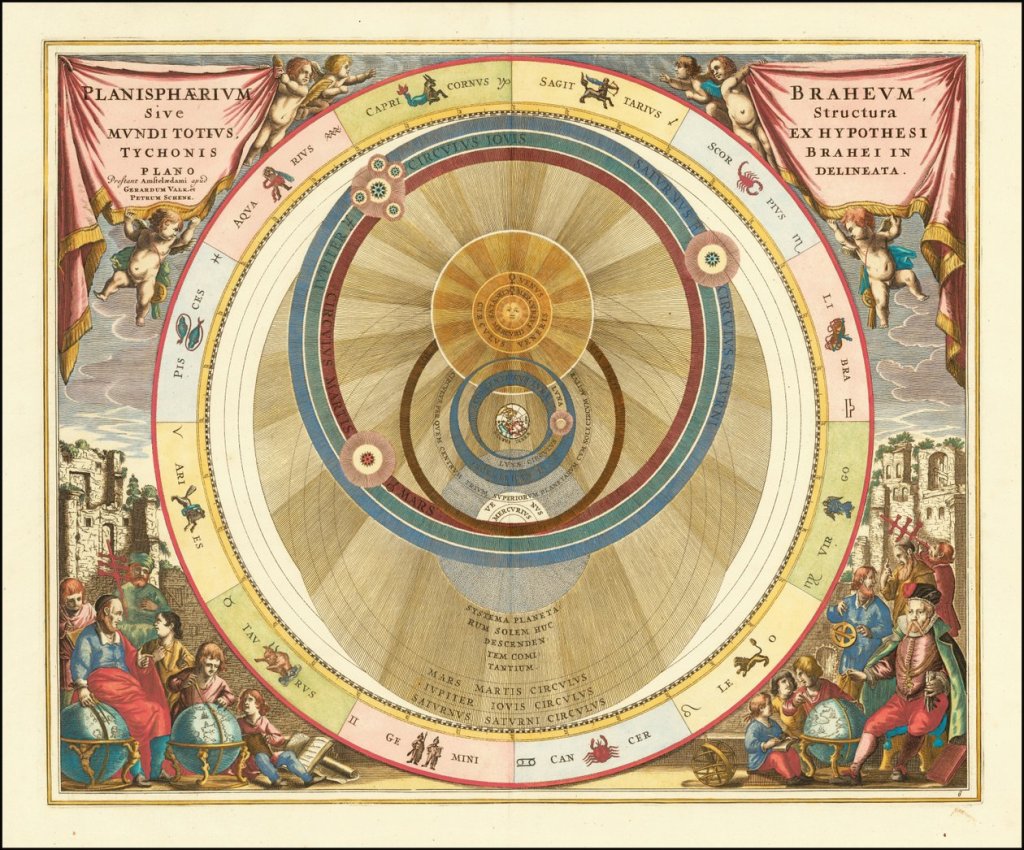
The Quarto of King Lear was printed in 1608. The Folio version came seventeen years later, and the two don’t agree — something over 300 lines differ between them, including material touching the French invasion that Jacobean censors had every reason to want softened. Modern editions mostly print a conflation of both, which means the “authentic” Lear most people read has never existed as a single document in any age, including Shakespeare’s own. He built the play from pieces already lying around anyway — Holinshed’s Chronicles for the history, an older anonymous play called King Leir with a happy ending for the basic shape, Sidney’s Arcadia for the Gloucester subplot, Spenser somewhere in the Cordelia material. Patchwork from the start, unstable in its own lifetime, and that’s before anyone else got their hands on it.
Nahum Tate got his hands on it in 1681, and rewrote the ending. Cordelia lives, marries Edgar, Lear is restored to his throne — a happy ending stitched back onto a play that had briefly had one before Shakespeare removed it. Tate’s version was the dominant Lear on the English stage for roughly a century and a half, not a curiosity but the mainstream text audiences actually paid to see. An age that found the real ending too bleak, too arbitrary, too willing to let goodness die for no reason, simply overwrote it until taste changed back. Whatever “timeless” is supposed to mean, it apparently didn’t stop the eighteenth century from deciding the play needed fixing.
Buried inside all that instability is the moment the play actually earns its place in this essay. Gloucester, reading a recent double eclipse as a portent, tells his son that “these late eclipses in the sun and moon portend no good to us” — the natural world visibly announcing the family’s coming disaster. Edmund, alone on stage a moment later, takes the argument apart with real contempt: “This is the excellent foppery of the world, that when we are sick in fortune… we make guilty of our disasters the sun, the moon, and stars.” Shakespeare doesn’t referee the disagreement. Gloucester’s reading and Edmund’s mockery both stay standing, unresolved, right through to the end of the play — not because the playwright hadn’t decided, but because his own audience genuinely hadn’t.
They hadn’t, because the ground had only just started moving under them. Tycho Brahe’s observations of the 1577 comet, made within Shakespeare’s own lifetime, showed the object moving beyond the orbit of the moon — somewhere no comet was supposed to be able to exist under the old Aristotelian model of a fixed, unchanging heaven above the moon’s sphere. That single observation didn’t finish off the old cosmology, but it put a visible crack in it, in public, in a way that couldn’t easily be unseen. Gloucester and Edmund are having Tycho’s argument in miniature, one generation on, with a family’s fate rather than the planets at stake.
Milton takes the same image and points it at Satan rather than at any human family. In Book II of Paradise Lost, Satan crossing Chaos is compared directly to a comet — “Satan stood / Unterrified, and like a comet burned” — a portent given to the single most dangerous figure in the poem, dread and grandeur fused into the same simile without apology. Donne, writing earlier and more plainly frightened, gets closer than anyone else in the period to simply saying what it felt like: “And new philosophy calls all in doubt.” Four words doing what Gloucester needed an entire scene to gesture at.
Brecht picked the argument back up three centuries later, from the other side of it. His Life of Galileo, written in exile and revised across the years either side of the atomic bomb, stages the Church’s suppression of heliocentrism not as simple obscurantism but as an institution correctly recognising that its whole legitimating order depended on the old cosmology staying fixed. Brecht wrote it with his own century’s version of the same collision fully in view — a scientific discovery the authorities in power had every reason to fear, made by a man they eventually forced to recant. A twentieth-century Marxist adjacent playwright picking up a story about a seventeenth-century argument this window has already been having with itself.
None of it happened for a private patron watching alone. The Globe took ticket money from anyone who could pay it, penny at the door for standing room, more for a bench — Shakespeare was writing for a paying public in a way Giotto, working to a single banker’s contract a few centuries earlier, never had to. The argument about the sky staged inside the play was being sold, nightly, to exactly the kind of ordinary Londoner who might have believed either Gloucester or Edmund walking in and believed the other one walking out.
Tate’s happy ending ran for a hundred and fifty years before audiences wanted the real one back. Whatever this play actually is, it has never once been left alone to simply mean one thing.
The Enlightenment
The sky, finally, on schedule
Edmond Halley never saw the comet that carries his name. He died in 1742, sixteen years before it returned, having spent decades doing something nobody had quite done before: treating a handful of historical sightings — 1531, 1607, 1682 — not as three separate ill omens but as one object, tracing the same orbit roughly every seventy-six years, calculable rather than mysterious. He predicted the 1758 return and staked his reputation on a date he wouldn’t live to see confirmed. On Christmas night that year, a German farmer and amateur astronomer named Johann Georg Palitzsch spotted it more or less on schedule. The comet had been watched, feared, and argued over for at least two thousand years by then. Halley didn’t see it first. He was simply the one who was right about when it would come back, and that turned out to be worth more than having watched it. It carries his name now, not the name of anyone who actually laid eyes on it in 1531 or 1607 or any of the centuries before.
That’s the whole argument of this window in one small transaction — prediction outranking observation, mathematics outranking eyesight, whoever supplies the winning framework getting to put their name on something that predates them by millennia. Chinese and Babylonian records almost certainly logged the same comet earlier and more carefully than anyone in Europe. None of them got the naming rights.
Halley himself never got rich on any of it. Salaried as Savilian professor and later Astronomer Royal, he paid for the printing of Newton’s Principia out of his own pocket when the Royal Society’s funds fell short, subsidising the age’s most important scientific book rather than profiting from it. In 1715 he published a public map of an approaching eclipse’s exact path, specifically so ordinary people would understand it as natural rather than ominous — reassurance handed out for free. His most lucrative legacy wasn’t astronomy at all: his 1693 mortality tables became the founding mathematics of actuarial science, underwriting every insurance contract sold from that point on; though probably not, a century and a half later, the policies sold against his own comet’s supposed dangers in 1910. Others managed the money better. Ferguson and Walker took admission at the door. Voltaire built a public career on popularising Newton in print. Wright sold paintings. The man who did the actual sum barely touched a shilling of what it went on to generate.
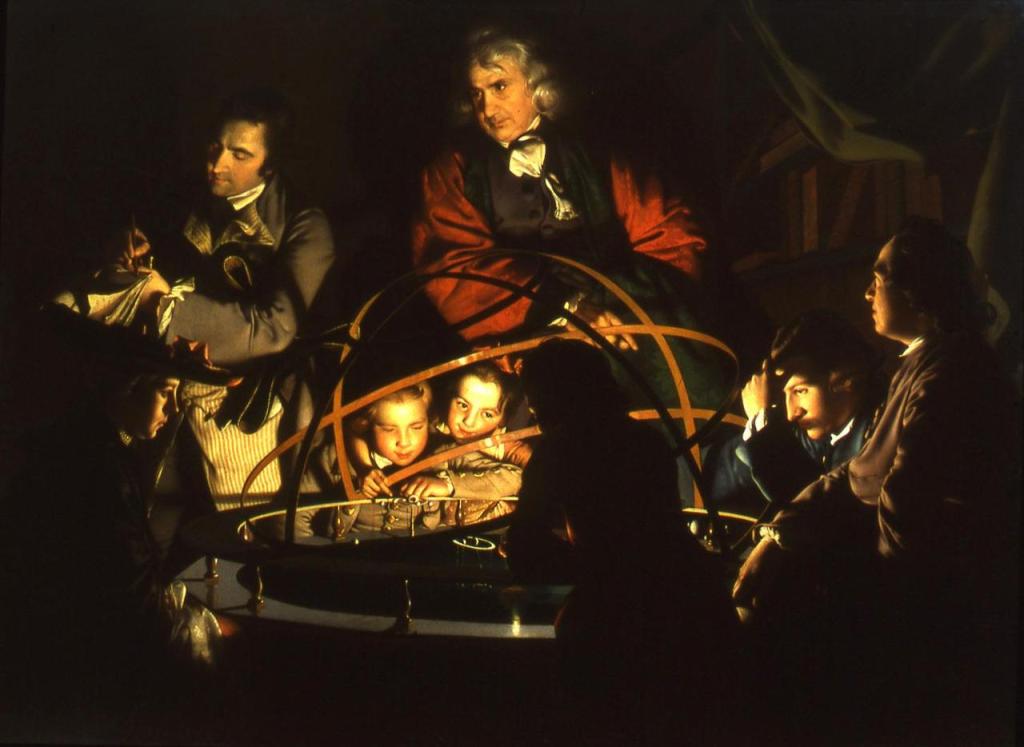
Joseph Wright of Derby painted what happens next. A Philosopher Lecturing on the Orrery, from 1766, shows a small mechanical model of the solar system lit from within, a lamp standing in for the sun, and a mixed audience — men, women, a child taking notes — gathered close in the dark to watch the planets go round on schedule. It is Halley’s proof turned into furniture and dramatic chiaroscuro. The unknowable has become something you can build a working model of and put on a table.
Wright painted it from Derby, and stayed working from Derby for most of his career, by choice rather than necessity — most ambitious painters of his generation went straight for London patronage, and Wright mostly didn’t bother. He didn’t need to. He was part of the Lunar Society circle meeting nearby: Erasmus Darwin, Josiah Wedgwood, Boulton and Watt, industrialists and chemists and engineers discussing science and manufacture in the same room rather than at a fashionable remove from it. The real economic engine of the period wasn’t sitting in London waiting for the Midlands to catch up. Wright painted it from the inside, in the actual towns where steam engines and porcelain glazes were being worked out at the same time as orreries were being demonstrated.
The audience in the painting isn’t court and it isn’t Church. It’s the sort of mixed, curious, moderately wealthy public that Ferguson and Walker were touring England charging admission to see the same demonstration — knowledge of the heavens now something you bought a ticket for, in a provincial parlour, rather than something mediated down to you by a priesthood or an altar. Not yet the mass market Flammarion and Méliès would sell to a century and a half later, but no longer a single patron’s private commission either. A room full of paying strangers, watching prediction perform itself.
Voltaire was doing the same job in print, for an audience Wright’s lamplit rooms could never reach. His Éléments de la philosophie de Newton, written after years in England absorbing Newtonian mechanics directly, did more than almost any other single book to carry Newton’s ideas across the Channel into French intellectual life — a continental popularizer working the lecture circuit’s job through a printing press instead. Keeping him in the window is worth doing on its own terms, not only to avoid the whole thing reading as an argument that all of this only happened in the English Midlands.
So fear, for the only time in this essay so far, drops out almost entirely. Gloucester’s dread and Edmund’s contempt, one generation earlier, needed each other to make sense — providence against observation, unresolved. By 1758 the argument is settled enough that a comet returning exactly when a dead mathematician said it would produces wonder without a shadow attached to it. The lamp in Wright’s painting stands in for the sun in the most literal, domesticated way imaginable: something you can walk up to, in a room, and watch behave itself. Literal Enlightenment.
Halley got the comet named after him for having been right. Two centuries later a painter named Wright painted the machine that turned that rightness into a public spectacle. The Enlightenment’s whole logic of naming, credit, and reward sitting in one coincidence of syllables, whether anyone in either century intended it or not.
The Turn of the Twentieth Century
What we watched, and what we missed
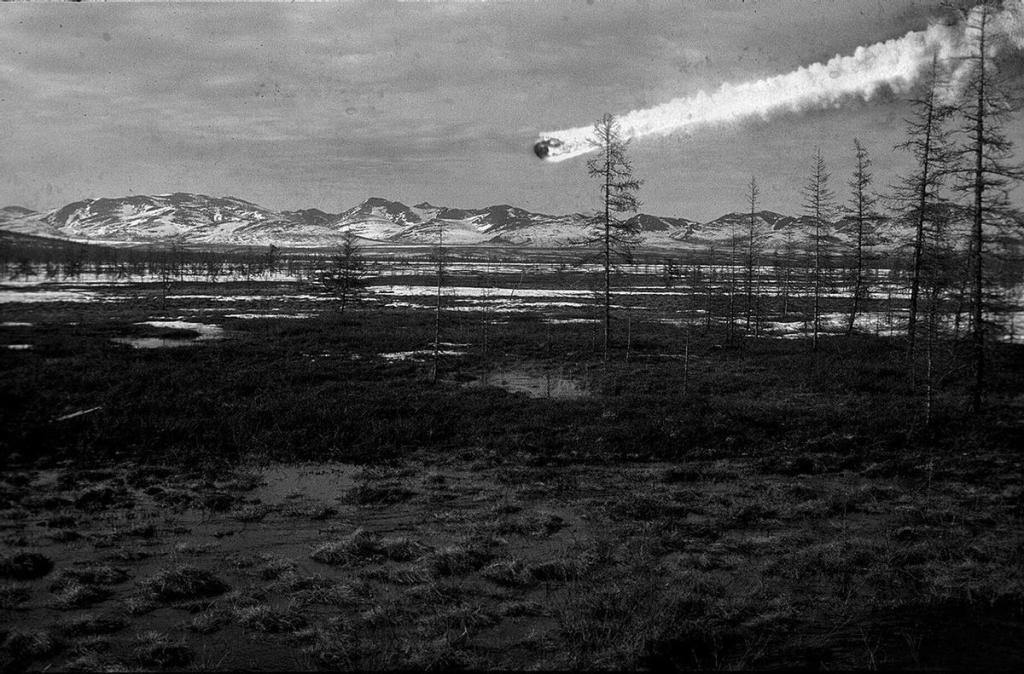
On the morning of 30 June 1908, something exploded over the Siberian taiga with enough force to flatten eighty million trees across roughly 830 square miles — a blast later estimated at somewhere north of a thousand times the power of the Hiroshima bomb, detonating a few miles above ground rather than on it, leaving no crater at all. A handful of reindeer herders and villagers close enough to see it described a fireball splitting the sky and a heat that knocked them off their feet from over forty miles away. Londoners, thousands of miles off, reported skies bright enough that same week to read a newspaper outdoors at midnight. And almost nothing happened. No expedition, no official inquiry, barely a paragraph in the foreign press. The site was too remote, the Tsarist state had other things on its mind, and then it had a war and another revolution to be contend with. The first scientists to actually reach the blast zone arrived in 1927, nineteen years later, led by Leonid Kulik, a mineralogist working from newspaper clippings and secondhand testimony rather than anything resembling a live investigation.
Halley’s own comet returned two years earlier, in 1910, with the watching very much switched on. Earth passed through its tail, and the result was gas masks, “comet pills” sold as prophylactic snake oil, and — in Los Angeles — an actual insurance policy sold against death by comet, 25 cents a week, small print excluding death by fright alone. The Spokane press reported same-day psychological casualties: a young woman’s attempted suicide, an elderly woman’s death, a man convinced the comet was attacking him directly. In a cave in Puerto Rico, someone scratched a crude image of the comet onto a wall that already carried centuries of older Taíno rock art — a name eventually recovered, decades later, by an astronomer cross-referencing the shape against 1910 census records. Three registers of the same event, all fully lit: dread, commerce, and a stranger, near-instinctive need to leave a mark on stone that had already been marked before.
This then is a story about which parts of the sky get watched, and which don’t. A comet crossing over Western Europe or America in this period gets tracked by observatories, argued over in the press, turned into pills and insurance policies within days. An explosion over a sparsely populated stretch of Russia, big enough to be the largest impact event in recorded history, produces silence for two decades because nobody with a telescope or a newspaper happened to be looking that way. The sky was never uniformly watched. It was watched wherever the watching public and the watching money already were, and largely ignored everywhere else.
Camille Flammarion got there ahead of both with the dread dressed as near-science. La Fin du Monde (1894), a bestselling comet-apocalypse novel from a working astronomer with a genuine public reputation, landed as something closer to prophecy than fiction usually manages — panic, apocalyptic cults, a calm scientific elite calculating the odds while everyone else loses their head, published by a man whose day job lent every page more credibility than it probably deserved.
HG Wells did the same trick more completely four years later, and routed it straight back through the sky rather than a general comet-dread. The War of the Worlds opens with astronomers noting strange flashes on Mars, dismissed at first as atmospheric distortion, then a “falling star” reported over Horsell Common — Woking, of all places, thoroughly respectable Surrey commuter belt, the last spot in England anyone would have picked for civilisation’s opening battle — that turns out to be the first Martian cylinder rather than a meteor at all. An entire invasion smuggled in through exactly the observational apparatus we have been following since Anaxagoras. Wells was emulating a whole genre rather than inventing one: invasion literature had been a publishing boom in Britain since Chesney’s The Battle of Dorking in 1871 (Home Counties again), mostly Germans or Frenchmen storming the beaches, anxiety about imperial vulnerability dressed up as military speculation. Wells simply moved the invaders off the map and into orbit, which let the same dread run through astronomy instead of geopolitics. We have watched three centuries of rational science dismantle the Church’s old monopoly on cosmic doom — Tycho against Aristotle, Halley naming and taming a comet, Wright’s orrery turning terror into a parlour demonstration. Almost the moment that job looks finished, fiction rebuilds the doom narrative anyway, in science’s own borrowed clothes: astronomers instead of prophets, a telescope instead of a portent, selling exactly the same appetite the Church used to supply, just with everyday credentials.
Georges Méliès, working the same years, sold the identical phenomenon as comedy rather than invasion — a flirtatious sun and moon eclipsing each other for a delighted crowd of astronomers, released in 1907, a year before Tunguska and three years before the real panic. Astronomy fully absorbed into commercial cinema, dread nowhere in sight, the same sky sold twice over in the same decade for opposite reasons.
What Tunguska adds, sitting underneath all of the more visible material, is the uncomfortable part: the panic wasn’t entirely misplaced. A comet’s tail never actually threatened anyone in 1910, whatever the gas masks and pills implied. An unannounced explosion over a populated region, arriving with no warning and no visible cause until decades of scientists had picked over the debris, genuinely could have. Get the object a bit bigger again, and the conversation stops being about broken windows in a Siberian forest and starts being about the Chicxulub crater and a very bad decade for anything that wasn’t a small mammal. Sixty-six million years is a long time to hold the record for worst asteroid strike, and the sky has never signed anything promising it won’t try again. The fear in this window was mostly aimed at the wrong object, in the wrong place, for the wrong reasons. The one that could genuinely end the conversation went almost entirely unwatched, and still mostly does.
Our Contemporary World
Same wonder, new machinery
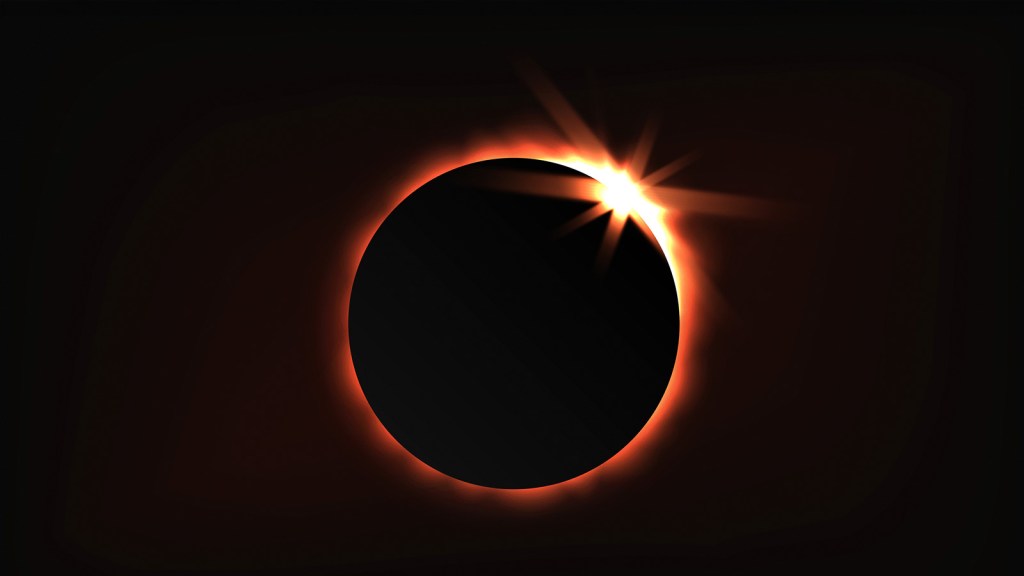
And so to 12 August 2026.
Don’t Look Up got there first, after a fashion, in 2021, with the mechanism laid out almost too plainly to count as satire. A comet certain to destroy all life on Earth arrives, and the film’s actual subject is never the comet — it’s the talk-show bookings, the political calculation, the tech billionaire who spots a resource-extraction opportunity in mass extinction, the entire apparatus of modern attention deciding a genuine planet-ending event is, at best, one news cycle among several. Critics mostly agreed Adam McKay’s film landed its target and disagreed hard about whether landing a target this obviously counts as good satire — too broad, too didactic, several reviewers said, a film so certain everyone would miss the metaphor that it stopped trusting the audience to do any interpretive work at all. Which is, itself, a data point worth keeping rather than dismissing: a culture that can’t quite laugh at a joke about its own mechanism once the joke stops disguising itself as one.
Lars von Trier’s Melancholia, a decade earlier, takes the identical premise — a planet on a collision course with Earth — and refuses the satire entirely. Nobody in it argues about news cycles or resource extraction. A woman sinks deeper into what the film treats as clinical depression while a planet called Melancholia bears down, and by the end the two threats have become close to indistinguishable — apocalypse as something closer to relief than horror, watched, not fought. Set beside Don’t Look Up‘s noise, it reads as the other possible response to the same information: not denial dressed as distraction, but dread taken so seriously it turns inward and goes quiet.
What actually happened on the August morning sat closer to neither. Passengers on the expedition ships were reported silent through totality, then loudly, unmistakably delighted the moment the corona appeared — the oldest response in this whole essay, virtually unchanged since a Puerto Rican cave wall picked up a scratched comet in 1910, since Wright’s lamp-lit drawing room in Derby, since the pure managed dread of Apep swallowing the sun over Thebes. The wonder hasn’t gone anywhere. What’s changed is what happens to it in the ninety seconds after it’s felt — filmed, posted, captioned, pushed through a recommendation algorithm built to reward exactly this kind of unscripted human reaction, monetised in real time by platforms that had no comet pills to sell and didn’t need any. The 1910 broker in Los Angeles wanted twenty-five cents a week and a signature. A platform in 2026 wants nothing signed at all, just the attention, which turns out to be worth considerably more.
Brian Cox and the current run of broadcast science stands at the very end of the line we have been tracing since Ferguson and Walker first charged admission to watch an orrery turn. Voltaire made a public career out of popularising Newton in print; Bartlett, several windows back, does something structurally identical on television for the medieval mind. Writing an accessible book and getting a documentary commissioned off the back of it has been one of the more reliable ways to turn academic standing into a generous income for a very long time now — not a complaint, closer to an observation Voltaire would have recognised immediately. The lecture circuit became the printed primer became the BBC documentary became the primetime physicist. The product hasn’t really changed. Wonder, packaged for an audience with money or attention to spend, has been for sale since at least 1766.
The 12 August eclipse was watched, largely, in genuine delight, from ships and aircraft and back gardens, by people who mostly weren’t thinking about Tunguska, or Chicxulub, or the fact that the thing being celebrated with such unforced pleasure is, structurally, the same category of event that killed the dinosaurs when it arrived at a size nobody was quite watching for. That isn’t a criticism. Managed dread, several windows back in Egypt, resolved every single night without fail. This one mostly does too. It just isn’t guaranteed to, and the platforms currently monetising four minutes of shared wonder have shown no particular interest in mentioning that part.
Coda
We peered through seven windows. What did we see?
The sky goes wrong roughly the same way every time.
What differs, window to window, is never really the reading itself. It’s who got to do it, and what they were allowed to build once everyone agreed to believe them. A priesthood turns a working calendar into a tax base. A general hands a war over to a soothsayer rather than his own officers. A king tries to hold both the throne and the sky in one pair of hands and loses both within a generation. A conquering army stitches a warning into linen and calls it history. A playwright stages an argument about the sky that his own audience hasn’t settled, and leaves it that way. A dead mathematician gets a comet named after him for having been right about a date he never lived to see. A broker sells insurance against an apocalypse with no possible mechanism for a claim. A broadcaster turns a comet into lucrative primetime streaming. A director turns the end of the world into two hours of box office satire.
Fear and wonder wax and wane. Together in Egypt, split apart in Greece, fused again in the medieval period, drained out almost entirely once Halley proved the sky could be scheduled, then back as a product with a price on it. And finally now. Four minutes of totality caught on a thousand phone screens before the shadow had even finished passing.
None of the seven eras believed anything stupid, exactly. Each one built the most rational structure available to it out of the evidence in front of it, evidence that was frequently real and often carefully gathered. What looks like superstition from here mostly turns out to have been good reasoning, run on incomplete information, by people with every reason to want an answer before the next morning arrived.
 At Home He Feels Like A Tourist
Leave a comment