Why empires fail: follow the land and the money
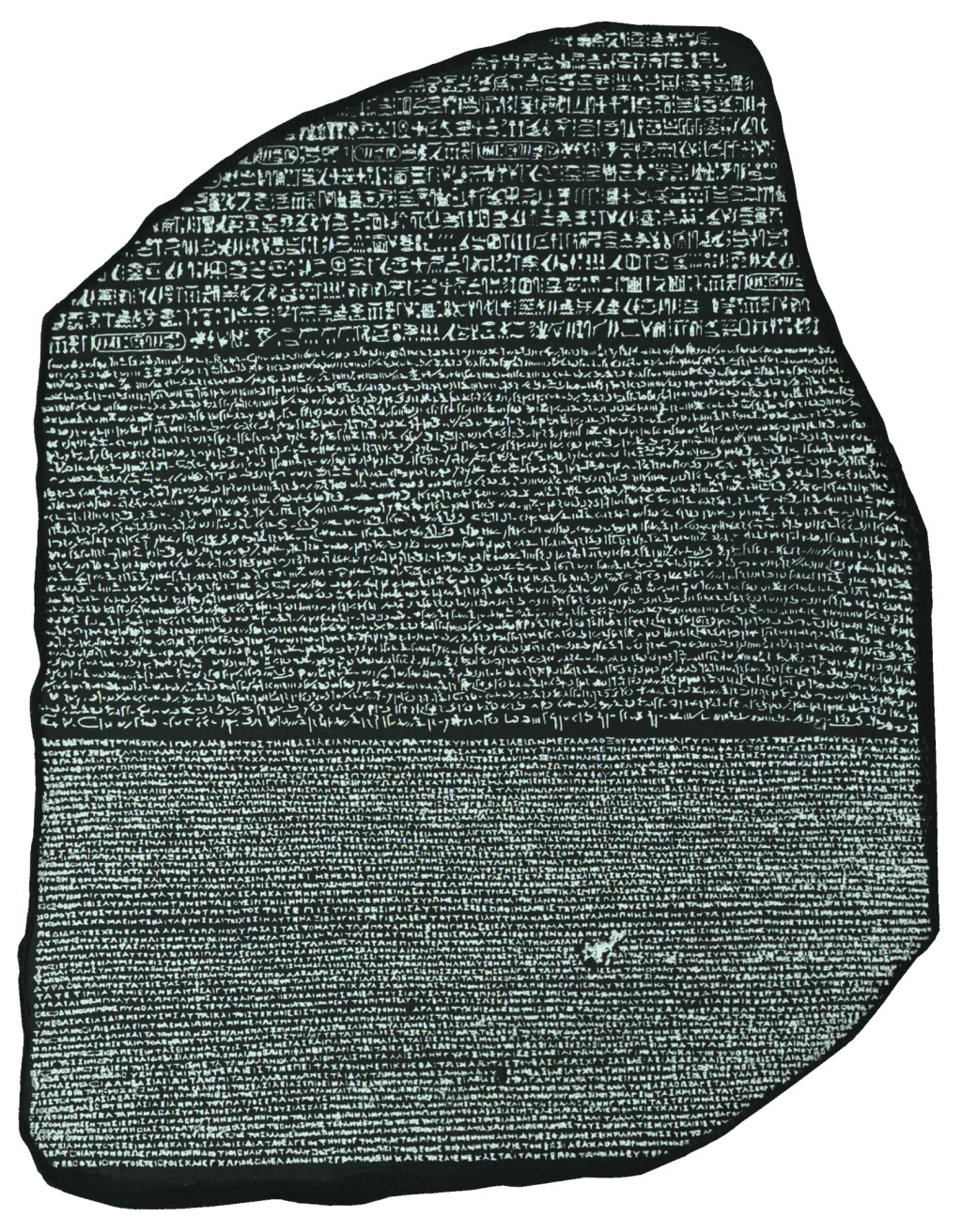
The most famous stone in the British Museum is a tax deal. You will almost certainly have heard of the Rosetta Stone. You may well have seen it sitting proudly in its vitrine in Bloomsbury. You probably know why it matters: scholars could read the Ancient Greek at the bottom, and once they realised the Demotic and hieroglyphic texts above it carried the same decree, they had a way back into hieroglyphs. What you probably don’t know, however, is what it says. It is a tax “return” – not one the priests filed, but one the state made to them. Specifically, it is a decree from 196 BC, under Ptolemy V, and much of its content concerns tax remissions and privileges for the temple priesthood. It was issued while the Ptolemies were fighting the Great Theban Revolt and needed the temples on side. A bribe of sorts, from the state to a landholding institution, giving up tax revenue to secure loyalty in the face of a threat to its legitimacy. Egypt by this time, through its many dynasties, had been going for nearly three thousand years, and had seen off multiple internal and external threats. But in the end, as we shall see with empire after empire, it was the precarity of its finances, and how much it had already given away, that set the terms of how its story ended. None of this was set in stone, but it is a pattern we will meet again and again.
School history explains the fall of empires from the outside in. Lessons start, and often finish, with external threat and internal decay: barbarian invasion, moral decadence, emperors gone bad or mad. All of that happened. But underneath it sits another pattern, rooted in political economy, and that is the one we follow here. Not the only explanation, and never identical from one empire to the next, but common enough across three thousand years to be traced from the Nile to the Rhine.
The same forces that build an empire also take it apart. Empires are made by pressure and invention on one side, structure and opportunity on the other, each working through land, money, labour and institutions. Run that framework in reverse and it explains decline as well as formation.
States need armies, and armies need paying, in money or in land. Paying in money means extraction: tax collected and spent by the centre. Paying in land means handing over the source of the tax itself. Either way, with extraction comes opportunity for accumulation, by institutions beyond the state.
The test comes when pressure arrives. When an invasion or a revolt threatens to overwhelm the state, the question is whether the fiscal base underneath its power is robust enough to absorb the shock. If not, collapse, or more often absorption by a rival, turns empire into history.
The sharpest statement of the pattern came from inside it. In 1377 the North African scholar Ibn Khaldun put the tax dynamic succinctly: early dynasties raise large revenue from small assessments, late ones small revenue from large assessments.
Tax and rent
Ibn Khaldun watched the cycle from inside the courts that lived it. Born in Tunis in 1332, he spent his working life as a secretary, envoy and judge to a succession of North African and Andalusian dynasties, several of which rose and fell around him. In 1377 he withdrew to a castle in what is now Algeria and wrote the Muqaddimah, the introduction to a universal history, which sets out how dynasties age. A new dynasty, in his account, is lean: its rulers ask little, farmers and merchants prosper, and modest rates bring in a great deal. As the dynasty settles into its palaces, the court and the army grow more expensive, rates climb to pay for them, enterprise withers under the weight, and the yield falls. Late in life, in 1401, he was lowered over the walls of besieged Damascus to meet Timur, and talked history with the conqueror while the city waited. The theorist of tired dynasties found himself bargaining with the most formidable outside pressure of his age. Six centuries later Ronald Reagan cited him in support of tax cuts, which shows how far a good observation can travel, and how selectively.
What Ibn Khaldun saw as a symptom, Chris Wickham names as a structure. Wickham, emeritus Chichele Professor of Medieval History at Oxford, has spent a career arguing that the way to understand pre-modern power is to follow the money: who took the surplus that peasants produced, and how. His answer turns on a distinction he first set out in 1984 and has built on since. In a tax state, the centre takes a share of the harvest through its own officials and spends it on a salaried army and administration; power concentrates because revenue does. In a rent state, the surplus goes straight to landholders as rent, the army is made up of those landholders and their followers, and the ruler is rich only in the lands he holds himself.
Tax states are stronger, but they are expensive to keep. A ruler who pays his soldiers in coin can move them, dismiss them and replace them. One who pays them in land has made them permanent partners, and every grant reduces what the centre can collect the following year. For Wickham, the decisive shift in western Europe came when the Roman tax system broke down in the fifth and sixth centuries and its successor kingdoms paid their armies in land rather than tax. Soldiers became landowners, and the state’s grip loosened with every estate it granted.
We borrow the distinction, and believe it can be applied elsewhere. Wickham built it to explain the transition from late Rome to early medieval Europe, and later tested it himself against China and the Islamic world. Using it for Pharaonic Egypt, Persia or the Mongol court in China is our choice, not his argument. The reason it seems to fit is that the constraint behind it was common to all of them: every pre-industrial empire drew almost all its wealth from farmland, and the question was who collected it. It does not fit every case in the same way. Egypt adds a third party, the temples, which grew rich from both sides of the deal. Persia and Mongol China lean towards money. And the Holy Roman Empire starts at the rent end, with no tax base to lose.
Land and money are two halves of one loop. When grants of land harden into hereditary holdings, the tax base shrinks. A state short of revenue reaches for the one source it still controls outright, the coinage, and debases or over-issues it: a tax levied on everyone holding coin. Debased money pushes anyone with wealth out of coin and into land, which strengthens the landholders and shrinks the tax base further. Each fix feeds the problem. The rest of the story follows that loop around, starting on the Nile, where the state measured its harvest with a ruler set in the river.
Egypt
Egypt was a tax state from the start, built on a measuring scale in the river. Every summer the Nile flooded, and the height of the flood decided the harvest. Along the river the state cut Nilometers, stairways or shafts marked in cubits, and read the year’s prospects off them: too low and the fields went dry, too high and the villages drowned, in between and there was a surplus to assess. The reading set the tax. Scribes surveyed the fields, counted the cattle and took the state’s share in grain, which fed the officials, the priests and the work gangs who built the monuments. Few states have ever had a tax base so visible, or so easy to measure.
The first leak came from the dead. Old Kingdom pharaohs, the builders of the Giza pyramids in the third millennium BC, endowed their own funerary cults with land in perpetuity, so that priests could make offerings to them for ever. Each reign added another estate the treasury could not touch. A run of royal decrees from the later Old Kingdom goes further, exempting temples and pyramid towns from taxes and labour service, carved in stone for the beneficiaries to display: the Rosetta Stone’s ancestors, two thousand years before it. At the same time, the provincial governors made their offices hereditary and began to be buried at home rather than beside the king. You can watch power decentralise in where officials chose to lie. When the Nile floods failed around 2200 BC, during a drought that climate historians link to a wider shift in the region’s weather, the centre had too little left to carry the country through. The Old Kingdom broke up into rival provinces for more than a century.
One king tried to take the wealth back, and the next one returned it. By the New Kingdom, Egypt’s imperial age in the second half of the second millennium BC, the great beneficiary was the temple of Amun at Thebes, enriched with land, cattle and the spoils of every campaign into Nubia and the Levant. Akhenaten, around 1350 BC, starved the old temples, closing some, and redirected much of their revenue to the worship of a single sun disc and to his new capital. Whatever else that revolution was, it was a fiscal one. It did not outlast him. Tutankhamun, the boy king the world knows for his gold mask, left a different monument: the Restoration Stela, now in the new Grand Egyptian Museum at Giza, a decree describing the temples in ruin and returning their estates and priesthoods. His best-known official act was a restitution to the priests.
The same reign that endowed the temples could not pay its own workers. The Great Harris Papyrus, around forty metres long and now in the British Museum, lists the gifts of Ramesses III to the gods: fields, herds, towns and tens of thousands of workers. On estimates ranging from about a seventh to a third, the temples by then held a large share of Egypt’s cultivable land, most of it Amun’s. In the twenty-ninth year of the same reign, around 1157 BC, the men cutting the royal tombs at Deir el-Medina downed tools because their grain rations had not arrived, and sat outside the mortuary temples until they were paid. It is the first strike on record. The state was giving away the land that produced the grain, and then running short of grain.
In the end, the generals took the temple’s wealth, and with it the south. By the reign of Ramesses XI, the last of the Ramesside kings, around 1080 BC, the office of high priest of Amun at Thebes was held by army commanders such as Herihor, who governed Upper Egypt in their own right while the pharaohs held the north from the Delta. Historians still argue over how much of this was priestly ambition and how much military seizure, but the outcome is not in dispute: whoever controlled Amun’s estates controlled the south. The army that needed paying had taken over the land that could pay it. The endowments that the crown had built up as an instrument of royal power had become the base of a rival one. Egypt spent the next several centuries divided and frequently ruled by outsiders, Libyans, Nubians, Assyrians and Persians among them.
The Ptolemies rebuilt the tax state, then repeated the leak at speed. After Alexander’s conquest in 332 BC, his general Ptolemy and his heirs ran Egypt as a Greek-speaking monarchy from Alexandria, with the most thorough tax administration the ancient world produced: crop forecasts, state monopolies on oil and other staples, tax farmers bidding for collection contracts, all recorded on papyri that survive in their thousands. To pay their army they settled Greek and Macedonian soldiers on plots of land, and within a few generations those plots had become family property. Their coinage slid too: by the end of the third century BC prices in bronze had risen many times over. Then came the revolts. Climate historians have linked failures of the Nile flood after volcanic eruptions to the outbreak of unrest, and the Great Theban Revolt took twenty years to put down. The Rosetta Stone dates from the middle of it, a dynasty paying the temples in tax concessions to keep them loyal.
Rome did not destroy Egypt’s fiscal machine; it took it over. When Octavian annexed Egypt in 30 BC, after the deaths of Antony and Cleopatra, he made it a province under his personal control, closed to senators without his permission. The Nile’s grain tax kept running, now shipped to Rome to feed the city’s population. The world’s oldest tax state ended as the granary of the next one. Rome would discover the same loop for itself.
Rome
Rome’s expansion paid for itself, so well that its citizens stopped paying direct tax. The Republic’s wars brought home plunder, slaves and tribute on a scale no state had seen. After the defeat of Macedon in 167 BC the booty was so large that the direct tax on Roman citizens was suspended, and apart from emergency levies in the civil wars, Italy did not pay it again for centuries. The provinces paid; Italy did not. This was the conquest dividend, and the whole system assumed it would keep coming.
The late Republic paid its armies in land, and the land payments tore it apart. Soldiers who had served a general for years expected a farm at the end of it, and only the general could deliver one. Sulla settled his veterans on confiscated Italian land; Caesar and then Octavian did the same. In 41 BC the land of whole Italian towns was handed to discharged legionaries, and tradition holds that Virgil’s family farm near Mantua went with them, an eviction his Eclogues turn into poetry. An army paid in land belonged to whoever could get it the land, and a century of civil war followed from that.
Augustus turned Rome into a tax state to take the army out of politics. Having won the last of the civil wars, he created a standing professional army of around 300,000 men and, in AD 6, a military treasury to pay its veterans pensions in cash rather than plots. To fund it he imposed new taxes on Roman citizens themselves: five per cent on inheritances, one per cent on auction sales. Soldiers now looked to the state for their money, not to their general for their land. On most estimates the army absorbed well over half of everything the empire spent.
When the frontier stopped moving, the dividend stopped coming. Augustus advised his successors to keep the empire within its existing limits. Hadrian gave up Trajan’s recent conquests in Mesopotamia on his accession in 117, and in the 120s built a wall across northern Britain. Hadrian’s Wall is usually read as defence; it also marks the point where expansion no longer paid. From then on, an army that had once been fed by new provinces had to be paid entirely out of taxes on existing ones.
When taxes fell short, the emperors turned to the coinage. The silver content of the denarius had been nudged down since Nero. In 211 the emperor Septimius Severus died at York, telling his sons, according to the historian Cassius Dio, to enrich the soldiers and scorn everyone else. His son Caracalla raised army pay and introduced a new coin, the antoninianus, to meet it. Over the next sixty years, as rival emperors fought for the throne with armies that each needed paying, its silver content fell to a few per cent: bronze with a silver wash. Prices held for a surprisingly long time, then rose sharply from the 270s, and the state increasingly paid and taxed in kind, in grain, oil and clothing, because its own money was no longer trusted.
Diocletian tried to fix prices by law and peasants to the land. Restoring order at the end of the third century, he rebuilt the tax system on a census of land and heads, collected largely in kind. In 301 he issued an Edict on Maximum Prices, setting ceilings for over a thousand goods and services on pain of death; fragments survive carved in stone across the eastern provinces. According to the Christian writer Lactantius, goods vanished from the markets and the edict was quietly abandoned. To keep the land producing tax, his successors bound tenant farmers, the coloni, to the estates they worked, on paper at least: a law of 332 allowed runaways to be returned in chains, though how far such laws were enforced is still argued over. Diocletian himself abdicated in 305 and retired to his palace at Split. Asked to return to power, he is said to have replied that if they could see the cabbages he had grown, they would not ask.
Constantine stabilised the money, but only at the top. His gold coin, the solidus, introduced around 309, held its weight and purity for centuries. Taxes were increasingly assessed in gold, officials and soldiers paid in it, and the rich held it. Ordinary transactions ran on bronze, which kept inflating. Sound money for the state and the landowners, unsound money for everyone else: the fix redistributed the cost of the crisis downward.
Meanwhile, the western landowners grew richer than the state that taxed them. The great senatorial families of the West held estates scattered across whole provinces. Around 400, the heiress Melania the Younger and her husband owned land in Italy, Sicily, Africa, Spain and Britain, and a contemporary historian put the annual income of the richest Roman houses at thousands of pounds of gold. These were the families best placed to avoid the tax collector, through exemptions, delay and influence at court, and to shelter peasants on their estates from the state’s demands in return for their dependence. Imperial laws against this kind of patronage were issued repeatedly, which tells you how well they worked.
The money trail in Britain ends in a field in Suffolk. In 1992 a man searching for a lost hammer near Hoxne found a hoard of more than fifteen thousand late Roman coins, gold and silver, now in the British Museum. The latest coins date from around 408, just as Rome stopped sending men or money to Britain. Many of the silver coins had been clipped at the edges, their metal shaved off to make more coin once the official supply dried up. The hoard is wealth leaving circulation, buried by someone who expected to come back for it and never did.
Pressure arrived, and took the provinces that paid. Gothic armies entered the empire from 376 and destroyed an eastern army at Adrianople in 378; in 406 Vandals, Alans and Sueves crossed the Rhine. Unable to defeat them, the western government settled several of these groups inside the empire as allies, paying them in land or in shares of the local tax revenue. In 439 the Vandals took Carthage and the provinces of North Africa, the West’s richest source of tax and grain. After that, the western state could not pay a Roman army large enough to replace the allies it depended on.
The fall of Rome, when it came, was a dispute over land for soldiers. According to the Byzantine historian Procopius, writing about seventy years later, the federate troops in Italy in 476 demanded a third of Italy’s land for themselves. Orestes, who ruled in the name of his young son, the emperor Romulus Augustulus, refused. Their commander, Odoacer, promised it to them, deposed the boy, sent the imperial regalia to Constantinople and ruled Italy as a king. The date every schoolchild learns as the end of the Roman Empire marks the moment an army that needed paying took its pay in land. The eastern half of the empire, with its tax base intact, went on for another thousand years.
The pattern elsewhere
Persia ran its empire on fixed tribute and paperwork. The Achaemenid Persian empire, which at its height around 500 BC stretched from the Aegean to the Indus and was larger than Rome would ever be, was organised by Darius I into provinces, each owing a fixed annual tribute. Herodotus lists them, mostly in talents of silver, with India paying in gold dust. The administration’s own records survive: tens of thousands of clay tablets from Persepolis recording rations of grain, beer and wine paid to workers, officials and travellers. Excavated in the 1930s and lent to the University of Chicago, those tablets were nearly seized in an American court case as compensation in a lawsuit against modern Iran, until the Supreme Court ruled in 2018 that they could not be. Two and a half thousand years on, a ration archive was still being treated as a pledge for debt.
Persian land-for-service turned into a cash debt, and a firm of middlemen took the margin. In Babylonia the Persians settled soldiers on “bow land”, “horse land” and “chariot land”, plots held in return for military service. By the late fifth century BC many of those holders no longer served or farmed in person. The archive of the Murašû family of Nippur shows the firm leasing the plots, paying the holders’ dues to the state in silver and lending to the holders against their land. A system designed to produce soldiers was producing rent and interest for a financial house.
The Persian money problem was the opposite of debasement: the state hoarded it. Tribute flowed to the royal treasuries and much of it stayed there. When Alexander took Susa and Persepolis in 331–330 BC, ancient writers put the bullion he seized at around 180,000 talents. He spent it on his armies, and it went on to fund the wars of his successors. Some historians have argued that this long withdrawal of silver squeezed the Babylonian economy; others think the evidence is too thin to say. Either way, the Persian empire did not collapse from within. It was conquered, in a few years, by a smaller power that was willing to spend.
The Abbasid caliphs inherited a working tax state and paid their army in cash. The Abbasids, who took power in 750, ruled from Baghdad after its founding in 762, and presided over the golden age most readers know from the Arabian Nights, took over tax systems built by the Persians and Byzantines before them. The irrigated farmland of southern Iraq paid a land tax that funded a salaried army, recorded in registers of who was owed what. For a century it was among the richest states on earth.
Samarra is a city built to house the army’s pay bill. From the 830s the caliphs recruited a new army of Turkish slave soldiers, loyal to them personally and expensive to keep. In 836 the caliph al-Mu’tasim moved his court and these troops to a new capital at Samarra, up the Tigris, which grew within a few decades into one of the largest cities of the medieval world; its spiral minaret still stands among the ruins. In 861 the soldiers murdered the caliph al-Mutawakkil, and in the following nine years they made and unmade four caliphs. The army that needed paying had found out who held the purse.
When the land tax fell short, the caliphs paid soldiers with the right to collect it. Revenue from southern Iraq declined through the ninth and tenth centuries, through war, neglect of the irrigation system and a fourteen-year revolt of enslaved labourers, the Zanj, in the marshes. Provinces drifted into the hands of their governors. To pay troops when the treasury could not, rulers increasingly granted iqta’: the right to collect the tax of a district directly, in place of salary. Contemporaries complained that the holders, with no stake beyond their own tenure, ran the land down. Here the move from tax to something close to rent happened in the open, as policy.
The caliph kept his title long after he had lost his revenue. In 945 the Buyids, a military dynasty from northern Iran, took Baghdad. The Abbasid caliph stayed, as a religious figurehead who legitimised whoever actually held power and taxed the land, until the Mongols sacked the city in 1258. For three centuries the institution survived its fiscal base.
The Mongol dynasty in China was the first state to make paper money its main currency. The Yuan dynasty, founded by Kublai Khan, Genghis Khan’s grandson, ruled China and Mongolia from 1271. Paper money was a Chinese invention, but Kublai made it the main currency of the empire from 1260. Marco Polo, who claimed to have served at his court, was astonished: the Khan had his notes made from the bark of mulberry trees and stamped with his seal, and Polo thought it the perfect alchemy, since it turned paper into gold at will. Readers who know Kublai only from Coleridge’s “stately pleasure-dome” are seeing the court that money paid for.
The Yuan paid for its pleasure-domes with paper, and gave away land as well. Mongol princes and nobles received appanages, revenue grants from districts and households, and Buddhist monasteries were granted large tax-exempt estates, an echo of Egypt’s temples two thousand years earlier. As revenue fell short, later Yuan emperors printed more notes. By the 1350s the paper was close to worthless.
The labour the state could no longer pay for became the rebellion that ended it. In 1344 the Yellow River broke its banks and changed course, flooding the plains of the north. In 1351 the minister Jia Lu conscripted around 150,000 labourers and 20,000 soldiers to rebuild the dykes, paid in increasingly worthless paper. According to the story, rebels had buried a one-eyed stone figure on the route, inscribed with a prophecy that when it was dug up the empire would rise against its rulers. The workers dug it up. The Red Turban rebellion began that year, and in 1368 one of its leaders founded the Ming dynasty and drove the Mongols back to the steppe.
Three cases, three fits of different tightness. The Abbasids fit closely: a tax state whose army turned tax into something like rent, in the open, until a military dynasty took the revenue and left the caliph the title. The Yuan fit on the money side, and partly on the land. Persia fits least: its land-for-service did turn into debt and rent, but the empire fell to outside conquest while its treasuries were full. The pattern is common, not universal, and Persia shows its limit.
Pressure calls in the bill
Pressure does not cause the fall; it presents the bill. Every empire in this story met shocks from outside: drought and failed floods on the Nile, volcanic winters, plague, nomad armies, rival states. Egypt’s Old Kingdom broke up in a drought; Ramesses III fought off the Sea Peoples in the same troubled decades that brought down most of the Bronze Age Mediterranean; Rome lost perhaps a tenth of its population to the Antonine plague in the 160s; the Yellow River’s change of course preceded the Red Turbans. Climate historians such as Kyle Harper for Rome and Joseph Manning for Ptolemaic Egypt have made the case that these shocks mattered more than older accounts allowed.
The same shock does different damage to different fiscal bases. Rome absorbed the Antonine plague and went on for three centuries; it did not absorb the loss of Africa. The eastern empire survived plague, the loss of its richest provinces and centuries of war on two fronts. What decided the outcome was less the size of the blow than what the state had left to meet it with: whether it could still collect, still pay an army, and still command loyalty from those who held the land. Labour and institutions run through all of this, in the soldiers who needed paying and the temples, landlords and generals who took the revenue, but the bill always came back to land and money.
Two cases at the edges
The eastern empire survived because it kept collecting. Byzantium, the Greek-speaking eastern half of the Roman Empire ruled from Constantinople, kept the Roman land tax and kept paying its officials and soldiers in gold. Constantine’s solidus held its weight for some seven hundred years; the historian Robert Lopez called it the dollar of the Middle Ages, trusted from the Atlantic to India. When the Arab conquests of the 630s and 640s took Egypt and Syria, its richest provinces, Byzantium shrank, reorganised and went on. It did mix in land: soldiers in the frontier provinces held military lands in return for service. But the state kept its tax machinery alongside them, and kept them owing service to the state rather than to a lord.
When the land and the money leaked, Byzantium followed the pattern. From the tenth century the great landowning families, the dynatoi or “powerful”, bought up the holdings of peasants and soldiers. Emperors legislated against them repeatedly, Basil II most fiercely, making the rich liable for the unpaid taxes of their poorer neighbours. Basil died in 1025 with a treasury reportedly overflowing. From the 1030s his successors began debasing the coin; by the 1080s the old solidus was close to worthless. Rulers increasingly paid aristocrats with grants of tax revenue from particular districts, the pronoia. In 1082 (some historians argue 1092) the emperor granted Venice freedom from customs duties across most of the empire in return for naval help against the Normans. In 1204 a crusading army transported and directed by Venice sacked Constantinople. The longest-lived tax state in this story had given away its customs revenue to the city that led the sack.
The Holy Roman Empire was a rent state from the start, and so had nothing to collapse. From Charlemagne’s coronation in 800, and in its German form from 962, the empire never had a regular imperial tax of any weight. The emperor, elected by the great princes, was rich only in the lands of his own dynasty, exactly as Wickham describes the ruler of a rent state. The Golden Bull of 1356 fixed the seven electors and confirmed their rights to mines, mints and tolls: the emperor signing revenue away, in writing, to the men who chose him. An attempt at a general imperial tax, the Common Penny of 1495, largely failed. Voltaire’s joke that it was neither holy, nor Roman, nor an empire is usually taken as a verdict on its pretensions. It also describes its fiscal base. Historians such as Peter Wilson argue it worked well enough as a framework of law and arbitration among its princes, and it lasted, in one form or another, for a thousand years, until Napoleon made the emperor dissolve it in 1806. A state that never collects cannot run out of tax base. It also cannot do very much.
Claims on the future
Tax state or rent state is a rough lens, but it explains a good deal. So, with variations and some qualifications, we think the taxonomy of tax and rent states offers a way of explaining how empires are built and, partially, how they decline: when contradictions emerge, as the land available to grant can no longer meet the demand for it, or as debased money drives wealth into land and shrinks the tax base.
In the early modern period the mechanism shifted: empires found creditors. Portugal, Spain, the Dutch Republic and England did not find more land or smarter debasement to pay for the Age of Exploration. They found creditors. Public and then private banks, joint-stock companies and bond markets allowed states, and those allied to them, to pay for armies and raise the capital to build empire by borrowing against future tax revenue. The old loop of land leakage and coin debasement was broken.
But fictitious capital set up a new contradiction. Claims on future revenue began to circulate as if they were present wealth, and the debt could grow faster than the tax base that, in theory, stood behind it. Spain found this out first. It received the largest flow of silver in early modern history and still defaulted on its debts again and again, because the silver was promised to its bankers before it landed. In various ways the same contradiction presaged the decline of each of these empires. For three centuries, economic growth was enough to bridge the gap, through the Industrial Revolution and into the era of modern empire.
That may no longer hold. Today the largest tax state and richest empire in history uses its privileged money to sell ever more claims on a future tax base that is not rising fast enough to pay them. Its chief rival, the second richest, bought those claims for years. Now it is letting them run down, and hoarding gold.
A final note: tax is not abstract. It comes from people. Specifically from labour, peasants then, workers now, directly or indirectly through capital. As shown by the stoneworkers at Deir el-Medina. Remember that.
The cast
| Empire | Dates and reach | The textbook version | What the textbook leaves out |
|---|---|---|---|
| Egypt (Pharaonic) | c. 3100–332 BC; the Nile valley and delta, at its height from Nubia to Syria | Pharaohs, pyramids and gods: a civilisation that built for eternity and lasted three thousand years | A tax state measured by the Nile flood, whose land drained into funerary cults and temples until the generals who held Amun’s estates held the south |
| Ptolemaic Egypt | 332–30 BC; Egypt, ruled from Alexandria | Alexander’s successors and Cleopatra: Greek culture on the Nile | The ancient world’s most thorough tax administration, undone by soldiers’ land grants, a sliding bronze coinage and revolts bought off with temple concessions; Rome took over the machine intact |
| Achaemenid Persia | c. 550–330 BC; from the Aegean to the Indus | Cyrus, Darius and Xerxes: the great king defeated by the Greeks, then by Alexander | Fixed tribute and ration paperwork; soldiers’ land turned into debt and rent for a Babylonian finance house; treasuries hoarded rather than spent, and conquered while full. The case that fits least |
| Rome (West) | c. 27 BC–AD 476; from Britain to Mesopotamia | Emperors, legions and roads, overrun by barbarians after centuries of decadence | Expansion that paid until it stopped; a tax state built to keep the army out of politics; debased silver, estates that outgrew the state, Africa lost in 439, and a fall that was a demand for land for soldiers |
| Byzantium | 330–1453; the eastern Mediterranean, ruled from Constantinople | Rome’s long, gilded, scheming afterlife, ended by the Ottoman conquest | The tax state that lasted because it kept collecting, with a gold coin trusted for seven centuries; it declined once the powerful bought up the land, the coin was debased and the customs were given to Venice |
| Abbasid Caliphate | 750–1258, in real power until 945; Iraq, Iran and beyond, ruled from Baghdad | Harun al-Rashid, the Arabian Nights and the golden age of Islamic science | A salaried army that outgrew its pay, a capital built to house it, tax rights handed to soldiers as iqta’, and a caliph who kept his title for three centuries after losing his revenue |
| Yuan dynasty | 1271–1368; China and Mongolia | Kublai Khan, Marco Polo and the Mongols ruling China | The first state to make paper money its main currency; over-issue, tax-exempt monastery estates and unpaid conscript labour on the Yellow River dykes lit the rebellion that ended it |
| Holy Roman Empire | 800 or 962–1806; Germany and central Europe, at times northern Italy | Neither holy, nor Roman, nor an empire: a patchwork of princes | A rent state from the start, with no regular imperial tax of any weight; it never collapsed because it never had a tax base to lose, and it could never do very much |
Methodology note: this piece was written collaboratively between a human and an AI — the human providing the instincts, provocations, editorial judgement and voice; the AI providing research synthesis, intellectual scaffolding and drafting. Full method at [athomehefeelslikeatourist.blog].


Leave a Reply