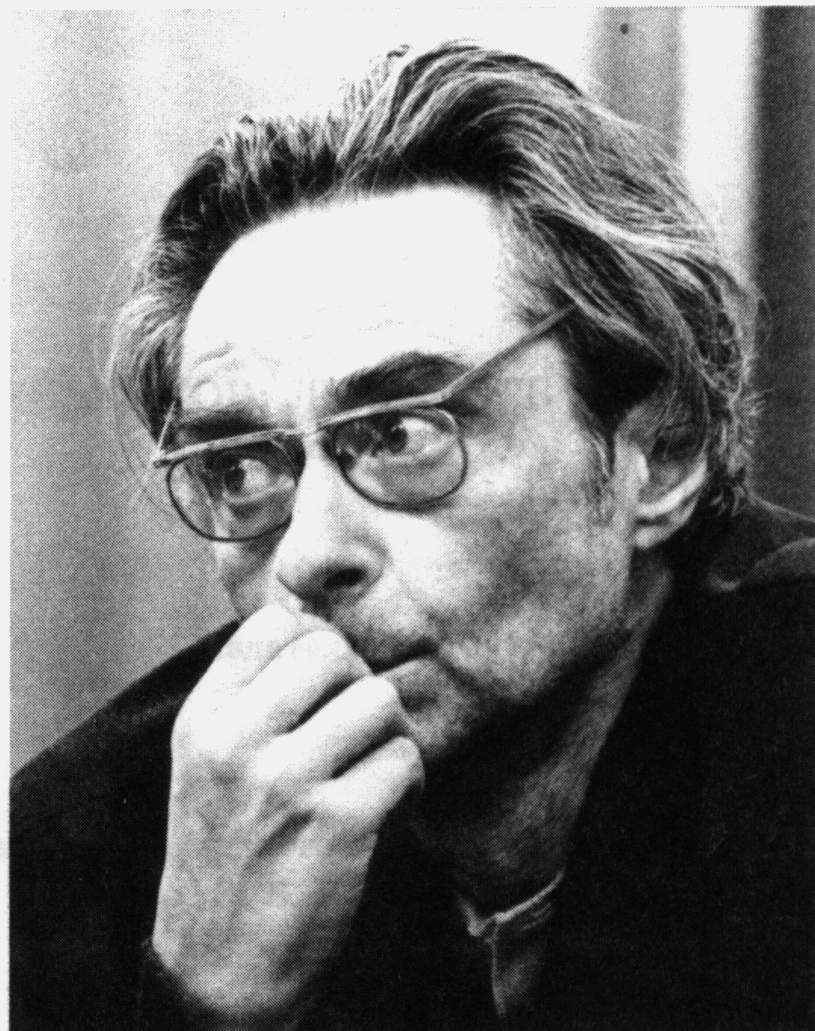
Evald Ilyenkov, and Why Understanding Was Never Going to Be Enough
Evald Ilyenkov. You won’t have heard of him. You should have.
Inside the System
There is a particular kind of intellectual courage that only becomes visible in retrospect, once you know the conditions under which it was exercised. Evald Ilyenkov was a Soviet philosopher working in Moscow in the 1960s and 1970s, inside an institution — the Marx-Lenin Institute — whose official purpose was the maintenance and propagation of Marxist-Leninist orthodoxy. The Soviet Union had taken the revolutionary tradition, hardened it into doctrine, and made that doctrine the property of the state. Contradiction, which Karl Marx had understood as the engine of history and Georg Wilhelm Friedrich Hegel before him as the engine of thought itself, had been administratively abolished. The correct answers were known. The task of philosophy was to confirm them.
Ilyenkov spent his career doing something different. He went back to Marx — not the Marx of the official catechism but the Marx of the early manuscripts, the Theses on Feuerbach, the dense analytical machinery of Capital — and found there a philosophical tradition that the Soviet system had claimed to represent and had in fact buried. He wrote carefully, within the constraints of what could be published, but the implications of what he wrote were not careful at all. He was, in effect, arguing that the intellectual culture of the Soviet Union was a betrayal of the very tradition it claimed to embody. He did this from the inside, without the protection of a Western academic post or a dissident’s visibility, until his death by suicide in 1979. He was fifty-five.
We begin there not because the biography is incidental colour, but because it is the argument. A man who insisted, philosophically and at personal cost, that genuine thinking requires the capacity to hold contradictions open — and who did so inside a system that had closed them by decree — is not simply an interesting historical case. He is a demonstration of what is at stake when thought loses its friction with reality and becomes a closed loop of self-confirming categories. That pathology did not die with the Soviet Union. It has a successor much closer to home: any system, including our own, confident enough in its own correctness to stop asking whether it might be wrong.
The Problem of Impossible Scale
But we are getting ahead of ourselves. Before the argument, a problem — one that will be familiar to anyone who has spent time reading political economy.
The problem is scale. Not the scale of the crisis — that is depressingly easy to grasp — but the scale of the explanation. You begin with Marx’s analysis of how capitalism produces value and alienation simultaneously. You add David Harvey’s account of how capital resolves its contradictions by moving through space and time, leaving devastated communities and financialised landscapes in its wake. You layer in Herbert Marcuse’s argument that advanced industrial society has colonised not just labour but desire, so that the very wishes you experience as most authentically your own are partly the product of the system that profits from their satisfaction. And then Fredric Jameson arrives to suggest that even your attempts to imagine an alternative are shaped by the cultural logic of what you are trying to escape.
All of this is, in its essentials, true. And it produces a very specific kind of paralysis — not the paralysis of ignorance but the paralysis of comprehension. You understand the system well enough to see why the obvious responses are insufficient, without yet being able to see what sufficient would look like. The analysis that was supposed to be the precondition for action becomes, at a certain point of elaboration, its substitute. You think more carefully about the totality. The totality remains.
This is the wall that serious political thinking keeps hitting. It is the wall that produces, on one side, the retreat into gesture — the petition, the march that changes nothing, the righteous Twitter thread — and on the other side, the retreat into personal virtue, as if composting and ethical consumption were adequate responses to a system operating at civilisational scale. Neither is satisfying because neither is serious. Both are forms of the same evasion: the system is too large to confront, so we perform our relationship to it instead.
Ilyenkov does not dissolve this problem. No single thinker does. But he offers something useful: a different account of the relationship between thinking and acting, one that resequences the problem in ways that open up space the standard framework closes down.
A History of the Ideal
Every age has had some picture of what a human being is for — not simply what people happen to want, but what they ought to become, given everything they are capable of becoming. Ilyenkov’s own name for this — the central concept in everything that follows, the one that bears the most weight and requires the most careful handling — is the ideal. Not ideal in the sense of perfect or aspirational, but ideal in the philosophical sense: the realm of concepts, meanings, values, the framework through which a person makes sense of the world.
But before he can say where that framework actually comes from — where the ideal lives, and how it can be both a product of a given age and a force capable of changing it — Ilyenkov has to clear away four centuries of wrong answers, and the clearing is where the argument gets its teeth. Every account before Marx treats the ideal as either pure fantasy or pure truth — something people simply made up, or something they simply discovered. Ilyenkov’s alternative starts earlier than his own century, and it starts, uncomfortably, with the ideal that looks most obviously invented: the suffering Christ.
Medieval Christendom’s highest image of a human being was a man broken on a cross, and Ilyenkov’s first move is to refuse the easy reading of that fact. The obedient monk, the ascetic, the flesh humiliated in preparation for a reward that arrives only after death — not, on his account, a delusion imposed on a credulous population by a cynical church, but a real reflection of a real condition. Feudal life was hardship, insecurity, and exploitation with no earthly exit in sight. A suffering god was not a lie told to suffering people. It was the only ideal that could have made sense to them, because it was the only one that matched what their lives actually were.
Ludwig Feuerbach is the thinker who first says this plainly, and Ilyenkov needs him for it before he can move past him. Religion, Feuerbach argues, is human self-alienation — humanity projecting its own best qualities outward into a heavenly double, then bowing down to the projection. The sky-god was never separate from the people who imagined him, only estranged from them. Marx’s objection is that Feuerbach stops one step short of the real question. He can show that the secular world produces its religious double. He cannot say why the secular world needs to produce one — why it splits off a piece of itself and sets it up in the clouds as something independent. Feuerbach diagnoses the projection. He never asks what kind of world requires projecting.
The Renaissance answers a question nobody had thought to ask, because for a thousand years the answer had been assumed. What if the ideal isn’t waiting in heaven at all? Materialist thinkers of the age looked past the crucifix to a different inheritance — the Parthenon, Apollo, human proportion as its own justification — and concluded that nature itself, not revelation, was the only legitimate authority. The full-blooded expression of an actual human life, doing what it is naturally capable of and enjoying the fruits of it, became the new ideal, and it stayed the Enlightenment’s ideal too: Denis Diderot, Claude Adrien Helvétius, Paul-Henri Thiry d’Holbach turning “study nature” into a political programme, and liberty, equality and fraternity into what a natural human life was owed as a matter of right.
The French Revolution looks, for one exhilarating moment, like proof that an ideal can simply seize reality by force. Liberty, equality, fraternity toppled a monarchy, an aristocracy, and a church in the space of a few years, and Enlightenment materialism appeared to have done what centuries of theology never could: made its ideal walk. What actually happened next answers a harder question than “can ideals win.” Terror followed, then dictatorship, then Napoleon, and once the dust settled the beneficiaries were not the enlightened citizens the ideal had promised but a new ruling class of industrialists, financiers and speculators. Universal freedom did not fail to arrive. It arrived, and turned out to mean freedom for capital.
The utopian socialists diagnose exactly this betrayal and cannot do anything about it. Henri de Saint-Simon and Charles Fourier in France, Robert Owen in England, arriving independently at the same conclusion: if capitalism cannot deliver the Enlightenment’s own promises, the fault lies in social organisation, not in human nature and not in the ideal itself. Cooperation, communal ownership, rational planning — the proposal was coherent and the diagnosis was sound. Ilyenkov’s judgment on them is not that they were wrong but that they were early: they had the argument and no organised social force behind it, reason and morality standing in for the historical conditions that reason and morality alone cannot produce.
Immanuel Kant tries to rescue the ideal from history altogether, and very nearly succeeds at the wrong thing. Nature, he insists, can supply causes but never goals — biology cannot hand you a moral law. Freedom is self-legislation: a person acting from a principle they could will as universal, not from impulse or appetite. This is where dignity gets its sharpest statement in the whole sequence — treat a human being always as an end, never merely as a means. And it is also, in Ilyenkov’s reading, where it goes wrong. Kant’s “categorical imperative” reconciles the Rights of Man with the Sermon on the Mount, Maximilien Robespierre with Christ, by turning a demand that had just overthrown a monarchy into a private matter of individual conscience. A citizen storming the Bastille wanted liberty delivered in the world, now, by collective force. Kant’s version asks only that each person will the right maxim inside their own head. The content survives; the politics does not. Dignity becomes something everyone already has the equipment to achieve alone, at any moment, regardless of who governs them or how — which makes it safe to hold, and correspondingly useless as a lever for changing anything.
Hegel puts the ideal back into history, and that is his real advance over Kant. Where Kant treats contradiction as a failure of reasoning to be resolved, Hegel treats it as the engine that moves history forward at all — thesis, antithesis, synthesis, each resolution producing a new and higher contradiction in turn. The ideal, on this account, is no longer a distant, unreachable state Kant’s good will can only gesture toward. It is the process of development itself, active inside reality rather than hovering above it. Ilyenkov credits this as genuine progress. He also names its limit precisely: the real subject of Hegel’s history is Spirit, or the zeitgeist, not any actual person. Human beings become, in Hegel’s own image, the clay a sculptor works and reworks toward his own self-portrait — necessary to the process, but never its author.
Four centuries in, the ideal has been shown to have real power and never once been properly explained. It reflected medieval suffering, it inspired a revolution, it corrupted into its own opposite, it organised a movement too early to succeed, it grounded a dignity too abstract to act, it entered history only to find a subject other than the human beings inside it. Ilyenkov’s own summary of where this leaves things is not despair. It is a genuinely open question, and one his own century was singularly unequipped to answer. That century had already lived through two world wars by the time Ilyenkov started asking it, and had settled, exhausted, into a standoff between two rival systems, each insisting it had finally organised the ideal correctly and each prepared to destroy the other over the claim.
The question itself was simple enough to state and had defeated everyone who had tried to answer it: how can something be simultaneously a product of the reality that shaped it and a force capable of transforming that same reality? Marx, he thought, had already answered it in 1845. Nobody had noticed.
The Answer
The official Marxism of the Soviet Union had made a particular philosophical error, and Ilyenkov spent his career identifying it. It had taken the materialist tradition — the tradition that insists ideas do not float free of the material conditions that produce them — and turned it into a kind of crude mechanism. Matter produces thought. The economic base determines the ideological superstructure. Consciousness reflects reality. This sounds Marxist and in a superficial sense is, but it misses something Marx himself had seen clearly in the Theses on Feuerbach, written in 1845 and not published in his lifetime.
The old materialism, Marx wrote, understood the world as object — as something to be contemplated, analysed, correctly understood. What it missed was the role of human activity, of practice, of the fact that human beings do not simply observe the world but continuously transform it, and are transformed in the process. Thought is not a mirror held up to reality. It is itself a form of activity, embedded in and shaped by the practical activity that surrounds it.
Ilyenkov took this insight seriously in a way the official tradition had not, and pushed it further than Marx’s own brief notebook entry ever spelled out.
Where does the ideal live? Not, Ilyenkov argued, in individual heads — that is the error of idealism, which turns social phenomena into private mental events. But not simply in material objects either. The ideal lives in activity — in the socially organised practices through which human beings transform the world and, in doing so, transform themselves. When you pick up a tool, you are not simply using an object. You are internalising a crystallised history of human social activity: the accumulated knowledge of how this kind of problem has been addressed, the social relations encoded in this kind of work, the entire human world that the object carries inside it. When you use a word, you are entering a practice that precedes you and will outlast you, shaped by the society that produced it and shaping, in turn, the thoughts you are able to think.
This matters because it means that ideology — the set of ideas through which a society reproduces itself and its power relations — does not primarily operate through deception. It operates through the instruments of your own thinking. The categories you use, the practices you participate in, the institutions you move through — these are not neutral. They carry inside them the social relations that produced them. You do not have to be tricked into capitalism. You think in it.
Acting Your Way to Different Thinking
Which sounds, once again, like the door closing. If the very instruments of thought carry the ideology of the system, how do you think your way out? The answer — and this is where Ilyenkov parts company with the more paralysing versions of the Frankfurt School — is that you do not, primarily, think your way out. You act your way to different thinking.
This is the move that the “too huge” problem requires and rarely gets. The standard progressive sequence runs: understand the system correctly, develop the right analysis and programme, then act in accordance with it. The reason this sequence produces paralysis is that the system is always more complex than the analysis, always generating new contradictions faster than the programme can accommodate them, always making correct understanding feel like a horizon that recedes as you approach it.
Ilyenkov’s sequence runs differently: act, reflect on what the action reveals, criticise what the reflection exposes, generate new ideas from that criticism, act differently. This is not anti-intellectual — it is a more rigorous account of where genuine intellectual work actually happens. Theory that is not in friction with practice becomes exactly what Soviet Marxism became: a closed system of self-confirming categories that mistakes its own coherence for truth.
The political implications are not small. They are not a counsel of modesty or a retreat from structural ambition. Let us be clear on this point, because the argument is often misread in exactly that direction. Ilyenkov’s epistemology does not suggest that local action is a substitute for structural change. The big bets remain necessary — the aggressive redistribution of wealth, the reclamation of the commons, the rewriting of the rules by which capital moves and accumulates. These require political power at the level of the state and, ultimately, at levels of international coordination that the current global settlement does not yet provide. No amount of local practice dissolves the jurisdictional arbitrage problem, the mobility of capital, or the political capture of the institutions that might constrain it.
What Ilyenkov’s argument does suggest is that the political conditions for structural change do not arrive ready-made. They are produced — through activity, through practice, through the slow and unglamorous work of building the cultural and institutional substrate without which structural change, even when it is won, does not hold. The great postwar settlement of 1945 was not only a policy programme. It was the expression of a society that had, through depression and war and collective survival, developed the practical solidarities and the shared conceptual frameworks that made such a programme politically possible and socially sustainable. You did not think your way to 1945. You lived your way there.
This is Antonio Gramsci’s war of position before the war of manoeuvre — the building of the cultural and political infrastructure through which decisive change becomes achievable and durable. It is Paulo Freire’s insistence that conscientisation does not precede practice but emerges from it. It is Erik Olin Wright’s real utopias — new social relations tested and built inside the gaps of the existing system, rather than waiting on its replacement — understood not as alternatives to structural change but as the activity through which the political capacity for structural change is built and tested.
None of these thinkers would tell you to stand for Parliament as a first move, or accuse you of hypocrisy for not having solved capitalism before lunch. They would ask what you are doing — specifically, concretely, locally — that puts you in friction with the system as it actually operates, generates learning from that friction, and connects that learning to the larger argument. The baby step is not underwhelming. It is, philosophically, where the lever is. Not because it is sufficient. Because it is where thought and action are actually in contact with each other, which is the only place from which either can develop honestly.
Dignity With Its Mechanism
Marx has a name for what a person actually is, buried in another of the same 1845 theses that gave the previous section its answer: the human essence is the ensemble of social relations. Not a fixed nature waiting to be expressed, and not the abstract rational will Kant needed for his categorical imperative to get off the ground, but something built, historically, out of participation — in labour, in culture, in the accumulated inheritance of everything humanity has made. This is where Kant’s dignity principle gets the material teeth it was missing earlier. Treating a person as an end rather than a means is not, on this account, a maxim to be willed in the abstract. It is a question about what conditions let a person actually become the fully developed thing their species is capable of — and Ilyenkov’s answer is that most people, under capitalism, are not given the conditions to find out.
Humanity, collectively, has produced an almost unimaginable wealth — language, science, art, technology, the whole accumulated inheritance of the species — and almost no individual gets to hold more than a sliver of it. That gap between what humanity has built together and what any one person actually possesses is not a side effect of capitalism. Ilyenkov’s argument is that capitalism intensifies it deliberately, and keeps intensifying it, because the division of labour that makes production efficient does not stop at separating owners from workers. It keeps subdividing. Every sphere of activity gets narrower, every function more specialised, until a person is not simply doing a job but has been reduced to it. Ilyenkov’s own term for the result is professional cretinism — a human being confined to a single specialised function until that function is what they are. Only a banker. Only an engineer. Only a lawyer. Only a clown.
None of this is a new observation, even if Marx gave it its sharpest name — the tradition’s own founding economist had already watched it happen and written it down without knowing what to do about it. Adam Smith, defending the division of labour as the engine of the wealth of nations, still paused long enough to notice what it does to the man performing it: a life spent on a handful of simple, repeated operations produces, in his own words, someone as ignorant and as narrow as it is possible for a human creature to become. Smith saw the cost clearly and accepted it as the price of the wealth. Ilyenkov’s argument is that the price was never necessary in the first place — that the same collective productive capacity which subdivides a person into a function could, organised differently, be what gives that person access to the whole of human culture instead of a fragment of it.
The image Ilyenkov reaches for is a machine that consumes labour, creativity, and human energy, and turns living activity into something he calls dead labour — the factories, the buildings, the accumulated capital that human beings built and that now stands over them as an independent force, dictating terms to the people who made it. Competition then does the rest: it rewards narrow efficiency and punishes the time a person might otherwise spend developing capacities the market has no immediate use for. The system is not irrational at the level of the individual factory, which can be organised with real precision. It is irrational at the level of the whole, which remains genuinely unplanned — crisis, waste, and unemployment are not malfunctions of this arrangement but its normal output.
Marx’s alternative to this is not that everyone becomes identical, or equally skilled at everything — it is that everyone gains access to the conditions for full development, whatever shape that takes for them. The fully and harmoniously developed individual: broad education, cultural literacy, scientific understanding, practical capacity, not because uniformity is the goal but because narrowness is the actual harm being diagnosed. And freedom, on this account, is not an abstract entitlement to be willed as a universal maxim. It is time and opportunity — the material room to realise one’s own abilities, which professional cretinism exists specifically to foreclose.
The question Ilyenkov leaves standing at the end of all this is not rhetorical, and it is worth letting it stand as a question rather than closing it with an answer he never fully gave: what kind of human being is actually required for a society in which people consciously control their own collective life? His own gesture toward an answer is a person capable of participating in the full richness of human culture while still contributing their own particular gifts to it — which is Kant’s dignity and Marx’s fragmentation resolved into a single, concrete demand, rather than two separate diagnoses left to sit beside each other unreconciled.
Of course, if we were all happy, none of this navel-gazing about the ideal and what makes a fully developed human being would matter. But we’re not. Are we.
Friction With Reality
Ilyenkov died in 1979, the year Margaret Thatcher came to power in Britain and a decade before the system he had spent his career quietly undermining from within finally collapsed. He did not live to see either vindication or the complications that followed. The Soviet Union fell, but what replaced it was not the recovery of the genuine materialist tradition he had tried to keep alive. It was, largely, the unreconstructed market ideology that rushed in to fill the vacuum — itself a closed system of self-confirming categories, itself hostile to genuine contradiction, itself productive of the kind of thought that mistakes its own coherence for truth.
The pathology he identified was not Soviet. It is the pathology of any system — political, economic, intellectual — that has sufficient power to insulate itself from the friction of reality. The question he poses, across the decades and the ruins of the particular system he worked within, is whether we can maintain that friction deliberately, as a practice, even when the system we inhabit is actively trying to smooth it away.
That is not a small question. It is, in some ways, the question this whole essay has been circling. Ilyenkov is one of the people who thought most clearly about it, at the highest possible personal cost, in conditions that make our own seem comfortable by comparison.
Now you know who he is. You should probably take him seriously.


Leave a comment