Essay One: The Invitation
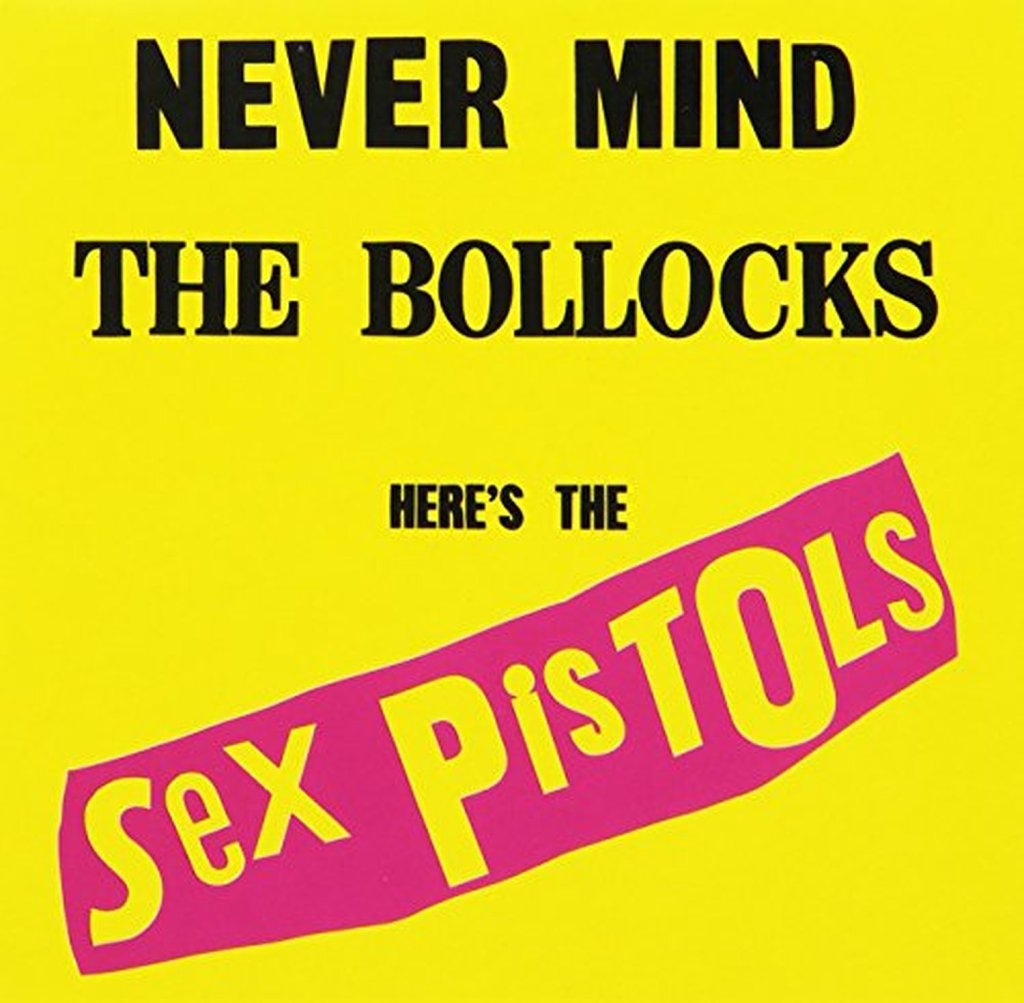
In the winter of 1976 the Sex Pistols signed to EMI Records. Three months later EMI dropped them. They signed to A&M in a ceremony outside Buckingham Palace and were dropped within a week. They signed to Virgin and released God Save the Queen during the Silver Jubilee. The record was banned. It went to number one anyway — or didn’t, depending on whose chart you believe. They split up eighteen months after they began. The reunion tour happened in 1996. The catalogue is available on all streaming platforms.
EMI, the song they wrote about their first label, contains the question this entire series is trying to answer: you do not believe we’re for real or you would lose your cheap appeal. The culture industry doesn’t need to suppress the radical gesture. It needs you to believe the gesture is real just long enough to sell it. Then it needs you to buy the reunion tour.
We have been thinking about that problem — about the space between the gesture and its recuperation, about whether any artist ever genuinely escaped the cultural gravity, and about six people in particular who seemed to us to have tried most completely and most revealingly — for long enough that it became this series of essays.
We offer it tentatively. We don’t know if we’ve chosen the right six. The conversation will tell us.
The question this series is asking has two parts that look like one.
The first is historical. In the twentieth century, across classical music and jazz and visual art and cinema and literature and popular music, were there artists who made genuine formal ruptures with their own accumulated work — who destroyed what they’d built, paid the actual cost, and produced something that mattered before the culture industry could process and sell it back? And if so, what do their specific cases tell us about the relationship between artistic reinvention and the capitalism that simultaneously enables and contains it?
The second is structural. Do the conditions that made those ruptures possible still exist? Our instinct is no. That the gap between the radical gesture and its recuperation has narrowed to the point where the cultural gravity now bends the leap before anyone has fully taken it. That what looks like reinvention in the contemporary mainstream is more often the performance of reinvention — the costume without the jump.
We hold that instinct lightly. Not from false modesty but from genuine uncertainty. The suspicion that authentic risk has disappeared is also what every generation feels about the culture that came after the culture that formed it. And there is a deeper problem: the culture we find most serious is also the culture that accumulated most weight for us personally as we aged. We cannot fully separate those things — the genuine development of ear and eye and attention that comes with long engagement, the class performance of difficulty as a marker of seriousness, the specific gravity of certain kinds of work when mortality is no longer abstract. All three are probably present simultaneously. We name this not to disqualify the argument but because it is the most important thing to say before the argument begins.
We proceed anyway. Because the evidence is there regardless of who is looking at it. And because even if we are wrong about the structural argument — even if genuine reinvention is happening somewhere we cannot see — the question of why it matters, of what culture does that capital cannot fully absorb, remains worth asking. Marcuse believed that art retains a utopian surplus that the culture industry cannot fully neutralise. The longing for something other than what is. We think he was right. We think that surplus is what genuine reinvention produces at its best. And we think its relative scarcity, if we are right that it is becoming scarcer, is a genuine loss to genuine human possibility — not a cultural complaint but a political economy argument.
Six figures. Six art forms. Six moments — or series of moments — in which an artist of genuine achievement looked at what they had built, at the reputation they had accumulated, at the audience that had gathered to receive the next expected thing, and chose instead to do something else entirely. Something that risked losing all of it. Something that baffled, alienated, enraged, or simply bewildered the people who thought they owned them.
We chose these six because they leap out. Because when you run the question — who in the twentieth century made a genuine, costly, formally significant artistic rupture with their own accumulated self, not once but repeatedly, across a career long enough for the reinvention to be the argument rather than the accident — these are the names that arrive first and most insistently in our minds.
Igor Stravinsky
He was not Diaghilev’s first choice. Or his second, or his third, or his fourth. The fifth choice became the century’s most important composer — and then spent fifty years insisting he owed nothing to the tradition that made him, the market that launched him, or the rivals whose deaths freed him to steal their aesthetic positions.
Pablo Picasso
The foundational move of Western modernism — the painting that changed everything — was made from borrowed materials he denied borrowing for the rest of his life. As one Ugandan artist put it: people tell me my work looks like Picasso, but they have it wrong. It is Picasso who looks like me, like Africa.
Miles Davis
He told an interviewer: I’ve changed music five or six times fundamentally. That’s probably why I’m here. Now share what you’ve done that’s important — other than being white. Every reinvention was partly a refusal — moving before the white liberal audience that thought it owned the previous version of him could get comfortable.
Jean-Luc Godard
He was the most celebrated filmmaker of his generation. Then he argued himself into believing that making films was a form of bourgeois ideological violence, and spent five years making films that almost nobody watched because that, he concluded, was the only honest response. He died in 2022 by assisted suicide — the auteur’s final cut, on his own terms.
Doris Lessing
In October 2007 she returned from the grocery shopping to find reporters outside her house. They told her she had won the Nobel Prize. She said: oh Christ, I couldn’t care less. She had written the defining feminist novel, told the feminist movement it was too smug, then disappeared into science fiction and Sufi mysticism. The novel is the one form you reinvent in private — each reader alone with the book, no collective scandalisation possible. Which is both why she could go so far and why so few noticed.
David Bowie
A list of selves: Major Tom, Ziggy Stardust, Aladdin Sane, Halloween Jack, the Thin White Duke, the Berliner, the Entertainer, the Blind Prophet. And underneath all of them, visible only in the gaps, David Jones from Brixton, who liked music and wanted to be in showbusiness and changed his name at seventeen to avoid confusion with a Monkee. The black hole of the series. Everything goes in. Nothing comes out with its original form intact.
Three thinkers do most of the work across these essays. We name them here so you know they’re coming and can ignore them if you prefer.
David Harvey’s concept of accumulation by dispossession has a cultural analogue that runs through all six cases. The genuine reinvention requires the dispossession of the prior self — the deliberate destruction of accumulated cultural capital in order to open new territory. The market is always the mechanism through which the transaction is made, and always the mechanism through which the result is eventually absorbed and sold. Harvey explains the economics of the leap.
Herbert Marcuse explains why the leap gets absorbed. His concept of repressive desublimation — the culture industry’s ability to neutralise radical artistic energy not by suppressing it but by digesting it — is the mechanism behind every recuperation on this list. The Rite of Spring became Cold War propaganda. Kind of Blue became dinner party music. Ziggy Stardust became a Halloween costume. The gesture is real. The absorption is also real. Both simultaneously.
John Berger explains how to look honestly at the thing in front of you without either the hagiography that flatters or the dismissal that evades. Ways of Seeing is the method underneath everything we’re doing here — the insistence that the conditions of viewing shape what can be seen, and that naming those conditions is the precondition for seeing clearly. He arrives most explicitly in the Picasso essay, where the frame around the work has become so large and so loaded that it has nearly swallowed the painting. But he’s present throughout.
These three are tools not conclusions. If the theory illuminates the work we’ll use it. If it doesn’t we’ll set it aside. You don’t need to know any of them to read these essays. But knowing they’re there explains why the essays occasionally stop to ask not just what happened but why — and how the cultural gravity eventually bends even the most radical gesture back toward the commodity form.
Six essays follow. Then a closing one that asks whether any of this is still possible and answers, sincerely, that we’re not sure. Our instinct may be wrong.
Read them in order or don’t. The frame is here if you want it. The rooms work without it. If you came for Bowie, go to Bowie. If you came for Lessing, go to Lessing. If you came because the Sex Pistols were on the cover and you wanted to know where this was going — welcome. So did we.
One last thing. That a series of essays about artistic reinvention written by an ageing metropolitan lefty with a CD collection and an expensive theatre addiction, assisted by an AI stuck in his Platonic cave, hoovering up energy, unable to see, hear or truly enjoy the apotheoses of human culture it helps to describe, is itself a kind of performance. We have tried to make it a sincere one. The questions are real. The uncertainty is real. The six people at the centre of it are genuinely extraordinary and genuinely complicated and genuinely worth the time.
We think so. Come and tell us if we’re wrong.


Leave a Reply