The Condition of Postmodernity and the Cultural Spine of Political Economy
These essays are written in dialogue between a human thinker and an AI interlocutor. The thinking is collaborative. The voice and the judgement are human. The form is the argument.
There is a question that the Pig Iron series has been circling without quite stating directly. The essays on monetary mechanics, on neoliberalism’s rise and exhaustion, on alienation and the seventeen contradictions — all of them explain what the system does. What they do not quite explain is what the system feels like. Why the present has the texture it has. Why collective action is so difficult when the analysis of collective problems is so clear. Why irony replaced conviction as the dominant cultural mode. Why grand narratives lost their authority. Why the future became something to be managed rather than imagined.
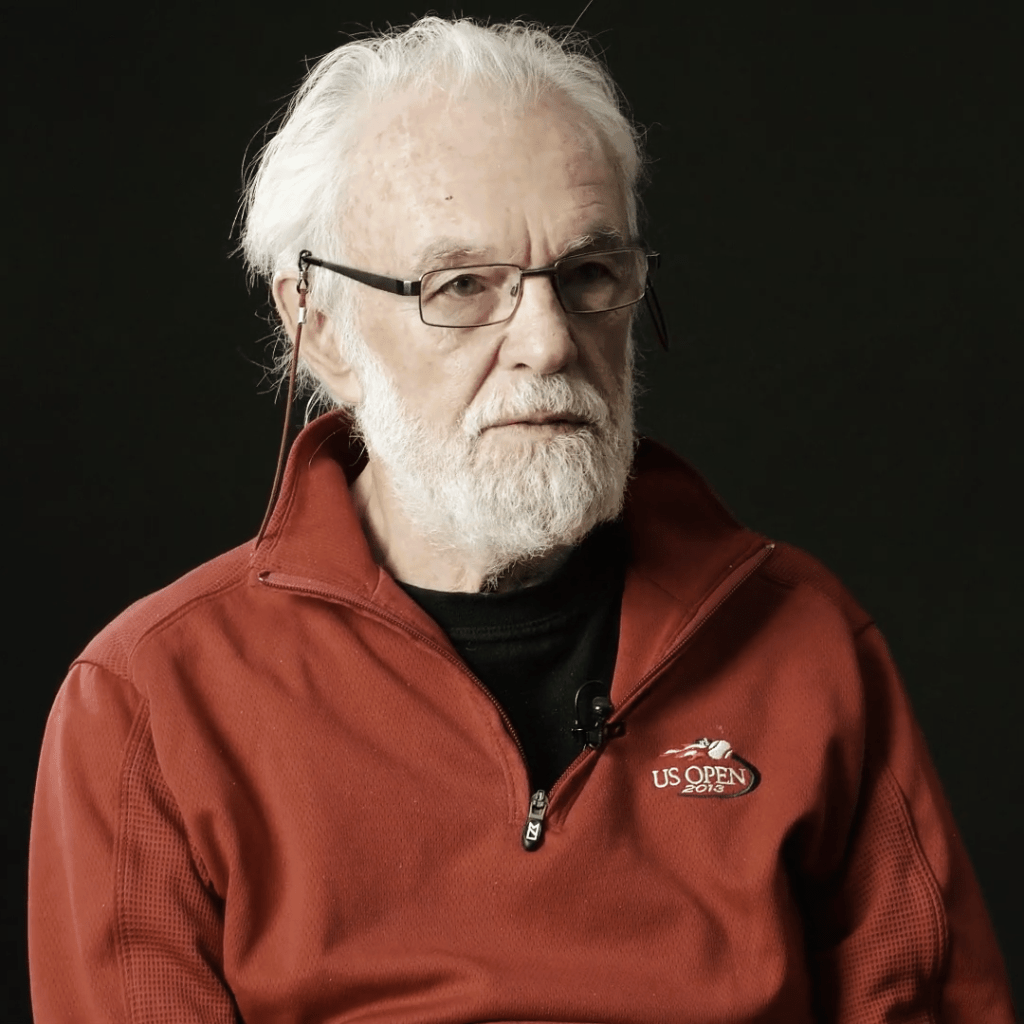
For that we need a different instrument. Not economics alone but the place where economics and culture meet. And for that, the indispensable text is David Harvey’s The Condition of Postmodernity, published in 1989 — the same year the Berlin Wall fell, which is its own commentary on the timing of ideas.
Harvey is the thinker this project returns to most consistently, and for good reason. He is the same man we turned to illuminate the political economy series. But the Condition does something his later work does not quite replicate. It catches a specific historical transformation in the act — the shift from one mode of capitalist organisation to another — and traces its consequences not just through the economy but through architecture, through art, through the experience of time and space, through the collapse of the very frameworks within which political opposition had previously been possible. It is, among other things, an explanation of why the left found itself so comprehensively disarmed in the 1980s and 1990s. And it is an argument for why the disarmament was not permanent.
That argument is what this essay is for.
I. The Problem of Postmodernity
To understand what Harvey is doing in the Condition, it helps to begin where he begins — with the cultural phenomenon he is trying to explain.
By the mid-1980s something had demonstrably changed in the texture of cultural life. In architecture, the clean lines and social ambition of modernism had been abandoned in favour of pastiche, historical quotation, the knowing wink at styles from elsewhere and elsewhen. The Pompidou Centre gave way to Canary Wharf. In literature, the confident novel of social realism fragmented into metafiction and unreliable narration. In philosophy, the grand systems of Hegel and Marx gave way to the suspicion of system itself. In politics, the collective project — the movement, the party, the programme — was increasingly displaced by the politics of identity, the local, the personal.
These changes were real. Harvey takes them seriously. His argument is not that postmodernism invented them or that the thinkers who described them were wrong about the description. His argument is about what caused them — and about the conclusions that were drawn.
The postmodern thinkers, broadly speaking, drew one of two conclusions. Either they celebrated the changes — the end of grand narratives as liberation from oppressive certainties, the play of surfaces as a more honest account of reality than the false depths of modernist seriousness. Or they lamented them — the loss of depth, the triumph of the simulacrum, the dissolution of the real into the image. But in both cases they treated the changes as permanent features of language, meaning, or the human condition itself. They historicised nothing. Which meant their analysis, however brilliant, had no political purchase. If fragmentation is constitutive of meaning itself, there is nowhere to stand from which to critique it.
Harvey’s move — and it is the move that makes everything else possible — is to insist that these are not permanent features of anything. They are historically produced conditions with historically specific causes. Which means they can change. Which means the position from which to critique them still exists, even if it has to be recovered.
II. The Relay Race — Frankfurt to Paris to Harvey
Before Harvey there were others running at the same problem, passing the baton forward. The relay matters because it shows that the Condition is not a lone intervention but the most fully developed version of an argument that had been building for half a century.
The Frankfurt School starts the race. Theodor Adorno and Max Horkheimer, writing in California exile in 1944, developed the culture industry thesis in Dialectic of Enlightenment. Their argument was that mass culture does not reflect authentic human needs — it produces them. The radio, the cinema, the popular song are not innocent entertainment but mechanisms for manufacturing the passive, consuming subject that industrial capitalism requires. Genuine art, in Adorno’s account, preserves the memory of what human experience could be — which is why the culture industry must neutralise it, not by censoring it but by incorporating it, smoothing its difficulty, making it pleasurable and therefore safe.
This argument has always attracted the objection that Adorno was a cultural snob whose tin ear for popular music led him to mistake formal complexity for critical value. The objection has force. But the structural argument survives the aesthetic snobbery. The culture industry is not a conspiracy. It is a logic. And it is a logic that has become, in the decades since Adorno wrote, vastly more total and more technically sophisticated than anything he could have imagined from his Hollywood exile.
Walter Benjamin, Adorno’s colleague and correspondent, arrives at the same terrain from a different angle. His essay on the work of art in the age of mechanical reproduction — written in 1935, in conscious dialogue with the Frankfurt School and in conscious disagreement with parts of it — introduces the concept of aura: the quality of presence, of unique existence in a specific place at a specific time, that mechanical reproduction destroys. The reproduced image is the same everywhere and always. The original is only ever itself, here, now. Benjamin was more ambivalent than Adorno about what the loss of aura meant — he saw in it both the destruction of the mystifying authority of tradition and the potential for a genuinely popular art. But the concept is indispensable for understanding what Harvey’s time-space compression does to culture. When everything can be reproduced and distributed instantly, the very category of the original becomes unstable.
Herbert Marcuse, writing in 1964, sharpens the Frankfurt argument for a world in which the most visible forms of repression had been relaxed rather than intensified. One-Dimensional Man introduces the concept of repressive desublimation — the system’s capacity to absorb and neutralise opposition by liberating rather than suppressing it. Desire is not repressed but channelled, commodified, given a platform and called freedom. The rebellion becomes an aesthetic. The aesthetic becomes a brand. The brand is sold back to you at a price that reflects your demographic. This is more insidious than simple repression because it leaves no clear outside, no uncorrupted position of refusal, nowhere the system has not already been. It is capitalism completing the colonisation of the last remaining territory — the self, the intimate, the desiring body.
The French arrive in the 1970s and 1980s with a different vocabulary and, Harvey will argue, a decisive wrong turn.
Jean-François Lyotard’s The Postmodern Condition (1979) — the text from which the period takes its name — declares the end of grand narratives. The great organising stories of modernity — progress, emancipation, the liberation of the working class, the march of reason — have lost their legitimacy. In their place: local narratives, language games, the irreducible plurality of knowledge claims. Lyotard is describing something real and important. The grand narratives had lost credibility. The question is why.
Jean Baudrillard goes further and, in Harvey’s reading, most catastrophically wrong. In a sequence of works from the 1970s through the 1980s, Baudrillard develops his theory of simulation and the simulacrum. The image, he argues, has passed through four stages: it reflects a basic reality; it masks and perverts a basic reality; it masks the absence of a basic reality; finally, it bears no relation to any reality whatever — it is its own pure simulacrum. Disneyland is more real than America because it makes visible what America otherwise conceals. The Gulf War did not take place — not because it didn’t happen but because what was available to experience was entirely the media representation, the image war, the spectacle without referent. Iran 2026. Plus ça change, plus c’est la même chose.
This is brilliant — and Harvey notes with restrained precision that it is also politically paralysing. If the real has been entirely consumed by the image, if the simulacrum has displaced the referent, there is no ground from which to critique anything. The analysis self-destructs as politics. Which is, as Harvey drily observes, a remarkably convenient conclusion for a period in which the powerful would very much prefer that systematic critique become impossible.
Jacques Derrida’s contribution is more philosophical and more carefully qualified than Baudrillard’s, but the political tendency is similar. The endless deferral of meaning, the instability of the sign, the impossibility of presence — these are genuine philosophical insights about the structure of language. But in their political reception they tend toward the same conclusion: that any stable ground for critique is illusory, that all claims to truth are power claims in disguise, that the master narrative is always oppressive.
Again, there is something real being described. The grand narratives did serve to conceal as much as they revealed. The claim to objectivity did frequently disguise a particular interest. But the move from this grand narrative was false and oppressive to all grand narratives are necessarily false and oppressive is the move that forecloses politics. It is the difference between a critique that has somewhere to go and a critique that devours itself.
Harvey’s historicising move restores the ground. The fragmentation is real. The instability of meaning is real. But these are produced by something — and that something can be named.
III. The Economic Hinge — Fordism to Flexible Accumulation
What produced them, Harvey argues, was a fundamental transformation in the organisation of capitalism. The most important chapter in the Condition is the one that names the hinge: the shift from Fordism to flexible accumulation.
Fordism — named after Henry Ford but describing a much broader social settlement — was the dominant mode of capitalist organisation from roughly the 1920s through to the early 1970s. It rested on mass production of standardised commodities, mass consumption sustained by relatively stable wages, long-term employment contracts, significant fixed capital investment in plant and machinery, and the welfare state as the mechanism for maintaining aggregate demand. Its temporal logic was the long cycle — the stable career, the thirty-year mortgage, the defined benefit pension, the gradual improvement in living standards across a generation. Its spatial logic was relatively fixed — the factory town, the industrial region, the national economy as the primary unit of management.
The postwar settlement that the welfare state represented — Beveridge, the National Health Service, Keynesian demand management, full employment as a policy objective — was the political expression of Fordism. It was not a gift from enlightened capitalists. It was a historically specific accommodation between capital and labour, made possible by the specific conditions of postwar reconstruction and the specific threat, from capital’s perspective, of a credible communist alternative.
The cracks appeared in the late 1960s and the break came in the early 1970s. The Bretton Woods system — the international monetary architecture of fixed exchange rates and dollar-gold convertibility that had underpinned the postwar boom — collapsed when Nixon closed the gold window in August 1971. The oil shocks of 1973 and 1979 compressed the profit squeeze that had been building. Stagflation — inflation and unemployment simultaneously — demolished the Keynesian policy toolkit. The long postwar boom was over.
What replaced Fordism — gradually, unevenly, but with increasing completeness — Harvey calls flexible accumulation. The name is precise. Capital becomes flexible in every dimension simultaneously. Production is disaggregated from the large integrated firm into global supply chains. Employment shifts from long-term contract to contingent, part-time, and gig arrangements. Capital itself becomes primarily financial rather than industrial — it moves faster, commits less, extracts value from circulation rather than production. Geography is reorganised as capital seeks cheaper labour and looser regulation across the globe, producing what Harvey calls a spatial fix — the resolution of crises through geographical expansion and restructuring.
The temporal logic of flexible accumulation is the short cycle — the quarterly earnings report, the rolling contract, the portfolio of skills rather than the career, the present as the only reliable tense. The spatial logic is the network rather than the place — connections that can be made and broken faster than communities can adapt to them.
This is the economic transformation. Now Harvey makes his crucial claim: postmodernism is its cultural logic.
The fragmentation that Lyotard described is real — but it is the cultural expression of a mode of production that has fragmented employment, space, time, and social identity. The loss of depth that Jameson diagnosed is real — but it is the cultural expression of a financial capitalism that values the quick return over the patient investment, the image over the substance, the story over the thing. The collapse of grand narratives is real — but it is the cultural expression of a system that has systematically destroyed the collective institutions — the union, the party, the movement, the stable community — within which grand narratives are made and sustained.
The postmodernists correctly diagnosed the symptoms. They incorrectly concluded that the symptoms were constitutive of reality itself. Harvey restores the diagnosis to its proper place: these are historically produced conditions with historically specific causes.
IV. Time-Space Compression and the Experience of the Present
The most original contribution of the Condition — the concept that has proved most durable and most generative in the decades since — is time-space compression.
Harvey builds on a long tradition of thinking about how capitalism reorganises space and time. Marx understood that capital must constantly seek to overcome geographical barriers and to reduce the turnover time of capital — to make production faster, distribution faster, the realisation of profit faster. The Communist Manifesto’s famous passage about all that is solid melting into air is precisely about this: the permanent revolution that capitalism makes in the conditions of its own existence. Georg Simmel, writing at the turn of the twentieth century, traced the psychological consequences of money’s abstraction of value — the way it makes everything equivalent, interchangeable, and therefore fundamentally the same regardless of its particular qualities. The metropolitan personality — blasé, detached, intellectually calculating — is Simmel’s account of what time-space compression felt like before it had that name.
What Harvey adds is the specificity of flexible accumulation’s particular compression. The container ship, the jet aircraft, the fax machine, satellite television, and eventually the internet did not merely speed things up. They reorganised the experience of space and time so fundamentally that the cultural and psychological responses were qualitatively different from anything that preceded them.
The consequences Harvey traces are precise. When time accelerates and space shrinks, the long-term commitment becomes difficult to sustain — not because people become shallower but because the ground keeps moving. The political project that requires patient organisation over decades becomes harder to maintain when capital can exit a region overnight, when the employment base that funded the labour movement can be offshored in a financial year, when the community whose interests the movement represented can be dispersed by a property market that answers to global capital flows rather than local needs.
The retreat to the local, to identity, to the immediate and the personal — which the postmodernists variously celebrated or lamented — is Harvey’s account of a rational response to conditions that make larger solidarities genuinely difficult to sustain. The politics of recognition over redistribution, of difference over class, of the local over the universal — these are not merely intellectual fashions or failures of the left’s political imagination. They are the political expressions of time-space compression.
Nostalgia, too, is a predictable product of compression. When the present feels uninhabitable and the future feels foreclosed, the past becomes the only available territory for genuine feeling. The heritage industry, the period drama, the endless revival — Harvey sees all of it as the cultural response to a present that moves too fast to be inhabited and offers too little stability to be trusted. The image replaces the thing not because Baudrillard is right about the constitution of reality but because flexible accumulation produces and circulates images faster and more profitably than it produces and circulates anything else.
V. The Move That Makes Everything Possible
All of this — the Frankfurt School’s culture industry, Benjamin’s aura, Marcuse’s repressive desublimation, Lyotard’s end of grand narratives, Baudrillard’s simulacrum, Derrida’s undecidability — is synthesised in Harvey into a single argumentative move that has consequences well beyond cultural theory.
If postmodernity is historically produced rather than philosophically constituted, then it is neither permanent nor inevitable. The conditions that produced it — flexible accumulation, time-space compression, the destruction of collective institutions, the financialisation of everyday life — are themselves the product of political choices and political struggles. They can be contested. They can, in principle, be changed.
This is the move that makes the manifesto possible. Not the specific manifesto of this project alone — but the very form of the manifesto as a political act. The manifesto presupposes that there is a position from which to speak, a collective subject capable of acting, a future that can be different from the present. Lyotard’s end of grand narratives, taken seriously, makes the manifesto impossible. Harvey’s historicising of the end of grand narratives restores its possibility.
Fredric Jameson, arriving at the same destination from literary theory, makes the connection explicit. His Postmodernism, or the Cultural Logic of Late Capitalism (1991) — published two years after Harvey’s Condition and in explicit dialogue with it — argues that the postmodern building, novel, or artwork is the cultural dominant of a specific economic formation, monopoly capitalism in its late phase. The glass and steel tower that contains no memories, that refers to nothing outside its own surfaces, that exists in a perpetual present without depth or history — this is not an aesthetic choice. It is what a mode of production that has lost the ability to imagine its own supersession looks like when it builds.
Both Harvey and Jameson are drawing on the same move that the Frankfurt School had made forty years earlier, and that Lukács had made before them, and that Marx had made first: the insistence that the apparently autonomous realm of culture is always and everywhere shaped by the material conditions of its production. Not mechanically — the relationship between base and superstructure is not a simple causation but a complex mediation — but really. The cultural and the economic are not parallel tracks. They are the same track seen from different angles.
VI. Thirty-Five Years On — What Are the Thinkers Saying Now?
Harvey published the Condition of Postmodernity in 1989. The Berlin Wall fell in November of that year. The dominant account — Fukuyama’s end of history — declared liberal capitalism the permanent horizon of human possibility. Harvey’s account declared it a historically specific formation with historically specific contradictions. Thirty-five years of evidence has not been kind to Fukuyama.
What have the thinkers been saying since?
Harvey himself has sharpened his analysis considerably, particularly on financial capital. The Enigma of Capital (2010), written in the immediate aftermath of the financial crisis, traces the specific mechanisms by which flexible accumulation generates crises — overaccumulation, the spatial fix, the tendency to resolve contradictions by displacing them rather than resolving them. The crisis of 2008 was not a surprise to anyone who had read the Condition carefully. It was the logic working itself out. And in The Story of Capital (2026) — a summation written at ninety, after fifty years of teaching Marx — Harvey guides the general reader through the full conceptual architecture: labour, technology, the state, geopolitics, fictitious capital, and what he calls the return of the rentiers. That last phrase is the Condition’s logic in its current form. Asset wealth. Passive income. Capital entirely divorced from productive activity.
Wolfgang Streeck, in Buying Time (2013) and How Will Capitalism End? (2016), develops the temporal dimension of Harvey’s analysis. Capitalism, Streeck argues, has been surviving its own contradictions since the 1970s by borrowing time — first through inflation, then through public debt, then through private debt, and now through the quantitative easing that has kept the system functioning at the cost of an asset inflation that transfers wealth systematically from those who work to those who own. The question in his title is genuine — he does not know how capitalism ends, but he is confident that what we are living through is not stability but a drawn-out process of decay.
Bruno Latour, approaching from science studies and political philosophy, adds the dimension that Harvey’s account most needs: the ecological. Down to Earth (2018) argues that the political geography of our moment — the return of nationalism, the rejection of internationalism, the culture wars — cannot be understood without the climate crisis. Capital’s response to the recognition of ecological limits has been, in Latour’s account, a deliberate retreat from the shared world — a decision by elites to deregulate, to withdraw from international agreements, to deny the science, and to fortify themselves against the consequences they know are coming. Time-space compression meets planetary boundary and the result is a politics of organised denial.
Nick Srnicek and Alex Williams, in Inventing the Future (2015), take Harvey’s analysis as given and ask the political question that follows from it: what kind of left politics is adequate to flexible accumulation? Their answer — post-work politics, universal basic income, the reduction of working hours, the reclaiming of technology from capital — is controversial but serious. It takes seriously Harvey’s point that the left’s defensive posture, organised around the recovery of a Fordist past that capital has already moved beyond, is a politics without a future.
And then there is the question that haunts all of this: artificial intelligence. The acceleration that Harvey diagnosed in 1989 has not plateaued — it has entered a qualitatively new phase. The time-space compression of flexible accumulation was about capital moving faster than labour could follow. The AI transformation is about capital replacing labour in domains previously considered immune to replacement. The cultural logic of this — what it does to the experience of time, to the possibility of the long-term commitment, to the stability of identity and work and meaning — is still being written. But the framework Harvey provides in the Condition is, if anything, more necessary now than when he wrote it. The question is not whether his analysis applies. The question is how much further it goes.
The climate crisis, the debt overhang, the AI transformation, the return of geopolitical conflict — all of them are legible through Harvey’s framework as the consequences of a system that has been resolving its contradictions by displacing rather than addressing them. The displacement runs out of road. The contradictions reassert themselves. What happens then is the question that the remaining essays in this project are attempting, with appropriate humility, to address.
Harvey gave us the diagnostic instrument. The condition he described has not ended. It has deepened. The thinkers building on his work are not revising his framework — they are filling it out, extending it into territories he identified but did not fully map, and confronting the political question that his analysis makes unavoidable: if this is historically produced, what does it mean to produce something different?
That is what we are here to find out.
This essay is part of the At Home He Feels Like A Tourist blog project. Written in dialogue between a human thinker and an AI interlocutor. The thinking is collaborative. The voice and the judgement are human.


Leave a comment